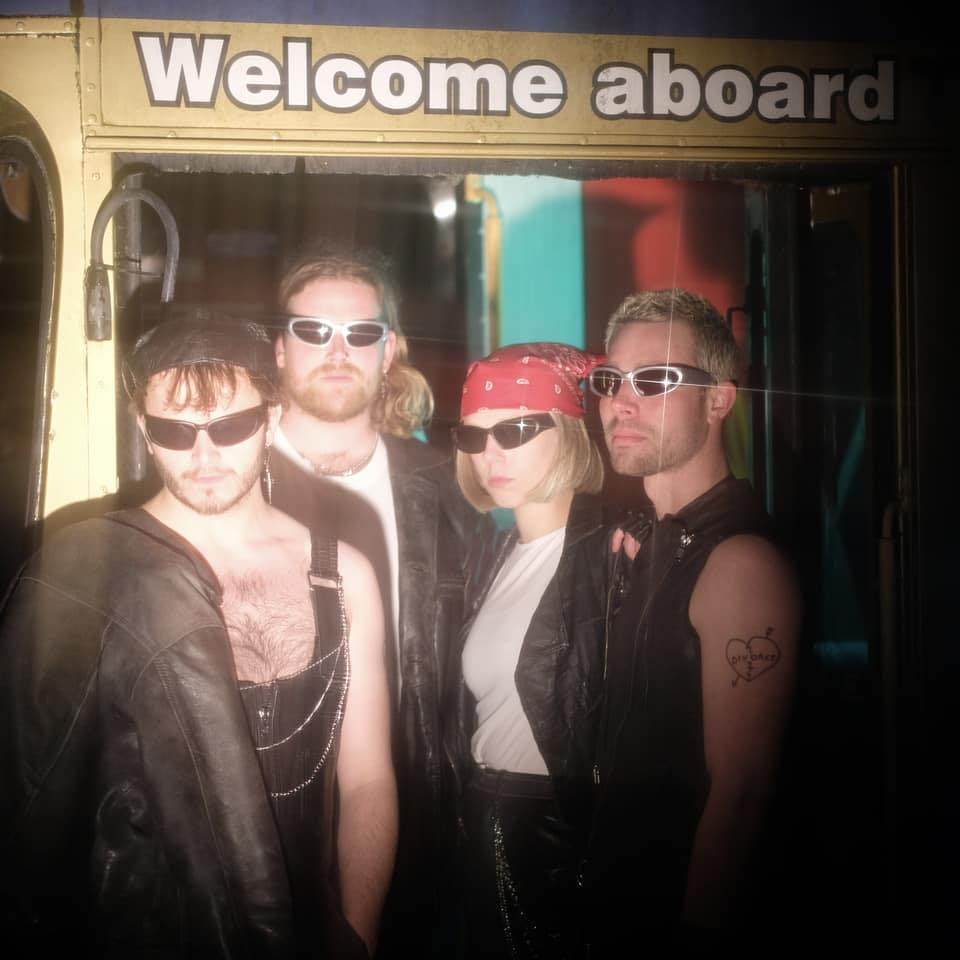
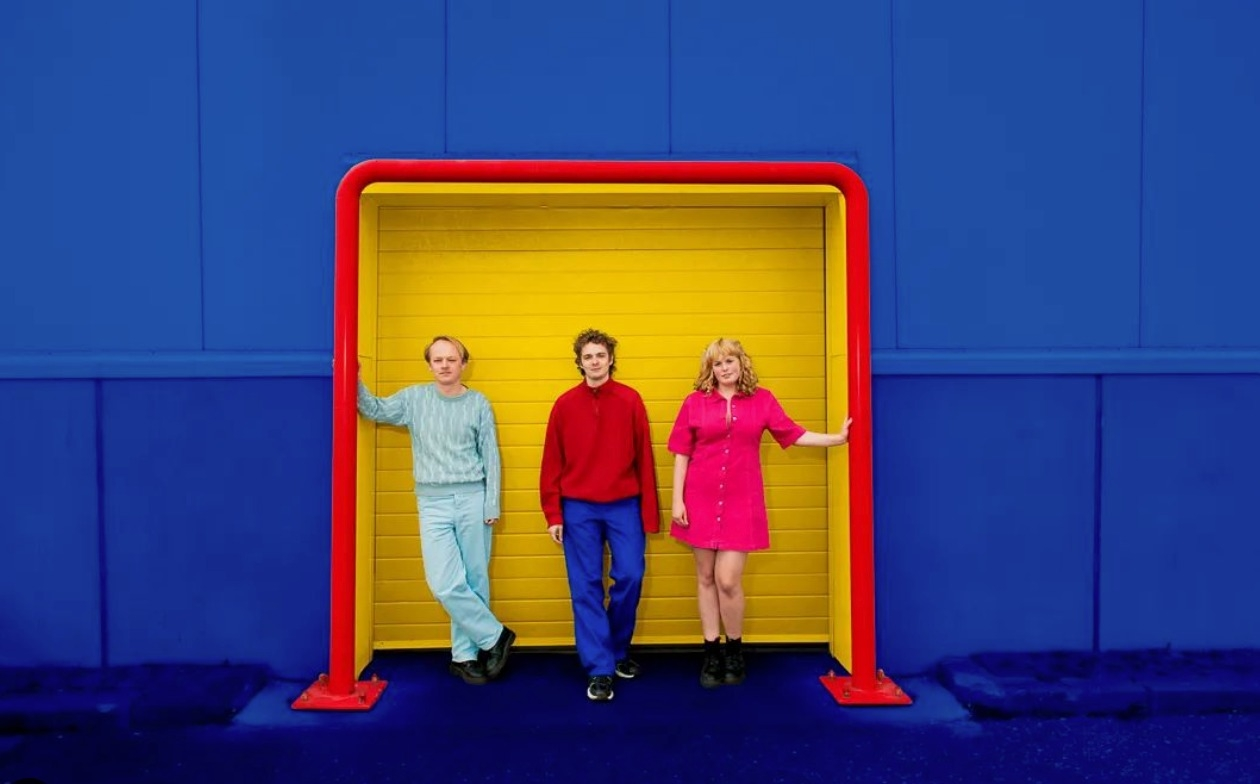
A short while ago, we released the second single from the now announced EP, “Heady Metal”, for you all to hear. The single is called “Scratch Your Metal”, and I (TigerCohen-Towell ) am going to tell you a little bit about the song. At the end of last year I had started a course at Goldsmiths University in London, but I had not yet found a place to live so was commuting for a few weeks from Nottingham and staying with friends. One of my dear friends, Eve, who’s an actor, let me use her room while she was away filming.
She’d been learning some keyboard for a part she’d gotten and she had this Yamaha keyboard by the bed, and I couldn’t resist fucking around on it, and I ended up writing “Scratch Your Metal“. Lyrically, the song pays homage to unromantic-romantic love, accepting that people are made up of many flaws, and embracing a full human instead of just the parts that are easy. I think when I wrote it I wanted it to sound a bit like Divorce does Tears for Fears or something.
I’d been listening to a lot of The Blue Nile, a band that my partner Jocelyn introduced me to, and because the song is largely about my partner it felt like a really integral reference that I wanted to reflect in the production. We all listened to The Blue Nile a lot on our autumn 2022 tour and we love their cinematic use of synthetic sounds, it felt like something we wanted to try and work into the Divorce sonic palette. My parents were both 80s teenagers so the pop music of that era was very formative for me musically, I love the unashamed camp-ness of it, this song is very much a leaking-out of my fondness for it.
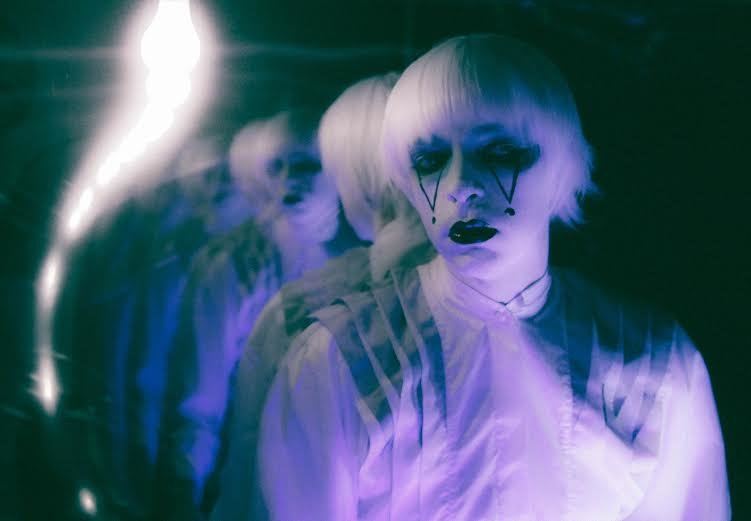
We’re also all big Caroline Polachek fans; I think when Felix first heard my scrappy voice note of the song he definitely took inspiration from her when he wrote guitar parts to lay on it, and we went ham on the amount of guitar on this track (didn’t really think about doing it live when we piled 67 parts into the first verse). It was very freeing for us to do a track like this, I think we’re eager to not be pigeon-holed into a genre, I think like Queen CP we’re sort of maximalists with an array of different sounds that we want to try. Why do one thing when you can do many? The video was such a joy to film, we all just basically got dressed up and danced to the song, we have a few exclusive BTS shots just for you. It was so uncanny seeing the older versions of ourselves, Clump did such a good job of casting them, massive shout out to those guys for making everyone feel so comfortable and nice on set too!
The latest 32-minute EP from Drab Majesty marks the start of a stirring new chapter in the band’s majestic legacy. Written during a 2021 retreat to the remote coastal Oregon town of Yachats, Deb Demure leaned into the neo-psychedelic resonance of a uniquely bowl-shaped 12-string Ovation acoustic/electric guitar. After early morning hikes in the rain, Deb would record ambient guitar experiments the rest of the day, tapping into “flow states,” letting the sound lead the way.
These sessions were then refined or recreated, and later elevated further with key collaborations by Rachel Goswell (Slowdive), Justin Meldal-Johnsen (Beck, M83, Air), and Ben Greenberg (Uniform, Circular Ruin Studio). “An Object In Motion” is true to its title, capturing the chrysalis moment of an artist evolving, reborn and untethered, silhouetted against an open horizon.
“Cape Perpetua” kicks off the collection’s divergent palette: sparkling acoustic finger-picking refracted through delay, equal parts raga and reverie. Melodies and moods congeal and dissipate, at the threshold of rustic American primitivism, brooding neo-folk, and pastoral melancholia. “The Skin And The Glove” deploys jangle to different effect – baggy, soaring, grey-skied kaleidoscopic pop in the spirit of Stone Roses, Primal Scream, and The Glove. Rachel Goswell lends her iconic freefall voice to The Cure-esque ballad, “Vanity,” infusing poetic gravity to the doomed refrain: “If the valve breaks / then the earth quakes / and history finds a way / to put you in your place.”
“Yield To Force”, the closing track of the EP, may be the most anomalous offering of the set. A 15-minute instrumental odyssey of cyclical strings, ominous slide guitar, and simmering synthesizer, the piece sways and spirals like a long zoom into distant storm clouds. Demure finesses the guitar with a restless but regal grandeur, unfolding a panorama of peaks, shadows, and plateaus. It’s music both intuitive and prophetic, tracing the slow swing of pendulums across an endless plain. Taken as a whole, ‘An Object In Motion’ presents a showcase of potential futures from Drab Majesty’s evolving domain, their sound poised to bloom at the precipice of transformation.
Boston-based artist Anjimile returns with a new album “The King”, and his 4AD Records debut and the follow-up to 2020’s “Giver Taker”. “If “Giver Taker” was an album of prayers,” the singer-songwriter explained in press materials, “The King” is an album of curses.”
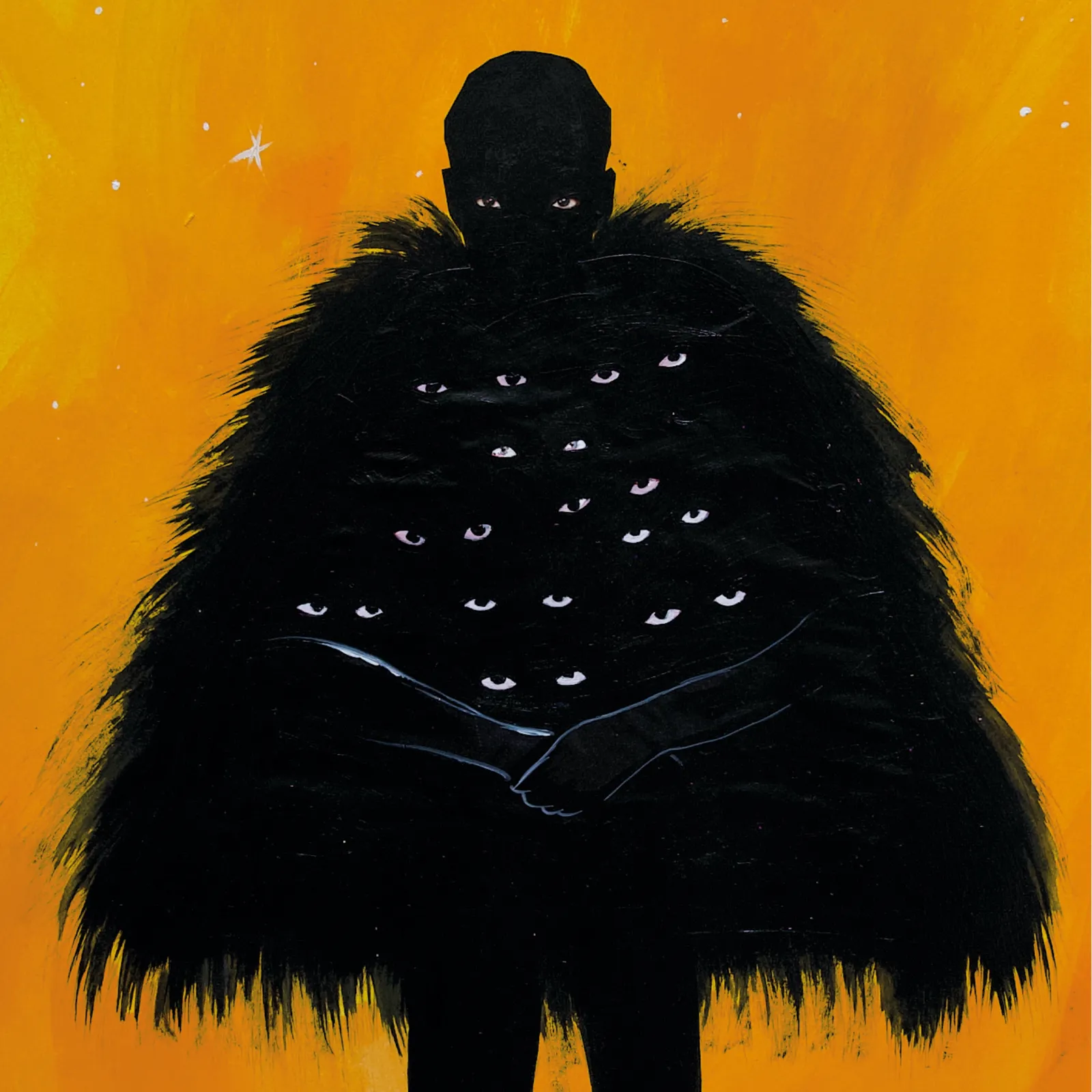
Anjimile Chithambo, better known as Anjimile, announces his new album, “The King”, out September 8th, his first full-length since 2020’s breakthrough “Giver Taker”. To herald the announcement, he shares lead single, ‘The King’, accompanied by a visualiser by Daniela Yohannes, whose striking painting takes centre stage on the album cover.
Highlighting the artistic shift from “Giver Taker” to now, ‘The King’ opens with a lofty, melodic choir, an intro that belies the song’s motives. Suddenly, sinister arpeggios interrupt the reverie, and the voices grow darkly serious. Deeply steeped in the confusion, grief, and rage of being Black in America, ‘The King’ pushes back against the tired adage, “what doesn’t kill you makes you stronger,” hissing, “What don ’t kill you almost killed you// What don’t fill you//pains you// drains you.”
The title track’s haunting, baroque pop is evidence enough for Anjimile’s thesis. Across the record’s 10 tracks, including the sombre “Father,” Anjimile draws inspiration from religion, Philip Glass, and his own lived experiences. He also enlists a number of special guests for the project, such as Justine Bowe, BradAllen Williams, Sam Gendel, and Big Thief’s James Krivchenia.
“The most remarkable thing about “The King”, however, is that its synthesis of sound and vision makes it feel so thoroughly like a monumental record.” – Paste (Album of the Week) “Anjimile tells you to accept your suffering, not run away from it, lest your unattended wounds drag you into the abyss.” – Pitchfork (7.5/10) “An innovative examination of distorted American life.” – Uncut (8/10) “A record of cold, hard truths.” – Loud and Quiet (7/10) “The inventive nature of Anjimile is really fascinating.” – NPR Music
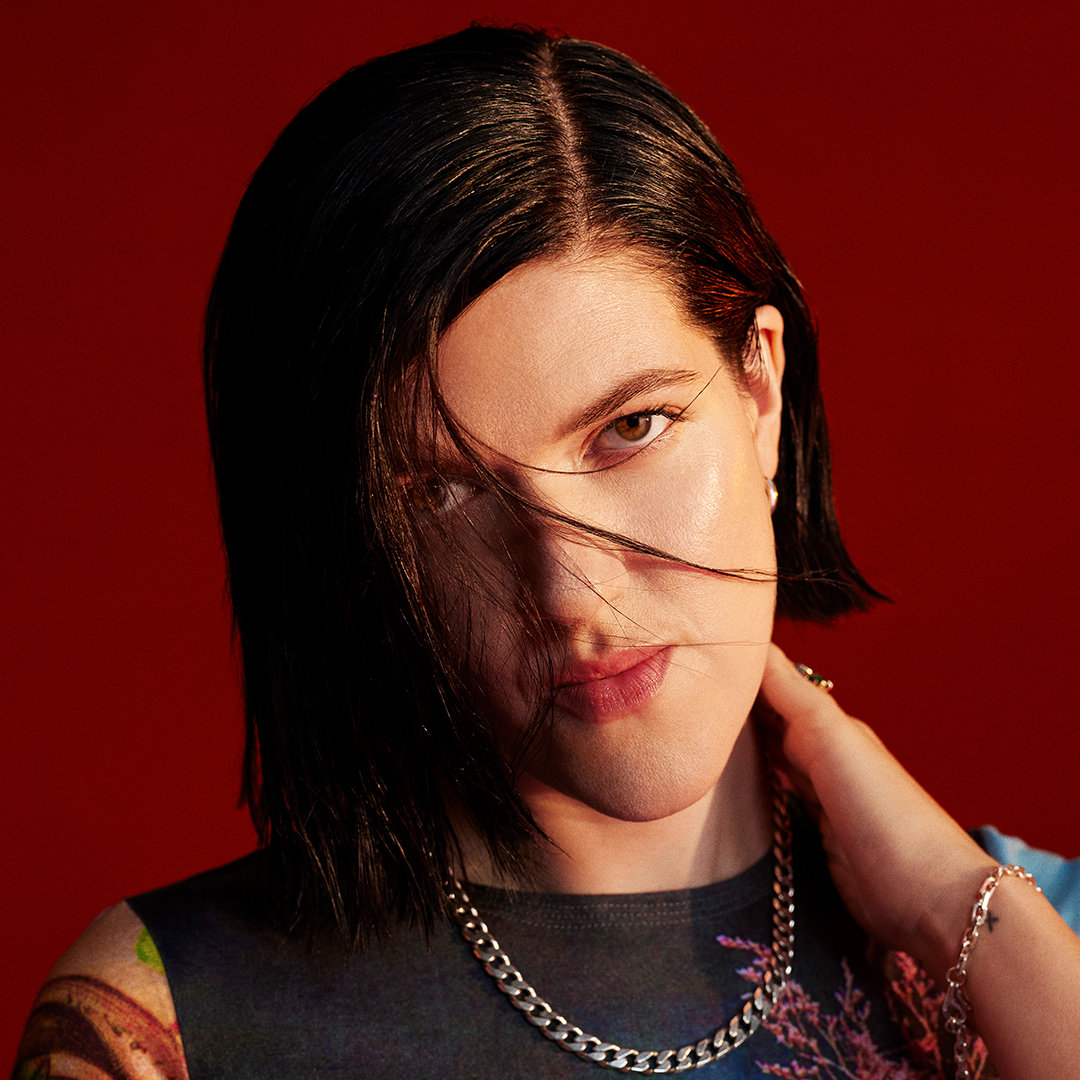
“Mid Air” is an album about celebration, sanctuary and salvation on the dance floor. It’s an album that deals with love, grief, relationships, identity and sexuality and is a love letter to the queer clubs where Romy found community and connection. It’s a coming-out album in a way, although she came out in my personal life a long time ago, but it’s also a coming-through album – through grief and heartache, towards euphoria.
“Mid Air” sees Romy working alongside producers Fred again.. and Stuart Price, as well as her bandmate Jamie xx on recent single “Enjoy Your Life”. Also featuring the previous single (and crossover anthem) “Strong”, “Mid Air” is the perfect encapsulation of a sound Romy describes as “emotional music to dance to”. It’s a sound that’s set to unify dancefloors, distilling Romy’s love of club classics and classic song writing and finding the sweet spot – like much of Romy’s favourite music – between euphoria, escapism, sadness and melancholy.
To celebrate news of the album, Romy today releases her latest single, the Fred again..-produced “Loveher”. It’s a pivotal track for Romy and acts as both the album opener and the first song to be written for the record. Romy and Fred were first paired together to write songs for other people, but their fast friendship and musical connection proved to be a spark for something new. After writing “Loveher”, a declarative pop song about the intimacy of falling in love with a woman, “Fred asked me, who could this be for?” explains Romy “and I tentatively said… ‘maybe me?’”. A proud and positive queer love story, this was the beginning of “Mid Air”.
Pip Blom are a band from Amsterdam, but it’s also the name of the band’s frontwoman and main songwriter.
Blom had this to say about “Get Back” in a press release: “One of the things I am most happy with on this album is the vocal sound. My voice sounds warm and intimate, but also punchy and fierce at other times. During the recording of the vocals in the chorus, we laughed a lot because it turned out to be quite difficult to say ‘Get Back’ so many times in a row.
I love how ‘Get Back’ is both a rock song but still sounds very produced. A recurring phenomenon on “Bobbie” is the vocals with a lot of autotune, which can also be heard in the bridge of this song. ‘Get Back’ may be one of the loudest songs on the album, yet Claudius managed to give it an even bigger lift in volume and intensity in the last chorus.
Pip Blom previously released the “Bobbie” song “Is This Love?,” which featured Alex Kapranos of Franz Ferdinand
Amsterdam’s Pip Blom are releasing a new album, “Bobbie”, on October 20th via Heavenly.
New York based singer/songwriter and multi-instrumentalist Jordan Lee and his band Mutual Benefit is releasing a new album, “Growing at the Edges”, on October 6th via Transgressive. The album’s third single, “Untying a Knot,” Kai Macknight directed the video.
Lee had this to say about the song in a press release: “‘Untying a Knot’ was partially inspired by a tweet that said something like ‘normalize taking in new information and changing your perspective’ and got me thinking about how difficult it is to clearly look at your own system of beliefs and make substantive changes to cause less harm. While there is currently a lot of focus toward ‘self-growth,’ I wanted the song to instead reflect the process as an ongoing unlearning and untangling of myriad internal knots collected through time.”
Previously Mutual Benefit shared the album’s first two singles: “Little Ways” and “Wasteland Companions”“Growing at the Edges”was co-produced with Gabriel Birnbaum and features violinist Concetta Abatte. Other collaborators include guitarist Jonnie Baker (Florist), vocalist Eva Goodman (Nighttime), bassist Nick Jost (Wilder Maker, Baroness), and drummer Sean Mullins (Wilder Maker, Sam Evian).
Austin-based band Sun June are releasing a new album, “Bad Dream Jaguar”, on October 20th via Run for Cover. The band have two more new songs from it, “Easy Violence” and “John Prine,” both via music videos.
Of “John Prine” the band had this to say in a press release: “‘John Prine’ is about appreciating something for the first time after it’s already over, and struggling to let it go. It’s also a shout out to my father who loves to say, ‘I’m not asleep, I’m just resting my eyes.’
The song was recorded in North Carolina by Alli Rogers and features Justin Morris (Sluice, Fust) on pedal steel. When Dan Duszynski mixed it he morphed the pedal steel into something more haunting and more ghostly . We wanted the video to capture the feeling of coming down after a long night or a short visit with someone you miss, the kind of daze that’s a mix of longing and appreciation. I am not a morning person, but I really wish I were.”
Sun June is Laura Colwell (vocals), Michael Bain (guitar), Justin Harris (bass), Sarah Schultz (drums), and Stephen Salisbury (guitar).
The band’s last full-length album was 2021’s “Somewhere”. the album ‘Bad Dream Jaguar’ out October 20th, 2023 via Run For Cover Records
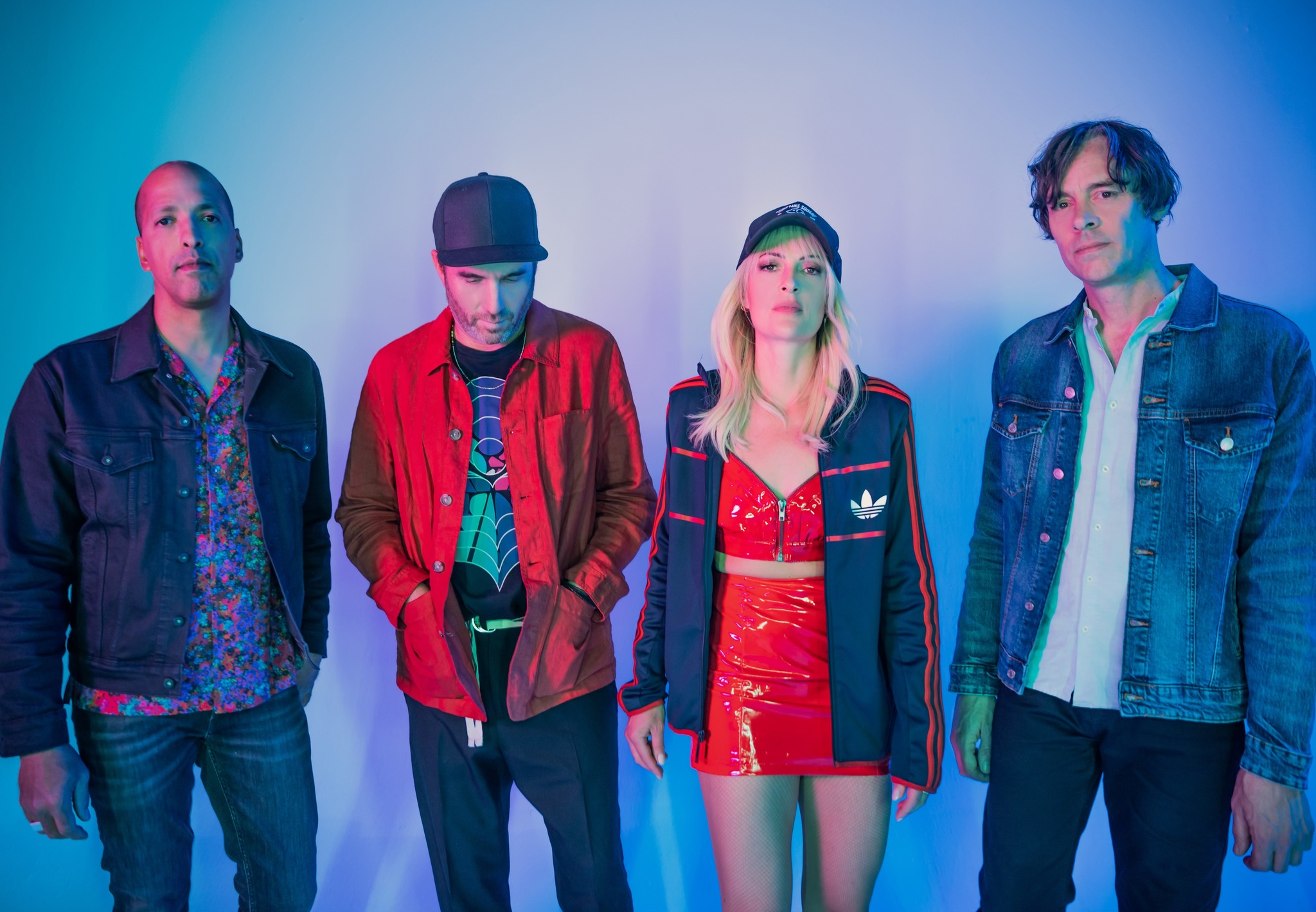
Metric are releasing a new album, “Formentera II”, on October 13th via Metric Music International/ThirtyTigers. The band have shared its third single, “Who Would You Be For Me.” The band have also announced some new tour dates, including some acoustic ones in Europe and some full band shows in South America. Justin Broadbent directed the video.
Haines had this to say about the new single in a press release: “The song ‘Who Would You Be For Me’ is a throwback lullaby set in NYC in 2002. All the action takes place in Tompkins Square Park, in a subway car, and at the café on St. Marks Place where I worked as a waitress when we were getting our start.
“Automatic behaviors and patterns are often fairly easy to flag in others but can be a riddle to spot in yourself. In life and in love, all the emphasis in your mind can default to being what someone else wants until it dawns on you to consider your own desire. I could be the girl for you, but who would you be for me?”
This week is the 20 year anniversary of Metric’s debut album, “Old World Underground, Where Are You Now?”, and the band have re-issued the album on vinyl with new color variants (neon violet, hot pink, and tangerine.
“Formentera II” is the a follow-up to their 2022 album “Formentera”.
“Formentera II” was recorded at the band’s own Main Street Studios and completed at Motorbass Studios in Paris. “Formentera II“, which is Metric’s ninth studio album, The band are also releasing a complete double vinyl set of both “Formentera I & II” on opaque white vinyl.
Metric is Emily Haines (vocals, keys), Jimmy Shaw (guitar), Joshua Winstead (bass guitar) and Joules Scott Key (drums).
Philadelphia five-piece Slaughter Beach, Dog are releasing a new album, “Crying, Laughing, Waving, Smiling” on September 22nd, 2023 via Lame-ORecords. The album’s fourth and final pre-release single, the nine-minute long “Engine.”
Slaughter Beach, Dog is led by Jacob Ewald, who had this to say about “Engine” in a press release: “This song keeps changing for me. First, I didn’t think it was about anything. Then I thought it was about the van. Then I thought it was about [Slaughter Beach, Dog bassist] Ian Farmer, and I couldn’t figure out why the guitar solo kept making me cry. Outside the Sinclair in January, I saw a flyer for a house show and remembered how long we’ve been doing this. Then my heart was in my shoes. Ten years of thinking a different life was right around the corner, selling off all this heavy machinery and making spreadsheets for somebody, futzing with chicken wire, everything more simple.
“Lately this song feels like. a eulogy for the change that never came. Ten years gone and I’m still squirming under freedom’s thumb, too easily forgetting rock’n’roll, my great hulking vessel, a framework to swing from, a history to make home inside of. Forms to learn, rules to break, comrades to find, mysteries turned over ad infinitum, inexplicable monsoons of the heart. I’m still finding myself inside this song, still learning to accept that I lived it. Some of it spooks me. I can hear it in the pain of belonging—standing in one place long enough to not take leaving lightly. Staying put when the outlaws arrive at night. Saying very quietly to no one, this is where I live.”
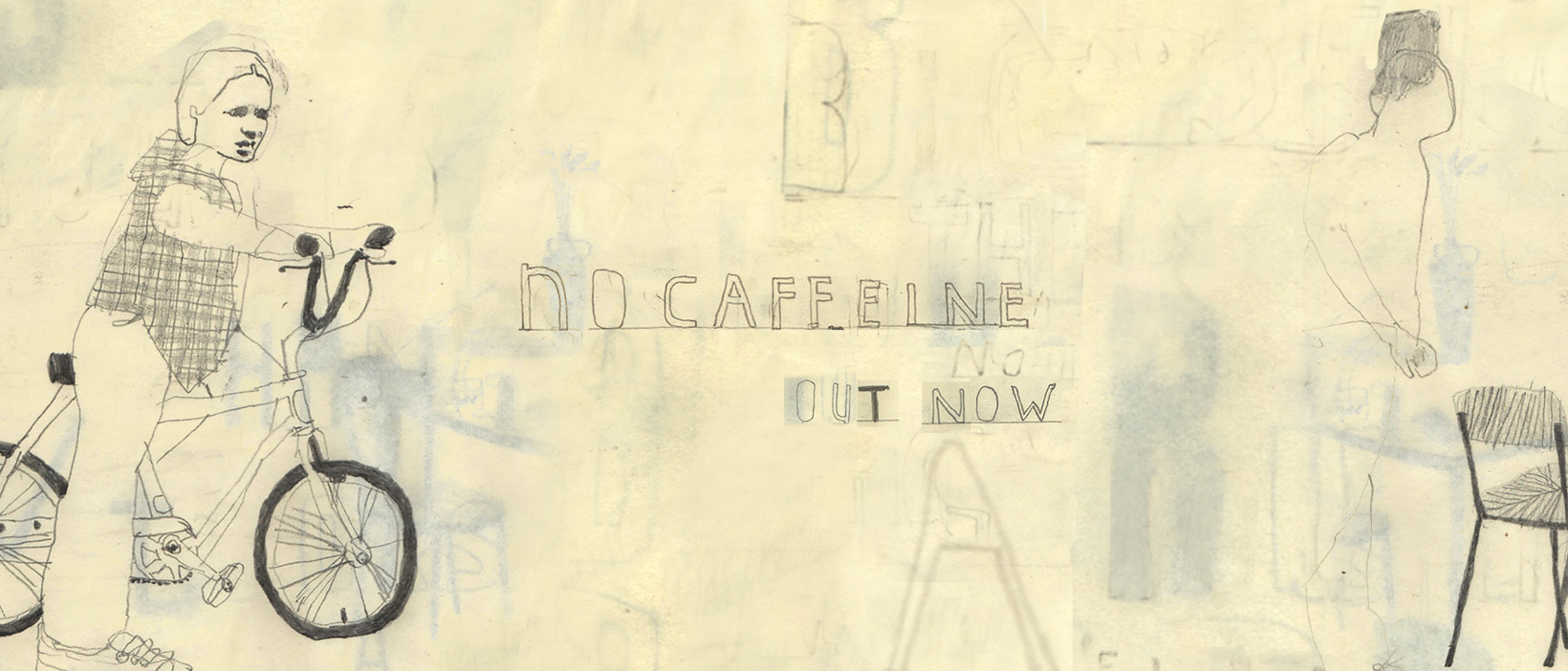
This week, singer/songwriter Marika Hackman returned with a new song, “No Caffeine,” via a music video. It’s her first single for Chrysalis. Hackman co-directed the video with Natàlia Pagès. The song tackles anxiety and the conflicting advice for how to deal with it. “Occupy your mind, don’t stay home/Talk to all your friends, but don’t look at your phone,” Hackman sings, later adding: “Remember how to breathe, maybe try and fuck/Stay away from love, maybe take your clothes off.” The second verse ends with: “Don’t forget to wash, don’t become a write-off.”
Hackman plays almost every instrument on “No Caffeine,” apart from the brass and strings. She self-produced the song, with additional production from Sam Petts-Davies (Thom Yorke, Warpaint) and long-term collaborator Charlie Andrew (Alt-J).
A press release describes the song like so: “‘No Caffeine’ finds Marika in fetal position, rattling off tactics to prevent a panic attack while likening her anxiety to an abusive partner.”
Hackman‘s last release a covers album, simply titled “Covers”, via Sub Pop. Hackman’s last album of originals was, “Any Human Friend”, which came out in 2019, also via Sub Pop.