Archive for the ‘MUSIC’ Category

Rolling Stones Records

The Rolling Stones didn’t end up touring the U.S. in the immediate wake of the April 1976 release of “Black and Blue”. However, the band still managed to cause controversy in the States, thanks to the album’s ad campaign and a Sunset Boulevard billboard promoting the record.
The ad featured model Anita Russell sitting atop an unfolded copy of the “Black and Blue” LP. She’s bound with rope and wearing dark makeup, to make it look like she was bruised by a beating. The giant billboard was even more controversial, as it contained the same image of Russell and the LP, but added the text, “I’m ‘Black and Blue’ from the Rolling Stones – and I love it!” in giant script.
Reaction to both the ad and billboard was fierce. “This campaign exploits and sensationalizes violence against a woman for the purpose of increased record sales. The ad contributes to the myth that women like to be beaten and condones a permissive attitude towards the brutalization of women.”
Five stealth women “armed with buckets of fire-engine-red paint” visited the billboard one night and triumphantly defaced it, scrawling “This is a crime against women” near the text and also painting over Jagger’s face, the stealth artists also painted the “women’s movement symbol” next to the Stones’ iconic tongue logo.

Atlantic Records took down the billboard soon after, “It was not the intention of Atlantic, Mick [Jagger] or the Rolling Stones to offend anyone.”

The Rolling Stones recorded “Black and Blue” while auditioning Mick Taylor’s replacement, so it’s unfair to criticize it, really, for being longer on grooves and jams than songs, especially since that’s what’s good about it. Yes, there are two songs that are undeniable highlights “Memory Motel” and “Fool to Cry,” the album’s two ballads and, therefore, the two that had to be written and arranged, not knocked out in the studio; they’re also the ones that don’t quite make as much sense, though they still work in the context of the record. As the Stones work Ron Wood into their fabric. And the remarkable thing is, apart from “Hand of Fate” and “Crazy Mama,”. They play with reggae extensively, funk and disco less so, making both sound like integral parts of the Stones’ lifeblood.

Rolling Stone magazine wrote at the time: “In a way, “Black and Blue” is an admirable
album just for its refusal to bow to the past. A few songs here try to sound like “Brown Sugar” and “Tumbling Dice” and those few aren’t the best ones. Still, the Stones have problems. Keith Richard recently has seemed to run out of melodic ideas altogether and, like the majority of their post-Exile on Main Street repertoire, the new numbers are based on loose riffs rather than tight song structures. Like the Who or any rock band, the Stones are obsessed in their way with age and time, but unlike the rest, they’ve matured with confident gracefulness. For Soul Survivors, I guess, dying before you get old is simply not relevant.”

Image result for rolling stones black and blue

The band that made “Black and Blue” isn’t the same one that made “12 x 5” or even “Aftermath”. But that doesn’t mean today’s Stones are not a great band playing great music. They’re a different sort of band, playing a different kind of music. Too much of “Black and Blue” picks up the trail of “Fingerprint File.” “Hot Stuff,” which opens side one, and “Hey Negrita,” which opens side two, are intricate funk jams, fusing reggae, Latin rhythms and the Meters’ brand of funk without achieving the focused mood of “Fingerprint File.” Some of the playing is exceptional — on “Hot Stuff,” Charlie Watts might be playing .44 magnums instead of drums.

There is plenty of good stuff left, although all of it is marred by the need for fuller, firmer instrumentation. “Hand of Fate,” which isn’t as melodic as the Stones riff usually is, is brought to life by a blistering Wayne Perkins guitar solo and Jagger’s incredibly live vocal. “Crazy Mama,” the wild little rocker that closes the set, is hot stuff. It sounds as out of control as the Faces, although Wood doesn’t play on it. (He’s “in the band,” but he only plays on two songs.) The lyrics are marvelous: “‘Cause if you really think you can push it/I’m gonna bust your knees with a bullet.” Those two are the only hard rockers on the album, and the only time Jagger pulls the standard macho-demonic act, too.

Since the “Memory Motel” was the only place in the area with a pool table and a piano, The Stones would occasionally come by and hang out at the bar. The owners at the time were not impressed…they hated The Stones. The Memory Motel is in Montauk on Long Island. It’s near The Church Estate, which Andy Warhol bought in 1972. Arthur Schneider, who owns the Memory Motel, said that The Stones stayed at Warhol’s estate when they were on tour in 1975-’76.

“Memory Motel,” a sort of return to “Moonlight Mile,” the stops are all pulled out. Once more, Watts propels the tune with his drumming. The story begins when Mick meets a girl before last summer’s tour. (The real memory motel is near the house in Montauk, Long Island, where the band rehearsed.) But it soon becomes entangled with his recollections of the tour.

But “Memory Motel” is more than just a vignette or two. In the end, it becomes the perfect agony-of-the-road song, for it dwells not just on the difficulties of touring, but also on the ultimate joys: As Watts moves in like a locomotive, pushing the song upward, Jagger explains in one brief flash what it’s worth to him, what keeps him coming back for more: “What’s all this laughter on the 22nd floor?/It’s just some friends of mine/And they’re bustin’ down the door!” There’s no way to capture the exhilaration he expresses as his pals roust him from his reverie, lifting him away from his cares. For that one moment, at least, Jagger feels his music as deeply as he ever has. Jagger’s voice swooping and snaking around Preston’s piano and harmonies. If “Black and Blue” leaves us nothing else, it is the knowledge that Jagger has become a total pro in a way that, of rock’s great white vocalists, only Rod Stewart and Van Morrison can match. With Mick Taylor gone, The Stones were auditioning lead guitarists while recording “Black And Blue”. Harvey Mandel from Canned Heat played lead on this while session man Wayne Perkins played acoustic, but Ron Wood eventually got the job.

It has a haunting melody and lyrics that stick with you. Some say the Hannah in the song is referring to Carly Simon and some say it’s Annie Leibovitz. Whoever the muse was, they inspired a beautiful song.

It’s widely speculated that “Hannah Honey” with the curled nose is none other than Carly Simon. Jagger had been romantically linked to Carly around this time, and her physical traits are eerily similar to the song’s descriptions. One theory is that Simon wrote “You’re So Vain” after a one-night-stand with Jagger at The Memory Motel. Simon has never said who that song is about. 

Mick Jagger and Keith Richards duet on vocals. Richards did not play guitar on the track – a rarity. Jagger played the acoustic piano, Richards the electric piano, and Billy Preston the synthesizer.

On their live album version “No Security“, Dave Matthews duets with Jagger in place of Richards. Matthews joined The Stones onstage from time to time and also sang this with Jagger on a televised St. Louis concert in 1997

The Rolling Stones

  • Mick Jagger – lead vocals (all tracks), backing vocals (1, 3, 4), percussion (1), piano (4), electric piano (7), electric guitar (8)
  • Keith Richards – electric guitar (all but 4), backing vocals (1-5, 8), electric piano (4), bass guitar (8), piano (8), co-lead vocals (4)
  • Bill Wyman – bass guitar (all but 8), percussion (1)
  • Charlie Watts – drums (all tracks), percussion (1)

Additional personnel

  • Billy Preston – piano (1, 2, 5, 6, 8), organ (5, 6), synthesizer (4), percussion (6), backing vocals (1, 4, 5, 6)
  • Nicky Hopkins – piano (7), synthesizer (7), organ (3)
  • Harvey Mandel – electric guitar (1, 4)
  • Wayne Perkins – electric guitar (2, 7), acoustic guitar (4)
  • Ronnie Wood – electric guitar (3, 5, 8), backing vocals (1, 2, 4, 5, 8),
  • Ollie E. Brown – percussion (1-3, 5, 8)
  • Ian Stewart – percussion (1)
  • Arif Mardin – horn arrangement (6)

MOTHERS – ” The Albums “

Posted: July 9, 2023 in MUSIC

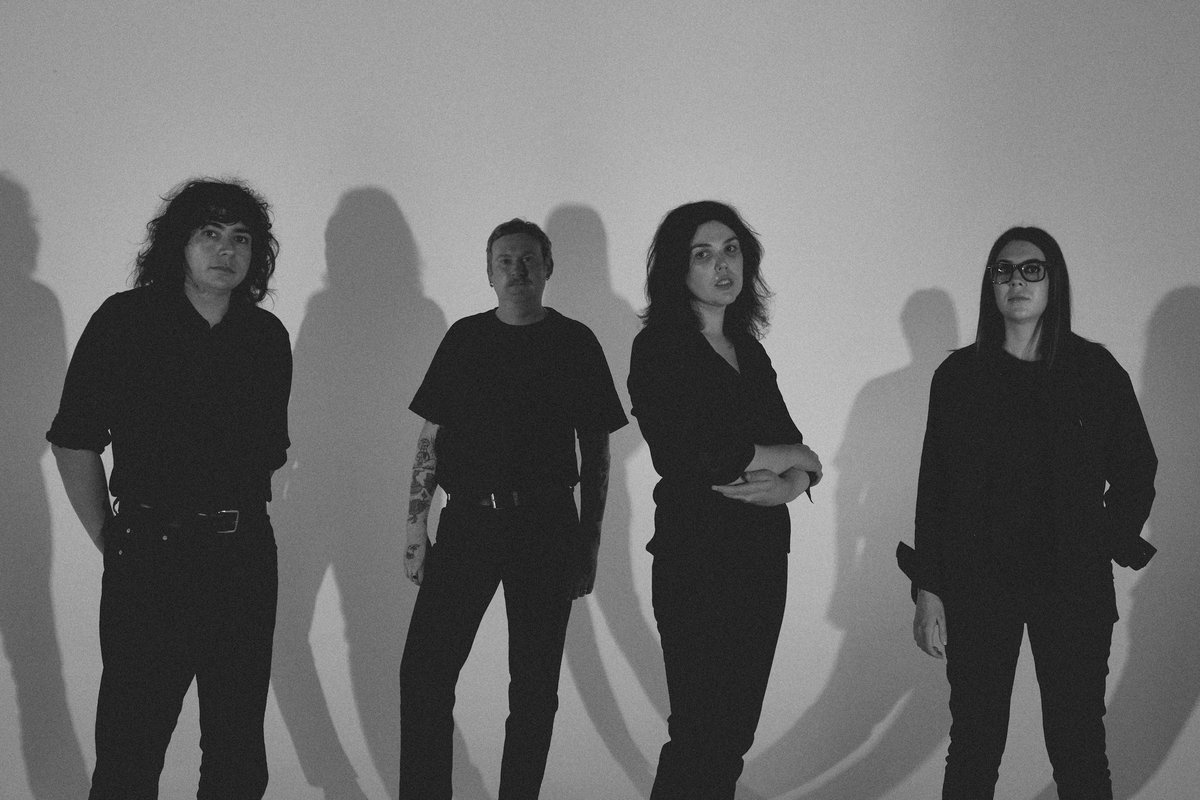
Mothers was an American band from Athens, Georgia, composed of Kristine Leschper, Matthew Anderegg, Chris Taylor, and Garrett Burke. They released only two albums before disbanding their debut “When You Walk a Long Distance You Are Tired”, released on Wichita Recordings in England to a lot of good press attention in February 2016. Their second follow up titled “Render Another Ugly Method”, was released in September 2018  on ANTI- Records.

Mothers were originally formed in 2013 as the solo project of musician Kristine LeschperLeschper started making music while she was a student studying printmaking at the Lamar Dodd School of Art. Over the next year, Leschper began to gather a large following alongside acclaim in the Georgia music scene.  Leschper decided to recruit other musicians from Athens to form a full band.

Mothers garnered what Leschper considers a “small but devoted” following, some of whom were resistant to her decision to expand the project into a full-fledged band. One of those fans was Mothers’ eventual drummer, Matthew Anderegg, who befriended Leschper through the intimate Athens music scene. Both Leschper and Anderegg describe it as an everyone-knows-everyone kind of place; a city with a small-town feel. But Athens has a long, storied presence on the national radar as a place deeply grounded in the arts, and especially in music. That makes it a hard place to escape, and though Mothers intended on staying their Leschper expects to move on in the somewhat foreseeable future. “It’s so wonderfully cheap to live here,” Leschper says when I ask her to describe exactly what attracted her to the city in the first place. Sometime after they met, he invited Leschper to record in his home and the two started to add to her arrangements, eventually incorporating Anderegg’s drums and eventually inviting guitarist Drew Kirby in to work out the rest.

In November 2015, When the bands debut single “No Crying In Baseball” was released, Leschper said that it was a song about being willfully vulnerable, about showing your offender where it hurts without resorting to hysterics, about realizing that weaknesses can be shouted and celebrated and owned without embarrassment. It’s crafted like an argument, albeit an internal one, and its declarative, abrasive, unrestrained delivery introduced us to Leschper’s powerful presence and the heart she wears on a tattered sleeve.

Leschper developed new confidence in the months after recording her debut full-length, and the band began to pursue a more dissonant sound. Just two weeks after that first show, Kirby, Anderegg and Leschper booked time at Chase Park Transduction and started recording material for their debut album, “When You Walk a Long Distance You Are Tired”.

Explaining why she felt the album needed to be recorded so quickly, Leschper says, “It was important for me to make that record when we did for my mental health. I was struggling a lot personally, and those songs were all written when I was going to art school and trying to figure my shit out. I was trying to figure out what kind of person I was and what I wanted to put out into the world. It sort of feels like documentation of this time in my life.”

“When You Walk a Long Distance You Are Tired”

The initial 14 tracks for the album—the final release was pared down to eight—were recorded in just two weeks. Though their time in the studio was short, the members of Mothers all considered it to be a profound experience.

“It was a really, really intense process,” says Anderegg. “I think everyone was kind of freaking out the whole time. It was brutal. It was a very serious session for a very serious record. It’s not a lighthearted record at all. It’s the kind of record that requires prior commitment to some extent, in the sense that you have to be willing to dive in and take your time with it.”

Comprised mostly of Leschper’s previous solo material reworked and re-recorded live with a band, “Tired’s” push-and-pull between quieter moments and raucous guitar-and-drum breaks is a living document of Mothers’ slow and fruitful transition into a more collaborative project.

For lack of a better phrase, started blowing the fuck up. Features from The Fader, Brooklyn Magazine, Stereogum and Paste started hyping the band as “the next big thing,” and shout-outs from NPR and Spotify pushed the streams of their singles to well over 1 million plays—all before the release of that first album. At the time “Tired” was one of the most consistent and exciting records to emerge from the Athens music scene in at least a decade. It’s as emotional, beautiful and human as the band itself. On a local level, some already view Mothers as hometown heroes, and praise from national publications is just beginning.

Render Another Ugly Method

Mothers scored one of the best albums of 2016 with their full-length debut, “When You Walk A Long Distance You Are Tired”. The follow-up LP, “Render Another Ugly Method” through ANTI- Records, the effort spans a total of 11 tracks and features production from Grammy-winner John Congleton (St. Vincent, The War on Drugs). “The first time I heard Mothers I knew it was a band that I wanted to work with,” Congleton shared in a press statement. “So special and idiosyncratic, it is impossible to ignore their point of view. I loved making the record and seeing them work.”

The first single released is “Blame Kit”, which frames “the body as an object that can be expanded or collapsed, inhabited or deserted,” 

“Pink” is the second track to come from the album, after “Blame Kit”.

“Pink” deals with the passage of time,” explains Mothers lead singer and songwriter Kristine Leschper. “It describes a series of memories within cars – cars of my childhood, recent past, and present – and subsequent feelings of childlike removal and helplessness. The video aims to reciprocate these three vignettes of idling, through limited actions and minimalist set design divided into three parts.”

Mothers attempt to exist in two places at once – both singular and collaborative, sprawling and concise, present and distant. Kristine Leschper, songwriter and founding member of the project, explains that it is in the space between opposites that she finds herself. The multifaceted is, by nature, fragmented – each facet reflecting a slightly different perspective of the whole. It is in this way that their latest record, “Render Another Ugly Method”, attempts to gain an expanded view of its surroundings through splintered sound, thought, and image. By conversing with her own experiences of attempting to validate herself through work, Leschper moves toward understanding the harmful and often indulgent nature of inextricably coupling the quality of your creative output to your right to exist.

“Broken Glass” is a compilation that brings together communities of Nettwerk artists of all genre and gender, covering songs from the 90s, originally performed by women. This project is Nettwerk’s response to the socio-political environment that we now live in. It is a continuation of the cultural legacy begun with Nettwerk’s founding of Lilith Fair in the 90s and launches a new mission that we intend to carry forward, supporting reproductive rights. With this a cover of Alanis Morissette’s “You Oughta Know” by Flower Face.

“Broken Glass” is the new compilation in support of reproductive rights from Nettwerkmusic’s Goodwerks in partnership with @keepourclinics. A portion of the proceeds will be donated to the Keep Our Clinics campaign, the @abortioncarenetwork’s latest effort to protect access to care and support independent clinics across the country.

released July 7, 2023

Nettwerk Music Group has announced a new compilation that will benefit the Abortion Care Network’s Keep Our Clinics campaign. The album, “Broken Glass”, features Nettwerk artists covering prominent 1990s songs by female artists.

Their first releases include Miya Folick’s cover of Annie Lennox’s “Walking on Broken Glass” and Flower Face’s version of Alanis Morissette’s “You Oughta Know”.

Half of “Broken Glass” proceeds from streams and downloads will go to Keep Our Clinics, which works to protect and support independent abortion clinics across the United States. Additional contributors to the compilation include Allie Crow Buckley, Jaguar Jonze, Syml, and Bre Kennedy.

““Walking on Broken Glass” felt like a fitting contribution to this project,” she continues. “Taking away people’s rights to abortion access is a shattering, a destruction. And, also, I recently discovered that Annie Lennox is the founder of a global feminist organisation called the Circle. An absolute badass.”

This is Miya Folick’s first release since her second studio album, “ROACH”, earlier this year.

Lukas Nelson & Promise of the Reals “Sticks and Stones” is a self-produced, honest and emotional new album that highlights Nelson’s strength as a songwriter and the band’s uncompromising commitment to clarity, compassionate tones, and exceptional melodic moments. Across the album’s 12 spirited tracks, Nelson explores the universal human experiences of love, celebration, longing and humor. “Sticks and Stones” captures the band’s musical power and fits perfectly alongside the canon of the electric live performances they’re known for. Reflecting on the record, Nelson shares, “This album is about celebrating the human connection, joy and excitement. We went from quiet and introspective on “A Few Stars Apart” to something big and fun to really showcase the band’s talent and performance.

You can listen to the album “Sticks and Stones” from start to finish and get the songs to dance to and then the quiet, poignant songs. To me, this album is the perfect setlist.”

“When Queen took a break for the first part of 1983, Brian May put his time to good use. Waking up one morning in Los Angeles, he decided to phone a few friends and invite them to collaborate on some tracks in California’s famous Record Plant studios. The resulting collaboration was a great success, and Brian would later mold the recordings into a unique mini-album, “Brian May + Friends: Star Fleet Project”. This third release in the Brian May Gold Series offers an extensively revisited and expanded box set edition of these legendary sessions.

The set is a complete document of the two days, April 21st and 22nd, 1983 that May spent in the Record Plant accompanied by Edward Van Halen (guitar), Alan Gratzer (drums), Phil Chen (bass) and Fred Mandel (keyboards).

The box set includes a spectacular 23-track CD filled with previously unreleased material. “We are going to give you everything,” May insists. “Every take of every song, the things that went wrong, the laughing, the finding new things to do.

But it won’t be just a remaster – we’ve rescued everything from the original multitracks, every detail magnificently remixed, and more! You’ll hear every take from the historic 1983 sessions plus fragments of conversations, out-takes and musical experimentation.”

This third release in the “Brian May Gold Series” offers an extensively revisited and expanded box set edition of these now legendary sessions. The set is a complete document of the two days, April 21st and 22nd, 1983 that May spent in the Record Plant, Los Angeles accompanied by top rock music luminaries Edward Van Halen (guitar), Alan Gratzer (drums), Phil Chen (bass) and Fred Mandel (keyboards).

The box set includes a spectacular 23-track CD filled with previously unreleased material. Containing 2 CDs, 1 vinyl LP, and a vinyl single, as well as other collector’s items, Brian May + Friends: Star Fleet Sessions will be launched as a Deluxe Edition box set, worldwide on July 14th. A separate exclusive 7” double A-side single, also available on CD comes the same day, July 14th, featuring newly mixed single versions of “Star Fleet” and “Let Me Out”. A special red vinyl version will be available exclusively through the official Queen Online store

“By the time Duane Betts began working on “Wild & Precious Life” his debut solo album — he’d already spent two decades creating his own version of guitar-slinging, story-driven American rock ’n’ roll. “It felt like the right time to make something that was entirely my own vision,” he says. “This is a record that guitar players will love, but at its core, it’s really a song record. It’s an album about who I am, where I come from, and what I believe in.” Duane spent the better part of 10 years playing guitar alongside his father legendary Allman Brothers co-founder Dickey Betts  then as a member of Dickey Betts & Great Southern.

He had also travelled the world as a touring member of Dawes before releasing an EP of his own songs, “Sketches of American Music“, in 2018. As the decade drew to a close, Duane co-founded The Allman Betts Band, releasing two records in 2019 and 2020. “Wild & Precious Life” captures the emotional release of overcoming struggle, appreciating the fleeting nature of life, and celebrating the joy of being present.”

from the album, “Wild & Precious Life” Out July 14th

The dB’s’ 1984 album “Like This” which features “Amplifier,” a breakup song whose sad lyrics are incongruously set to catchy, upbeat music so I’m more than thrilled to hear that The dB’s’ Chris Stamey recently released a single that will be featured on his new solo album . 

Take a listen to Stamey’s cover of “She Might Look My Way,” which was written by Tommy Hoehn and Alex Chilton. On his YouTube page, Stamey explains why he chose to include this song on his new album, “The Great Escape”

When I was a kid, I fell in love with the sound of records. I was 17 in 1972 when I got a copy of No#1 Record by Big Star, and I thought it had about the most magical sound of them all. So I decided one summer afternoon that, hey, I’d just call the studio listed on the back and ask them how they did it! The woman who answered the phone at Ardent in Memphis put me on hold, and I can only imagine now that some laughter ensued all round the office at the audacity and absurdity of my question! But they put engineer/producer Terry Manning on the line, and lo and behold, as my head reeled, he ever so kindly took the time to tell teenage me all about the nitty gritty, the mics and guitars and amps and gizmos. 

I had no idea then that Terry had worked on Led Zep III, classic Staples Singers tracks, and was soon to helm ZZ Top megahits. I just knew he was one of the Ardent wizards. And I was so grateful to have him pull the curtain back just a little. 

Decades and many sessions later, meeting at a NYC concert, we picked up the conversation again. Both loving a forgotten song, “She Might Look My Way,” that I’d later played regularly at CBGB with Big Star’s Alex Chilton—and even recorded with him at Todd Rundgren’s studio for Elektra Records, although it was never released by the label. At that point I’d already started a bare-bones studio version of it myself, with Mitch Easter on drums, so I handed the tapes off to Terry. He dialed in his wizardry once again, in the Bahamas, and filled it with that same brand of Memphis magic: harmonies, guitars, Mellotron. It was the very last thing ever mixed at the famous Compass Point Studios, and that, too, seemed kind of magical. I loved it. We even talked about starting a band together then, but geography got in the way. 

So when I was finishing up my new record, “The Great Escape”, as a reality check I kept referencing this track, which had also never been released. I finally realized that it belonged in here with the newer tracks, that it was in a way a keystone for the rest. I didn’t write it, Alex did that, with Tommy Hoehn. But I’m so pleased to have it on board.

In an interview with Brooklyn Vegan, Stamey describes the video: The video itself is an homage to the lip-sync video TV appearances Alex and the other Box Tops did in the 60s. Here, it’s Alejandro Escovedo who is playing the host of an imaginary late-70s NYC late-night cable-TV show called Rock On. Mitch Easter, who plays drums on the actual recording, is the drummer in the video here. Robert Sledge (bass, Ben Folds Five) and Matt McMichaels (2nd guitar, Mayflies USA) are also in the band here.

The dB’s cofounder embraces his jangly past on his wistful ninth solo album.” brooklyn vegan

“One of the great men of Southern jangle pop successfully adds some country accents to his repertoire.” allmusic

The Leisure Society are an English rock band formed initially in  Burton upon Trent by Nick Hemming and Christian Hardy. Hemming has a history in indie music and film scoring, and in 2006, he collaborated with Hardy in London. The band, which includes members from various musical collectives, received critical acclaim and comparisons to U.S acts like Grizzly Bear and Fleet Foxes. They received consecutive Ivor Novello nominations in 2009 and 2010. They’ve released five studio albums between 2009 and 2019, each receiving positive reviews.

Hemming was formerly of early 1990s indie band She Talks to Angels, which included actor Paddy Considine, and film director Shane Meadows. Hemming wrote and performed music for the films A Room for Romeo Brass and Dead Man’s Shoes. He was also a member of The Telescopes.

Hemming moved to London to work with multi-instrumentalist and producer Christian Hardy the pair have subsequently built a live band drawn from members of Brighton’s Willkommen Collective and further afield, notably Mike Siddell who previously played violin with Hope of the States and The Miserable Rich and currently performs with Lightspeed Champion and Troubles. Other members of the band played with The Miserable Rich and currently play with Sons of Noel and Adrian and more.

Their debut single, “The Last of the Melting Snow”, was honoured with a 2009 Ivor Novello nomination for Best Song Musically & Lyrically.

The Sleeper

In July 2009 the band signed with UK label Full Time Hobby, prompting the re-release of “The Sleeper” with a bonus EP entitled “A Product of the Ego Drain“. In the September Brian Eno cited the band as “The only other thing I’ve been listening to lately with enthusiasm”, calling it “Such a beautiful album”. This prompted a meeting between Hemming, Hardy and Eno at Eno’s London studio.

The third single from “The Sleeper”, “Save It For Someone Who Cares”, was also nominated for the Ivor Novello in the same category as the previous year, making the band one of very few consecutive nominees.

They are doing something right, to my ears at least, and in these early days I take immense pleasure from “The Sleeper” in its rereleased form with added bonus EP “A Product Of The Ego Drain”, which compiles singles, B-sides and other unreleased material. This includes “Pancake Day” which instantly demands the creation of a new tradition in my household of being given an annual airing every Shrove Tuesday. This is in part because of its topical title but also to remind me of the subtle wit and humour that pervades some of the band’s lyrics: “I’m not an evil man, on Pancake Day I lent you my frying pan”. 

Into The Murky Water

The band’s second album “Into The Murky Water” was released in May 2011 and received glowing critical praise] and gave the band their first chart position. The first single from the album, “This Phantom Life”, was released with a video starring Green Wing’s Mark Heap.

The Leisure Society’s delightful second record arrives as a wonderful surprise: one leg in and one leg out of the current folk-pop scene but utilising their wide stance to confidently deliver a record bedecked in beautiful, swirling melodies and deftly constructed vignettes. The whole record plays out like a sumptuous stage musical: stocked full of dramatic twists, surges of strings, woodwind cascades and a continual desire to find new and improved ways of bringing a song to a mutually satisfied conclusion.

The Leisure Society have a gift of expertly spreading their creativity over the tracks so that you don’t get too much in one place and too little in another – an ideal spread of musical butter. Therefore, everything sounds precisely where it should be: relaxed and naturally weightless. It would be comparatively easy to ratchet this into overwrought rambling and unnecessary intellectualism but they never even come close. From the overture swoops of the opening title track into the gradually-gathering momentum that pirouettes through ‘Dust on the Dancefloor’, the album sounds perfectly pieced and patched together, held close with an invisible seam. Lead singer and writer Nick Hemming is also enough to recognise the value of understanding when a song has been wrung clean of all possibilities (the joyous ‘You Could Keep Me Talking), but also ambitious enough to know when to throw a curveball at a song to change its form and momentum (the gypsy campfire coda to ‘I Shall Forever Remain An Amateur’). The continual intelligence in the songs doesn’t demand the same cerebral connection from the listener, but it certainly does reward it. This is very clever songwriting; made to sound absurdly simple.

In that, and many other senses, “Into The Murky Water” sounds as close to any of The Beatles’ greatest records as anything I’ve heard in the last five years or so. But in terms of the ability to blend disparate elements of pop music together without fear or pretension; writing songs with care for them being pieces of genuine art craft rather than as an exercise or entrepreneurial venture. The result is a truly gorgeous collection of sounds, flourishes and fresh, vibrant ideas and melodies crafted out of wicker and flowers (the subtle orchestration behind the tracks in particular is absolutely beautiful). Lyrically, it doesn’t cover any new ground or contain any shattering proclamations or poetry, but when married to melodies as exquisite as those on display here, you can easily forgive the words settling into a minor degree of complacency.

Into The Murky Water” won’t change the world. It won’t answer the questions you have about life, the universe and the upcoming zombie apocalypse spawned by the Fukushima Reactor Leak (you heard it here first). It doesn’t need to. What it will do is fill your ears, mind and spirit with a little shaft of sunlight that causes you to delight in the moment and experience. Music doesn’t always need to say or do anything radical but it does need to be committed, genuine, honest and lovingly cultivated. And because the album is drawn from each of those elements, it succeeds admirably: providing a door into a world of spinning umbrellas, bright colours and richly embroided music tapestries. As light, pretty and as aurally satisfying a record as you will hear this year; it proves that sometimes, the good guys really do win. Fuck looking cool, scowling and hiding your face in that dark overcoat; let’s all sing together, shall we? After all, summer’s coming. And lord knows, we could certainly all do with a little smile upon our lips right now…

In many of their songs, the Leisure Society blend sadness with hope, often in two distinct musical sections, the sun coming after the rain, and this is no exception – “We’ll all get somewhere somehow” is the promise. Album closer “Just Like The Knife” provides similar sensation, shifting from the industrial grey of a British seaside fairground in winter to a warm, evening sunlit Hawaiian beach across the space of six minutes.

Alone Aboard the Ark 

Onwards, then, to the band’s third studio album “Alone Aboard the Ark” was released, once again receiving a strong critical reaction. “One Man And His Fug” is exactly the sort of song that is all cheery, bouncy chords laced with self-reflection and perverse revelling in sometimes not being very well in the head. I, too, have sometimes missed “the fug of apathy and the grey days it surrounded”; similarly, I have known that “if I say what you want to hear, the face in the mirror won’t look right”. It’s great to have a catchy song to sing these emotions along to.

‘Alone Aboard The Ark’ sees them further reaffirming their quaint old-time charms with a release that looks back, while retaining the air of a band who are happily prepared to continue on their own merry way. It was recorded at Ray Davies’ legendary Konk Studios, and a measure of The Kinks’ 60s charm seems to have rubbed off.

As has become customary for The Leisure Society, Hemming’s lyrics and gift for storytelling once again stand out, his wonderful couplets and warm voice helping to lift many of the weaker moments here above torpor. He is quite the wordsmith, the best evidence of this found in ‘Tearing The Arches Down”s description of a mysterious elusive character, ‘the boy with the bloodshot eyes, a legend in your lunchtime.’ A glimpse at the tracklisting with song titles like ‘One Man And His Fug’, shows his way with a memorable line.

The string-filled climax of ‘All I Have Seen’ veers perilously close to the theatrical. Far better is the graceful, quite lovely waltz of penultimate track ‘We Go Together’, six minutes of sashaying beauty fully emphasising everything heart warming and good about The Leisure Society at their best.

The Fine Art of Hanging On

The band’s fourth studio album “The Fine Art of Hanging On” was released, receiving the strongest critical reaction since their debut. Released a couple of years later, It is a truly wonderful collection of songs. On the follow-up to their 2013 LP, “Alone Aboard the Ark”, the Leisure Society contemplate survival and perseverance with a loosely themed collection called “The Fine Art of Hanging On“. During the writing and recording of the album, a close friend of frontman Nick Hemming’s was waging a losing battle with cancer, and all through the band’s creative process, these recurring ideas of hanging on and grasping kept reappearing in Hemming’s lyrics, resulting in what he has referred to as an “accidental concept album.” Hemming no stranger to melancholic themes, but the overall sunny nature of the Leisure Society’s previous output feels especially counterbalanced here by the weight of desperation and difficulty.

You’ll Never Know When It Breaks” which is as beautiful a song of love as you could hope to hear. Not fairytale, Hollywood love, but the love that accepts destiny with all its flaws and contradictions – “we decided to be artless and happy” being the ultimate conclusion following the realisation that “It’s no use handing out platitudes, our luck is so uneven you’ll never know when it breaks.”

Musically, the band is as affable as ever, layering these well-crafted songs with the clever Baroque pop arrangements and unique embellishments they’ve become known for. Still, for as tidily orchestrated as they are, songs like “Tall Black Cabins,” which tells the story of a hopeless fishing crew, and the lonely waltz “All Is Now” are powerful and soulful, with a wistful grandeur that supports their subjects. The rhythmic, hooky “Outside In” is another standout with a maudlin streak running through its pop core. “Nothing Like This” is a breezy indie pop confection with a slight Latin flair, and “I’m a Setting Sun” rocks gently with a hopeful and harmonic richness. Still, there is already an overwhelming politeness to most of the Leisure Society’s songs and arrangements, and the tight, almost constricting production style here ensures that any sharp edge or rogue tone has been dealt with.

It makes sense then to conclude with what – for me at least – is the finest moment in the band’s canon: Wide Eyes At Villains. Part one, the lyrical part, begins with us listening to the radio’s gentle music, a direct contrast to the violence of the scene outside, constant promises of change that never materialise. It is a fair reflection on the state of the world today. And then … then … part two. This is the utopia, the promised land. There are no words, just a glorious, building instrumental crescendo with layers of brass, strings and opera.

Arrivals & Departures

Their fifth studio album released January 2019, by the band “Arrivals & Departures” on their own label, Ego Drain Records. A decade into their recording career, England’s amiable chamber pop specialists, the Leisure Society, return with their first double album, a deeply personal self-exploration from frontman Nick Hemming, whose breakup with bandmate Helen Whitaker lies at its thematic core. There has always been an earnest sensitivity to Hemming’s songwriting which the group then trims in garlands of wistful strings, horns, and woodwinds so that even at their most melancholic, there remains a feeling that hope does indeed spring eternal. Such is the case on “Arrivals & Departures”, where over two discs, the band serves up themes of regret and dramatic life changes atop puffed clouds of bittersweet melody and orchestral grandeur with occasional stabs of angry lightning. As with all of the Leisure Society’s output, there is a good deal of thought put into these tightly crafted songs and while tonally, their inter-band drama may sound more like a storm in a teacup, the subtlety of Hemming’s pain lies in the many layers contained within. Take the title cut, for example, where a sad but stately waltz is briefly interrupted by a sudden fuzz-laden bridge whose simmering anguish boils over in tiny discordant notes and anxious effects without straying from its major-key refrain.

While the more obvious references to the transient nature of relationships explain themselves outright, it’s the grace notes and musical subtexts that make “Arrivals & Departures” an interesting listen. The eerie, glistening backdrop of the remorseful “I’ll Pay for It Now” and the distant, distorted hums threading in and out of tracks like “Let Me Bring You Down” and “Leave Me to Sleep” accent the more forthright melodies in enchanting ways. At his core, Hemming is a classic popsmith with an innately optimistic compass, and throughout these 16 tracks, he still manages to transmute his troubles into several rousing, even exultant crescendos and hooks that celebrate the journey more than the arrivals and departures.

Brave Are The Waves

The Leisure Society are back with a new song recorded in collaboration with pioneering musician, producer and artist, Brian Eno. ‘Brave Are The Waves’ is the first feature track from a forthcoming 2023 EP. It was recorded as a one-take live performance at The Kink’s famous ‘Konk’ studios, then sent to regular collaborator and champion of the band, Brian Eno, who created new textures and sounds across the song.

The band first met Eno in 2009 when he emerged as a fan of their debut album, “The Sleeper”. That album went on to be a Rough Trade Album of the Year and secured the band their first record deal, along with those two Ivor Novello nominations. Eno also played on the band’s song ‘I’ll Pay For It Now’, from their last 2019 double album “Arrivals & Departures”.

Emerging from lockdown with a big new collection of songs, The Leisure Society will be doing a small tour in UK later this year,before embarking on a major album tour in 2024.

‘The World From a Window’ is a brand new Leisure Society song, written and recorded in isolation. Not all the band currently have access to a studio, but Bas and Jon mailed over rhythm tracks and Helen offered a last-minute flute part – just as Nick was mixing the final recording (with remote guidance from Christian). Chris Riddell kindly created the beautiful artwork with only a few hours notice. The song is a reflection on the challenges of isolating alone and the comfort that can be found in creativity, nature and the warmth of the sun.

Released May 1st, 2020

The Albums So Far,

  • The Sleeper (2009)
  • A product of the Ego Drain (2009)
  • Into The Murky Water (2011)
  • Alone Aboard the Ark (2013)
  • The Fine Art of Hanging On (2015)
  • Arrivals & Departures (2019)

The English alternative rock duo Curve formed in 1990, consisting of Tony Halliday and Dean Garcia. The English alternative rock duo Curve formed in 1990, In 1991, they released their first three EPs, “Blindfold”, “Frozen” and “Cherry”. All three were produced by Steve Osborne, who also worked with U2, New Order and Simple Minds amongst others. The third EP “Cherry” was also known as Clipped / Galaxy and featured four tracks; “Clipped”, “Die Like A Dog”, “Galaxy” and the title track “Cherry”.

In 1991, they released their first three eps, Blindfold, Frozen and Cherry. all three were produced by Steve Osborne, who also worked with u2, new order and simple minds amongst others.

Written by Toni Halliday and Dean Garcia
Toni Halliday Voice and Words
Dean Garcia Bass Drums Guitars Keys and Programming
Alan Moulder Guitar and FX
Debbie Smith Guitar
Alex Mitchell Guitar
Steve Osborne Guitar and Keys (Die Like A Dog)
Released October 28th, 1991