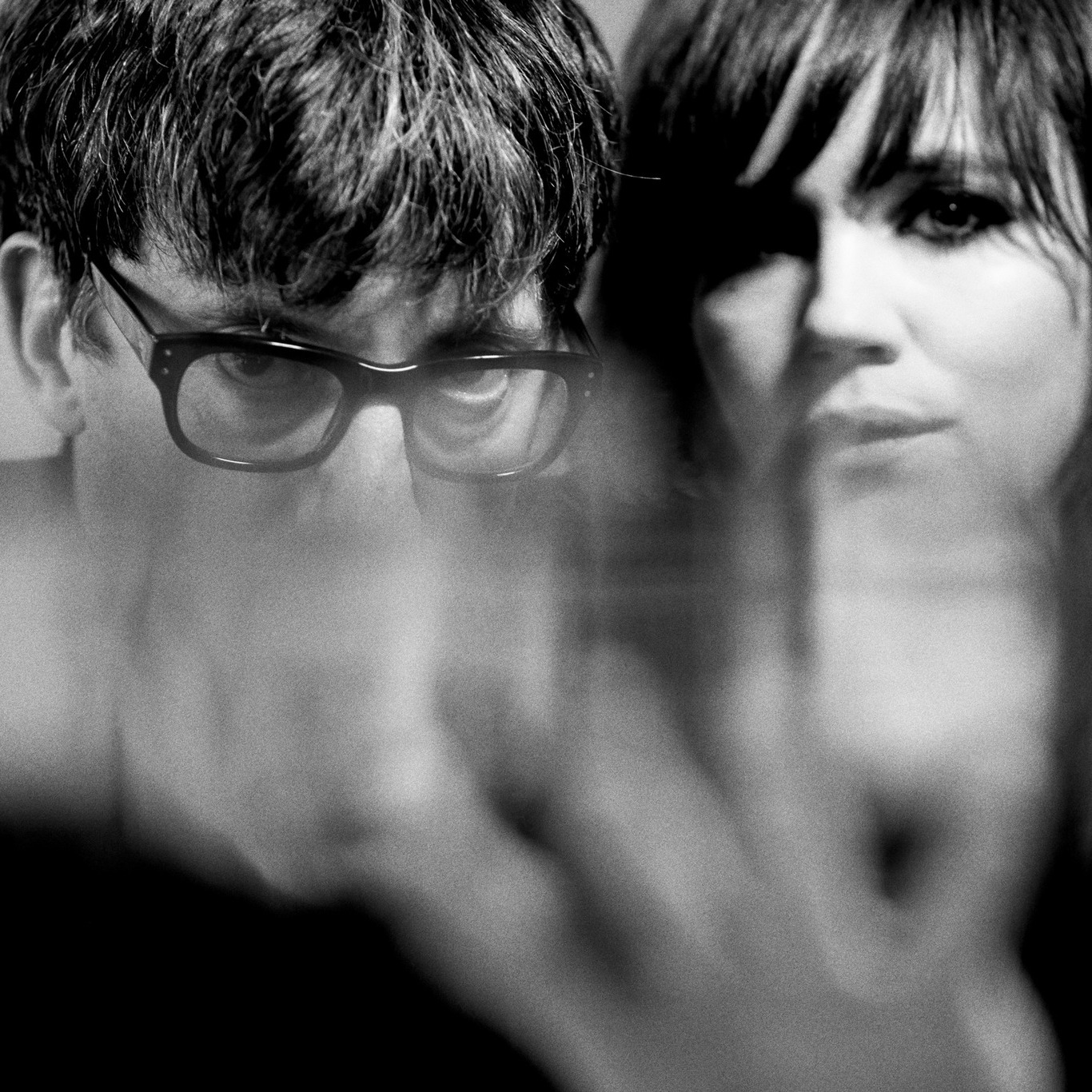
This collaborative effort of oddly paired trailblazing artists Graham Coxon (Blur) and Rose Elinor Dougall (The Pipettes and her solo work) shows off a unique musical style that is a genuinely entertaining mix of cinematic British rock and indie pop, brought to life with polished vocals.
The catchy rhythms on the handful of indie rock-oriented songs are skillfully constructed and executed and settle into a groove of nuanced pop rock that erupt with bursting melodies and vibrant accents. Other tracks offer a more blithe pop vibe, whose arrangements have surreal qualities that add up to a feeling of being enveloped by whimsies and trances as they navigate a varied landscape of delicate melodies.
With flashes of pure rock and roll splendour, “The WAEVE” contains warm and fuzzy rock with woozy orchestrations, an amiable swirl of sound, and a pleasant cacophony of motley instrumentation, from a band that’s super talented and not afraid to take chances.
Pacific Northwest singer-songwriter Katherine Paul, whose music has been featured on ‘ReservationDogs,’ talks about the lifetime of experience that went into her fiery, brilliant new album Katherine Paul’s third album comes on with the subtlety of a freight train as “My Blood Runs Through This Land” thunders through the speakers.
Not one to shrink from truth, Paul shares mental health struggles on the brooding “Treeline” and graces us with the gift of her singing with her parents on the chill-inducing “Spaces.” “The Land, The Water, The Sky” runs as deep as Paul’s pride for her community and gives the listener many paths to explore.
“‘The Land, the Water, the Sky’ feels like KP is reaching out, more so than her previous, more introspective albums, to an expansive version of what Black Belt Eagle Scout can be . . . with each song, you can feel the weight of an entire community behind her.” When Katherine Paul thinks back to the experiences that inspired her sweeping new album, she thinks about Sčičudᶻ, a forested path near the Salish Sea, and the salmon berries that grow there.
Salmon berries, for those who live outside of the Pacific Northwest, are sweet, tart fruits resembling blackberries or raspberries. Their name comes from their color — shades of pink or a deep red — and they’re hard to get outside of their natural habitat, as they are fragile and spoil quickly. The singer-songwriter and multi-instrumentalist, who goes by KP and performs as Black Belt Eagle Scout, would often take hikes along Sčičudᶻ, witnessing the seasons change.
As may be obvious from the title, “The Land, the Water, the Sky” is an incredibly grounded album, steeped heavily in the locale in which KP wrote it. She grew up in the Swinomish Indian Tribal Community, in the same area from which she took my call. More than a decade ago, she moved to Portland, Oregon, where she stayed for years, attending Lewis & Clark College and working at the Rock ‘n’ Roll Camp for Girls. But as the pandemic set in, KP found she couldn’t stay away from home for much longer. “This album is a lot about the journey back home,” she says. “Moving back, and then figuring out who I am and this new phase of being an adult in my homelands.”
“That place is really special to me,” says KP, 33. “I would go there a lot during the last two, three years, to hang out and to witness what was going on. There’s a lot of things going on there.”
She recorded her new album, “The Land, the Water, the Sky”, at a studio in Anacortes, Washington, about 10 miles north of that path. But she wrote the album at various places like Sčičudᶻ, bringing a guitar along to strum chords and “feel what was around me.”
“I’m sorry I’m being a little bit of a nerd,” she says with a laugh. “But when I was saying there’s a lot that goes on, it’s like… You watch the salmon berries grow.”
With those liquid, reactive vocals, Caroline Polachek is so sublime at selling a line that whatever “Bunny Isa Rider” turns out to mean, you know you’re on board from the lyric’s first flinching, suggestive rendition. Her latest collaboration with Danny L Harle concerns the taming of this elusive, wounded creature, learning to trust again – “heart is unbreaking but don’t drop my name” – amid a febrile bassline, a tail-shake of glassy percussion and a whistled refrain to lure you into giving chase.
Caroline Polachek released ‘Bunny Is A Rider’: an instant earworm and a song that ended up on the vast majority of critics’ and publications’ end of year lists . Throughout 2022 Polachek will be appearing as support on Dua Lipa’s The Future Nostalgia Tour in the US, and at a number of summer festivals in Europe. So, we’re hoping this will be the opportune time for the alt-pop singer-songwriter to release a new full length LP.
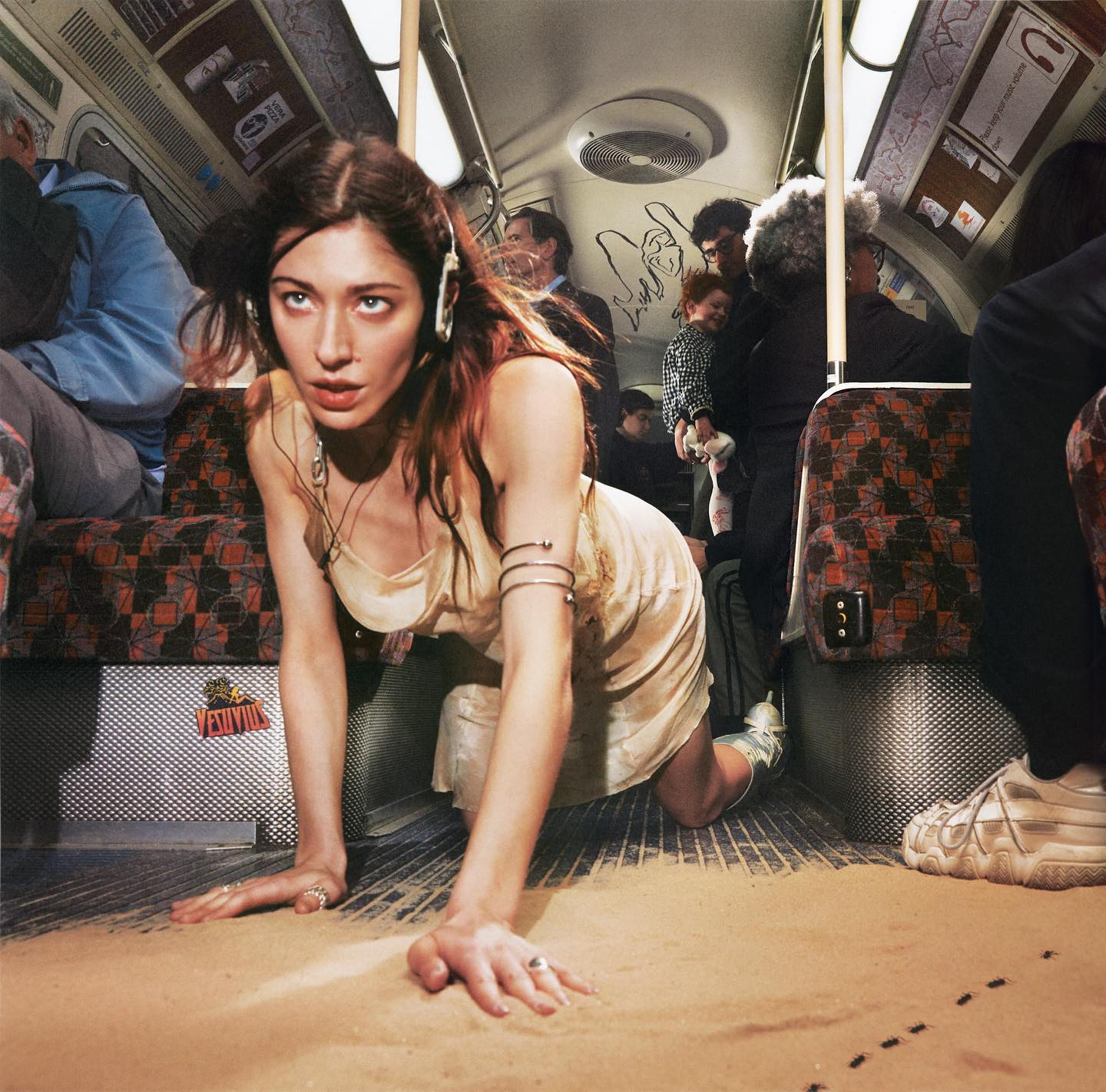
Whether as the vocalist for Chairlift or in her solo work, Caroline Polachek is truly singular. Nobody sounds like Polachek, and she has never sounded more vibrant or potent than on her sophomore record, “Desire, I Want to Turn Into You”. She opens the album with an otherworldly wail with “Welcome To My Island,” dances with twirling flamenco guitars on “Sunset,” and darts through wiry and minimalist art pop on “Bunny Is a Rider.”
All along, she casts herself as desire incarnate, crafting a series of decadent fantasies traced with dream-like lyricism. There is a hunger within these tracks, an incorrigible drive to sample new sounds, try on new aesthetics, and subsume them all within Polachek’s glassy avant pop.
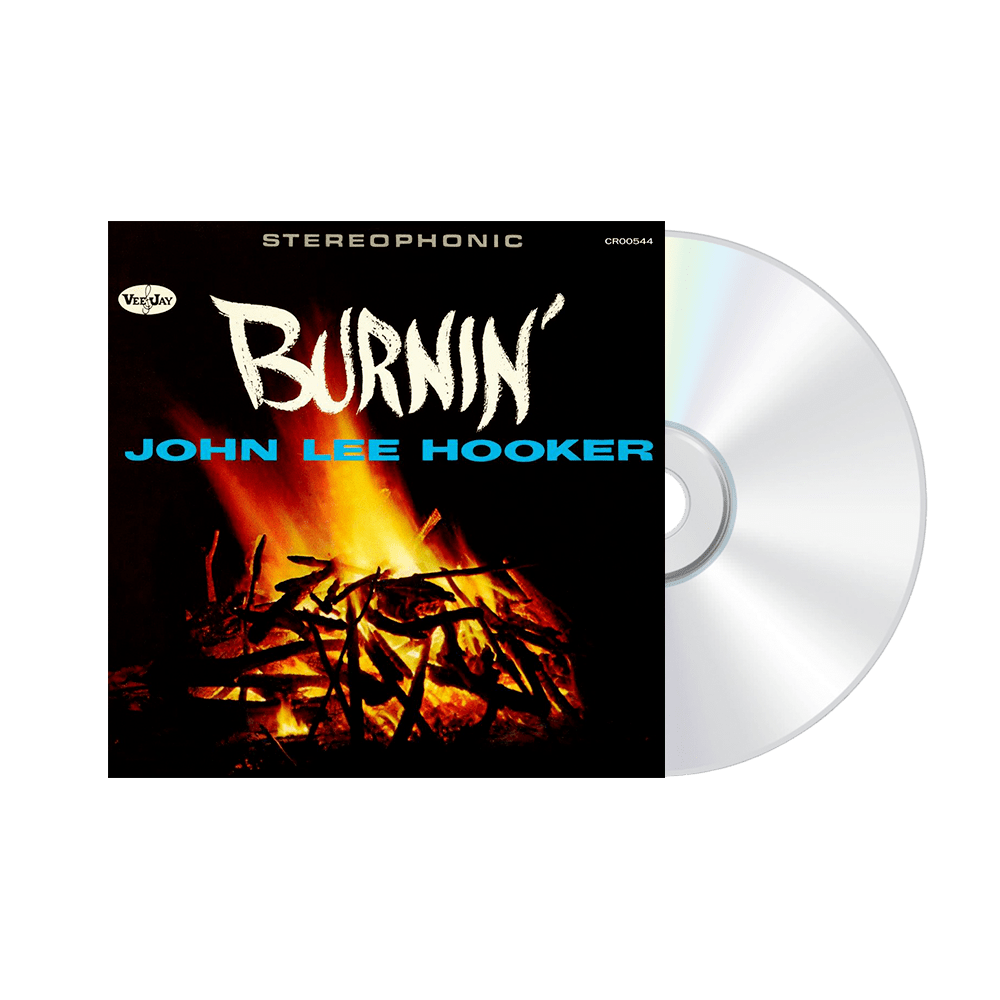
Celebrating the 60th anniversary of John LeeHooker’s electrifying blues classic, “Burnin’, this 180-gram reissue offers newly remastered audio from the original analog tapes. Featuring a stereo mix of the album, as it was first released in 1962, the set includes the King of the Boogie’s signature hit, “Boom Boom,” and features members of the legendary Funk Brothers (Motown Records’ celebrated house band). A tip-on jacket, which replicates Vee-Jay Records’ original designs, rounds out the package.
“Burnin’ upends many myths orbiting John Lee Hooker, one of the iconic blues musicians of the 20th century. Whether you know either his name or his records, you know his heavy-footed boogie, a rollicking rhythm absorbed and assimilated by such acolytes as George Thorogood and ZZ Top, who once faced a lawsuit from the copyright holder of Hooker’s 1948 breakthrough hit “Boogie Chillen,” claiming the Texas trio ripped off Hooker with their 1973 single “La Grange.”
ZZ Top won the lawsuit with the court claiming that the rhythm is in the public domain, a ruling that in a perverse way proves how deeply entrenched Hooker’s music is in popular music: It’s impossible to imagine rock’n’roll would sound without him. Hooker’s boogie is so endless, it not only survives long after his death but seemed to exist prior to “Boogie Chillen.” Critics picked up on this eternal essence early in Hooker’s career. Charles Shaar Murray, the author of the definitive John Lee Hooker biography “Boogie Man: The Adventures of John Lee Hooker in the American 20th Century”, cites the French blues critic Jacques Lemetre as the first to describe the bluesman as “one of the most primitive (from a musical point of view) and, I would say, one of the most African of blues singers” back in 1964, a framing that’s echoed through the years.
Calling Hooker’s music primitive obscures a crucial trait, one as essential to understanding his art as his slippery sense of timing: He was a modernist, not a traditionalist. He wasn’t anchored to his birth state of Mississippi: He hightailed it up north as soon as he could, settling in Detroit where he played an electrified update of Delta blues for factory workers in the 1940s. “Boogie Chillen” captured how Hooker played not for a rural audience but for city folk: He bent the bars of a blues vamp, extending the groove to gin up the energy in the room. He didn’t sing laments; he played dance music.
This essential distinction comes into sharp relief on 1962’s “Burnin’, a record released in the thick of the folk-blues revolution. In “Boogie Man”, Murray argues that the 1960 Newport Jazz Festival—the one headlined by Muddy Waters, in a performance distilled on a Chess LP that year—is the point where blues was formally accepted by the “(mainly white) jazz and folk establishments, and its passing as the indigenous voice of the ghetto.” Hooker was hardly above pandering to this trend. Vee-Jay released an album called “The Folk Lore of John Lee Hooker” in 1961 and he’d later issue an installment in Chess’ ongoing “The Real Folk Blues” series in 1966. This isn’t a reflection of Hooker’s folk roots—indeed, when Riverside approached him to record an album dedicated to Lead Belly, it became clear the bluesman didn’t know the subject of his intended tribute—but rather how he’d go wherever the audience went.
To an extent, that’s what happened with “Burnin’, the fourth album he released on Vee-Jay. Unlike its Windy City rival Chess, Vee-Jay wasn’t primarily known for blues. They specialized in harmony groups, gospel, jazz, and soul, finally landing a major blues artist when the lackadaisical bluesman Jimmy Reed started racking up big hits for the label in the late 1950s. Reed opened the door for Hooker, whose rambling 1958 hit “I Love You Honey” and lazy 1960 stroll “No Shoes” both demonstrate a clear debt. That’s not the case with “Burnin’. For this session, Vee-Jay hired a group of Detroit musicians who were toiling away at the various imprints helmed by Berry Gordy, Jr., the impresario who was working hard to keep his Motown label afloat in the early ’60s.
Many years later, these musicians would be called the Funk Brothers, a group immortalized in the 2002 documentary Standing in the Shadows of Motown, but back in 1961 they were struggling to make ends meet, so they were happy to head to Chicago to make a bit more money than they would in Detroit.Hooker had a connection to the Funk Brothers through Joe Hunter, a pianist who worked the same Motor City circuit as Hooker. This familiarity let Hooker ease into the rhythms laid down by drummer Benny Benjamin and bassist James Jamerson. The grooves were streamlined when compared to the idiosyncratic beat Hooker played on his own, but they felt vibrant and vital, pitched halfway between contemporary R&B and the dwindling urban blues market.
On this 60th anniversary reissue, “Burnin’ has been remastered by Kevin Gray from the original analogue tapes; there’s an audiophile vinyl edition of the stereo mix, along with a CD that has both stereo and mono mixes, plus an alternate of the lively shuffle “Thelma.” Listening now, it’s striking how mid-century modern the album seems. Jamerson and Benjamin keep the beat bouncing, Hunter decorates the margins with runs that also push the rhythm, and guitarist Larry Veeder adds texture and colour to Hooker’s bedrock boogie, while Hank Cosby and Andrew “Mike” Terry punctuate riffs, rhythms, and melodies with their greasy saxophone. All the extra instrumentation doesn’t allow Hooker to burrow deep into his grooves, a loss that doesn’t seem especially painful while “Burnin’ spins. These club-tested musicians allow Hooker to take such unexpected detours as vamping on the riff to the Champs’ “Tequila” on “Keep Your Hands to Yourself (She’s Mine),” which in turn allows him to sing about all manners of eccentricities: He gripes about women processing their hair, swears he’s about to turn over a new leaf now that it’s 1962, implores a paramour “Let’s Make It,” then runs down a list of his domestic needs on “Drug Store Woman,” claiming he’d rather have bathwater waiting than a woman “wearing lipstick and powder, her hair all fixed up.”
Anchoring the whole affair is “Boom Boom,” which wasn’t merely his last big hit—it was arguably his greatest. The Funk Brothers help keep his three-chord stomp lean, so slinky and hooky that it reads not as backwoods blues but downtown pop. “Boom Boom” became his only crossover Billboard hit—it peaked at 60, compared to 16 on the R&B chart—eventually making its way to both the Grammy Hall of Fame and the Rock and Roll Hall of Fame, a position assisted by its embrace by such British Invasion blues-rockers as the Animals and the Yardbirds. ZZ Top surely heard it too: With its “aw-haw-haw-haw” refrain, it’s more clearly an antecedent to “La Grange” than “Boogie Chillen” itself. As pivotal as “Boom Boom” is, Burnin’ isn’t merely a single surrounded by agreeable also-rans. The Funk Brothers helped Hooker hone into his modernity, letting him play off contemporary trends in a way that accentuates how he always existed within the moment, letting the times take shape around his elemental boogie.
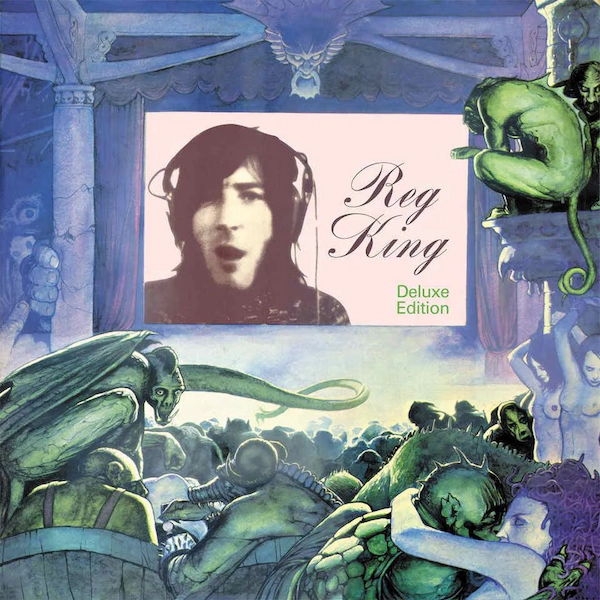
This 3CD Deluxe Edition of Reg King’s self-titled solo album from 1971 containing all his solo recordings. Featuring musicians from The Action / Mighty Baby and Blossom Toes / B.B. Blunder. Original copies of this cult classic album now fetch three figure sums.
Reg King was one of the UK’s greatest soul singers whose recordings with The Action made him a mod legend. This Deluxe Edition proves that Reg King wasn’t just a great singer but a great songwriter too.
Disc 1 includes a newly mastered version of the album itself that follows the original United Artists vinyl release track list, including the eight-minutes-plus version of ‘Savannah’ that has never been on CD before as well as reinstating the children talking at the end of ‘Gone Away’.
The album includes the Reg King and B.B. Blunder single ‘Little Boy’ previously recorded by Reg’s old group The Action. Also featured on Disc 1 is a planned but unreleased second single – an alternative version of album highlight ‘You Go Have Yourself A Good Time’, featuring B.B. Blunder backing Reg rather than Mighty Baby as on the album and the non album track ‘Nobody Knows Where We Are’.
Disc 2 includes earlier 1969 demos where Reg is backed by his former bandmates from The Action and bridging sound-wise The Action’s psychedelic ‘Rolled Gold’ era and Reg’s solo album.
Disc 3 features album demos and out-takes including early 1969 recordings of four album tracks featuring The Action and an out-take of ‘10,000 Miles’, where Reg is backed by Mighty Baby.
Sleeve notes by MOJO magazine’s Lois Wilson draw on new interviews with guitarist Brian Godding and drummer Roger Powell.
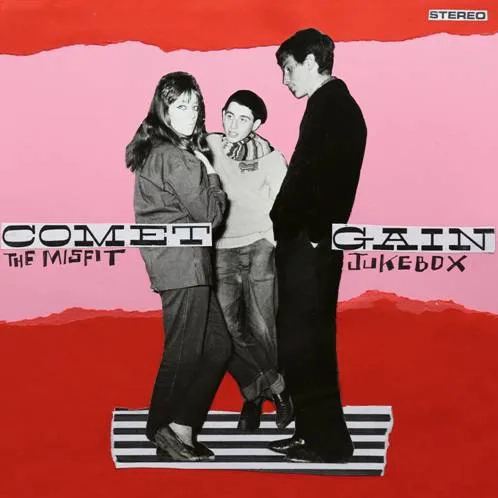
Since 1992, the collective around David Christian has been stoically producing unique noise pop. Comet Gain are Comet Gain, a band in which the Swell Maps and the Undertones shake hands in the Wigan Casino. Admittedly, a skewed picture. But as with every outstanding band, one fails to describe the sound of Comet Gain. You just have to hear it.
When the Corona shit hit the fan in 2020, David Christian, who now lives in the beautiful south of France, had the leisure to dig through the considerable Comet Gain archive and presented the astonished Comet Gain community with new compilations of outtakes, demos, live recordings and simply forgotten and never released hits every Bandcamp Friday. “The Misfit Jukebox” is now a compilation of these compilations, the toppermost of the poppermost from a hitherto unseen or unheard part of the CG universe. First time on LP and CD.
An indie blend of shoegaze and New York underground post-punk from The Woods! Combining the songwriting expertise of songwriters like Syd Barrett with the musical stylings of Fairport Convention, this folky ‘90s pop is often defined as – undefinable. Includes their 1985 single! The Woods are often associated with New York’s post-punk scene, a designation that may ring true in the sense of their DIY ethic but in a musical sense is far too simplistic. The band is as informed by the harmonies of 70s British folk music as they are by the droning minimalism of the Velvet Underground. Their pop sensibilities run deep, and their noisier and experimental moments seem to be rooted more in the desire for artistic dramatic effect than anything that could be considered punk.
Predominantly known as the musical genesis of eventual home 4-track folk pioneer Linda Smith, The Woods’ organically experimental blend of folk style and pop sensibilities epitomize 80s NYC underground music – Included here is their lone 1985 single plus a full album’s worth of previously unreleased recordings and a booklet filled with liner notes and ephemera.
The complexity of their harmonies and penchant for melody are really what sets the band apart. In a sense, the band epitomizes 1980s New York underground music, so much so that one could easily see them slotted next to the likes of Sonic Youth, Lydia Lunch, or even Laurie Anderson. This, however, was not The Woods’ reality. While they were indeed in New York, the group never quite felt they were part of New York or anything that could be defined as a New York scene. In a strange way this could have been somewhat because of the band’s greatest strength, their undefinable sound.
The record and its subtle punk momentum, jangle pop sensibilities, and hint of droning dissonance found the attention of local DJs, papers like The Village Voice, and college radio stations, including Yale University’s WYBC. “Miracles Tonight,” the single’s A side, is marked by its rather sunny vocal arrangements and propelled by a looping bass groove, worthy of an Andy Rourke comparison, that locks in tightly with the drums.
The record’s flipside, “Love Me Again This Summer,” comes across as both a revelling folk song and a lamenting dirge. It’s both anthemic and sombre, somehow holding a space in which The Association and The Velvet Underground could exist in the same place. The production is sparse, but it’s exactly what the band’s sound required, room enough for the layers of music and vocals to both coalesce and stand on their own. This collection is mainly comprised of songs written for a full length album that never was. The vinyl portion is bookended by the two tracks from the band’s single on Justine, and it also contains compositions in various stages of development.
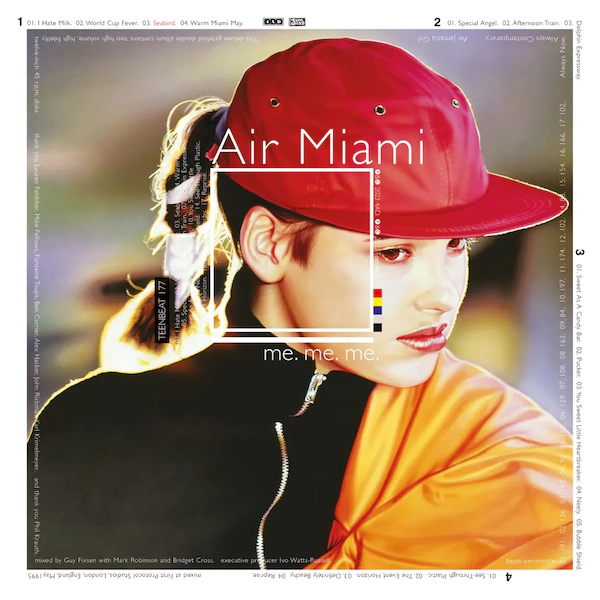
Double LP reissue of Air Miami’s lost-classic 1995 album, “Me. Me. Me”. Remastered from original 2” tapes and now including 3 extra tracks. This one time pressing comes on coloured vinyl and in a gatefold sleeve. Almost three decades after its release, Air Miami’s first and only studio album, “Me. Me. Me.”, is finally being reissued.
Made up of Unrest’s Mark Robinson and Bridget Cross, Air Miami formed shortly after the D.C. indie rock mainstay’s demise in 1995, and together with drummer Gabriel Stout and producer Guy Fixsen (The Breeders, My Bloody Valentine, Stereolab), they travelled to their namesake land of Miami to record the entirety of “Me. Me. Me”.over the month of May at the famed Criteria Studios; a place where James Brown, Aretha Franklin, the Bee Gees, Eagles, Fleetwood Mac, AC/DC and countless more have recorded classic works. The album was then mixed at a studio in London where labelmates Lush were recording their 1996 LP “Lovelife” at the same time.
Nearly thirty years on, this deluxe reissue sees the 1995 album expanded to include all sixteen tracks from the album sessions, three of which are new to the tracklist: ‘Warm Miami May’ (not on original LP), ‘Pucker’ (previously unreleased), and the full version of ‘See-Through Plastic’ (edited version only previously seen on the EP). The record also features singles ‘I Hate Milk’ and ‘Seabird,’ a track that found new life recently when covered by current 4AD artist Maria Somerville, her first release for the label and part of the label’s 40th anniversary compilation Bills and Aches and Blues.
Remastered from the original analogue tapes by Pete Weiss (whose recent remastering work includes Luna, Type O Negative, Morphine and Belly), “Me. Me. Me. (Deluxe Edition)” sees the album now spread over two LPs and cut at 45rpm. Pressed on Floridian-inspired aqua and orange vinyl its stunning artwork is housed in a gatefold sleeve with Hideaki Kodama’s ‘Girl B 1988’ photo still adorning the cover.
Fenne Lily’s “Big Picture“, a vivid exploration of her past two years, balances love, comfort, and claustrophobic feelings. Despite personal and global chaos, the album is her most cohesive, addressing fear, uncertainty, and liberation in an unexpectedly inspirational manner. Each song showcases her evolving understanding of love as a journey, not a discovery. “Big Picture’s” ten tracks, penned during a relationship, diverge from her past works centered on heartbreak, offering insights on love, self-reflection during closeness, and the obligations of being crucial in someone’s life.
UK-born but now New York-based artist Fenne Lily shared the tender and life-affirming lead ‘Lights Light Up’ from her album “Big Picture” this year. ‘Lights Light Up,’ a soothing, prophetic and insightful account of love at its temporary best. Invested with Lily’s delicate yet enveloping vocal that wraps around you like a big hug. It’s paired with simmering guitars, muted percussion, and gently burnished and forgiving production.
Written partially as a conversation, it vividly tracks the details of a burgeoning relationship and recognizes the transitory nature of any shared thing; the bittersweet truth that you can only walk hand in hand with someone as long as you’re going in the same direction.
Fenne later expands on these themes with the release of “Big Picture (Expanded Edition)” featuring five bonus tracks including the beautifully evocative “Hollywood and Fears”





 The Fat Angel Sings