King Crimson “Lizard (Elemental Mix)” (2025 UK/EU limited edition LP, a remarkable new edition of one of King Crimson’s most ambitious and intriguing albums. “Lizard“, the band’s 1970 progressive rock masterpiece, has been completely reimagined in the 2025 Elemental Mix by producer DavidSingleton, offering a revelatory new perspective on this richly layered classic.
Pressed on 200-gram Super-Heavyweight Vinyl cut by Jason Mitchell at Loud Mastering, and manufactured at The Vinyl Factory, London. Singleton’s “Elemental Mixes” approach delves into the heart of each recording session, incorporating alternate performances and newly uncovered takes from individual musicians to illuminate details that were previously buried in the original 1970 mix.
Featuring Robert Fripp on guitar, Mellotron, and electronic keyboards, alongside Mel Collins, GordonHaskell, Andy McCulloch, and lyricist Peter Sinfield, “Lizard” also includes guest appearances from Jon Anderson, Robin Miller, Mark Charig, Nick Evans, and Keith Tippett. The album’s fusion of symphonic rock, jazz improvisation, and poetic lyricism finds new clarity and warmth in this fresh 2025 master.
One of the highlights of the King Crimson 50th anniversary CD/Blu-Ray editions to date has been King Crimson producer David Singleton’s series of Elemental Mixes as he utilises the full spectrum of available studio sessions for each album to produce very different takes on the familiar songs and pieces.
This is especially true of “Lizard” where the ambition of the material, the much-expanded line-up of musicians – the background of many of them in the jazz rather than the rock world – and the number of takes recorded, resulted in a large amount of material to be considered for this album.
There was enough material for David to be able to mix and produce alternate takes for every piece from the original album.
As well as giving great insight into the recordings, the nature of Elemental Mixes allows for different takes from individual musicians to be included – sometimes alongside one another – in a way that would never be considered in the formulation of the original album.
David comments that “When I was working on the Elemental mixes, I jokingly described them as ‘Lizard for those who don’t like Lizard’. They were a complete revelation. “Lizard” is the one album which, in its initial incarnation, never quite convinced me. And yet these Elemental mixes, with their opportunity to look ‘under the hood’ of the album, revealed something fresh, wonderful and astonishing. So, if you are a King Crimson fan, who like me, has never quite taken “Lizard” to your heart, then these are essential listening. And hopefully equally fascinating to those who already love the album”.
Robert Fripp: Guitar, Mellotron, Electric Keyboards & Devices
Mel Collins: Flute & Saxes
Gordon Haskell: Bass Guitar & Vocals
Andy McCulloch: Drums
Peter Sinfield Words & Pictures
With: Robin Miller, Mark Charig, Nick Evans, Keith Tippett and Jon Anderson
In 2014, to mark 20-years since the release of their landmark album “The Holy Bible”, Manic StreetPreachers embarked on a sold-out tour playing the record in full. More than a decade later, “The HolyBible Live” captures an unforgettable show at London’s Roundhouse, documenting a band revisiting a defining chapter of their history.
In December 2014, Manic Street Preachers set out on a UK tour where they would play their career-defining album “The Holy Bible” in full for the first — and probably last — time. At shows in Glasgow, Manchester and London, James Dean Bradfield, Nicky Wire and Sean Moore propelled themselves through the blackness of the album on the twentieth anniversary of its initial release, and of the band’s legendary Astoria shows played in support of the record.
“The Holy Bible Live” was recorded across the three nights played at the Roundhouse in London. Every track from the original album is returned to here, helping create the perfect document of a band at their creative zenith, and of their unfaltering power.
The recordings on “The Holy Bible Live” were mixed by Dave Eringa in the months following the shows. There are no overdubs — just the sound of a three-piece band tearing through a classic album, and the unified voices of every member of the audience singing it back to them.
Singer/guitarist James Dean Bradfield says: “I wanted to prove that we were still a band tough enough to play “The Holy Bible.” I wanted to prove to people that being on stage and hammering it through together like a military unit was still part of us. We still have that muscle memory, that badge of honour. We knew there would be a reflex reaction to doing something like this – people looking at the record and your performance through a prism of the past. ’It’s not quite got the spark I was hoping for.’ Proving those people wrong – disproving cynics- massively powered me on.
“I never had any doubts when we rehearsed the songs in the studio. The most important part of doing something like this is to get back in the groove, find that muscle memory, find that reflex, and go into rehearsal to prove to yourselves that you can still do it. I never doubted that we could do it again even though we knew that it was an incredibly hard album to play.
“I’d had really bad flu at the Roundhouse shows. I’d lost my voice, and the night of the first Roundhouse show I was on steroids. Remarkably, my voice just kept coming back enough as I reached the stage. I don’t know if there was some kind of weird, Venom-esque adrenaline shot that I was getting from the fear of doing “The Holy Bible” with injured vocals, I don’t know where that adrenaline came from, but it was something almost supernatural.
“When we played the album, I felt like I was wearing a different mask. I didn’t feel as if I had to completely connect with all the lyrics, I just needed to mainline into the energy of it all. And that felt good – it felt good for us to be a piece of rock ’n’ roll theatre. It felt good to be close to that power again.” August 2026
Bass player Nicky Wire continues: “”The Holy Bible” took a long time to arrive at a place where we felt we could reinvestigate the songs, after years of simply letting them be, letting them grow, letting them unfold. It almost felt like we had become a little disconnected from the songs themselves.
“I was more than a little reticent about the physical, technical and emotional demands they brought with them. As a collection, the songs required a particular state of mind: a kind of ferocious discipline that I wasn’t sure I still had inside me.
“When the idea of playing the album in its entirety arrived, we were riding high on a critical wave after the release of “Futurology.” Touring that would have been easy, and yet our thoughts turned back to “The Holy Bible.” What it was, what it meant. We knew they would not be easy songs to play together. We’d never had more than five or six of them in a live set before, even when the record had just been released. But the idea grew, and then it was a tour. “Futurology” became part of the second set, and “The Holy Bible” was the savage, ruthless opening.
“James was much more up for the challenge than I was. He seemed to thrive on the amount of willpower, control and horror he had to go through and relearn in order to make it all work. That was never clearer than at the last Roundhouse show, when James lost his voice to a flu bug. On stage, he just charged through the whole thing. There’s an edge and a rawness in his voice that makes the whole thing complete.
“One of the deciding factors in playing “The Holy Bible” from start to finish was wanting those lyrics – Richey’s genius, really – to be heard by a mass audience and to see how those words still resonated with a crowd who had grown up with them. Maybe this live record documents the last time that we – as a band, as friends – could really occupy “The Holy Bible”’s particular state of mind. Listening back, I’m incredibly grateful that we did.
“After playing the gigs, we got to see what Kieran Evans had been working on after shooting every gig on the tour. It’s incredible – intimate, oppressive and weirdly joyous at points. That said, as much as it’s a a film, it’s also Kieran occupying the same state of mind that we were were in.”
Out on 23rd October, this deluxe edition features the complete live show on CD and 2LP Blue Marble vinyl, including a special Side D etching, as well as the Director’s Cut of Kieran Evans’ acclaimed live concert film Be Pure – Be Vigilant – Behave on Blu-Ray.
The package also includes a brand-new Steven Wilson mix of the original album on CD, an exclusive 16-page book and a Pennie Smith photo print; making it an essential addition to any Manics collection.
“The Holy Bible Live” – which comes out on Friday 23rd October 2026 via Sony Music.
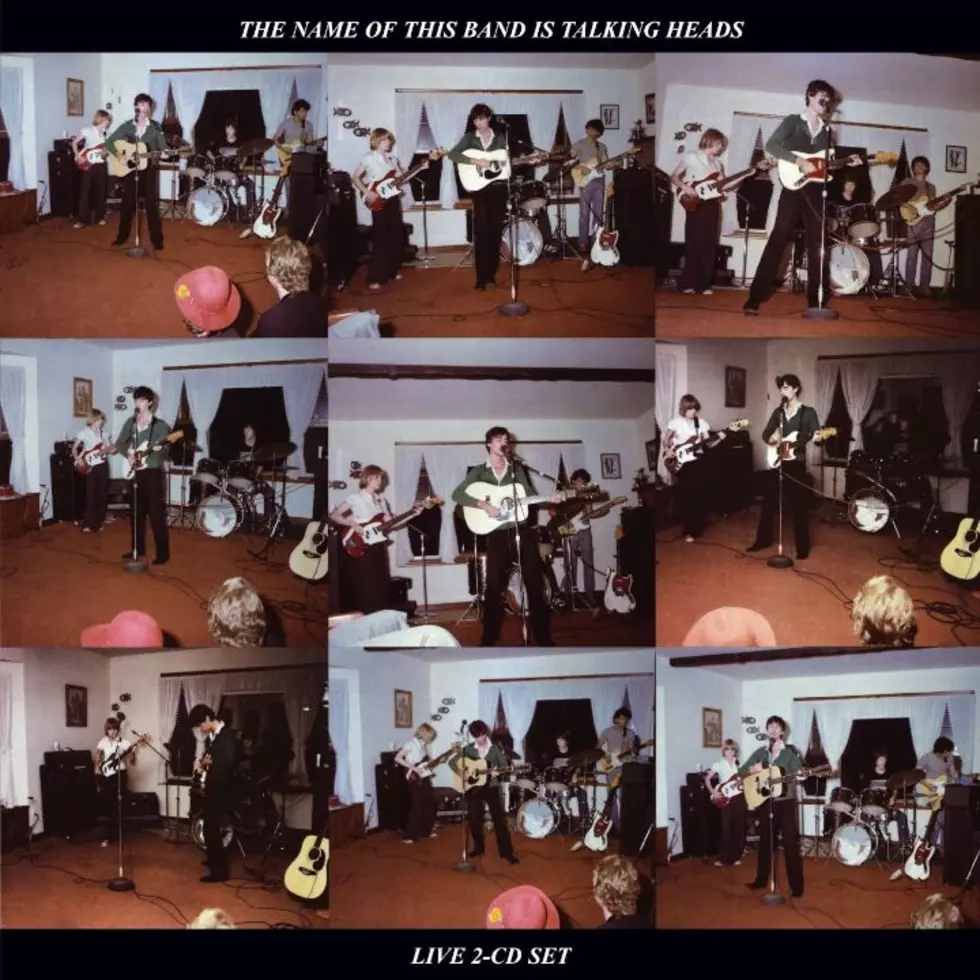
Released March. 8th in 1982: Talking Heads released the single “Life During Wartime (live)”, paired with a studio version of the same song (a 12″ version also added the song “Don’t Worry About the Government”); the single was issued in advance of the group’s forthcoming live double-LP, ‘The Name Of This Band Is Talking Heads’ (Sire Records); many critics & fans consider this album a more exciting & fiery live document of the Heads more popular & mainstream ‘Stop Making Sense’ (1984)…
Recorded over four years at various live performances, Talking Heads’ first concert album reflected the band’s evolution during the period. Starting with a radio broadcast from 1977 and ending with an expanded group playing a cover of Al Green’s “Take Me to the River” at a Central Park concert in their hometown of New York in 1980, “The Name of This Band Is Talking Heads” turned the page on the band’s earliest stage.
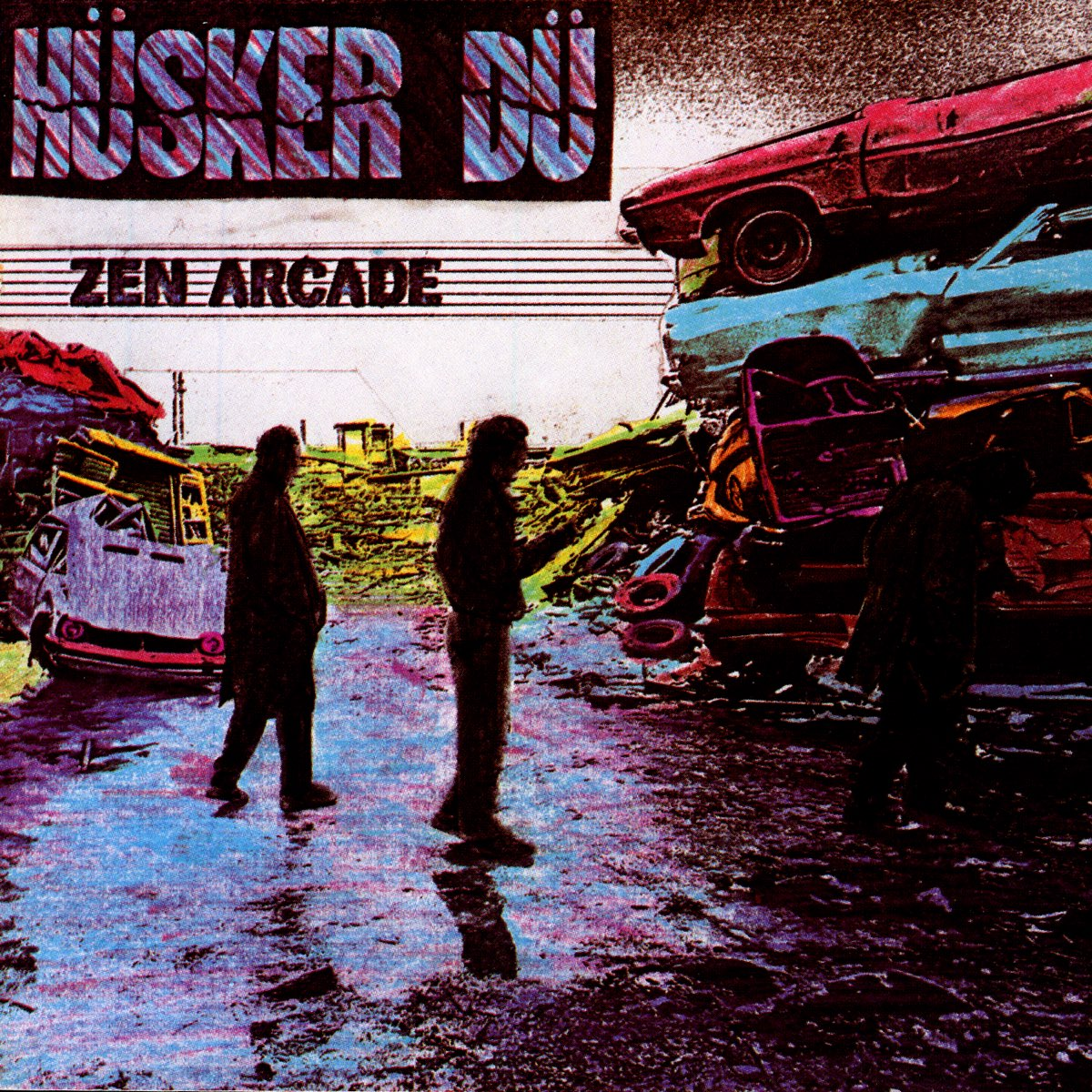
Hüsker Dü’s taste already went beyond punk rock before they broke a land speed record on their fast-paced hardcore debut, and it didn’t take them long to start bringing those non-hardcore influences into the hardcore scene. They showed off their love of ’60s psychedelia with a Donovan cover on 1983’s “Everything Falls Apart“, and they prefaced the release of 1984’s “Zen Arcade” with a cover of TheByrds’ “Eight Miles High.” On “Zen Arcade” proper, all bets were off.
Being a 70-minute double album alone made it go deeply against the grain of hardcore, and the music within ranges from hardcore ragers like the immortal opener “Something I Learned Today” to the acoustic “Never Talking To You Again” to the band’s own brand of psychedelia (“Hare Krsna,” “The Tooth Fairy and the Princess,” and the 14-minute jam “Reoccurring Dreams”) to the garagey proto-punk of “What’s Going On” to sweetly melodic, proto-alt-rock songs like “Chartered Trips,” “Standing by the Sea,” and “Pink Turns to Blue.”
Like so many great double albums, “Zen Arcade” goes in countless different directions, and it’s the kind of album that you can spend a lifetime listening to and hear something new every time. It’s very literally “post-hardcore” in the way that it bucks against almost every convention of the genre without abandoning it entirely, and those proto-alt-rock songs sound nearly a decade ahead of their time. Nirvana’s Krist Novoselic famously said “What Nirvana did was nothing new; Husker Du did it before us,” and with today’s hardcore scene embracing alt-rock, “Zen Arcade” is a still-relevant reminder that history repeats itself.
An ambitious record from punk’s Midwest coalition, Husker Du’s “Zen Arcade” takes the Minneapolis trio into both past (some psychedelic rock here) and future (noise-rock studio experiments there) territories. As with many double albums, “Zen Arcade” is a loose concept record, about a kid’s journey to adulthood; the story’s narrative is secondary to the songs: melodic, cutting slices of ’80s punk feeling its way forward.
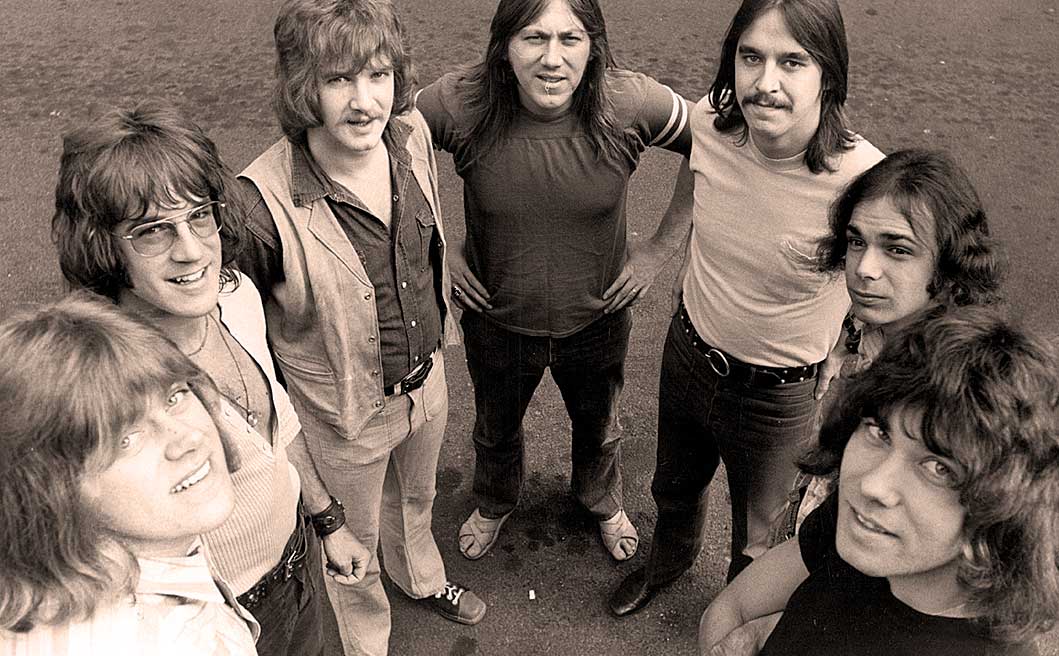
The Chicago Transit Authority (from which “The” is frequently omitted, but it’s right there on the cover) was self-titled when it hit stores in April 1969, but the band soon shortened its name and retroactively erased the collection’s eponymity. That truncation would prove atypical from a band more prone to take the long way around.
The debut’s format told the tale: Their record label Columbia originally signed up for two sides, but the band negotiated an expansion, surrendering some royalties in exchange for the right to deliver a double album. Expansiveness would prove a habit Chicago wouldn’t release a single disc until its fifth album. The band made use of that real estate in exploratory fashion, building interesting diversions alongside its primary calling card of rock meshed with thick doses of horns. The Chicago Transit Authority was a blueprint for the approach.
The title of its first cut could not be more apt: “Introduction” is akin to a table of contents, weaving elements from blues and big band sensibilities into the rock milieu. Terry Kath growls the lyrics of his own composition in some places, accelerates the groove with electric guitar sizzle in others. It’s the rest of the arrangement that marks the start-and-stop flow as singular, particularly when James Pankow’s trombone and Lee Loughnane’s trumpet fill out mellow interludes in the 6-½-minute debut. The method is simple but memorable; Kath sets the table and the horns take over, adding shape, definition and punctuation with their omnipresent percolation.
The Chicago Transit Authority, produced by James William Guercio and released in late April 1969 on Columbia Records, is justifiably remembered as a hit album with an assortment of popular songs, but at the time of its release that was only half right. The set initially climbed high on the Billboard album chart, but did so without the benefit of any hit singles. It was only later, after songs from the group’s second album (including “Make Me Smile,” which became the band’s first Top 10 in 1970) paved the way that songs from the debut record started making their marks on the charts.
Among that group is “Does Anybody Really Know What Time it Is?,” which became the band’s third straight Top 10 hit (“25 or 6 to 4,” also from the next record, being the second) when it was made a single in October 1970. Composed and led by keyboardist Robert Lamm, the tune’s album version opens with a piano solo that floats coolly and builds urgency, then eases off after about 1:15 before a flourish of horns marks the single’s point of entry. Lamm’s steady, bobbing vocal pace gives the song as much punch as the bright swatches of horns throughout, while response vocals in the chorus provide depth. Lamm’s spoken interlude woven into the final verse is unnecessary clutter in an otherwise engagingly breezy mechanism, but for the most part the song—and overall model for the band—nimbly stitches together its pieces.
The collection sprawls over its four sides, embracing the sort of ranginess found in “Poem 58.” Driven by Terry Kath’s decorative electric displays over more than 8:30, its instrumental workout is driven by Danny Seraphine’s drum rattle and given a springy spine by Peter Cetera’s bass line. It’s 5:20 before Lamm’s first vocal arrives, but the blues-laced rock saunter and slink is cohesive and well-designed.
On other occasions, the celebration of excess becomes excessive. The set-closing “Liberation” is an ambitious 14 ½ minutes with substantial flavour, much of it driven by Kath’s guitar pyrotechnics. Some of it is showy, some displays uncommon feel, and none is restrained as he lets loose over a period of several minutes, sometimes working against Lamm’s organ traces, other times just working as the rest of the band gets out of the way. At about 11:22 the fever breaks and Kath eases into a mellow cool-down, becoming the song’s lone vocalist shy of the 13-minute mark before a frenetic full-band push stokes a big finish.
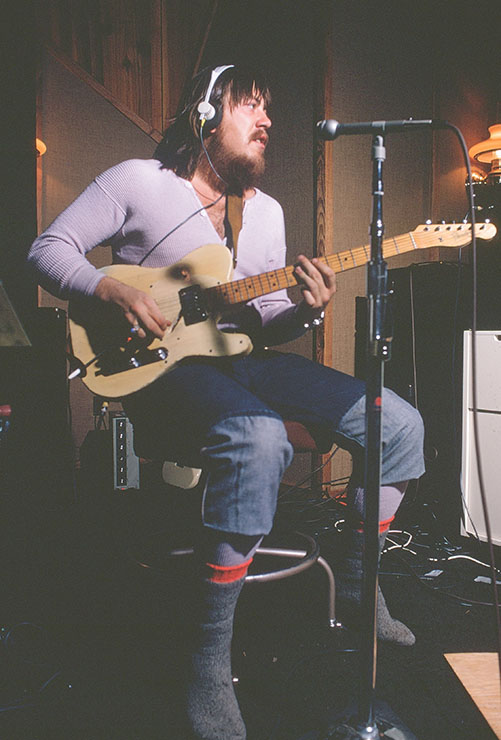
Kath also is at the centre of the album’s most curious artifact, the side three-opening “Free Form Guitar.” His Stratocaster excursion is a sonic search, an experimental diversion, and not a little self-indulgent. Larded with feedback and prolonged sustain, it’s a founding father to dissonant noise rock, skipping right over the punk wave that had not yet arrived with its love of extreme, sonically restless distortion. At its core, it’s just a guy making sounds for nearly seven minutes, and shows that single-focus Chicago is the least interesting Chicago. As a piece of the band’s identity, it scarcely fits, and as a piece of what would become a hit album, it’s certainly among the most-skipped songs ever created.
More focused is the crisp “Listen,” a brass-dappled blues rock churn. On an album of tunes that wander through multiple ideas, at a concise 3:22 it’s the most straightforward container in the bunch. Equally direct is the socially conscious “Someday (August 29, 1968),” which follows a prologue of chants by anti-Vietnam War demonstrators at the 1968 Democratic National Convention (in Chicago, for an interesting connection) with a call for change voiced by Lamm and Cetera amid an insistent flurry of horns.
“South California Purples” is gritty blues-rock with Lamm at the helm. Sturdy and robust, the number would become a band standard in live settings, supporting long-form workouts. It leads to the side three closer “I’m a Man,” a chipper Spencer Davis Group cover with some lyrical adjustments along the way. “I’m a Man” would later be installed as B-side in 1971.
The song it backed was a reissue of “Questions 67 & 68,” which ultimately would reward the band’s faith in it after only reaching number #71 when it was made the group’s first single in July 1969. Sharing lead vocals with Lamm, Cetera ignites his share of the lyrics, his high tone a great vehicle for emphasis. Steady and pulsating with percolating flourishes from multi-tracked trombone, trumpet and Walt Parazaider’s tenor saxophone, the song is a triumph of cadence and shiny sonic appeals. Cetera and Lamm would later record its vocals in Japanese for single release there, and perform it live with those lyrics on a 1972 Japanese tour. Cut down for its September 1971 domestic reissue, the version in the original English climbed as high as #24, and stands as one of the band’s enduring classics.
“Beginnings” shared a similar arc of success. The collection’s second single, it failed to chart in a version just under three minutes, only to reach #7 when reissued two years later. A billowing arrangement capped by Lamm’s cool vocal presence and Kath’s rich 12-string acoustic guitar, the song gradually increases in density and power. It stretches out over eight exploratory minutes (with a playout that’s arguably too long by about half) atop Seraphine’s buoyant percussion, with trumpet and trombone sparking its latter portions. As a whole, it is a tribute to the synergies the band enjoyed in its most collaborative moments, forging a rich sonic tapestry that has stood the test of time.
After decent initial success, The Chicago Transit Authority’s real run began once follow-up Chicago (also known as Chicago II) started delivering hit singles. In addition to its eventual success spawning hits, the debut became a perennial seller, starting in 1971 on a chart run that would span a then-record 171 weeks, breaking the old record by nearly four months. It also cemented the group’s identity with listeners, creating an appealing calling card that continues to serve the act half a century on.
Few punk bands better represented the American underground better than Minutemen. Fronted by the imitable D. Boon and anchored by the funk-inspired rhythms of bassist Mike Watt and drummer George Hurley, the band laid the groundwork for post-hardcore by incorporating a diverse range of influences into its music. This is best illustrated on the legendary 1984 double-album “Double Nickels on the Dime“, which explores many musical styles across its 45 songs. You could always rely on the Minutemen to “jam econo,” maintaining a staunchly DIY approach until D. Boon was killed in a tragic van accident while on tour on December 22nd, 1985.
For their third album, San Pedro, California, punk trio Minutemen branched out from the punk rock of their earliest records to include jazz, post-rock, country and even three classic rock covers (Creedence Clearwater Revival’s “Don’t Look Now,” Van Halen’s “Ain’t Talkin’ ‘Bout Love” and Steely Dan’s “Dr. Wu”) into their thorny mix. Forty-five tracks deep, “Double Nickels on the Dime” clocks in at an economical 81 minutes.
The idea of a double album from a band called “Minutemen” is funny in itself. (What is that, 80 songs?) But the Minutemen drew inspiration from a pitched creative battle with their talented SST Records labelmates, Hüsker Dü and the Meat Puppets. The San Pedro boys were the most down-to-earth of the bunch: When I arrived at Mike Watt’s house for an interview, years later, he literally lobbed his bass at me. God help me if I hadn’t caught it. Every Minuteman album is good, but this one is probably the best. You get the deathless classics “Corona,” “This Ain’t No Picnic,” “Jesus and Tequila” and, of course, “Political Song for Michael Jackson to Sing.”
Also recommended: “What Makes a Man Start Fires?“, from 1983, kicks off with “Bob Dylan WrotePropaganda Songs.” 3-Way Tie (For Last) is the tragic swansong, released shortly before the death of the great D. Boon.
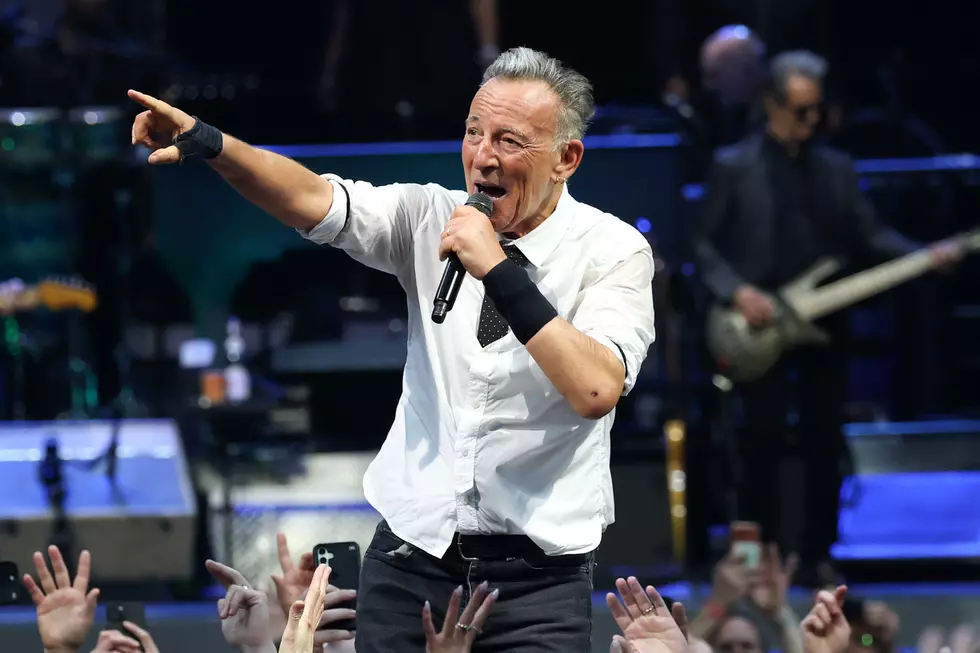
Bruce Springsteen has released a trailer for what he is calling “Land of Hope and Dreams American Tour (Philadelphia Freedom Cut).” The film will begin streaming on September. 9th; Watch the trailer below.
The upcoming release was captured during his tour with the E Street Band and Tom Morello earlier this year. “We are living through dark, disturbing and dangerous times, but do not despair — the cavalry is coming! Bruce Springsteen and the E Street Band will be taking the stage this spring from Minneapolis to California to Texas to Washington, D.C. for the Land of Hope And Dreams American tour,” Springsteen said in a press release regarding the trek, which wrapped purposefully in Washington, D.C. on May 27th.
“We will be rocking your town in celebration and in defense of America — American democracy, American freedom, our American Constitution and our sacred American dream — all of which are under attack by our wannabe king and his rogue government in Washington, D.C. Everyone, regardless of where you stand or what you believe in, is welcome — so come on out and join the United Free Republic of E Street Nation for an American spring of Rock ‘n’ Rebellion! I’ll see you there!
Presumably, this will be a concert film of Springsteen’s May 30th, 2026 concert with The E Street Band at the Xfinity Mobile Arena in Philadelphia. Springsteen has not confirmed any other details on his website or social media.
The Land of Hope and Dreams outing is one that came together quickly, with 20 shows booked on the heels of a series of national events, including the deaths of Renee Good and Alex Pretti in January in Minneapolis, which moved the songwriter to write and record “Streets of Minneapolis.”
Here is the setlist of that show, which concluded Springsteen’s Land of Hope and Dreams American Tour:
“War” (with Tom Morello) “Born in the U.S.A.” (with Tom Morello) “Death to My Hometown” (with Tom Morello) “Clampdown” (with Tom Morello) “No Surrender” “Darkness on the Edge of Town” “Streets of Minneapolis” “The Promised Land” “Two Hearts” “Hungry Heart” “Youngstown” “Murder Incorporated” “American Skin (41 Shots)” (with Tom Morello) “Long Walk Home” (with Tom Morello) “House of a Thousand Guitars” “My City of Ruins” “Because the Night” “Wrecking Ball” “The Rising” “The Ghost of Tom Joad” (with Tom Morello) “Badlands” (with Tom Morello) “Land of Hope and Dreams” (with Tom Morello)
Encore: “American Land” (with Tom Morello) “Born to Run” “Dancing in the Dark” “Tenth Avenue Freeze-Out” (with Tom Morello) “Chimes of Freedom” (with Tom Morello)
For the past decade, Personal Trainer has served as the ever-evolving creative outlet for frontman and songwriter Willem Smit, growing from Amsterdam’s underground scene into an internationally successful touring band.
An electrifying force in modern indie rock, Personal Trainer blend sharp wit, chaotic energy, and irresistible hooks. Their third album Human Assholes balances playful absurdity with a quiet undercurrent of doubt, Smit has been ever reluctant as the quote unquote frontman of a band.
Previously absorbed in meticulous, detail-driven recording, Smit and producer Casper van der Lans changed their approach. This time, they shifted toward immediacy– writing on acoustic guitar and recording live as a full band. The result is a warmer, more organic sound, heard in irresistible tracks like “Tyres Skid,” “Scrambled Egg,” and “Punch Drunk Love.”
Shaped by years of touring, the band embraced imperfection and spontaneity. For Smit, “Human Assholes” ultimately reaffirms music as both a shared, collaborative process and a personal refuge.
Record Collector October 2026 (RC#588), originally published on 3rd September, is experiencing a delay to copies supplied to retailers and newsagents due to a printer plant going out of business. The new publication date is currently expected to be no later than 9th September, although retail and newsagent copies may become available sooner. ————
What are the greatest Kate Bush songs? She’s got the requisite career longevity and tendency to work in “phases”: your favourite Bush track is as likely to be something that got to No 1 in 1978 (no prizes for guessing) as it is an early deep cut or a B-side picture disc from 2005. Over 14 pages this month, RC’s leading Bush-ologists — at least one of whom interviewed her at the planetarium in 1985 and is immortalised doing so on photo website Getty – choose Bush’s 50 Best Songs; and we take the radical decision to present them in order of excellence.
If we had to rank 80s synthpop outfits in order of greatness, Depeche Mode, Yazoo, Erasure and Blancmange would inevitably occupy the upper reaches of the countdown. Two members of same – Vince Clarke and Neil Arthur — join forces with fellow electronicist Benge for a synth-supergroup called Doublespeak. They explain their music and motives this month to RC.
There are a couple of in-depth reports this issue and they couldn’t be more different: one is on what happened to the 90s Seattle music scene, the other on the Northern soul fan who wound up owning a 7” single worth £100,000. Elsewhere, we interview Gary Lightbody of Snow Patrol, 1976 punks turned 1982 lounge lizards Subway Sect and 80s hardcore Cramps devotee Henry Rollins.
So much for the cover story and features. News this month includes a new exhibition celebrating the queens of punk, from Ari Upp to Debbie Harry. RC Investigates looks at records given away with breakfast cereals. The Collector is (Small) Faces expert, Nigel Adams. Value Added Facts wonders what the value is of post-Jim Morrison Doors while Diggin’ For Gold explores car boot sales and Most Wanted finds goodies under the hammer from Boy George and Mick Jagger.
Things get a bit more opinionated in, hardly controversially, the Opinion column where CatherineAnne Davies examines the threat posed by AI ‘art’. There are more opinions in the Reviews section: those heavy people (hello again, Kate) at Rise Above Relics have a splendid new compilation out and there is new (old) vinyl from Ten Years After and TRex plus old (new) material from a gentleman by the name of Nirosta Steel and new NEW music from Johnny Marr, Roger Taylor and Fat Dog. We trust you’re making notes here. Also reviewed: books on The Alan Parsons Project, Andrew Weatherall, Neil Young, Marco Pirroni, Island Records, Lynyrd Skynyrd, Sandy Denny and John Mayall; singles by The Rolling Stones, Mike Watt and others; and gigs by Iron Maiden, The Cardigans, Sunn O))), Kraftwerk, Joan Jett and more.
Heading towards the back of the mag, we visit Shop Of The Month Eel Pie Records in Twickenham; there is a Crossword to fill in and prizes to be won such as glorious Felt vinyl, a 4CD Northern soul set and Genesis’ debut album.
Finally, we (re-)introduce Irma Thomas and Michael Weston King, welcome back 80s blond indie-poppers Darling Buds, reveal the records that changed Claire Hamill’s life, pick 10 Of The Best records by Lee “Scratch” Perry and, in Not Forgotten, bid a sad farewell to William Orbit, Vicki Wickham, Derry Brownson, Bill Oddie and more.
Do listen to RC’s podcast, Needlepoint, and look out for our special editions on Yes (out now in shops), with Rush arriving this month and Small Faces/Faces coming soon.
The Frank Zappa estate have announced a 60th anniversary super deluxe edition of his debut album with The Mothers Of Invention, “Freak Out!”.
In keeping with the Zappa estate’s recent run of 50th anniversary releases – “Waka/Wazoo”, “Over-Nite Sensation”, “Apostrophe (‘)”, “One Size Fits All” and “Bongo Fury” – the reasonably-priced set is packaged in a neat clamshell box and features the original album, studio outtakes, demos, rehearsals, live tracks over multiple CDs, plus a Blu-ray featuring various mixes.
As with many Zappa releases, unpicking what’s already out there is tricky, with the period around “Freak Out!” already covered by a bunch of releases. Released in 1985 as part of The Old Masters:Box One, Mystery Disc was a compilation of early Mothers material compiled by Zappa himself. The following year a second volume appeared as part of the next Old Masters box and in 1998, Rykodisc combined the two to make a single Mystery Disc (reissued in 2012 by Zappa Records).
“Joe’s Corsage” appeared in 2004, a collection of early Mothers demos, interviews and live tracks recorded in late 1965 and early 1966. Two years later, the Zappa estate released “The MOFO Project/Object, available as either a 4CD or 2CD set (the 2CD features seven tracks not on the 4CD – go figure). If you could prise the CDs from the packaging of the 4CD set, it was designed as an ‘audio documentary’ of the making of the album, by way of backing tracks, alternate mixes and edits, outtakes, live recordings and interview excerpts.
So what’s new on the 5CD+Blu-Ray “Freak Out! (60th Anniversary) set?“
Disc one features a new remaster of the original stereo mix by John Polito of Audio Mechanics. Disc Two has the first official release of the pre-master mix, an early version of the album from April 1966, newly mastered. And disc three features the original 1966 mono mix, first time available since 1969. Three songs – ‘How Could I Be Such A Fool’, ‘Who Are The Brain Police?’ and ‘It Can’t Happen Here’ – are taken from mono mix tapes in Zappa’s vault, the remainder are taken from a needle drop, mastered by John Polito.
Discs four and five are where things start to get complicated, they include:
The entirety of the two shows the Mothers performed opening for Lenny Bruce at the Fillmore,San Francisco, on 24th and 25th June 1966. Tracks from these shows have previously turned up on Mystery Disc (‘Band Introductions At The Fillmore West’ and ‘Plastic People’) and the 4CD MOFO. (‘Motherly Love’, ‘You Didn’t Try To Call Me’, I’m Not Satisfied’ and ‘Hungry Freaks,Daddy’).
Two tracks from a show that Zappa sleuths have surmised is the Fillmore, San Francisco, 24th February 1966. The version here of ‘The Downtown Talent Scout’ was previously released on “You Can’t Do That On Stage Anymore Vol 5 (1992).
Full, seven-song rehearsal tape from early 1966 – snatches of conversation and ‘How Can I Be Such A Fool’ appeared on Mystery Disc, but this the first time the other tracks have been released.
Eight demos recorded on 20th October 1965 at Original Sound Studio. Three of them – ‘I’m SoHappy I Could Cry’, ‘Go Cry On Somebody Else’s Shoulder’ and ‘How Could I Be Such A Fool’ were on Joe’s Corsage. Meanwhile, a brief section of the ‘Trouble Every Day’ demo was used in ‘Watts Riot Demo/Fillmore Sequence’ on the 2CD MOFO. All other tracks previously unreleased.
Five previously unreleased mono vocal reference mixes.
Three tracks from the final night of recording, the ‘freak session’. ‘Freak Out Zilofone’ was on the 2CD MOFO, the others appear to be unreleased, but time will tell. Any Zappa fans in the know, comment below.
The Blu-Ray will feature Atmos and 5.1 mixes alongside, 192/24 and 96/24 high-res audio of the album, plus the contentious-sounding bonus track ‘Groupie Bang Bang’.
The set also includes a booklet and a reproduction of the double-sided fold-out ‘Freak Out! Hot Spots Map’ by Zappa himself that was originally included in the November 1966 issue of the Los Angeles Free Press.
“Freak Out! (60th Anniversary)” is also available as a 5LP vinyl set, which includes the 1966 pre-master mix, the 1966 mono mix and a single-disc which collects highlights from CDs 4 and 5 of the super deluxe edition. There’s also a 2LP multi-coloured edition featuring the original 1966 stereo mix, which is currently only available from Zappa’s official shop.
“Freak Out! (60th Anniversary)”is out on 25th September 2026.