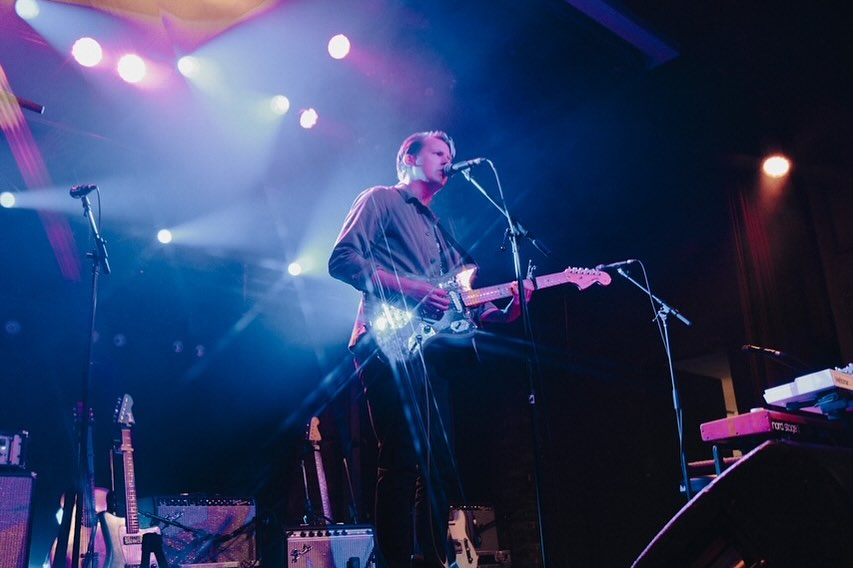
Kurt and Luke were admirers of one another after meeting on MySpace years ago, and this release highlights both of their distinctive musical styles. “classic love” was written by Luke, “hit of the highlife” by Kurt, “slow talkers ‘22” is a re-work from Kurt’s 2008 debut album and “wildflower” is a Beach House cover.
“I always thought ‘classic love’ was the epitome of a song that belonged on the radio. When I heard Luke and Kyle [Spence’s] recording of this (they even got Kyle’s old Harvey Milk bandmate, Creston Spiers to play some on it) it just floored me: like this could be old or new, just a timeless track… I figured the best way I could help it reach the masses was to just get myself up in that track as well and move ‘er through the kv / verve machine. I believe in Luke so much and, yeah, this song in general has been my and Kyle’s religion for some time. Luke is just a great songwriter, man. Now it can be immortalized in the canon of classic songs! The minute I heard this song I just wanted to be involved.” – KV
Luke Roberts: acoustic guitars, vocal Kyle Spence: drums, bass, percussion Creston Spiers: electric guitar, rhodes, percussion Kurt Vile: vocal
Written and produced by Luke Roberts & Kyle Spence
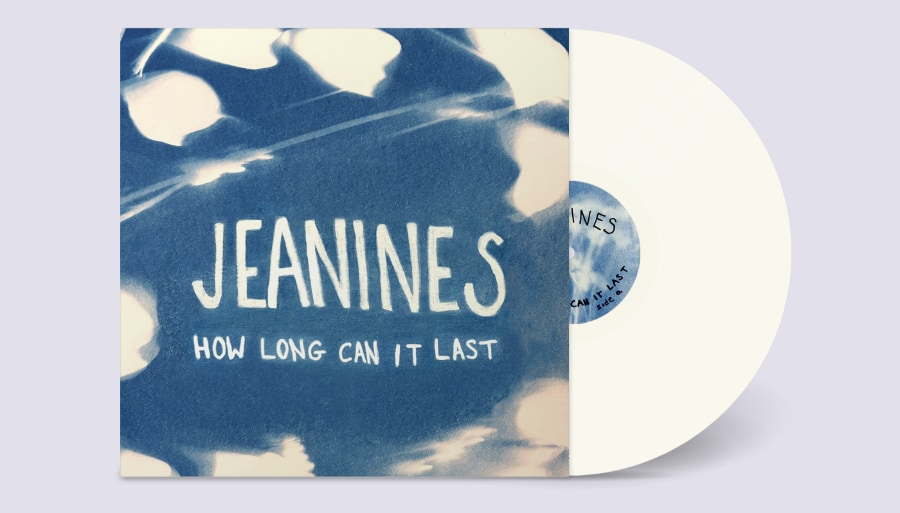
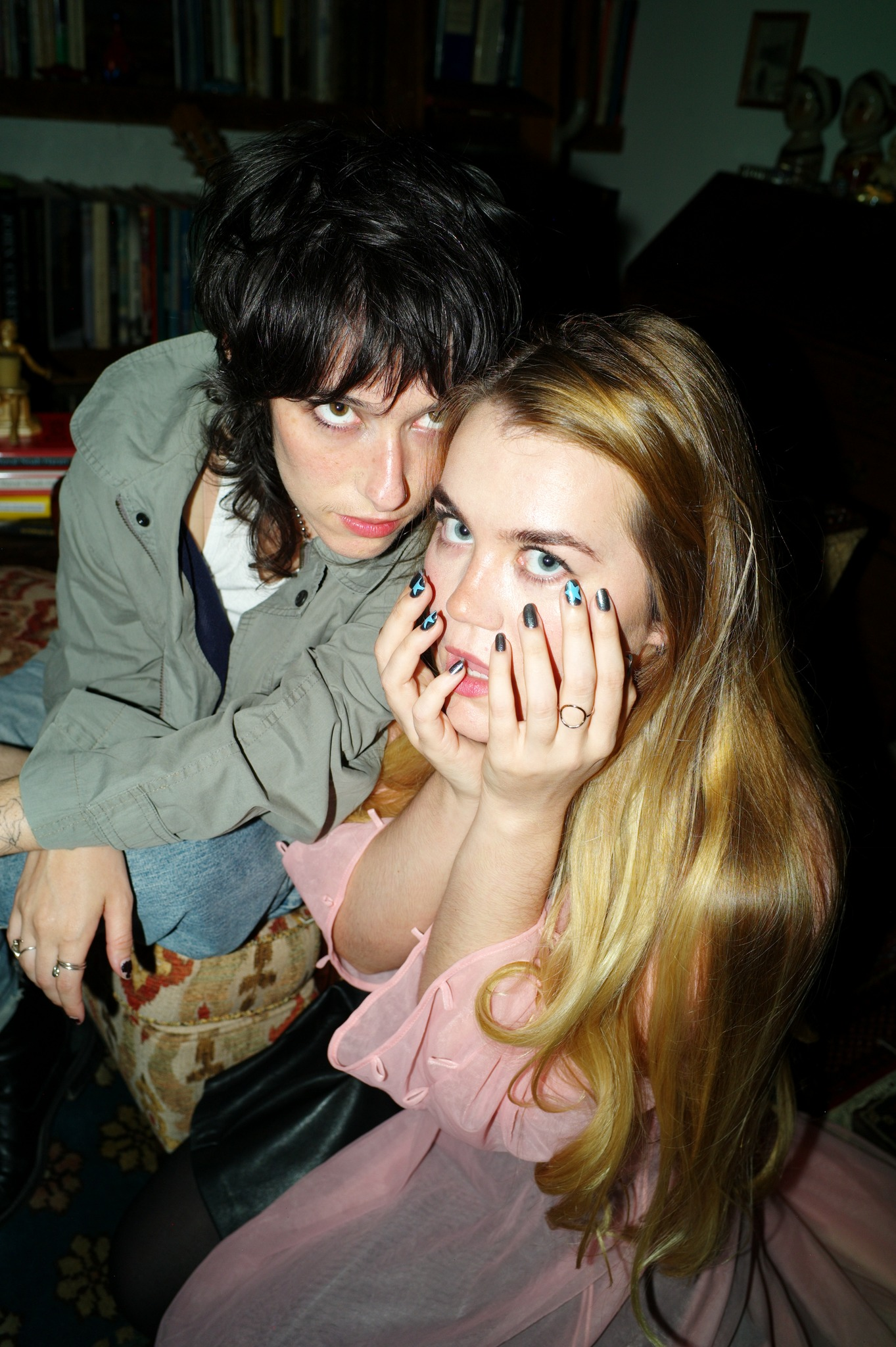
Jeanines return with their best album yet!, Over the course of a decade playing together as Jeanines, Alicia Jeanine and Jed Smith have charted a distinct course through the history of pop, variously taking in 60s folk, 80s DIY pop, sunshine/soft pop, and of course classic indiepop. Their new album “How Long Can It Last” finds Jeanines grappling with serious themes of personal and professional upheaval, adding weight to their finest set of songs yet, elevating these economical tunes and giving each the feeling of a lost classic.
Over the course of a decade playing together and making records as Jeanines, the duo have charted a distinctive course through the history of pop, evoking influences as varied as the 60s folk of early Fairport Convention and Vashti Bunyan, the sunshine pop of Margo Guryan and Laura Nyro, and of course indie-pop touchstones like Dear Nora, Marine Girls, Dolly Mixture, and the post-Black Tambourine projects of Pam Berry. Their new album “How Long Can It Last” finds Jeanines grappling with serious themes of personal and professional upheaval, adding weight to their finest set of songs yet. With lyrics that look deeply at time and its reverberations, connections and ruptures, songs like “Coaxed A Storm,” “What’s Done Is Done” and “On and On” combine richly melodic tunes and crisp arrangements to stellar effect. While the themes might be heavy, the melodies and harmonies are simply heavenly, elevating these economical songs and giving each the feeling of a lost classic.
With what must be the worst album sleeve In 1969, guitarist Buddy Guy got together with his old Chicago blues pal Junior Wells, added in jazz pianist Junior Mance, and cut a loose for an “unplugged” session for Blue Thumb Records that would become the now-legendary album, Buddy and the Juniors. Buddy and the two Juniors were relaxed, cutting familiar tunes like Willie Dixon’s “Hoochie Coochie Man” and their own off-the-cuff originals, including “Buddy’s Blues.” Additionally, two improvised tracks were recorded in a single burst of creative energy: “Riffin'” and “Talkin’ ‘Bout Women Obviously,” all making for a fresh, inviting and inspiring album.
The historical details surrounding the recording session that became Buddy & the Juniors are almost as entertaining — and oddly satisfying — as the music itself. Released on Blue Thumb in 1970 on multi-coloured wax, this session, was it not for a very real economic necessity due to Buddy Guy’s feud with Vanguard Records, would never have happened. It appears that Vanguard wouldn’t pick up the tab for Guy to fly to New York to mix an album he’d cut with Junior Mance and Gary Bartz — also produced by Cuscuna. Being an ever-enterprising genius, Cuscuna pitched the idea for a recording between Guy,Mance, and Junior Wells to Blue Thumb label boss Bob Krasnow, who jumped at the chance.
The all-acoustic Buddy & the Juniors was recorded on December 18th of 1969, and on December 19th, they mixed this album and the Vanguard date! While an acoustic pairing between Guy and Wells is a natural one, adding jazz pianist Mance — a Chicago native whose early influences were the boogie-woogie recordings of Meade “Lux” Lewis and Albert Ammons — to the mix was risky in terms of interpersonal dynamics, but in retrospect, proved a brilliant idea.
The proceedings are informal and raw with plenty of fireworks. The first two tracks — “Talkin’ ‘Bout Women Obviously” and “Riffin’ (aka A Motif Is Just a Riff)” — were the last two recorded. They are blazing, hairy, on-the-spot improvisational duets between Wells and Guy: the former offers lyrics in a back-and-forth extemporaneous style; the latter develops in intensity as it goes on. The playing by Guy and Wells is inspirational. “Buddy’s Blues,” the first interplay of the trio, has Mance digging deeply into the Otis Spann tradition, just rolling inside it, accenting lines, punching chords, and offering beautiful tags to Wells’ harmonica lines.
Wells’ vocal on “(I’m Your) Hoochie Coochie Man” meets Guy’s six-string head-on, with Mance comping and popping a melodic fill underneath each sung phrase. He introduces “Five Long Years” as a piano blues that gets countered in exponential grit by Guy’s vocal and Wells’ punchy harp; he shuffles, fills, trills, and blows straight at the keyboard, creating a forceful gale of dialogue. On the slippery boogie-woogie set closer, Wells’ “Ain’t No Need,” the listener grasps the deep communication of this trio. Given how earthy, informal, and joyful this acoustic session is, it conveys everything right about Chicago blues.
Verve’s Acoustic Sounds Series features transfers from analog tapes and remastered 180-gram vinyl in deluxe gatefold packaging.
The most common strategies for coping with grief is to surround yourself with loved ones and lean on your support network when you have trouble standing up on your own. And though Ben Kweller’s “Cover The Mirrors“, an album he recorded as a way to reckon with his grief over the death of his 16-year-old son,
Ben Kweller is back and he’s not the same. Who could be after the heartbreak he’s endured since the sudden passing of his 16-year old son, Dorian Zev. Instead of hiding away, the beloved indie-rocker is walking through the fire of grief with intention and purpose. Kweller’s latest album “Cover The Mirrors”, arrives on what would have been Dorian’s 19th birthday, May 30th. ”This is the most personal, emotionally raw project I’ve ever worked on,” Kweller says. He has been an open book throughout his illustrious career. His songs hold a nostalgic quality that takes you to a time and a place, happy or sad. Despite all of the heartache and sadness surrounding this story, Kweller’s open-eyed honesty about grief and loss has been an inspiration to people around the world. His new musical chapter is a chance for all of them to witness a great songwriter at his creative peak.”
“I can’t wait to hang with you again.” If you know the tiniest bit of backstory about Ben Kweller’s upcoming album “Cover the Mirrors“, there’s no way the closing line from his new song featuring MJ Lenderman won’t leave you with at least a knot in your throat. There’s a warmth to it, but that waiting feels like staring right into the sun.
The album features several guest musicians (Waxahatchee, Coconut Records, The Flaming Lips, and MJ Lenderman), it never feels as though he’s relying too heavily on them. Instead, they contribute to the album’s somewhat unexpected uplifting atmosphere; it’s not exactly a party, but it does feel more like a celebration of life than a meditation on despair. Even “Letter To Agony,” possibly the album’s most downbeat song (it opens with the line, “Oh, darling / I’m not doing so well”), leads into the poppier “SaveYourself,” with a chorus that implores, “Don’t let it beat you up / When the rose you have / Is a faded color.” “Oh Dorian,” the album’s closer, ends with the heartbreaking but optimistic line, “I can’t wait to hang with you again.” “Cover The Mirrors” isn’t always an easy listen, but it is, ultimately, deeply rewarding.
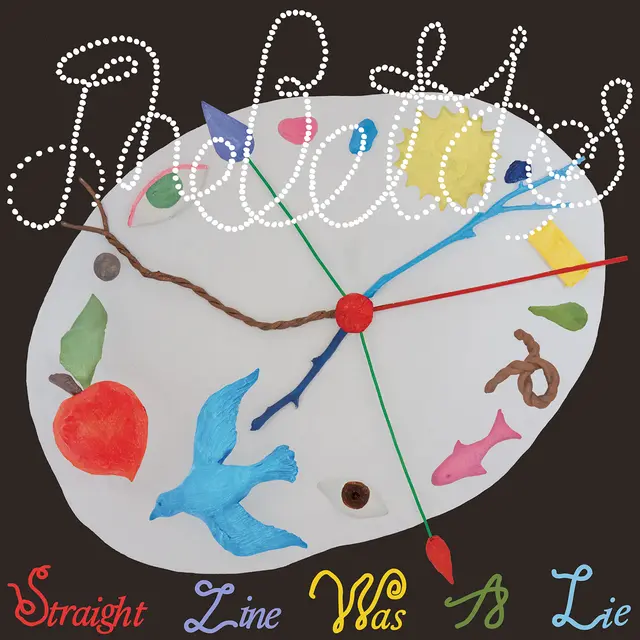
The Beths will drop their fourth album, “Straight Line Was A Lie” (out August 29). The band released the second single from the album, “No Joy,” this week, and it’s a nice complement to “Metal.” “No Joy” is propelled by drummer Tristan Decks’ infectious percussion and vocalist and guitarist Elizabeth Stokes’ deadpan lyrics. Stokes said about the song in a press release, “It’s about anhedonia, which, paradoxically, was there both in the worst parts of depression, and then also when I was feeling pretty numb on my SSRI. It wasn’t that I was sad, I was feeling pretty good. It was just that I didn’t like the things that I liked. I wasn’t getting joy from them. It’s very literal.”
Written in Los Angeles and self- recorded in the band’s hometown of Auckland, “Straight Line Was A Lie” (their first release for ANTI-) follows 2022’s critically celebrated LP “Expert in A Dying Field“. Lead singer and songwriter Liz Stokes delves deeper into her psyche to address everything from roundabout progress to physical and mental health challenges, and fraught family dynamics. Inspired by The Go-Go’s, Olivia Rodrigo, flmmaker Akira Kurosawa, and Stephen King’s On Writing, amongst others, Stokes’ songwriting has achieved startling new depths of insight and vulnerability.
Fans will agree that “Straight Line Was A Lie” is the most sharply observant, truthful, and poetic Beths project to date. New Zealand indie rock heroes The Beths latest album “Straight Line Was A Lie” is a catchy, instant classic out on Anti.
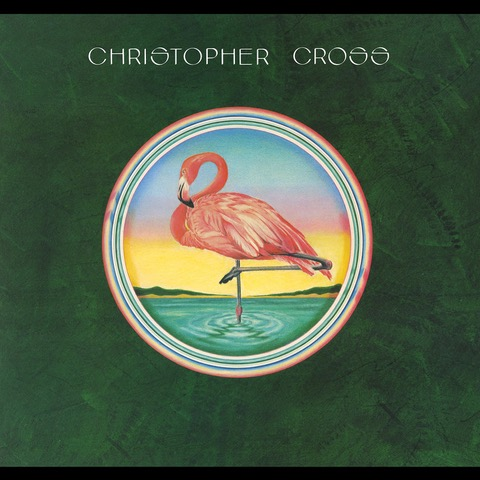
Few debut albums in the history of music have garnered as much success as the eponymous one from singer, songwriter and guitarist Christopher Cross.
Though virtually unknown at the time of the record’s release in 1979, he rocketed to fame with this soft-rock LP, whose star-studded guest list includes such names as Nicolette Larson, Michael McDonald, DonHenley and J.D. Souther. The album spent five months on the pop charts and sold more than five million copies. It also earned Cross Grammys for Album of the Year, Record of the Year, Best New Artist and Song of the Year. Four of the LP’s nine self-penned songs became hit singles, among them “Ride Like the Wind,” “Never Be the Same,” “Say You’ll Be Mine” and the chart-topping “Sailing.”
Unfortunately, Cross’ fall was nearly as rapid as his rise. He did score a couple more hits in the early 1980s, including “Arthur’s Theme (Best That You Can Do),” in 1981. But his time in the spotlight was over by the middle of that decade.
a new, expanded edition of Christopher Cross, which Steely Dan associate Michael Omartian produced, you can hear why the original album did so well, but you can also sense why the singer’s star faded. The June 20, 2025, reissue features a 2019 remaster of the LP, plus 11 bonus tracks. Among them are several previously unissued tunes and demos of five of the debut’s songs, most of which don’t sound all that different from the final versions. Everything on the record is impeccably crafted, expertly delivered and generally more impressive than what you’d expect from a newcomer. But much of it is also light as a feather, and feathers can float away in the wind.
Laura Anne Stevenson is an American singer-songwriter from Long Island, New York. Born on April 25th, 1984, she gained recognition as a keyboard player for the musical collective *Bomb the Music Industry!*. With her captivating vocals and heartfelt lyrics, Laura has carved out a unique place in the indie music scene. Laura Stevenson has announced her seventh album,
Her music draws inspiration from a variety of genres including folk, punk, and indie rock. Fans of artists such as P.S. Eliot, Nana Grizol, and Jeff Rosenstock will find themselves drawn to Laura’s introspective song writing style and melodic soundscapes.
Having collaborated with renowned musicians throughout her career, Laura’s solo work showcases her exceptional talent as both a songwriter and performer. Her discography includes critically acclaimed albums like “Wheel” and “Cocksure,” which have solidified her reputation as one of today’s most exciting independent artists.
“Late Great”, due out on June 27th via Really Records, the label of her old Bomb the Music Industry! bandmate and long time collaborator Jeff Rosenstock. It’s the follow-up to her self-titled album first since 2021 effort, and it was recorded and produced with John Agnello, and features contributions from Rosenstock, Sammi Niss, James Richardson, Shawn Alpay, Kayleigh Goldsworthy, Chris Farren, Kelly Pratt, and Mike Brenner.
Stevenson calls the album “a document of loss for sure,” adding, “but it also draws the map of this exciting precipice that I’m standing on. I am making my own life now. With the record, with everything, this is the first time I get to call all the shots.”
The lead single is the lush “Honey.” “I said in my mix notes (to Agnello) that I wanted it to sound like a thousand angels screaming and crying,” Stevenson says. “Honey” is as stunning as it is heartbreaking, as Stevenson, who went through a breakup shortly after becoming a mother, voices her invasive, self-deprecating thoughts as she contends with what went wrong in her relationship. “Tell your tale behind your beaded veil, I am escapable, I am unable not to fail / Fail anyone I ever met, I’m not еnough, I never am / An enеmy, a nobody, I’m not enough, I’ll never be it, honey,” Stevenson sings, with sweetened vocals against country-tinged instrumentals.
“Laura has always had this supernatural ability to write abstract lyrics that cut straight to your heart, but the feeling of perpetual heartbreak on this record is more pointed, universal and vulnerable than anything she’s ever done before and it hits so hard,” Rosenstock says.
From “Late Great” out June 27th 2025 on Really Records
“The title of our third album, “The Rubber Teeth Talk“, comes from a lyric in one of the songs on the record, “Dream Song“, describing “the rubber teeth” covering the clock during a freaky, playful fever dream. Throughout the album, the Rubber Teeth symbolize the voices in our heads — sometimes tender and creative, other times critical and self-sabotaging. At its core, this album is about embracing the unknown, driven by both bold imagination and intimate personal reflection. We were so lucky to be able to work on this project with the inimitable Catherine Marks, star of our hearts and fearless co-leader of the project.
“All I wanna know is, will I be alright? / Will I be alright for the rest of my life?” I couldn’t agree more. NewYork duo Daisy the Great’s third LP, “The Rubber Teeth Talk“, finds Kelley Dugan and Mina Walker in full Rock God mode. Produced alongside Catherine Marks (St. Vincent, boygenius, Wolf Alice), “The Rubber Teeth Talk” is energizing, catchy, and sharply self-aware, traveling between rock-adjacent tangents—twang on “Mary’s at the Carnival,” dream-pop on “Lemon Seeds,” overmodulated grunge on “Bird Bones”—while keeping grit, distortion, and guttural emotion at its core.
The reverby opener “Dog” kicks off with a high-pitched synth loop that explodes into a riff-heavy 2000s-era rock track. The vocals are stacked to infinity, delivered in their signature run-on sentence cadence, building intensity with each repeat of the chorus. The production throughout is crisp and clean, which only makes the chaos hit harder. The record is as intense as it is gentle.
The wispy falsettos and laid-back acoustic riffs on “Mary’s at the Carnival” offer a moment to catch your breath. “Swinging,” about getting too high on laughing gas at the dentist, is a standout—bass-heavy and rhythm-forward, it flirts with spoken word and King Gizzard-style, psychedelic storytelling before melting into something whimsical and synthy.
“The Rubber Teeth Talk” is packed with attitude the single “Ballerina” carries a Courtney Barnett-like exasperation (“I’ll never have any fun if all I do is sit and whine”), while “Lady Exhausted” names that fatigue outright, ending in an operatic, Heaven’s Gate-style climax. I’m convinced the sound of Dugan and Mina’s voices alone could lure me to the ends of the earth.
Each song exists in its own distinct world, blending lyrically inspired sonic details with our stacks of interlocking harmonies. We recorded the album with our band at Studio G in Brooklyn and finished it up in London with Catherine at Eastcote. It has been a really really special time and we can’t wait for everyone to hear the music.
Five albums in, Ken Yates thinks he may have nailed it with Total Cinema (Tone Tree)—and we tend to agree. With help from award-winning producer Dan Ledwell, the London, Ontario, singer/songwriter has finally assembled the fully operational musical vehicle for delivering his subtle, meticulously observed insights into the post-millennial human condition. He came awfully close with 2023’s “Cerulean”, an album that connected with American critics, if not a ton of listeners. But while that LP tailed off into formula toward the end, “Total Cinema” never loses its creative momentum, thanks to a surplus of memorable melodies that often hinge on Yates’ inventive guitar leads.
Yates says With “Total Cinema“, I felt like I had this depth of new experiences to draw inspiration from. From grief and cynicism, to love and gratitude, there was a clarity to writing these songs I’ve never had before. I think that comes from experiencing and feeling things my younger self wouldn’t have been able to articulate.
Yates’ boyish delivery has something in common with Elliott Smith’s, in the way it makes vulnerability feel so approachable—even charismatic. As with “Cerulean“, lead vocals are often doubled on “Total Cinema“, which adds another dynamic to the album’s living, breathing bed of sound.
“Radio Waves” (Tone Tree) marks a significant milestone for an artist who’s been an all-around model of self-sufficiency. For his fifth studio album, the Bones Of J.R. Jones’ Jonathon Linaberry cleared the creative decks, hiring an outside producer for the first time. As it turns out, the one he picked was a perfect match for his latest nostalgia-laced batch of tunes. A Grammy nominee for his work with Feist, Robbie Lackritz does moody and hypnotic better than most, and he permeates “Radio Waves” with an uncanny sense of time and place: a distinct ’80s/’90s vibe. For Linaberry, those were the days when an album could change your life. And while “Radio Waves” may not change your life, it will move you in unexpected ways.
1) “Car Crash” “As we get older, we realize that life and love will always be beautifully imperfect. It’s a disaster. It’s a car crash. But it’s something I like to think we always yearn for. There’s some part of us that wants it to hurt. If it hurts, you know it means something—and that’s all we ever really want.”
2) “Savages” “‘Savages’ is about finding yourself out all night in the July heat under the city lights, at a house party or getting lost with your friends and being completely enveloped in that moment. It’s surrendering to that feeling, letting yourself feel wrecked, gut-punched, inspired and bleary-eyed. It’s about wanting to disappear right then and there in the hopes that time stops.”
3) “Heart Attack” “This one always felt like the loneliest track on the album. For me, it’s about dealing with the expectations of family, loved ones and just life in general.”
4) “Shameless” “I think we all struggle with the ‘what could have been’ question. What arrogant fool can’t look back and wonder? I’m just trying to recognize that in this song.”
5) “Catching You” “Here I’m missing days of staying out on wild nights … of not caring, of being a stranger in a room.”
6) “Ghosts” (Featuring Two Runner) “Young loves. Young friends. Just kids making silly promises to each other.”
7) “Wasting Some Time” “It’s about fulfilling a role for someone you love deeply, but you recognize that life is too complicated to call it what it truly is.”
8) “Hills” “I had a neighbor set fire to a giant brush pile in his yard. It burned for days. His wife had just died, and it felt like an effigy to me. I imagined him working through his loss and carrying on with his farm work. This song is about living in a town where you see this fire on the hill that burns and burns … and everyone imposes their own meaning on it.”
9) “Drive” “I’ve spent so many years of my life driving myself around, playing my songs. Countless cities, countless late nights, trying to get home as fast as I can. Sometimes I do feel like I lose time. It’s the tediousness and monotony of the touring life, doing the same thing every night. I suppose this is my modest attempt to express my darker feelings on being a touring musician.”
10) “The Devil” “It’s recognizing that maybe the one you love is the worst thing for you as a person, that maybe they represent the weakest point in your character. But you know you’re going to love them anyway.”
11) “Start Again” “The repetitious arguments, the same highs, the same lows, the acknowledgment of changes needed and then doing it all over again. This song is about the hope of starting over—that maybe tomorrow will be different if we just put these feelings to bed tonight.”
Linaberry explains, “A lot of these songs started on a drum machine, which was very intentional. I wanted to focus on simplicity, on stripping tracks back to their most essential elements so that the melody and the vocals could shine.” Those electronic origins are clearly evident throughout what is, for the most part, an excellent album that allows Linaberry’s glorious vocals to shine amidst a mix of acoustic and synth-driven backing. The songs work best when those drum machines are employed in a more restrained and subtle fashion. ‘Waste Some Time’ and ‘Start Again’ are fine examples of this, while others like ‘Hills’ eschew the electronics for simple acoustic accompaniment.
Just occasionally, though, that programming is a detraction that threatens to overwhelm. ‘Savages’, revelling as it does in the reckless abandon of young adulthood, begins with an insistent drum track that never lets up. In the same vein, ‘Catching You’ wonders what we were ever trying to prove with all the debaucherous nights and bad decisions of youth. Whilst also employing an unrelenting beat, the acoustic backing here distracts the ear and softens the overall sound.