The second album by South London seven-piece Fat Dog is titled “Cancel Me (I’m Tired)”. After releasing their debut album “WOOF”. in 2024 and becoming one of the U.K.’s most exciting breakthrough bands in the process, they have a good reason to be tired. They’ve spent the period since “WOOF.’s” release spreading their raucous, infectious and irresistible bark around the world. The reason that they want you to cancel them is that they’ve been around the world and they’re tired.
But if Fat Dog — Joe Love, Chris Hughes, Morgan Wallace, Ellis Dickson, Michael Dunlop, Dillon Harrison and Jed Bevington — are tired with the world, the world is not tired of them. In fact, the world can’t get enough of them. With “Cancel Me (I’m Tired)“, they have created an exhilarating, swaggering, panoramic, inventive, re-inventive, re-re-inventive electro-punk-art-pop-rock ’n’ roll-space-country triumph that deserves all the adjectives.
Over 10 mind-bending and melodic tracks, it blends electro-pop anthems, cascading rave bangers, cowboy-tinged pitstops and swirling psychedelia. Into its lyrical orbit, the record pulls mentions of addiction, family ties, love, AI, ancestry, extra-terrestrials, S&M, B&M, H&M and M&Ms. “Cancel Me(I’m Tired)” possesses all the rabid frenzy and electrifying excitement of their debut but now delivered on a grand and glorious scale. Big, big things are ahead. Fat Dog are only just getting going.
Fat Dog – “Call It What You Want” taken from the album ‘Cancel Me (I’m Tired)’ out on the 2nd October 2026 on DominoRecordings
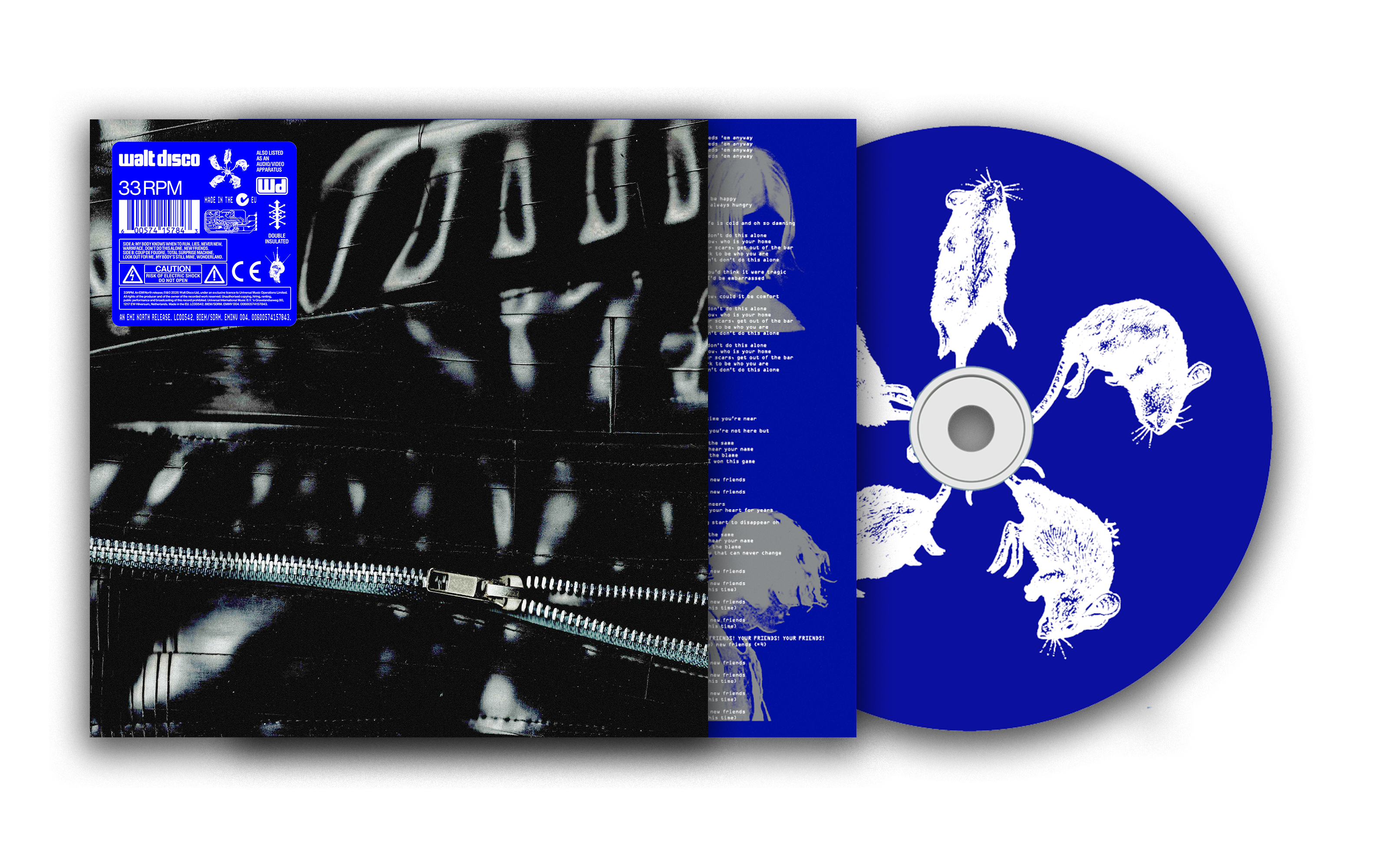
Walt Disco’s self-titled album, Walt Disco, pulls you straight into their high-velocity world. It’s the sound of years of graft paying off, with the band turning experience into something sharp, ambitious and fully their own.
The songs wrestle with growing up through gender dysphoria, shifting relationships and a volatile industry, before landing somewhere warmer: gratitude, acceptance and clarity. It’s a fearless alt-rock record that feels specific to Walt Disco, with “Coup de foudre” and “Lies” among its highlights.
For a band tempted to start over entirely, walt disco’s new music doesn’t erase the past: it turns it into art worth living. Rather than a rebirth, the band’s next era is something harder won: a continuation, sharpened by doubt, grounded in their evolving personal identities, and driven by the belief that they can still become exactly what they were chasing all along – a generation-defining band who dared to do something unique.
It made no sense for a group so enviably young to be worrying about longevity – but that was the situation walt disco found themselves in. Their debut album, “Unlearning”, was released in 2022, scoring enormous buzz and award nominations (including Best Independent Album at the AIM Awards). Touring took them from the likes of Glastonbury and SXSW to support slots in arenas around the world, alongside cultural co-signs from Charles Jeffrey and Louboutin.
Yet looking back on 2024’s second album, “The Warping” which still earned a second nomination for Scottish Album of the Year – walt disco felt as if they’d lost momentum, and were at a crossroads in their lives and careers. Separately and collectively, uncertainty surrounded walt disco to the extent that they even considered changing their name altogether. The impulse for a clean slate was particularly understandable for Jocelyn, who started HRT at the start of the year and wanted to begin again. “We were all convinced by the idea of that fresh start,” offers drummer Jack Martin. Ultimately, though, they decided to keep walt disco. “It was particularly hard for me I think,” adds , “because that thought had helped me come out to my mum as a jumping off point.
You know, ‘a few things in my life are changing…’.” The irony of ending up with a self-titled album, using a name they almost walked away from, is not lost on any of them.
The walt disco of 2026 is a thrillingly rejuvenated prospect. The quality and ingenuity of their new material initially caught the attention of Leeds-based label, EMI North; the UK’s first ever major label regional outpost, and long-time fans of the group. Today, the band’s management and visual collaborators all consciously fall under a Glasgow postcode, with walt disco turning a creative corner at a memorable Paper Dress Vintage show in front of superfans and industry people. “That gig showed that instead we could just be the best we’d ever been as Walt Disco,” says bassist Charlie Lock. As they threw themselves into another record, walt disco emerged with songs that felt enriched by experience, turning years’ worth of graft to their advantage and ultimately ending up somewhere, unquestionably, new.
Set for release later this year, walt disco is a fearlessly ambitious alt-rock album that could also come from no other band. It grapples with the strange, disorienting feeling of growing up – amid body dysmorphia, and changing relationships – and gives voice to the quiet terror of your twenties. “A lot of the songs are about these feelings of starting to feel like old news and struggling with being nearly there in the music industry but not quite there,” explains Jocelyn. The album is searingly honest about life as a creative, where momentum is the artist’s responsibility and luck plays an outsized role. Yet it’s also deeply representational of a generation who “were only 24 and 25, when we were feeling chopped – it’s fucked up,” laughs Jack darkly.
Recorded over four weeks in Brighton – with an additional week in London – alongside emerging producer Ellie Mason (Stella Donnelly, Liars), walt disco marked a complete change in process too. Mason wasn’t just chosen for her technical ability, but for her cultural alignment with the band – a collaborator who could push their increasingly intricate vocal harmonies and shared vision. For the first time, walt disco recorded live as a full unit. “We asked ourselves what would happen if we just wrote more to our core tastes, leaned in to what made us love music at our formative ages,” says Jocelyn.
The results are diverse but lend themselves to a cohesive inspirational palette: echoes of Smashing Pumpkins, Cocteau Twins, Placebo, MGMT or The Sundays, wrought into a shape unmistakably walt disco’s. Their rules were simple: heavy guitars, dynamic electronic textures, and emotionally-rich songwriting. In some ways, recapturing just why walt disco formed in the first place. “It’s a certain era and a certain ethos when you first get into music and play guitars loud in your bedroom as though you’ve never heard them before – that’s what we were going for,” says Jack. The album is shaped by such nostalgia, but not trapped in it; employed to support a smart reflection on youth, rather than a blanket recreation for the sake of it. “We’ve stepped back a bit from being ‘we’re the most different band you’ve ever heard’ and now just want to be creative within the confines of what a band is known to be,” adds Jocelyn.
First single ‘Coup de foudre’ captures such newfound clarity perfectly: a raw, immediate rush of 2000s indie dancefloor intensity, which channels the sharp directness of Yeah Yeah Yeahs into today’s concerns. Built around the French phrase for a sudden, electric connection, ‘Coup de foudre’ is a lustful, fast-paced jolt that few walt disco followers – least of all the band themselves – might have seen coming. “It’s fun to have a horny, chaotic song as the first taste,” says Jocelyn. “I knew it would be a hoot.” What follows is an album that sets out to find comfort – and the occasional bit of gallows humour – amidst the chaos. Opening track ‘My Body Knows When To Run’ observes a situation and a world on fire (“I’ve been busy doing God’s work for him”), its anthemic chorus almost celebratory of uncertainty. Second single ‘Lies’, meanwhile, is more bittersweet, its sparkling guitars masking the unease of a relationship quietly sustained by small deceptions. “Sometimes I’d say ‘I feel fine’ when I didn’t,” Jocelyn admits. “It rarely actually helps.” The song moves non-linearly through doubt, questioning whether our illusion of everyday stability is in fact easier to live with. On ‘Don’t Do This Alone,’ walt disco shift into cinematic territory. Modular synths and swelling choral arrangements frame a personal confession over obsession, and its day-to-day impacts. The track reflects a period of spiralling – drinking, identity struggles, and the overwhelming process of transition – ultimately landing on a simple but vital message: ask for help.
“Never New’, meanwhile, followed a surprising wave of existential angst as Jocelyn was asked to be a judge on the Sound of Young Scotland. Blending humour with vulnerability and tackling dysphoria through surreal imagery, “I compare myself to Nicolas Cage and Michael Phelps,” Jocelyn laughs. “They’re like my gender dysphoria demons.” Beneath that, though, lies a deeper fear over the passage of time. “For me, as a trans person, aging means something very specific. The idea of growing into an old man is really distressing.” The ballad ‘Look Out For Me’ is quieter, but holds the most powerful scene of the record. Written the day Jocelyn sought NHS medical advice about gender dysphoria, it captures – with faint country and post-rock stylings – a moment of unexpected compassion. “You hear so much about how transgender care is at the doctor’s discretion, and that was really scary – especially in a village, because I went to the GP back home,” she remembers. “She was just so nice and helpful and calming about it and did everything in her power to help me. Her kindness was such a big deal – it felt like she was an angel.” After she wrote the song, the miracle bestowed on Jocelyn felt political, which is the exact weight that the song carries for a listener too. It shouldn’t be a miracle but we understand why it is. Elsewhere, Jack’s nimble songwriting adds further dimension. Reflective post-rock ballad ‘Warmface’ remembers him meeting a former walt disco bandmate who has moved into a stable, conventional life. “I felt like an idiot chasing this possibly delusional dream of music,” he admits. “Like, what am I doing?” The song imagines an alternate reality where he chose differently. The expansive indie rock of ‘New Friends’, too, captures the strange grief of a friendship ending. “You feel the ghost of that person for ages,” Jack says. “It’s different from a romantic breakup, but just as painful.” Meanwhile, ‘Total Surprise Machine’, with its thick, fuzzy distortion and lush saturation, explores feelings of learning how to love again after a more emotionally detached relationship, framing vulnerability as something mechanical, awkward, and relearned.
The album draws to a close with quiet pain at first, and then with an outpouring of grief-soaked gratitude. Standout track ‘My Body’s Still Mine’ is a statement of intent to live as best as possible, to be at peace with the past and yourself. “I want the feeling of having arrived in so many ways,” explains Jocelyn of its emotional weight. “I wanted the band to be where I want it to be, wanted to be transitioning, wanted to be more kind to the people who love me. My conclusion was that even though I don’t love my body, it serves me very well.” Ending the album is ‘Wonderland’, a cathartic, emo-influenced piece that moves from darkness toward hope. Written during a difficult period living in band member Finlay McCarthy’s cramped flat-turned-studio, it confronts Jocelyn’s body image issues, dysphoria, and intrusive thoughts. “You can’t change the body you’re given, and that’s upsetting,” Jocelyn says. “But even if you could, you still have to fix your head.” The song edges toward something brighter, its closing refrain rejecting escapism and ultimately death: “I don’t need no wonderland.”
Reflecting on walt disco’s journey to this point, Jocelyn recalls the football team in the village she grew up in: perpetually losing, conceding goal after goal, yet always met with one relentlessly upbeat teammate insisting there was still “something to play for.” It’s a memory that feels almost absurd in hindsight, but underpins the final moments of the record: self-aware, slightly ridiculous, but completely sincere. It’s probably how you have to be to survive a music career, and life more broadly. Ultimately, walt disco as an album has become something for the band to play for, the sound of that voice on the pitch. But they’re no longer gesturing at optimism, having created something that truly feels like them. Or as Jocelyn sings on the rousing ‘My Body’s Still Mine’: “so fae the start boys / although we’re 8 down / the cold is pinching / but I’m back in town.”
Goodbye to this stellar version of Swans. “Newly Sentient Being” features superb recordings of Swans’ final concert of the “Big Sound” era, the apotheosis of 15 years of cosmic sonic expressionism, alternately heavenly and debased, visceral and transcendent. Recorded in November. 2025, in Berlin. With more than two hours of music, it includes a wealth of new material never recorded elsewhere and a DVD of the performance.
Up there with the best of Swans’ legendary live records, they close this chapter with love and unbridled passion. “This phase is finished,” leader and founder Michael Gira says. “There’s nowhere else to take it, but we seem to have ended on a particularly high note with our final tour of this (now passing) Swans era, and I believe these current recordings convey the sensations and experience of the unique world we forged. For the next phase, I’m moving Swans into something with a decidedly more humble and intimate musical palette, but here now I offer my praise to the righteous group of humans, the musicians that made our final foray into the sonic ether a reality: Norman Westberg, Dana Schechter, Phil Puleo, Larry Mullins, Kristof Hahn, Christopher Pravdica… and I was in there flailing somewhere too.
4LP Box Set with 2CD + DVD and poster included. Also available on 4LP Gatefold + DVD 2CD + DVD and digitally.
Gizmo are rockers inspired by the guitar-damaged pop of 1990s American slacker bands and their contemporaries on Canada’s east coast. A 120 Minutes band for the Gen Z set, they breathe new life into their vintage influences with a distinctive songwriting style and frenetic live show. “All Your Worships”,Gizmo’s debut full-length, comes roaring out of the gate, picking up right where 2023’s livewire “Buddy System” EP left off without skipping a beat.
The new material finds the band mining similar sources but reaching new heights, imbuing their carefully considered, structurally ambitious power-pop songwriting with more unexpected twists and turns. To record it, the band decamped to a converted community hall in Great Village, N.S., with co-producers Alex Edkins (METZ, Weird Nightmare) and Loel Campbell (Wintersleep) in tow. They pulled 12-hour days, sleeping at the studio and capping off nights with drunken music listening sessions.
The group bonded over their overlapping tastes, able to share a common language when referencing sounds and direction. This helped flesh out the sound; while the record is informed by long-held aesthetic touchpoints like Guided By Voices and Pavement, keen listeners will hear the gothic jangle of R.E.M. or the jagged Americana of Silver Jews and Red House Painters peeking through in spots as well.
Greg Freeman won’t be getting comfortable anytime soon. Across New Mexico, Vermont, Los Angeles, and a long stretch of tour stops hooking those places together, “All Set The Bone” came alive. While writing and recording it, Freeman moved out of his longtime home in Burlington, holed up in a middle-of-nowhere part of the Southwest, and stepped into music full-time, leaving behind odd jobs as a cemetery landscaper and restaurant line cook.
The following album is populated by a grain of similarly unsettled people: a voter buried in credit card debt, a pair of Christian hearts clanking like trapped lobsters, a town of bent necks, a lover with limbs bent like crabapple trees. Freeman calls “All Set The Bone a “reflection of a lot of change, and a lot of tension.”
It’s a box of political and personal yarns spread across four sides, “inhuman events” and grief pulled into a “perfect tsunami.”
Off the new record “All Set The Bone” out on Transgressive Records / Canvasback Music on October 2nd.
This is a song for the collective about the never-ending cycle of exploitation. One of the trickiest parts of trying to survive and thrive in late-stage capitalist America is the way that so many of us feel forced to participate. We become complicit to the systems that exploit us. We perpetuate them, and ultimately implement them onto each other. There is a pattern of feeling like you’ve finally gotten something figured out, only to learn that there is always another door to unlock, and another pocket waiting to take a percentage of your work.
Many of those in power positions act like they know what they’re talking about, but they really don’t! We are all always learning. Be wary of anyone too certain and follow your own intuition. Don’t be afraid to discard logic that isn’t serving you. For those of you who relate, this one’s for you! The vocal reference on this track was Ursula from The Little Mermaid.
“Kool Faith/Loosies II” was created by TAGABOW’s Douglas Dulgarian in the spirit of the mixtapes he grew up on. The 29 new songs include collaborations with Hotline TNT, Horse Jumper of Love, Scarlet Rae, Spirit of the Beehive and more. “Look at the options. Just pick one,” says Dulgarian. “Go that way. See how it feels. Try another one. See how it feels. Let the world have its way with you. Cuz someday you’ll look back and think of all the places you’ve been. All the things you let wash over you.”
The artist known as Blondshell sounds fired up. Just over a year after releasing her second album, “If You Asked for a Picture”, the LA musician born Sabrina Tietelbaum returns with “Violins” which, contrary to the name, is not some sudden pivot to classical swells of strings. Instead, it’s a fully-fledged rock record, where her formerly plain-speaking lyricism has evolved into something considerably more abstract – while still leaning on her favoured, reverb-drenched Nineties alt-rock sound.
The 11-track “Violins” trades the veil of bad romantic relationships for something braver, asking how we balance the world’s violence with its beauty across songs about troubled friendships, religion, the body, and the long, unglamorous work of healing. It’s an album of grandeur, drama, and tragedy, built on virtuoso hooks, swelling guitars, and big lead lines, pulling in fresh touchstones from Gang of Four, Teenage Fanclub, The Go-Betweens, and Sade, alongside lyrical nods to Leonard Cohen and Pavement.
Album standout “Heart Has to Work Out” is led by an angular riff, stomping drums and electric guitar squalls that hang broodily over the track like thunderclouds. It’s a bloody, unsparing dissection of the complexities of female friendship: the rivalry, the tension, the unspoken feelings. “You give me paws, you get me scaring strangers,” Teitelbaum sings, “You got me criticising, you make this feel like labour.”
Her laconic delivery pairs beautifully with poetic songwriting that springs forth with striking imagery: “Hands are fireproof, wooden table/ Literary heroine breaking through a stable,” she sings over the thrashy loud-quiet-loud dynamic of closer “Für Elise”. Violent undercurrents churn through songs like “Stone Fruit”, capturing a love so fierce it feels like something darker: “I care to stick to you like a clot/ Wanna hear your history until you don’t wanna talk.”
She’s strangely tender on “New Age Trojan Horse”, an anthemic, Eighties-leaning track that John Cusack might have played from his boombox. As the title suggests, though, its theme creeps up on you, excoriating performative male behaviour that masks misogynist tendencies. Tietelbaum namechecks Leonard Cohen’s posthumous collection of poetry and non-fiction writings, The Flame, on the slow-burning “Sea Legs”. Like Cohen’s work, “Violins” weaves together questions of melancholy, humour, romance and life’s meaning. It pulls you in, beautifully.
“Violins” out now. On tour this winter.
I hope heads don’t roll, they rest lightly on your shoulder.
Following the release of “Acknowledge Kindness”, The Reds, Pinks and Purples announce a companion record, “True Love Daydream“, arriving on September 25th.
Ever prolific, most of the music on “True Love Daydream” was created by Donaldson at the same time as “Acknowledge Kindness”. Donaldson eloquently describes the EP as “a little boat set adrift off the shore of the main album.” Here, separated from the album, the music has space to ebb and flow, lingering in shimmering ambience. Three of the songs on the EP are atmospheric instrumentals, a slight departure from Donaldson’s classic songwriting, yet retain the emotional depth that makes the music so captivating.
One of the most anticipated debut records of the year lands from Londoners KEO.
Raw, bruised, and unflinchingly self-aware, their first full-length release captures the emotional fallout of love, guilt, shame, and self-destruction with a clarity that feels almost confrontational. The record captures a band documenting themselves in real time, preserving every fracture, ugly thought and moment of collapse without compromise.
Blending grunge intensity, shoegaze textures and confessional songwriting, the record draws on the charged candour of artists including Led Zeppelin, Sun Kil Moon and Smashing Pumpkins, while carrying the lyrical directness and storytelling instinct of artists like Radiohead.
Across its 11 tracks, Keo move between moments of towering vulnerability and total collapse, pairing brooding atmospheres with melodies that feel built to be screamed back in over-spilling rooms.
The physical design of the LP mirrors the record’s bruised and confrontational atmosphere, blending distressed textures with Keo’s stark visual world. The London alt-rock band will head out on the road early next year in support of their UK Number Two debut album, ‘Put A Smile On For Me’, which was released last month.
“Put A Smile On For Me” captures Keo at the exact moment underground obsession turns into something much bigger. February 20th – Rock City, Nottingham