Like his pal Frank Zappa, Captain Beefheart isn’t an easy listen. His initial recordings with the rotating Magic Band were basically garage-blues stompers highlighted by the frontman’s raspy, Howlin’ Wolf-like voice. But by the time of their first album, 1967’s “Safe as Milk“, they had taken a turn toward more experimental territory. By 1969’s career peak “Trout Mask Replica”, they were engaging the avant-garde like few other bands of the era. The band made more than a dozen albums before Beefheart, born Don Van Vliet, retired in 1982 to focus on painting.
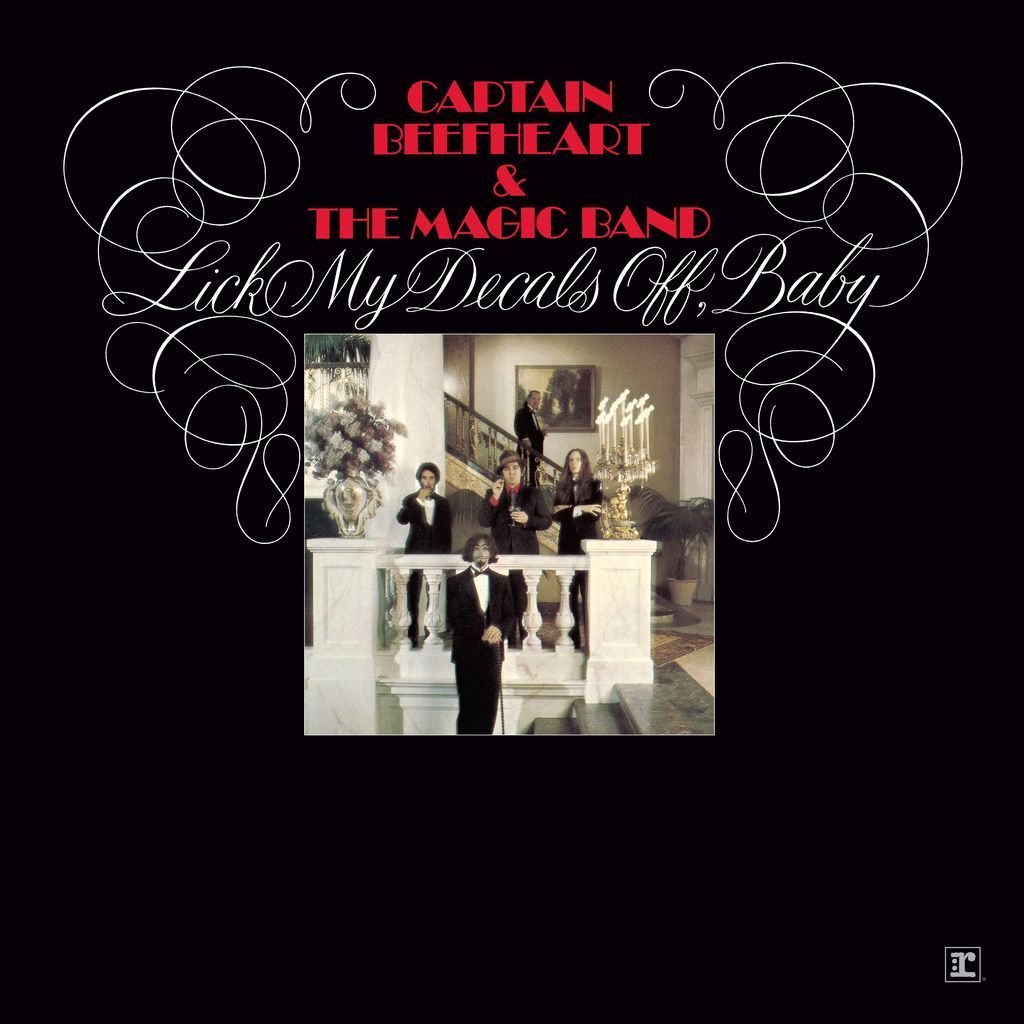
“Lick My Decals Off, Baby” is the fourth studio albumfrom American musician Captain Beefheart (Don Van Vliet) and the Magic Band, released in December 1970 by Straight and Reprise Records. T
he follow-up to “Trout Mask Replic”a (1969), it is regarded by some critics and listeners as superior, and was Van Vliet’s own favourite of his albums. In his words, the title credo of the album was an encouragement to “get rid of the labels”, and to evaluate things according to their merits.
Their catalogue includes some of the wildest and most boundary-pushing rock ‘n’ roll ever made, serving as a template for generations of forward-thinking artists.
Deluxe edition of the classic 1970 album from Captain Beefheart and The MagicBand. This limited edition 2LP vinyl set features the original album, recut from the original master tapes at Bernie Grundman Mastering, plus an additional LP with previously unreleased instrumental versions and alternate takes from the original album sessions.
Oklahoma psych kings the Flaming Lips have been around since 1983 — a mind-boggling fact, given they’ve been shedding members and tweaking their sound for most of that time. They formed around the eccentric vision of frontman and chief instigator Wayne Coyne, who guided the group’s early voyages through harsh, experimental noise (Telepathic Surgery) and warped pop melodies (In a Priest Driven Ambulance).
Back in the early ’90s heyday of true alternative rock, they even managed to sign with a major label, Warner Bros., who’ve bankrolled the Lips’ cosmic creations ever since. But there was one other chief addition: Multi-instrumentalist Steven Drozd joined for their 1993 breakout LP, “Transmissions From the Satellite Heart“, which spawned the fuzzy earworm “She Don’t Use Jelly.” And the Coyne-Drozd partnership has anchored the band ever since, through grand art-pop explorations (1999’s “The Soft Bulletin“, electronic dream-pop (2002’s “Yoshimi Battles the Pink Robots” and stately psychedelia (2020’s “American Head“.
If the average listener had had the four CD players playing simultaneously required to listen to Oklahoma psych-rock band The Flaming Lips‘ 1997 album “Zaireeka”, we might have seen it coming, but for most of us “The Soft Bulletin” was a beautiful sucker punch, a smack upside the head with a rainbow. What happened to the band that sang “This Here Giraffe,” “The Magician vs. the Headache,” and “She Don’t Use Jelly”?
This was an album of deep thoughts, boundless empathy and the weight of the world on its shoulders, all set to wonderful melodies and inventive widescreen sonics. Sixteen years into their career, on their ninth album, and as frontman Wayne Coyne was nearing 40, The Flaming Lips delivered their masterpiece.
“We were a not very successful weirdo rock group about to get dropped from our label,” Coyne said in a documentary about the album, setting the scene in 1996. A lot of things happened simultaneously to the group that led to their near total transformation. Guitarist Ronald Jones, who had been a big part of the Lips’ sound in the first half of the ’90s, quit the band, making room for Steven Drozd to fully assume the role as musical director. He was the drummer, but also a polymath multi-instrumentalist genius. Meanwhile, Coyne became more interested in non-band musical ideas. He hit on an idea where The Flaming Lips would take different elements of a song and put them separately on dozens of cassettes to be played at the same time on dozens of car stereos while he orchestrated the whole thing like a conductor at a symphony. The “Parking Lot Experiments” became cult events which then led to the bigger and more portable “Boombox Experiments,” which led to Coyne wondering “Can we make an album this way?” and then “Will they let us make an album this way?”
The band, along with producer/collaborator David Fridmann and manager Scott Booker, talked Warner Brothers into letting them do it on the condition that simultaneously and on the same budget they would make a “normal” album that only required one CD player / tape deck to listen to it.
To facilitate this, Fridmann built his own studio, Tarbox Road, in Cassadaga, NY, and The FlamingLips would be the first to use it. Free of hourly studio rates, they had unlimited time to test out what the studio could do while working on songs. Coyne set down some rules for the recordings, namely no distorted guitar. He hoped to find a new way to bring about the same effect that loud-quiet-loud had served. To achieve it, Drozd, Fridmann and bassist Michael Ivins turned to synthesizers, new digital technology, and a lot of creative inspiration. “Though we were using the most modern synthesizers and digital junk that you could get at the time, we were trying to make it sound like it wasn’t a band any more,” Coyne said in 2019. “We wanted it to be more of an emotional sound than a band.”
On that emotional front, a lot was happening personally to the members of The Flaming Lips. Coyne’s father was dying of cancer and passed during the making of the albums. Drozd confronted his heroin addiction after he almost had his hand amputated from what he thought was a spider bite that turned out to be an infection from intravenous drug use. Ivins nearly died in a freak auto accident. (Many of these real life occurrences turn up in The Soft Bulletin’s “The Spiderbite Song.”) Things were getting heavy and Coyne stopped writing about absurdist, weirdo ideas (like Giraffes) and began writing from the heart. It was still from his psychedelic mind, but pondering the mysteries of the universe by way of his own experiences with death, grief, and despair led to wonderfully off-kilter yet highly relatable songs with real staying power.
“Theirs is to win, if it kills them,” he sings on the album’s first single and opening track, “Race for the Prize,” a song which also introduces us to the new sonic world of The Flaming Lips that is closer to Phil Spector and Brian Wilson than to Nirvana or Dinosaur Jr. “They’re just humans with wives and children” is an unlikely shout-along anthemic chorus, but there’s no denying it works.
The album’s other single, “Waitin’ for a Superman,” is as much a moving rumination on grief against seemingly insurmountable odds as R.E.M.’s “Everybody Hurts” is, but without being so obvious about it. “Tell everybody waitin’ for Superman, that they should try to hold on as best they can / He hasn’t dropped them, forgot them, or anything / It’s just too heavy for Superman to lift.”
The rest of the album is just as wonderful. “A Spoonful Weighs a Ton” covers similar thematic territory as “Superman,” but plays as Disney music by way of John Bonham. Drozd’s drumming is the most awesomely bashed, impactful playing of the ’90s that wasn’t recorded by Steve Albini. Those drums really bring the album to life, juxtaposed against the orchestra of warbly synths and layers of harmonies that may at times fool you — like on “The Spark That Bled” — into thinking there was an actual orchestra involved. No violins were harmed during the making of this record, but many drum heads died so that these songs may live.
“The Spark That Bled” and many others on “The Soft Bulletin” take surprising zigs and zags that would seem insane on paper and sound like they were just born that way. “What is the Light,” one of the album’s sunniest pop songs, transitions into pensive instrumental “The Observer” which you could imagine sound tracking an arthouse sci-fi film or an episode of Cosmos. Need some Grand Guignol honky-tonk loneliness? “Suddenly Everything Has Changed” is there for you. Gospel? “The Gash” makes room for that alongside phantasmagoric Morricone-style bombast and ’80s orchestra hit samples in a song that asks “Will the fight for our sanity be the fight of our lives lives / now that we’ve lost all the reasons that we thought we had?”
“Suddenly Everything Has Changed” was a pivotal moment in the making of the album. Reflecting on the song recently, Coyne said he had the verses figured out but suggested to Drozd that the song could, after the refrain, could go into “an expansive emotional, cinematic moment,” but “we didn’t really consider how unexpected this interlude is…but for us it fit perfectly with the idea of suddenly everything changes. And it kind of felt like we were doing our own thing, like no other group would wanna do something like this .. we were making our own world.”
The album closes as brilliantly as it opens with “Feeling Yourself Disintegrate,” arguably “The Soft Bulletin‘s” best song, where Coyne ponders all the Big Questions (life, death, the universe, everything) in just four lines that are both entirely psychedelic and entirely grounded: “Love in our life is just too valuable / Oh, to feel for even a second without it / But life without death is just impossible / Oh, to realize something is ending within us.” It finishes with a repeated refrain of the title against a galaxy of “ahhs,” and a very groovy bassline from Ivins and Drozd’s slide guitar. “Feeling Yourself Disintegrate” then segues into another instrumental, “Sleeping on the Roof,” that sounds like looking at the stars on the hottest day of the summer as you drift off into slumber.
“The Soft Bulletin” when I hear it now it really is about despair, but there’s no despair in it,” Coyne said in 2019. “It’s not singing about despair, it’s being in despair and singing.” And finding beauty and hope in all of it.
“Horrorful Heights” marks a formidable new chapter in The Bevis Frond’s deep and storied catalogue, showcasing the enduring creativity of songwriter, guitarist and frontman Nick Saloman as he moves into yet another decade of recording. Long established as one of the most distinctive voices in British underground rock, Saloman continues to refine the band’s signature blend of melodic psychedelia, wiry guitar epics and sharp, emotionally attuned songwriting.
“Horrorful Heights” offers one of the most approachable entry points to the band’s world in years: A record that gathers their core strengths into a cohesive, vivid set.Though unmistakably eclectic, Horrorful Heights presents a focused portrait of the band in 2025 — vital, tuneful and unburdened by nostalgia.
Saloman describes the collection simply: The best songs he’d written in recent years, arriving unforced and instinctive. The result is a late-period peak from one of Britain’s most quietly influential underground bands.”
Recorded with long-time drummer Dave Pearce and guitarist Paul Simmons, alongside new bassist Louis Wiggett, the album moves fluidly between jangling psych-pop, heavy-lit guitar workouts and pastoral comedown reveries. Wiggett also brings a surprising new colour to the Frond palette, contributing pedal steel to “Best Laid Plans” and “Momma Bear,” recalling early-70s country-tinged British rock from Bronco or Cochise.
The album’s range is wide but sharply defined. “Draining The Bad Blood” channels the classic Bevis Frond mode of melodic guitar pop—cut from the same cloth as longtime fan favourites later covered by Teenage Fanclub and The Lemonheads. “Space Age Eyes,” a concise nine-minute odyssey, nods toward the transcendental explorations of ’70s electric Miles Davis, complete with a blistering solo from Simmons and rhythmic elasticity from Pearce.
The sitar-laden title track, written off-the-cuff while Saloman half-watched a football match, drifts through incense-hazed psychedelia with layered vocals and tumbling tablas—an affectionate echo of the head-shop mysticism he has toyed with throughout the band’s history. Elsewhere, “Mossback’s Dream” splices lysergic leads with the propulsive energy of ’80s American hardcore, forging a hybrid that feels both timeless and entirely its own.
Additional highlights include the Byrds-tinged “Buffaloed,” the swirling narrative freeze-frame of “Silver Insects,” and “That’s Your Lot,” a rapid-moving burst of melancholic euphoria and one of the record’s most immediate songs.
Though unmistakably eclectic, “Horrorful Heights” presents a focused portrait of The Bevis Frond in 2025 – vital, tuneful and unburdened by nostalgia. Saloman describes the collection simply: the best songs he’d written in recent years, arriving unforced and instinctive. The result is a late-period peak from one of Britain’s most quietly influential underground bands.
The deluxe edition includes “Horrorful Offal“, an eleven-track companion drawn from the same fertile sessions. Far from a grab-bag of leftovers, it extends the world of “Horrorful Heights” with alternate moods, deep-cut experiments and songs that illuminate the album’s edges. Together they form a panoramic view of the Frond’s current creative streak. Both albums are housed in a striking deluxe edition, presented in a bespoke die-cut slipcase that frames the artwork
3XLP Limited Deluxe Vinyl Edition: ‘Horrorful Heights’ 2XLP + ‘Horrorful Offal’ LP available from Rough Trade
“Horrorful Heights” · The Bevis Frond released through Fire Records
“When a song comes, I make sure I don’t let it go by,” says Joe Pernice. Pernice has been catching songs for 30 years now, first with the alt-country legends Scud Mountain Boys and then with the indie-pop mainstays Pernice Brothers.
“Sunny, I Was Wrong”, his first studio album of new material under his own name, was born during a period of concentrated inspiration and productivity. Songs were coming almost more quickly than he could get them down on tape, as though they’d been waiting to pounce at just the right time. With a little help from his friends, Pernice fashioned a handful of them into a beautiful refinement of all the qualities that have distinguished him as a songwriter over the years: His facility for aching melodies, his penchant for arrangements that nod to pop’s past without getting mired in nostalgia, and a deep empathy for the characters who inhabit his verses.
From the new album, ‘Sunny, I Was Wrong,’ available April 3rd, via NewWestRecords
Nashville based psychedelic blues rock act All Them Witches return with brand new album, “House OfMirrors“, the band’s first new studio album since 2020 Seminal “Nothing As The Ideal”. The album features singles “Red Rocking Chair” and “Starting Line” and is set for release on May 29th. The band will be touring worldwide in support of the new album throughout 2026 and 2027.
Time at last for All Them Witches to release the album they’ve been heralding on tour since last year. Due out May 29th I think as a self-release, “House of Mirrors” will be the Nashville four-piece’s first full-length since 2020’s “Nothing as the Ideal“, and that’s probably long enough even with the “Baker’sDozen” singles project they spent 2022 dug into.
The new single “Starting Line” — as though to mark the beginning of the album cycle that, again, has already started — has a video filmed on tour .
It’s not actually the first single, though, as the prior-posted visualizer for the blues traditional “Red Rocking Chair” that they put out last month will lead off the record. Curious if “Culling Line” and “Starting Line” will have any interaction, and how the crunch in this current single and the prior will play out across the entirety of “House of Mirrors“, what shape the psychedelic lean of their sound might take this time around. I guess I just want to hear the record, It’s nice to feel excited about a thing.
They did a whole thing with tarot cards on their socials and at shows, Preorder links, the album tracklisting and announcement, and dates for the European tour will follow.
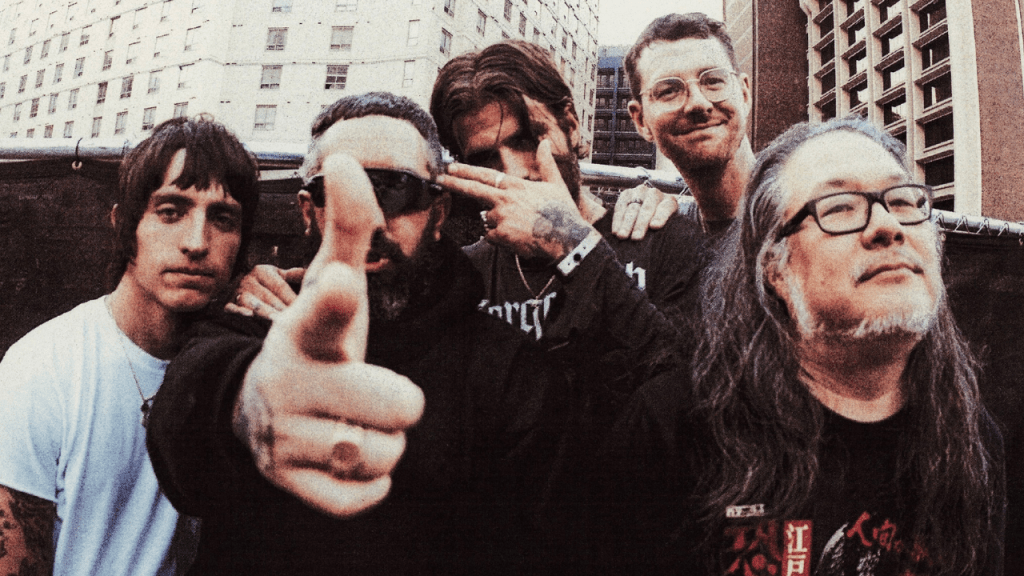
Nothing are an American shoegaze band formed in 2010 by vocalist-guitarist Domenic Nicky Palermo. The band is known for its unique blend of distorted guitars,
ethereal vocals, and confessional lyrics. They have released several albums, including
“Guilty of Everything” (2014), “Tired of Tomorrow” (2016), “Dance on the Blacktop” (2018), and “The Great Dismal” (2020).
The story of how singer and guitarist Domenic Palermo came to form the noise-rock band Nothing sounds like a Behind the Music episode gone bad. Growing up in the crime-infested neighbourhood of Kensington in Philadelphia, Palermo hung with a tough crowd that, in his own words, drove around with large amounts of cocaine and guns while listening to My Bloody Valentine’s Loveless. He was in and out of trouble, but he found a release in music,
In 2002, Palermo’s life was put on hold when he was arrested and charged with aggravated assault and attempted murder after stabbing a man in a fight. Palermo served two years in prison — where, he says, he did a lot of reflecting, a lot of reading and a lot of writing. After leaving prison, Palermo found himself in the depths of despair, but in 2011, in a last-ditch effort to find something to hold on to, he started playing music again, and writing songs. He eventually met guitarist Brandon Setta, and together they formed Nothing. Now a four-piece group with a love of loud, dark and seriously heavy rock,
Nothing are described as a cross between heavy metal and shoegaze, while later releases were said to have bordered on a dream pop style. The group’s sound is marked by “walls of distorted guitars”, “pummeling” drums, “angelic” vocal harmonies and “soul-searching lyrics that tell of hard times and pain of all kinds”
Nothing have always been rule-breakers. Shoegaze renegades who’ve rebuilt the stereotypically lightweight genre in their own bloody knuckled American image. Outlaw poets spilling existential dread on mile-wide canvasses of fuzz and reverb. Beginning as a Philly-born bedroom solo project in 2010, Nothing’s music has always captured the full scale of the human condition, both the blaring anger and the whispering sadness.
Guilty of Everything – 10th Anniversary Edition
In 2013 Nothing signed to Relapse Records and released the single “Dig”, which featured on the band’s debut album, “Guilty of Everything“, A profoundly thoughtful, beautifully crushing wave of droning distortion, the album is epic and stirring, even unnerving at times, but it carves a path toward enlightened serenity. Guilty of Everything opens with a warm, ringing guitar as Palermo, his gentle falsetto buried just behind the mix, sings of “summers spent in a well,” alone and far from home. It’s melancholy, but it feels like a reassuring balm to life’s ills — just before the song erupts with the pulverizing tumult that comes to define much of the record.
“Guilty of Everything” closes with the album’s confessional title track. “I’ve given up,” Palermo sings. “I’m on my knees… I’m guilty of everything.” It’s a sonic surrender to the void. But in Nothing’s world, giving up all hope can actually lead to nirvana; a release from the prison of fear that the things you dream of attaining or escaping will never be realized.
Nothing return with the 10th year anniversary edition of their landmark debut album, “Guilty of Everything”. Recorded and produced by Jeff Zeigler (Kurt Vile, War On Drugs, etc), “Guilty of Everything” is a triumph of a debut that successfully manages to be massively loud, darkly introspective and totally beautiful all at once.
Nothing’s Nicky Palermo comments on the bonus material, highlighting a cover of Big Star’s track, “Holocaust”: “We wrote and recorded this track right before I almost got killed in Oakland. We were out on tour with Cloakroom and Tony Molina, so before Doyle joined Nothing. Forgot it existed until a couple years ago while demoing with Nick in Oakland for “The Great Dismal“.
Hard to imagine a more crushing piece of music than the Alex version, but looking back and how things progressed following recording, this version really holds heavy weight as well to me. Looking back, it’s almost like an eerie premonition now of how quickly things can turn devastating.”
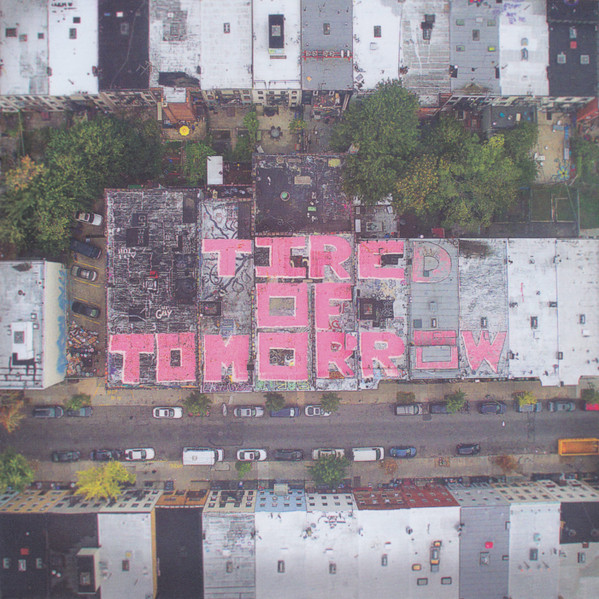
Tired of Tomorrow
The bands second album, “Tired of Tomorrow”, was released on May, 2016. The first single from the album, “Vertigo Flowers”, John “PBoy” Policastro from the band New Lows joined the band as a live bassist to tour for the record.
Philadelphia’s Nothing return with ‘Tired Of Tomorrow’, their beautifully profound follow-up to 2014’s widely-acclaimed ‘Guilty Of Everything’. Recorded over the course of a month at Studio 4 with Will Yip (Circa Survive, Title Fight),
‘Tired Of Tomorrow’ is a modern, nihilistic take on the triumphant fuzzed-out guitar rock of the 90’s, replete with huge hooks and brooding melodies. Much like the events it’s based on, the album displays an unparalleled balance of opposites and contradictions, rife with sweet-and-sour themes, downcast grooves, infectious choruses, and blissfully expansive washes of sound. With ‘Tired Of Tomorrow’,Nothing have worked the deepest influences of their youth and maturation into a confident, memorable album that is sure to soothe old wounds while simultaneously opening up new ones.
Nothing’s whole catalogue is astounding. Nice and heavy…nice and mellow. Its all there. Great textures.
Dance On The Blacktop
The band’s third studio album, “Dance on the Blacktop“, was released on August 2018, again on Relapse.
Nothing’s third full-length recording, “Dance On The Blacktop“, is the next chapter in the band’s tumultuous story and like its predecessors, pulls from all corners of life with a focus on the bleak and despairing. Captured by renowned producer John Agnello (Sonic Youth, Dinosaur Jr., Kurt Vile) at Dreamland Studio in Woodstock, NY, “Dance On The Blacktop” is a stirring collection of songs accentuating the band’s love for all sounds 90s from both sides of the pond; from alternative rock and shoegaze to the realms of pop and post-punk.
Across the course of 45 minutes, Nothing weave together nine tales of heightened confusion, anxiety, paranoia, depression and chronic pain juxtaposed against angelic yet apocalyptic, reverberating walls of shimmering sound. “Dance On The Blacktop” is a fervent, emotional tour-de-force, the sound of a band at the peak of their individuality. For fans of Smashing Pumpkins, Slowdive, My Bloody Valentine, Beach House, Melody’s Echo Chamber and Radiohead.
The Great Dismal
On October 2020 “The Great Dismal” was released on Relapse Records. Promotional videos were released for the songs “Say Less”, “Bernie Sanders”, “Famine Asylum”, “April Ha Ha (Ft. Alex G.)”, and “Catch a Fade”. Production was handled by Will Yip, who previously produced the band’s second record, “Tired of Tomorrow”.
This is the first album to feature Doyle Martin replacing Brandon Setta on guitar and vocals, as well as Aaron Heard replacing longtime bassist Nick Bassett.
“The Great Dismal”,Nothing’s album explores existentialist themes of isolation, extinction, and human behavior in the face of 2020’s vast wasteland. Closing in on the band’s ten-year mark, frontman Domenic Palermo finds himself stringing together songs of misanthropic tales of Philadelphia with a refined and refreshed take on Nothing’s classic sound. “The Great Dismal refers to a swamp, a brilliant natural trap where survival is custom fit to its inhabitants,” Palermo states. “The nature of its beautiful, but taxing environment and harsh conditions can’t ever really be shaken or forgotten too easily.”
The ever progressive Nothing keep true to their chaotic outlook on life, keeping a keen eye to avoid repetition. With a radical cast of talented contributors such as harpist Mary Lattimore, classical musician Shelley Weiss, and singer/songwriter/producer Alex G., “The Great Dismal” showcases yet another essential side of the band’s trademark American Post-Shoegaze.
Don’t Look For Light In Tunnels
In July 2021, Nothing announced a limited edition vinyl-only album titled Don’t Look For Light In Tunnels as a celebration of their tenth anniversary. The album was recorded at Machines with Magnets in Pawtucket, Rhode Island with producer Seth Manchester. The album was “a two part thought experiment” where the “vision was to capture the sound of nothing on both a sonic and subsonic level” and influenced by Alvin Lucier’s process music album I Am Sitting in a Room.
The album was released on February 2022.
A Short History of Decay
Their latest album, “A Short History of Decay,” released on February 27, 2026.
The band has had several lineup changes, with Palermo being the longest- serving member following the departure of guitarist-vocalist Brandon Setta in 2019.
From the rattling train lines of Philadelphia’s Kensington to the isolation of Texas’ Sonic Ranch, the road to A Short History of Decay has been anything but straightforward for Nothing.
Nothing have always been rule-breakers. Shoegaze renegades who’ve rebuilt the stereotypically lightweight genre in their own bloody knuckled American image. Outlaw poets spilling existential dread on mile-wide canvasses of fuzz and reverb. Beginning as a Philly-born bedroom solo project in 2010, Nothing’s music has always captured the full scale of the human condition, both the blaring anger and the whispering sadness. “, Nothing’s fifth solo album and first for Run For Cover Records, widens that aperture even further, providing the most hi-def rendering of Nothing to date. The band have never sounded this colossal, never felt this intimate, never been this honest.
With the strongest arsenal in Nothing’s ever-shifting line-up locked in – guitarist Doyle Martin (Cloakroom), bassist Bobb Bruno (Best Coast), drummer Zachary Jones (MSC, Manslaughter 777), and third guitarist Cam Smith (Ladder To God, also of Cloakroom) join singer-songwriter Domenic “Nicky” Palermo knew he had the manpower to make the band’s most ambitious record yet.
Co-written and produced with Whirr guitarist Nicholas Bassett, and with additional production and mixing work from Sonny Diperri (DIIV, Ju- lie), “A Short History of Decay,” is the most evolved musical statement in Nothing’s catalog. Songs like “Cannibal World” and “Toothless Coal” are cataclysmic lashings of mechanized industrial-gaze that sound like My Bloody Valentine — except more extreme.
On the other end of the spectrum, the ornately morose “Purple Strings” boasts a beautiful string arrangement that includes harpist — and two-time Nothing contributor — Mary Lattimore. That baroque delicacy permeates other “A Short History of Decay,” highlights, particularly “The Rain Don’t Care,” a lilting ballad that channels the worn-down elegance of Mojave 3, and also “Nerve Scales,” a pattering bop that resembles Radiohead in its marriage of otherworldly atmosphere and mortal precision. Palermo calls the new record “a final chapter.”
Not the end of Nothing, but the conclusion of a story that began with Nothing’s 2014 debut, “Guilty of Everything” another album about time, regret, and confronting uncomfortable truths — and now resolves with a short history of decay. As much a snapshot of Palermo’s past as it is a leap into Nothing’s future.
Now on their bands fifth studio album, “A Short History of Decay” (out now via Run For Cover Records/Civilians), sheds the protective haze that once cloaked the band’s heaviest moments.
Vocals are drier, closer, more human. Their palette has expanded, introducing electronics, sampling and more exposed production against themes of aging, illness, mortality and the slow erosion of both body and memory. For frontman Domenic “Nicky” Palermo, the new record is less a reinvention and more of a reckoning – with time, with survival, and with the ghosts that have followed him from his upbringing through incarceration, loss, addiction and two decades of turbulence inside and outside of the music industry.
We caught up with Nick to talk about growing up, societal re-entry, the industry burnout that followed their last album, The Great Dismal, the heaviness of time, and why “A Short History of Decay” feels like the clearest reflection yet of who he is – and who he’s been running from.
Looking back on scenes in America, a city that always ranks highly in terms of its punk rock credentials is Boston, Massachusetts and with the post shoegaze band Nothing, Run For Cover records have signed one of the most inspiring bands to emerge from the city since Cave In and the 90s post hardcore days. Nothing’s music bears comparisons to elders of the underground rock scene for its darkly atmospheric belligerence in doing their own thing and crafting genuinely cathartic songs. ‘Cannibal World’ blends noise rock with a drum ‘n bass intensity and a Ride-esque dream pop ethereal quality – that it manages to be so intense and calming at the same time is quite impressive. Elsewhere, ‘Purple Strings’ is more Thom Yorke than shoegaze and the trembling violin adds a haunting quality that’s highly evocative. 2026 is shaping up to be a good year for new releases if this is on the menu.
Sourced from electrifying live performances across October 10th-12th, 1968, this collection showcases Hendrix at peak creativity, delivering towering versions of his most iconic songs alongside extended improvisations that reveal new dimensions of his musicianship. From the blistering intensity of ‘Fire’ to the soulful sweep of ‘Little Wing’ and the psychedelic charge of ‘Are You Experienced?’, this curated single LP set offers a powerful snapshot of Hendrix in his prime.
Experience the raw electricity and boundary pushing creativity of Jimi Hendrix with this definitive 1 LP black vinyl edition of ‘BBC Sessions’ – a release showcasing some of the most dynamic and intimate performances ever captured by the BBC. Recorded between 1967 and 1969, these sessions highlight Hendrix at his most spontaneous and inventive, delivering explosive renditions of his classics, unexpected covers, and rare arrangements unique to these broadcasts.
It contains all the surviving tracks from their various appearances on BBC radio programmes, such as Saturday Club and Top Gear, recorded in 1967.
At a BBC radio session, a practice still alive in British radio today, a band is required to record material in a studio quickly with limited overdubbing, largely limited to and relying upon their live sound. Many groups as part of this tradition choose to record some songs that are not part of their main repertoire. The album also includes the only two surviving Hendrix UK TV soundtracks (both BBC) Late Night Line Up (“Manic Depression” only survives) and the 1969 Lulu Show (complete).
“BBC Sessions” therefore offers its own unique example of the Experience sound, and a revealing glimpse of a song from their early repertoire Howlin’ Wolf’s “Killing Floor” and their only known studio recording of Bob Dylan’s “Can You Please Crawl Out Your Window?”
Apart from the “live” in studio versions of well-known Experience songs, there are several unique studio recordings of songs, i.e. “Driving South” (three versions), which includes several guitar lines derived from Albert Collins’ “Frosty” (1962) and “Thaw Out” (1965), “(I’m Your) Hoochie Coochie Man”, “Catfish Blues”, “Hound Dog”, “Hear My Train A Comin'” (two versions) and a couple of novelty tracks: the amusing parody of a BBC Radio 1 jingle “Radio One”, and a recording with a young Stevie Wonder on drums (a cover of Wonder’s own “I Was Made to Love Her”).
It also includes the sound track from the band’s infamous appearance on Lulu’s television show in 1969.
This collection has been re-released as part of the Hendrix Family’s project to remaster Jimi’s discography in 2010 by Experience Hendrix and Legacy Recordings. The re-release contains two digitally remastered sound discs with “Burning of the Midnight Lamp” bonus track from August 24, 1967,
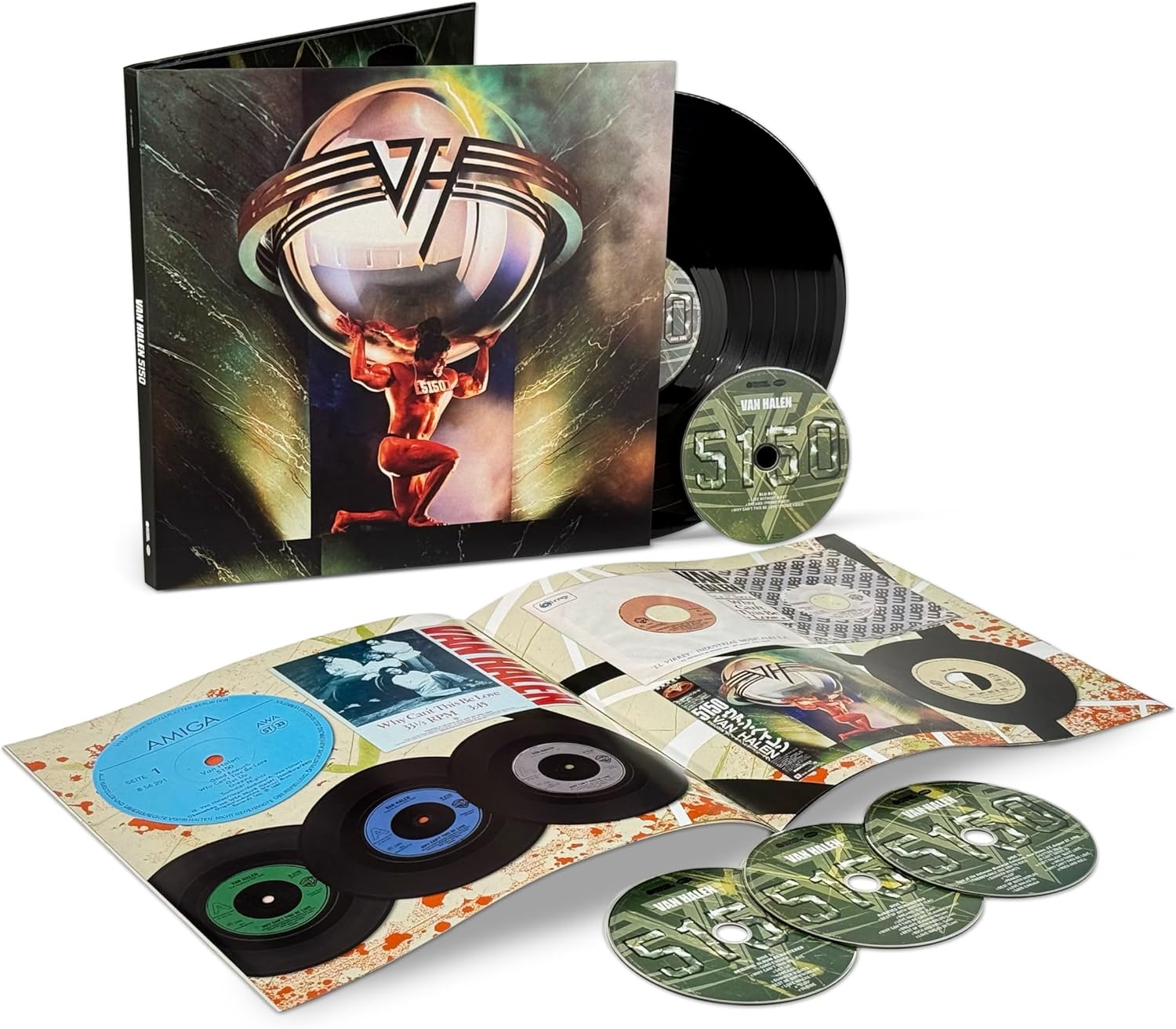
Celebrating its 40th Anniversary in March 2026, “5150” is the first of four albums Van Halen recorded with Sammy Hagar as lead singer. To mark this moment, The band are releasing an expanded edition of this classic with a remastered version of the original album, a disc of rare singles edits and B-sides and a previously unreleased performance from the band recorded on August 27th, 1986. Rounding out the package will be a blu-ray inclusive of the first HD release of the band’s classic 1986 live video Live Without a Net and a promo video for the track ‘Dreams’. Featuring the evergreen tracks ‘Why Can’t This Be Love’, ‘Dreams’, ‘Love Walks In’ and ‘Best of Both Worlds’
Coming after Dave Lee Roth’s acrimonious departure and heralding the arrival of their new singer Sammy Hagar, 1986’s “5150” was always going to be pivotal for Van Halen. It turned out to be more than that. The band had spent the late 70s and early 80s building up an irrepressible head of steam, but Roth’s egomaniacal behaviour on and off stage and guitarist Eddie Van Halen’s desire for respect alongside his fame were increasingly incompatible.
Hagar was not a familiar figure to Van Halen fans who did not know or care about his Montrose past or his solo hit singles, but his singing style – more straightforward than Roth – fitted in well, and “5150” gave them their first No.1 album, on the back of three hit singles: a couple of power ballads in Why Can’t This Be Love and Love Walks In, plus the inspiring, anthemic Dreams.
The production, by Foreigner’s Mick Jones, was tighter and more commercial than anything Ted Templeman had achieved on earlier albums, and left no room for the florid flights of fancy like “Panama” or “Hot For Teacher” that had characterised their previous album “1984″.
So the risk had paid off, and Van Halen looked set to dominate the hard rock/pop scene for a decade or more, especially when 5150’s follow-up album OU812 also hit the top spot. But it turned out Eddie was allergic to singers in general, and the second time things went tits-up it set off a chain of events from which the band never recovered
This five-disc reissue of “5150″ is notable for not including anything new or previously unreleased – a dubious honour.
The first two discs bring you the remastered album on CD and vinyl. There’s a second CD of single remixes, B-sides, etc. The third CD lifts the audio from the band’s Live Without A Net 1986 video from New Haven, Connecticut, which does at least include half a dozen decent rarities: the band play a couple of Hagar solo songs “I Can’t Drive 55” and “There’s Only One Way To Rock” Hagar sings a couple of Roth-era Van Halen songs “Panama” and “Ain’t Talkin’ ‘Bout Love” and together they maul a couple of covers The Troggs’ “Wild Thing” and Led Zeppelin’s Rock And Roll”. The fifth disc is a Blu-ray that includes the “Live Without A Net”
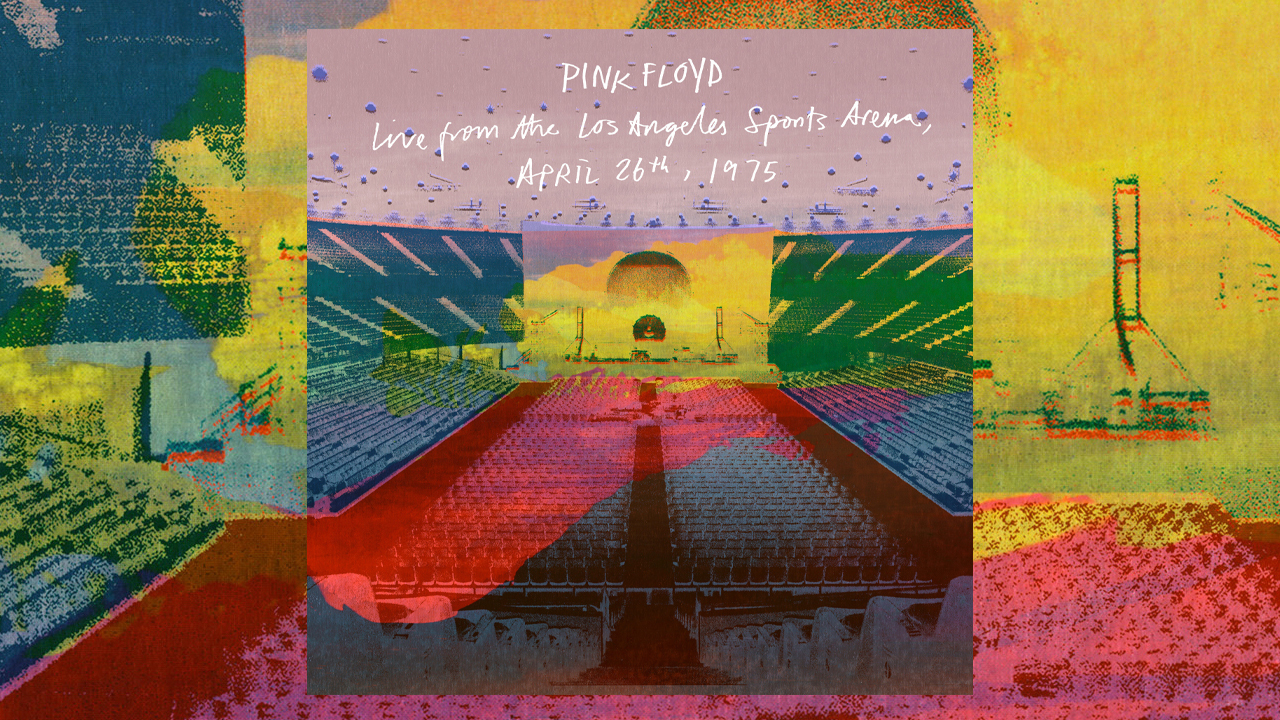
Pink Floyd “Live From The Los Angeles Sports Arena, April 26th, 1975” has been restored and remastered by Steven Wilson. A Pink Floyd concert from the Los Angeles Sports Centre from 1975, during the band’s Wish You Were Here tour, is to be released on vinyl and CD for the very first time.
Pink Floyd “Live From The Los Angeles Sports Arena, April 26th, 1975” will be available from SonyMusic as a special four LP clear vinyl version, which will be released exclusively for Record Store Day on 18th April, followed by a 2CD edition on April 24th.
At the time of the Los Angeles Sports Arena shows, Pink Floyd were in a period of creative transition. While a new album had originally been expected earlier in 1975, the band embarked on their North American tour whilst still developing new material live, on stage
Pink Floyd “Live from the Los Angeles Sports Arena, April 26th, 1975” spotlights the band during their rapid ascent. “The Dark Side of the Moon” had taken Pink Floyd from a hugely successful breakout British band to one of the biggest rock groups on the planet.
Arenas and stadiums would now play host to their performances. The Wish You Were Here Tour was announced in early March 1975, just one month prior to commencing. The shows instantly sold out and broke box office records, including that of the Los Angeles Sports Arena, which in a single day sold all of its 67,000 ticket allocation for the scheduled four-night run. An extra fifth show signalled a residency, and sold out within a matter of hours. The recording that lays the foundation of this historic release was created by the late bootlegger Mike “Mike the Mic” Millard, whose tapes from concerts across Los Angeles in the 1970s became renowned for their surprisingly clear sound quality.
To conceal his recording equipment from venue security, Millard would often pretend to be disabled and arrive to concerts in a wheelchair. Many of Millard’s bootlegs were pressed onto vinyl unofficially, however he did not condone the sale of his recordings for profit. Pink Floyd’s penultimate concert at the Los Angeles Arena was no exception, remaining unreleased and unheard by all but a few audio trading collectors, until now.
The concert opens with both “Raving and Drooling” and “You’ve Got To Be Crazy“, both of whch evolved into “Sheep” and “Dogs”, which would feature on their 1977’s tenth album, “Animals”, before the epic “Shine On You Crazy Diamond” kicks in, both parts separated by “Have A Cigar”, also from “Wish You Were Here”,before the whole of “The Dark Side Of The Moon” is played, followed by an encore of “Echoes”.
The recording has been meticulously restored and remastered by Steven Wilson from tapes that originated from the legendary late bootlegger Mike “Mike the Mic” Millard, whose tapes from concerts across Los Angeles in the 1970s became renowned for their surprisingly clear sound quality.
Many of Millard’s bootlegs were pressed onto vinyl unofficially, although he did not condone the sale of his recordings for profit, and these recordings were heard for the first time when released as part of the 2025 UK album “Wish You Were Here 50” box set.
Pink Floyd: “Pink Floyd Live From The Los Angeles Sports Arena, April 26th, 1975“ 1. Raving and Drooling (Live bootleg – Los Angeles Sports Arena, 1975) 2. You’ve Got To Be Crazy (Live bootleg – Los Angeles Sports Arena, 1975) 3. Shine On You Crazy Diamond (1-5) (Live bootleg – Los Angeles Sports Arena, 1975 ) 4. Have a Cigar (Live bootleg – Los Angeles Sports Arena, 1975) 5. Shine on You Crazy Diamond (6-9) (Live bootleg – Los Angeles Sports Arena, 1975) 6. Speak to Me (Live from the Los Angeles Sports Arena, 1975) 7. Breathe (In The Air) (Live from the Los Angeles Sports Arena, 1975) 8. On the Run (Live from the Los Angeles Sports Arena, 1975) 9. Time (Live from the Los Angeles Sports Arena, 1975) 10. The Great Gig in the Sky (Live from the Los Angeles Sports Arena, 1975) 11. Money (Live from the Los Angeles Sports Arena, 1975) 12. Us and Them (Live from the Los Angeles Sports Arena, 1975) 13. Any Colour You Like (Live from the Los Angeles Sports Arena, 1975) 14. Brain Damage (Live from the Los Angeles Sports Arena, 1975) 15. Eclipse (Live from the Los Angeles Sports Arena, 1975) 16. Echoes (Live from the Los Angeles Sports Arena, 1975)
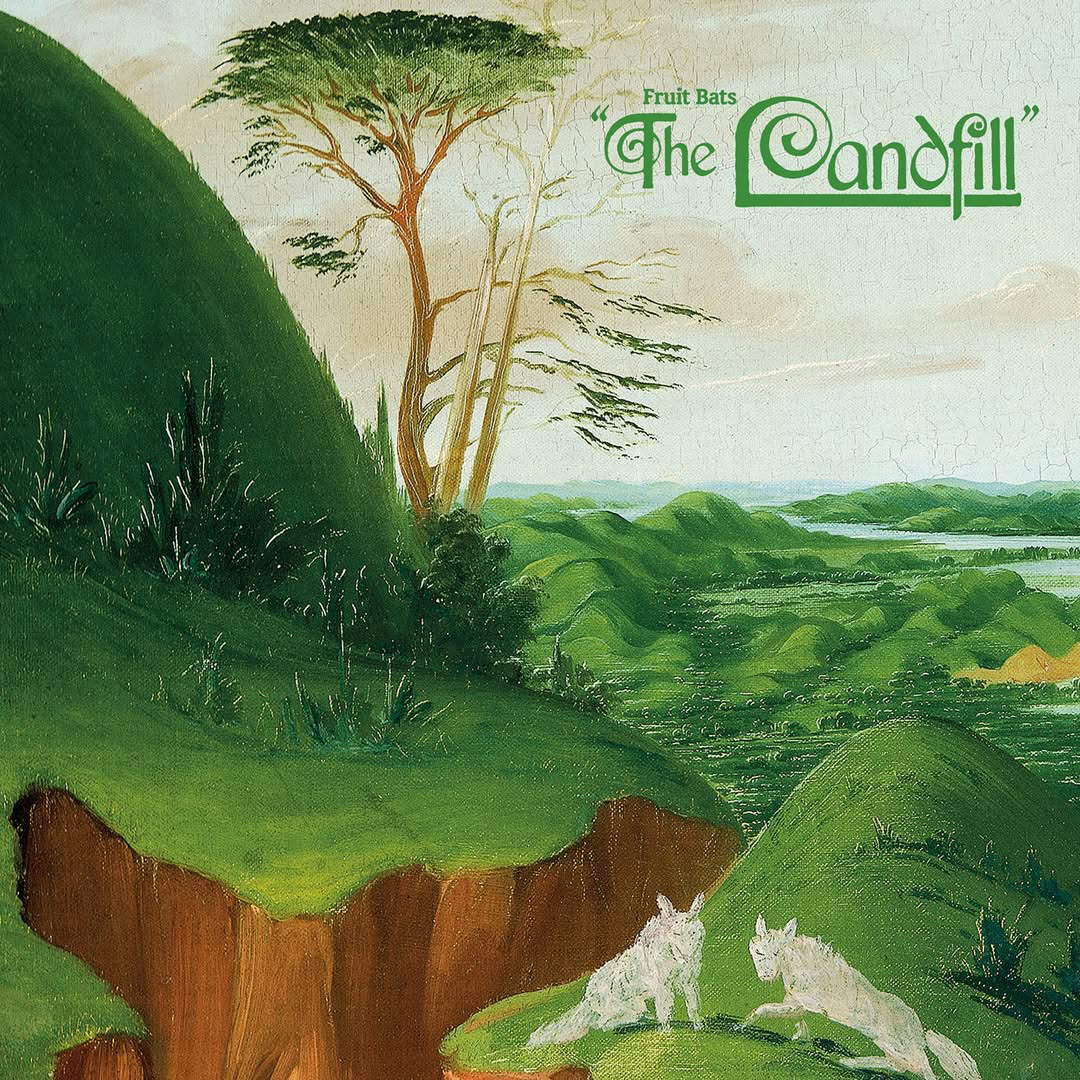
Eric D. Johnson announced a new Fruit Bats album and shared the title track, “The Landfill”, due out June 12 via Merge. It’s the follow up to last year’s “Baby Man“, and about it, he says, “Full swashbuckling band vibes, laser beams aimed at your heart as usual, all my lyrical preoccupations distilled further down into the heart cavity.”
The first single is the title track, which is accompanied by a video directed by Adam Willis. Johnson says:
This is my 6th video with the great Adam Willis, AKA Brother Willis. Another in our long line of collabs which are often funny with cold opens and strange characters plumbing the depths of the human psyche. The very first brainstorm session, we landed on Close Encounters of the Third Kind as an initial reference. Especially the notion of a man at a crossroads who is haunted by a mysterious shape. Later that morphed into the idea that, for some strange reason, I live a double life as a tortured art star in Europe. And that my music career there is completely unknown. Truth be told, Fruit Bats have had a strange journey as more or less a cult band for a long time. Things have gotten bigger in recent years in North America but we ARE still quite obscure in Europe. This is a less than subtle nod to that fact.
Silly and obscure as these concepts may be – the video still plays to the lyric and feeling of the song. The notions of memory and legacy and following signs that may or may not lead you down the right path. Adam and I always like winking in these videos but the concepts and stories are still kinda poignant at the end of the day.
Fruit Bats album, out June 12th, 2026, on Merge Records







 The Fat Angel Sings