

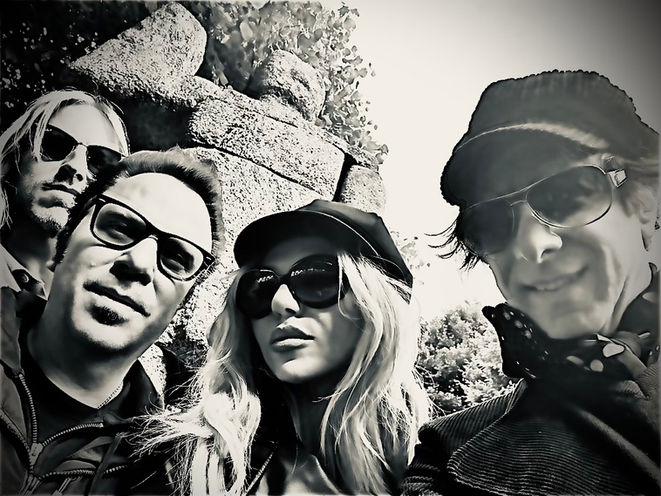
Mercury Rev is an American indie rock group that formed in 1989 in Buffalo, New York. A band committed to experimentation and reinvention, their music has run the gambit from neo-psych and noise rock, lush pastoralism, and 4/4 electronica. Over 25 years, the US greats have ploughed a wayward furrow through grunge, funk, doo-wop and electronica.
Mercury Rev, are one of the most important bands of the 1990s, The group did not have a fixed drummer, and instead revolved around John Donahue (guitar, and later vocals), Sean “Grasshopper” Mackiowiak (guitar, clarinet), and Dave Fridmann (bass). David Baker performed primary vocals on the earlier and more prolific recordings, and Jimy Chambers functioned as their early drummer and keyboardist.
Mercury Rev are a rarity in indie rock: a band who have continually evolved their sound, pushing at the boundaries of what rock music actually means over 25 years, the line-up has remained fairly stable over the years, with the core duo of Jonathan Donahue (vocals and guitar) and Sean “Grasshopper” Mackowiak (guitar) present throughout, joined by Dave Fridmann (bass and production) on the first seven studio albums and flautist Suzanne Thorpe on the first five.

“Yerself Is Steam” (Beggars Banquet, 1991 – Columbia, 1992), their debut, is one of the most important records of psychedelic rock and one of the masterpieces of the ’90s. On first listen, the record’s sound is chaotic and swirling, obviously signifying Mercury Rev’s cathartic function, and their aim to achieve an acid-influenced nirvana, just like the first San Franciscan hippies.
But every song hides terrible neurosis, which amplifies the most electric moments of Neil Young, and gives rise to a sick and decadent atmosphere, different than that of the optimistic and carefree ’60s. The schizophrenic compositions of Mercury Rev are delicate ballads that hide the soul of a serial killer.
“Funky” rarely appears among the adjectives used to describe Mercury Rev. And yet “If You Want Me to Stay“, a Sly and the Family Stone cover originally released as part of the Rough Trade Singles Club, demonstrates that Mercury Rev can funk it up with the best of them. Their version, later collected on “Yerself Is Steam” bonus album “Lego My Ego”, not only captures the original’s understated funk, but also brilliantly reflects the dark desperation of early-70s Sly Stone as he retreated into drugs and paranoia. That is largely thanks to Baker’s yearning, slightly deranged vocal, which bounces around over woodwind riffs and guitars that vacillate between funk and fuzz.
The complex music appears to be a new age version of Red Krayola; uncoordinated and unbalanced, like Red Krayola, but at the same time containing a contemplative and meditative sound, like new age music. The band’s method of hypnosis is well exemplified by the song “Frittering”, in which one of the guitars “sings” the spongy melody while the other is immersed in a sea of distortion. Everything goes on for eight minutes over a hypnotic cadence. “Chasing a Bee” runs for seven minutes and is the quintessence of ‘”dreampop” music: folk guitar chords are underpinned by an underworld of eccentric sounds, all accompanied by a fairytale-like lullaby singer. “Chasing a Bee” On side one, track one on the band’s debut album – might be Baker’s tour de force, his vocals endlessly shifting from calm to angst, from humour to passion in a remarkable, unnerving performance, set off by a soaring chorus and a backdrop of exploding guitars. Thorpe’s four-note descending flute riff anchors the madness.
Slowly, the guitar riffs become more distorted and loud, while the pace becomes more and more martial. Meanwhile, the noise generated by Thorpe’s pastoral flute playing hovers calmly over the piece. The song is gradually submerged in a maelstrom of hellish noise. “Blue and Black” is a piece of Dadaist theater in the most solemn tradition of David Thomas: a soft-toned shamanic blather, it is as insane as it is poetic, floating on a gentle rhythmic carpet on which stands massive chords for both piano and orchestra. Percussion is often the protagonist; the harmonies are always accompanied by eccentric rhythms.
“Syringe Mouth” is influenced by the demented saraband of Red Krayola, with a carousel of guitars and distorted vocals set to a crazy martial rhythm. In “Sweet Odyssee of a Cancer Cell”, exhaled over a charging beat are almost Indian psalms, and before long the song is screwed into a dizzying Sufis dance. The disc culminates with “Very Sleepy Rivers“, twelve minutes of slow clouds of chords and ethereal singing, which is broken by an inhumane fear.
The theatrical aspect of the album can be attributed to David Thomas’s influence on the band, but the spatial sense is derivative of Pink Floyd.
The following album-less single, “If You Want Me to Stay” (Rough Trade, 1992), seems to mitigate the madness of the ensemble portrayed on the previous record.

The next record, “Boces” (Columbia, 1993), however, ran with the brilliant anarchy of the previous album, but this time with excessive self-indulgence. “Meth of a Rockette’s Kick” unwinds for ten minutes on a carpet of pretty, anxious, and harmonic adventures. It is a succession of surreal solfeggio, dissonances, arpeggios and rings, with an ethereal flute solo from Thorpe and sudden bursts of distorted guitar.
On the surface the track is a fairy’s floating lullaby; a carousel for children that takes the form of a pastoral, Mediterranean arrangement a ’la Kevin Ayers, and rears a melody that owes something to the Flaming Lips. The meat of the song is gradually shown, though, and in the end it is revealed to be a long jam of jazz horns, children’s choirs, and exotic percussion.
“Deserter’s Songs”, Mercury Rev’s fourth album, may be their acknowledged classic. But “Boces”, their second, and the last to feature Baker, is the hardcore fans’ favourite, a 3D DayGlo dream of a record on which all musical life abounds, from Dixieland jazz to punk. Remarkably, it came out on a major label Columbia in the US, the label essentially let them get on with it. “We were trying to allow each other’s freaks and difference to come out because we had a responsibility,” he said. “They [Columbia] were saying, ‘You can do what you want.’” On the album’s mighty, 10-and-a-half minute opening track “Meth of a Rockette’s Kick”, “what you want” turned out to be combining a tightly wound, multi-layered collage of barbershop-quartet backing vocals with harps, trombones, brushed drums, flute and controlled guitar detonations. Its astonishing attention to detail was a tribute to the production nous of Fridmann.
Developed in their own pseudo-orchestral fashion, Mercury Rev created two more entertaining songs: “Trickle Down” and “Hi-Speed Boats”. Both are set at a strong pace and placed in a sonic cloud of distortion, and both are held back by litanies reminiscent of Dinosaur Jr.. As proven on this and the previous record (and through a look at the turbulent personal history of the band), the group is enhanced when deformed; when guitars, percussion, and wind instruments are free to ramble and create cacophony, the band is at its prime.
The long raga “Snorry Mouth”, however, has a thread to more serene music, which holds together the centrifugal forces of chaos, and ends up limping behind the melody. Unlike classic psychedelia, which was anchored to the form of the song, Mercury Rev creates music with a free flow of sound and without a predefined order, such as the changing and unpredictable course of a stream.
The liquid jamming of the songs “Boys Peel Out” and the enthralling improvisation “Something for Joey”. Depending on who you ask, the recording of “Boces” was either “magical” (Baker), “trying” (Grasshopper) or “impossible” (Donahue). And yet what emerged was an album shot through with colour, light and harmony. “We were trying to capture the magic of what was happening,” Baker told me. “There was humour and energy. We loved being in the studio.” “Something for Joey“, the album’s improbable lead single, exemplifies that feeling of humour and energy, with rolling guitar verses erupting into a three-note brass chorus that is pure musical release and childish joy.
The incoherent, messy opera that is “Boces” closes with the blues ballad “Girlfren“, which lies somewhere between the “acidfolk” of the Holy Modal Rounders Mercury Rev’s true specialties, though, were their cacophonous delusions that prove them as masters of musical transformation.
Following “Boces“, Baker left the band (to form the Shady) and Donahue became the unique lead singer. Adam Snyder was added on electric keyboards (mellotron, synthesizer, electric piano), which added a third layer of ivory to the two played by Chambers (clavinet, harpsichord) and Fridmann (piano and mellotron).
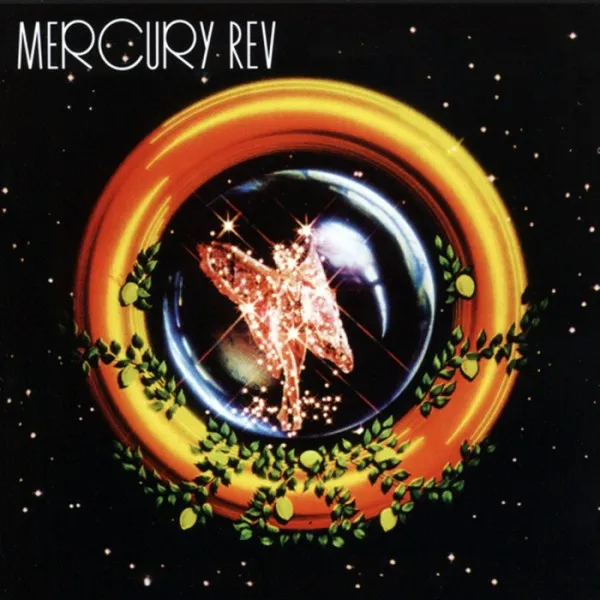
“See You On the Other Side” (Columbia, 1995), their next record, tries to sound a bit more ‘pop.’ A mostly serene and joyful, yet compact and focused, air limits the disc to swirling and spatial rides. “Empire State“, a fairy tale nursery rhyme to the beat of a march, degenerates into percussive chaos scarred by a free-jazz saxophone. A mutant hard-rock riff can be found in “Young Man’s Stride”. Although the record starts off strong, after the second song it is all downhill. The record becomes a prisoner of more and more brazenly ‘pop’ songs, even if it is redeemed continuously with touches of genius: the romantic solo clarinet in the maudlin country dirge “Sudden Ray Of Hope; Racing the Tide” features counterpoint pastoral flute and French Horn, which has a slightly pathetic affect; “Close Encounters Of The 3rd Grade” is suddenly launched into a frantic disco “groove,” while a soprano sings with the choir, which is an off-key chorus of synthesizers. “Everlasting Arm” parodies the ornate orchestra of Tin Pan Alley
“A Kiss from an Old Flame” utilizes a deadly tango, and “Peaceful Night” is a Salvation Army blues piece, filled with gospel organs and a sad bombardment of horns. At this point in the bands career, the general sonic background of their music has become more tenuous, although more and more refined, more and more calculated, and especially more and more orchestral. Donahue’s vocal register is perhaps too tempting, and the melodies are too sweetened, giving the impression that this is their Dark Side of the Moon; when the ingenious psychedelic music leads to the loss of the psychedelic touch, what remains is only a baroque pop mediocrity.
“See You on the Other Side”, was the band’s third studio album, released in 1995, represented something of a commercial nadir for Mercury Rev. Baker had departed, longtime drummer Jimy Chambers was soon to do so too, and the album sold so badly that the band apparently asked their label to drop them. That 1995 was the peak of Britpop – a style that, at its worst, was the antithesis of Mercury Rev’s experimental bent
“Paralyzed Mind of the Archangel Void” (Big Cat, 1995) was recorded under the pseudonym “Harmony Rockets” and only contains a suite, forty minutes in length. The EP “I’ve Got a Golden Ticket” (No 6, 1998) contains bizarre covers of Vangelis songs and of film themes.
![Deserter's Songs [Deluxe Edition]](https://media.pitchfork.com/photos/5929aef49d034d5c69bf4626/1:1/w_1024%2Cc_limit/6ecdcabf.jpg)
“Deserter’s Songs” (V2, 1998), which in the process of its creation added violin, contrabass, horn, and trombone, is rather schizophrenic: on the one hand, the record’s atmosphere is just as hallucinatory as the previous records, but on the other, the production is usually reserved to a light music orchestra. The music, then, is the equivalent to a treatise on post-modernism: the sound is not that of a score, but instead a repetition of continuous musical quotes of others, in particular those of suburban Broadway and vaudeville.
When Mercury Rev eventually ascend to the great gig in the sky, “Deserter’s Songs” will be written on their tombstone. The album, released in September 1998, is near flawless, one of those records on which not a second is wasted and every track could be a single. “See You on the Other Side” had flopped three years earlier Donahue said in 2011, “The world wasn’t exactly waiting for another Mercury Rev record.” Even the fans were taken aback by “Deserter’s Songs”. The band had experimented with musical genres over the years, but they had never changed their sound so totally. Out went frantic electric guitars and brute sonic force, in came pastoral Americana and yearning for a forgotten age. It even featured a musical saw. But it was the incredible quality of the tracks that made “Deserter’s Songs” stand out. “Tonite It Shows” has an immaculate vocal performance from Donahue, which injects the straightforward nostalgia of lines such as “The way we were, the way we met / The way I lit your cigarette” with spine-tingling power, his voice catching at the edges like a man overcome with the force of memory. The orchestral arrangement, reminiscent of early Disney films, is note-perfect, too.
Sadly, where the previous album seemed to be a vain affectation of their original sound, the orchestration, at this point, was seemingly becoming the norm. “Holes” is the first song on the album, and the sounds that begin it are those of a classical string section and a pastoral flute. The song is decadent, scanning, and martial, like the Flaming Lips, but marries that aesthetic with a clear envy of the languid symphonic orchestrations.
“Tonite It Shows” takes a theme and arrangements from nostalgic ‘50s soundtracks (oboe, violin, harp, xylophone) . Their method on this album is a deconstruction and reconstruction of clichés and masterpieces. To the yearning in the string section (and this time in the women’s choir as well), “Endlessly” adds the yelps of an atmospheric Theremin. The short song “Hudson Line” is a hodgepodge of unrelated ideas, from the poignant saxophone solo (played by Garth Hudson of the Band) to the searing electric guitar, to the warbling of an alto chorus, to the minimalism of the string section, to the passing phrases for organ, trombone, xylophone, etc., this relatively short work is obviously jumbled.
This album proves that the commercial orchestration was becoming a method of creating music for Mercury Rev. There are glimmers of hope for genius, though, like the jazz-rock exuberance of “Delta Sun Bottleneck Stomp“; however, the song is more “marketable” than any of their prior brilliant moments. The postmodernist practice leads them to more and more literal interpretations of past music. The violins of “Opus 40″ and the vocal harmonies as well as the gospel organ solo come from the Band and perhaps the organ solo is in homage the drummer and guest of honor, Levon Helm). It is curious that, in the end, the disk triumphs. Among the lows, there are high moments, like the ballad “Goddess on a Hiway”, It was as if under the immediate Baroque trappings of the record there was the rediscovery of the American tradition. The arrangements within the record are a riot of electronic keyboards, which are entrusted with the melody, rhythm, and polyphony. The timbres are colourful, and the dynamic is swirling. This record, in conclusion, is a little Pet Sounds (Beach Boys) by Donahue, who put order into chaos and tried to save what little rationality there was left in the early records.

The good news about “All Is Dream” (V2, 2001) is that it is the most self-referential work of their career: instead of turning the tradition upside down, Mercury Rev turn their own past music upside down. Unfortunately, the good news comes with some seriously bad news. Gone is the anarchic, chaotic, savage sound of the beginnings. What we witness today is three mildly detached musicians disfiguring their own legacy by using kitsch and easy-listening arrangements.
“All Is Dream” has some fantastic songs and moments of preposterous pomp, not least “The Dark Is Rising”, which continues the band’s tradition of brilliant album openers. The song races out of the traps with booming timpani and soaring strings, before settling into one of Donahue’s most sweetly affecting melodies. If Mercury Rev were ever to make a Bond theme, this would be it.
For the first time a Mercury Rev album features a couple of embarrassing songs, as if the band couldn’t come up with two more to finish the album and thus dusted off whatever they could find in the drawer.
Take away the layers of instruments and half of the album is made up of soft country-ish Neil Young-ian litanies. Notable examples include “Tides Of The Moon“, despite the soul-jazz embellishment and the psychedelic guitar solo, “Dark Is Rising“, despite the orchestral swells, “Little Rhymes“, despite the noir atmosphere, and the closing “Hercules“, despite the synth drone and the folkish strumming.
The more lively songs sound like “Nite And Fog”, the languid piano ballad “Spiders And Flies”, and especially the lunatic “A Drop In Time”, halfway between orchestral muzak and vaudeville.
One song, “Lincoln’s Eyes”, relies on an uneasy balance between old and new styles. The whining falsetto is hardly endearing, and the folkish melody is hardly original, and the instrumental tumult is too linear to be truly dramatic, but the coda is quite ghostly.
The album showcases the band’s talent and skills at manipulating sonic icons. This is not all too different from what happened to the Grateful Dead in their later years: living-room psychedelic music for aging hippies based on great playing and some cool ideas.
The problem is that the band is now doing for real, in earnest, what they originally merely pretended to do: heavily-arranged pop music.
However, even the worst Mercury Rev album is still one of the best albums of the year.

“The Secret Migration” (V2, 2005) is sheer calligraphy. The band continues to “normalize” the music, smoothing out the corners, erasing the discontinuities, reorganizing the chaos, the result is classy easy-listening music for the generation that missed the real action (“Black Forest”, “Diamonds”, “Climbing Rose“).
The double-CD “The Essential Stillness Breathes” (2006) is a selection of their most popular songs and a CD of rarities.
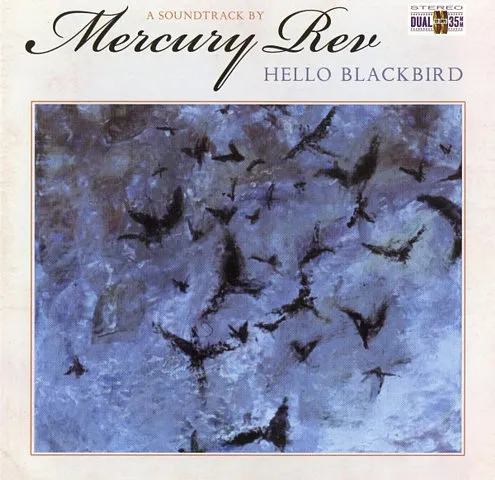
“Hello Blackbird” (2006) contains the music for a film soundtrack.

With bassist Dave Fridmann having become one of the most creative producers of the 2000s, Mercury Rev sounded more artificial than ever on “Snowflake Midnight” (Yep Roc, 2008). The album had nothing that even remotely matched the glorious mess of their early albums. The mainstream press that had missed them in the 1990s hailed it as a masterpiece, a fact that signified more about the influence that their sound had on the music world than the real merits of this late, lame and lackluster work. Only a virtually total ignorance of the contemporary music scene could explain why anyone would find anything relevant in these modest, old-fashioned songs.
“Our bass player Carlos was a DJ in this little nightclub,” Jonathan Donahue told the Quietus. “But he would play stuff that would get the girls dancing, you know, [sings] “groove is in the heaaart”, and we’d sneak in there and bring in tiny synthesisers, and say ‘OK, at the end of Groove Is in the Heart, switch into this, and see how long we could play before people noticed. Not mimicking the sound, but the feel.” The result was a bunch of 30-minute-long song ideas, largely electronic, which would become “Snowflake Midnight“, the band’s seventh studio album, released in September 2008. Their embrace of electronics was brilliantly out of place with what was happening in the rest of the musical world, coming more than a decade after British indie bands fused their own dance/rock crossover
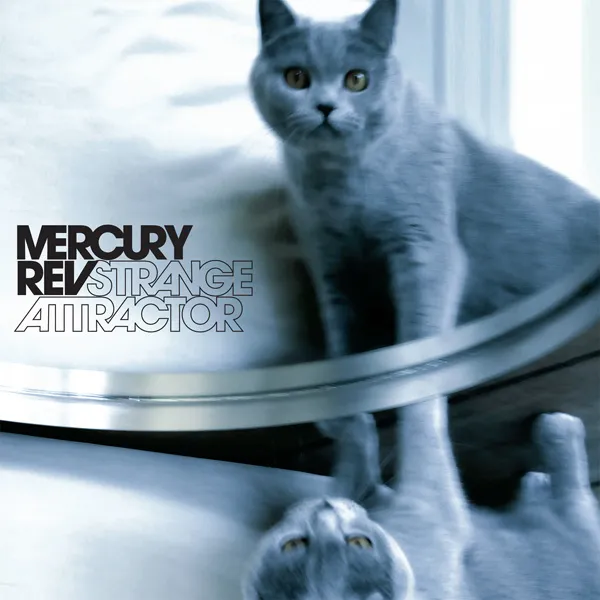
“Strange Attractor” (2008) was an instrumental album distributed for free to anyone who bought “Snowflake Midnight“.
“Strange Attractor” is the 8th full-length studio album. The album was released as an MP3 companion album to Mercury Rev´s 7th full-length studio album “Snowflake Midnight”. Both albums were released on the 29th of September 2008. It´s possible to download “Strange Attractor” from the band´s official homepage.
“Strange Attractor” has also been released as a bonus LP on the vinyl release of “Snowflake Midnight”.

Other than the archival double-album “The Peel Sessions” (2009), and compilations, the band was silent until a new lineup with Jonathan Donahue, Sean “Grasshopper” Mackowiak, new bassist Carlos Anthony Molina and new drummer Jason Miranda recorded The Light in You (2015), an album of nostalgic orchestral pop arranged with synthetic strings and horns.
“The Light In You” does lean more towards “Deserter’s Songs” than the lukewarm electronics of “Snowflake Midnight“, its sound dominated by acoustic guitars and sweet orchestral flushes and featuring some of their strongest songs in years. Remarkably, though, Mercury Rev still manage to explore new musical paths on the album, with “Sunflower” dashing through film-soundtrack funk, while “Rainy Day Record” features – I kid you not – the band’s first excursion into rap (or rhythmic spoken word, if there’s any difference). The best track, though, is the one that sounds most like the Mercury Rev of very, very old: “Are You Ready”? hints at the massed guitars and surging choruses of “Boces” or “Yerself Is Steam” – a sound that, it appears, is as evergreen as Mercury Rev

They then decided to cover the entire album “The Delta Sweete” by country music’s singer-songwriter Bobbie Gentry using an impressive cast of female vocalists: Norah Jones, Hope Sandoval of Mazzy Star, Rachel Goswell of Slowdive, Laetitia Sadier of Stereolab, Marissa Nadler, Vashti Bunyan, Phoebe Bridgers, Beth Orton, Lucinda Williams, etc. However, “Bobbie Gentry’s The Delta Sweete Revisited” (2019) is a very minor tribute album.
This “Delta Sweete” is her long-delayed justice—Mercury Rev’s committed and an affectionate resurrection of an album that anticipated by three decades their own pivotal expedition through transcendental America, 1998’s “Deserter’s Songs“. From their recording lair in New York’s Catskill Mountains, the founding core of Jonathan Donahue and Grasshopper with Jesse Chandler (previously in the Texas group Midlake) honor Gentry’s foresight and creative triumph with spacious invention and hallucinatory air. And they are not alone. Gentry’s stories and original resolve are brought to new vocal life and empowerment by a vocal cast of women from across modern rock and its alternative paths: among them, Mazzy Star’s Hope Sandoval; Laetitia Sadier, formerly of Stereolab; Marissa Nadler; Margo Price, the fiery new country star with a punk-rock heart; and Norway’s Susanne Sundfør, who cuts through “Tobacco Road” with arctic-Nico poise. Phoebe Bridgers, whose first record was a softly stunning 2015 single for Ryan Adams’ PAX AM label, hovers through the acid- western suspense of Gentry’s “Jessye’ Lisabeth” with floating calm, like a comforting angel.

“Born Horses” On their first album of original material in nine years, the veteran New York rockers reinvent themselves once again. That’s where the problems begin. Mercury Rev’s first studio album of original material in nine years is that rare thing: a work that doubles, even quadruples down on a weird idea, defying marketability or even legibility. The band wrote and recorded “Born Horses”, mixed and mastered it, then released it, all of which constitutes brash commitment to the bit. There’s something admirable in the fact that it exists, for these are the materials from which cults are built—not the white-robes-and-passing-comets variety but the kind that rescues lost objects and redefines them as precious.
This is the second time they’ve taken such a risk. After the commercial failure of their third album, 1995’s “See You on the Other Side”, Mercury Rev effectively broke up and reunited as a very different band under the same name. Jettisoning the punk-derived riffs and blasts of distortion that had defined their music, they adopted a weird pastoralia, indulging whims both folksy and cinematic, earthy and magical; “Deserter’s Songs”, their unexpected comeback, sounded like a transmission from a haunted forest. It was a huge, potentially alienating gamble, but it paid off beautifully and revitalized the band for the new millennium. Perhaps that’s what Jonathan Donahue and Sean “Grasshopper” Mackowiak hoped to achieve when they made “Born Horses”, which attempts a much less dramatic transformation and fails spectacularly.


