

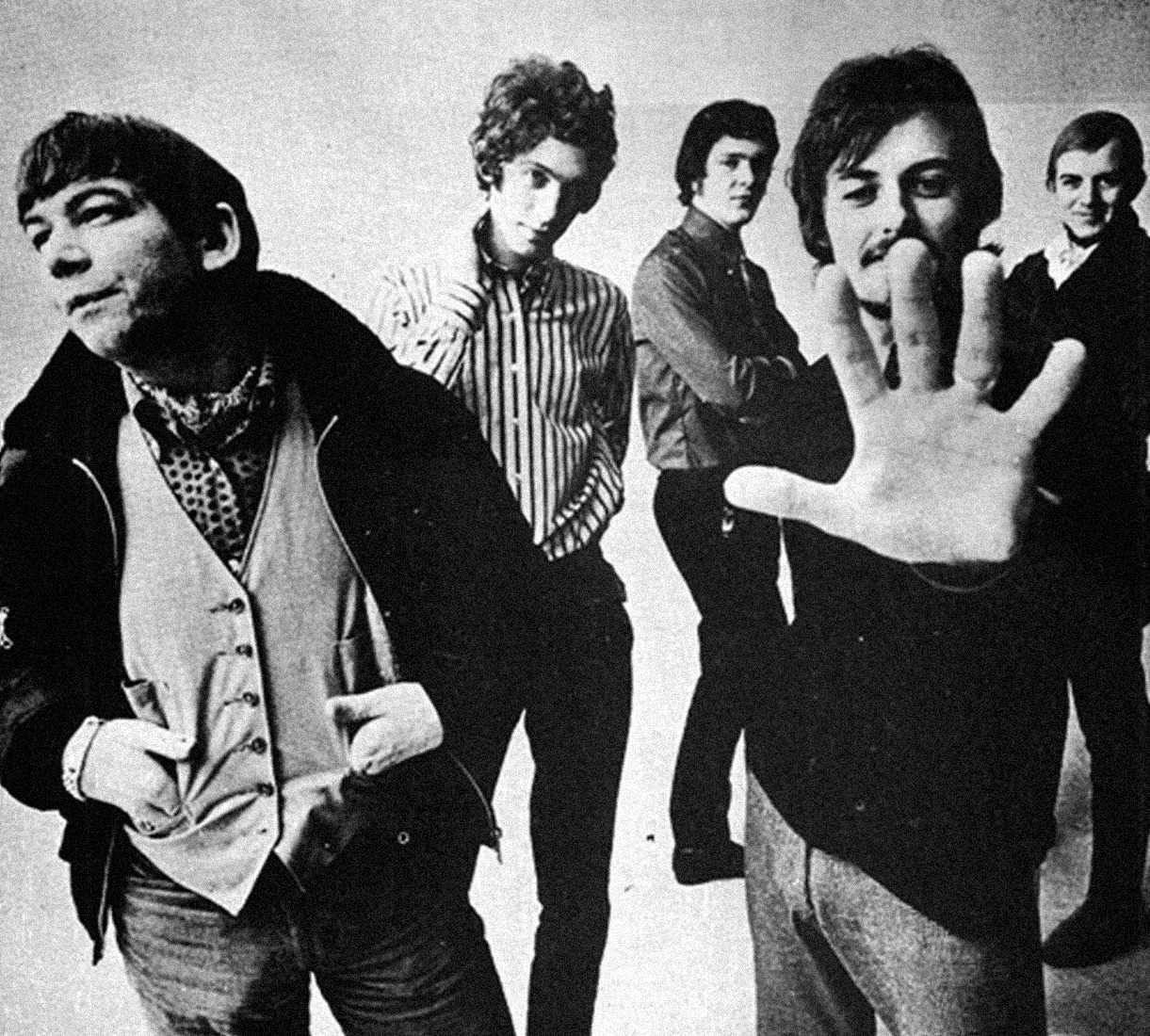
“Every One of Us” was the second of three albums released by the band in the United States in that year (the album was not released in the United Kingdom). The single from the album was “White Houses”, which charted in the United States and Canada. The album combines several styles such as blues, folk rock, and raga rock, while the track “Year of the Guru” is notable for its early use of rapping vocals.
At the time of the release of the album in August 1968, both Danny McCulloch and Vic Briggs had been fired from the band earlier that summer, and Eric Burdon was seeking replacement musicians. Unlike the previous two albums, involving shared songwriting credits with band members, “Every One of Us” is primarily compositions solely credited to Eric Burdon.
When they recorded “Every One of Us” in May of 1968, just after the release of their second album, “The Twain Shall Meet”. The group had seen some success, especially in America, with the singles “When I Was Young,” “San Franciscan Nights” and “Sky Pilot” over the previous 18 months, but had done considerably less well with their albums. “Every One of Us” lacked a hit single to help drive its sales, but it was still a good psychedelic blues album, filled with excellent musicianship by Burdon (lead vocals), Vic Briggs (guitar, bass), John Weider (guitar, celeste), Danny McCulloch (bass,12-string, vocals), and Barry Jenkins (drums, percussion), with new member Zoot Money (credited, for contractual reasons, as George Bruno) on keyboards and vocals. Opening with the surprisingly lyrical “White Houses” — a piece of piercing social commentary about America in early 1968 — the record slid past the brief bridge “Uppers and Downers” and into the extended, John Weider-authored psychedelic mood piece “Serenade to a Sweet Lady,” highlighted by Briggs’ superb lead acoustic guitar playing and Weider’s subdued electric accompaniment. This is followed by the acoustic folk piece “The Immigrant Lad,” a conceptual work that closes with a dialogue. “Year of the Guru” is another in a string of Jimi Hendrix-influenced pieces by this version of the Animals, showing the entire band at the peak of their musical prowess, and Burdon –– taking on virtually the role of a modern rapper — generating some real power on some surprisingly cynical lyrics concerning the search for spiritual fulfillment and leaders. “St. James Infirmary” recalls “House of the Rising Sun,” as both a song and an arrangement, and is worthwhile just for the experience of hearing this version of the group going full-tilt as a rock band. And then there is “New York 1963 — America 1968,” an 18-minute conceptual track with a center spoken word section featuring not a group member, but a black engineer named Cliff, who recalls his experience as a fighter pilot during World War II, and tells of poverty then and now.
This album would be one of the last times that this line up of the group would appear on record —Briggs and McCulloch would leave later in the year, both to be replaced by Andy Somers (aka Andy Summers), and the group as a whole would pack it in with the waning of 1968.
Billboard described this album as “Another fine album by Eric Burdon, and the Animals.“ Allmusic described it as “a good psychedelic blues album, filled with excellent musicianship.

