


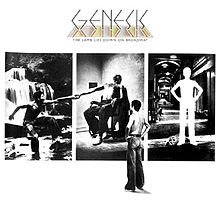
With an overarching narrative concept, input from Brian Eno and an album cover by groundbreaking designers Hipgnosis, Genesis released “The Lamb Lies Down On Broadway” in November 1974. Fittingly, the live show that they took on the road was as much theatre as it was rock concert, bringing the story of the album’s protagonist, Rael, to life on stage. Closing out this period in Genesis’ history, album characters such as the Lamia and a Slipperman made up part of Gabriel’s visual arsenal, while the group themselves were firing on all cylinders, performing their new album in its entirety every night.
But by the time the tour came to a close, the band felt they had progressed as far as they could in this direction. Gabriel left the fold, issuing a press statement entitled ‘Out, Angels Out’ in August 1975.
Genesis would undergo yet another transformation in the months that followed, and by the time A Trick Of The Tail was released, in 1976, the baton had been passed to Phil Collins.
The album that’s seen by many fans of the classic 1970s Genesis line-up as their finest hour — or hour and a half, to be precise. The Lamb Lies Down On Broadway was released as a double LP on 18th November 1974. It played a huge part in making the group the progressive rock legends they became.
With only six weeks on the UK chart and a No. 10 peak, The Lamb, as admirers everywhere know it, was rather short-lived in strictly commercial terms. But it’s the earliest album in the Genesis catalogue that’s certified gold in the UK, and gave them their highest-charting release to that point at No. 41 in America, adding to the band’s growing reputation there.
With its complex tale of redemption focused on the subterranean character Rael, widely seen as the alter ego of frontman Peter Gabriel, the album established itself as one of the key concept albums of the initial “prog” heyday — even if devotees, to this day, continue to debate its possible meanings.
In making such an ambitious piece, Gabriel himself knew that Genesis were opening themselves up for vilification from the music press. “We’re easy to put down,” he admitted to the NME soon after the album’s release. You can say the characters are far fetched, the music over ornate, that we’re riding on my costume success. There – I’ve done it for you.
“However,” Gabriel went on, “in maybe ten years a group will emerge to take what we do a lot further. I look upon us as an early, clumsy prototype.”
Mike Rutherford, talking about The Lamb later in Hugh Fielder’s The Book Of Genesis, was quite matter-of-fact. “It was about a greasy Puerto Rican kid!” he said. “For once, we were writing about subject matter which was neither airy-fairy, nor romantic. We finally managed to get away from writing about unearthly things, which I think helped the album

Genesis had been building toward their sixth album since their formation, so it’s no surprise that their sprawling double-LP concept record is their masterpiece. Like most prog epics, it doesn’t make a whole lot of sense storywise, but the music and performances are among the genre’s all-time best. Singer Peter Gabriel left after its release, and the rest of the band eventually headed in a new, more lucrative direction.

 The Fat Angel Sings