Posts Tagged ‘Terry Reid’

Terry Reid (November 13, 1949) is 75 years old today.
Already playing with a band called The Redbeats, he left school at 15 and joined the band Peter Jay’s Jaywalkers. Landing a spot as opening act for The Rolling Stones at a Royal Albert Hall show in 1966, Reid became friends with Graham Nash (then a nember of The Hollies) who suggested The Jayhawks sign with Columbia Records’ U.K. division.A minor hit single came out in 1967, but the group had disbanded. Producer Mickie Most took on the job as Reid’s (now a solo artist) manager. Reid garnered good notices as opening act on tours with the Stones and Cream, but album sales weren’t spectacular.
In 1968, as all thiis was happening, The Yardbirds were in diisarray, having lost their vocalist and drummer, and needing to put an ad hoc band together to fulfill set Yardbirds European tour dates, that group’s Jimmy Page asked Reid to be frontman for the “New Yardbirds”. Already committed to the Stones and Cream tours, Reid suggested a young vocalist named Robert Plant, as well as Plant’s boyhood friend, a drummer named John Bonham, the New Yardbirds to soon becone Led Zeppelin. Reid was also offered the vocalist position vacated by Rod Evans in Deep Purple, but turned it down due to contractual agreements (Ian Gillan got the job).
He concentrated on live shows while engaged in legal matters with Most after a falling out, releasing three albums on different labels during the 1970s (one, 1976’s Seed of Memory, produced by Nash), and frustrated by his lack of major success, retired his solo career to do session work with artists like Jackson Browne, Bonnie Raitt, and Don Henley (he returned to the studio to record the 1991 album The Driver), and his songs have been covered by artists rangiing from Cheap Trick to REO Speedwagon, and he has collaborated with other musicians in recent years. An unauthorized documentary filn, Superlungs, was released in 2016.

In the waning days of the nineteen-sixties, Terry Reid was England’s most wanted man. Jimmy Page wanted him as the front man of the band that would become Led Zeppelin. Deep Purple wanted him to fill the singing slot that wound up going to Ian Gillan. And both the Rolling Stones and Cream had enough respect for his talents to offer him the coveted role as opening act on several of their most storied tours. Back then, Reid’s stock rose so high, it inspired Aretha Franklin to comment, “there are only three things happening in England: The Rolling Stones, The Beatles and Terry Reid.”.

A frustrating clutch of factors came into play. Reid’s legal commitment to a rigorous solo touring schedule prevented him from forming a band with Page at that time, and the anxious guitarist didn’t want to wait. The offer from Purple held far less appeal for Reid. In an interview years later, he told me he didn’t want to be straight-jacketed into their brand of “cock rock,” as he called it. As for his solo career, a bad contract, a crumbling record company and his own resistance to musical formulas, conspired to make Reid the kind of singer who would end up being greatly admired by his fellow musicians but obscure to the wide swath of listeners who would love him if they could only hear him.
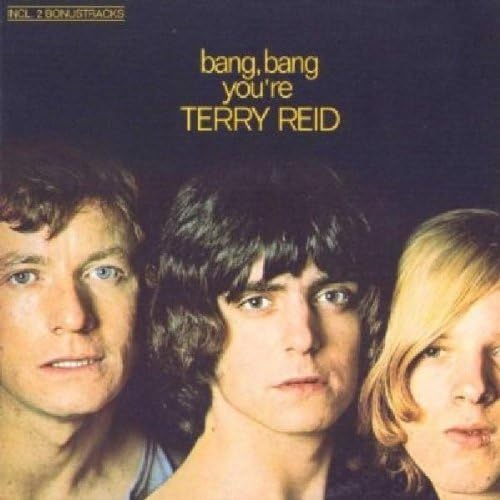
Terry Reid’s first two albums, ‘Bang Bang,You’re Terry Reid” and ‘Move Over for Terry Reid”. Released in 1968 and ’69 respectively, showcased one of the most ferocious, and distinct, soul shouts of the classic-rock era. In both power and emotion, Reid paralleled singers like Janis Joplin and Joe Cocker, while mirroring their go-for-broke brand of blues rock. At the same time, Reid’s early albums featured subtler pieces, something he explored further on albums like ‘River”, ‘Seed of Memory’, and ‘The Driver”.

Over the course of a long career, Reid has walked a labyrinthine path, snaking from the golden era of British blues to the peak of the Laurel Canyon scene, with stops in Brazil, Nashville and Puerto Rico along the way. He has played with artists from Graham Nash and David Lindley to Gilberto Gil and Willie Bobo, while his songs have been covered by The Hollies, Marianne Faithfull, John Mellencamp, Jack White and more. At the center of it all sits a voice commanding and singular enough to have earned him the nickname, “Super Lungs.”.

Born 70 years ago in Huntingdon, England, Reid began his career at age 15 when he dropped out of school to join a band called The Jaywalkers. Led by their drummer, Peter Jay, the group generated enough buzz to open for the Stones at the Royal Albert Hall in 1966. There, Reid met Graham Nash, then with The Hollies, who helped get the band a contract with Columbia Records. The Jaywalkers‘ first single “The Hand Don’t Fit the Glove” (backed with “This Time” became a minor British hit in 1967. “Glove” sounded like a lost single by the Shirelles, while “This Time” had a whiff of the New York Latin-soul you’d hear songs written by Bert Berns or Doc Pomus. The teen Reid delivered both songs with the oomph of maximum R&B. Despite the single’s promise, the Jaywalkers quickly imploded, leaving an opportunity for top UK manager/producer Mickie Most to swoop in and ink Reid to a solo contract.

https://www.youtube.com/watch?v=c2gXPy8Eb04

The first single he released on his own, “Better by Far” sounded like something Dusty Springfield might have belted. At that time, Mickie Most had a working relationship with Peter Grant, manager of Jimmy Page, then the heir to the Yardbirds‘ name. Reid’s potency as a singer inspired Page’s offer for him to front a “New Yardbirds.” When Reid’s commitments to his solo career scotched that, the singer recommended two obscure blokes he knew from up north, Robert Plant and John Bonham. Given what happened next, one hopes Plant wrote Reid the most profound thank you note in history. Yet, at the time, the solo Reid seemed an equally strong bet. His 1968 debut, released on Epic Records, featured a daring range of material, a hot and scrappy band (including Peter Solley’s surging organ and Keith Webb’s wild drums) and, of course, Reid’s show-stopping voice. Recorded mainly live in the studio, ‘Bang Bang, You’re Terry Reid’ was an album of extremes, marked by fidgety arrangements, lengthy songs, and vocals that ranged from the sensitive to the primal. The track list featured four well-selected covers, along with seven equally distinct Reid originals. The singer offered a direct comparison between a classic and an original in a nine-minute suite that linked his hard rock ode “Writing on the Wall” to a chunky take on Eddie Cochran’s “Summertime Blues.”

The Sonny Bono-penned title track had already been recorded twice, by Cher and Vanilla Fudge on their 1967 debut. But Reid’s take outshined both, with an arrangement fired by a chilling organ, stabbing horns, and a keening vocal that built to a series of acapella crescendos. Reid’s run at a song previously cut by Gene Pitney, “Something’s Gotten Hold of My Heart” gave it a haunted quality that suggested what he might have done with an early Zeppelin ballad. Not that all the covers clicked. A ten-minute meander through Donovan’s “Season of the Witch” took the spooky theme a-tad-too-literally. Luckily, Reid more than made up for that with original pieces like “Tinker Tailor” goosed by an irresistible riff, and “Loving Time” whose soaring organ sounded like something from early Traffic. Some songs showed Reid’s eclectic bent towards, including the Latin-laced “Sweater” and “Erica” whose jazzy lilts could have been penned by Burt Bacharach.

https://www.youtube.com/watch?v=odM5S3BZS-g

But the most enduring track turned out to be “Without Expression” which Reid had written when he was just 14. The song so impressed Graham Nash, he cut it with The Hollies and again with Crosby and Stills in 1969, though the latter version didn’t come out until years later. Despite the album’s many charms, Most decided to hold back its UK release, initially issuing it only in the U.S., where it drew just a cult.

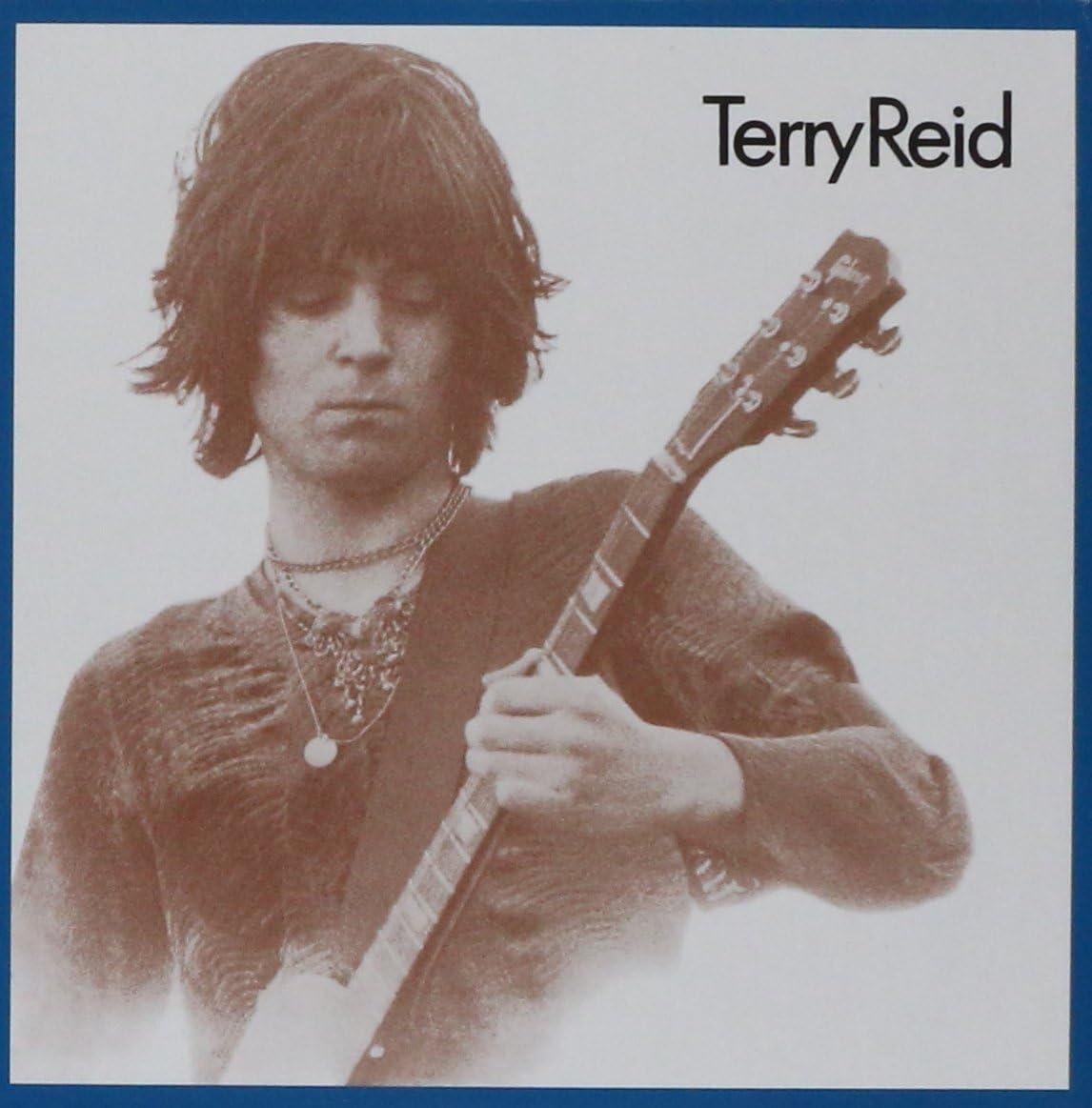
Terry Reid – Terry Reid

Reid received somewhat wider exposure for his 1969 follow-up, ‘Move Over for Terry Reid’, aided by a gig opening for the Stones‘ on one of their most significant American tours. It didn’t hurt that everything about ‘Move Over’ represented an upgrade over its predecessor, from the material to the vocals to the band’s rapport. Again, they cut it largely live, and, again, it featured some great covers, including the opener, “Superlungs My Supergirl”

Though penned, and previously recorded by Donovan, only Reid had the pipes to turn its title line into a personal tag, as well as the rocking power to shoot its psychedelic guitar riff through the roof. Solly’s organ in “Silver White Light” gave the song a bold glow, while “Speak Now or Forever Hold Your Peace” had a melody worthy of an anthem. Ballads like “July” and “May Fly” proved Reid could make as strong an impact singing sensitively as shouting, while his talents as a writer showed in ‘Rich Kid Blues” a power ballad later cut by artists like Marianne Faithfull and Jack White. Still, the bulk of the radio play centered on his cover of the soulful classic “Stay with Me Baby” Lorraine Ellison first cut the song in 1966. and it’s best known as Bette Midler’s 11-o’clock number in The Rose.

But those blow-outs were whispers compared to Reid’s to-the-rafters reading. In escalating waves, his voice moved from murmurs to screams violent enough to make you think this may be the last song he’ll ever sing. It’s a catharsis worthy of Greek tragedy, an expression of both emotional desperation and physical prowess that never fails to devastate.

Terry Reid – River

Reid could have stuck with that brilliant mix of hard rock blues and soul forever, but for his follow-up album, ‘River’, he charted a very different course. He also made a switch in his management, firing Mickie Most who, in turn, launched a law suit that kept Reid from releasing an album for four long years. In the meantime, he tried out a host of musicians, and recorded in both London and L.A. Finally, in 1973, he cemented a new deal with Ahmet Ertegun, who paired him with Atlantic staff producer Tom Dowd. ‘River’ presented a newly cohesive, and expansive sound for Reid.

https://www.youtube.com/watch?v=fE1kVi0w0ks

It also introduced a striking new band, highlighted by the silvery lilts of slide guitarist David Lindley. Despite the herky-jerky backstory of ‘River’, it had a clear and strong flow, running through American folk and country music. Though somewhat mellower than his previous albums, ‘River’ had its own intensity, amplified by Reid’s vocal belts. The airier parts of the music reminded some of Tim Buckley’s recordings, particularly the quavering “Dream” and the album’s diaphanous finale “Milestones” but if ‘River’ impressed the critics, it baffled radio programmers, stifling its sales. It was another three years lapsed before Reid got another shot in the studio, aided by his old friend Graham Nash.
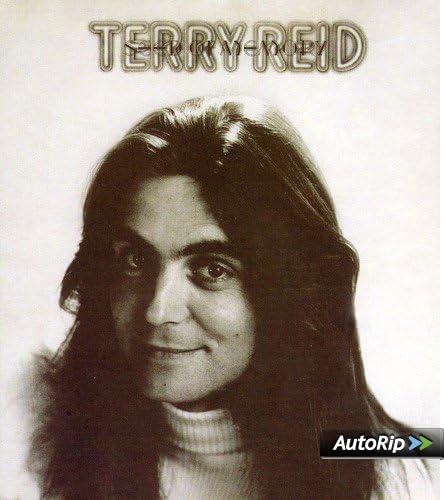
Seed Of Memory

Terry Reid – Seed Of Memory

The CSNY mainstay produced his 1976 set ‘Seed of Memory’, which explains the country-folk vibe of its first half. The highlight came in the probing melody and caring vocal of “Faith to Arise.” Oddly, the album’s second side, which offered a variation on his old hard soul sound, seemed less convincing.

Either way, ‘Seed’ never had a commercial shot, given the weakness of his label, ABC Records, at the time. Three years later, the company folded.

Terry Reid –  Rogue Waves

That same year, Reid resurfaced on Capitol with the album ‘Rogue Waves” Given the trends, and technology of the day, it’s no surprise the production and arrangements showed the slick signs of new wave. Still, the core of the album referred back to earlier pop trends. Reid covered two Brill Building touchstones, “Baby I Love You” and “Then I Kissed Her” by The Ronettes and The Crystals, respectively. Countering the girl groups’ versions, Reid’s had the heavy intensity he earlier brought to his cover of “Bang Bang.” Again, he savored the long arc of the melodies and connected the core of the songs to deeper soul. He adopted the same m.o. in his rendition of The Left Banke’s ‘Walk Away Renée” By contrast, the original pieces on ‘Rogue Waves’ leaned towards rock but, unfortunately, the airy production softened their impact.

Terry Reid – The Driver

The same hesitancy affected parts of Reid’s final full studio work, ‘The Driver’, released in 1991. The production by Trevor Horn employed the gauzy tricks of the day, though that wasn’t always a bad thing. The lushness enhanced Reid’s cover of The Waterboys’ wonderful song “The Whole of the Moon” but most of the album’s highlights could be found in its least fussy sections, including the acoustic “Hand of Dimes” and the title track which each underscored Reid’s talents as a balladeer and melodist.

Terry Reid – Silver White Light: Live At The Isle of Wight 1970

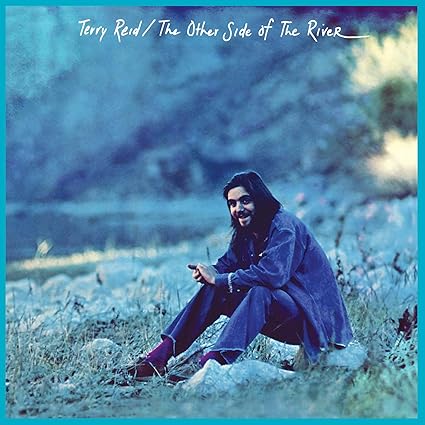
Anyone eager to reconnect to Reid’s rawer side should look to a pair of live albums that surfaced over the last few years. ‘Silver White Light” captured the singer’s full performance at the 1970 Isle of Wight Festival, a fascinating period of transition for Reid. He had just split with his first band, working instead with some of the musicians who would cut ‘River’, including David Lindley. For a drummer, Reid made a one-time-only connection with Michael Giles, who had just left King Crimson. The audio quality of the set may be brittle, but Reid’s vocal power comes through. Another concert set, ‘Live in London” from 2013, is rough too but, again, Reid’s voice sounded strong. An even more potent historical document surfaced in 2016, titled ‘The Other Side of the River’. It gathered eleven lost, or alternative, recordings from the ‘River’ sessions, in the process documenting that album’s evolution.

These versions presented freer takes on songs that, even in their final form, felt loose. Some fascinating guest musicians turned up for the sessions, including The Ikettes, who sang backup on a version of “Avenue,” Gilberto Gil, who played on “Country Brazilian Folk,” and the Latin percussionist Willie Bobo who appeared on a live-in-the-studio take on the title track and a worthy, never-before-released song, “Listen with Eyes.” Altogether, it provided generous evidence of Reid’s fearless commitment to exploration, a creative advantage but a commercial hurdle that only contributed to his role as one of music’s most under-appreciated stars.

alt_text

Sweetzerland Manifesto marks Joe Perry’s sixth solo album outside of his day job as guitarist / songwriter / producer of Aerosmith. Comprised of 10 new tracks, they were all written or co-written by Joe Perry (along with the album’s guest vocalists), except for a cover of “Eve of Destruction” which features Joe on lead vocals and Johnny Depp on drums. Highlights include “Aye, Aye, Aye,” which Joe co-wrote with Robin Zander (Cheap Trick); three collaborations with David Johansen (New YorkDolls), who sings “I Wanna Roll,” “Haberdasher Blues,” and “I’m Going Crazy”; and rock-and-roll survivor Terry Reid, who lights up “I’ll Do Happiness,” “Sick & Tired” and “Won’t Let Me Go.” Cover art courtesy of year “1991.

Other Side of the River

Dubbed “superlungs” for his raw vocal power, Terry Reid will forever be remembered as the man who declined the frontman job in Led Zeppelin , Okay, so the music here isn’t exactly new. But the latest release from the British soul shouter Terry Reid consists entirely of unissued songs, jettisoned from one of the most under-appreciated albums of all time. Back in 1973, the scratchy voiced star issued an album called “River”, which provided a daring contrast to his stentorian blues-rock declarations of the late ’60s. While cutting the original album, Reid moved from London to L.A., absorbing that locale’s folk-rock muse while elaborating it with the influence of dreamy jazz.

One high point is 1973’s River, Reid’s third album and first after escaping the clutches of producer Mickie Most (Yardbirds, Herman’s Hermits).Offering an hour of previously unreleased music, The Other Side of the River isn’t the first time the River sessions have been revisited, with a 2006 reissue adding bonus tracks to the original seven songs. Terry Reid also took inspiration from Puerto Rico (via contributions from Willie Bobo) and Brazil (aided by Gilberto Gil). The result suggested a cool amalgam of Tim Buckley, Van Morrison and John Martyn. ‘The Other Side of The River’ collects outtakes from the original ‘River,’ leading us farther into Reid’s ambitions. In one of the most adventurous tracks, “Country Brazilian Funk,” he finds an unlikely connection between Gil’s Tropicalia and David Lindley’s Americana. More than forty years later, these songs still trace the cutting edge.

Image of Terry Reid - The Other Side Of The River

TERRY REID  –  The Other Side Of The River

– Remastered from the original analog tapes
– Track notes by Terry Reid
– 6 never before heard Reid compositions, plus 5 very different alternate takes – all previously unreleased.

British musician Terry Reid is a relatively unsung legend. With his incredible voice (that earned him the nickname “Superlungs”), spot- on songwriting, and underrated guitar skills, Reid invented new sounds and others followed suit. His 1973 LP, River, is an under-the- radar but deeply loved album. Our special new release, The Other Side Of The River, features all previously unreleased material from the River sessions, including six never-before-heard Reid compositions and five very different alternate takes of tracks from River.

Over the decades, as River went in and out of print, there were rumors of a mythological double album’s worth of unreleased material. The rumors turned out to be true, as the entire album was recorded twice: once with British producer Eddy Offord and again with the legendary Tom Dowd. The sessions captured Reid’s free-associative mix of folk, blues, rock, jazz, bossa-nova, soul, and samba, recalling at times Tim Buckley and Van Morrison, while featuring some remarkable guests including Gilberto Gil on percussion, Ike & Tina Turner’s Ikettes on vocals, and David Lindley, of psych band Kaleidoscope, on violin.

The Other Side Of The River includes songs that even Terry had forgotten – rockers in the style of the River track “Dean,” Latin grooves with percussionist Willie Bobo, and beautifully sparse vocal material not unlike David Crosby’s If Only I Could Remember My Name and John Martyn’s Solid Air.

Reid’s vocal prowess earned him offers to front both Led Zeppelin and Deep Purple, but he turned down both opportunities to carve out a distinctive solo career. Instead, he rocked on the sidelines, ultimately touring with Cream and Fleetwood Mac, writing songs for CSNY, and opening for The Rolling Stones on their 1969 tour.

More recently, Terry’s songs have been covered by a number of younger artists including the Raconteurs, and his voice can be heard on DJ Shadow’s track “Listen”. This spring he will be touring the East Coast and U.K. Though his “superlungs” would have no doubt served Zepp well, perhaps his solo status allowed him to be more experimental and nuanced than he would’ve been able to be as a mainstream frontman, and for that we are grateful.

The Other Side Of The River stands alone as a fresh and utterly groundbreaking Terry Reid gem.

JOSEFIN OHRN AND THE LIBERATION / GNOOMES REPETITIONS EP

Sweden’s Josefin Ohrn and The Liberation and Russia’s Gnoomes released two outstanding albums at the tail end of 2015, and Rocket Recordings are pleased to be bringing you this special split EP entitled ‘Repetitions’. Josefin Ohrn and The Liberation’s side starts with a radio edit of their live favorite ‘Green Blue Fields’ – a great slice of psychedelic disco pop that calls to mind a psyched out Blondie’s ‘Heart of glass’. Then for the first time on vinyl ‘Lucid Sapphire’ – a punked up, motorik driven, rock stomper that first appeared as the b-side of their digital only single ‘Sunday Afternoon’. The side is finished with a stunning cosmic-dance remix of their ‘hit’ single Take me Beyond by label mates Gnoomes. That leads us nicely into Gnoomes’s side which starts with ‘Myriads Of Bees’ – a new version of the track ‘Myriads’ which featured on their debut album ‘Ngan!’ This new version sees the band strip the song back to a minimal kosmiche pulse with repetitive mind altering effects. Then for the first time on vinyl the radio edit of their ‘hit’ single ‘Roadhouse’, this is the version of the track that got them noticed by countless BBC 6 Music DJs. Then the final track of the EP sees Josefin Ohrn and The Liberation return the ‘remix’ favour pushing the original motorik groove of ‘Roadhouse’ into an addictive heavy kraut groove beat, overlaying it with head spinning synths and fuzz guitar.

CAR SEAT HEADREST – TEENS OF DENIAL

‘Teens of Denial’ is the thirteenth album in Car Seat Headrest’s (aka 23-year-old Will Toledo) oeuvre, second on Matador, and first to be recorded in a proper studio with a full band and producer (Steve Fisk). On Denial, Toledo moves from bedroom pop to something approaching classic-rock grandeur and huge (if detailed and personal) narrative ambitions, with nods to the Cars, Pavement, Jonathan Richman, Wire, and William Onyeabor. By turns tender and caustic, empathetic and solipsistic, literary and vernacular, profound and profane, self-loathing and self-aggrandizing, he conjures a specifically 21st century mindset, a product of information overload, the loneliness it can foster, and the escape music can provide. At the heart of the album sits the 11:32 ‘Ballad of the Costa Concordia,’ which has more musical ideas than most whole albums (and at that length, it uses them all). Horns, keyboards, and elegant instrumental interludes set off art-garage moments; vivid vocal harmonies follow punk frenzy. The selfish captain of the capsized cruise liner in the Mediterranean in 2013 becomes a metaphor for struggles of the individual in society, as experienced by one hungover young man on the verge of adulthood.
2LP – Double Vinyl with Download.

TANYA DONELLY – SWAN SONG SERIES

Tanya Donelly is a singer-songwriter and founding member of three of the most successful bands of the post-punk era. At the age of 16, she and stepsister Kristin Hersh formed Throwing Muses, which became the first American band ever signed to the influential British label 4AD. Not only did the Muses‘ dreamy, swirling guitar sound prove highly influential on many of the alternative acts to emerge in their wake, but they also made any number of unprecedented advances into the male-dominated world of underground rock. Donelly later sidelined with Pixies bassist Kim Deal to form the Breeders, appearing on the debut LP, Pod. She later exited both the Breeders and Throwing Muses to form her own band, Belly. After issuing a pair of well-received EPs, Belly released their full-length debut, Star — a superb collection of luminous, fairy tale-like guitar pop songs — and for the first time in her career, Tanya Donelly earned commercial success commensurate to her usual critical accolades. Not only did the record go gold on the strength of the hit single ‘Feed the Tree’ but the band even garnered a Grammy nomination for Best New Artist. Donelly would eventually disband Belly to raise her two daughters. She still found time to write and record music as a solo artist – Beautysleep, Whiskey Tango Ghosts and This Hungry Life were all exceptional albums and enjoyed critical success. The Swan Song Series is a collection of songs in which Donelly collaborated with friends, musicians and authors such as Rick Moody, Robyn Hitchcock, John Wesley Harding, Damon Krukowski and Naomi Yang (Damon + Naomi/Galaxie 500), Bill Janovitz (Buffalo Tom), Tom Gorman (Belly), and Claudia Gonson (Magnetic Fields), and explored an impressive range that wasn’t always captured on previous albums. This exclusive collection includes the first 5 self-released digital EP’s and 7 brand new, previously unreleased, tracks on a 31 song set.


Image of Mutual Benefit - Skip A Sinking Stone

MUTUAL BENEFIT  –  Skip A Sinking Stone  

‘Skip A Sinking Stone’, Mutual Benefit (aka Jordan Lee), is released via Transgressive Records.

This new album is a two-part meditation on impermanence that also acts as a portrait of growing up. Mutual Benefit’s work has been praised as being vulnerable and warmhearted. This release has a similar sensibility, patiently built from carefully chosen lines illustrated by lush astral folk and intricately composed arrangements that manage to appear effortless.

“I kept coming back to how nice that was, throwing these stones against the water,” says Lee. “I thought it was a fitting metaphor for the endeavours I have in my life – sometimes they work out and sometimes they don’t. I think it’s a good exercise in accepting impermanence and failure and these things that are constant, and yet the activity of skipping stones is really relaxing and beautiful.” Each stone ultimately sinks but, as Lee sings on the album’s zenith, as the cycle ends and repeats again, all we can do is maintain the hope that it’s ‘Not For Nothing’.

Image of Mountains And Rainbows - Particles

MOUNTAINS and RAINBOWS

Last summer, John Dwyer came back from an Oh Sees tour talking about a fantastic band he’d played with in Detroit called Mountains and Rainbows. What followed him home was a double-LP’s worth of shopworn weirdness and a delightfully loose attitude that must have something to do with the ecstasy of a Midwestern summer. These backyard freaks jam into the twilight, led by a vocal quaver belted to the cheap seats, a groove and a grin and a heaping spoonful of “damn, aren’t you glad we came out tonight?” Vibrant and confusing like the insane-o cover artwork that appears to be constructed of many layers of fluorescent duct tape.

Careening from the mellow chugger vibe on “How You Spend Your Time” to the tightly wound twitch of “Dying To Meet You,” Mountains and Rainbows stretch their legs deep into the strange, with a dark oddness lurking in the corners of tunes like weirdo highlight “With Beefheart.” Particles is a great addition to a little journey of one’s own, perhaps, and just in time for the sunlit afternoons to come.

FIR  –  SUMMER WASN’T THERE / WINTER DOESN’T CARE

Limited 7″ (200 copies) with CD (CD contains Stereo, Mono & Instrumental mixes), and digital download. We have 50 copies only !!! Alt pop super-group FIR combines the songwriting genius of Brent Rademaker from Beachwood Sparks and Matt Piucci from Rain Parade, with the extraordinary talents of Rob Campanella from The Brian Jonestown Massacre and Nelson Bragg from the Brian Wilson Band. On this record, the bittersweet combo is made complete by the smooth harmony vocals of the Allah-Las. Sounding something like a sugary, drugged out Beatles, FIR’s first 7″

Image of Methyl Ethel - Oh Inhuman Spectacle

METHYL ETHEL  –  OH INHUMAN SPECTACLE

New to 4AD, Australian trio Methyl Ethel’s celebrated debut album is being given a worldwide release. Hailing from the remote fringes of Perth in Western Australia, band linchpin Jake Webb – like 4AD peers Grimes and Bradford Cox before him – wrote, played and recorded everything on ‘Oh Inhuman Spectacle’.

Crafted in isolation, the album’s understated psychedelic pop quickly drew plaudits, leading Webb to recruit Chris Wright (drums) and Thom Stewart (bass) – friends from the tight-knit and thriving music scene in Perth – to help realise the songs live as a full-fledged band.

Having gained notable success in Australia including being nominated for the prestigious Australian Music Prize and taking Laneway Festival by storm, Methyl Ethel are now poised to take their music overseas with the worldwide release of ‘Oh Inhuman Spectacle’ and a huge run of touring in both Europe and North America to coincide.

Like a modern, indiefied iteration of Syd Barrett with the melodic intonations of the ghosts of post-punk. Woozy rhythms and fuzzed-out basses, twirling arpeggios meet chugging guitars and soaring strained vocal melodies. Definitely one to keep an eye on.

BRAIDS – COMPANION

Limited Copies come with a Arbutus Records Sampler CD. Braids are a three-piece experimental pop band from Montreal. In the spring of 2015 they released ‘Deep In The Iris’, their standout third record. ‘Companion’ is the band’s latest 4 track EP, written during the ‘Deep In The Iris’ sessions, and completed during a burst of creative energy in August 2015. Here Braids use the palette of ‘Deep In The Iris’ to paint decidedly different vistas – joy, disaffection, thunderous explosion to delicate introspection, the minimalistic power of ‘Companion’ to the patient blossoming of ‘Sweet World’. Distinct in their own right, these 4 songs are not to be dismissed as B-sides, outtakes, or the lesser of a group of songs. Though it uses ‘Deep In The Iris’ as a compositional guidepost, Companion is a breath-taking journey all of its own.

MANIC STREET PREACHERS  – EVERYTHING MUST GO 20 Box Set

20 Year remastered anniversary of the classic Manics’ album ‘Everything Must Go’. In coming back after the disappearance of guitarist Richey Edwards, ‘Everything Must Go’ had to be special. Thankfully, the album shows extreme dignity in the face of adversity, with its big, Phil Spector-ish production and the pure lyrical perfection of ‘A Design For Life’ (the least patronising, most spot on discussion of the working class ever to reach number two in the charts). Richey Edward’s influence is still evident, as ‘Small Black Flowers That Grow In The Sky’ is a pit of despair, but it is much more subtle than anything on ‘The Holy Bible’, delicately comprised of James’ vocals and a harp. Their love of art and literature continues, referencing Sylvia Plath (‘The Girl Who Wanted To Be God’), war photographer Kevin Carter, and artist Willem De Kooning (on “Interiors”, surely one of Nicky Wire’s best bass parts since ‘La Tristesse Durera’). It’s little surprise that this was the album to finally shove the Manics into the mainstream.
2CD – Double CD remastered version comprising the remastered album and the Nynex Arena audio.
4LP / Box – Deluxe 12″ x 12″ box set containing the original album remastered by James Dean Bradfield and Tim Young on CD and 180 Gram vinyl. Plus Live At Nynex, the band’s legendary 1997 show available in its entirety for the very first time, and an exclusive new film about the album, ‘Freed From Memories’, directed by Kieran Evans. The single B sides and a 40 page book complete this stunning set. It includes
CD1 Everything Must Go remastered and B sides
CD2 B sides
DVD1 Live at Nynex
DVD2 Freed From Memories and A Design For Life / Everything Must Go/ Kevin Carter / Australia videos
180 Gram heavyweight vinyl ‘Everything Must Go’ remastered
40 page book

Image of Various Artists - Day Of The Dead

VARIOUS ARTISTS  –  DAY of the DEAD

A celebration of the Grateful Dead’s music, Day of the Dead was created and curated by brothers Aaron and Bryce Dessner of The National.

For both Aaron and Bryce, the Grateful Dead were a gateway to playing music together; the first music the brothers investigated deeply. The two recall their first-ever jam session at 14 years old with The National’s future drummer Bryan Devendorf playing the Dead’s ‘Eyes of the World’ for several hours in Bryan’s attic in suburban Ohio. The brothers were drawn not just to the Dead’s songwriting, but also to the detail, spontaneity, and depth in the instrumentation. A life-long love affair with the Dead, shared with the Devendorfs, was born in those teenage years and crested when The National were invited to play a HeadCount.org fundraiser with Bob Weir in March 2012. The band assembled for this event learned over 25 Grateful Dead songs, and most of those players went on to form the “house band” heard on many of Day of the Dead’s tracks.

The compilation is a wide-ranging tribute to the songwriting and experimentalism of the Dead which took four years to record, and features over 60 artists from varied musical backgrounds, 59 tracks and is almost 6 hours long. Produced by Aaron Dessner, and co-produced by Bryce Dessner and Josh Kaufman, many of the tracks feature an all-star house band made up of Aaron, Bryce, fellow National bandmates and brothers Scott and Bryan Devendorf, Josh Kaufman, and Conrad Doucette along with Sam Cohen and Walter Martin. The record shows the broad reaching impact and legacy of the Grateful Dead, both culturally and musically.

Day of the Dead will be released digitally and on 5xCDs on May 20th. A limited edition vinyl boxed set will follow later in the year. All profits will help fight for AIDS / HIV and related health issues around the world through the Red Hot Organization. This is the 20th album of original music produced by Red Hot to further its mission and the follow up to 2009’s Dark Was The Night (4AD), a 32-track, multi-artist compilation also produced by Aaron and Bryce for Red Hot. Dark Was The Night has raised over $1.5 million to date for the organizations fighting AIDS to date.

Image of Marissa Nadler - Strangers

MARISSA NADLER  –  STRANGERS

For more than 12 years Marissa Nadler has perfected her own take on the exquisitely sculpted gothic American songform. On her seventh full-length, Strangers, released 20th May on Bella Union , she has shed any self-imposed restrictions her earlier albums adhered to, stepped through a looking glass, and created a truly monumental work.

Today Nadler has shared “Janie in Love”, one of her most texturally rich songs to date and one that updates her signature sound with some of the most prominently featured drumming of her career. Her talent for powerfully juxtaposing the ominous and the beautiful is on full display.

In the two years since 2014’s elegiac, autobiographical “July”, Nadler has reconciled the heartbreak so often a catalyst for her songwriting. Turning her writing to more universal themes, Nadler dives deep into a surreal, apocalyptic dreamscape. Her lyrics touch upon the loneliness and despair of the characters that inhabit them. These muses are primal, fractured, disillusioned, delicate, and alone. They are the unified voice of this record, the titular “strangers.”

Once again partnered with July producer Randall Dunn (Sunn O))), Earth, Black Mountain) Nadler has created an album equal in sonic quality to the apocalyptic lyrical tone that covers its 44 minutes. In places her voice and guitar play off subsonic synths, while elsewhere, a pulsing drumbeat launches the songs off into an intense, confrontational place.

Image of Fews - Means

FEWS  –

Swedish / American four-piece FEWS have been making some serious waves ahead of their debut album. Specialising in propulsive, motoric noise-pop, producer Dan Carey (Bat For Lashes, Sexwitch, TOY, Kate Tempest et all) discovered the band via a mysterious Soundcloud link and promptly invited the band to his South London studio where debut single ‘Ill’ quickly followed on Carey’s Speedy Wunderground label.

Having joined the ranks of the Play It Again Sam label their own brand of malevolent post-punk continues to evolve and thrill with follow up singles ‘The Zoo’ and ‘100 Goosebumps’ that has seen the band bear resemblance to DIIV and Faust.

“Sonically charged post-punk that’s equal parts Interpol, DIIV, The Walkmen and A Place To Bury Strangers. Anthems for the disaffected in waiting”