Posts Tagged ‘Stories From the City Stories From the Sea’

Albumism_PJHarvey_StoriesFromTheCityStoriesFromTheSea_MainImage_16x9.jpg

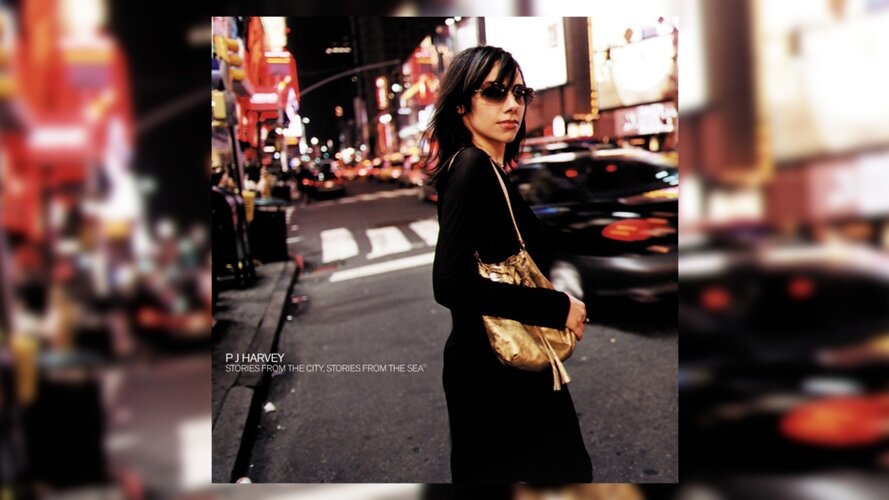
Reissue on vinyl of the fifth PJ Harvey studio album “Stories From The City, Stories From The Sea”. Produced by PJ Harvey with Rob Ellis and Mick Harvey, and originally released in November 2000, Stories From The City, Stories From The Sea features the singles ‘Good Fortune’, ‘A Place Called Home’ and ‘This Is Love’ and includes a duet with Radiohead’s Thom Yorke on ‘This Mess We’re In’. The album won the Mercury Music Prize in 2001. Reissue is faithful to the original recording and package, cutting by Jason Mitchell at Loud Mastering under the guidance of longtime PJ Harvey producer Head.

PJ Harvey’s “Stories From The City, Stories From The Sea” is the fifth studio album from the critically acclaimed artist, and it marked a dramatic shift from her previous two releases, To Bring You My Love(1995) and Is This Desire?(1998). The former was Harvey’s commercial breakthrough, which landed the album on several “Best of” lists in 1995 and the latter earned Harvey a GRAMMY nomination for Best Alternative Music Performance in 1998. 

Stories From The City differs from the previous two albums in that it veers away from the blues influences of “To Bring You My Love” and the melancholy of “Is This Desire?.” Harvey paints a very vivid and sensual picture of life in New York City, and if she is indeed the protagonist in these songs, she was definitely living her best life at the time. 

Ironically, the opening track is titled “Big Exit,” a raucous, upbeat tune that immediately lets us know this is going to be something much different than what we had come to expect from Harvey. Track 2, “Good Fortune,” is not only one of the best songs on the album, but it may be one of the best in her catalogue. Harvey seemingly summons the aura of Patti Smith and delivers a tale that examines the indescribable feeling one gets when they first start dating someone. She sings it in a way that brings you right there in that particular moment we’ve all felt at one time or another: “When we walked through / Little Italy / I saw my reflection / Come right off your face / I paint pictures /To remember / You’re too beautiful / To put into words / Like a gypsy / You dance in circles / All around me / And all over the world.”

“Good Fortune” has a thread that continues right through to the next track, “A Place Called Home.” As I listened to the song, it became apparent that this album is somewhat of a chronicle of a romance, and Harvey does not hold back, singing, “One day I know / We’ll find a place of hope / Just hold on to me / Just hold on to me / Walk tight one line / You’re wanted this time / There’s no one to blame / Just hold on to me.”

Harvey has shown vulnerability on her previous recordings, but on Stories From The City, there’s a beauty and joy that radiates throughout the entire album. The next two songs, “One Line” and “Beautiful Feeling,” bring the mood to a more tranquil place, with the latter being one of the darker yet gorgeous songs on the album (“And when I watch you move / And I can’t think straight / And I am silenced / And I can’t think straight / And it’s the best thing / It’s the best thing / The best thing / Such a beautiful feeling”).

The one song that does not have an overt reference to the album’s romantic theme is “The Whores Hustle and the Hustlers Whore,” a song whose lyrical DNA reminds me of a Lou Reed song. The subject matter is definitely in his wheelhouse, as evoked through lines like “Speak to me of heroin and speed / Of genocide and suicide, of syphilis and greed / Speak to me the language of love / The language of violence, the language of the heart / This isn’t the first time I’ve asked for money or love / Heaven and earth don’t ever mean enough / Speak to me of heroin and speed / Just give me something I can believe.”

“This Mess We’re In,” along with the previously mentioned “Good Fortune,” ranks high on the list of Harvey’s best songs in her career. When I first listened to the track twenty years ago, I did not expect it to be a duet with Radiohead’s Thom Yorke singing its first lyrics. The pairing of Harvey and Yorke is sheer perfection, and “This Mess We’re In” made me want to hear more from them. Yorke also did backing vocals on “One Line” and “Beautiful Feeling,” but this one stands out amongst the three. The song is about two lovers whose affair is approaching its end and the conversation leading up to that point, with the duo echoing each other, “What were you wanting? (What was it you wanted?) / I just want to say (I just want to say) / Don’t ever change now baby (Don’t ever change) / And thank you / I don’t think we will meet again / And you must leave now / Before the sun rises over the skyscrapers / And the city landscape comes into being / Sweat on my skin / Oh, this mess we’re in.”

Additional highlights include “Kamikaze,” “This Is Love,” and the album send-off “We Float,” which, like the opening track “Big Exit” musically and lyrically takes the listener to an unexpected place (“We wanted to find love / We wanted success / Until nothing was enough / Until my middle name was excess / And somehow I lost touch / When you went out of sight / When you got lost into the city / Got lost into the night”).

Harvey has always incorporated sex within the thematic thrust of her albums, but with Stories From The City, it feels different from her previous output. Her inspiration had come from another place in her life. Harvey was living in Dorset, England at the time, but a couple of lengthy stays in New York influenced her writing. “New York certainly gave me a different kind of energy,” she explained in a 2000 interview. “I do think that has permeated to some of the music. I had long wanted to [live there]. I made a film with Hal Hartley in New York, and I realized at that time what an inspiring sort of place it felt to me. I can remember even when we were filming, I was writing songs, some of which ended up on this record. I just felt very inspired.”

As I sat down to write this retrospective, I listened to this album intending to play a few tracks at a time, but I often found myself settling in and letting the whole thing play. That’s what excellent albums tend to make you do. The deserving winner of the prestigious 2001 Mercury Prize, Stories From The City, Stories From The Sea is an intense, loving, and beautiful valentine to a New York City that I miss dearly.

Happy 20th Anniversary to PJ Harvey’s fifth studio album “Stories From The City Stories From The Sea”, originally released October 23rd, 2000.

 PJ Harvey

As part of her ongoing reissue series, PJ Harvey has announced a vinyl reissue of her fifth album, 2000’s Stories From the City Stories From the Sea. It will be released alongside Stories From the City, Stories From the Sea – Demos, a collection of unreleased demos of every track on the album. Both sets arrive February 26th 2021. Listen to a demo of “This Mess We’re In” below.

Later this month, Harvey will reissue Is This Desire?, also with a new demo collection. Over the last year, Harvey has reissued her albums Dry, Rid of Me, To Bring You My Love, and Dance Hall at Louse Point. Her documentary film A Dog Called Money, which followed the creation of her 2016 album The Hope Six Demolition Project, will be released later this year following screenings last December.

Coming from Britain’s most chameleonic musical export, the shouted lyric “I want a pistol! I want a gun!” remains a jarringly American sentiment. Heard at the outset of PJ Harvey’s fifth album “Stories From the City Stories From the Sea”, this line was then Harvey’s most U.S.-evoking to date. Musically, though, her prior albums were rife with American musical influence: On her clamorous 1992 debut album Dry and her third album, 1995’s varied and biblical To Bring You My Love, she respectively built grunge and blues backdrops for bracing tales of despair. The album between the two, Harvey’s uncompromisingly abrasive 1993 pinnacle Rid of Me, pulled equally from both genres. Though she mined the distinctly British influence of trip-hop for 1998’s often-underrated Is This Desire?, one of that album’s music videos took place in the heart of the Big Apple. That’s exactly where Storiesreleased twenty years ago today, gets its start.

Of course, despite the gun-toting salvo of Stories’ storming opener “Big Exit,” New York isn’t a haven of American gun culture in the same way that, say, Virginia is. Instead, New York is all in Stories’ presentation (Harvey wrote much of the album while living there for nine months in 1999). On the album’s artwork, Harvey is clearly in Manhattan and well-dressed for the part. Her love of legendary New Yorker and punk poet laureate Patti Smith pervades her unprecedented mostly-not-gloomy guitar work, and the vocal vibrato of “Good Fortune” is supreme Horses-core. It remains debated whether Harvey’s newly upbeat guitars and lucid vocals were attempts to recapture the mainstream success she almost achieved with To Bring You My Love, but what’s clear now is that her unabashed enthusiasm for turn-of-the-21st-century New York hides a much darker interior. 

Released just weeks before the Bush vs. Gore presidential election, and less than a year before 9/11, Stories is an unsettlingly prescient view of how the Bush era would accelerate the dystopia in which we currently find ourselves. Revisited just weeks before the 2020 presidential election, the album is a striking referendum on the terrors that accompany city life under proto-fascist rule. After 9/11, lyrics about planes and helicopters eternally overhead resembled New York’s understandably paranoid state; twenty years later, it’s still easy to close your eyes in major American cities and hear those same choppers above multiple times a day, seemingly patrolling (or just searching for) another anti-fascist demonstration.

In Harvey’s Clinton-era dream of New York, these disturbing details were just background noise. “The planes keep winging,” she mutters over a rollicking, starry-eyed eighth-note wash of guitars during the glowing chorus of “A Place Called Home,” which is otherwise a strong plea to a romantic partner. The first lyrics on the Thom Yorke–featuring rock ballad “This Mess We’re In” are Yorke singing “Can you hear them? / The helicopters / I’m in New York,” but it, too, is otherwise a love song. It’s a reminder that even as the police and military fly overhead, even as chaotic cities buzz and bristle and never sleep, everyday romances continue. It’s 2020 city life in a nutshell.

Harvey continues to unintentionally predict a future much closer to Stories’ setting throughout the album. The power-chord blast of “Kamikaze” is a prime example: It’s full of references to, as its title suggests, suicide pilots. Sure, in the song’s proper context, “How could that happen again? Where the fuck was I looking? When all his horses came in / And he built a whole army of kamikaze” is ostensibly about her partner continuing to surprise her, but when she describes her setting as “another war zone,” it’s hard not to connect her suicide pilots to the men who flew two planes into the Twin Towers. She might have meant to say that love is a battlefield, but she accidentally forecasted just how literally New York would become one.

Twenty years and more after Stories’ release, it remains fascinating and disturbing to see how well PJ Harvey’s most accessible, joy-filled album (when Stories survived Rolling Stone’s revisions to its 500 Best Albums of All Time list last month, the newly written blurb still expressed surprise about the LP’s felicity: “Polly Jean Harvey happy?” accidentally predicted some of its setting’s darkest times. Its twentieth birthday is also its first big-number anniversary to arrive after Harvey’s failure to work through American politics when she intended to do so. Her most recent album, 2016’s The Hope Six Demolition Project, rightly received backlash for engaging in Washington, D.C. poverty tourism and describing American political problems with minimal context and no solutions. Whereas Stories songs such as the ghostly arena-rock highlight “One Line” are ever more chilling for casual mentions of “This world all gone to war,” Hope Six’s “The Community of Hope” is…well, let D.C. politicians tell you for themselves.

But this reflection on Stories, not Hope Six, right? Well, sure, but now that the latter exists, it’s impossible not to consider its version of America when analyzing the former’s. The albums’ contrast suggests that the best way to get to know a place, its culture, and its people is pretty easy: Fully immerse yourself in it. As Harvey wrote songs about the whirlwind romance that defines Stories, she couldn’t help but detail New York—it’s where she was. That the helicopters, planes, guns, and war are peripheral only makes them more significant; they’re constantly in Harvey’s descriptions becausethey’re part of everyday life there. 

What would such a world look like? It’s not the dystopia Harvey paints on “Big Exit” when she wants a pistol: “Too many cops / Too many guns.” Like much of Stories, this complaint isn’t just a story from the city told after ample time immersed in its lifestyle—it’s a vision and a solution for a place called home. “I live with hope that things can change,” Harvey said in an interview shortly before releasing Stories, which, for the first time in her career, showed this hope—and, in classic PJ Harvey form, the darkness threatening to crush it. 

from Rolling Stone