Posts Tagged ‘Phil Lynott’

Left us on this day (April 23rd) in 1991: American rock’n’roll/punk rock guitarist, singer & songwriter Johnny Thunders (believed to be drug-related causes, age 38), who came to prominence as a founding guitar player of influential, proto-punk band, The New York Dolls (1971-75); born John Anthony Genzale, Jr., he renamed himself after a comic book of the same name; the Dolls released the seminal albums ‘New York Dolls’ (1973) & ‘Too Much Too Soon’ (1974); Johnny left & formed The Heartbreakers in 1975, recording on & off until 1984 (including the essential 1977 album ‘L.A.M.F.’); he also recorded solo, including the 1978 considered classic LP ‘So Alone’, featuring a rock & punk celebrity cast & arguably his greatest composition, “You Can’t Put Your Arms Around A Memory”; he also formed Gang of War with MC5’s Wayne Kramer for one album in 1990; his final recording was a version of “Born To Lose”, with German punk rock band Die Toten Hosen less than two days before his passing in New Orleans; in 1999, veteran documentary filmmaker Lech Kowalski released ‘Born To Lose: The Last Rock ‘N’ Roll Movie’; Danny Garcia’s featured documentary, ‘Looking for Johnny’, was released in 2014…

My admiration of Johnny Thunders stems from my huge love of his tenure with the New York Dolls and The Heartbreakers. I’ve just started listening to his solo catalogue again. And I started off with what are identified as his three true studio albums, “So Alone”, “Que Sera Sera”, and “Copy Cats”. Does anyone recommend listening to specific other releases of his that are floating around out there? There are so many titles live albums, compilations, bootlegs, Love to get your recommendations please.

“DTK live at the Speakeasy” often included in some LAMF reissues. “Live at the Village Gate” is good. If you can get your hands on one, “LAMF Heartbreakers definitive edition” box CD set. It includes 4 CD’s (and badges!), LAMF lost ’77 mixes, LAMF the restored Track LP, LAMF demo sessions ’76, ’77, LAMF alternative mixes (21 in total for that disc), deluxe booklet by Nina Antonia including a comprehensive interview with Walter Lure. You should still be able to find one on EBay probably. “Belfast nights” has pretty good sound quality. “The Yonkers demos” often included in some comps. “Madrid memory”, “The Heartbreakers live at Max’s” great sound quality. Walter Lure’s Waldos have a couple CD’s “Rent Party” and the still pretty new “Wacka Lacka Loom Bop A Loom Bam Boo” on Cleopatra Records.

‘Johnny Thunder lives on water, feeds on lightning.
Johnny Thunder don’t need no one, don’t want money.
And all the people of the town, They can’t get through to Johnny, they will never, ever break him down.
Johnny Thunder speaks for no one, goes on fighting.
And sweet Helena in bed prays for Johnny.’
“Johnny Thunder”—R. Davies

In the late summer of 1980, the remains of what was Giant Sandworms went in an exhaustive road trip to find our place in NYC’s post-punk rock whirlpool of unsigned bands. We were unprepared for this mythic belly flop into the catacombs of both the Lower East Side and the herculean task of day-to-day advancement of spinning our wheels just to play CBGB for 16 people, 15 of them being our friends.

New York City was a harsh, smelly, tinderbox of sorts. The Hell’s Angels block on First Avenue and Third Street held an obit on the west side of the street, sprayed on the brick wall in memory of Big Vinny “When in doubt, knock ’em out.” .The building was like any other building in 1981, serving as Alphabet City’s 24/7 narcotics market and shooting galleries. It wasn’t always a pleasant interaction and even Johnny Thunders was just another mark.

Back then, everybody had a story about Johnny Thunders, everybody. Way back in the early ’70s, rock had become listless. With a few exceptions, groups made the same record again and again, then a live album, with audience applause engineered to sound like panzer divisions. But the onset of change would begin in small camps, garages, and basements, by like-minded kids that didn’t fit. New York City had become dangerous, abandoned and for the taking. Beneath the Brill building, Warhol’s Factory, Manny’s Music (“try it, you buy it”), record companies furnished with mahogany and leather and maybe a faint trace of Birdland and, more recently, The Fillmore, offered up stagnation. The industry and its product were stamped in Billboard Magazine, in self-congratulatory pages, while raw, young talent went unfostered. It became near impossible to break into the machinations of this music machine.

In 1973, one band The New York Dolls almost got through. They were representing their city with driving blues rock, and hard-luck tales of youth punching back at the disorder of war, technology, urban renewal and the luckless stars of a time where nothing was forbidden. It was unapologetic, dirty, loud, and fast. The cover of their debut album found the quintet in full drag and unwashed long hair with more swagger than the Rolling Stones could muster on their best night.

Todd Rundgren produced it and it sounded as they did—no whiteout on this term paper. David Johansen was a lead singer with the goods. Lead guitarist, Johnny Thunders’ sound was driven, mangy, loud, and original. “Trash,” “Vietnamese Baby,” and “Subway Train” were unforgettable titles. There would’ve been no Sex Pistols without them and that’s just for starters. It was pure from-the-streets commentary on the times.

CREEM magazine awarded the Dolls the No. 1 best new band and No. 1 worst band in their yearly poll in 1973. Love ’em or hate ’em, they made a huge impression. The record peaked at paltry No. 119 on the Billboard album chart , and they toured in the U.S. supporting Mott The Hoople and went back to London for a short tour as well. They could inspire from an audience a chorus of boos, or offer truly compelling performances that left people gasping, saying it was the best rock show of their lives.

The band was schizophrenic and the media found them authentic if nothing else. Bowie had referenced Billy Murcia in song (“Time” from Aladin Sane), the original Dolls drummer who OD’d in a London bathtub in ’72 just before the band signed to Mercury. By ’74 the quintet made Too Much Too Soon with Shangri-Las’ producer Shadow Morton. It held “Babylon,” “Human Being,” and Thunders’ first lead vocal on “Chatterbox.” It was camp but cool, choosing mostly great covers like Philadelphia’s “Gamble and Huff” and Sonny Boy Williamson’s “Don’t Start Me Talking.” Record sales were even worse than the first outing, and the tours were hampered by bassist Arthur ‘Killer’ Kane’s alcoholism and the heroin habits of Thunders’ and drummer Jerry Nolan. Infighting and a lack of new material found them waning, they dropped by Mercury.

In ’75, Thunders and Nolan quit the band. But along with the MC5, The Stooges, and The Dictators, the Dolls were the American precursor to a punk-rock movement that found its place in every city young, reckless, and hungry.

Johnny Thunders forms The Heartbreakers, Thunders might have been without a band or a steady gig for a week before he formed The Heartbreakers, which, for a downtown minute, included Richard Hell. But the group would be ex-Doll Jerry Nolan, guitarist Walter Lure, and Billy Rath on bass. They worked and developed a devil-may-care harder rock sound and, planned or not, they were synonymous with heroin. You wouldn’t find The Heartbreakers pictured with Nancy Reagan’s “Just Say No to Drugs” slogan above their heads. What I did see on every other pole and telephone booth after moving to New York City with a post-Heartbreakers pic of Johnny sideways in a hat, syringe sticking out of the brim, pimping his next show, trading street cred for self-parody by 1982.

The Heartbreakers played around New York and then overseas as be part of the historic Sex Pistols’ Anarchy Tour. Four dates in and things imploded. London was not used to a group like this, unafraid to play a guitar solo, yanks dressed big-city junkie cool with enough ego and stage presence to be long remembered. They stayed and recorded the record L.A.M.F. , a very good journal of a rock & roll band with antisocial bravado and American conceit and big dirt-sugar pop hooks. But the record was muddy and poorly mixed and has by now a remixed version or two, but you don’t get them when you need them and Nolan left the band because of it.

They became an apparition of sorts, who would through the years get back together for a payday, but in their time, they were the house band at Max’s Kansas City and took on all contenders. (Their swagger-y ’79 live album, Live at Max’s Kansas City, smokes).

Thunders stayed in London and the next year put out his debut record “So Alone”, one of ’78’s best by anyone. He had Paul Cook and Steve Jones hot to play from The Pistols’ demise and Thin Lizzy’s Phil Lynott on bass, some Peter Perrett (Only Ones) on guitar, and it opens on a cover of The Chantays’ “Pipeline” and it don’t quit. The ultimate in blood-on-the-page ballads is “You Can’t Put Your Arms Around a Memory” and covers Otis Blackwell II’s “Daddy Rolling Stone” with Thunders on the first verse, Lynott emotive second, and Steve Marriott, the white blues-boogie screamer, who turns the final verse into sulfur, striking fire, holding nothing back.

The studio is said to have been an all-day and all-night den of vice and electricity, where all involved saw a success in its making and a fortune cookie that read “Your Time is Nigh.” So Alone was helmed by a young (pre-U2) Steve Lillywhite. It earned some good press on both continents, sold better than expected and is a rock ‘n’ roller’s album. Johnny’s vocals were as good as they got and his playing was tough, sincere and even tender. It has aged well. But and he never hit that high again. In fact, all three of the voices heard in “Daddy Rolling Stone,” would be dead within a decade.

After returning to the States, Thunders became more difficult, more undisciplined, and toured to survive and make his bones with mostly sub-par bands, or worse. Thunders and Wayne Kramer were in that storied, short-lived combo Gang War. The few songs I’d heard were reggae influenced, but with no real direction. The band was more like a ghetto timeshare for two very talented men. It was a project that brought no record deal and no new respect for the future rock ‘n’ roll legends. Lots of time-wasting though.

Fighting with his band, fighting with his roadies, and with the audience. Trolling the faces to call down: “hey douchebag, pussy, come suck me off!” as if he was waiting on something or someone to take the weight off, to just be John again, or someone else completely. The shows might have been sloppy the first week, but you end up floating downstream letting a last power chord float when he didn’t know the bridge or when the band did one out of thin air he didn’t know. Thunders would look back, frown, turn up a notch before doing standards like “Can’t Kick,” “Chinese Rocks” or a cover he still found a friend in.


May be an image of 4 people, people standing, people playing musical instruments and guitar

To celebrate 50 years of Thin Lizzy Universal Music are proud to announce the first instalment of an archive release programme that will cover the career of one of the most iconic and respected bands of the 1970s.

“Rock Legends” is a six CD one DVD Super Deluxe Edition that features 99 Tracks in total, 74 of which are unreleased and 83 of which have never been released on CD or streaming. It is simply the ultimate Thin Lizzy boxset. Rock Legends’ covers the bands whole career over 6 discs newly mastered by Andy Pearce encompassing a raft of unreleased material including demos, radio sessions, live recordings and rare single edits. The track listing has been compiled by Thin Lizzy guitarist Scott Gorham and Lizzy expert Nick Sharp from a collection of newly discovered tapes most of which have never been heard before.

‘Running Back (Demo)’ is a previously unreleased track taken from Thin Lizzy‘ forthcoming “Rock Legends” box set.
The song is from the band’s breakthrough Jailbreak album from 1976 and was for a time being considered as the first single before Thin Lizzy opted for ‘The Boys Are Back In Town’ (good choice!). This unheard demo features saxophone which was not used on the released version, as well as some alternate vocals, guitar takes and keyboard parts.

The box is housed in a 10” x 6” slipcase and in addition to the six CDs contains a DVD with the hour long ‘Bad Reputation’ BBC documentary and the band’s legendary performance on the Rod Stewart ‘A Night on the Town’ TV Special from 1976. This DVD looks good too. As well as the Bad Reputation documentary which went out on BBC Four a few years back, we get four songs – ‘Jailbreak’, ‘Emerald’, ‘The Boys Are Back In Town’, and ‘Rosalie/Cowgirl Song’ – that were recorded for Rod Stewart’s A Night On The Town TV special in 1976. Just think about that for a minute, Rod and Philo and a night on the town. I’d say there wasn’t a bottle of plonk to be had for a square mile.

The set also contains replicas of the bands tour programmes bound into a hard-backed book, the very sought-after Phil Lynott Poetry books, 4 prints by legendary Lizzy cover artist Jim Fitzpatrick and a book containing quotes by all the members of the band about their experiences playing with Phil Lynott and Thin Lizzy. It also has a selection of famous fans such as Slash, Lemmy, Joe Elliot, Geddy Lee, James Hetfield, Ian Gillan, Henry Rollins, Billy Corgan, Bobby Gillespie, Craig Finn, John McEnroe and Pat Cash talking about the band.

On top of all of this, the full trailer for the life of the band frontman has been released on what would have been his 71st birthday. The synopsis reads: “Phil Lynott: Songs For While I’m Away is a feature documentary on the life and music of Phil Lynott, telling the story of how a young black boy from working class 1950’s Dublin, became Ireland’s greatest rock star.”

Thin Lizzy have been eligible for induction into the Roll Hall of Fame since 1996 – by which time iconic leader Phil Lynott had already been dead for a decade. Thin Lizzy’s best record was a double live album

They’ve finally been nominated for the honor as part of the Should they receive the nod, Lynott will be inducted along with Scott Gorham, Brian Downey, Brian Robertson and Eric Bell.

Although Thin Lizzy’s moment in the spotlight didn’t last long, that doesn’t mean they’re not worthy of induction. If anything, their achievements during a relatively short run of success should be an argument in their favour. Here are five more reasons they should be honored.

It wasn’t just the fact that as an Irish group working through the period known as The Troubles,” when people in parts of the island lived under the watchful eyes of armed cops and soldiers and waited for the next terrorist atrocity. For Thin Lizzy to feature both Catholics and Protestants, thus crossing the religious divide at the center of the dispute, was remarkable in any part of the world touched by terrorism.

Inspired by Irish folk tales and the kind of gallows humor to be expected from those who grow up against a background of disorder, Lynott became a significant working-class poet, expressing in a few verses the kinds of meanings and feelings that commentators could (and did) take thousands of words to explore. While Thin Lizzy were predominantly known for fast hard rock songs, those lyrics helped introduce the concept of ballads – that is, songs that tell stories about people – to an audience not always open to the idea. “I still hear the wind whistling through the wild wood, whispering goodbye” (from “Philomena”)… “Valentino’s in a cold sweat, but he lost all his money on that last bet / Against all the odds he smokes another cigarette” (from “Waiting For an Alibi”) … “She’s got the pleasure, comes from all the cornerstones of the world / She’s so fantastic, she’s everybody’s favorite little record girl” (from “Rosalie).

As if his lyrics weren’t musical enough on their own, the construction of Thin Lizzy’s music was also remarkable. While they didn’t invent the twin-guitar approach to rock, they most certainly developed and refined it and took it to a new audience. With the words and music providing such a strong structure, it’s no surprise that the band were at their best on stage, transmitting emotions in sound and movement. So it’s also no surprise that Thin-LizzyLive and Dangerous”, while far from being the first successful live album in rock history, remains regarded as one of the best.

‘Are You Ready?’ is a song so taut and single-minded, so devastatingly exciting, that if a band can follow it, then they deserve to be on the stage. ‘Are You Ready?’ doesn’t appear on any of Thin Lizzy’s studio albums. It was released on the 1978 album Live And Dangerous, “recorded” (the inverted commas are important) in London in 1976 and Toronto in 1977. Live And Dangerous might not be the best live album ever made, but it’s the best album Thin Lizzy ever made, a double album that’s pretty much a pleasure from start to finish, and a live album without any of the manifold vices that traditionally afflicted such records: no 20-minute solo spots, little in the way extended interaction with the crowd, no radically inferior reworkings of beloved songs in order to keep the band mildly interested in their 3,923rd performance of it.

He seemed to see further than most, with the poet’s eye and the musician’s hands; and yet he struggled with his own demons and died aged just 36 as a result of drug addiction. While the tragedy remains raw to many, it’s one that reflects so many of the fairy-story tragedies that inspired him. If he’d been able to write a song about his own rise and fall, it would doubtlessly have been one of his best; and maybe some people hear parts of that unwritten song when they listen to the words he left behind today. That’s why he remains admired at the level of John Lennon Lemmy Kilmister and others of that ilk – he lived and died as the type of folk hero he wrote about.

Where did he get his Lynottness from? It’s worth noting that Celtic mythology and society often operated within a matriarchal structure and strong women were no rare thing in his world. Most notable was his mom, Philomena Lynott, who died aged 88 in 2019, and led a life ever larger, probably, than Phil did himself.

No photo description available.

Fighting off the apparent disgrace of giving birth to a mixed-race child out of wedlock, Philomena fought and fought and never gave up. And although she wasn’t able to save her son in the end, many of the musicians who passed through the Thin Lizzy family, or indeed stayed in the hotel she once ran (including the Sex Pistols, whom she called “nice-mannered”) had cause to look up to her as a mother figure.

Right up until her passing she continued to battle to keep Phil in the spotlight. It’s enough of a shame that he didn’t live long enough to see his band nominated for the Hall of Fame; it’s an almost poetic tragedy that Philomena didn’t either. Still, better late than never.

https://www.youtube.com/watch?v=EMGyhBQ4MPI

If the great guitarists are often the ones that took what had gone before and used that inspiration to become unique players themselves, then Gary Moore is on the A-list. We’re paying tribute to the Northern Irish guitar hero on what is already the fourth anniversary of his passing, on February 6, 2011.

His death, at just 58, came as a great shock, but he left a legacy of nearly 40 years’ worth of recording. Plus, of course, a reputation as a brilliant player, in the studio and on the stage.
To shine the spotlight chiefly on his solo work, we’ve omitted his copious additional work with bands such as Skid Row, G-Force and Thin Lizzy, and started the selection with his 1978 album ‘Back On The Streets.’ His official solo debut, it spread the word about Moore’s fiery playing to a wider audience, especially when he combined with his Thin Lizzy compadre Phil Lynott to hit the UK top ten with its romantic single ‘Parisienne Walkways.’
That led the way to three further decades of uncompromising, blues-infused rock releases including such top 40 albums of the 1980s as ‘Corridors of Power’ and ‘Victims of the Future,’ before Gary hit big with 1987’s ‘Wild Frontier.’ Another new staging post came with the 1990 album ‘Still Got The Blues,’ which emphasised his widespread respect among fellow musicians in its contributions by Albert King, Albert Collins and (on ‘That Kind Of Woman’) George Harrison.

https://www.youtube.com/watch?v=lbJI1y0i1mk

1992 brought a summit with another hero, B.B. King, who frequently sang Moore’s praises and played with him on the Ivory Joe Hunter staple ‘Since I Met You Baby,’ on ‘After Hours,’ his highest-charting UK album, at No. 4. Gary then became part of the forceful power trio BBM, with Jack Bruce and Ginger Baker, for 1993’s ‘Around The Next Dream.’

Gary’s recording adventures continued into the 2000s on records such as ‘Back To The Blues,’ ‘Old New Ballads Blues’ and what turned out to be his final album, 2008’s ‘Bad For You Baby.’ For Gary Moore, it wasn’t a case of going back to the blues, because he never left them, and his contribution to the music he loved was immense.

rose-300

http://www.youtube.com/watch?v=Ux9405qQzao

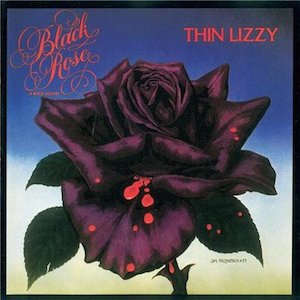
THIN LIZZY’s Black Rose was released 13th April 1979, The British Rockers were at their peak when they released this their Ninth studio album which headed straight into the UK charts at No 2 with a distinct Celtic appeal on some of the songs the title track “Roisin Dubh” consists of traditional songs arranged by Lynott and Moore the latter amazing complex solos . Way back in 1970 the band set out as a trio of Eric Bell on guitars, Phil Lynott on Bass and vocals and Brian Downey on drums. Four year later the band had re-invented themselves as a dual guitar rock band powered quartet. Bell had left and new guitarists Scott Gorham and Brian Robertson traded licks.
In 1978 after the LIVE and DANGEROUS live album Irish Guitar hero Gary Moore joined as Robertson left the band. Moore has been in Lizzy previously, the sessions that produced BLACK ROSE with the contrast of Moore shredding guitar solos and Gorham’s more low key style bought together the band as they took on songs “Do Anything You Want To” plus the hit single “Waiting for An Alibi” plus the sombre “With Love” and the track “My Sarah” a song Lynott wrote about his then new baby daughter this was Lizzy at their best and standard Text Book rock songs “Toughest Street in Town” about substance abuse BLACK ROSE proved to be one a classic rock album of the 70’s and one of Lizzy’s best sellers with Gary Moore’s parallel star power and his guitar playing surely added to the quality of this album. The Album has been re-issued with extra tracks from the Nassau sessions “Dont Believe a Word” the slower version of had been on many a bootleg.