The Who have announced a symphonic show at London’s Wembley Stadium on Saturday 6th July 2019.
Part of the band’s Moving On! tour, which also includes shows in North America in the summer and autumn, Roger Daltrey, Pete Townshend and co. will be joined by an orchestra at the special concert.
Alongside Daltrey and Townshend, The Who line-up will also feature guitarist/backup singer Simon Townshend, keyboardist Loren Gold, bassist Jon Button and drummer Zak Starkey. Together with celebrating The Who’s legendary back catalogue, the show supports their first new studio album in 13 years, which is due to land at some point in 2019.
The very special guest at the show will be Pearl Jam’s Eddie Vedder, along with Kaiser Chiefs and more acts to be announced.
Pete Townshend says: “The Who are touring again in 2019. Roger christened this tour Moving On! I love it. It is what both of us want to do. Move on, with new music, classic Who music, all performed in new and exciting ways. Taking risks, nothing to lose. Looking forward to seeing you all. Are you ready?” . Roger Daltrey adds: “Be aware Who fans! Just because it’s The Who with an orchestra, in no way will it compromise the way Pete and I deliver our music. This will be full throttle Who with horns and bells on.”
Tickets to The Who at Wembley Stadium go on sale from 10am on Friday 1st February. JULY 2019 London Wembley Stadium – Sat 6th
The 1970-72 “Lifehouse”-era of post-“Tommy” and pre-“Quadrophenia” Who yielded a prolific amount of single-only tracks, but the one that stands out every time is the B-side to “Join Together” called “Baby Don’t You Do It.” It was the sole live recording of the series as well as being far and away the most abandoned, passionate and reckless of the bunch in terms of high energy Rock. ‘Letting one go,’ kicking out the jams, going for broke, fucking rockin’ out, call it whatever but remember it’s Rock’n’Roll. For here, The Who did it, baby and did it all over this six minute blast of unleashed whirlwind thrash from their collective outgrown Mod past. “Baby Don’t You Do It” and several other tempestuous highpoints and flashpoints (i.e.: “Sparks,” “Underture,” etc.) continued throughout both sides of the dividing line twixt the sixties and seventies when The Who’s tour schedule was as severe and intense as the band themselves.
“Baby Don’t You Do It” was first born in 1964 as a pleading ballad by Marvin Gaye and quickly thereafter became one of The Who’s earliest covers. Giving it seven years of rough handling in the studio and on the road, it mutated into an apocalyptic beast of heavy Rock. Their live rendition doesn’t sound remotely Tamla nor Motown: it sounds like “Live At Leeds” and the songwriting credits should’ve read Holland-Iommi-Holland instead. It’s a raging soul plea shot with a Benzedrine dart to its heart. It’s a flippin’ template for their forthcoming “The RealMe.” It’s heavy, it fucking moves and it’s got it all: Townshend’s SG guitar power chords roar through dominant HIWATT loudspeakers; pretzel-shaped bomb-bass-tic Entwistlian 4-string runs are tautly performed with the greatest of ease; Daltrey’s throat-tearing vox and the outbreak of Mooning drum frenzy that continues unabated throughout. There are several sections where Townshend’s guitar cuts out and stays that way to leave Moon’s unaccompanied ferocious riding of cymbals and rapid double bass drumming to briefly hiccough then regain their lunatic balance on its rhythmic tightrope. After ending the song with several synchronised band crescendos, Daltrey places the microphone gingerly on the stage floor and instead of clinking it sounds like an explosive-filled projectile going off. Luckily, he didn’t sneeze into it or the walls of the venue would’ve probably collapsed or at very least: rendered them structurally unsound.
“Baby Don’t You Do It” is quite possibly one of The Who’s most unknown B-sides. It hasn’t been available on CD unless if there happened to be a minor European reissue of one of the “Rarities” compilations. Dammit: it even missed the clarion call for the “Thirty Years of Maximum R&B” box set while the version on the over-amended CD version of “Odds & Sods” contains an earlier studio version and as for the double expanded “Who’sNext”? There’s a version of it, but it’s yet another studio take — with Leslie West on lead guitar, no less. Luckily, second-hand copies of this single have always been relatively available and trade for about the price of a new CD and it’s so worth it so jump on it NOW — before it gets remixed like the rest of their back catalogue has and all the dirt gets spot cleaned into far less demanding digi-perfection (Crackling Noises Rule OK — DO NOT CORRECT.)
Speaking of the digital domain, all the other non-LP sides from the first four years of the 1970’s (including this here A-side, “Join Together”) are available all over the place on CD: “The Seeker,” “Here For More,” “Heaven And Hell,” “I Don’t Even Know Myself,” “Let’s See Action,” “When I Was A Boy,” “Relay,” “Waspman,” and “Water.” ALL of them except for…yup, you got it: “Baby Don’t You Do It.” Since it’s a 45 B-side, it would logically wind up either on a compilation or as a bonus track tacked on to “Who’s Next” along with lots of the above-named tracks. So why is it missing? Is it because it was such a storming, sweaty and sloppy set-ending afterburner that it would make all tracks fore and aft seem like CSN&Y in comparison? I dunno, but I love it not because it represents everything The Who were about as they operated on a far wider scale than just putting the boot in. But I love it because it’s everything they were about that I always loved: an undiluted channelling of aggression, passion and no-bullshit energy. Period.
I wasn’t alone in this sentiment except (weirdly enough) in situations surrounded by Who fans. I first heard the track on a New York City radio station show in 1985 hosted by Bill Wyman. He did an admirable job in hitting a lot of his own fave raves, which turned out to be obscuroes like “Dogs Part 2” and so on. But when the first few power chords of the B-side of “Join Together” called “Baby Don’t You Do It” rippled out from across the airwaves, it flattened me. It sounded like a “Live At Leeds” outtake. THIS was a killer, yet none of my half-assed Mod revival pals who’d seen the “Quadrophenia” movie umpteen times who wore green parkas had any clue about it. They didn’t want to either, for these were the new mod cons who’d stifle a yawn and get up to leave with the onset of the live ‘69 “Young Man Blues” during late night videotape viewings of “Kids Are Alright.” “Hey, this is the best part!” I’d exclaim to no acknowledgement and the place would soon empty out to the front door for extended goodbyes and leaving yours truly alone to suck it all in within the confines of a darkened room littered with empty beer cans and only the flickering red and white from the images of Townshend’s SG, the highlights of Daltrey’s shaggy mane and Moon’s cymbals the only light. What gives: They were apparently big fans of The Who and they all had “Live At Leeds.” Only thing was that upon close inspection the discs within were always in pristine shape with all signs of wear upon the front cover (and THAT was only from repeated removal and reinsertion of the adjacent copy of “Who’s Next” on and off the shelf when they should’ve just filed it next to “White Light/White Heat” for all the walks around the block — side one AND two — their copies of THAT sick puppy got when it was just glue factory compost to their “Face Dances”-era sensibilities.)
While listening to this song, look at the Spanish picture sleeve of the single or Jeff Stein’s Who photo book for visuals of Townshend going airborne, windmilling his heart out and casting off all inhibitions. Not that the music needs any help, but you probably will after repeated plays of this gale force classic. Just try not to break anything, as I sometimes do when jolted into a higher level of sensation by The Who and therefore put the boot in everywhere to everything. Sticking your fork in the socket was never half as entertaining or painless as this, and probably a few volts short.
This and three other tracks were recorded live at the same gig in San Francisco at the Civic Auditorium on December 13th, 1971. The other trio of “My Wife,” “Bargain” and “Goin’ Down” have turned up on various Who compilations throughout the years and instead of being powerful fragments from a late night sortie upon the heads and hearts of teenage wasteland USA, perhaps it’s time to release the whole gig, master it loud as fuck and we’ll all be happy as clams…before we get much older.
The Who recorded live footage at Shepperton Studios in 1977 and 1978 for their documentary “The Kids are Alright”. Keith Moon’s final performance with The Who before his death was at these studios on May 25th, 1978.
Keith Moon climbed over his drum kit, took a bow, shook hands with fans and then walked off stage, unaware it would be the last time he would play live with the Who. The band had reconvened (after two years of not touring) at Shepperton Studios in England to record some pick-up footage for their documentary movie The Kids Are Alright. Some tension had surrounded the sessions, which was performed in front of a small invited audience, because director Jeff Stein was unhappy with a take of “Won’t Get Fooled Again.”
He wanted the band to play it again, and after some complaints, they did, giving it the bombastic ending Stein wanted. But no one could have predicted Keith Moon would be dead within four months, at age 32, a victim of his larger-than-life lifestyle. Moon suffered a number of setbacks during the 1970s, most notably the accidental death of chauffeur Neil Boland and the breakdown of his marriage. He became addicted to alcohol, particularly brandy and champagne, and acquired a reputation for decadence and dark humour. After moving to Los Angeles with personal assistant Peter “Dougal” Butler during the mid-1970s, While touring with the Who, on several occasions he passed out on stage and was hospitalised. By their final tour with him in 1976, and particularly during production of The Kids Are Alrightand Who Are You, the drummer’s deterioration was evident. Moon moved back to London in 1978, dying in September of that year from an overdose of Heminevrin, a drug intended to treat or prevent symptoms of alcohol withdrawal.
Scottish bassist Chris Glen of Michael Schenker Group, who knew Moon during the last decade of his life, says he still finds the footage difficult to watch. The pair first met when the Who played the Caird Hall, Dundee, Scotland, around 1969, and Glen’s band Tear Gas — which later morphed into the Sensational Alex Harvey Band were the support act. The Who and SAHB would later tour the U.K. together.
“It’s very emotional, and sadly it’s far from his best,” Glen says of the filmed performance, “He’d put on a lot of weight by that time … and the worst bit was that the Who hadn’t been together for a while. I saw him the week after the recording and he told me, ‘I wish we’d got together before it, just hung out together for a bit, and that would have made it better.’”
In spite of all Moon’s much-documented antics, Glen says the drummer “cared an awful lot about their music.”
“As a bass player,” he notes, “I was impressed with John Entwistle, of course, and one of the most impressive things was that it was John’s problem to take what Pete Townshend and Keith were doing and pull it together. That’s not easy and God knows how Roger Daltrey managed to find a place to fit in! But Keith really cared about what he did, and I think it’s a shame that’s ignored by the general populace.”
Glen had first-hand experience of Moon’s legendary eccentricities, and recounts a number of the drummer’s outlandish moments in his memoir Chris Glen: The Bass Business. In one instance, they were in a penthouse suite in a hotel in Glasgow, when Moon, who’d stolen a megaphone, opened the window and announced that there was a bomb scare in the building, leading to a police raid. Moon was arrested but released with a caution. Glen also remembers a story about Moon leaving a U.S. hotel only to return an hour later, because he’d forgotten to throw the TV out of his room window.
But Glen insists that not all of the drummer’s legendary antics were Moon’s idea. “Keith was a nicer, quieter guy than people think he was,” Glen says. “He was just easily led. You hear stories, like he drove his car into the swimming pool, but it wasn’t his idea. People would say, ‘Come on, Keith, do a Keith Moon thing! Drive your car into the swimming pool!’ and he’d go, ‘Okay, I will then.’ It’s not that he didn’t find it funny, or that he regretted it, it was just that if no one had asked him to do it, he wouldn’t have done it.”
Pete Townshend‘s masterpiece is as much a defining part of the late ’60s as Vietnam and Woodstock. Its story — about a deaf, dumb and blind boy turns hippie idealism into a messianic fable of acceptance and rejection. But it’s the music, constructed as a rock opera complete with an overture and recurring musical themes, that holds together this double-record epic.
Perhaps it’s the original rock opera“Tommy”, released in 1969, composed by Pete Townshend and performed by The Who. This acclaimed work was presented over two LPs and it took the idea of thematically based albums to a much higher appreciation by both critics and the public. It was also the first story-based concept album of the rock era to enjoy commercial success. The Who went on to further explorations of the concept album format with their follow-up project “Lifehouse”, which was abandoned before completion, and with their 1973 rock opera, “Quadrophenia”.
After the witty, but flawed The Who Sell Out, The Who still hadn’t been really accepted as a serious album act. That was it, if they were going to conquer the world, they were going to have to use the big guns. It was time for the rock opera. While there had been concept albums before, none of them had been on this scale, Tommy was a double album meditation on loneliness, murder, child abuse, spritual guff, rejection and and a whole host of other weird stuff. On top of this it also had some fantastic tunes and was easily the best Who album to date.
Tommy as a little boy see’s his father murdered by his mother and her lover. He is told to never say he saw it or heard it. Tommy, being deaf, dumb, and blind learns to play pinball by sense of smell and touch soon master’s the game. Tommy as an adult becomes famous for his pinball prowess and quickly gains a mass following. By the end of the Opera Tommy’s follower’s turn on him, as they get sick of all of the rules he give’s.
Townshend’s desire for this album to be taken seriously is underlined by the instrumental passages “Overture” and “Sparks”, though admittedly the ambitious “Underture” was far too long for its own good. Most of the characters in this cantata are given voice by Roger Daltrey, though each member of the band seems to get to voice at least one character. As many of the songs on Tommy are a part of the much bigger narrative, there’s actually not that many songs that work well as stand-alone tunes, with only the rocking “Pinball Wizard” and to a lesser extent “Sally Simpson” able to thrive outside of the confines of the parent album.
Tommy is an album you have to listen in totality. There’s no point in which you can happily let your mind wander, other than “Underture”, which probably explains why it is one of the most popular tracks on the album (i.e. it gives you chance to put the kettle on). Arguably the thing that makes Tommy work was the drive and ambition of Pete Townshend and the fact at this stage in their career, The Who were a particularly well-drilled band, capable of making a good job of almost anything thrown at them.
Of course since its release Tommy has inspired countless bands to attempt ill-conceived and frankly tedious concept albums, all trying to be hugely significant and open the doors of perception. Ultimately Tommy is a much more intelligent and creative album than its questionable legacy suggests.
On (May 23rd) in 1969: The Who released their classic album ‘Tommy’ (Track Records in the UK/Decca Records in the US), a full-blown ‘rock opera’ about a deaf, dumb & blind boy that launched the band to international superstardom; written almost entirely by Pete Townshend, his ability to construct a lengthy conceptual narrative brought new possibilities to rock music; despite the complexity involved, he & the band never lost sight of solid pop melodies, harmonies & forceful instrumentation, imbuing the material with a suitably powerful grace the album has sold over 20 million copies worldwide…
The Who – Rock Opera Tommy – Full Concert – 1989 – Live performance in Los Angeles at the Universal Amphitheater The Los Angeles version of this show featured Phil Collins as Uncle Ernie, Patti LaBelle as the Acid Queen, Steve Winwood as the Hawker, Elton John as the Pinball Wizard and Billy Idol as Cousin Kevin
The Band
Roger Daltry (Vocals) Peter Townsend (Vocals/ Guitar) John Entwistle (Vocals Bass) Phil Collins, Billy Idol, Elton John, Patti LaBelle, Steve Winwood Simon Phillips (drums) Steve Boltz Bolton (Guitar) John Rabbit Bundrick (Keyboards) Roddy Lorimor (trumpet) Jody Linscott (Percussion) Simon Clarke (Saxophone) Tim Sanders (Saxophone) Niel Sidwell (Trombone) Simon Gardner (Trumpet) Chyna (Vocals) Cleveland (Vocals) Billy Nichols (Vocals)
On 1st June a week before Roger Daltrey begins a tour where he’ll perform Tommy with an orchestra, the Who vocalist will release “As Long as I Have You”. This will be Daltrey’s first record in four years since Going Back Home, his collaboration with Dr. Feelgood guitarist Wilko Johnson.
The album is a mixture of self-penned tracks such as ‘Certified Rose’ and the soulful ballad ‘Always Heading Home’ along with songs that have inspired Daltrey over the years including Nick Cave’s ‘Into My Arms’, ‘You Haven’t Done Nothing’ by Stevie Wonder, Stephen Stills’ ‘How Far’ and the title track originally recorded by Garnet Mimms in 1964; the year that Daltrey, Townshend, Entwistle and Moon changed their name from The High Numbers and became The Who.
It’s a return to his roots mixed with the wisdom that can only come with age. “This is a return to the very beginning, to the time before Pete [Townshend] started writing our songs to a time when we were a teenage band playing soul music to small crowds in church halls.
” Daltrey said in a statement. “That’s what we were, a soul band,” he continued. “And now, I can sing soul with all the experience you need to sing it. Life puts the soul in. I’ve always sung from the heart but when you’re 19, you haven’t had the life experience with all its emotional trials and traumas that you have by the time you get to my age. You carry all the emotional bruises of life and when you sing these songs, those emotions are in your voice. You feel the pain of a lost love. You feel it and you sing it and that’s soul. For a long time, I’ve wanted to return to the simplicity of these songs, to show people my voice, a voice they won’t have heard before. It felt like the right time. It’s where I am, looking back to that time, looking across all those years but also being here, now, in the soulful moment”
Daltrey worked with a band that includes former Style Council keyboardist Mick Talbot and Sean Genockey on lead guitar. Townshend contributed guitar on seven tracks, and noted that the record “shows Roger at the height of his powers as a vocalist.” .
The Who have long held a reputation for being a ferocious live band, but a performance on The Smothers BrothersComedy Hour back in the ’60s resulted in one of the most memorable performances of all time. See, drummer Keith Moon always had a penchant for the extreme, but it was during this performance that he decided the band needed to end their live show with a bang… literally.
Bribing a stage hand to fill his drum kit with explosives, Keith Moon was set to make his drum kit explode at the end of the song. However, unbeknownst to almost everyone, the stagehand filled the drum kit with more than ten times the amount of explosives required. The resulting detonation was enough to almost destroy the stage, and to give guitarist Pete Townshend permanent hearing loss in one ear.
Along with tracks like ‘You Really Got Me’ by The Kinks, ‘My Generation’ was instrumental in forging the foundation for garage and punk rock. The dirty production, garagey arrangement, and defiant lyrics make this slice of proto-punk one of modern music’s most enduring youth anthems.
“My Generation” by the English rock band The Who, which became a hit and one of their most recognisable songs. The song was named the 11th greatest song and among 100 greatest songs of all time.
The song has been said to have “encapsulated the angst of being a teenager,” and has been characterized as a “nod to the mod counterculture” Originally released as a single on 29th October 1965, reaching No. 2 in the UK, The Who’s highest charting single in their home country, “My Generation” also appeared on The Who’s 1965 debut titled album, My Generation and The Who Sings My Generation in the United States , and in greatly extended form on their live album Live at Leeds (1970). The Who re-recorded the song for the Ready Steady Who! EP in 1966, but it was not included on the EP, and this version was released only in 1995 on the remastered version of the A Quick One album. The main difference between this version and the original is that instead of the hail of feedback which ends the original, the band play a chaotic rendition of Edward Elgar’s “Land of Hope and Glory.” In the album’s liner notes the song is credited to both Townshend and Elgar.
But when guitarist and songwriter Pete Townsend was first penning the classic tune, it sounded more akin to later hit ‘Magic Bus’, consisting of shuffling acoustic guitar and a reverb-laden call-and-response section. Townshend reportedly wrote the song on a train and is said to have been inspired by the Queen Mother who is alleged to have had Townshend’s 1935 Packard hearse towed off a street in Belgravia because she was offended by the sight of it during her daily drive through the neighbourhood. Townshend has also credited Mose Allison’s “Young ManBlues” as the inspiration for the song, saying “Without Mose I wouldn’t have written ‘My Generation’.” Townshend said that “‘My Generation’ was very much about trying to find a place in society.
An aspect of The Who’s “My Generation” is Daltrey’s delivery: an angry and frustrated stutter. Various stories exist as to the reason for this distinct delivery. One is that the song began as a slow talking blues number without the stutter (in the 1970s it was sometimes performed as such, but with the stutter, as “My Generation Blues” , but after being inspired by John Lee Hooker’s “Stuttering Blues,” Townshend reworked the song into its present form. Another reason is that it was suggested to Daltrey that he stutter to sound like a British mod on speed. It is also proposed, albeit less frequently, that the stutter was introduced to give the group a framework for implying an expletive in the lyrics: “Why don’t you all fff… fade away!” However, producer Shel Talmy insisted it was simply “one of those happy accidents” that he thought they should keep. Roger Daltrey has also commented that he had not rehearsed the song prior to the recording, was nervous, and he was unable to hear his own voice through the monitors. The stutter came about as he tried to fit the lyrics to the music as best he could, and the band decided it worked well enough to keep. The BBC initially refused to play “My Generation” because it did not want to offend people who stutter, but it reversed its decision after the song became more popular.
The instrumentation of the song duly reflects the lyrics: fast and aggressive. Significantly, “My Generation” also featured one of the first bass solos in rock history. This was played by Entwistle on his Fender Jazz Bass, rather than the Danelectro bass he wanted to use; after buying three Danelectros with rare thin strings that kept breaking easily (and were not available separately), a frustrated Entwistle used his Fender strung with nylon tapewound strings and was forced to simplify the solo. The song’s coda features drumming from Keith Moon, as well, whereupon the song breaks down in spurts of guitar feedback from Townshend’s Rickenbacker, rather than fading out or ending cleanly on the tonic. There are two guitar parts. The basic instrumental track (as reflected on the instrumental version on the My Generation Deluxe edition) followed by Townshend’s overdubs including the furious feedback on the outro.
The final night of the North American tour, was when The Who took to the stage of the Capital Center in Largo, Maryland before another sold-out house. This show, like the preceding show in Philadelphia two nights prior, was recorded by the King Biscuit Flower Hour. These historical recordings have been the source of collector confusion and the subject of debate for nearly 35 years. While PA system issues are apparent and the band is struggling with problems both on and off the stage, here for the first time ever, are the nearly complete direct recordings from this final night of The North American tour, including all the Quadrophenia songs performed that evening. Much like the Philadelphia gig two nights prior, this performance kicks off with a double dose of primal Who, first with the opener “I Can’t Explain” followed by a ferocious “Summertime Blues” to warm things up. Next up is another enjoyably expanded version of John Entwhistle’s “My Wife,” before they cap off this initial segment with the signature song, “My Generation.” Both feature impressive instrumental exchanges between Townshend, Entwhistle and Moon, with the latter taken at a furious tempo and pummeling in its delivery.
The next hour is devoted exclusively to Quadrophenia or as Daltrey jokingly mentions in his introduction, “what’s left of it.” The band had been trimming it down since the tour began and the opening “I Am The Sea” tape sequences had been problematic. On this final night in America, they forego it completely and instead launch directly into “The Real Me” to kick it off, followed by “The Punk And The Godfather.” As the storyline progresses, the crowd continues to surge toward the stage, which doesn’t go unnoticed by the band. Several times during Quadrophenia both Daltrey and Townshend implore the audience to relax and move back as fans were being crushed against the stage. After addressing this, Townshend continues with his introduction to “I’m One.” Similar in structure to “Behind Blue Eyes,” this begins as a solo vehicle for Townshend’s voice and guitar alone, before the entire group kicks in to dramatic effect. The remainder of the Quadrophenia material features plenty of great ensemble playing, but the problems continue in front of the stage and one can sense the band is distracted. The performance of “5:15” is quite good and a marathon take of “Drowned” never loses its energy. “Bell Boy,” again features Keith Moon altering his lyrics to recall the hotel room destroyed in Montreal earlier that week. Despite the technical limitations of the equipment, which are more prominent during this latter part of the Quadrophenia presentation, the band concludes with a fine performance of “Dr. Jimmy” followed by a majestic “Love, Reign O’er Me” that has Daltrey’s raw vocals echoing throughout the mammoth hall. It’s a strong finale to a difficult performance. As the audience roars, Daltrey addresses them in regards to this being their last night in America. He mentions the ups and downs of this tour and makes a point to debunk then prominent press rumors that this would be The Who’s last tour. As if to hammer this message home, they launch into a powerful “Won’t Get Fooled Again.” As icing on the cake, they cap it all off with two classic tracks from Townshend’s earlier magnum opus, Tommy. First by way of a frenetic rendition of “Pinball Wizard,” followed by a wild finale of “See Me Feel Me” to end the night and the 1973 North American tour.
King Biscuit Introduction
Setlist:
I Can’t Explain Summertime Blues My Wife My Generation Quadrophenia Introduction The Real Me I’m One Sea And Sand Drowned Bell Boy Doctor Jimmy Won’t Get Fooled Again Pinball Wizard See Me Feel Me
Roger Daltrey – vocals, harmonica; John Entwistle – vocals, bass; Keith Moon – vocals, drums; Pete Townshend – vocals, guitar
Beginning in the late 1960s, Pete Townshend was on the forefront of the development of home studios. In a world before ProTools and GarageBand, the idea of having a recording studio in your own home was quite extraordinary, but Townshend took to it immediately and started producing amazingly rich demo recordings on which he sang and played every instrument (including drums and bass). For tracks that later found their way onto TheWho albums, these demos provided a template for the other members of the Who to flesh out with their individual parts, adding their own flourishes and touches. It’s incredible, however, how fully Townshend had already worked out the arrangements of these future Who classics. In many respects he’d figured everything out ahead of time, and it was just up to the Who to lay it down in a professional studio, bringing to it the animal electricity that only the Who could.
The first album for which Townshend did extensive home demoing was 1969’s Tommy, a perfect example of his arranging genius, as his home recording maps out the song pretty much exactly in line with the Who version that would sweep the world by storm: He heard in these demos exactly what we hear today—that Keith Moon’s manic drumming, John Entwhistle’s muscular bass, and Roger Daltrey’s guttural vocal fury launch these songs to a whole other level.
Of TommyPete Townshend said, ” Until we made TOMMY we had largely been our own bosses. Suddenly all that changed – for the first time in our lives we were really successful, really taken over by the audience, and we had to do as we were told. America, the great consumer nation told us, ” There are 50 million kids over here that want to see you perform. What are you going to do about it – stay in Twickenham and work on your next album, or come on over here and perform ? ” So we went on over and got involved in the standing ovations and the interviews, the 19 page Rolling Stone article, the presentations of the gold albums, all that. It took two years to work on anything new. ”
Out of the work from Tommy, I don’t recall this song ever being released. I extended Keith’s opening drum lines and the song, as well. I only know of two other takes that exist, but by far — I love this one the best.
Universal Music will issue The Who“Live at the Fillmore East 1968” in April, a set of unreleased recordings from the second of two nights played at Bill Graham’s legendary, but short-lived, venue in the Lower East Side of Manhattan. An oft-bootleg concert by the Who will soon gets its first official release. Live at the Fillmore East 1968, which documents the last show of a two-night stand at the New York venue.
The two-disc, three-LP set, whose track listing is below, focuses largely on material from their two previous records, The Who Sell Out and A Quick One. But there are also three Eddie Cochran covers — “Summertime Blues,” “C’mon Everybody” and “My Way” plus takes on Benny Spellman’s Allen Toussaint-penned “Fortune Teller” and Johnny Kidd and the Pirates’ “Shakin’ All Over,” and a lengthy version of “My Generation.”. The Who’s manager Kit Lambert had recorded both the 5th and 6th of April shows of ’68 with a view to issuing as The Who’s fourth album after “The Who Sell Out”. That never happened, but 50 years later sound engineer BobPridden (who was there in 1968) has restored and mixed songs from the 6 April show for this new archival release.
The Who headlined the Fillmore East with Free Spirits and Buddy Guy opening.
The second night of The Who’s first run ever playing at the Fillmore East is an unbelievably great document of the band in its early prime, still full of the punk attitude that they would initially define while beginning to venture off into more artistic and experimental territory. Every minute of this performance is fascinating and much of this material has never been released, This set captures the entire band fully engaged in their music. Although many songs were still short and concise during this stage of their career, the intensity level is undeniable. Opening the show with Eddie Cochran’s “Summertime Blues,” they immediately set a bar that most other bands could never even approach.
Their second song of this set is the Stones‘ cover of the Allen Toussaint penned “Fortune Teller” which they had just performed for the first time ever the previous night.
They continue with “I Can’t Explain,” one of the few songs American audiences were familiar with at the time, but with a new level of aggression that wasn’t apparent on that early single. Next up is their current single at the time, “Happy Jack,” a tune that found them exploring new directions and beginning to experiment with dynamic changes. Extremely rare live performances of “Relax” and “My Way” follow and continue to explore and expand on the boundaries within the band’s music. “Relax” surprisingly turns out to be one of the heavier numbers on this set and the band takes flight into some inspired jamming following the verses. Unfortunately, the jam fades out and is incomplete.
John Entwistle then steps up for his defining song, “Boris The Spider,” lending his dark sense of humor to the proceedings. At this point, the band launches into “My Generation” and this version is amazing. The improvisational section following the verses is a great early example of the band letting the music propel itself. Although at times it seems like they are on the verge of being out of control, they never are, and early signs of Townshend developing themes within a jam are also surfacing. The approach to their instruments and the sound they create as a unit is utterly unique and unlike any other band at that time. The reels were changed during this jam, so a small part of it is missing on this recording.
This surely must have left the audience breathless, so while they were recovering, the band embarks on their most experimental composition yet, “A Quick One While He’s Away,” which is incomplete and begins in the middle of the song. This adventurous suite of songs, loosely tied together, is a hint at Townshend’s future aspirations that would eventually be realized in his first full-blown rock opera, Tommy. This is a fascinating performance for its entire eight minutes.
They close their set this night with another propulsive jam on “Shakin’ All Over,” again letting the music propel the band through several pulverizing jams, including spontaneous flailing of riffs familiar from other songs. Again, the raw energy is astounding. This and the previous night’s performance must have gone a long way towards cementing their reputation in New York City. This should be required listening for anyone interested in that era of rock music and especially for anyone interested in The Who this is absolutely essential.
Pete Townshend – guitar, vocals; Roger Daltrey – vocals; John Entwistle – bass; Keith Moon – drums
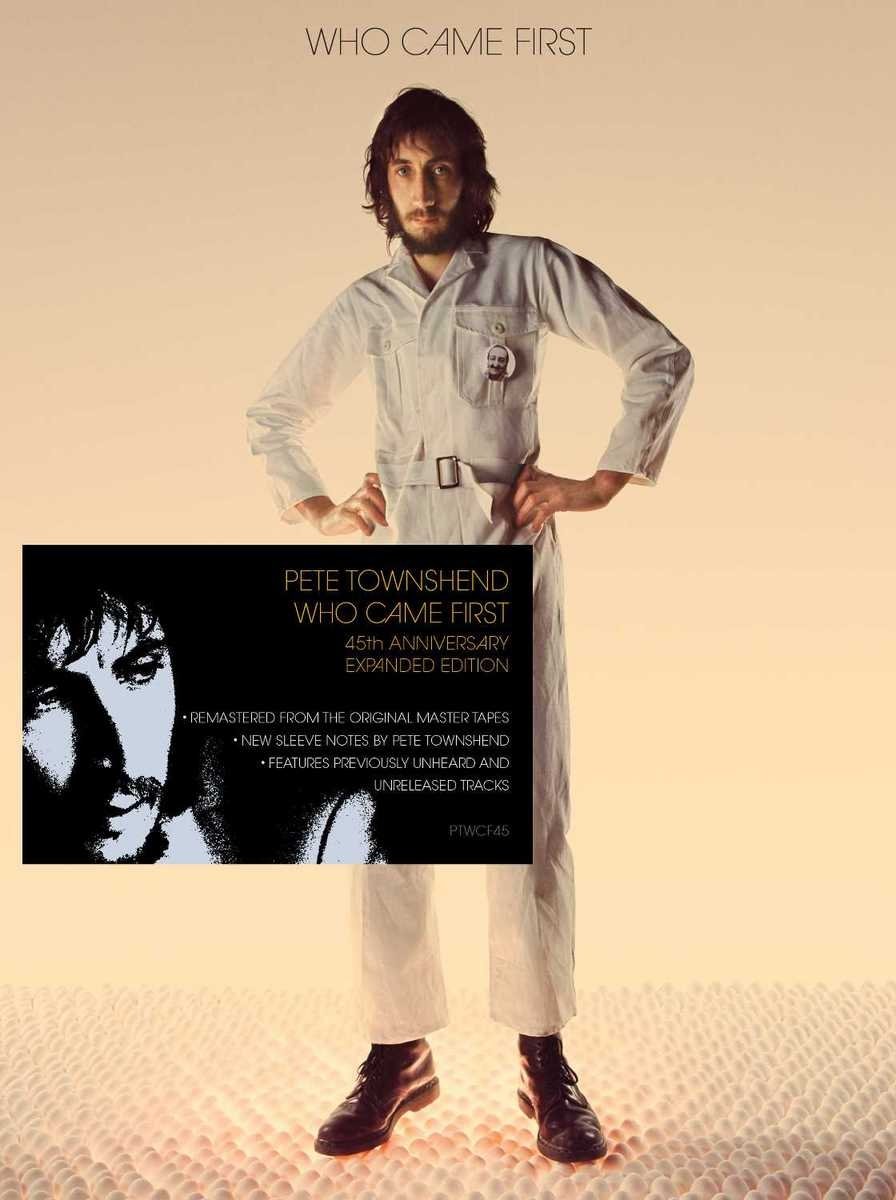
The Who Live at Fillmore East 1968 will be released on 20th April 2018. Amazon UK have a remarkably cheap pre-order price for the 2CD edition. Who fans should also note that an expanded 2CD deluxe edition of Pete Townshend‘s solo album “Who Came First” will be issued a week earlier on 13th April.
Pete Townshend’s first solo album will mark its 45th anniversary by returning to stores with a second disc of bonus material that includes previously unreleased tracks. the pending plans to reissue Townshend’s “Who CameFirst” LP. Originally released in October 1972, the album marked the Who guitarist and songwriter’s official solo debut, and collected an assortment of recordings that included demos for the band’s aborted Lifehouse project.
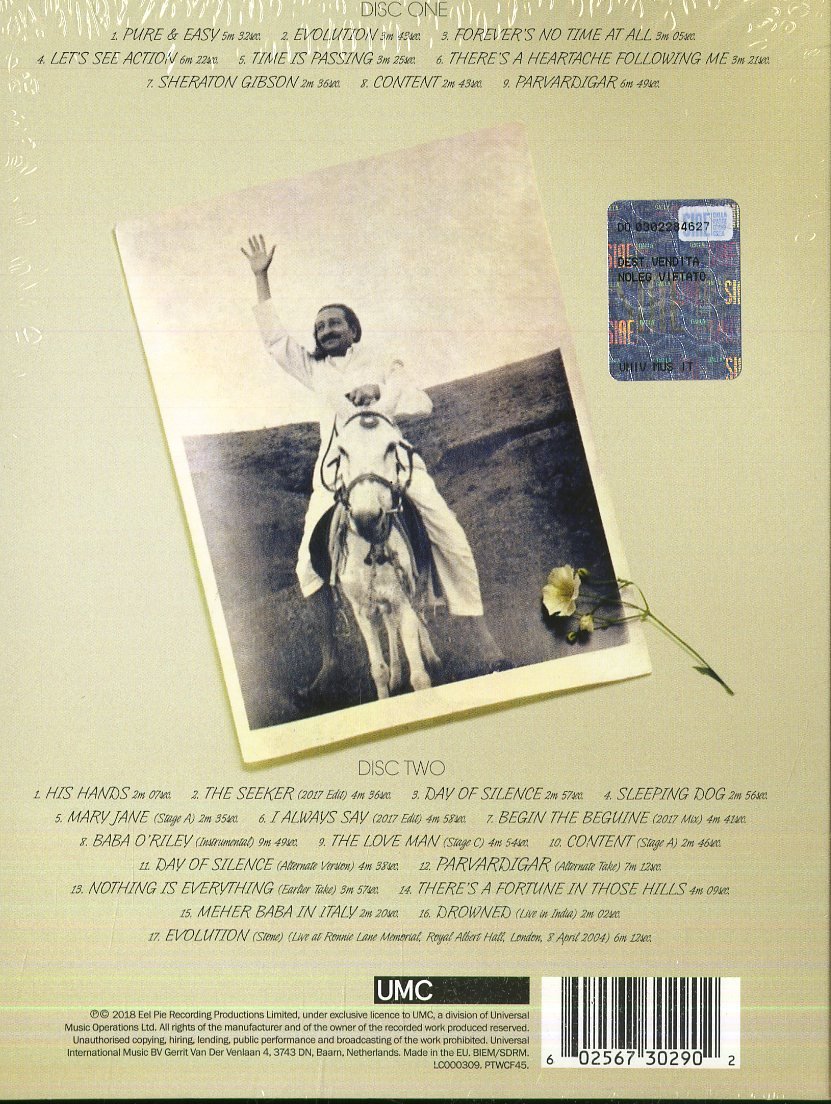
According to the label, the 45th anniversary Who Came First reissue, which is scheduled for an April 13th arrival, will add “eight previously unreleased tracks, new edits, alternative versions and live performances,” as well as restored and expanded packaging that includes new liner notes from Townshend, the poster included in the original release and a 24-page booklet containing rare photos from the period that produced the album.
The track listing hasn’t been made available for this edition, but as fans are likely well aware, this isn’t the first time Who Came First has been given the reissue treatment. Rykodisc brought the album to CD with bonus tracks in the early ’90s, and it was subsequently expanded further in 2006, after Universal took over the catalog. Between those two editions, nine extra cuts have already been added to the original track listing, so if nothing else, it should be interesting to see what else has been unearthed for this latest expansion.
This 1972 album gets off to a cracking start with a superb song which fans of The Who will know well – Pure and Easy . While I really like The Who’s dynamic version I prefer this because it sounds more personal, more precise, more…at peace with itself. Yes. For this is indeed a great album and something of a personal and spiritual odyssey for Townshend. The Who’s main composer is in reflective mood here, heavily influenced by the spiritual leader Meher Baba. If you are expecting trademark power chords you’ve come to the wrong album, this is a quiet set of songs compared to his band at their exuberant best. It is something of a tour de force as Townshend sings and plays all the instruments, recording his songs in his home studio. No surprise then that acoustic guitar is very much in evidence and some songs have an almost folky/country feel – one thing that is unmistakeable is the catchy tunes and singalong hooks that Pete seems to produce with ease. If you want an insight into the creative processes and intuitive craft of a classic songwriter this intimate album is probably a good place to start. Townsend’s voice gives more sensitive treatment of his own lyrics compared to Daltrey’s mighty lungs.
It would seem churlish to go through the album track by track, this is one collection which is meant to be heard as a whole and very much proves that the sum is greater etc. Special mentions though for the beautiful Evolution and Heartache, the addictive Sheraton Gibson and a song which again would be recorded by The Who, Let’s See Action. The bonus tracks on this deluxe edition are all worthwhile although none are essential.
The instrumental His Hands starts like the quiet beginning of Pinball Wizard but you’ll wait in vain for those power chords. Another version of a Who song “The Seeker” seems appropriate in some ways but is also ill at ease in the company of the other songs. The Who version you will remember is a classic song of despair and fruitless searching. Somehow, in context, the lyrics “I won’t get to get what I’m after till the day I die” take on a different meaning. Among the other songs, Mary Jane is perhaps not just about a girl (!)and is a wry song (of the same ilk as Pictures Of Lily, Dogs or Tattoo but not as good) and Begin The Beguine is not a cover you would expect from this guitarist. Sleeping Dog is a touching love song to Baba, while The Love Man could conceivably have made a good Who album track, I Always Say is a McCartneyish blues number and the piano is very much to the fore in instrumental Lantern Cabin.
Meanwhile, his contributions to the new Who Came First booklet notwithstanding, Townshend is in the midst of a quiet spell. As he announced late last year, he’s enjoying a yearlong sabbatical following his marriage to longtime partner Rachel Fuller.
A ’60s-era rock star finding spirituality in an Indian mystic and adopting the teaching philosophy of said mystic is almost a stereotype. However, Townshend has never wavered in his admiration of Meher Baba (The Baba in ‘Baba O’Riley’). While Townshend’s drug use was at odds with Baba’s views, he never tossed out his beliefs throughout the decades. Indeed, his more overtly religious songs were usually tempered with narratives that involved child abuse and salvation (‘Tommy’), Mod culture (‘Quadrophenia’), or an early version of the Internet as connecting people to more authentic experiences (‘Lifehouse’ and ‘Psychoderelict’). However, one song members of the Who were most likely never exposed to during band meetings was ‘Parvardigar’ — a prayer Baba asked his devotees to say every day. Townshend set the prayer to music, and the result is this rather heartfelt and beautiful song.


:format(jpeg):mode_rgb():quality(90)/discogs-images/R-1557549-1228220087.jpeg.jpg)


 The Fat Angel Sings