Posts Tagged ‘No Other’

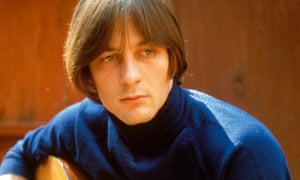
Gene Clark – (1944-1991) Gene Clark was a founding member of the seminal 1960s Rock group the Byrds and the principal songwriter for the band for its first three albums. He penned some of the most beautiful songs of the decade: “Here Without You,” “I Feel A Whole Lot Better,” “She Don’t Care About Time,” and “Set You Free This Time,” and the majestic “The World Turns All Around Her,” He also co-wrote the classic “Eight Miles High,” Clark departed the band in 1966 partly because of his deathly fear of flying and partly because McGuinn sang lead on the singles and Bob Dylan songs,

Also, there was the resentment of other band members that Clark was more highly paid because of his song writing credits. It was the group’s loss because they were never better than when he was in the band He was the heart and soul of the Byrds. Clark next signed as a solo artist with the Columbia label, releasing “Gene Clark and the Gosdin Brothers,” that also featured the Byrds Chris Hillman on bass. The album was a critical success, but because it was released at the same time as the Byrds “Younger Than Yesterday,” in 1967, it disappeared without a trace.

A short stint with the Byrds after David Crosby left ended after three weeks. In 1968, Clark hooked up with banjo player Doug Dillard, guitarist Bernie Leadon (later of The Flying Burrito Brothers and the Eagles), bassist David Jackson and mandolinist Don Beck – and for a short time Byrds drummer Michael Clarke joined the group, They delivered two albums, “The Fantastic Expedition of Dillard & Clark,” (1968) which was a landmark work of acoustic country rock, featuring a collaboration between Clark and Leadon on “Train Leaves This Morning,” (later covered by the Eagles), and “Through the Morning, Through the Night,” (1969) which leaned toward traditional bluegrass. Then Clark decided to move on. He continued to record quality solo albums such as “White Light,” (1971) which included perhaps Clark’s masterpiece “For a Spanish Guitar,” which Bob Dylan embraced. But Clark failed to promote the album, and it was a commercial failure except in the Netherlands. “Roadmaster,” was released in 1973 to the same fate. A reunion Byrds album in 1973 didn’t fare as well either.

David Geffen signed Clark to his new label Asylum Records in 1974, and the ensuing album “No Other,” over $100K in production costs. It featured the Allman Brothers Band and a host of other session musicians. The music was overarching in its ambition with a blend of Country Rock, Folk, Gospel, Soul and Choral Music. Clark’s songwriting included some of his finest work including “Silver Raven,” “Some Misunderstanding, “Life’s Greatest Fool,” and “No Other.” Critics loved it but Geffen agitated by the cost failed to promote it properly, “Two Sides to Every Story,” followed in 1977 with tracks such as “Hear the Wind,” and “Sister Moon.” Clark considered it his best album, but it was yet another failure on the charts. He regrouped with McGuinn and Hillman on the album “McGuinn, Clark, and Hillman,” in 1979, and had better luck. He contributed four songs including “Backstage Pass.” The album, though slick, was a success, . Unfortunately, Clark’s substance abuse and dissatisfaction with the production resulted in his leaving the band. Later in the 1980s, Clark recorded a highly acclaimed duo album with Carla Olson called “So Rebellious a Lover,’ (1986) which for a time rejuvenated his career. But ulcers and alcohol had left him with serious health problems. The Byrds were inducted into the Rock and Roll Hall of Fame in 1991, and Clark performed together with the band for the last time. He died on May 24th, 1991 at age 46, another tragic casualty in the long line of Rock Stars succumbing to alcohol or heroin addiction.

Clark’s songwriting became revered after his death: his songs were covered by Tom Petty, Ian Matthews, Alison Krauss and Robert Plant – just a few of his fans. Clark was a hard-luck guy, who was unable to sustain a long career, but his songwriting craft has been rediscovered, and his Byrds’ compositions are timeless.

Originally released in September 1974, “No Other” is an absolutely extraordinary album of Country-steeped rock and roll balladeering from The Byrds founding member, Gene Clark. An LP of huge innovation and terrible luck.

By 1973, Gene Clark had ended his third stint with The Byrds, the hall of fame rock band he founded alongside Roger McGuinn, David Crosby, Michael Clarke and Chris Hillman. As amicable and volatile as they ever were, 1973 found the original members back together and recording, although the album was an all-out critical and commercial disaster. With a renewed inspiration and the opportunities afforded to him by Asylum, Clark began work on his magnum opus.

This is another album that demands to be listened to as a whole flowing between musical styles in an easy manner. The album feels like it was delivered from the heavens to us to soothe our souls. Reading about how it was made and the fact that it apparently only made number 144 on the Billboard album chart reminds me that sometimes it takes time to recognise genius. 

The album was reissued in 2019 with all of the bells and whistles including multiple versions of the tracks on the original.

Eight years and three solo albums after leaving the Byrds, Gene Clark released “No Other,” an album that truly lived up to its title. At the time, there was no other record like “No Other,” which cost more than $500,000 to produce and was seen as a masterpiece by Clark. However, the experimental use of overdubs and other effects were just a bit ahead of their time, leading to heavy criticism by the press, who called the effort bloated, pretentious and overproduced. (Fleetwood Mac used many of the same techniques just a year later to great success.) As a result, Asylum Records refused to promote the album and basically disowned it, damaging Clark’s career so badly that he would never recover. Sadly, it wasn’t until after the artist’s death in 1991 that “No Other” would see a reissue, re-evaluations by critics and the respect it (and Clark) rightfully deserved.

“No Other” is one of the most important albums of the 1970s. It has the Laurel Canyon vibe (although it was primarily written at his coastal home in Mendocino and recorded in downtown LA across various stints with producer Thomas Jefferson Kaye). It is also rich in Gospel stylings, with complex and full harmonies that would inspire many dozens of albums across the decade that followed. There are flashes of Country (the album includes a vast array of session musicians, including members of The Section and the Allman Brothers Band) and all bound to his wistful and spiritual songs. Although each of its nine tracks are different, they sit together beautifully and create the most vivid and coherent flow. Like all timeless albums, you can just keep flipping it over and bathing in the opulent world it creates.

But, like many classics, it was an album not of its time and failed to find an audience on release. It is tragic that this wonderful album’s renaissance would arrive after Clark had died, but it remains one of the most seminal albums of the period.

Misunderstood, mismanaged and one of the greatest ever fumbles (alongside Big Star’s #1 Record), “No Other” is a visionary work of such artistry. It is an album of dichotomy, both sonically and thematically focused on the balance between light and dark. Joyous and rousing, pensive and mournful, it really does cover the spectrum of emotions and there is not one wasted second.

A proper beauty then and a proper beauty now.
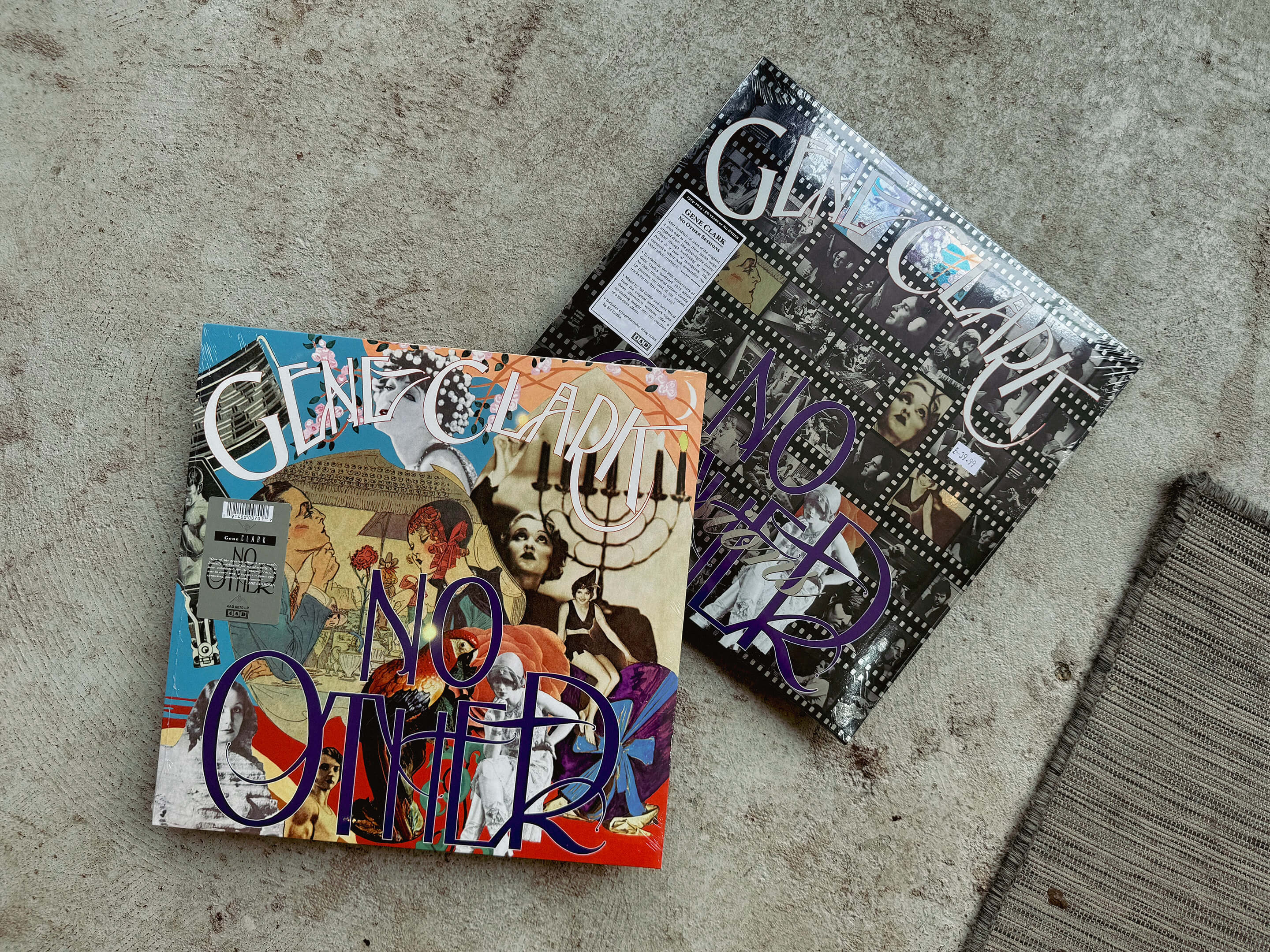
American singer-songwriter and The Byrds founding member Gene Clark’s 1974 solo album “No Other” is to be reissued by 4AD Records in November as a lavish box set which features no fewer than three SACDs, a blu-ray and an 80-page hardcover book!.

Originally released on Asylum Records, a year after the Byrds shortlived reunion, Clark’s psychedelic rock, folk, country and soul record cost a small fortune to make and despite being well received critically, it was a flop. It is said that Clark never really recovered from this blow. Since then, the album has gained greater prominence via a few reissues and has become recognised as a great album of its era. Recorded at the Village Recorder in West Hollywood and produced by Thomas Jefferson Kaye, “No Other” was originally released in 1974 on Asylum Records, Reaching for the stars, Gene delivered a visionary record of psychedelic rock, folk, country and soul which famously cost a small fortune to make (“It took a lot of time in the studio before we could actually get the songs to the point we wanted them,” Gene said in 1977).  Although warmly received by critics, No Other was a commercial failure and was subsequently deleted shortly after.

However, as The New York Times wrote around the record’s 40th anniversary in 2014, “hindsight has burnished No Other, as it has redeemed other albums that went on to be reconstructed as rock repertory, like Big Star’s Third/Sister Lovers and Lou Reed’s Berlin,” with No Other now being increasingly recognised as one of the greatest of its time, if not all time.  Another sign of the album’s enduring charm came that year when feted Baltimore duo Beach House decided to “spread awareness”of Gene’s master work by enlisting friends – most of whom weren’t born when No Other was released – from bands such as Fleet Foxes, Grizzly Bear and The Walkmen to tour the album note-for-note in both the UK and the US.

Five years on from then andNo Otheris finally getting the reappraisal it deserves.  The original tapes have been remastered at Abbey Road, a stunning 5.1 Surround mix of this album created for the first time (done by Neil Wilkes & B.J. Cole at Opus Productions), and both the in the studio and promotional photoshoots have been located.  Furthermore, all the studio takes have been forensically worked on and mixed by the duo of Gene Clark aficionado, author and Long Ryders frontman Sid Griffin and John Wood, More than just bonus material, these tracks offer fans an insight in to how Gene approached recording No Other; no track has been edited or composited in any way, allowing for things to be heard exactly as they went down in the studio and before any overdubbing took place.

4AD have remastered the eight-track album at Abbey Road and are reissuing it on CD and vinyl, There will also be an ‘extremely limited’ deluxe box set which contains the album on silver-coloured vinyl, three SACDs, an exclusive seven-inch single, and a blu-ray disc – which includes HD versions of all tracks, a 5.1 surround mix of the album, the original 1974 vinyl master and an exclusive documentary by Paul Kendall (the director of the 2013 film, The Byrd Who Flew Alone: The Triumphs and Tragedy of Gene Clark) – and a hardbound 80 page book which features essays, extensive liner notes and previously unseen photos.

All the studio takes have been worked on and mixed by the duo of Gene Clark aficionado, author and Long Ryders frontman Sid Griffin and John Wood, the producer famed for his work with the likes of Fairport Convention, Nick Drake & Sandy Denny. No track has been edited or composited in any way so what you hear is exactly what went down in the studio before any overdubbing took place.

All the SACDs are hybrid, meaning you can play the stereo audio on normal CD players. The first (multi-layer) SACD is presented in an exclusive Japanese vinyl replica sleeve and features the eight-track album and the 5.1 surround mix, while two further SACDs offer 18 session tracks and a couple of seven-inch edits. Amongst the sessions is a recording of ‘Train Leaves Here This Morning,’ an Eagles hit in 1972, written by Gene and Eagles founding member Bernie Leadon.

Coming on the eve of Gene’s 75th birthday, this reissue serves as both a celebration for fans and an introduction to soon-to-be fans.  There really is no other like No Other.

‘Incapable of divesting his work of resonance and beauty’ … Gene Clark.

1. Echoes
Having midwifed the more exhilarating variety of psychedelia as the co-writer of Eight Miles High, Gene Clark left the Byrds in early 1966 a move triggered, in a much noted irony, by a fear of flying. The following year came Gene Clark with the Gosdin Brothers, a glorious countrified psych-pop album, and more than distinctive and original enough to establish him as a major act in his own right. In a decision probably more clumsy than malicious, but one that prefigured the misfortunes of Clark’s entire subsequent career, Columbia Records timed its release in direct competition with his old band’s Younger Than Yesterday, on the same label, and it tanked. Its lambent, artfully scored opening track, taking a stately stroll through the twisting paths of inner space, was perfect for its moment. Alas, its moment never got to hear it.

2. So You Say You Lost Your Baby
Lost love was Clark’s creative engine; his former bandmates had always looked forward to his turbulent personal life going awry, because of the songs they’d get out of it. This hallucinatory stormer, also from his debut LP, is an urgent, pounding, organ-driven (in several senses) account of the tripped-out mind as much as the cracked-open heart. Clarke was a superb vocalist, one who merits consideration alongside Scott Walker and Nina Simone. As a lyricist, he needed to be heard rather than read; his ornate, often mystical and sometimes overwrought writing can fall flat on the page, but it soars on record.

https://www.youtube.com/watch?v=fO57oiYgQkk

3. Polly
Ever ahead of a game he somehow always ended up losing, Clark had included country and bluegrass on his first album, well before the Byrds recruited Gram Parsons and recorded Sweetheart of the Rodeo. Two years on, he teamed up with bluegrass banjo maestro Doug Dillard, and a band including future Eagle Bernie Leadon plus other leading sidemen of the new country-rock movement, for a splendid pair of rootsy albums, The Fantastic Expedition of Dillard & Clark and Through the Morning, Through the Night. Their quality and influence would later be acknowledged with the inclusion of two songs from the latter on Robert Plant and Alison Krauss’s 2007 Americana hit, Raising Sand. One was the title track, the other, this. Dillard and Clark’s haunted, gorgeous original is slow, clear, stark and heavy with longing – country music’s primary emotion, for which Clark, with his rich, tempered vibrato and yearning lyricism, had a particular affinity.

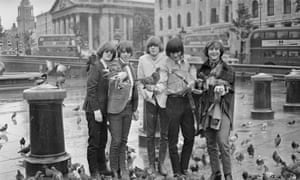
Byrds of a feather … Gene Clark (second right) with the Byrds in an overliteral London photoshoot in August 1965.

4. The Virgin
In 1971, Bob Dylan was the elephant in every singer-songwriter’s room, and he was bound to loom particularly large when the room belonged to a former Byrd. Clark was always too singular, too idiosyncratic, to be a straight-up Dylan imitator, which is perhaps why Dylan, who unjustly scoffed at Donovan, held him in such high regard. The plain, folky, largely acoustic album White Light was as close as Clark ever came to sincere flattery of Dylan – and while it wasn’t all that close, it stands among the finest of that era’s many records unmistakably beholden to the master. On opening track The Virgin, the measured, honeyed, philosophical tale of a girl in the big city, his inflection veers towards Dylan’s – but he never gives himself over to pastiche. Nor would he ever, even when it might have benefited him. Perhaps he genuinely didn’t know how.

5. She Don’t Care About Time
Clark often reworked his own songs. His later versions of Feel a Whole Lot Better and Train Leaves Here This Morning are wonderful, but this is the ne plus ultra of his revisions. Still feeling his way around country rock on the recordings that would be collected on the Roadmaster album, in 1972 he turned to a classic he wrote for the Byrds, the epitome of all things jangly, and rendered it something else entirely. Baroque and suffused with tenderness and wonder, it is one of those overwhelming tracks devotional not only in a romantic but in a quasi-religious sense. The best known such number is, perhaps, the Beach Boys’ God Only Knows – and you wouldn’t want to live on the difference between that and this. It was also a foretaste of what Clark would do next.

6. Life’s Greatest Fool
What Clark did next was produce one of the greatest albums ever made. No Other (1974) eventually became synonymous with the phrase “lost masterpiece”. Initially celebrated for its obscurity – it was deleted by Asylum in 1976, reissued in 1991, then given the bells-and-whistles treatment in 2003 – it is now celebrated for its magnificence. It was in every way a magnum opus: epic, sprawling, poetic, choral, rococo. It cost a small fortune to record, and the already erratic Clark never got over its commercial failure. Its opening song is an exuberant, foot-tapping country-gospel anthem stuffed with counterculture folk wisdom, its downbeat lyric defied by its pure joie de vivre.

7. No Other
Gram Parsons, in some ways a parallel figure to Clark, had a vision of a cosmic American music; Clark lived to fashion one of his own. The title track of his masterwork pulses, glows and rattles in a thrilling meld of country and funk, gospel and rock, with echoes of the Family Stone, Staple Singers, Gimme Shelter and Abbey Road (Anglophilia being a strain unacknowledged in Americana, but not by Clark). It’s unique not only in his own catalogue but perhaps in all of pop music.

https://www.youtube.com/watch?v=f2ViQXg_0bw

8. Some Misunderstanding
Here it is: the centrepiece of the No Other album and indeed of Clark’s career: a slow, eight-minute cry from the heart, reflecting on the perils and pleasures of a life lived too extravagantly. For Clark, who would surely have recognised William Blake as a spiritual progenitor, the road of excess had at last brought him to the palace of wisdom – and what a palace his is. It is a song to be dwelt in, to walk about within, exploring its chambers, curlicues and turrets. It is in most ways the antithesis of his sharp, concise writing of a decade previously, yet what stayed with Clark throughout was soul and soulfulness.

9. All I Want
Come the 80s, Tom Petty and REM were making the Byrds’ 60s sound fashionable again. In 1982 Clark recorded what would be released two years later as the Firebyrd album (later expanded and issued in the UK as This Byrd Has Flown). Again, circumstances (and perhaps self-sabotage) conspired against him; even when blatantly courting the main chance and invoking his past at every turn, he couldn’t catch a break. All I Want sounds like a prototype for later, poppy hits by the Traveling Wilburys and former bandmate Roger McGuinn; an updated, 80s-style Byrds. It is, by Clark’s standards, facile, a plaintive courtship of radio play. Yet it illustrates how he was quite incapable of divesting what he did of resonance and beauty.

https://www.youtube.com/watch?v=nTdboENmtQw

10. Gypsy Rider
In 1986, five years before his drug- and alcohol-hastened death at 46, Clark recorded his final studio album, So Rebellious a Lover, with the roots singer Carla Olson. It includes this lovely piece, in the traditions both of biker and rambling-man’s-gotta-be-free songs. Yet it’s a world away in spirit from Born to Be Wild or Free Bird. It is as sorrowful a motorcycle tune as you’ll ever hear, and it invokes an almost unbearable sadness at the prospect of leaving yet another love. “She should have known by now / You’re just a vagabond,” laments Clark. “You may never pass this way again.” It is easy to read too much into words in hindsight, but it truly does sound as if he is performing his own elegy.