A casual scan of Nels Cline’s dizzying discography echoes this – spanning lead guitar duties in iconic Chicago rock band Wilco, to over 200 recordings across alternative, punk and jazz. While accolades have been plenty (Rolling Stone once hailed him as one of its 20 “new guitar gods”), Nels Cline has hardly had time to rest on his laurels with various projects fuelling his flair for genre-bending.
“Share The Wealth”, his latest Blue Note Records outing with long-time band The Nels Cline Singers, is no exception.
Well Nels Cline does it again. The man just doesn’t miss. This 10-track, almost 80-minute album is a tour de force. Nels brought in a bunch of heavy hitters for this effort: Skerik on saxophone, Brian Marsella on keys, Trevor Dunn on bass, Scott Amendola on drums, and Cyro Baptista on percussion. The talent oozing out of this record is palpable. They never step on one another and each musician is given room to do damage as the music ebbs and flows between quietness and rowdiness. Nels brought this group together as an experiment and decided he liked the jams so much that he didn’t really want to mess with them as originally intended to do by picking pieces of the jams apart to make a different sonic landscape.
So here we have this behemoth of a jazz record that just pulls you in and never lets go. From the opening notes of “Segunda” to the ending of “Passed Down” you just have to strap in and go for the ride. “Beam/Spiral” really sets for taking off into outer space around the five-minute mark. “Stump the Panel” is a 17-minute excursion that will leave your jaw dropped. Each member of the band really goes for it, with Skerik and Brian battling it out in the first half before a dip in the action leads to a beautiful quieter portion until it turns into what sounds like the beginning of a horror movie. “Princess Phone”, “The Pleather Patrol”, and “Headdress” all sound like music from outer space coming to take over the land.
Listening to Nels go from quiet background player to upfront shred fest to psychedelic slides to ambient noises all from the same instrument throughout the record hurts my brain. The man just does so much with one instrument. Please listen to this one on some good headphones.
Blue Note Records; under exclusive license to UMG Recordings, Released on: 13th November 2020.
Elvis Costello has released a new album, “Hey Clockface”, recorded in Helsinki, Paris, and New York. The album, released October. 30th, is his first new music since 2018, and is at times playful, on other occasions introspective. The highlight is its jaunty title track; listen to it and many of the other tracks below. Hey Clockface was recorded in Helsinki, Paris and New York and mixed by Sebastian Krys in Los Angeles. Following the solo recording of tracks, No Flag, Hetty O’Hara Confidential and We Are All Cowards Now at Suomenlinnan Studio, Helsinki by Eetü Seppälä in February 2020, Costello immediately travelled to Paris for a weekend session at Les Studios Saint Germain. Costello tells us, “I sang live on the studio floor, directing from the vocal booth. We cut nine songs in two days. We spoke very little. His strikingly good 31st studio album, “Hey Clockface,” which dropped October 30th, and a deluxe vinyl boxed set commemorating his third album, the 1979 masterpiece “Armed Forces,” which arrives just a week later, on November 6th. There is a lot of clock-punching, or smashing, to go around in this sudden flurry of releases.
These old and new works are almost ridiculously incomparable in style, but there is a striking commonality. “Hey Clockface” doesn’t sound remotely like his last album, “Look Now,” which didn’t sound like any of the ones before it. And “Armed Forces” found Costello already shedding the lean, frantic signature sound of the prior record, “This Year’s Model,” to embrace the possibilities of the studio in a more ambitious and even grandiose way.
Watch the video for “Hey Clockface”/”How Can You Face Me”
Almost everything the musicians played was a spontaneous response to the song I was singing. I’d had a dream of recording in Paris like this, one day.” The assembled album, Hey Clockface is “An Elvis Costello & Sebastian Krys Production” following on from their work together on Elvis Costello and The Imposters Grammy-winning album Look Now. The motion picture of We Are All Cowards Now by Eamon Singer and Arlo McFurlow features images of flowers and pistols, smoke and mirrors, tombstones and monuments, courage and cowardice, peace love and misunderstanding. Specifically, what Costello had done was take time out before and during those tour dates to book quick, experimental sessions — by himself, as a clanging one-man rock band in Helsinki, and with a jazzy combo of Parisians put together by his keyboard player Steve Nieve in France. (He had even booked time with his touring band and his old producer Nick Lowe in London, with a whole different set of songs earmarked to work on, but those plans got scotched and will wait for another day and another album.
The ensemble, dubbed, “Le Quintette Saint Germain” by Costello, was recruited for these dates by Steve Nieve (who plays grand piano, upright piano, organ, mellotron and melodica) and features Mickaél Gasche on trumpet, flugel horn and serpent, Pierre-François “Titi” Dufour on cello, and the drums, percussion and high harmonies of Ajuq. Listen to the beautiful instrumentation on “The Whirlwind”
Reed player Renaud-Gabriel Pion plays contrabass clarinet, bass clarinet, Bb clarinet, tenor saxophone, bass flute and cor anglais. The Paris sessions were recorded by François Delabrière. Watch the video for “We Are All Cowards Now”
The New York sessions were produced by composer, arranger and trumpet player, Michael Leonhart in collaboration with guitarists, Bill Frisell and Nels Cline and completed, lyrically and vocally by Costello, “via Electrical Wire.” The musician had been teasing the first two songs’ release in late spring and early summer with a series of tweets that featured some of the songs’ lyrics and illustrations from the music videos. Costello performs Hammond organ, Fender Jazzmaster, upright piano, Rhythm Ace and “all other noises.”
“She could kill a man with a single stroke,” he sings on “Hetty O’Hara Confidential.” “She is not the one you want to provoke.” Watch the lyric video for “Hetty O’Hara Confidential”
As with all of us, 2020 has been a memorable year for ElvisCostello, though he has several unique reasons. On February 14th, he became an Officer of the Order of the British Empire, at a ceremony overseen by Prince Charles at Buckingham Palace.
And though his celebrated career is decades old, Costello had never won a Grammy Award for one of his albums. That all changed at the 62nd Grammy Awards, held on January . The musician won for Best Traditional Pop Vocal Album for his Oct. 2018 release, Look Now. The legend had previously won in 1999 for Best Pop Collaboration with Vocals, with Burt Bacharach.
“You may be joking, but I don’t get the gag,” he sings in “No Flag.” “I sense no future, but time seems to drag.” Watch the lyric video for “No Flag” There’s some days where none of it matters, and it doesn’t mean anybody would want to stay there forever, but maybe it’s better to write that out in a song.” Costello says he has no need to “live in the past, trying to summon up some old kind of fury. Because I’ve got all the fury that I need right now. Put on ‘No Flag’ and tell me which track on ‘This Year’s Model’ is more aggressive than that. There isn’t one.”
All songs written by Elvis Costello except as noted. On Aug. 28, Costello surprised his audience with the release of a spoken word song, “Phonographic Memory,” described as “the B-Side of the recently released, ‘We Are All Cowards Now’. “Phonographic Memory” imagines a post-war ceremony involving an archive recording of the voice of Orson Welles and someone identified only as “President Swift”. The recording takes the form of a short story recited over an open-tuned acoustic guitar soundtrack and as such is unique in Costello’s recorded catalogue.
For a band that’s typically so meticulous and exacting in their sound and process, Wilco’s 2016 album Schmilco seemed like a rushed and pieced-together work that followed its predecessor, Star Wars, a little more than a year later. The strain was evident.
Ode to Joy is the bands the 11th studio album from the pioneering Chicago band Wilco – released via dBpm Records. The album features 11 new songs written and produced by Jeff Tweedy and recorded by Wilco at the bands’ own Chicago studio dubbed The Loft. The group went on a break, while leader Jeff Tweedy released three solo albums in succession, with the last, Warmer, arriving less than six months before Wilco return for their 11th LP, Ode to Joy.
A lot has happened in the relatively short three years between Wilco albums and, obviously, not all of them on the personal front. It’s been a rough period for a lot of people; anger, disillusionment and hopelessness seem to be at the core of a lot of lives these days. So, it’s no small thing that the record is called Ode to Joy. The somewhat winking title notwithstanding, there’s light in the darkness of these songs. You just have to dig a little to find it.
That’s a lot to ask, even from Wilco’s most devoted fans. Especially when the opening “Bright Leaves” barely works up a melody to lift spirits. But then the next two songs – “Before Us” and “One and a Half Stars” – proceed at a similar pace, and Ode to Joy begins to find strange comfort in its melancholy. “Now, when something’s dead, we try to kill it again,” Tweedy sings on “Before Us,” striking a sense of nostalgia for a lost past that eventually settles for resigned coziness.
The album is like that, creeping up on you with unexpected pokes you’re not really expecting to find in the sad-sack nature of many of the songs. By the time “Love Is Everywhere (Beware)” rolls along during the last third of the LP, Ode to Joy sounds like the most organic Wilco album since 2004’s A Ghost Is Born.
At times, the moody atmospherics underlining the songs amount to no more than mere hums; other times they become another instrument, pushing the tracks along. These sonic textures add haunting rumbles, fleeting noise bursts and the occasional melodic upswing.
But turmoil is always around the corner. The album’s opening lines – “I don’t like the way you’re treating me” – signal a theme that shows up throughout the album, even at its most uplifting moments. But there’s reserved hope, a tentative grasping for purpose in humanity, even when the chorus of a song called “Citizens” goes “White lies, white lies” and another one slyly titled “We Were Lucky” plays at a funeral-march pace.
Ode to Joy, like the best Wilco albums, can be oblique. That’s always been a draw, and it’s no less so here. The time away from each other has sharpened some of their ties. Tweedy is still in charge, but Nels Cline’s guitar cuts through the occasional clutter to expose the soul that’s not always surface evident. And the band’s focused interplay on standouts like “Everyone Hides” takes on a life-force of its own, even if the overall result seems a little slight compared to past masterworks like Being There and Summerteeth.
As with the band’s accidental post-9/11 meditation and career high-point Yankee Hotel Foxtrot – which was supposed to be released earlier in 2001 but didn’t come out until 2002 – Ode to Joy sounds like a reflection of the times. Art can’t help but to react, but maybe reading too much into the album shifts its intent and position.
Then again, maybe not. When Tweedy declares, “I’m freaking the fuck out / I’ll try to do my best, I guess” on “Hold Me Anyway,” it comes off like a summation of both the record and 2019. This isn’t a record to change the world or even Wilco’s place in it, like Yankee Hotel Foxtrot did. But in trying to make sense of it, Ode to Joy finds a sort of strength. And we’ll take what we can get these days.
Wilco are back with Ode To Joy, a decidedly optimistic collection of new tunes of really big, big folk songs, monolithic, brutal structures that these delicate feelings are hung on.
On July 16th, Wilco shocked their fans in the best way possible: by releasing Star Wars, the band’s first album in four years, for free on their website, with no advance warning. The album is Wilco’s best in at least a decade, full of loose, poppy rockers like “Random Name Generator” and “The Joke Explained.” After recording the basic tracks himself in the Wilco loft in Chicago, frontman Jeff Tweedy brought in the other members of the band separately to play on them. The process has proved so productive that Tweedy says he’s already halfway finished with the next Wilco album. “I have a whole lot of material,” he says.
It’s kind of an extension of the thought process behind, I don’t know, staying in touch with some sort of wild energy as much as possible and some sort of an irreverence. But that painting of that cat hangs in the kitchen at the [Wilco] loft, and every day I’d look at it and go, “You know, that should just be the album cover.” Then I started thinking about the phrase “Star Wars” recontextualized against that painting — it was beautiful and jarring. The album has nothing to do with Star Wars. It just makes me feel good. It makes me feel limitless and like there’s still possibilities and still surprise in the world, you know?
“What’s more fun than a surprise?” Jeff Tweedy asked cheekily on instagram as he introduced us to Wilco‘s ninth studio album. In a year when fans of another Star Warswere being incessantly teased, this album dropped out of nowhere, no endless teaser trailers required. Instead it was free to download,
The album’s got a great sound—jagged guitar (courtesy Nels Cline), distorted vocals—but a critical shortage of great songs. “You Satellite” rules and “Random Name Generator” is formidable enough to make Jeff Tweedy feel like a shapeshifter rock star, but much of the album feels unfinished, like sketches for something that might’ve been great, a perception that’s fairly amplified by the album’s brief length and lazy title. The best thing you can say about Star Wars is that it injected some spontaneity, some aggression back into Wilco’s music. The album thrilled fans when it was surprise-released for free in 2015, following the longest gap between Wilco albums to date. But it’s already been eclipsed by the superior Schmilco. Wilco’s weakest effort isn’t bad at all, just—well, underwhelming
Kitsch kitty cover art and silly title aside, the fuzzed up, lean rock on Wilco’s most concise album in years took plenty of unexpected turns. Tweedy worked largely alone, the band adding the gloss and grit to finished arrangements and basic tracks. The result is at times wild and weird but always Wilco.
For over 20 years, Chicago Americana troupe Wilco has been a band of depth and intricacy. Singer-songwriter JeffTweedy has served up his personal insights on the mic as a revolving backing band of ace multi-instrumentalists dressed them in the Alt-country repose of A.M. and Being There, the ‘70s pop sheen of Summerteeth, and the minor symphonies of Yankee Hotel Foxtrot. By 2007’s Sky Blue Sky, the band settled on what would be its first stable lineup: JeffTweedy and his former Uncle Tupelo bassist buddy John Stirratt, experimental drummer and percussionist Glenn Kotche, guitar god Nels Cline, knob twiddler Mikael Jorgensen, and alt-country session hand Pat Sansone. The lineup honored Wilco’s commitment both to country and to pushing the envelope of this genre, but 2009’s Wilco (The Album) and 2011’s The Whole Love, the pair of full lengths that followed Sky Blue Sky, maybe fizzed when they ought to have popped.
Last summer’s surprise free release Star Wars was an attempt to redirect the band’s energy. At just over 33 minutes long, it’s the shortest Wilco studio album.
The songs were two- and three-minute pop-rock confections that pulled off the difficult feat of sounding both thoughtfully arranged and off the cuff. This month’s Schmilco seeks to extend the streak, revisiting the wiry energy of Star Wars over a dozen quiet acoustic tunes. Most of the new album’s songs were conceived around the same time as Star Wars, but Tweedy made the peculiar decision to split the fertile sessions in two: “The alternative to making two records would have been to spend another year really honing everything, all of it, getting it all right for that kind of release.”
The irony of the Star Wars/Schmilco project is that the decision not to whittle everything down to a single body of work is its saving grace.
If the major strength of Star Wars was getting Wilco, a band whose finest albums are also their busiest, to strip down, Schmilco’s is figuring out how to stash six players into the quiet of a backyard jam. “Normal American Kids,” introduced at a live show earlier this year as a solo Jeff Tweedy cut, gets a studio version that sneaks sweet, meandering electric guitar from Nels into the background. A few songs later “Nope” crams stuttering bits of riffs into the margins, the lead guitar coughing and spitting over the tune like Blur ax-man Graham Coxon did on “Coffee & TV.” “Nope” slowly unravels as it trips along, its personnel expanding to no less than three guitarists and two drummers. (Tweedy’s son Spencer lends Kotche a hand on Schmilco’s drums.) Between these extremes is a tapestry of shaggy guitar shuffles like the laconic “Happiness,” the demented, atonal “Common Sense,” and the muted punk blast of “Locator.”
Schmilco’s subtle intricacies provide cover for a series of vignettes of dreamers in various degrees of resignation. From the song titles — “Nope,” “Cry All Day,” “Someone to Lose,” “Shrug and Destroy” — down to the lyrics, Schmilco bleeds sadness. The deceptively titled “Happiness” opens on a devastating observation: “My mother always says I’m great, and it always makes me sad / I don’t think she’s being nice, I really think she believes that.” Album closer “We Aren’t the World (Safety Girl)” devilishly subverts the chorus of the star-studded ‘80s charity single “We Are the World” into a dart about settling: “We aren’t the world / We aren’t the children / But you’re my safety girl.” As a lyricist, Tweedy loves his abstractions. (“I am an American aquarium drinker / I assassin down the avenue”?) So Schmilco’s snap focus on dejected character studies, like the hopeless barfly of “Quarters,” who sweeps the place for quarters to play music on the jukebox, is jarring, but like the elegant arrangements that swirl and sputter underfoot, it feels like the work of a tightly wound unit taking chances. Wilco’s willingness to embrace risk and change at a point in its career where peers often retreat into comfort and self-parody suggests there could be another couple of decades of life left in this 22-year-old enterprise.
Despite playing the game for over two decades, the 49-year-old singer-songwriter has hardly ever sounded so intimate as he does on Schmilco, grappling with the never-ending angst of knowing that you never really can escape yourself. On album standout “If I Ever Was a Child”, he vividly paints this feeling, singing: “I slump behind my brain/ A haunted stain never fades/ I hunt for the kind of pain I can take.” The Chicago rockers add some color to each of the album’s 12 tracks by stripping things down to its core essentials.
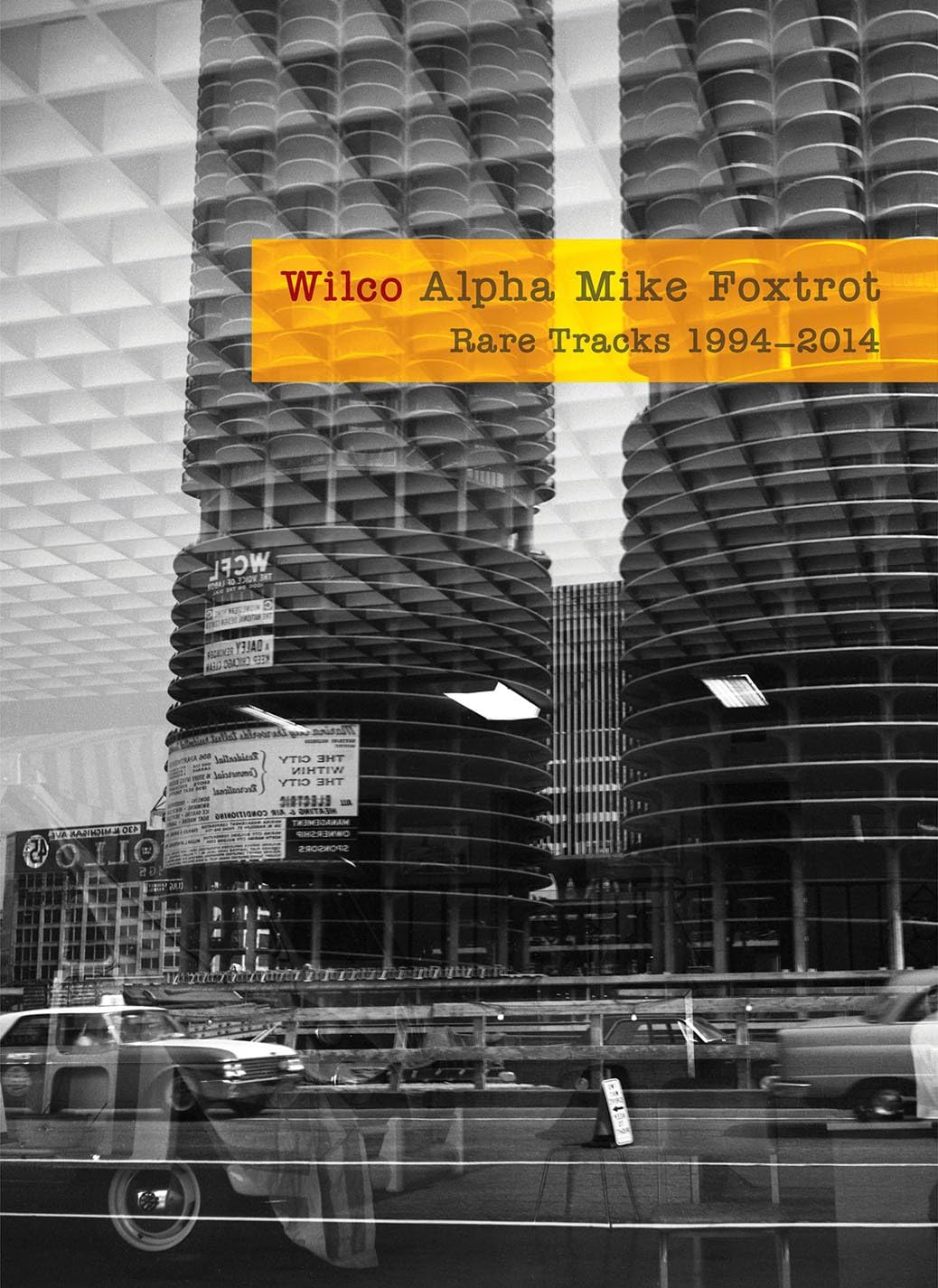
In the book that accompanies Alpha Mike Foxtrot: Rare Tracks 1994-2014, a four-disc collection of rare and non-LP recordings by Wilco, the former Reprise Records publicist Bill Bentley admits that no less a legend than Doug Sahm thought he was making a mistake when, after Uncle Tupelo abruptly and acrimoniously broke up, Bentley opted to work with Jeff Tweedy’s new band rather than Son Volt, Jar Farrar’s post-UT project. “Come on, Bentley, you gotta go with the other guy,” Sahm said, “he’s gonna happen.” Which was certainly the conventional wisdom when Wilco and Son Volt both launched in 1994 , Most fans seemed certain that Farrar was going to go on to a brilliant career on his own, and Tweedy’s band would be a fine but lesser commodity.
But those bets were off after Wilco released their ambitious, game-changing second album, “Being There”, in 1996, and in the years that followed, it became clear that Tweedy was the stronger songwriter, With a more imaginative sonic visionary, and a keener judge of collaborators than he’d had the chance to show in Uncle Tupelo. Two decades on from their debut, Wilco have created a large and impressively diverse body of work, and Alpha Mike Foxtrot is a massive odds-and-sods collection, bringing together 77 tracks from singles, promo releases, movie soundtracks, bonus discs, and downloads from Wilco’s website.
Alpha Mike Foxtrot plays like an alternate history of Wilco, and most of what’s here is every bit as satisfying as what the band delivered on its first eight studio albums, if more idiosyncratic; it traces the evolution of the band from early solo cassette demos Tweedy cut in his living room to extended workouts from the line-up that solidified after the release of “A Ghost Is Born”, as Wilco grew from a spirited alt-country combo to a rock band as adventurous and eager to innovate as it was engaging and tuneful (Tweedy’s simple but powerful way with a melody is the surest unifying factor that holds these songs together). And the plentiful live tracks here demonstrate how willing Tweedy and his bandmates have been to give their songs new shapes on-stage (a ten-minute live recording of “Spiders [Kidsmoke]” is a tremendous showcase for Nels Cline’s stellar guitar work), and there’s a fistful of studio tracks that didn’t fit on an album but sound splendid in this context, especially the Replacements-styled “Student Loan Stereo,” the soulful “The Thanks I Get,” and the faux-live pop/rocker “The Good Part.” In the strictest sense, nothing on AlphaMike Foxtrot is unreleased, but there’s a lot here that’s never been available for general public consumption, and while the sheer bulk of this set means it’s most likely to be heard by hardcore fans, anyone with a genuine interest in Wilco will find a lot of great music that fell between the cracks on this set, as well as a fascinating map of the many roads Wilco did and didn’t take.
Chronologically ordered, the 77 songs clock in at 4 hours and 40 minutes and there’s much to enjoy. The live version of ‘Impossible Germany’ is mind blowing with the Television style duelling guitars and Nels Cline’s staggering extended guitar solo, it’s better than the studio version. Most of the covers (Big Star, Steely Dan, Buffalo Springfield, etc.) remain faithful to the originals and their guitar heavy cover of the Gram Parsons written ‘One Hundred Years from Now’ is the best recording of the song I’ve heard. Full marks to Tweedy for his falsetto on the third verse of ‘I Shall Be Released’ (funny but cool!) and the memory of the late multi-instrumentalist Jay Bennett lives on with many of his co-writes and playing featuring on Discs 2 & 3. The alternative versions though interesting are never better than the originals but what this collection does highlight, much like the ‘Kicking in Television’ live album, is what a well drilled and impressive live act Wilco are.
Wilco are one of those bands that are always around and always releasing quality music. Whether it be through the Wilco name or through one of the band’s many side projects, there is no doubting the sheer amount of talent in the Wilco camp. In celebration of their 20th birthday, the band have decided to release a massive 77-song collection of rarities, alternative takes, and live tracks that are bound to be essential for any big Wilco fan. And, considering they are so popular that they have their own annual festival, that’s a good amount of people!


 The Fat Angel Sings