Mike Bloomfield “The Gospel Truth” 2CD set of rarities, hits and unreleased live tracks (Sunset Blvd)
New 2 CD set, a combination of rarities, hits & previously unreleased live recordings.
Michael Bloomfield was one of America’s first great white blues guitarists, earning his reputation on the strength of his work in the Paul Butterfield Blues Band. His expressive, fluid solo lines and prodigious technique graced many other projects — most notably Bob Dylan’s earliest electric forays — and he also pursued a solo career, with variable results.
Uncomfortable with the reverential treatment afforded a guitar hero, Bloomfield tended to shy away from the spotlight after spending just a few years in it; he maintained a lower-visibility career during the ’70s due to his distaste for fame and his worsening drug problems, which claimed his life in 1981.
During the late ’70s, Bloomfield recorded for several smaller labels (including Takoma), usually in acoustic settings, authentic and personal. Disc 2 features a previously unreleased 1971 concert from the archives.
Tracklist: [CD1: Best Of Acoustic & Electric Sessions] 1. Michigan Water Blues 2. Frankie And Johnny 3. Hitch-Hike On The Possum Trot Line 4. Pleading Blues 5. Papa-Mama-Rompah-Stompah 6. Effinonna Rag 7. The Gospel Truth 8. You Took My Money 9. Lights Out 10. Junker’s Blues 11. It’ll Be Me 12. Snowblind 13. Peepin’ An A Mornin’ Blues 14. At The Cross 15. Hilo Waltz 16. Guitar King 17. My Children, My Children (I Call You) 18. See That My Grave Is Kept Clean
[CD2: In Concert] 1. If You See My Baby 2. Poor Kelly 3. Statesboro Blues 4. You Won’t See Me 5. She’s Mine 6. Come Back Baby 7. Driftin’ and Driftin’
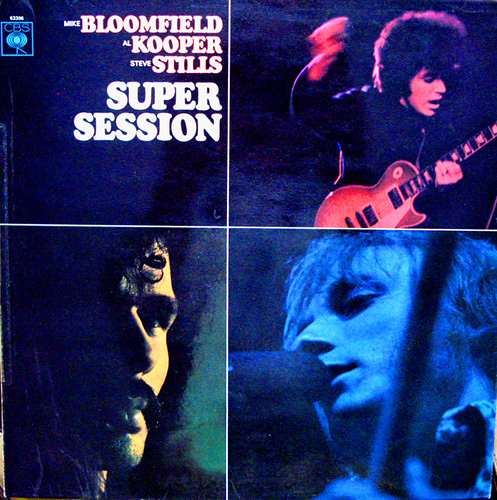
From the “Supersession,” album in 1968 comes arguably Mike Bloomfield’s finest moment in his legendary career. The jam will send a jolt to your synapses, as Bloomfield’s inspired, fluid playing from the intro is so assured and soulful, it will make a true believer of you. With Al Kooper on organ, Harvey Brooks on bass, Barry Goldberg on electric piano, and Eddie Hoh on drums, “Albert’s Shuffle, the groups homage to Albert King, does the band and the Blues legend proud. It is an enduring masterpiece. Bloomfield’s playing with the Butterfield Blues Band on their first two albums is astonishing. He was one of the greatest players of all time. Sadly I don’t believe he received the recognition he deserved and it is us of a certain age who recall his inimitable skill. “Super Session” – the musically adventurous mid-1968 collaboration between the unlikely triumvirate of multi-instrumentalist Al Kooper, Chicago-blues ace Michael Bloomfield and Buffalo Springfield guitar player Stephen Stills – is cited as a different type of milestone: the capturing of itinerant rock musicians coming together briefly for a one-off jam, in the same way as jazz musicians had previously done. It can lay claim, almost by accident, to being the impetus for a whole branch of rock’s family tree.
The project was masterminded by well-travelled multi-instrumentalist Al Kooper, and Super Session was at least partially borne out of Kooper’s frustration that no producer had been able to properly showcase the formidable talents of his friend, blues guitarist Mike Bloomfield.Kooper and Bloomfield led parallel musical lives, both eventually playing in brass-driven bands; the former in Blood, Sweat & Tears, the latter in The Electric Flag. Both had recently left these acts at the time of Super Session; Stephen Stills, who joins the story later, was in the process of leaving Buffalo Springfield. Kooper, had taken a job as an A&R man at Columbia,
“Albert’s Shuffle” written by Al Kooper and Mike Bloomfield is from the classic Columbia album, Super Session, recorded in May 1968 by guitarist Michael Bloomfield, multi-instrumentalist Al Kooper, keyboardist Barry Goldberg, and bassist Harvey Brooks. This version is from the Sony CD reissue and features the original track before the horns were added on the final mix.
“Super Session” (1968) was conceived by Al Kooper and features the work of guitarists Mike Bloomfield and Stephen Stills(originally printed on the sleeve as Steve Stills). Kooper and Bloomfield had previously worked together on the sessions for the ground-breaking classic Highway 61Revisited by Bob Dylan. The success of this record opened the door for the “supergroup” concept of the late 1960s and 1970s.
Kooper recalled in his book Backstage Passes And Backstabbing Bastards: “[Bloomfield] commenced to play some of the most incredible guitar I’d ever heard… And he was just warming up! I was in over my head. I embarrassedly unplugged, packed up, went into the control room, and sat there pretending to be a reporter from Sing Out! magazine.” Kooper still seized his chance to be part of the recording, by playing the Hammond – the first time in his life he’d ever sat behind the instrument. The pair were in also in Dylan’s band for his electrified 1965 Newport Folk Festival set.
The album’s title – thought up after it was recorded – is almost a misnomer, since its two star guitarists didn’t actually play together during it. Instead, Side One is the result of a nine-hour Kooper-Bloomfield session; Side Two features Kooper-Stills, with both sessions backed by Electric Flag members Barry Goldberg on keys and Harvey Brooks on bass, plus consummately talented session drummer ‘Fast’ Eddie Hoh – horns and Kooper’s extra guitar parts were overdubbed later.
Mike Bloomfield – is the subject of a new multi-disc anthology produced by Al Kooper, “From His Head to His Heart to His Hands”, released by Columbia/Legacy – is rock’s greatest forgotten guitar hero. From 1965 to 1968, he was nothing less than the future of the blues, charging the primal forms and raw truths of his idols – B.B. King, Muddy Waters, Howlin’ Wolf – with cutting-treble tone, breakneck improvising and incisive, melodic articulation on a machine-gun series of classic records: Dylan’s epochal single “Like a Rolling Stone” and the Highway 61 LP; the Butterfield band’s ’65 debut album and ’66 raga-blues thriller, East-West; and the 1968 Top 20 hit Super Session, a dynamic jamming collaboration with Kooper. In 1966, Eric Clapton, on the verge of his own stardom, called Bloomfield “music on two legs.” But in the Seventies, as Clapton ascended to sold-out arenas, Bloomfield slipped into twilight in San Francisco, working with low-profile bands and making small-label records while wrestling with chronic insomnia and heroin.
Bloomfield – (1943-1981) Born in Chicago, Bloomfield gravitated toward the Blues after playing in high school Rock and Roll bands. He was born to play the Blues, spending time in Chicago’s South Side Blues clubs with black bluesmen such as Sleepy John Estes, eventually performing with Chicago’s finest, Howlin’ Wolf and Muddy Waters during the early ’60s. He also met harmonica player, Paul Butterfield and guitarist Elvin Bishop. A grandfather, Max, owned a pawnshop, and Bloomfield got his first guitar there. Born left-handed, he forced himself to play the other way around. “That’s how strong-willed he was,” says Goldberg. “When he loved something so much, he just did it.”
The Butterfield Blues Band was born in 1965 with the addition of keyboardist Mark Naftalin, bassist Jerome Arnold, and drummer Sam Lay. The debut album the eponymous “The Paul Butterfield Blues Band,” was released in October 1965 and met with little success nationally. But more important, Bloomfield played on Bob Dylan’s epic single “Like a Rolling Stone,” and on most of the tracks of Dylan’s 1965 “Highway 61 Revisited,” album. Additionally, he also joined Dylan at the Newport Folk Festival in July, along with the balance of Butterfield’s band (sans the leader). and keyboardists Al Kooper and Barry Goldberg. This was Dylan’s historic appearance in which he strapped on a Telecaster, and the band played electric – the first instance of an electric-guitar performance by the folk rocker. Dylan remembered Bloomfield as “the guy that I always miss. . . . He had so much soul. And he knew all the styles.”
“He put tremendous force into what he was doing,” says pianist Mark Naftalin, who played with Bloomfield in the Butterfield band, then on many post-’68 gigs and sessions. “But that’s not the same as ambition. He turned away from possibilities of success ritually.
The Butterfield Blues Band’s second LP “East-West” from 1966 fared much better than its predecessor and has gone on to become a classic. During this period, Bloomfield also contributed guitar on albums by Chuck Berry, James Cotton, and Mitch Ryder. Next, after relocating to San Francisco in 1967, he formed Electric Flag with his long time collaborators Goldberg and Nick Gravenites, and bassist Harvey Brooks and drummer Buddy Miles completed the band. Michael was organic – he played directly from his heart into an amp,” says keyboard player Barry Goldberg, who met the guitarist in high school in Chicago and was in Bloomfield’s psychedelic-R&B big band the Electric Flag. “When he shook a string, it was like Otis Rush. He had the intensity in his soul. He didn’t need anything else.
They appeared together for the first time at the Monterey Pop Festival and released the “A Long Time Comin,” album in 1968, featuring “Killing Floor,’ “Texas,” and “Wine,” among other tasty tracks. The record was seen as uneven, and hostilities between band members and heroin abuse subverted the group. Teaming up with Kooper once again and Steven Stills., The band released the one-off “Supersession,” with one of Bloomfield’s finest moments on the soulful “Albert’s Shuffle,”
The classic example is Super Session, Bloomfield’s only hit record under his own name. Tracks from that album, outtakes and associated live material – arguably some of his most sublime, furiously poetic soloing on record – comprise From His Head‘s second CD. Guitarist Jimmy Vivino, the bandleader on Conan and a lifelong Bloomfield disciple, cites the gleaming tangle of vocal-like phrasing and diamond-hard melodic certainty in “Albert’s Shuffle,” the opener on Super Session, as the peak. “The intro and first chorus are breath taking,” he raves. “And it’s just a Les Paul Sunburst into a Super Reverb amp with that Bloomfield tone – no bass, volume all the way up. And you control it from the guitar.”
But Bloomfield is on only one side of the original LP. He quit the sessions after one night of recording, leaving Kooper a note: “Alan, couldn’t sleep. Went home.” Kooper finished the album with Stephen Stills. “You know what it was in retrospect? Michael wasn’t properly challenged by anyone,” Kooper says now. “Even I didn’t want to take that position. I’d rather be his friend.”
The album was a big hit landing at #12 on the Billboard Album Charts, and resulting in a sequel “Live Adventures of Mike Bloomfield and Al Kooper”, recorded at Fillmore West. Bloomfield turned to solo. session and backup work for the next 12 years, including guitar on a track of Mother Earth’s “Living With the Animals,” in ’68. He also produced James Cotton’s “Cotton in Your Ears,” sessions in ’69, and contributed to Janis Joplin’s “I Got Dem Ol’ Kosmic Blues Again Mama,” 1969 album – and helped put together the band.
His last major work was on “Fathers and Sons,” on the Chess label reuniting with Butterfield and Lay, backing Chess masters Muddy Waters and pianist Otis Spann. He gave up guitar playing in 1970 because of his addiction but did manage a few more albums in the 1970s, including “Triumvirate,” in 1973 with Dr. John and John Hammond Jr., and a reformed Electric Flag for an album “The Band Kept Playing.” He sat in with Dylan at San Francisco’s Warfield Theatre on 11/15/80, and continued to play live dates, with an appearance at S.F. State College on 2/7/81 that would be his last.
Sadly, Bloomfield was found dead in his car from a heroin overdose on 2/15/81. His guitar prowess would live on in his wake, and Rolling Stone magazine ranked him #22 on its list of “100 Greatest Guitarists of All Time,” in 2003, and he was inducted into Blues Hall of Fame in 2012 and the Rock and Roll Hall of Fame in 2015.



 The Fat Angel Sings