

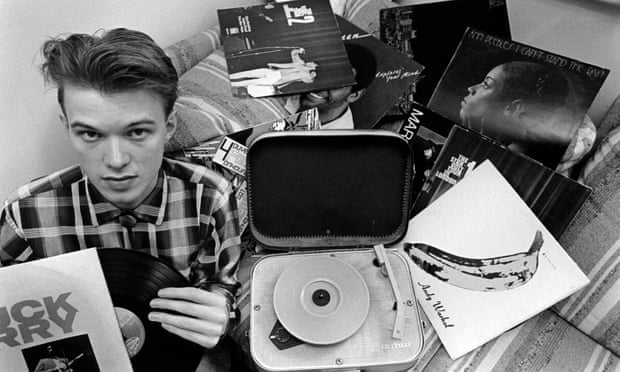
It would be exaggerating to say that Orange Juice singlehandedly invented what came to be known as “indie” music, but only slightly: for decades, the term was virtually defined by the influence of their trebly guitars, their defiantly anti-rock and un-macho stance, even their haircuts. Frontman Edwyn Collins often professed to be horrified by what they inadvertently spawned, and you can see why. As much in love with disco and soul as the Velvet Underground, Orange Juice were richer, wittier and more daring than any of their imitators: their records – whether the chaotic, life-affirming rush of 1980’s Blueboy, their sparkling hit Rip It Up or 1984’s gorgeous ballad A Sad Lament – are still as fresh as new paint.
Alan Horne was a nineteen-year old botany student with Malcolm McLaren aspirations, was struck not only by the breadth and dexterity of Orange Juice’s reference points, but also by Edwyn Collins’ unique ear for an infectious pop melody. Horne immediately set up Postcard Records with co-funding from Collins and bassist David McClymont, and in April 1980 the single ‘Falling and Laughing’ was released . ‘Falling and Laughing’ began a stream of unfathomably perfect singles across 1980 and 1981, giving Orange Juice nationwide indie success and a music press that almost took for granted that Orange Juice would become massive.
As one of four Orange Juice singles released on Glasgow’s legendary and legendarily dysfunctional Postcard Records, August 1980’s “Blue Boy” was atypical of their early tangled jangle of a sound, but it packed a powerful wallop. It’s a blistering, Buzzcocks-indebted flash of excitable energy beginning with seven seconds of speed-fuelled martial drumming and an opening line that leaves you in no doubt you’re listening to a lyricist of real fluency and wit (“When he spoke, she smiled in all the right places”). Culminating in some fantastically cack-handed and out-of-tune guitar soloing, it’s an indecently exciting piece of punky guitar pop, and as apt a place as any to begin a root through some of the best bits of h Orange Juice.
A debut album for Postcard Records would be recorded (‘Ostrich Churchyard’) and then scrapped, and by the time Orange Juice finally released their debut ‘You Can’t Hide Your Love Forever’ on Polydor in 1982, the indie world was already moving on, Orange Juice’s sound had already moved on.
With one stroke of his pen, Collins practically gave indie pop music its entire faux-naive raison d’être. “Worldliness must keep apart from me,” runs the chorus clincher to Simply Thrilled Honey. Rarely has a more eloquent statement been made about music as a harbour from the harshness, the impurities, the compromises of the grownup world. “It’s about a girl who tried to seduce me, but I didn’t want to go to bed with her,” Collins said: “I find going to bed with someone you don’t love disorientating.” Dating back to Orange Juice’s earliest days, when they were still the Nu-Sonics, Simply Thrilled Honey is packed with disco-fresh chords and the kind of starchy guitar top lines the Jesus and Mary Chain would later hotwire.
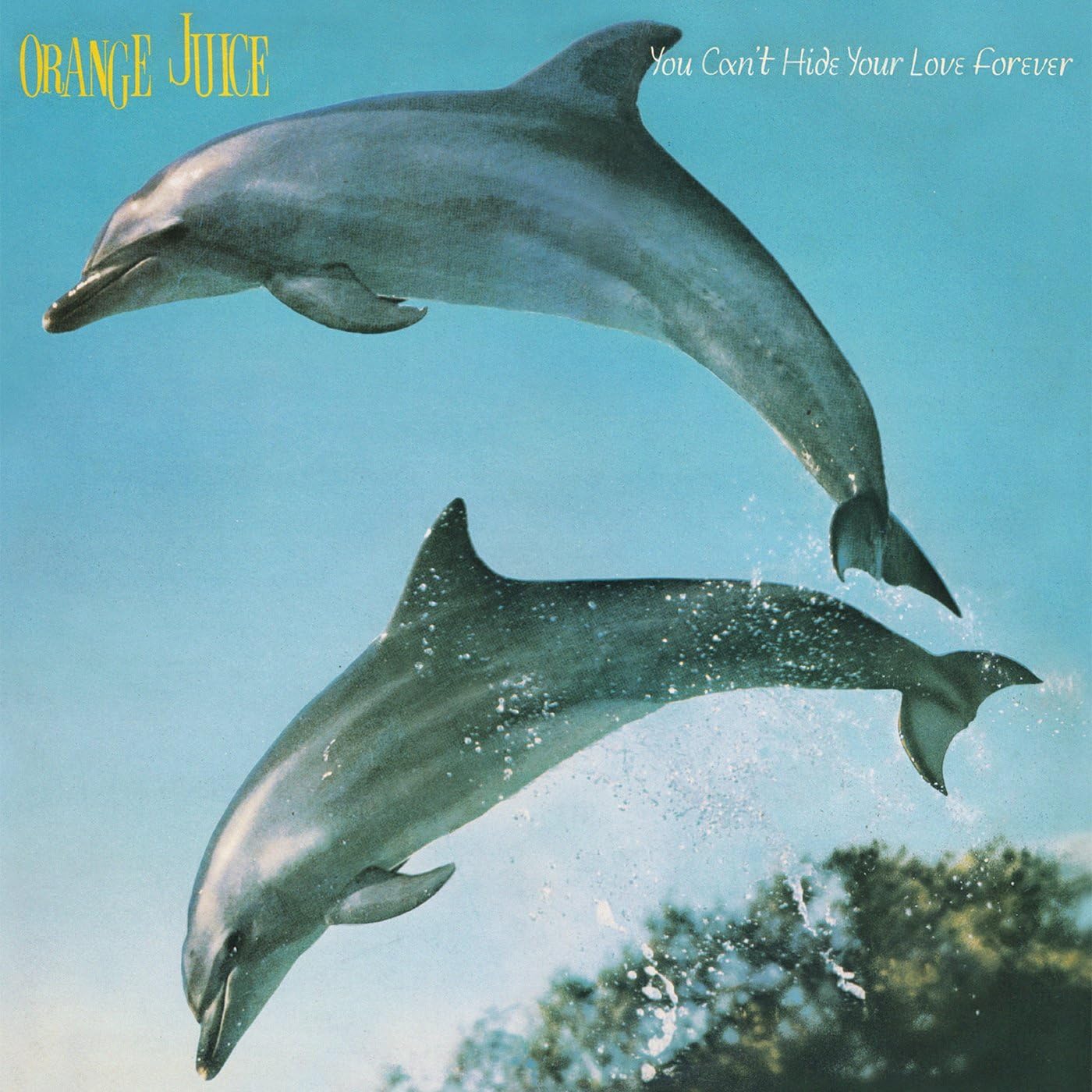
You Can’t Hide Your Love Forever
After leaving Postcard Records and convincing Rough Trade to finance the sessions, Orange Juice ended up signing to Polydor for their 1982 debut album, “You Can’t Hide Your Love Forever”. Made up of a couple re-recordings of brilliant songs from early singles (“Falling and Laughing,” “Felicity”), cleaned-up versions of songs from the demo, and a few new tracks, the album is a slick, tuneful slice of early-’80s pop that’s catchy and bright, and only slightly overcooked. Both Edwyn Collins and James Kirk could have retired after this album and been secure in the history books as two of the finest songwriters of the era. Kirk‘s “Three Cheers for Our Side” and “Felicity” are brilliantly odd and hooky songs that sound unlike anything anyone else was doing at the time; Collins‘ songs are reliably witty, cutting, and romantic with lovely choruses. “Falling and Laughing” is timeless pop, “Tender Object” is rippingly good dance-punk, his ballads are heartbreaking (“Untitled Melody,” “In a Nutshell”), and “Consolation Prize” takes the prize for hilarity (“I wore my fringe like Roger McGuinn‘s/I was hoping to impress/So frightfully camp it made you laugh/Tomorrow I’ll buy myself a dress”).
Not too many other folks were writing songs like these, either. Add some excellent guitar interplay between Kirk and Collins and a strong rhythm section to the mix and you’ve got something that seems hard to mess up. Unfortunately, some of the production choices come close to wrecking things, as the tinkling pianos and backing vocalist can come on a little strong at times. The glossy finish given to the album is also a giant leap from the scrappiness of their early sound, though its effects are lessened by the exuberant energy the band plays and sings with at all times. These criticisms aside, once one accepts that the arty punks Orange Juice started off having fully embraced the sophisticated pop side of the world, then it’s easy to see that You Can’t Hide Your Love Forever is one of the best examples of early-’80s pop there is. That it’s the one and only album the team of Collins and Kirk made before splitting only makes it all the more essential to own. For many, the album failed to live up to the expectations of the early Postcard singles, and amidst accusations of selling out by signing to a major label there were criticisms of the glossier elements of the album’s production.
It was the year that ‘You Can’t Hide Your Love Forever’ was released that a young Johnny Marr would knock on the Stretford door of one Steven Morrissey, and the Smiths would go onto claim the success that many had assumed for Orange Juice with a not dissimilar guitar sensibility or approach to lyricism. Scores of Postcard Records impersonators would spring up across the K in the wake of Orange Juice’s success.

Rip It Up
By the release of ‘You Can’t Hide Your Love Forever’, Collins had culled head-in-the-clouds guitarist James Kirk and drummer Stephen Daly from the line up, Kirk having been responsible for three of ‘You Can’t Hide Your Love Forever’s most intoxicating moments (‘Wan Light’, ‘Three Cheers for Our Side’ and ‘Felicity). Luckily for Collins and his new line-up, a bona fide hit single would follow the next year in the form of ‘Rip It Up’, but the album of the same name was too inconsistent and unsure of itself to capitalise on the single’s top 10 success.
After releasing their first album in February of 1982,Orange Juice were struck with their usual batch of bad luck. James Kirk, whose songwriting efforts were crucial to the band had left; then the label pressed them to follow up with a new album as soon as possible in order to cash in on their fading buzz. After adding ex-Josef K guitarist Malcolm Ross and drummer Zeke Manyika, they headed back to the studio and Rip It Up was released a mere ten months later. The album reflected the lineup change and quick turnaround quite a bit. In the search for material, Manyika contributed two songs with an Afro-pop influence (“A Million Pleading Faces” and “Hokoyo”) and Ross brought a sprightly song he wrote while in Josef K (“Turn Away”), and while they are all good efforts, they don’t measure up to Kirk‘s contributions. Edwyn Collins went back to a couple old songs and revamped them for the album, turning “Breakfast Time” into a weirdly reggae-influenced ballad and “Louise Louise”
For this crumpled Velvetsy ballad, Collins goes full caramel-voiced crooner, as he variously woos and taunts the titular Louise – who seems to be having none of it to a backing of knitted trebly guitars, barbershop harmonies, a shuffling beat and a fabulously fuzzed-out guitar solo. “I’m doubled up on bended knees / Tell me darling tell me please” he begs, despite acknowledging that his melodramatics aren’t clever, nor likely to make her change her mind. “Have a wonderful birthday, dear,” he mopes sarcastically. He also took a song from the very earliest incarnation of the band as the Nu-Sonics and stretched it out into the overly long “Tenterhook.” So far not the makings of a great album, but the rest of the songs turn the tables almost completely. “Mud in Your Eye” is a sweet little soul crooner with heartfelt guest vocals from Paul Quinn, “Flesh of My Flesh” is a bouncy tropical pop song that shows Haircut 100 how it really should be done, and “I Can’t Help Myself” gives the Four Tops a run for their money in the hooks department.
Best of all is the title track, a timeless indie dance classic that rode an impossibly catchy synth bassline, infectious handclaps, and one of Collins‘ best lyric/melody combos right to the top of the charts. Despite these moments of genius, the album is an uneven and frustrating listen that proves you can’t rush a band into making great art. And despite the frustrating nature of the album, Rip It Up is definitely still worth checking out for the moments of brilliance and the overall sound Orange Juice deliver even in their weakest moments.
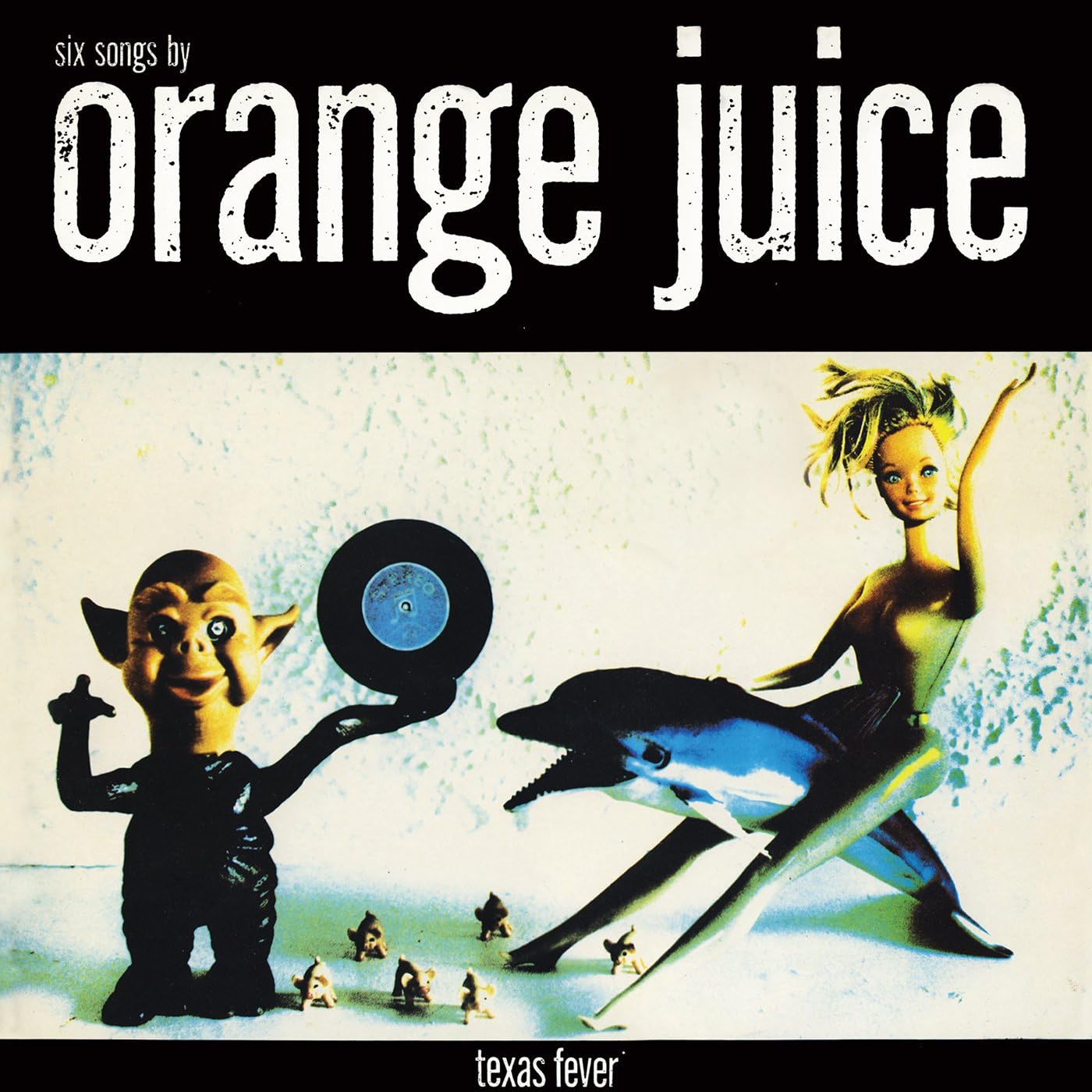
After the group splintered yet again during the recording of what turned out to be the Texas Fever EP, Orange Juice returned as the duo of Edwyn Collins and Zeke Manyika to craft maybe the most satisfying album of their too-short career. Working with producer Dennis Bovell for the most part, the record sounds great from start to finish. Highly polished mid-’80s pop with plenty of dubby bass (provided by Clare Kenny), inventive rhythms, and some of Collins‘ best vocal work, the record is a sophisticated, diverse, and mature work that easily stands the test of time, even if it was somewhat dismissed at the time of release. Collins also managed to craft an incredible batch of songs that range from the laid-back grooves of tracks like the self-effacing “I Guess I’m Just a Little Too Sensitive” and the guitar-heavy and determined-sounding “What Presence?!” to charging rockers like “The Artisans” and “Salmon Fishing in New York,” with plenty of introspective ballads that suggest Collins was doing a bit of soul-searching at the time.
Indeed, his decision to pack up the band and head out as a solo act soon after the album’s less-than-heralded release seems to bear this out. Titles like “Lean Period” and “Get While the Gettings Good” make it clear, so does the elegiac “All That Ever Mattered,” which sounds like nothing less than a lovesick ode to bandmembers come and gone. Orange Juice may be the group’s swan song that came too soon; it’s also an excellent example of why people still care about the band years later.
Edwyn Collins’ talent has endured the split of Orange Juice and he found another ‘Rip It Up’ on a global scale with 1994 hit ‘A Girl Like You’.
The Albums
You Can’t Hide Your Love Forever
Rip It Up
Texas Fever


 The Fat Angel Sings