

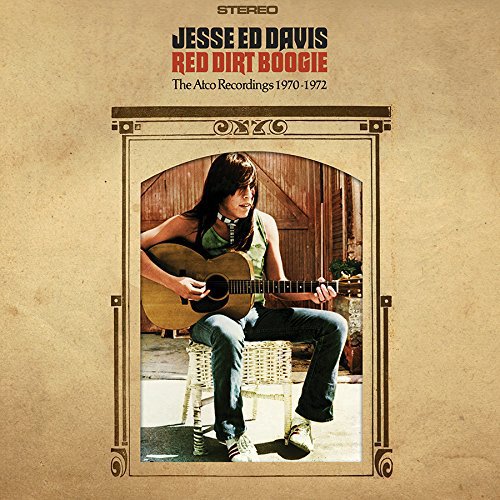
One downside the digitizing of music has created is the lack of liner notes that listeners typically don’t get with their music. That has unfortunately resulted in a lack of knowledge about the producers, engineers and backing musicians supporting the stars whose names are out front.
Before the era of downloads made cover art and studio personnel listings somewhat of an afterthought, music fans would scour notes and players on albums, seeing some names appear often and raising their chances of someday being the featured performer. That’s the case with Jesse Ed Davis.
Jesse Ed Davis – (1944-1988) – 1970s – Originally from Norman, Oklahoma, Jesse Ed Davis relocated to California in the early 1960s eventually becoming friends with Levon Helm who introduced him to Leon Russell. They became the catalyst for Davis’s massive body of session work. Davis played on Taj Mahal’s first three Columbia albums, the former distinguishing himself on slide guitar, while also playing lead and rhythm.
Davis’s first solo album “Jesse Davis!” was released in 1971, featuring back-up vocals by Gram Parsons and guest appearances by Russell and Eric Clapton. He was also a participant in George Harrison’s Concert for Bangladesh in 1971. He worked with the Byrds’ Gene Clark producing his second solo album “No Other,” (1974), and lent the lead guitar solo to Jackson Browne’s hit single “Doctor My Eyes,” from Browne’s 1972 debut album “Jackson Browne,” (Or “Saturate Before Using.”) which climbed to #8 on the Billboard Hot 100 chart.
Two more Davis solo albums followed: “Ululu,” (1972), and “Keep Me Comin’ “ (1973) but neither sold well. In 1975, there was a stint with the Faces during which time Davis developed a serious drug addiction… His credits with A-list musicians is daunting: Rod Stewart, Eric Clapton, Ry Cooder, Rick Danko, Steve Miller, Harry Nilsson, George Harrison, Taj Mahal and a slew of others. Davis spent much of the 1980s battling drug dependence, managing to form the Graffiti Band in 1985, and in 1987 reuniting with Taj Mahal for a one-off at the Palomino Club in Hollywood, joined by Bob Dylan, John Fogerty and George Harrison on stage, demonstrating the esteem with which Davis was held. It was to be his last major gig.
Davis died in Venice, CA of an apparent drug overdose on June 22nd, 1988, cutting short the life of a major talent who would be missed by his musical brethren and fans alike.
Native American Davis started his career backing Taj Mahal, then left to became a hired gun, supporting such superstars as Eric Clapton, George Harrison, Neil Diamond, Bob Dylan, Leon Russell, Ringo Starr and perhaps most famously John Lennon on whose Walls and Bridges album he played most of the solos. But like most supporting musicians, Davis — who passed away in 1988 due to a drug overdose in 1988 — wanted more of the spotlight.
He got his chance when Eric Clapton suggested he try his hand at being a frontman. The result was a three album catalog. The first two of those for the titular label, long out of print, are collected here.
At first blush, there isn’t much going on. Davis’ voice is ordinary at best, and that might be overly generous. It’s somewhere between Dr. John and Leon Russell, both of whom are part of the 36 musicians who contribute to these sessions. Davis generally talks/sings without much range or emotion. And for someone known as a guitar wiz, he plays few solos, preferring to let his lines weave into a muddy mix that screams 70s. Musically this falls on the swampy side of the Band, perhaps a low-rent version of that group, without its great songwriting, vision or personality. Not surprisingly he covers their “Strawberry Wine” in a slowed down, droopy take that feels like he and his backing musicians might have imbibed too much of the title beverage before recording. And originals like the very 70s touchy-feely “Golden Sun Goddess” and the clichéd “Rock and Roll Gypsies” just feel underwritten .
But about halfway into this generous 75 minute compilation, you start to warm up to the spontaneous, laid back, communal style. Covers of George Harrison’s “Sue Me, Sue You Blues” (released before Harrison’s own version), Van Morrison’s “Crazy Love” and Russell’s “Alcatraz” capture the loosey-goosey spirit that drenches these performances with better material to work with. On the occasional original like “You Belladonna You” where Davis stretches out into a funky vibe, he shows the potential for what could have been if everyone involved had put a little more time and effort into this.
There remains a shared simplicity and long lost warmth to these sessions. Dated? Sure, but undeniably charming with a sense these albums could never be cut at any other time.
Credit the Real Gone label for excavating these once missing sides. Even if this is far from “lost classic” territory, there’s a genuine, organic approach to the music that grows on the listener once you get into the groove.

 The Fat Angel Sings