Posts Tagged ‘John Entwhistle’

Pete Townshend

When it comes to chops and technique on the instrument, Pete Townshend is rarely thought of as a virtuoso, but he may just be the best guitarist in rock’s history. Townshend soloed infrequently during the Who’s glory run especially if we’re talking about studio albums but no player has used the guitar to build up so much of a band’s sonic architecture.

Pete Townshend (born 1945 Peter Dennis Blandford Townshend), lead guitarist and principal songwriter of one of the world’s most successful bands The Who, was also known for his extravagant stage style. The Who’s shows often culminated in him smashing his guitar.

Such on-stage equipment destruction has now become part of rock and roll tradition and while Jerry Lee Lewis may have been the first rock artist to destroy pianos on stage, Pete Townshend was the first guitar-smashing rock artist. Rolling Stone magazine included his guitar smashing at the Railway Hotel, Harrow in September of 1964 in their list of ’50 Moments That Changed the History of Rock & Roll’. The Who are the best known and most brilliant expression of the most influential “youth movement” ever to take Great Britain, the Mods. Their career began in Shepherd’s Bush, a lower-class suburb of London, and took them through such places as Brighton-by-the-sea, scene of the great Mod-Rocker battles several years ago. Their first recording was “My Generation.”.

Townshend’s career with The Who has spanned more than 40 years, during which time the band grew to be considered one of the greatest and most influential rock bands of all time. The author of most of the material, the composer of most of the music and the impetus behind the Who’s stylistic stance. It was he, for example, who is credited with initiating the Union Jack style in clothes.

Townshend was the primary songwriter for the group, writing over 100 songs on the band’s eleven studio albums, including the rock operas Tommy and Quadrophenia, plus dozens of additional songs that appeared as non-album track singles, bonus tracks on re-issues, and tracks on rarities compilations such as Odds and Sods.

https://www.youtube.com/watch?v=fTrvu5-Uruk

A genius for overdubbing, with a sense of scale and shape that bordered on the Bachian, and an underrated acoustic player, Townshend used the guitar as a tool to abet his singular compositions, and as the director within the band’s dynamics and interplay. While there are also stellar moments within Townshend’s solo career as well, here are 10 cuts from the Who’s heyday that work as a primer for his guitar brilliance.

10. “Pictures of Lily” (1967)
One of the best written singles of its decade—it’s essentially a short story in song form about masturbation, a post-Mod bildungsroman—“Lily” is typical of Who songs of this vintage for not having a guitar solo. But listen to the intense, driving chording of the song. Townshend has the firmest of grips on his guitar, his central riff acting as a path for Keith Moon and John Entwistle to follow. There’s bounce in that riff, too, a playfulness that provides congruity with the oh-so-cheeky lyric that turns out to have the warmest of hearts at its core

9. “A Quick One (While He’s Away)” (1968)
The album version is pretty great, too, ditto the Leeds and Hull live renditions from 1970, but this performance from The Rolling Stones Rock and Roll Circus stands as the best live Who cut of all. The band was tighter than a seaman’s knot thanks to working on Tommy in the studio. Townshend’s volume-swelling chords lend scope right from the opening section, which makes Moon’s fills feel all the more epic. Come the coda, as the power chords rain down and the intense hammer-ons come in clusters, it’s evident that here’s an artist who uses every last crayon in the tin.

8. “Anyway, Anyhow, Anywhere” (1965)
A strangely under-discussed early single, this is the Who growing up—fast—in large part thanks to Townshend’s guitar. Displeased with the feel of the preceding “I Can’t Explain”—they thought it wasn’t tough enough—the band boosted the energy quotient and Townshend decided to turn his guitar into a percussive element. Put simply, he bashes holy hell out of the thing on the instrumental blast-out-of-the-galaxy bit. What makes a guitarist think that way? See a rule, detonate a rule. This was a melding of avant-garde bona fides with a populist kick. Thrilling.

7. “My Way” (1968)
Finally receiving an official release in 2018, the Who’s April 1968 Fillmore East gig includes this Eddie Cochran cover, with Townshend’s tone blending rockabilly twang and proto-metal swagger. And lordy, that first guitar solo—distortion, a broad-assed tone, coppery sheen, a curl or two of vibrato. Then the second comes along and redoubles everything before some slashing power chords top us off.

6. “Pinball Wizard” (1969)
It’s a cool notion that one of the most indelible of all guitar tracks should feature both acoustic and electric guitars, and nary a solo in sight: how many other songs can you say that about? The opening riff is both easy to play and something that no one else would have thought of. Orson Welles would talk about the dozen or so ideas that might just come to a genius, like a gift from the gods, without laboring over them, and one has the sense that the song-starting guitar figure fit that bill for Townshend. It’s as central to rock riffology as the Kingsmen’s “Louie Louie,” the Stones’ “Satisfaction” or the Kinks’ “You Really Got Me.” And that’s not even the guitar high point of the song. For that we have to turn to the over-loud—but pleasingly so—crunch that follows the “sure plays a mean pinball” line, especially on the second pass. You can just about feel Townshend’s entire body leaning into his instrument.

5. “5:15” (1973)
There may be no better guitar album in rock than Quadrophenia, the Who’s second double-album rock opera. The guitar textures are tapestries that could hang on a museum’s walls, were it possible to mount sound. This brassy strut of a song, with its angry-young-man lyrics about various boasts that, of course, will never be brought off, bubbles with aggression and ego, which is also to say, the insecurity of the hero of the piece, Jimmy the Mod. Townshend’s solo channels the energy of a Motown horn section, and Roger Daltrey can’t stop himself from vocalizing through it. It just feels good—like Jimmy does as he rides those rails.

https://www.youtube.com/watch?v=uswXI4fDYrM

4. “My Generation” (1970)
This fourteen-and-a-half-minute rendition of the Who’s unofficial anthem from Live at Leeds is practically an album unto itself. Townshend’s guitar has a lot of responsibility: it triggers the next spate of improvisations from the band, brings them to a stop so as to start something else, solos with gusto, and unleashes enough riffs to stock another guitarist’s career. A Townshend riff is never just a riff: it can double as the basis of a song that will be further fleshed out. Near the end of this performance, he starts playing against his own echo from the back of the hall. No guitarist was better at waiting than Townshend, allowing a sound or an idea to develop. He plays a figure, the echo repeats it, with the effect that it’s in a slightly different, more compressed key, and another cue for invention is taken from that.

3. “Overture” (1969)
The opening number from Tommy has a lot of instrumental high points—Moon’s drumming, for instance—but listen to the acoustic playing in the song’s segue sequence near the end. Arpeggios ripple outwards, delicate figures possessing almost flower-like forms dance, flamenco movements intercede and Townshend gives his guitar a couple of open-palmed whacks that produce echoes to further vibrate the strings.

2. “Won’t Get Fooled Again” (1971)
An anthem in which a synthesizer and a power-chording guitar essentially duet, and drums pop from all directions, “Won’t Get Fooled Again” is like two kinds of concertos in one. Again, no guitar solo, and so much of the guitar you do hear comes in impeccably placed staccato bursts. The tone is crucial to the overall sound design; and where else can you hear a tone that sounds like a tendril of frozen fire being dragged across a radiator grill?

1. “Quadrophenia” (1973)
There are moments in the title track from the Who’s second rock opera album that Townshend’s guitar so seamlessly assumes the characteristics of its surroundings that it doesn’t sound like a guitar at all. The lines are regularly pinched, tamped down, which lends them a greater reverby quality, and a greater sing-song one, too. No player had a more vocal guitar than Townshend, in terms of making the instrument sing. He varies his pacing throughout, so that when the synth goes faster it feels natural that the guitar should immediately start to dance alongside it. And when the cut slows down and the heavens feel as though they’re opening up, it’s the guitar that comes descending down from them.

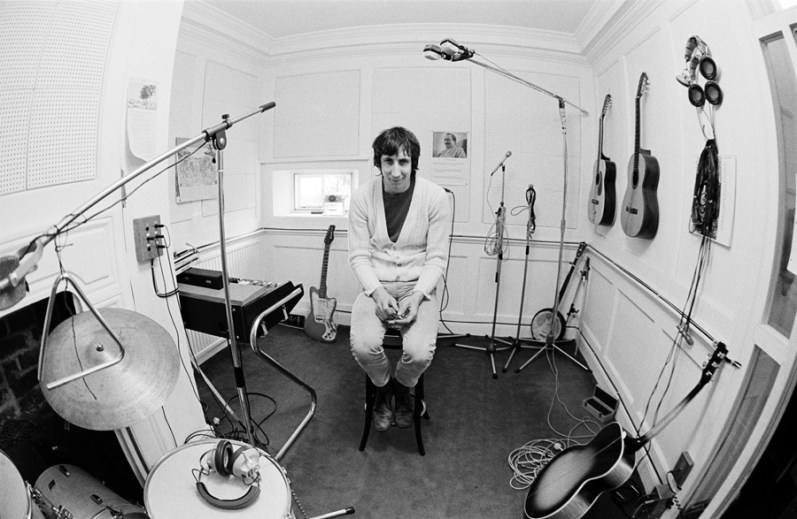
Image result for pete townshend the home demo's

The Who’s incendiary 1968 performance on “The Rolling Stones Rock and Roll Circus” TV special. That article was all about the incredible power of the Who, and Townshend in particular, as live performers.

Pete Townshend’s stage antics were unparalleled (the leaps, the windmill, the guitar smashing), as was the sheer speed and energy of his playing. As another example, check out one of my all-time favorite Townshend live performances, him doing Quadrophenia’s “Drowned” by himself on acoustic guitar at the 1979 Secret Policeman’s Ball.

The entire performance is spellbinding, but the guitar flurry he unleashes at the 2:00 mark just blows me away every time. That technical dexterity combined with primal energy, top-notch songwriting, and heartbreaking pathos encapsulates the amazing creative mixture that was Pete Townshend.

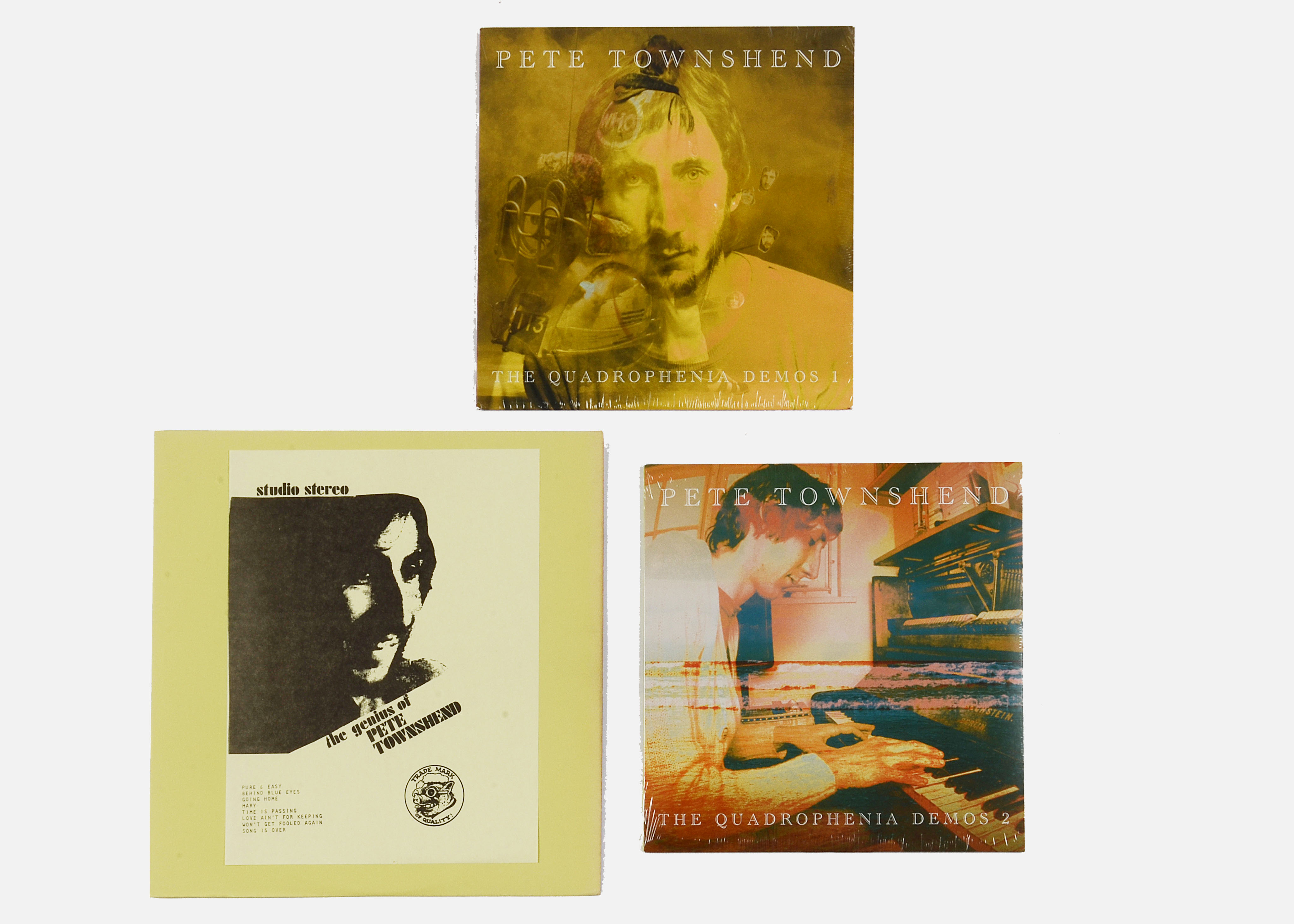
Yet there’s a quieter, more private side of Pete Townshend that’s just as noteworthy. Beginning in the late 1960s, Townshend was on the forefront of the development of home studios. In a world before ProTools and GarageBand, the idea of having a recording studio in your own home was quite extraordinary, but Townshend took to it immediately and started producing amazingly rich demo recordings on which he sang and played every instrument (including drums and bass). For tracks that later found their way onto Who albums, these demos provided a template for the other members of the Who to flesh out with their individual parts, adding their own flourishes and touches.

It’s incredible, however, how fully Townshend had already worked out the arrangements of these future Who classics. In many respects he’d figured everything out ahead of time, and it was just up to The Who to lay it down in a professional studio, bringing to it the animal electricity that only The Who could.

The first album for which Townshend did extensive home demoing was 1969’s “Tommy”, and his demo of “Pinball Wizard” is a perfect example of his arranging genius, as his home recording maps out the song pretty much exactly in line with the Who version that would sweep the world by storm:

Despite the fact that Townshend could play every instrument and write every part, he never felt like he didn’t need the band. He heard in these demos exactly what we hear today—that Keith Moon’s manic drumming, John Entwhistle’s muscular bass, and Roger Daltrey’s guttural fury launch these songs to a whole other level.

It was in preparing for the Who’s next album—which started as the multimedia Lifehouse project but wound up as the Who’s Next collection released in 1971—that Townshend began producing stunningly complex and beautiful home demos, cuts that really demonstrate his multi-instrumental talent and sonic adventurousness. One of the most impressive tracks is “Baba O’Riley,” which is both like and quite unlike the eventually released Who version:

Townshend’s synthesizer part is mind-blowing in and of itself, revolutionary at the time and still impressive today. In fact, the part heard on this home demo is the very one the Who wound up using on the official recording (though they did muck around with it a bit once in a professional studio). “Baba O’Riley” gives a fascinating window into Townshend’s creative process. All the basic parts of the Who version are here, but this demo goes on for longer, and includes little passages here and there that eventually got cut from the Who’s Next arrangement. In this recording we get to hear all the ideas Townshend throws at the wall, and by comparing it to the released version he can hear what eventually stuck (though Townshend was reportedly unhappy with the released version of “Baba O’Riley,” feeling that he’d allowed too much material to be cut; he’s wrong, though, since The Who’s “Baba O’Riley” is pretty much perfect).

Another Who’s Next classic worth pointing out here is “Behind Blue Eyes.” Again, the demo mostly mirrors the Who version, but in this case it has an entirely different feel. Whereas the Who’s version is for the most part loud and bombastic, Townshend’s demo version is gentle, dark, and plaintive,  (Daltrey’s over-the-top vocals on this track have always bothered me):

These demos provide the listener a view into an alternate reality where Townshend rather than Daltrey is The Who’s primary vocalist. I mean, listen, for much of the Who’s material, Daltrey was the man for the job, and in certain instances, he laid down some of the best rock vocals ever, period. The first and last example anyone would need in that regard is “Won’t Get Fooled Again” from Who’s Next, aka “The Scream”:

Pete Townshend could never pull off that scream, nor could anyone else. But on some of the Who’s more gentle material, Daltrey’s approach can feel a little ham-fisted, so hearing Townshend sing some of these songs in demo form is a real treat. The song that stands out in this regard for me is one of my Who’s Next favorites, “Getting in Tune.” With Townshend at the mic, the song’s delicacy and fragility come to the front, causing my heart to break a little bit each time I hear it:

Speaking of Townshend’s gentle side, not all of his home demos were done with the Who in mind. Since the late 1960s Townshend had been a loyal disciple of the Indian spiritual leader Meher Baba, and a good portion of his home recordings were intended for release on Baba tribute and fund-raising albums, produced and released under the name “Pete Townshend” rather than “the Who.” This gave Townshend the chance to work out material not appropriate for the Who as a band, and which might confuse or anger the Who’s trill-seeking, head-banging audience.

Many of these tracks were very hard to track down until released on Townshend’s first solo album, 1972’s Who Came First, in their original demo form. The gentle yet bouncy “Mary Jane” is a great example of the type of material Townshend worked on without thinking of the Who eventually performing the song in a stadium setting:

While Townshend continued to produce home demos throughout the rest of the 1970s, I’ll end here with two choice cuts from the Who’s last significant record, 1973’s Quadrophenia. Breaking from the pattern of these home demos being very close in arrangement and spirit to the eventually released Who versions, “The Real Me” demo is vastly different. Whereas the Who version is a driving punch in the face—for my money one of the best things they ever recorded—Townshend’s home demo is a slower, funkier, almost dancey take. I don’t think it holds a candle to the Quadrophenia version, but it’s an interesting experiment nonetheless:

Another standout from the Quadrophenia double album was “Bell Boy”; as with “The Real Me,” the Who’s version of “Bell Boy” is a prolonged punch in the face, a monumental wave of sound and energy. Townshend’s home demo follows the same structure, but overall it’s quieter and gentler, especially with him on lead vocals for the entire song instead of drummer Keith Moon, whose vocal cameo on the album version is hilarious, intense, and unforgettable. In the home demo setting, you can here just how complex and lovely the song’s arrangement really is, having stripped away all the Who’s (admittedly great) rock and roll bombast:

And that’s just it—the Who as a band could melt your face, but obviously Pete Townshend’s vision and talent went beyond such histrionics, and it’s in these home demos that we hear him stretching out in all sorts of different directions. They’re certainly a mixed bag—sometimes these sketches are better than the eventual Who versions, sometimes they’re not, sometimes they allow us to hear material never performed or recorded by the Who or Townshend in any other arena, but they’re always revelatory, giving us a more intimate glimpse of the creative process of a man who could both windmill the shit out of a guitar but also play every instrument in the band and arrange complex rock operas while his tea steeped in the kitchen down the hall.

Image result for pete townshend the home demo's

Buy Online The Who - Live In Amsterdam Red

“Live In Amsterdam 1969”. The Who’s performance at Amsterdam’s Opera House in September 1969 was remarkable in a number of ways. It was the first of a series of gigs in more formal surroundings and one of the longest live gigs the Who ever performed.

The recording was made by a Dutch radio/tv broadcast. It’s not 100% certain who did it, but it was probably done by the VPRO, who also did the Pink Floyd recording the same year at the same venue. And just like that Pink Floyd recording, this one was also bootlegged a million times from various very good to very poor sources. Alll of these sources were originated from radio broadcast/s. Back then, and today still, The Concertgebouw was not a place for rock bands but for opera’s and other classic music.

Mixed directly to 2-tracks, this may been one of the reasons why the mixing engineer had a hard time finding the right balance. The mix changes often, and sometimes the drums or the guitar just disappear or get buried for a while. It also must have been hard for the band to hear each other, because of the extremely reverbrating acoustics. Remember, this was 1969 and sound monitoring on stage was still a thing for the future.

When comparing this one to other Who shows from this period, this one probably isn’t the best. Roger Daltrey has once said that he didn’t think he sang very well this night. And playing the “Tommy” album on stage was obviously not a routine for the band yet. But, there is more than enough to enjoy here. It is the only complete soundboard recording from this year. It is also the only one with complete lineage, and it has the best sound. Beside that, all other Who ’69 board tapes are far from complete and don’t have most of Tommy.

Somewhere around 2000, a Pre-FM source of this show was unearthed. Funny enough, the same thing happended with the aforementioned Pink Floyd recording . They may have come from the same person though.

The recent boot “Amsterdam Journey” on the Hiwatt label is the one taken off his copy.

The Who, live at Concertgebouw, Amsterdam, Netherlands 29th September, 1969
Following the release of Tommy in May 1969, the Who embarked on a series of epic concerts, soon earning themselves a reputation as the finest live band in the world. This amazing set was broadcast on AVRO-FM, in Amsterdam’s most prestigious concert hall on 29th September 1969. The only complete soundboard recording of them made that year, it boasts astounding fidelity and captures them at the peak of their powers, playing not only most of Tommy but also numerous other classics from the length of their career to date. It’s presented here together with background notes and images.

The Who – The Complete Amsterdam 1969 
Venue: Het Concertgebouw, Amsterdam, Netherlands
Date: 29th September 1969

'The Who Sings My Generation'

The WHO – My Generation (1965) debut album

The Who…  The vinyl reappearances of My Generation (the U.K. edition), A Quick One  and the glorious The Who Sell Out simply catapulted me back to the age of 14 when these albums were the most important to ever come into my life.  To revisit them they way I first heard them was as thrilling now as it was then – except now, I’m 50 years old, Keith and John are long-deceased and Pete and Roger are celebrating their 50th anniversary as The Who.  Nonetheless, these three albums should be the cornerstone for teaching your children about rock & roll, about playing guitar, plus the first steps to songwriting and are for all time, essential listening:

My-Generation-SDE-3D-Packshot600 (1)

Super Deluxe Edition featuring unreleased songs, demos, mixes, remasters, new notes from Pete Townshend, an 80-page book, rare memorabilia and much more!

5-CD Super Deluxe box set, 3-LP Edition* and 2-LP Edition*

In the half century since its release The Who’s debut album “My Generation” has lost none of it’s raw visceral power and still stands as the ultimate musical declaration of teenage rebellion. The title track alone has been covered innumerable times by the likes of Oasis, Green Day, Patti Smith, Billy Joel, Alice Cooper and Iron Maiden amongst many more. Back in 1965 the band were considered to be so dangerous that the tailors tasked with turning a Union Jack into a pop art mod jacket for the cover feared that they would be jailed for desecration of the nation’s flag.

Brunswick Records first issued My Generation in the UK in December 1965, and later in the US, under the title The Who Sings My Generation, in April 1966. It was produced by Shel Talmy who shot to fame with his work with The Kinks, a group that the teenage Pete Townshend admired greatly.

During a break in touring in 2015 Pete Townshend discovered tapes in his audio archive featuring previously unheard demos for the album which also included three totally unreleased songs that the other members of The Who hadn’t ever even heard, ‘The Girls I Could Have Had’,  ‘As Children We Grew’and ‘My Own Love’.

The spectacular 79-track five disc super-deluxe edition features these unheard songs as well as unreleased demos, unreleased alternate mixes, new remasters and a stereo remix which was created using new overdubs from Roger Daltrey and Pete Townshend. For this mix Pete used exactly the same guitars and amps as the original album and Roger used the same type of microphone.

The super deluxe edition also features a stunning 80-page colour book with many rare and unseen period photos, candid and insightful new notes from Pete Townshend and period memorabilia.

Of the super deluxe box set Pete Townshend commented “Gathering these demos for this collection has been enjoyable; it’s wonderful for me to have these tapes made fifty-two years ago to listen to. I hope you enjoy them. They have a naiveté and innocence, a simplicity and directness, and an ingenuousness that reveals me as a young man struggling to keep up with the more mature and developed men around me. What an incredible group of strong, talented, young and engaging men they were!”

From the 5th January 1966 UK TV show, “A Whole Scene Going”.

https://www.youtube.com/watch?v=Pp3fyLUM1_8

The Who

47 years ago tonight, The Who performed at Leeds University in Leeds, UK on February. 14th, 1970. The recording of this landmark concert became known as the greatest live album in Rock history

Classic Rock photographer Ross Halfin is an avid record collector – especially when it comes to The Who. He owns multiple versions of the band’s classic Live At Leeds album, and here he tells us through ten different versions of them.

The Who’s “Live At Leeds” is among the greatest live rock album of all time, The original on vinyl is way better than the uncut, remastered version, which is too much. It goes on for too long. The original edit by Pete Townshend captures all the dynamics of The Who as a band. And the vinyl release sounds better.

In England, there were three variants of “Live At Leeds”. The first came out with a black-stamp cover, and the first 1,000 copies of it had the ‘Maximum R&B’ poster from The Who at the Marquee [in 1964] inside. There have been versions with blue stamps and red stamps as well.”

Image may contain: 1 person, on stage, playing a musical instrument and standing

There have been Taiwanese versions, Spanish versions, a Peruvian version with a picture of Townshend jumping on the cover… The critic Nik Cohn, who inspired Pinball Wizard and wrote the article that became Saturday Night Fever, reviewed “Live At Leeds” for the New York Times, and called it a “hard rock holocaust”. The hardest version to find, then, is the one that came out in Israel with Cohn’s quote translated into Hebrew on the cover. It had to be withdrawn.

Since its initial reception, Live at Leeds has been cited by several music critics as the best live rock recording of all time


janglepophubhome.wordpress.com/

Dedicated to all jangly indie/guitar/jangle-pop

Stray Bullet

Show a little faith there's magic in the night

blackwings666

Horror, Science Fiction, Comic Books and More

hotfox63

IN MEMORY EVERYTHING SEEMS TO HAPPEN TO MUSIC - Tennessee Williams

All Things Thriller

A Celebration of Thrillers, Noire and Black Comedy by Pamela Lowe Saldana

The UK Number Ones Blog

Join me as I listen to every single #1 single!

Mike and Paul's Music Blog

Two Guys In Search of Great Music

A Unique Title For Me

Hoping to make the world more beautiful

A Sound Day

hear ye, hear ye!

Christian's Music Musings

Celebrating music craftsmanship

ECLECTIC MUSIC LOVER

Favorite song lists, reviews, featured indie artists, and music commentary.

Every record tells a story

A Blog About Music, Vinyl, More Music and (Sometimes) Music...

Make Your Own Taste

Eclectic reviews of ambient, psychedelic, post-rock, folk and progressive rock ... etc.!

Martin Crookall - Author For Sale

A transparent attempt to promote a writing career

Music Aficionado

Quality articles about the golden age of music

J. ERIC SMITH

Slow molasses drip under a tipped-up crescent moon.

THE PRESS | Music Reviews

Click Header to Return Home

Born To Listen

to Rock, Country, Blues & Jazz

Blabber 'n' Smoke

A Glasgow view of Americana and related music and writings.

The Music Files

Rewind the Review

If My Records Could Talk

A stroll down memory lane through my music collection

The Fat Angel Sings

the best music of yesterday today and the tomorrow, every era every genre