It was in the summertime half a century ago that the world first met CCR, a group that would reach sky-high success while retaining a resolutely rootsy, earthbound sound. An incredible legacy that was formed in just four years of unbridled creative output (1968 – 1972).
Beyond its anti-war sentiment, “Fortunate Son”is an anthem for the 99%ers, condensing a critique of elitism and class privilege into three simple, but powerfully defiant words: It Ain’t Me. Craft partnered with director Ben Fee (Band of Horses, The War on Drugs, The Lumineers, Aesop Rock) to give a whole new generation a visual entry point into the world of Creedence Clearwater Revival.
The song already has an undeniable place in history as one of the most visceral, attention-grabbing protest tunes of the Vietnam era. And though the Vietnam War is in the rearview mirror, the underdogs CCR spoke for in “Fortunate Son” are still the heart and soul of America, only facing a whole new set of challenges.Fee turned the video into a celebration of their indomitable spirit, giving viewers a glimpse of the broad array of characters comprising the patchwork that is our country at its core.
Fee’s video road trip took him across the country, from Los Angeles to Miami and all points in-between. The footage captures people across America of diverse ages, cultures, ethnic backgrounds and locations (including Florida, Louisiana, Texas, New Mexico, California, Washington and Hawaii) to document the true spirit that makes up the fabric of the United States, for which CCR have been the soundtrack for 50 years. Says Fee, “I wanted to highlight the community and positivity that everybody shares . . . I wanted to show what America feels like when you actually hit the road and drive throughout the States.”
The arrival of Creedence Clearwater Revival’s 50th anniversary brings an unprecedented celebration of everything the band contributed in their short but startlingly epochal time together (1968 – 1972). To commemorate this milestone, Craft Recordings is releasing a deluxe box set comprising the band’s complete seven-album studio output: Creedence Clearwater Revival, Bayou Country, Green River, Willy and the Poor Boys,Cosmo’s Factory, Pendulum and Mardi Gras. Each album in this collection has been mastered at half-speed at Abbey Road Studios, benefiting from an exacting process that allows for an exceptional level of sonic clarity and punch, bringing these classic recordings a new vibrancy. The 180-gram LPs come housed in handsome tip-on jackets replicating the packaging of the original pressings. Along with the complete studio album collection comes an 80-page book featuring new liner notes from music journalist Roy Trakin, archival photos and reproductions of band ephemera — offering something for both new and the most die hard of Creedence fans. Available November 30th, 2018.
A ranking and review of the studio albums by the legendary swamp-rock band Creedence Clearwater Revival. This list also includes their brilliant live album. A true tragedy when Creedence broke up, had they stayed together they really could have taken the 1970’s by storm.
Creedence Clearwater Revival’s 1968 self-titled debut album introduced the world to guitar-playing brothers John and Tom Fogerty, drummer Doug Clifford, and bassist Stu Cook, four young men out of ElCerrito in the San Francisco Bay Area. Though they emerged in a place and time where trippy psychedelic visions were the order of the day, CCR bucked the trends and instead tapped into a rich, traditional seam of American music that connected to blues, country, rockabilly, gospel, folk and R&B. During their short time together as a band (1968 – 1972), the band enjoyed an unparalleled period of creativity. They’ve sold over 30 million records in the U.S. alone, releasing 14 Top 10 hits, six Platinum albums (two of which went to number one) and one Gold album. They also managed to play over 150 tour dates around the world, including a headlining spot at Woodstock. Creedence Clearwater Revival’s canon has become a part of the Great American Songbook. Songs like “Bad Moon Rising,” “Down on theCorner,” “Fortunate Son,” “Have You Ever Seen the Rain,” “Proud Mary,” “Born on the Bayou,” “Travelin’Band” and “Up Around the Bend” have been ingrained into pop culture — not just as rock staples, but as classic standards. With so many memorable songs that continue to grace our radio waves and television and movie screens, plus lyrics that still resonate today, Creedence Clearwater Revival is, truly, America’s greatest rock ’n’ roll band.
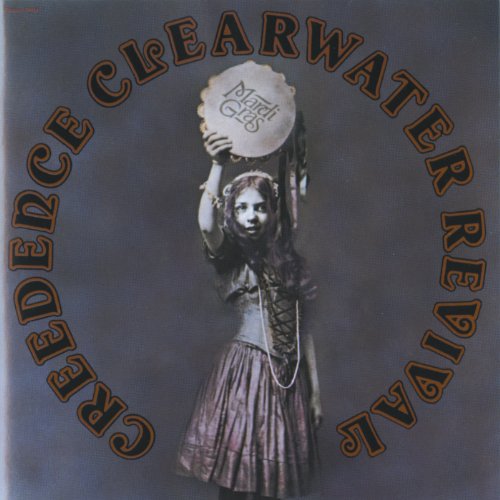
Mardi Gras (1972)
Creedence Clearwater Revival really deserved a better swan song than what they got with ‘Mardi Gras’. How the final Creedence album turned out was a real shame. Released in 1972, Tom was out the door, and John had reconnected with Doug and Stu after almost a year apart with little or no contact,
After John’s brother, rhythm guitarist Tom Fogerty, left the band, John gave the other two members of the group album space to write and sing their compositions. I’ve never heard this, but I’m happy to avoid it – even John’s material like ‘Sweet Hitch-hiker’ and ‘Someday Never Comes’ isn’t among his best. It’s generally a unanimous pick for Creedence’s worst studio album.
Creedence deserved a better swan song than ‘Mardi Gras,’ whose title is the most celebratory thing about it. By the time the band arrived here, it was down to a trio with John’s older brother, rhythm guitarist Tom Fogerty, had left CCR over creative control issues. Bassist Stu Cook and drummer Doug Clifford also had expressed a desire to have a stake in the songwriting, and they got it. For this album, John relinquished his firm grip on the band and split the writing and singing duties evenly among the three remaining members. The result was the most uneven album in the band’s catalog, with six songs contributed by guys who were new to songwriting, not to mention far from naturally gifted vocalists. Cook and Clifford try their best but sound like they want to be in a Creedence cover band (they eventually got their wish, in a way). But CCR’s otherwise wonderful rhythm section isn’t the only thing to blame. After a few years of constant creative output, Fogerty’s well of songs (which once seemed endless) was beginning to run dry. Still, he saved the album from being a total loss with blazing closer “Sweet Hitch-Hiker” and the soulful “Someday Never Comes,” an elegy to terrible fathers, including himself. What a way to go out.
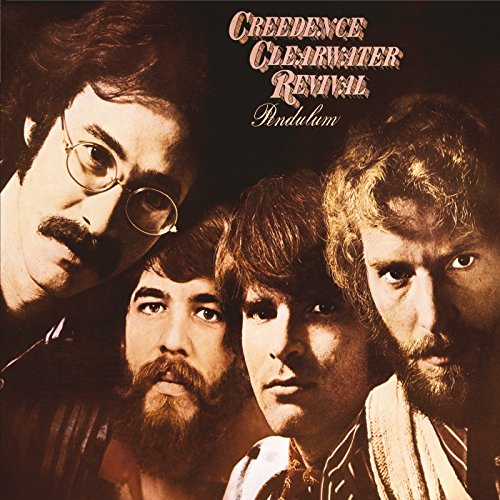
Pendulum (1970)
Pendulum is more of a studio-based album than Creedence’s previous albums – I like the more detailed arrangements, like the soulful organ on some tracks. But on their sixth album since 1968, it feels as though John Fogerty’s running out of songs, and despite a few strong songs like ‘Have You Ever Seen The Rain?’, For the baby-boom generation, this is John Fogerty either commenting on the Vietnam War era or the loss of late-1960s innocence and idealism. But Fogerty reportedly wrote the somber, acoustic-guitar-driven song about the friction within CCR, particularly brother Tom’s unhappiness with his role in the group. What’s known for sure is this: “Have You Ever Seen the Rain,” was CCR’s last big A-side featuring Tom Fogerty. It reached No. 8 in early 1971.
‘Pendulum’ is Tom Fogerty’s final run with Creedence; he would quickly depart after its release to pursue an unsuccessful solo career, citing stifling creative control from brother John. ‘Pendulum’ would also foreshadow the internal conflicts that had been driving the band apart since they first became famous. During 1969 and 1970, CCR was dismissed by hipsters as a bubblegum pop band and the sniping had grown intolerable, at least to John Fogerty, who designed Pendulum as a rebuke to critics.
Ranking CCR’s albums, we swing back toward the end of the discography to the band’s second-to-last album, ‘Pendulum.’ Creedence’s was thier sixth LP stands out as the band’s most sonically layered album as well as Fogerty’s most obvious tribute to his Stax Records heroes. John not only wrote, sings and plays guitar on every track, he also overdubbed organ and horns (which he played himself) on many of the songs. When the more adventurous sound works, ‘Pendulum’ showcases the band at its best: the sweet church organ that floats through “Have You Ever Seen the Rain?,” the honking sax on the charging “Molina.” When Fogerty overreaches,
The rest of the record is excellent, with such great numbers as the bluesy groove “Pagan Baby,” the soulful vamp “Chameleon,” the moody “It’s Just a Thought,” . Most bands would kill for this to be their best stuff, and the fact that it’s tucked away on an album that even some fans forget illustrates what a tremendous band Creedence Clearwater Revival was.
Creedence sound unremarkable or even worse, untethered (the half-baked prog exercise “Rude Awakening #2”). That said, this is Creedence Clearwater Revival’s most cohesive album; it’s more than just a collection of songs – even if hits such as “Have You Ever Seen the Rain” and “Hey Tonight” and the overlooked ballad “It’s Just a Thought” rise to the top. Pendulum was the band’s weakest effort to date.
The Concert (2003)
Released in 1980 originally as ‘The Royal Albert Hall Concert’ but then it was changed on later releases due to the fact that the recordings were not made at London’s Royal Albert Hall. ‘The Concert’ was one of Fantasy’s attempts to continue making money off the Creedence name, years after the band had dissolved and in the midst of their legal battle with John. A merchandising ploy at its best. Nevertheless, ‘The Concert’ is the perfect album to capture Creedence in all their glory on stage; while it may have been John’s brains on the studio recordings, it was Creedence’s energy on the stage. The chemistry and timing between the members is impeccable and they sound fantastic as they rip through their timeless classics.
Creedence Clearwater Revival (1968)
Creedence’s debut album landed on the charts immediately upon its release in 1968. This was due to the strong single ‘Suzie Q’, which saw Creedence put their own distinct twist on the Southern blues that had influenced them; the long version is a tough, delightful jam that conveys this as a band to be reckoned with. The rest of the debut sees the band tear through all the other typical bluesy numbers that most modern rock bands were guilty of doing on their first album to attract attention.
It’s a testament to the rest of Creedence’s catalog that the band’s self-assured debut comes in so low in our ranking of their albums. While most of the rock ’n’ roll world was still suffering the after-effects of psychedelia, CCR were digging for treasure in the mud of Americana. The self-titled album is a sort of sampler platter of what the guys in this band were into, from roadhouse rockabilly to Stax soul. The record also established that these four white boys from California knew their way around a groove, so much so that they scored hits with hypnotic covers of “Susie Q” and “I Put a Spell on You.” But save for the righteously angry “Porterville” (the most underappreciated song in the CCR canon), Fogerty’s original contributions lack the melodic hooks and the gritty atmosphere of his future songs. On their debut, Creedence Clearwater Revival proved they had a sound. Soon, Fogerty would find a voice to go with it. And he was a very quick learner.
Bayou Country’ (1969)
Creedence came into their own on the band’s second album, with mantle-deep bass grooves, guitars that wafted in like swamp gas and a lead singer whose throaty yowl buzzed right through the heavy air. ‘Born on the Bayou’ John Fogerty doesn’t just sing this ominous ode to the New Orleans area — he howls it. “To this day, it’s still my favorite Creedence song,” says drummer Clifford . In August 1969, CCR opened its Woodstock set with this song, which probably scared the crap out of many mind-altered spectators.
This was the first of three studio albums released throughout 1969, reveals an assured band; a band that has found its voice between their first and second album, and spotlighting John Fogerty as the driving force within the band. Within ‘Born on the Bayou’, Fogerty sketches out his persona; it makes him sound as if he crawled out of the backwoods of Louisiana instead of being a native San Franciscan. He carries this illusion throughout the record, through the ominous meanderings of “Graveyard Train” through the stoked cover of “Good Golly Miss Molly” to “Keep on Chooglin’,” which rides out a southern-fried groove for nearly eight minutes. At the heart of BayouCountry, as well as Fogerty’s myth and Creedence’s entire career, is “Proud Mary.” A riverboat tale where the narrator leaves a good job in the city for a life rolling down the river, the song is filled with details that ring so true that it feels autobiographical. The lyric is married to music that is utterly unique yet curiously timeless, blending rockabilly, country, and Stax R&B into something utterly distinctive and addictive.
Despite a lack of first-hand knowledge, Fogerty crafted a mood, a time, a place that is so tangible, you can almost feel the muck between your toes. He caught a lightning bug in a bottle. And CCR keep on chooglin’ that way through the album, becoming more interesting with each track – from the snarling gem “Bootleg” to working man’s anthem “Proud Mary.”
To call the song an instant classic is to undersell it. Like their contemporaries in the Band, This is without doubt Creedence’s signature song — the first of five CCR singles to peak at No. 2 between 1969-70 , It also displays all of the band’s signature strengths: an airtight rhythm section, steadily strummed guitars and John Fogerty’s fantastic imagery and working-class sensibilities. After hearing this song, you understand why fans assumed the band was from Louisiana.
Creedence were tapping into something pure and primal about America, taking hard-luck yarns and wrapping them around country-fried mythology. There are thousands of brilliant rock ‘n’ roll songs, but so few of them rank as honest-to-goodness standards. “Proud Mary” is one of those … and it’s not the only standard Fogerty wrote.
Willy and the Poor Boys’ (1969)
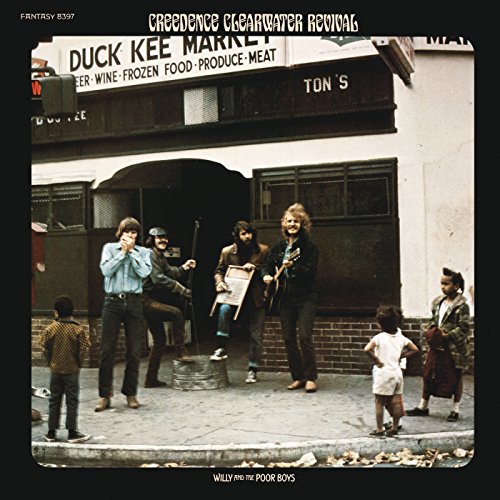
Speaking of timeless standards, CCR’s fourth album opens with a track so strong, it’s endured being associated with Fisher-Price Pocket Rockers and Walgreens’ commercials. If you didn’t know better, you might guess that “Down on the Corner” was a folk song handed down a few generations, instead of something Fogerty wrote in 1969. A lot of fun and a little bit funky, “Down on the Corner” can be interpreted as the story of CCR. It’s easy to picture the Fogerty brothers, bassist Stu Cook and drummer Doug Clifford in their hometown of El Cerrito, Calif., as the “four kids on the corner trying to bring you up” with their “happy noise.”. But the majority of the songs on “Willy and the Poor Boys” have an easy, almost tranquil aesthetic – suggesting a ragtag band playing country shuffles, bluesy boogie woogie and Leadbelly covers out on the back porch or, perhaps, down on the corner. Creedence never sounded more effortless, which must have been hard work. In contrast to the rest of the album (and most of CCR’s catalog), a pair of songs witnessed topical commentary creeping into Fogerty’s writing.
The rampaging “Fortunate Son” was an all-out protest song that was less a specific commentary on the Vietnam conflict and more of an excoriation of cowards who hide behind privilege. As such, it might be the least dated ’60s protest song (it’s certainly among the most exciting to listen to). John Fogerty didn’t grow up privileged or politically connected, but he totally understood that an upbringing with “silver spoon in hand” could later play a big role in working the system, whether it be exemption from military service or paying taxes. Fogerty makes it crystal clear he’s among the have-nots, not the haves, and rock ’n’ roll is all the better for it.
Then there’s the sinister finale of “Effigy,” in which Fogerty runs out of answers and allows a blistering guitar attack to express the all-consuming anger of a turbulent nation.
Cosmo’s Factory’ (1970)
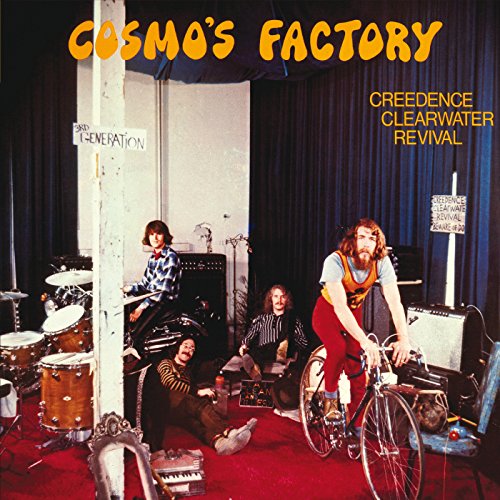
On the heels of a year in which CCR released three albums, toured incessantly and played Woodstock, it wouldn’t have been surprising if the group decided to take 1970 off. Instead, Fogerty and Creedence pushed through, often drawing on their hectic schedule and weary feelings on their fifth album. Fogerty’s original songs focus on escape and touring (“Up Around the Bend,” “Travelin’ Band”) as well as a less-than-sunny worldview (“Ramble Tamble,”“Who’ll Stop the Rain”), and the LP features more cover tunes than any other CCR release (four). Even the title ‘Cosmo’s Factory’ was a reference to the band’s work ethic. Although relationships within CCR were becoming strained, the guys pumped out some of the best music in their career. Covers included (especially the edgy, epic version of “I Heard It Through the Grapevine”), ‘Cosmo’s Factory’ features Creedence’s best batch of songs, most of them instantly distinct. There’s the glistening melancholy of “Who’ll Stop the Rain,” Almost a year to the day before ‘Have You Ever Seen the Rain’ CCR reached the chart with this precipitous tune. John Fogerty’s thinly veiled tale of disappointment with U.S. politics is showered with a haunting wall of vocals during the chorus, and the song’s three-note acoustic-guitar figure throughout sticks with you as much as the lyrics.
The buzz-saw frenzy of “Up Around the Bend,” Over snarling electric guitars, John Fogerty urges everyone to “leave the sinkin’ ship behind” and “catch a ride to the end of the highway” in this No. 4 Billboard pop hit. Was he yearning for everyone back in the day to ditch the policies of President Nixon’s administration, or merely prompting listeners to take a momentary escape on the open road? Like most CCR songs, there’s enough vagueness to make ‘Up Around the Bend’ timeless as well as adaptable to many experiences.“Lookin’ Out My Back Door.” Just like Down on the Corner’ did the year before, the countrified ‘Lookin’ Out My Back Door’ shows CCR at its most joyous and playful. A rapidly strummed, heavily muted acoustic guitar sets the pace, and along the way John Fogerty sings rather trippy lyrics about all sorts of “happy creatures dancing on the lawn” (perhaps a friendly swipe at the San Francisco Bay Area’s psychedelic scene) while also name-checking country legend Buck Owens.
Meanwhile, Fogerty was branching out sonically by playing a blurting sax on “Travelin’ Band” and using a mellow organ to enhance the “last call” vibe of closer “Long As I Can See the Light.” Then there were the backward sound effects added to the ominous “Run Through the Jungle,” which turns the mysterious “Bayou Country” of a few albums before into a violence-plagued land ruled by Satan. With so many great songs,
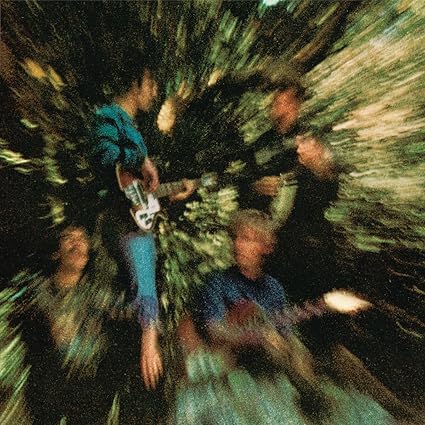
Green River’ (1969)
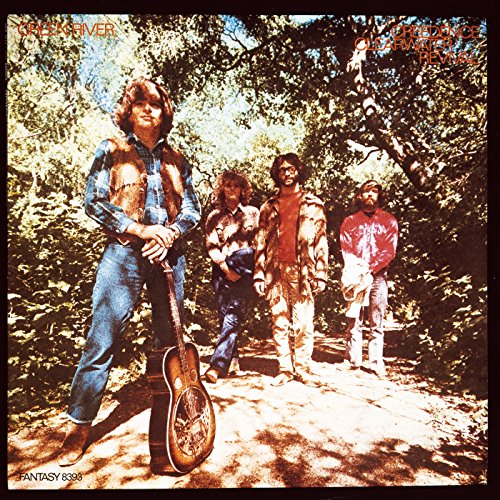
How did the terrific ‘Cosmo’s Factory’ end up at No. 2 on our list? Because ‘Green River’ is even better. The album isn’t just an excellent introduction to Creedence, but rock ‘n’ roll as a whole. ‘Green River’ is a near-perfect distillation of country, blues, soul and rockabilly, resulting in a record that digs into bedrock Americana. The guitars twang, the bass lines tumble down, the drums chug like a locomotive and Fogerty’s foghorn voice barks above it all. The sound is beautiful in its simplicity – the sound of a band locked into a gleeful groove. John Fogerty’s protagonist looks back fondly to a simpler time and a place where he fished, skipped rocks and scoped out shoeless girls dancing in the moonlight. It’s not all fun and games in this short, tight rocker, An old-timer warns the narrator that “you’re gonna find the world is smolderin’,” and whenever that happens, he’s always welcome to come back to the comfort and safety of good ol’ Green River.
The songs, on the other hand, are a few towns removed from glee, maybe somewhere around “Lodi” – a dead-end town where Fogerty imagined he might find himself down the road, singing for his supper.
Doug Clifford recalled the night that significantly inspired Creedence Clearwater Revival track “Lodi,” which appeared as a the b-side to “Bad Moon Rising” in 1969. It tells the story of a musician, down on his luck, who finds himself stranded and penniless after playing in the California town.
Although frontman John Fogerty later said he’d never visited Lodi in real life, Clifford said that the band had plenty of experiences in playing similar places.
“We played up and down the Sacramento-Cerrito Valley for four or five years, in pizza places and in bars where people asked us to turn it down because it was interfering with whatever else was going on,” he said. “The night that I really remember, we were in a little bar, and the most people they had in there at any one given time was nine people, all locals, all drunk, all obnoxious. They made us play the full four hours They made us, the entire time, ‘Turn it down, do this do that.’
“So we did it, honored our commitment, and went to get paid. And the bartender said, ‘I’m not paying you guys. You were too loud, you were this, you were that.’” When the band issued an angry demand to hand over the cash, Clifford recalled, “The nine guys stood up in the bar and said, ‘You better leave now.’ And we did.”
But that wasn’t the end: “And to add insult to injury, Stewie [Cook] backed up our truck in haste, trying to leave, and backed up over one of our amps. Not a good deal. So a lot of inspiration for ‘Lodi’ came from that particular evening.”
Between the jaunty chords of “Bad Moon Rising” and the end of all existence described in the lyrics, Something’s lurking out there, and it ain’t good. And once again, John Fogerty uses weather-related imagery to make his point: earthquakes, lighting, hurricanes and “rivers overflowin’.” And in a little more than two minutes, he unloads his mind and prompts you to think about what’s troubling you in your life.
Fogerty was feeling the weight of his responsibility when writing many of the songs on ‘Green River,’ weary of urban “Commotion,” wary of his “Tombstone Shadow,” unable to communicate with his love on “Wrote a Song for Everyone.” Even the warm nostalgia of the title track is tainted by the knowledge that “Green River” might be the last refuge. The push and pull between the full-bore energy of the music and the nagging fear in Fogerty’s heart makes for a fascinating listen, again and again. If you get lost, you can always come home to ‘Green River.’
Any artist that manages to stick around will end up evolving at some point — but few do it as quickly or successfully as Creedence Clearwater Revival who returned to record stores on August. 5th, 1969, with Green River, their third overall album and second of the three LPs they’d release that year. GreenRiver followed hot on the heels of the group’s second effort, Bayou Country, which had arrived in the January. As singer, guitarist, and primary songwriter John Fogerty later recalled, it was that album’s success that spurred him to go deeper with his music.
Creedence released the “Green River” album in 1969, the group’s second of three studio LPs that year, and their first to reach Number#1. That same year, they began a stretch of Top 5 singles that still rivals any band’s success, including such classic rock favourites as “Proud Mary,” “Bad Moon Rising” and “Down on the Corner.” Chances are you’ve heard Fogerty’s 1969 composition, “Green River,” hundreds of times and have sung along to it dozens of times on the car radio.
Fogerty explains how the song came to be. “When I was quite young, my family would travel up to Winters, California. We had a cabin there and it’s a place where I learned how to swim and how to fish. Of course, dragonflies and other critters were in the mix. A lot of the scenery and those memories made it into the song. “Right up the street from where I lived was a pharmacy that had a soda fountain. And one of the drinks they would make for you was a Green River. And I stared at the label on that bottle of syrup when I was around eight years old and I said, ‘I’m gonna save that. That’s important. ”Green River” was released as a double-A-sided single with “Commotion” in July 1969.
“After Bayou Country, I began to feel I had the freedom or power to do what I wanted,” said Fogerty explaining the nostalgic mood that permeates Green River. “And where I went … was right to my emotional, musical core.”
That inward journey included an embrace of childhood memories, specifically on the title track, a No. 2 hit single that was inspired both by a Fogerty family vacation spot and a drink John loved to order at a particular soda shop when he was a kid. “The drink was a green, lime drink on ice with fizz water, a soggy green snow cone,” he said later. “That’s what I would order and it made me the happiest.”
All of which is not to say that Green River is a misty album of watercolor memories; it includes some of the band’s punchiest, most instantly memorable work, as well as a fair amount of good old-fashioned storytelling. Of the plaintive “Lodi,” which laments the narrator’s lot in life as he’s stuck in the titular one-horse town, Fogerty mused, “I saw a much older person than I was, because it’s sort of a tragic telling. A guy is stuck in a place where people really don’t appreciate him. Since I was at the beginning of a good career, I was hoping that that wouldn’t happen to me.”
Fogerty also looked outside his own experiences for the No. 2 hit “Bad Moon Rising,” which he later admitted was inspired by a viewing of the 1941 film The Devil and Daniel Webster. “That just seemed so spooky, the idea of an epochal force — nature, or the devil, or whatever — that’s gonna get you,” he said. “Later, people began to point out, ‘Hey, John, you’ve got this song about death and doom, but it’s this bouncy little thing.’ And I’d go, ‘I just didn’t worry about that part.’”
What Fogerty did worry about — along with his bandmates Tom Fogerty (rhythm guitar), Stu Cook (bass) and Doug Clifford (drums) — was rehearsing like crazy so the band could make sure the songs were exactly where they needed to be before they entered the studio. It was that dedication that helped make CCR such a reliable source of great music in 1969 — and, much to their label’s delight, kept recording costs low.
“They were one of the few bands [that] when they came in to record, they were ready,” said engineer Russ Gary. “They worked hard. One of the few bands that used to show up and really kick it. Really take care of business. [Studio owner Wally Heider] used to say he never saw a band that came in and took care of business like Creedence. They came in, wham, bam, thank you ma’am, they cut ‘Green River’ right off the bat. It didn’t take long. It was a lot of preparation.”
In fact, Fogerty said they completed five basic master tracks — with music, but no vocals — in just one day. “I think we scrapped one and redid it,” he said. “Whatever was left, three songs, we did the next day. In this age of studio-conceived music, I guess it seems weird, but we rehearsed first.”
As a result, Fogerty added, CCR’s first three albums each cost less than $2,000 to make. “We always know what we’ll do before going into the studio,” John said in a 1970 interview with Hit Parader. “We want our music to last a while, be part of a continuous thread. Stay on the main line rather than go off on side trips. The basis of our thing is country blues and it might always be. Blues is blues anywhere. It’s the most straight forward way to say anything that’s on your mind. The one-four-five chords. Even Pythagoras, the Greek philosopher, figured it out that those chords are the most pleasing to the ear. He figured it out mathematically.”
Not that the albums didn’t represent creative growth, speedy as they may have been. “Green River was the next step without changing much, format-wise,” Clifford argued. “We did have that sort of Southern thing; it was a little more focused than on the other albums. The tune ‘Green River’ is one of my favorites. That’s a great tune. It’s fun, it’s an up, happy, summer song and it can warm a heart during the middle of winter.”
For John, Green River remained “a high water mark in my musical life, only because it felt so good. Here was the music closest to my musical center. Even though we had bigger albums, that album was my favorite. Green River was where I lived from the sound of the record, what the record’s about, the riffs, the setting, which spills out on the rest of the album, the cover. It’s my most comfortable place.”
Tom Fogerty said “everything described in that song is real and actually happened.” And it wasn’t just that title track that grew out of John’s private life; he eventually admitted that the Green River track ‘Wrote a Song forEveryone’ was inspired by an argument with his wife, who wanted him to be more involved in their young son’s upbringing. “As she walks out the door, I say to myself, ‘I wrote a song for everyone and I couldn’t even talk to you,’” he explained. “You sit and write these songs, yet you try to talk to your own son and daughter and maybe you’re totally inadequate, trying to explain life to a child.” Clifford too asserted that “John was better able to communicate through his music than he was speaking with people.” It was, at least in part, this inability to articulate in times of crisis would eventually help hasten the band’s demise. But, in August 1969, the future seemed limitless for Creedence Clearwater Revival. “Our career is just starting,” John said at the time. “There is so much untapped sound and so many songs waiting to be written.”
Greeted with rave reviews, Green River topped the album charts, spinning off a pair of hit two-sided singles (“BadMoon Rising”‘ backed with “Lodi” and “Green River” backed with “Commotion”) before yielding to CCR’s third album of 1969, Willy and the Poor Boys, in November.
Green River is the third studio album by American rock and roll band Creedence Clearwater Revival, released in August 1969. It was the second of three albums they released in that year,
Green River The album isn’t just an excellent introduction to Creedence Clearwater Revival, but rock ‘n’ roll as a whole. Creedence were huge band and ‘Green River’ is a near-perfect collection of country, blues, soul and rockabilly, resulting in a record that digs into bedrock Americana. The guitars twang, the bass lines tumble down, the drums chug like a locomotive and Fogerty’s foghorn voice barks above it all. The sound is collectively beautiful in its simplicity – the sound of a band locked into a gleeful groove. The songs, on the other hand, , ‘Lodi’ – a dead-end town where Fogerty imagined he might find himself down the road, singing for his supper. Fogerty was feeling the weight of his responsibility when writing many of the songs on ‘Green River,’ weary of urban ‘Commotion,’ wary of his ‘Tombstone Shadow,’ unable to communicate with his love on ‘Wrote a Song for Everyone.’
If I had to pick a favorite song from this album of Credence Clearwater Revival it would hard… but this song would be a contender. It’s the way Fogerty wearily sings the lyrics, he sounds so much older than he was at the time. The song is off of the great “Green River” album. John Fogerty on writing the song.
“Inspired by my young wife at the time. It was early ’69, and I was 23 years old. We had our first child, who, at the time, was two and a half. I was sitting in my room, writing the songs, pushing my career. Without the songs, the career ends. You might be a great band, but without the songs, you’re not going anywhere. At one point, my wife and I had a mild misunderstanding, I wouldn’t even call it a fight, She was miffed, taking our young son out, wishing I would be more involved. But there I was, the musician manic and possessed the only guy holding things up. Without me, it all collapses, so I’m feeling quite put upon. As she walks out the door, I say to my self, “I wrote a song for everyone, and I couldn’t even talk to you.” I looked at my piece of paper and changed gears. How many great leaders can’t even manage their own families? So I went with that. “Pharaohs spin the message/Round and round and true/Richmonds about to blow up” referring to nearby Richmond, California. It was actually a true emotion that took on a larger meaning. It’s still a special song in the sense that it keeps my feet on the ground. You sit and write these songs, yet you try to talk to your own son and daughter and maybe you’re totally inadequate, trying to explain life to a child. We used to record our album very quickly and I remember finishing five different songs in one afternoon. The fifth one didn’t work, and that was “Wrote A Song For Everyone.” I had to start over on that one.”
Even the warm nostalgia of the title track is tainted by the knowledge that ‘Green River’ might be the last refuge. or fear in Fogerty’s heart – between the jaunty chords of ‘Bad Moon Rising’ and the end of all existence described in the lyrics – makes for a rocking listen, again and again.
Creedence Clearwater Revival
John Fogerty – lead and backing vocals, lead guitar, piano, keyboards, harmonica, arranger


:format(jpeg):mode_rgb():quality(90)/discogs-images/R-1700702-1342609413-9987.jpeg.jpg)




 The Fat Angel Sings