For months now, Fiona Apple has been telling fans that a new album is coming. She teased a 2020 release date last fall, said she’d be ready “in a few months” back in January, and finally announced she’d completed the LP earlier this month. In an extensive and wide-ranging new interview with The New Yorker’s Emily Nussbaum, Fiona Apple shared details of her long-awaited new album. Apple has never been one to deliver approachable melodies or catchy choruses—she repeatedly serves us the abnormal, in all its twisted glory, with minor chords and off-kilter rhythms, often constructed with everyday objects rather than musical instruments. As a woman who lives mostly secluded from society and releases music so rarely, Fetch the Bolt Cutters is exactly what so many expected it to be: brilliant. In a surprise to probably no one, Fiona Apple is now five for five. Over the last 25 years, she has made five albums that have all—in due time—ascended to holy text status, even if it took some longer than others to come around to her genius. Her most recent, the staggeringly good The Idler Wheel… arrived in 2012. Before that: Extraordinary Machine, in 2005. But Apple isn’t just sitting on these songs during the long gaps between albums; she’s buffing them to perfection. Fetch the Bolt Cutters is finally here, and it’s another miraculous case of bottled lightning.
The record is called “Fetch the Bolt Cutters”, and it consists of 13 songs whose titles include “Newspaper,” “On I Go,” “The Drumset Is Gone,” “Rack of His,” “Kick Me Under the Table,” “Ladies,” “For Her,” “Fetch the Bolt Cutters,” “Shameka,” “Heavy Balloon,” and “I Want You to Love Me.”
In the profile, the new album is described as sounding “raw” and “percussion-heavy,” with a focus on drums, chants, and bells. Apple composed and recorded the album at home, handling production duties herself. Her band on the record includes drummer Amy Aileen Wood, bassist Sebastian Steinberg, and guitarist Davíd Garza. Steinberg notes that Apple was interested in recording her band “as an organism instead of an assemblage—something natural.” Garza adds, “It felt more like a sculpture being built than an album being made.” It can be difficult, at times, to make out what exactly she’s getting at in any given verse, but there’s an overwhelming sensation that what she’s singing is vastly important. In Fetch the Bolt Cutters’ case, these psalms beam clearer than ever before. “Evil is a relay sport when the one who’s burnt turns to pass the torch,” she offers on the characteristically enraged “Relay,” before whisper-singing an anecdote about a ferris wheel that comes across like a sequence from a horror film. In an even more brilliant couplet, she playfully sings, “I would beg to disagree / but begging disagrees with me” before adding, “Kick me under the table all you want / I won’t shut up” on “Under The Table,” a protest of bored, stuffy dinner parties everywhere—and the people who drag you to them: “I told you I didn’t want to go to this dinner / You know that I don’t go for those ones that you bother about,” she sings casually, “So when they say something that makes me start to simmer / That fancy wine won’t put this fire out.”
The album title is a reference to the British crime show The Fall starring Gillian Anderson; the phrase is uttered during a scene where a sex-crimes investigator finds a “locked door to a room where a girl has been tortured.” “Really, what it’s about is not being afraid to speak,” Apple says of the title. According to the piece, Apple considered using a sketch of Harvey Weinstein and his walker for the album cover.
On the bass-heavy (provided by Sebastian Steinberg, who cultivates ace bass, production and sometimes percussion throughout the record) title track, which benefits even more from Apple’s restless, spoken-word wisecracking, she literally meows before dropping a nod to Kate Bush: “I grew up in the shoes they told me I could fill / Shoes that were not made for running up that hill / And I need to run up that hillI / I will, I will.” Borrowed from a line on British TV show The Fall, “Fetch the Bolt Cutters” is this album’s rallying cry, and, as it happens, a clairvoyantly apt one for our isolated moment, too: “Fetch the bolt cutters / I’ve been in here too long,” she sings over and over, like a prisoner who hasn’t seen the light of day for years (or, just like Apple herself, who willingly isolates herself all year long).
You might need to resist the urge to get totally lost in this album’s lyric sheet, because you don’t want to miss a sonic stroke of genius, either. Apple’s devotion to unexpected sounds remains steadfast: Pots (or, maybe baking sheets?) clatter against one another on the title track and the spooky “Newspaper”; cascading piano (one of Apple’s trademarks) takes center stage on “Shameika,” in which she recalls a childhood bully who poked fun at her “potential.” When Apple’s not singing her own backing vocals, or some choir isn’t chanting wildly in the periphery, the role usually goes to a dog (presumably from her own dog, Mercy, a pit bull/boxer mix?). On the album opener “I Want You To Love Me,” Apple sings “Time is elastic,” over staccato piano while she describes the kind of love that swallows you whole, akin to the passion she described on “Hot Knife” back in 2012. It’s all frantic and skittering before climaxing in an uncomfortable fit of Apple’s wimpers, forcing us to be beholden to whatever pain or evils she’s emoting so ferally.
On the complicated yet clearly #MeToo-inspired “For Her,” she manically chants, “Good morning!” before singing, “You raped me in the same bed your daughter was born in.” Apple has always known just where to add extra punch to grab attention, but this isn’t for pure shock value: There are a multitude of layers to any one of her expressive fits or sermons.
While these songs ultimately capture not only a decade of Apple’s life, but also American life, they also feel classically timeless. The one that seems to elude era and description the most is “Ladies,” a word which Apple repeats drowsily throughout the song. Apple nearly ushers in a new wave of feminism with this verse alone: “Ruminations on the looming effects of the parallax view / The revolving door which keeps turning out more and more good women like you / Yet another woman to whom I won’t get through.” Another highlight is the brooding “Heavy Balloon,” in which she chants, “I spread like strawberries! / I climb like peas and beans!” like a deranged Joanna Newsom, complementing that line with, “We get dragged down, down to the same spot enough times in a row / The bottom begins to feel like the only safe place that you know.” It sounds like a searing protest slogan, but more than anything, Fiona Apple just sounds fed up with everything.
Elsewhere in the article, Apple discusses her relationships with Paul Thomas Anderson, Louis C.K., and Jonathan Ames. She also shares thoughts on her back catalouge (“That’s just a great album,” she says of When the Pawn…) and her least favorite song she’s written (“Please Please Please” from 2005’s Extraordinary Machine).
Official audio Fiona Apple off her new album “Fetch the Bolt Cutters”
Earlier this spring, Fiona Apple let loose some much pined-for information regarding her eagerly awaited new album, via an extensive interview with The New Yorker. The new record (with a still unannounced release date) is called “Fetch the Bolt Cutters”, taken from a Gillian Anderson quote. “Really, what it’s about is not being afraid to speak,” Apple said in the profile. As it turns out, Apple has never been afraid to speak throughout her 25-year career. She has repeatedly divulged and desecrated the rumors and gossip surrounding her public persona, but instead of doing so in the press, she usually prefers to address those matters in her music (except for the occasional, incredible public outburst, like her famed acceptance speech at the 1997 MTV Video Music Awards, or, more recently, her spur-of-the-moment interview with Vulture). But take away all the noise, all the speculations about what she’s up to and when she’ll release something next, and Fiona Apple is still one of the most innovative artists to have walked the earth in the last three decades.
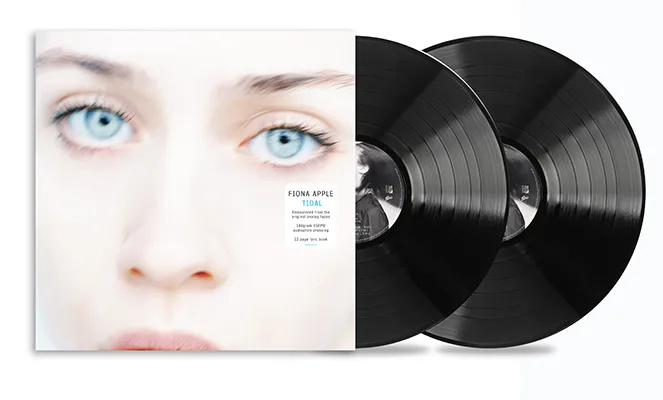
After writing her debut album, “Tidal”, when she was 17, Fiona Apple was painted as an ingenue – but she dispelled any impressions that she was an innocent just as fast as she emerged. As a classically trained pianist, her acerbic, songwriting nonetheless resists convention, pulling in off-kilter percussion and woodwind to explore the outer reaches of what might otherwise be reduced to “adult contemporary”. Her singular approach to rhythm and instrumentation sometimes verges on vaudeville. But she is best-loved for her lyrics (and her voice), betraying a self-knowledge – and sometimes a bitterness – beyond her years, and honesty sometimes to a fault. “When I have something to say, I’ll say it,” she has said. Apple was 19 when she released her debut album, after a demo tape wound up in the hands of producer Andrew Slater via his babysitter; it went on to go triple platinum.
She has released four near-perfect albums, and she continually pushes the boundaries of what it means to be a pop artist. These days, the 42-year-old rarely leaves her house in Venice Beach, Calif., but for those of us in the outside world, her music remains a sort of salve to the chaos that has unfolded since the most noteworthy moments of her career. In anticipation of the new music and celebration of what she has already accomplished, we took a look back at some of Fiona’s best songs.
You have to be careful with “Sleep to Dream,” because it unlocks unparalleled female energy. Rhythmic vocals act like an incantation over an aggressive drumbeat, which Apple punctuates with: “You say love is a hell you cannot bear, well then give me mine back and then go there, for all I care.” If you haven’t yelled those lyrics, you should give it a go. The chorus doesn’t let up the sentiment, though a string accompaniment does help put Apple (and us) in a triumphant posture above the righteous anger: “Don’t forget what I told you, don’t come around, I’ve got my own hell to raise.” The verse then goes right back into that tumbling, insistent, almost spoken-word declaration of brilliantly-crafted hard truths about someone you have been long ready to excise from your life. Do so! And then exalt, middle fingers in the air: “Just go back to the rock from under which you came, take the sorrow you gave and all the stakes you claimed … and don’t forget the blame!”
From the first few majestically unhinged notes to the devilish alto chorus of Fiona Apple’s biggest hit, “Criminal” is as masterful as anything in her discography—and she recorded it when she was just 19. The song recently made a buzzy and beautiful resurgence when Jennifer Lopez impeccably pole danced to it in the 2019 film Hustlers, but we didn’t need an immaculate strip-tease routine to remind us this song is just dripping in sexuality (but it is, truly, one of the most memorable moments in the movie, or any movie that came out last year, for that matter!).
The first two lines in the song are “I’ve been a bad, bad girl / I’ve been careless with a delicate man,” and while we don’t condone sex as a means of power manipulation, we do condone Fiona Apple clowning on any lousy guy she pleases. Ultimately, this song is about sex and love and good and bad and guilt and responsibility, but it could be about anything and we’d still listen to that honeyed-barrel-of-a-voice that Apple possesses and first wields remarkably well here.
There’s something so sensual about the consummation of a first kiss. For Fiona, it’s primal, an evolutionary truth marked by dominance and consumption. In a wonderland of keys, a dizzyingly repetitive piano chord competes with vibraphone, somehow growling with unexpected violence, and, for a moment, it feels so damn comforting to be caught in the rituals of first contact, as bestial and scary as they can be. It’s what Fiona excels at—a vulnerable reconstruction of patterns we all notice in ourselves. “The First Taste” is shocking even 20 years later in its brutal, fragile, undisguised perspective on sexuality. Fiona, as usual, is nervous but willing to burst our placid fantasies and expose them for what they are: a continual role play of a dangerous game.
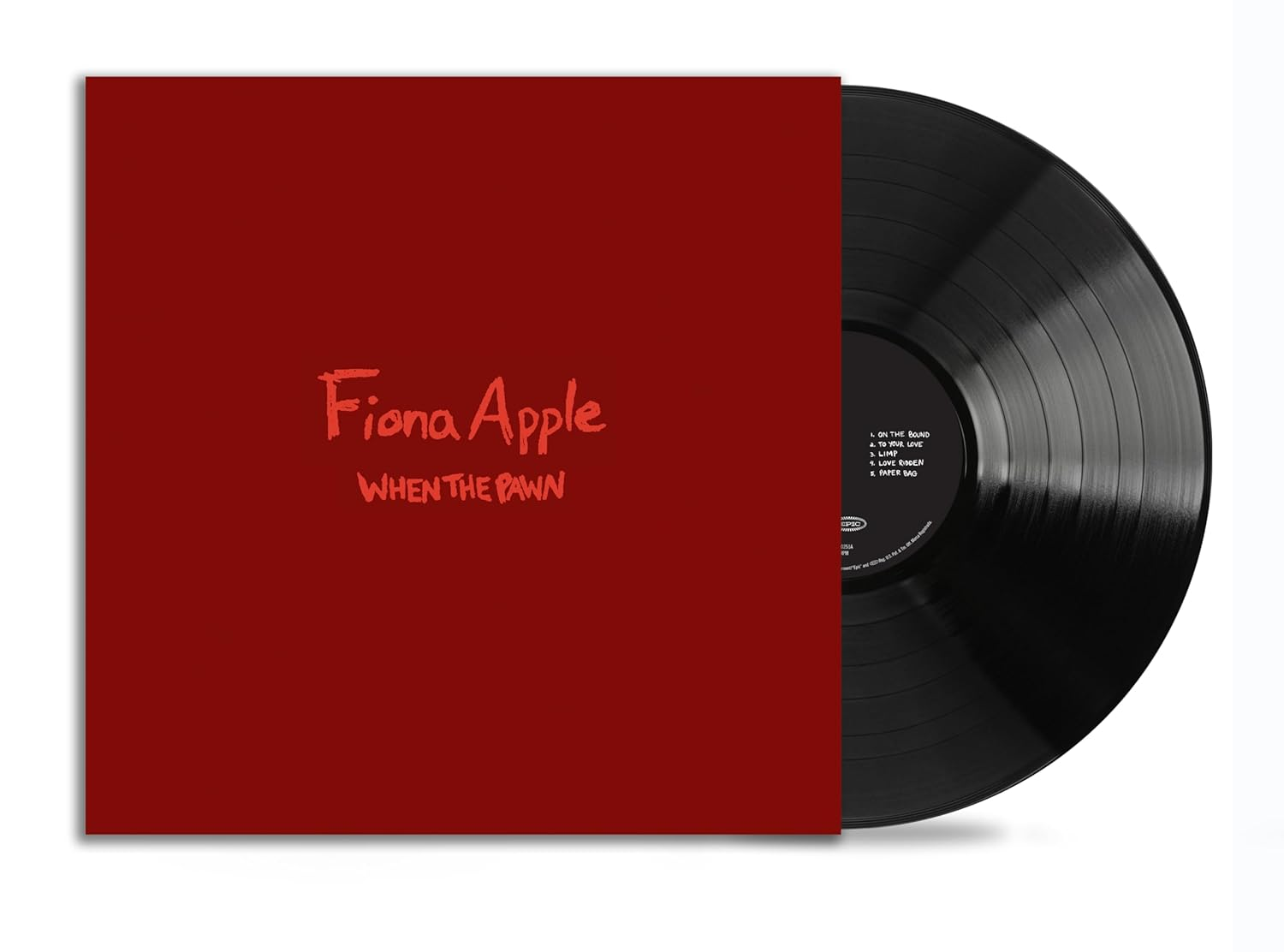
Those Drums. Those Keys. The intensity of this song’s intro paired with a series of fast-talkin’ warnings gives “Fast As You Can” its overall feeling of urgency, something Fiona Apple has excelled at from “Tidal’s” rumbling lead-off track “Sleep to Dream” all the way to the see-sawing “Periphery” on “The Idler Wheel”…. Released somewhere in the middle of Apple’s high-profile relationship with Paul Thomas Anderson, this song immediately fell victim to hearsay. It’s hard to listen to the song today without thinking about the Apple/PTA junction, a fiery partnership between two creators who never figured out how to tame the wild love that’s so acutely described in “When The Pawn”…The unwieldy, 90-word title of “When the Pawn” … is infamous, but Apple’s second album is a perfectly-formed whole, running the gamut from rage to regret in just under 45 minutes. Produced by Jon Brion, with artwork and videos by Anderson (Apple’s partner at the time), it featured Apple as sole songwriter on all 10 tracks, written following her fall from favour with the music industry. Apple met anticipation for her first new music in nearly a decade with her most stripped-back album yet: sparse and purposeful, with the electronic tilt to her past work notably absent. The Idler Wheel is almost a folk-country record, and finds the 34-year-old older, wiser and more ready to take responsibility for turbulence in her relationships than she had been in the past.
With “When the Pawn” …, she returned deliberately and defiantly, on her own terms. The lurching piano of opener “On the Bound” sets the tone, Apple breathing nimble smoke rings in the verse (“Hell don’t know my fury”) before erupting into flames with the chorus (“You’re all I need”). Through defiance (A Mistake, Limp) and desperation (To Your Love), she comes to something approaching acceptance with I Know, her voice bruised and beautiful over brushed drum and double bass.
The song is a perfect snapshot of those feelings, as well as a rousing anthem for anyone who’s ever felt tired and trapped in a relationship. Remove the gossip and noise from the equation, and it’s just a timeless banger—the best one Fiona Apple has ever released
The conflict of Fiona’s music often oscillates between what she wants and what she thinks is possible. “Never Is A Promise” finds safety in fatalism. At just 19, Fiona understands what she thinks to be her place, the order she can’t upset lest she never finds peace again (“I realize now what I am now too smart to mention to you”). Fiona’s writing can take a sinister turn at the drop of a hat, though—the girlishness of her pianos and violin can sour, adopting vicious grit in their too-loud, too-forceful delivery. Even when lost in a whorl of depression, Fiona is sober enough to point out the empty promises of empathy assured by lovers, family, strangers. It’s what makes her music eternally relatable; she’s unafraid to appear resentful for us, and live on in righteous spite.
This song’s title gives its mood away even before the somber keys do. It’s a downer, to be sure, but it doesn’t feel like useless spiraling. This is a productive sadness. Apple takes a few moments on her debut album to sulk and stare aimlessly ahead, having herself a metaphorical cleansing cry and a bout of self-pity before picking things back up again on the very next song, “Shadowboxer.” She says it best: “It’s calm under the waves / in the blue of my oblivion.” Sometimes a moody hiatus is just enough to get you feeling back to normal.
The most successful of Apple’s covers, of a stylish repertoire (mostly from live sets) taking in Sinatra and Hendrix, is her take on the Beatles’ Across the Universe, recorded for the Pleasantville soundtrack in 1998. Still her second-most-streamed track on Spotify behind “Criminal“, it is far from a deep cut, but her take on such a familiar (and – relatively for Apple – friendly) song foregrounds the molasses quality of her voice and her distinctive approach to instrumentation. The descending woodwinds after “nothing’s gonna change my world” are especially lovely.
Hardly prolific at the best of times (four albums in what will be 23 years in 2019) Fiona Apple’s last one, The IdlerWheel, (the short form of a full title that is 23 words long) is itself seven years old this year, which was also the gap between albums three and four.
With a rumbling piano-based start featuring Apple’s distinctive timbre, “Shadowboxer” moves along a soulful jazz rift as it describes the disorientation of a complicated relationship. There is naturally a lot of angst here, building alongside strings that enter hesitantly as the vocals turn accusatory. But like many of Apple’s best songs, all of this breaks through to a cathartic chorus, relaxing somewhat with the defiant and weary admission, “I’m a shadowboxer baby / I wanna be ready for what you do / And I’ve been swinging around me / ‘cause I don’t know when you’re gonna make your move.” You can feel the exasperation, especially when she leans into an emphasis on the vowels in “swinging” and “around,” which leaves a dizzying impression. “Shadowboxer” is a showcase of Apple’s vocal and emotional range, and a prime example of why her songs continue to resonate.
Katy Perry could never. Before there was ever a whimper of “Do you ever feel like a plastic bag?” Fiona Apple was singing this sweet and sultry song about a fleeting glimmer of papery hope. She sings the melody with a sly, Regina Spektor-ish curve—almost like a dark bar piano tune. But this is no cabaret solo. “Paper Bag” is, plainly, about one woman’s isolation in the wake of desolated relationship, one that crumbled because he was a weak “little boy” and she was “a mess he don’t wanna clean up.” But she hungers for him anyways, and the endless cycle of craving, satisfying, starving repeats itself once more.
The reclusive and sometimes emotionally-challenged Apple is known to write only when she wants to and when she feels she has something to say. Since “The Idler Wheel” she has limited herself to occasional film and advertising score writing, backing vocals, a one-off collaboration with Andrew Bird and occasional appearances at her local venue Largo, in Los Angeles while she recovered from a digestive problem that had reduced her to a living skeleton.
“The Idler Wheel”…, Fiona Apple’s most recent album but released back in 2012, is full of strange and spooky soundscapes. The kooky vamping on “Periphery” may just be my favorite. Apple’s dedicated anthem to the fringes is a rare moment of lightheartedness on the record (or in any of her records, for that matter) and features shredding percussion and bouncing piano, but it’s still a biting shutdown in the end. “You let me down / I don’t even like you anymore at all,” Apple sings at one point. Even when she’s being silly, Fiona’s always working an ulterior motive.
Undoubtedly one of the most intensely sexual and purely thirsty songs in Fiona Apple’s catalogue (and that’s saying something), “Hot Knife” is a miraculously strange and uniquely specific rendering of sexual tension. The constant pit-patting of the booming timpani drum acts like a metronome as Apple repeats, with increasingly frantic energy, that same oily verse over and over: “If I’m butter, then he’s a hot knife.” Apple’s sister Maude eventually joins in with backing vocals, and they begin to sing in the round. Apple says what’s on her mind loud and clear over tip-toeing keys: “He excites me / Must be like the Genesis of Rhythm / I get feisty / Whenever I’m with him,” she sings. This Idler Wheel… highlight remains one of the most memorable songs Apple has ever created.
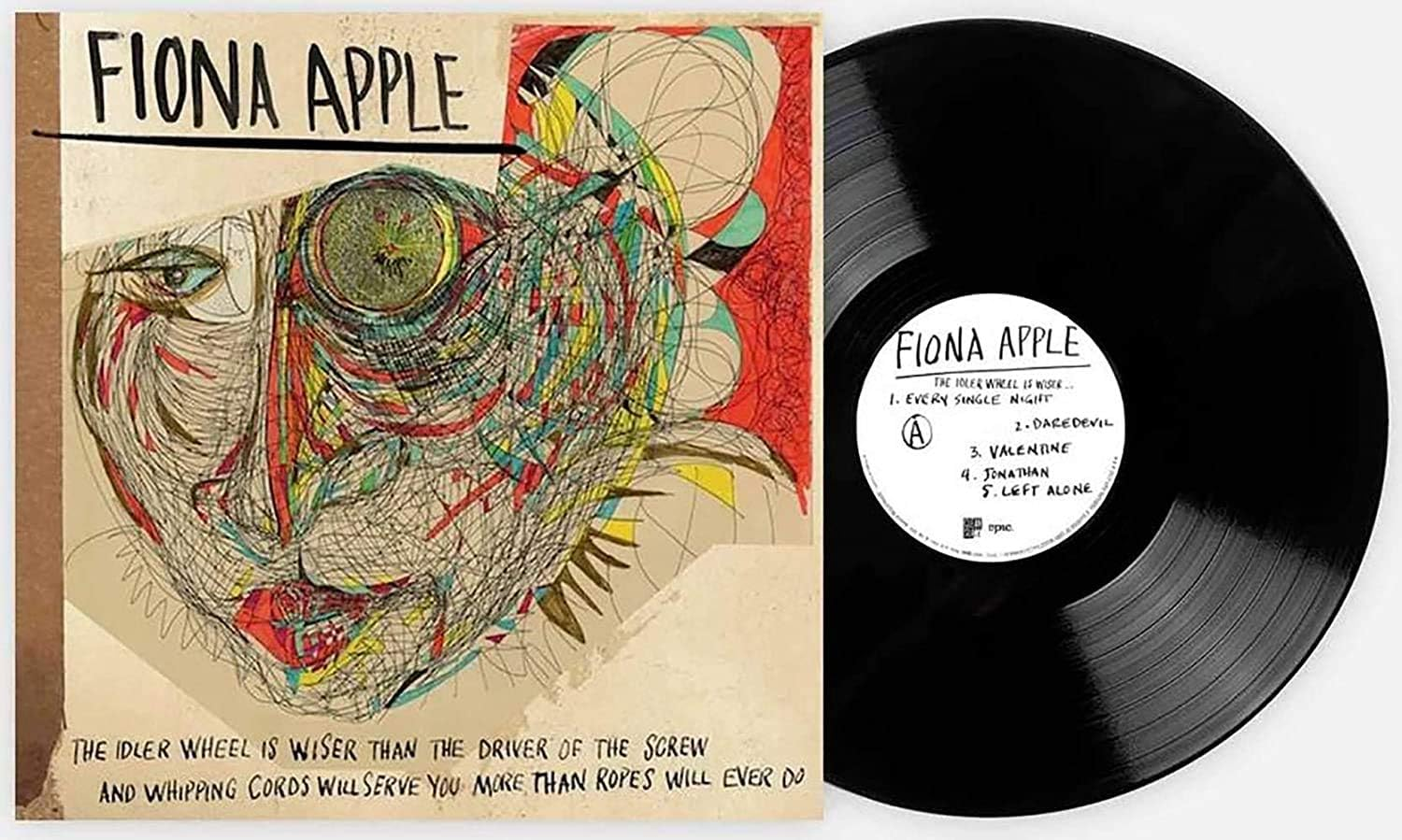
The Idler Wheel… was Fiona’s third big comeback, and until the recent announcement of Fetch the Bolt Cutters, the longest period between her studio releases. Even after seven years, she still had it, releasing what is arguably her best album since Tidal.“Every Single Night,” the album’s sole single, twinkles with a childish fear, heralded by the equally delicate timbres of her frequently used marimba and a less used celesta, which is perhaps most recognizable on “Dance of the Sugarplum Fairies.” Fiona’s description of her anxiety manifesting is detailed with razor-sharp precision (“These ideas of mine / Percolate the mind / Trickle down the spine / Swarm the belly, swelling to a blaze”), in direct juxtaposition against her heroic struggle against depression’s stagnancy. If Fiona’s music could be described by its characterization, she’d be a brave soul responding to her own cowardice. Her strength, in response to her knee-buckling fear, is laid bare by a central tenet, a refrain that could very well summarize her work up until this point: “I just wanna feel everything.”
Looking much healthier and happier now she made a series of fan videos in 2018 and in one of them revealed that she was working on new material. That’s the only clue we have but then The Idler Wheel was only disclosed in an off-the-cuff remark by the CEO of Epic Records shortly before its release. That’s how it is with Fiona. And as her fans know, she has history where album releases are concerned, having held back her third album, Extraordinary Machine, in a row over production standards.
After long delays, Apple’s third album made its inauspicious debut unfinished on file-sharing sites; it was officially released months later and named album of the year by many outlets. Co-producer Brian Kehew has said Apple’s lack of clear vision was one factor in the hold-up (along with a micromanaging record label), and that comes across in the finished product. “Extraordinary Machine” is Apple’s most experimental record, as well as the most sonically rich.
Maybe it’s just me, but “I could liken you to a werewolf” is Fiona’s cleverest use of wordplay to date. “Werewolf” is defiant all the way down, from Fiona’s subtle gestures to her own hand in her relationship’s failure (if he’s a werewolf, she’s a full moon: instigating, yet passive) to this plea, which seems like a convenient deflection: “Nothing wrong when a song ends in a minor key.” To prove her point, she does just that. Catharsis doesn’t have to end happily. Discordance can be just as satisfying, depending on the type of comfort you’re looking for.
Many songs throughout Fiona Apple’s discography could be described as hungry for something: sex, love, isolation, escape, revenge. The sonically busy, thematically cocksure “Limp” is perhaps most hungry for the truth. This unmistakable tale of a parter who can’t quit the gas-lighting game is consistently angry—and rightfully so. This “man” who Apple warns of throughout the song may have spent a considerable amount of time emotionally torturing her, but, before long, she’ll up and leave him with nothing but his own hand for pleasure: “It won’t be long till you’ll be lying limp in your own hands,” she spits with a vengeance. No one does rage and underhanded revenge with quite as much finesse as Fiona.
Just when you think you know what to expect from a Fiona Apple song, she goes and sounds off a church bell. The opening title track from Apple’s third album “Extraordinary Machine” sounds like both a deleted Norah Jones demo and a slapstick solo that might occur at the first half of Act II in a Broadway show (featuring most of the orchestra’s woodwinds, too). This album arrived after a long six-year intermission since 1999’s When The Pawn…, and as if to tease us for our impatience, Apple fills us in on what she was doing in the meantime right away: “I certainly haven’t been shopping for any new shows / And I certainly haven’t been spreading myself around,” she sings. As it turns out, these informational verses were only a harbinger of long waiting periods between albums to come. Fiona Apple mostly remains an unhurried recluse, but at least the wait’s always worth it.
“Extraordinary Machine” consists of some of the more subtle Fiona Apple songs—if there even is such a thing as a “subtle” Fiona Apple song. But “Please Please Please,” falling at number nine in the tracklisting on the 2005 release, is just what it sounds like: a plea, and a pretty non-straightforward one at that. It’s a kind of whirling, all-encompassing prayer, one that feels eerily timely right now in this age of separation and isolation. “Please please please / No more maladies / I’m so tired of crying / You’d think I was a siren,” Apple sings. Sound familiar? While this delightful song probably had something to do with Apple’s public image and her struggles surrounding it, now it just sounds like a coronavirus anthem: “Give us something familiar, something similar,” she goes on to sing. “To what we know already / That will keep us steady.” She had to be referring to binging sitcoms on Netflix during a pandemic, right? Obviously not, but it feels pretty dang clairvoyant.
Apple is recognised as one of the (possibly the) greatest musical and lyrical talents of her generation, certainly one who lays her soul bare more often, and more convincingly, than anyone else in popular music today, and one who knows exactly what performance art means. And yet she is still unknown to many. Having written songs since was she eight Apple is still only 41 though. There is time yet to put that right.



 The Fat Angel Sings