Posts Tagged ‘Devo’

Are We Not Men We Are Devo!.jpg

“Are We Not Men? A: We Are Devo!” is the debut studio album by the American new wave band Devo. It was originally released in August 1978, on the labels Warner Bros. and Virgin. Produced by Brian Eno, the album was recorded between October 1977 and February 1978, primarily in Cologne, Germany,

The album received somewhat mixed reviews from critics and peaked at No. 12 on the UK Albums Chart and No. 78 on the U.S. Billboard chart. Recent reviews of the album have been more uniformly positive and the album has charted on several retrospective “best of” lists from publications including Rolling Stone, Pitchfork Media and Spin.

On May 6th, 2009, Devo performed the album live in its entirety for the first time as part of the Don’t Look Back concert series curated by All Tomorrow’s Parties. On September 16, 2009, Warner Bros. and Devo announced a re-release of Q: Are We Not Men? and Freedom of Choice, with a tour performing both albums

In 1977, David Bowie and Iggy Pop received a tape of Devo demo songs from the wife of Michael Aylward, guitarist in another Akron, Ohio band, Tin Huey. Both Pop and Bowie, as well as Brian Eno and Robert Fripp, expressed interest in producing Devo’s first release. At Devo’s New York debut show in 1977, Bowie proclaimed that “this is the band of the future, I’m going to produce them in Tokyo this winter.” Eventually, Eno was chosen to produce the album at Conny Plank’s studio located near Cologne, Germany. Bowie was busy with filming Just a Gigolo but helped Eno produce the record during weekends. Two tracks, “Come Back Jonee” and “Shrivel-Up”, were recorded at Different Fur in San Francisco, California; proprietor Patrick Gleeson co-engineered the album. All tracks were mixed at Plank’s studio. Since Devo was without a record deal, Eno paid for the flights and studio cost for the band, confident that the band would be signed to a record contract. In return for his work on the album, Eno asked for a share of any subsequent deals.

The recording sessions were a source of frustration for Eno and Devo. Eno found the band unwilling to experiment or deviate from their early demonstrations of recorded songs. Devo later admitted that “we were overtly resistant to Eno’s ideas. He made up synth parts and really cool sounds for almost every part of the album, but we used them on three or four songs.” A majority of the tracks were later remixed by David Bowie; excluding “Space Junk”, and “Shrivel Up”, which had Eno’s production still intact.

After 16 years of eligibility, Devo snagged their first Rock & Roll Hall of Fame nomination in 2018.

It’s a long time coming, say fans. “It took this long for Devo to be nominated simply because their highest charting song, “Whip It,” only got to No. 14, and the history of this process holds that a band gets in either, and mostly, because of popular, commercial success or singular artistic influence,” notes David Giffels, co-author of the band biography Are We Not Men? We Are Devo!

“Critics had a hard time figuring Devo out initially, and they were constantly subverting both the commercial and critical systems. So, they sort of undermined the usual expectation of a rock band in terms of its route through the Rock Hall sausage machine.”

Gerald V. Casale and Mark Mothersbaugh were art students moonlighting in the music world while attended Kent State University. They were there on May 4th, 1970, when the National Guard shot and killed four college students and injured nine others during a protest. De-evolution was happening before their eyes.

The band’s line-up solidified by 1976 when Casale and Mothersbaugh were joined by their respective brothers, both named Bob, and drummer Alan Myers. From there, they slowly infiltrated the mainstream, influencing generations of artists along the way.

They Made One of Rock’s Best Debut Albums, David Bowie famously announced during a 1977 gig at Max’s Kansas City that he was going to produce Devo’s debut album, and that helped secure the band a major-label record deal.  Brian Eno ended up working on most of that LP, 1978’s Q: Are We Not Men? A: We Are Devo!, which almost immediately found fans, as well as many critics, with its herky-jerky interpretation of the Rolling Stones’ “(I Can’t Get No) Satisfaction.” The album’s other tracks showed that there was much more to them. “Jocko Homo” and “Uncontrollable Urge” revealed punk roots, while other tracks showed off their experimental nature.

Devo were not Just a Band but an Art Project, A photo of golfer Chi Chi Rodriguez was used for the early “Be Stiff” single as a comment on commercialism. They made a short film all about their theory of de-evolution. And they they were one of the first American bands to embrace video as a new medium. “They pioneered the use of video, predating MTV, and created a new kind of art — the music video — within the rock ‘n’ roll genre at a time when very few new frontiers were left,” says Giffels. “Devo owned the art of video, uniquely and with complete authority.”

They Were Sincere About That De-Evolution Theory, Mark Mothersbaugh and Gerald Casale believed that modern society hit its peak and was making a downward slide in the form of de-evolution — that mankind was regressing biologically and as a society. This increased conformity among the masses led to the group’s famous yellow hazmat stage outfits, stiff organized movements and songs that embraced and mocked cultural norms. “Let’s be honest, is there any question that de-evolution is real?” Casale asks UCR. “Did you think we were joking?”

They Managed to Push Their Way Into the Mainstream, Even though their debut album was certified gold, 1980’s Freedom of Choice was even bigger, selling more than a million copies, thanks, in part, to the hit single “Whip It.” Over the years, they’ve released studio LPs, live records, compilations, EPs, singles and a soundtrack, and are one of the most easily recognized bands from the era. They have some high-profile fans, including Neil Young, who included the band in his 1982 movie Human Highway. And Mark Mothersbaugh and Gerald Casale have worked on, separately and together, music used in commercials, TV shows and movies, including Pee-wee’s Playhouse, a Diet Coke ad and several of director Wes Anderson’s acclaimed films.

Their Influence Is Super-Huge, Devo’s famous fans and early champions include David Bowie, Brian Eno and Neil Young, but their influence since then has included bands like Nirvana, Pearl Jam and Arcade Fire, all of whom have covered the group onstage or on record. Their robotic rhythms can be heard in countless punk, New Wave, college rock and indie-rock artists throughout the decades. “If you were going to identify a band from the New Wave genre, which certainly deserves a presence in the hall, Devo defined the sound and the look in a quintessential way, and with more artistic and cultural depth, in my opinion, than any other candidate,” says Giffels.

Few albums have announced a band as sufficiently as Q: Are We Not Men? A: We Are Devo. The record says everything you need to know about the band Devo, and while in 2021 the prospect may feel a little passe, in the late seventies, the mere concept of Devo was revolutionary. For that reason alone, the band go a long way to define the very nature of post-punk music.

Not necessarily the band’s best album, Are We Not Men? is certainly their seminal moment in musical history. It was this album that allowed a generation of music lovers to cock their head sideways and attack rock music with a brand new view. Devo are undoubted pioneers of the post-punk genre and kept the keen spirit of experimentation at the forefront of everything they did.

Devo

  • Mark Mothersbaugh – lead and background vocals; keyboards; guitar
  • Gerald Casale – lead and background vocals; bass guitar; keyboards
  • Bob Mothersbaugh – lead guitar; backing vocals
  • Bob Casale – rhythm guitar; keyboards; backing vocals
  • Alan Myers – drums

No automatic alt text available.

Fans have voted to make the next limited and numbered Run Out Groove title, Turn Around: B-Sides & More 1978-1984 available for pre-order now. Devo really needs no introduction. They are one of the most iconic bands in rock history and have been releasing recordings for over 40 years. The band name comes from the concept of de-evolution: the idea that instead of continuing to evolve, mankind has actually begun to regress as evidenced by the dysfunction and herd mentality in American society. We decided to pull together some unique B-Sides and remix singles from 7” and 12” records to create a brand new collection on one full length LP with new artwork. The album will be pressed on 180g multi-color swirl vinyl and come in a beautiful single pocket tip-on Stoughton jacket with a few additional goodies inside! Turn Around: B-Sides & More 1978-1984 will be available to pre-order until November 8th and then pressed and numbered to a limited quantity based on total orders. Follow our socials to get production updates.

Originally from Akron, Ohio and formed in 1973, the classic line-up consisted of two sets of brothers – the Mothersbaugh (Mark on vocals, keyboards and guitar and Bob on guitar and vocals) and the Casales (Gerald on bass, vocals and bass synth and Bob on guitar, keyboards and backing vocals) along with drummer Alan Myers. The band achieved a #14 Billboard chart hit in 1980 with the memorable and catchy, “Whip It,” which was featured heavily in the early days of MTV and pushed the band into mainstream popularity. Devo became known for their music and elaborate stage performances combining kitsch science fiction themes, surrealist humor and satirical social commentary. Their off kilter pop songs include unusual time signatures and synths that have proven very influential on subsequent new wave, industrial and alternative rock acts. Recommendations from David Bowie and Iggy Pop helped Devo land a recording contract with Warner Bros. in 1978.

Be sure to vote for Devo to be inducted into the Rock and Roll Hall of Fame this year!

Unknown

Long out of print and never reissued, Futurismo proudly present a super limited Deluxe edition of Devo’s 1988 album – Total Devo, in time for it’s 30th Anniversary! Over the years this totally underrated LP has become a true fan favourite, as well as a prediction of these unsettling times we live in. So it seems only fitting it’s right now that Total Devo gets it’s first time reissue for all to hear. Back in 1988, when the airwaves were being homogenized by vapid pop, Devo set about creating their first album in four years. The result was this slice of overt irony, a dance orientated, back to basics, emotionally arch selection – including now classic tracks Baby Doll and Disco Dancer – that twisted pop on it’s head by imitating in part the very music it mocked. Despite it’s industrial edge and unusual trademark quirk, the joke was so honest at the time that it was inevitably lost, but in the years since heinsight has this serving as a true testament to another of Devo‘s misunderstood works of art.

Unknown

Each Gatefold LP set includes 2x180g limited edition coloured vinyl in the choice of ‘Defcon Disco’, ‘Totally Agitated’ or ‘Happy Sad’ also available is a 2xCD gatefold digipak version. Included alongside the original album are remixes, demos and unheard tracks unearthed from the archives. The records come in a spot laminated gatefold sleeve that shows illustrations and logos when viewed in a certain light, it contains a huge double sided poster with unseen pictures and brand new liner notes by Gerald V. Casale of Devo.

The LP version also contains two collectable photographic postcards! Devo’s Total Devo Deluxe is an essential addition to the collection of any agitated spud, on it’s 30th Anniversary it’s time to witness total de-evolution in action! You knew the time would come, and now it’s here, so get totalled

Released in the summer of 1978 a year in which the charts were dominated by the disco pop of the Bee Gees, Boney M., and “You’re the One That I Want” Devo’s mold-breaking debut was already years in the making.

Devo formed initially not as musical group but as an idea ,the concept of the “de-evolution” of the human race—formulated by three art students at Kent State University in response to the fatal shooting of four anti-war protestors by National Guardsmen on May 4th, 1970 (events that also inspired the Crosby, Stills, Nash & Young song “Ohio”).

After making their live musical debut in 1973, by 1976 Devo had settled on a five-piece configuration comprised of two sets of brothers Jerry and Bob Casale, and Mark and Bob Mothersbaugh and drummer Alan Myers. (Bob Lewis, who worked with Jerry and Mark on their earliest “de-evolution” pamphlets and played in an embryonic version of the band, had stepped sideways into a short-lived management role.)

That year, true to their subsequent reputation for cross-media experimentation, they made their debut not with a record but with a short film. Directed by fellow Kent Stater Chuck Statler, The Truth About De-Evolution was part manifesto, part music video, interspersing surrealistic visuals with performances of “Secret Agent Man” (a Sloan/Barri song made famous by Johnny Rivers in the mid-sixties) and Devo’s own jerky “Jocko Homo.”

Statler’s film went on to win first prize at the 1977 Ann Arbor Film Festival in the same week that “Jocko Homo” also appeared as the B-side to the band’s first, self-released single, “Mongoloid.” With its call-and-response chorus of “Are we not men? We are Devo,” the song would become a mission statement of sorts for the band—a disorienting blur of tricky time-signature shifts and thought-provoking lyrics (inspired by the 1932 film Island of Lost Souls) hidden beneath a veneer of throwaway pop-punk whimsy.

Four decades later, of course, they’re legends — distinctly memorable and directly influential both in their performance-art-laced messaging and in the way they actually composed a pop-deconstructing milieu that fit somewhere between NEU! and the Ramones. Their uncanny nature of building indelible hooks in even their most avant-weirdo songs gave them a way in to impressionable listeners, their visual camp was the closest early MTV ever got to embracing a Fluxus-style art sensibility, and for a lot of outsiders they seemed like one of the few signs that maybe things didn’t have to keep on continuing the way they were.

https://www.youtube.com/watch?time_continue=4&v=Bu1WX2nsZfo

Devo, preferring to keep their options open and corporate interference to a minimum, had not yet signed a long-term record contract, so Eno agreed to finance the record himself in return for a share of any future deal, even paying for their flights to Conny Plank’s studio in Cologne, Germany. (Bowie, keen to maintain his involvement in the record, would visit at weekends during breaks from shooting Just a Gigolo in Berlin.)

If the meeting of arty upstarts and art-rock legends sounded good on paper, the reality was not quite as Devo had anticipated. As Casale recently recalled “Here we were with this brutalist, industrial aesthetic and songs we’d lived with for up to three or four years, and [Eno is] suddenly adding harmonies and very pretty synth string sounds, and we’re like, ‘That’s not Devo. What’s he doing?’” As such, much of the subsequent mixing process involved turning down the faders on Eno’s contributions, although as Mark Mothersbaugh admitted in the same interview, “The stuff that stayed is really amazing.”

Forty years on, that remains the case, from the opening assault of “Uncontrollable Urge” and the band’s Dadaist cover of the Rolling Stones’ “Satisfaction” to the rising arpeggios and trans-European groove of “Gut Feeling” and the short, sharp shock of “(Slap Your Mammy).” Before it could be released into the world, however, the album remained in the can for six months while lawyers for Virgin and Warner Brothers jostled over the rights to it. Though the former had agreed to a worldwide deal with the group, executives at the latter label claimed that they, not Eno, had put up the funds for the sessions, and that as a result they should have it.

https://www.youtube.com/watch?v=YX_f6sUr47U

In the end, a compromise was agreed, with Virgin releasing the album in the UK and Europe and Warner issuing it in the U.S. and beyond. Though it was only modestly successful from a commercial standpoint, damned with faint praise by critics like Robert Christgau of the Village Voice, who concluded that, “in small doses,” it was “as good as novelty music ever gets,” the album would quickly become an important touchstone of the era.

Part of what makes Devo so important, of course, is that nobody else truly sounds like them. But while precise sonic analogues are few and few between, numerous acts from across a whole spectrum of music styles owe a debt to them, not least for the way they brought uncompromising ideas out into the light. “When we were new, we were shocking and so different—only we owned that aesthetic,” Jerry Casale noted in 2010. “Now a lot of bands cite as Devo as their influence.”

Rolling Stone wrote: “It’s a brittle, small masterpiece of Seventies pop irony, but its shriveling, ice-cold absurdism might not define the Seventies as much as jump the gun on the Eighties.”
Released: 28th August 1978.

Image result for devo girl u want images


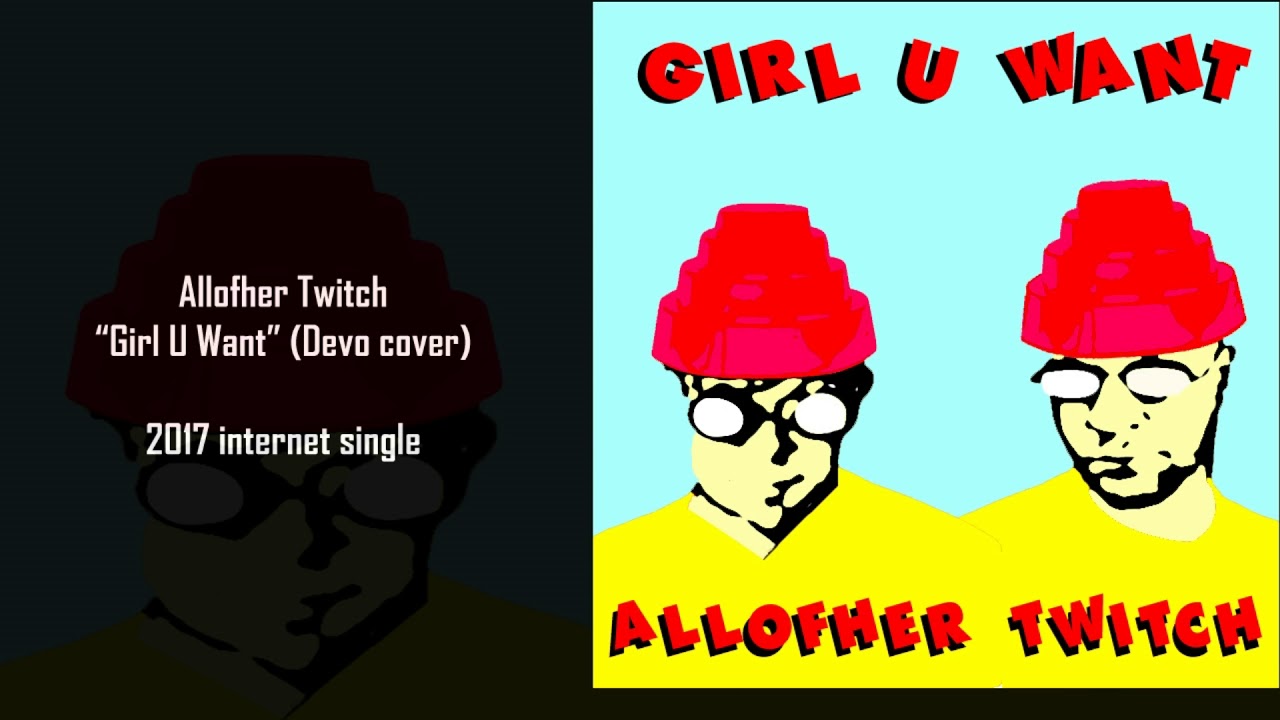
Devo! As well as being quirky, retro-futuristic, geeky, new-wave heroes, could also write a mean and truly intelligent pop song. “Girl U Want”  was the first released single from their 1980 album Freedom Of Choice, but these days it’s often overlooked because the follow up 7” was the band-defining classic, Whip It.

The synthesizer/guitar hooks on Girl U Want were widely believed to have been inspired by the jagged riffs on The Knack’s My Sharona, though co-writer Gerald Casale has denied this. Coincidental or not, it’s easy to hear the similarity.

What’s more important than where the tune came from is what it does, which is to convey that overpowering feeling of being young and in love with someone, but too chicken shit to tell them. The song saw Devo delivering an original twist on a well-worn theme and a classic piece of art-pop. And you have to say the lyrics on Girl U Want have held up a whole lot better than My Sharona’s “I always get it up, for the touch of the younger kind”.

In the music video, Devo performs for a group of young women in the style of a performance from The Ed Sullivan Show, with two robotic backup dancers, one male and one female. Further implying the televised nature of the performance, the color in the video is deliberately altered to make the red of the band’s energy dome headgear look almost purple. The band wears the silver naugahyde suits from the cover of Freedom of Choice, and mime the song with Moog Liberation synthesizers.

During the video, the camera focuses on the girls in the audience exaggeratedly enjoying the performance, including one girl who is visually implied to “wet” herself, which transitions to a scene of a General Boy controlling the backup dancers. At one point, Mark Mothersbaugh pulls aside the curtain behind the band to show an overweight man on a vibrating exercise machine, attempting to drink a milkshake to the ecstatic reaction of the audience. As the video ends, girls in the audience are shown holding signs with icons,

Soundgarden issued a cover of Girl U Want as an extra track on the Rusty Cage EP. Theirs is a sleazy, slowed down version. Unlikely as it seems, Robert Palmer also released an interpretation of Girl U Want as a single in 1994. It didn’t do too well. Plenty of other bands have covered it too, but Superchunk’s needle sharp cover for the 1992 compilation Freedom Of Choice is the best by a distance.