Posts Tagged ‘CSN and Y’

Graham Nash writing songs in the house he shared with Joni Mitchell. 'From the moment I first heard her play, I thought she was a genius. I'm good at what I do, but genius?' he said

On an August evening in 1968, the sun was sinking in the western sky as the cab crawled up Laurel Canyon, bathing the Hollywood Hills in a golden flush of summer. Graham Nash stopped in front of a small wooden house on Lookout Mountain Avenue. Inside, lights glowed and I could hear the jingle-jangle of voices.

I leaned on my guitar case – the only baggage I’d carried off the plane at LAX – and considered again where I was and what I was doing here: leaving my country, my marriage and my band, all at once. It was August 1968, and the Hollies and I had come to an impasse. We had grown up together and enjoyed incredible success, but we were growing apart.

The same with my marriage: Rosie was off in Spain chasing another man, and I was in Los Angeles, the city that already felt like my new home, to visit Joni Mitchell, who had captured my heart. I was an English rock star – I had it made. I had co-written a fantastic string of hits with The Hollies. I was friends with the Stones and The Beatles.

Suddenly, Joni was at the door and nothing else mattered. She was the whole package: a lovely, sylphlike woman with a natural blush, like windburn, and an elusive quality that seemed lit from within. Behind her, at the dining room table, were my new American friends David Crosby and Stephen Stills – refugees, like me, from successful, broken bands. I grinned the moment I laid eyes on them.

I had never met anybody like Crosby. He was an irreverent, funny, brilliant hedonist who had been thrown out of The Byrds the previous year. He always had the best drugs, the most beautiful women, and they were always naked. Stephen was a guy in a similar mould. He was brash, egotistical, opinionated, provocative, volatile, temperamental, and so talented. A very complex cat, and a little crazy, he had just left Buffalo Springfield, one of the primo LA bands. That night, while Joni listened, the three of us sang together for the first time. I heard the future in the power of those voices. And I knew my life would never be the same.

Joni and I had first met after a Hollies show in Ottawa, Canada in March. I’d seen this beautiful blonde in the corner by herself, and I’d shuffled over and introduced myself. ‘I know who you are,’ she said, slyly. ‘That’s why I’m here.’ She had invited me back to her room at a beautiful old French Gothic hotel, where flames licked at logs in the fireplace, incense burned in ashtrays and beautiful scarves were draped over the lamps. It was a seduction scene extraordinaire.

She picked up a guitar and played me 15 of the best songs I’d ever heard, and then we spent the night together. It was magical on so many different levels. That evening with Crosby and Stills at Joni’s, five months later, was the first time I’d seen her since. From the moment I first heard her play, I thought she was a genius. I’m good at what I do, but genius? . She was finishing her “Clouds” album and writing songs for what would become Ladies Of The Canyon.

After that, I moved out to Los Angeles for good, as soon as I had messily extricated myself from The Hollies.

The plan was to crash at Crosby’s house, where a party was always in full swing: beautiful young women all over the place, some clothed, some not so clothed. Music pulsing through the place. It was Hippy heaven.

CRAZY LOVE: Graham Nash first met Joni Mitchell after a Hollies gig - within months he left the band and moved in with her in LA

On my first night, in the midst of the party, Joni appeared. Taking me by the arm, she said: ‘Come to my house and I’ll take care of you.’  I moved into Joni’s and never made it back to David’s. Joni had a great little place, built in the 1930s by a black jazz musician: knotty pine, creaky wooden floors, a couple of cabinets full of beautifully coloured glass objects and Joan’s artwork leaning discreetly here and there.

We both wrote whenever the spirit moved us, but in Joni’s house, when it came to the piano, I always gave way. If she was working there or playing guitar in the living room, I’d head into the bedroom with my guitar or simply take a walk. Occasionally, I lingered in the kitchen, just listening to her play. I wrote there too. On one of those grey days in LA that foreshadows spring, Joni bought a vase on the way home from breakfast. When we got back, she gathered flowers in the garden, and while she was away from the piano, I wrote “Our House”, capturing that little domestic moment.

Early on, Joan and I went to visit her parents in her Canadian hometown of Saskatoon. I can’t describe what her childhood room looked like because I wasn’t allowed within 20 feet of it. Bill and Myrtle were a very straight, religious couple, and they weren’t about to let a long-haired hippy sleep with their daughter under their roof.

Joni represented one aspect of my new life in LA; Crosby and Stills the other. Crosby and Joni had been lovers not long before, but he wasn’t the possessive type. He had fallen in love with a beautiful girl named Christine Hinton, Crosby had far worse problems. His girlfriend Christine was taking the cats to the vet, when one escaped in the van. Veering into the opposite lane, she was hit by a school bus and killed instantly. I watched a part of David die that day. He wondered aloud what the universe was doing to him. And he went off the rails; he was never the same again.

When David, Stephen and I flew out to The Hamptons for our first serious Crosby Stills & Nash rehearsals, we rented a wooden chalet by the lake and invoked the ‘no women’ rule. We were finally free from our previous bands.

We had a hell of a time, cementing our friendship, getting wasted, working up the first CSN album – three hippies wired to their eyeballs in a snowbound cabin for a month.

We recruited Stills’s old bandmate Neil Young as our fourth member and played our first show in Chicago. Now, I know a few things about crazy tours. At our height, the Hollies’ shows had been insane: wall-to-wall teenage girls, screaming their heads off in a sexual frenzy at these young, good-looking guys playing loud rock ’n’ roll.

At one of our shows in Glasgow, 75 girls fainted during the Hollies’ set and had to be passed hand-over-head, like in a mosh pit. Some of those gigs had an eerie, war-zone quality. If a chick took a shine to the lead singer, you could bet he was going to get his ass kicked by her boyfriend and his pals after the show. I can’t tell you how many buses I ran for after concerts. One time, I got three front teeth shattered.

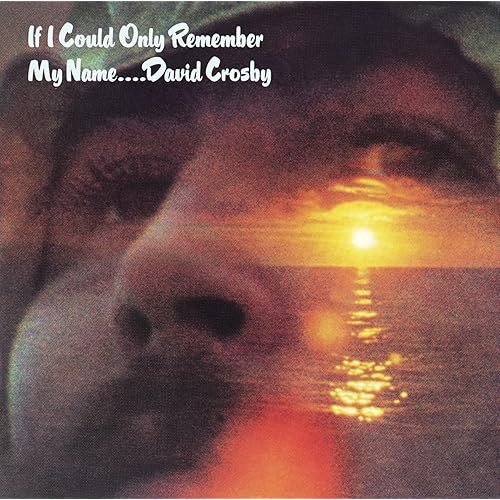
The period between the fall of 1970 and the summer of ’71 was an auspicious one for America’s prime supergroup, Crosby, Stills, Nash and Young.  Each of the individual members released crucial solo albums within a year and a half of Déjà Vu’s arrival: Stephen Stills’ released “Stills 2”, David Crosby’s first outing of his own, “If I Could Only Remember My Name” and Neil Young’s career-defining “After the Gold Rush” and along with Graham Nash’s initial individual offering, “Songs for Beginners”. In many ways, Nash’s album, released on May 28th, 1971, was the most anticipated effort of all. Stills and Young had proven their muster with earlier efforts, while Crosby’s previous behaviour negated any great hope for significant achievement. Nash’s work, on the other hand, had heightened expectations, given a lengthy early résumé that included his tenure with the Hollies as one of the group’s chief singers, songwriters and original architects. After all, his high harmonies were an integral element in the band’s biggest songs “On a Carousel,” “King Midas in Reverse” and “Carrie Anne,” to name but a few—and indeed, when he joined forces with Crosby and Stills, his songs and singing helped define the sound of that union as much as anything else brought to bear by his colleagues.

Given his signature style, he already had all the elements needed when it came to plotting his long-awaited outing. Not that he was going it alone; like his partners, Nash took a populist approach, inviting the same friends and fellow travellers that populated the prodigious post-’60s West Coast music scene: Jerry Garcia and Phil Lesh of the Grateful Dead, fellow expatriate Dave Mason, Jackson Browne accompanist David Lindley, his then-current paramour Rita Coolidge, and, of course, his erstwhile compadres Crosby and Young. Consequently, while Nash naturally takes centre stage, any one of these songs could easily have found a fit in the CSNY repertoire. The highly charged anthem written in support of the so-called Chicago Eight, “Chicago” proved the point after making its debut on “4 Way Street” the year before.

Like the album’s lead-off track “Military Madness,” Nash’s autobiographical narrative on the futility of army conscription, “Chicago “was rooted in the anti-war stance that fully ignited within the band following the student killings at Kent State and the rush-release of their single “Ohio” in its immediate aftermath.

That said, the majority of the album could be considered an emotional salve of sorts, given that the songs were written in the immediate aftermath of Nash’s breakup with one-time lover and subject of the song “Our House,” Joni Mitchell. Indeed, Nash makes little attempt to hide his tattered emotions, especially as they’re reflected within such songs as “Better Days,” “Sleep Song” and “I Used To Be a King.” The latter is especially telling, a distraught attempt to reconcile his heartbreak with the serenity and security he thought he once attained: “I used to be a king and everything around me turned to gold/I thought I had everything and now I’m left without a hand to hold…” The lyric becomes even more explicit as Nash conveys his sentiments in the resolute yet remorseful chorus:

“And in my bed where are you Someone is going to take my heart But no one is going to break my heart again”

The feelings of heartbreak and happenstance morph into words of advice in the emotional thrust of the bittersweet ballad “Better Days,” in which Nash attempts to impart lessons learned into abject advice for others:

Back in the U.S., with Crosby torturing himself over Christine’s death, he and I took his boat and embarked on a trip from Fort Lauderdale, Florida to San Francisco: 3,000 miles, seven weeks at sea, with a bottomless supply of weed and coke. Joni met us just outside Panama, and it wasn’t pleasant. A row broke out, Joan yelling that I hated all women. Things had turned ugly between us. She decided to leave us and fly back to LA.

When I got home, Joni decided she needed a break. I was laying a floor in her kitchen when a telegram arrived from her. It said: ‘If you hold sand too tightly in your hand, it will run through your fingers. Love, Joan.’ I knew at that point it was truly over between us.

That’s how things were by 1973. But Crosby, Stills, Nash & Young were a habit I couldn’t kick, and we jumped at that 1974 tour. We made $12 million, though David, Stephen, Neil and Nash only got $300,000 each. Plenty of people took their cuts off the top, while we picked up the tab for the decadence.

We were our own worst enemy. Put the four of us in a room, and anything could trigger a fatal blast. Crosby, Stills, Nash & Young wouldn’t tour together again for 26 years.

On David Crosby (far left): 'He always had the best drugs, the most beautiful women, and they were always naked,' said Graham Nash (pictured right). Also pictured: Stephen Still and Neil Young

It was the biggest tour ever staged. The Beatles had played Shea Stadium and the Stones had done some big dates, but until Crosby, Stills, Nash & Young hit the stadiums and arenas of America in the summer of 1974, no rock band had ever played to that many people, night after night, for two-and-a-half months.
Everything was going to be first-class. Travel was in private planes, helicopters and limousines with police escorts. There were hand-embroidered pillowcases in every hotel with Joni Mitchell’s drawing of the four of us silk-screened in five colours on the front. That same logo was burned into the teak plates we all ate from.
It was a wild, profligate, orgiastic, self-indulgent tour. David Crosby, our resident free spirit, took two beautiful young women on the road with him.
Some nights, we’d have great parties, with strange people all taking the weirdest things and eating the best food – all paid for by us. Other nights, the excess would overwhelm. Tensions between us crept up all the time.
It was six years since Crosby, Stephen Stills and I had first sung together and discovered a flawless three-part harmony that came naturally to us.
Our first album caught fire and went burning up the charts; our second show was Woodstock. We were in love with each other and in possession of something magical.

By 1974, things had changed. Music, drugs, talent, ego, excess, stubbornness – mix them together and it’s a powerful explosive.

We hadn’t been out on the road for a while and all of us had expensive lifestyles. We liked to play small venues, where you could see the audience’s eyes. That’s difficult with 50,000 people. So we did it for the money. We’d fallen for the rock ’n’ roll bull**** in a big way.
See the source image

David Crosby’s now classic debut solo album “If I Could Only Remember My Name” featured members of CSN&Y, Grateful Dead, Jefferson Airplane and Santana on the illustrious guest list. If I Could Only Remember My Name was regarded as one of the best sounding albums of the early 70s but this is some of the coolest Crosby you’ll ever hear.

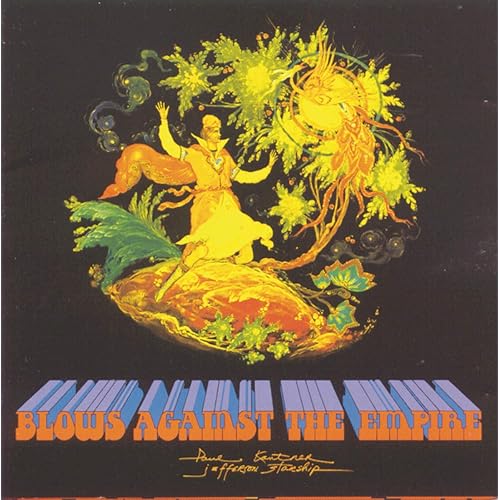
What is Perro Sessions? : The Planet Earth Rock and Roll Orchestra is a nickname given to artists who recorded together in the early 1970s. They were predominantly members of Jefferson Airplane, the Grateful Dead, Quicksilver Messenger Service, and Crosby, Stills and Nash. Their first album recorded together was “Blows Against the Empire”, when they were known as Jefferson Starship. The name changed to Planet Earth Rock and Roll Orchestra for the next album, David Crosby’s If I Could Only Remember My Name.

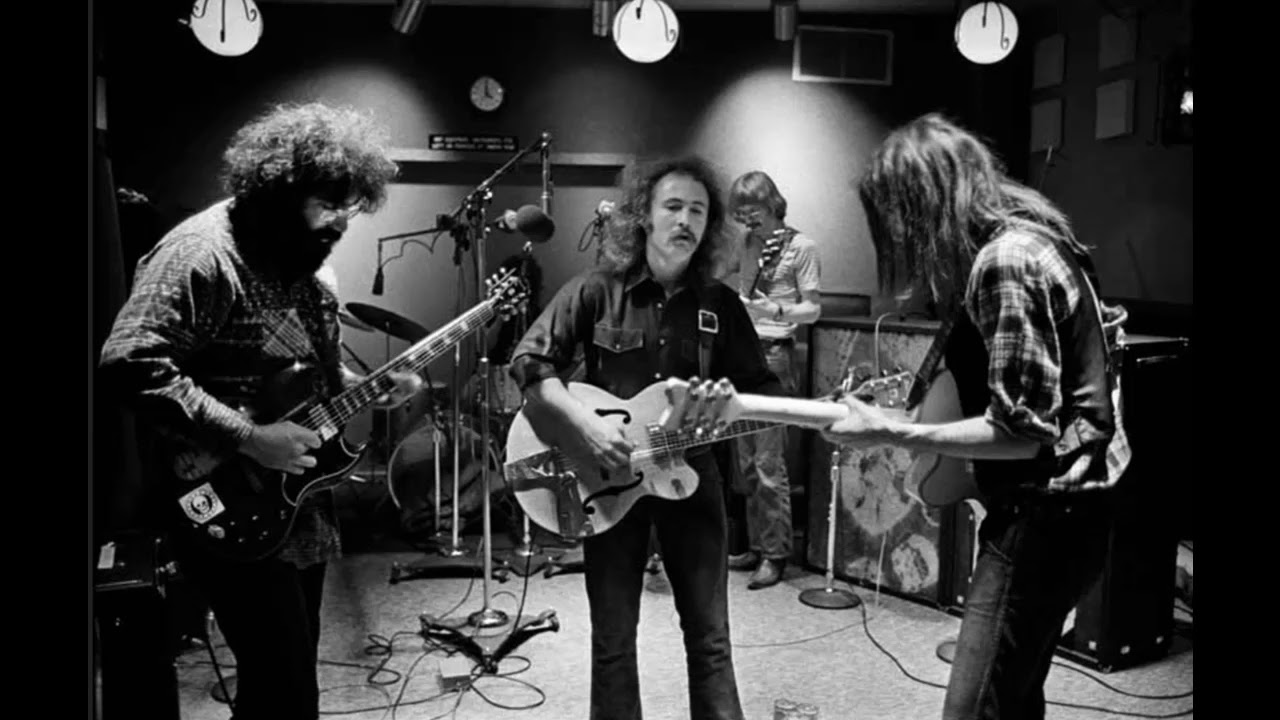
During the sessions for Crosby’s album at Wally Heider Studios, the musicians of each band were invited to the sessions and rehearsed hours of material, and everything was recorded. Material played during these recorded sessions in 1971 was used for Crosby’s album (the “Perro Chorus” is credited on the song, “What Are Their Names”) and several other solo albums after Crosby’s . The name Jefferson Starship was later used for Paul Kantner and Grace Slick’s new band formed in 1974. Paul Kantner recorded a solo album in 1983 as a tribute to this time, Planet Earth Rock and Roll Orchestra.

The material on the Perro tapes was very interesting, but had nothing to do with CSNY. There were 4 reels of 2 track mixes made in 1971 during the sessions (obviously there is more that has never been mixed). The tapes were put into storage in Nash’s vault. Paul called Nash in 1992 and requested DATs of those tapes. This was the first time they had been outside of the CSNY organization. They were copied at A&M Post Production audio and my personal DAT was made at that time. The roots of Perro go back a lot further than 1971. 1 guess it had its inception in the early years of the ’60s (prior to the Airplane, the Byrds et al) when Kantner, Crosby and Freiberg used to hang out, play music, get high and rap together around Venice Beach. That was the initial bond, the start of it all.

The “PERRO Chorus” is credited on Crosby’s song, “What Are Their Names” and several other solo albums after Crosby’s. The name Jefferson Starship was later used for Paul Kantner and Grace Slick’s new band formed in 1974. Paul Kantner recorded a solo album in 1983 as a tribute to this time, Planet Earth Rock and Roll Orchestra.

Later, when they were in bands of their own, there were occasional points of interaction – like Garcia sitting in on the ‘Surrealistic Pillow’ sessions, like Crosby giving “Triad” to the Airplane when he couldn’t get the Byrds to record it, like Kantner, Crosby and Stills writing “Wooden Ships”.

Then, as the ’60s drew to a close, two sets of circumstances combined to bring the Planet Earth Rock And Roll Dream a whole lot nearer. One was the opening of Wally Heider’s studio in San Francisco – because now the local SF musicians (Airplane, Quicksilver, Dead) had a place on their doorstep where they could record. This gave item freedom from the corporate studios to record and produce as they saw fit, to come and go more as they pleased and to invite the musical neighbourhood in if they chose. (It hadn’t been so easy when they were holed up at RCA’s or Warner’s studios in Hollywood.) The other catalyst was the state of flux that a lot of bands were falling into by 1969/1970, for Crosby had left the Byrds, the Airplane was a less cohesive force with Dryden out and Hot Tuna splitting off, and Dino Valenti’s arrival had unsettled QMS.

Things had come pretty much full circle by the end of the decade. Kantner was again hanging out with Crosby (quite often on the latter’s yacht) and with David Freiberg – and, when Paul came to assemble musicians to record ‘Blows Against The Empire’, it wasn’t just to his Airplane cohorts that he turned but also to Crosby and Garcia and even Graham Nash – who’d just bought a house in Frisco and ended up producing the whole second side of the ‘Blows…’ album at Heider’s studio. ‘Blows…” was the first album by that collection of musicians whom Paul liked to term the Planet Earth Rock And Roll Orchestra.

The fact that he billed the album as being by Jefferson Starship shouldn’t mislead anyone. Kantner, Crosby, Slick, Freiberg, Nash, Garcia, Kaukonen, Lesh, Casady, Kreutzmann, Hart – these people were the Planet Earth Rock And Roll Orchestra, supporting each other on key projects.

Blows Against The Empire

As Grace recalls, “These sessions were like ‘Uh, do you wanna play guitar on this one?’ ‘No, man, I have to go to the bathroom.’ ‘Okay, David, you wanna play?’ ‘Sure’. Whoever felt like doing something did it. Parts interchanged, people interchanged.”

Graham Nash says “They asked me my opinion and I just jumped right in. Grace, Paul, David – they let me do whatever I heard. I was searching for this kind of environment when I came to America and when I was mixing in the studio our imaginations were running rampant. We were creating virtual kingdoms with music.”
The second such PERRO project was David Crosby’s debut solo album, ‘If I Could Only Remember My Name’, which features all of the above-mentioned Planet Earthers plus the likes of Joni Mitchell, Neil Young, Greg Rolie and Mike Shrieve from the band Santana.

They come from sessions at Wally Heider’s San Francisco studios in 1971. Crosby had sailed his boat up to Sausalito harbour. Nash was resident in the Haight. Kantner and Slick had moved out to Bolinas and the Dead were in Mill Valley but they would all head for Wally’s of an evening to work on PERRO songs. Some of these things ended up on Crosby’s solo, a couple on Garcia’s solo, one on Grace’s album, one on Paul’s 1983 ‘Planet Earth...’ album – and some have never seen the light of day, in which case we’ve had to guess at what they might be title.

“Walkin’ In The Mountains” (1′ 47n): A Crosby composition featuring typically attractive chordings, but little in the way of finished lyrics. “All the words we got so far are just ideas of places we’d like to go,- he tells Garcia at the start of this…

> “I went walkin’ out last summer> Tryin’ to find a breath of air.> I went walkin’ in the mountains> A friend had told me I’d find you there”

comprises just about all the words he has, but the feel is so airy and open you can almost smell that mountain air. The sequence makes a surprise reappearance later in the tape, as an intro to version four of ‘The Mountain Song’.

Barncard: Two of the versions are actually the same performance, the second remixed a little better.

Is It Really Monday?” (4′ 55″): Crosby again, and this one begins with his acoustic guitar and the composer scat-singing the abstruse melody. When the lyrics arrive, he asks:

> “Is it really Monday? > I must have been here before. > Is it really Monday? > I think the walls begin to speak.”

The tempo is very slow, in a country blues vein and Garcia adds some restrained picking. The lugubrious bass sounds like that of Phil Lesh.

“Under Anesthesia” (5′ 14″): The timing includes a false start of about 45 seconds, after which Crosby calls a halt and announces ‘No, that’s not it. Started too slow, it’s outta time and I didn’t get the right words!” When he does, it’s another hugely impressive song, the lyrical angle of which is to bemoan the inertia of the common man – who is portrayed as stupefied by beer and TV. At the conclusion, Crosby launches into a brief sequence on guitar and comments ‘I thought I’d try something original…if I write another song in E Minor, man, I’m gonna get fired!’

*This song is actually called “You Sit There”

“Loser” (8′ 41″): The timing includes several restarts and Jerry explaining – and indeed demonstrating – the chord progression to his colleagues, who could well be Crosby, Lesh and Papa John*. There’s certainly a violin in here and it works especially well, counterpointing the three guitars most effectively. *Papa John never hung out in PERRO sessions. Possibily David Freiberg on viola.

It’s obviously an early run through the song as Jerry doesn’t have much more than the first verse written. The second crack has more audible vocals, but Garcia still resorts to “da da das” from the second verse on. The bridge is there, at least intact musically, even if the only line Jerry seems sure about is the closing “Don’t let that deal go down” The genesis of a great song.

If I Could Only Remember My Name

“Over Jordan” (3′ 30″): Another Crosby song, replete with a beautiful structure, but short on completed lyrics. It begins with David’s rippling acoustic guitar which is soon joined by that of Garcia for some impressive picking.

> “I’m only going over Jordan, > Just a-goin” to my home”

sings Crosby, but after a couple of minutes he declares that he’s forgotten the changes, so restarts the performance at the bridge. This is a delightful half-song which the composer should really have completed and recorded at some stage. *Also called “Wayfaring Stranger”

“The Mountain Song – 1″ (5′ 11″): This is the first of several attempts at what would eventually become a slice of classic Airmachine. However, at this stage, the only fragment of the song they had to work with was the line “Gonna make the mountains be my home” and the chord-sequence that supported it, so it’s quite amazing that from such a meager base Kantner, Slick, Crosby and Garcia (possibly with Casady and Hart) are able to conjure 23 minutes of undulating beauty. There’s a banjo featured prominently, plus two acoustic guitars and Grace’s distinctive piano. The banjo is Paul K.& the touches are so accomplished, it’s Kantner on the five- string with Garcia and Crosby on guitars. Surprisingly, there’s no trace of Paul’s vocal – though the other three take care of that handsomely enough.

Early on, it’s Jerry singing the line in orthodox fashion, while Grace embellishes with some improvised lyrics around the theme. Then Crosby takes Grace’s place and scats around Jerry’s vocal for a while. As you’d expect, the playing is loose and slightly tentative on this first version, but no less affecting for all that.

“The Mountain Song – 2″ (5′ 17″): Grace is back providing an improvised descant to Jerry’s straight vocal at the start here, and she’s singing about the sky and the river as he eulogizes the mountains. After a minute or so, Crosby introduces his scat and Grace leaves the chorus to concentrate on her keyboards. Her vocal chords are re-engaged towards the close.

“The Mountain Song – 3″ (3′ 44″): This version begins with Jerry and David singing the line and Grace gliding around them. Briefly, Crosby supersedes her in this role but soon the two of them are improvising around the structure as Jerry perseveres in the middle. At the end of this effort, Paul is heard to remark “It sounds like everybody’s going in and out of time” to which Crosby responds “No, no, no, it’s all working – and it works perfectly.” The listener is strongly inclined to agree with him.

“The Mountain Song – 4″ (8′ 20″): As you’ll see, this is the longest version and undoubtedly the most satisfying of the four. This is where Crosby’s embryonic “Walkin’ In The Mountains” suddenly reemerges and he goes through the verse and various chord sequences as an introduction to “The Mountain Song,” to which it bridges seamlessly and beautifully. It’s a remarkable segue which makes the listener keenly aware of how the song could have developed in a very different direction had Crosby stayed to contribute throughout its evolution. Speculation aside, what we do have is a return to the familiar pattern of banjo, guitars, bass, piano and percussion. Crosby reverts to his scatted counterpoint before it slips into a stunning instrumental section. Herein, the music weaves a genuinely hypnotic spell as it rolls effortlessly along the bed of Paul’s banjo and Grace’s piano, with Garcia picking exquisitely. After several minutes of this, the vocal pattern is re-introduced, now in a more restrained vein against instrumentation which has become subdued, with Grace and the Crosby gently dancing around Jerry to the finale of a wonderful excursion.

A definite high point on this portion of the tape Mountains v. 4 reaches its apex (a phenomenal passage in it’s own right), when the band led by Jerry starts coaxing out a proto version of  Loser and a brief reprise of Deal including a pause to recapitulate the chords.  Then there is a cold cut in the tape and Jerry plainly recounts the chord progression: C-Em-Am-G-Am.  At which point they go into Deal proper.

“Wild Turkey” (4′ 20″)(AKA “Leather Winged Bat”): An interesting improvisation with Jorma and Jack at the controls, this may or may not be an early styling of what became the dynamic duo’s “Bark” instrumental. It certainly starts off that way, with Kaukonen roaring out some aggressive electric noise and Casady on a familiar rumble. But soon it settles into something much gentler, employing a more reflective chord progression. Jorma’s playing rises and falls in a fairly relaxed manner – until the finale, when he stirs it back towards the “Turkey” structure with some more  combative lead guitar. It could well be that Jack and Jorma decided the split-mood approach didn’t work and restructured the number as the wholly aggressive strut we encountered on ‘Bark’. Whatever, it’s a nicely balanced piece and a pleasure to hear.

“Jorma & Jerry’s Jam – 1″ (14′ 22″): If the previous outing was a pleasure, this jam is a sensation! As readers will be aware, there’s little recorded evidence of Kaukonen and. Garcia essaying their remarkable skills together, so this is a rare chance to hear the fruits of one such collaboration. Backed up by the supple bass of Jack Casady plus solid percussion (Mickey Hart?), this is a quarter-hour of incisive and responsive musicianship – intuitively structured and beautifully realized. Jorma leads it off on electric guitar, his playing funky and rich in wah-wah, whilst Jerry complements it with a more subdued style. Casady is well mixed and excellent, but it’s Jorma’s sprawling mass of notes which take center stage in this section; hot, handy and winding all over the soundscape in unfettered rampage. Having played a disciplined supporting role for the first half of the jam – his accomplished touches providing the perfect foil to Jorma’s aggression – Jerry assumes control for the second phase. Initially calm after the Kaukonen storm, this movement gradually builds over several minutes into a fabulous jam, delightfully evolved and transfixing the listener as it develops. Jerry’s playing gets less lyrical, more earthy, until it is stylistically much closer to his partner’s earlier contribution. Naturally, Jorma then resumes the lead and steers the ensemble to a nicely judged conclusion. It would be perfectly reasonable to hail this example of superlative sparring as San Francisco jamming at its very finest.

“The Wall Song -1″ (6′ 00″): After a waggish intro from the composer, we’re into a captivating version of a Crosby song which appeared in 1972 on the LP ‘Graham Nash David Crosby.’ On that take, the duo were backed by Garcia, Lesh and Kreutzmann and there’s no reason to suppose that the same trio isn’t in support here. The real distinction between the released version and this is the absence of Nash – though this is more than ably compensated for by the double-tracking of Crosby’s wonderful voice, which provides an imaginative and memorable harmony. But there’s a bonus. Just when listeners familiar with the 1972 record expect the track to finish, there’s a lovely instrumental excursion with Garcia in winning form, shuffling percussion from Bill and a gentle ripple from Lesh. Really, this is so good it eclipses the official release by some distance – and should clearly have been included in the CS&N box of 1991.

“The Wall Song – 2″ (4′ 27″): Again, David is doubly tracked, but this time there’s only his own acoustic guitar in support, and the performance is generally a little lazier than before.

“Eep Hour” (4′ 44″): A very dissimilar reading from the one which appeared on ‘Garcia’ and which had keyboard and pedal steel dominating the sound. This is just the acoustic guitars and bass and has a very Spanish ambiance. Presuming that Jerry isn’t multi-tracked and playing everything himself – as he did on his album – we might take the other participants to be Lesh and either Kantner or Crosby. *Jack Casady plays bass on EEP HOUR

At the close, there’s a whoop of triumph from somebody and what sounds like Kantner’s voice saying ‘everybody just have a little break from their guitar strings!’

“Shuffle” (2′ 20″): Two guitars (one electric), bass and drums glide effortlessly down a four-chord structure for a couple of minutes. The drums shuffle effectively but nothing much happens and the piece sounds more like an intro to something more substantial than an entity in itself.

“Jorma & Jerry’s Jam – 2″ (14′ 29″): This has a slightly longer introduction than its earlier incarnation (i.e. it starts a few seconds before) but is otherwise identical to the first version.

These tapes are a fabulous find, showing as they do the formative stages of some classic songs and hinting at others, notably by Crosby, that could have been among the best things he never recorded.

Personal: David Crosby — guitars, vocals Laura Allan – autoharp, vocal Jack Casady – bass David Freiberg – vocal Jerry Garcia — guitars, pedal steel guitar, vocal Mickey Hart — drums Paul Kantner – vocal Jorma Kaukonen – guitar Bill Kreutzmann — drums, tambourine Phil Lesh — bass, vocal Joni Mitchell – vocals Graham Nash — guitar, vocals Gregg Rolie – piano Michael Shrieve – drums Grace Slick – vocal Neil Young — guitars, bass, vibraphone, congas, vocals