Eric Clapton’s 1991 live album “24 Nights” will be re-issued in June as “The Definitive 24 Nights”, with two massively expanded super deluxe box sets. Eric Clapton’s ground-breaking run of 24 concerts at London’s Royal Albert Hall were some of the most ambitious shows of his career. Each night featured him performing a career-spanning set with one of three line-ups – a rock band, a blues band, or an orchestra conducted by Michael Kamen.
The original double live album and home video delivered great performances but only covered a fraction of what was filmed and recorded. That’s about to change.”
Eric Clapton’s “24 Nights”, which originally appeared in 1991, culled from 15 superlative performances from a series of concerts that year and in 1990 at London’s famed Royal Albert Hall, where he has appeared more than 200 times. The set clocked in at well over an hour and a half and filled two CDs, but that’s nothing compared with the new limited-edition “The Definitive 24 Nights”. This six-CD (or eight-LP), three Blu-ray box set, released June 23rd, 2023, adds nearly three dozen previously unreleased songs for a total of 48 remastered audio tracks, plus there is video of all the material. It comes with a numbered lithograph and a 48-page, LP-sized hardcover book with abundant photos and extensive liner notes by journalist David Fricke.
All audio has been restored, remixed and remastered and the three types of concert have been effectively formatted intothreedouble albums which all fit on two CDs or three vinyl records (the exception is the Blues concert which fits on 2LPs). The two super deluxe edition box sets bring all of these together, which is why the CD version has six CDsand the vinyl edition has eight LPs.
Both box sets include three blu-rays (unavailable anywhere else), details of which are scant but which clearly will be devoted to the three types of show. A limited theatrical presentation called “Across 24 Nights” is planned for May which features a Dolby Atmos soundtrack, so that suggests the blu-rays included in the box set should also feature a Dolby Atmos soundtrack (not confirmed). “Clapton has performed at the Albert Hall] over 200 times , more than any other artist,” Warner Records said in a statement. “He also holds the record for the longest run of concerts at the venue. He set it in 1990 with 18 shows, then broke it the following year with 24 concerts. These were some of the most ambitious shows of Clapton’s career.
The biggest highlight from the orchestral concert – and possibly the entire boxed set – is the previously unreleased 30-minute epic, ‘Concerto for Guitar.’ Kamen composed the piece especially for Clapton, which made its live debut at Albert Hall.”
Clapton surrounded himself with superlative musicians for these concerts. The roster includes the likes of Johnnie Johnson, Jimmie Vaughan, Chuck Leavell, Phil Collins, Robert Cray, Buddy Guy, Albert Collins, Nathan East, Greg Phillinganes, Steve Ferrone, Ray Cooper and Jerry Portnoy.
Each box set also includes a hardcover book and an individually numbered lithograph featuring a photograph of Clapton by Carl Studna.
The three concerts (Rock, Blues and Orchestral) are also available individually as 2CD+DVD sets or 3LP (Rock, Orchestral) or 2LP (Blues) vinyl sets. The 18-track rock set culls material from throughout Clapton’s career, including his solo work “Wonderful Tonight,” Bob Marley’s “I Shot the Sheriff” as well as his days with John Mayall’s Bluesbreakers“All Your Love”, Cream “White Room,” “Sunshine of Your Love”, Blind Faith Steve Winwood’s “Can’t Find My Way Home” and Derek and the Dominos “Layla”.
The 14-track blues set also draws on the Derek and the Dominos repertoire for Big Bill Broonzy’s “Key to the Highway” and Billy Myles’ “Have You Ever Loved a Woman” and additionally offers such classics as Lowell Fulson’s “Reconsider Baby,” Robert Johnson’s “Sweet Home Chicago,” Lightnin’ Hopkins’ “Black Cat Bone,” Big Maceo Merriweather’s “Worried Life Blues” and “You Better Watch Yourself” and “Everything’s Gonna Be Alright,” both by Walter Jacobs (aka Little Walter).
The 15-song third program finds Clapton’s band backed by the National Philharmonic Orchestra, conducted by the famed late composer Michael Kamen. It includes different versions of some of the songs on the first two sets and a few other numbers. Among them: the spectacular, previously unreleased half-hour “Concerto for Guitar,” which Kamen wrote for Clapton. That concerto is just one of many tracks in this collection where Clapton’s guitar work is nothing short of awe-inspiring. The sounds he draws from his instrument are on par with what Jimi Hendrix produced—in other words, incredible enough to make you understand what prompted graffiti purveyors to spray-paint “Clapton is God” on walls around London and New York in the sixties.
The “Definitive 24 Nights” and the individual “24 Nights” sets will be released on 23rd June 2023 via Warner Music.
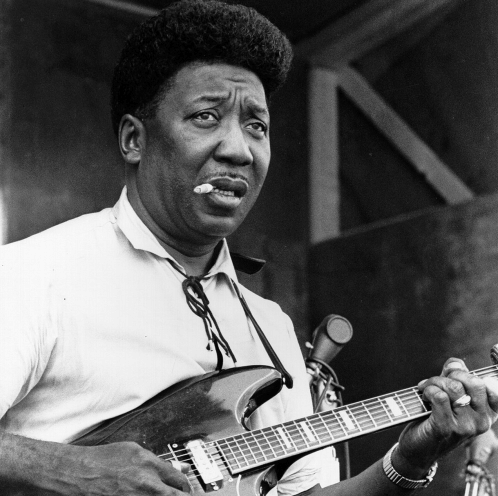
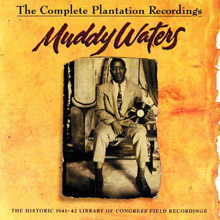
Muddy Waters was arguably the greatest and most famous bluesmen who migrated from Mississippi north to Chicago bent on a making a name for himself. It was a long, hard road out of the Mississippi Delta and almost unimaginable for Waters to go from picking cotton on Stovall’s Plantation in Mississippi to the Library of Congress recordings made by Alan Lomax of Waters on the farm in 1941. But from there he went on to the pinnacle of success in Chicago as the premier post-War blues master. Muddy Waters transcended all obstacles in reaching his goal, becoming the reigning Chess king in Chicago for nearly 25 years.
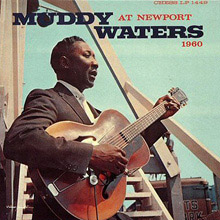
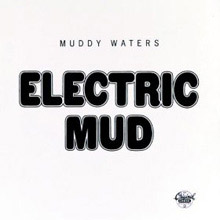
After moving to Chicago in 1943 and making a few sides for Columbia Records, Waters first recorded for the Chess brothers’ Aristocrat label in 1947, and by 1953 had hit his stride with one of the great Blues songwriters, Willie Dixon, providing the hits, and his seminal band with Little Walter Jacobs on harmonica, Jimmy Rogers on guitar, Elgin Evans on drums and Otis Spann on piano providing the groove. In 1960, Waters recorded the Blues classic “Muddy Waters at Newport,” “Folk Singer,” in 1964, the dreaded “Electric Mud,” in 1968, and the all-star “Fathers and Sons,” set in 1969. Waters reigned until Chess closed shop in the 1970s but got a second life with Johnny Winter later in the decade with four Blue Sky albums produced by the Beaumont Blaster. Grammy Award winners were “Hard Again,” (1977), and “I’m Ready,” (1978) and “King Bee,” (1981), all studio albums, and the acclaimed live set “Muddy “Mississippi” Waters.” which was released in 1979. The Rolling Stones came under his sway, recording many of his songs, and Rolling Stone magazine paid homage to both the Stones and Waters in the title of its publication. Waters was the template, setting the table for other Windy City Bluesmen that came in his wake such as Buddy Guy. He was the Hoochie Coochie Man – one of the greatest of the post-war Blues masters.
Muddy Waters was bandleader, songwriter, guitarist, singer, song interpreter and the prime mover of the Chicago electric Blues scene, Muddy from the Mississippi Delta, like almost all the great electric bluesman of the post-war era. He was also a good man, who helped many younger or struggling musicians as they later bore witness. But whatever else he was, he will forever be the once and future King of the Chicago Blues. “No I ain’t no millionaire, but I had a lot of managers that became millionaires.” Muddy Waters got his nickname from his grandmother, because he was always playing in a nearby creek as a child. It is a name that resonates way beyond the confines of the Blues. As the man who claimed that “The Blues had a baby and they named it rock ‘n’ roll,” he certainly had a point and his reputation among young white boy wannabe blues musicians was second to none. It was from a track on his 1958 album, from whicha young British band took their name in 1962… and they went on to become, “The Greatest Rock and Roll Band in the World”.
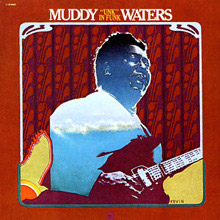
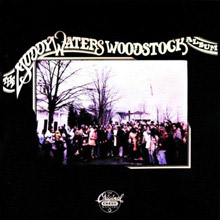
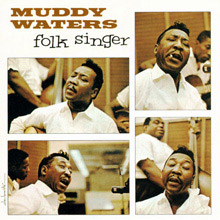
Muddy Waters Folk Singer shows the depth of Muddy’s talent, his understanding of the Blues and his brilliance in playing them in whatever form he wanted. It is fair to say that without the album Muddy Waters Live at Newport 1960, no self-respecting white Blues band would dare not play at least half the numbers Muddy performed. The success of rock bands helped many a Bluesman’s career, both in the USA and as international acts; Muddy was no exception and in fact his recording career benefitted more than most. Albums including The Muddy Waters Woodstock Album and Unk in Funk offer a real insight into the thirty year recording career of the real legends of the Blues.
When he was about three years old McKinley Morganfield’s Mother died so he was sent to the Stovall farm to stay with his grandmother. After he grew up he began working on the plantation, while at the same time teaching himself the harmonica and later the guitar. He began playing in juke joints, at parties and dances in and around the Clarksdale area from about 1935 onwards.
When in the mid summer 1941 Alan Lomax recorded Muddy at Stovall’s for the Library of Congress; Muddy sang “Country Blues” and “Burr Clover Country Blues”. According to Howard Stovall whose family still own the farm. “He was the burr clover man, which was a cover crop to put nitrogen back in the soil. It’s drudge work, you hand rake it up and put it in bags and then spread the burrs around to improve next year’s crop. I had the honour of that job one summer, apparently Muddy felt about it the same way I did, only he was able to express it more eloquently.”
In 1943 Muddy moved north and like many before him, took the train to Chicago’s Illinois Central Station; initially finding work in a paper factory. Muddy began playing for tips on Maxwell Street soon after arriving in the city; Big Bill Broonzy helped the country boy break into the urban scene. He started working in clubs, playing with Eddie Boyd, as well as backing Sonny Boy Williamson No.1 at the Plantation Club. A switch from acoustic to electric guitar in 1944 galvanised Muddy’s career. He continued to play traditional Delta bottleneck, but the electric guitar transformed his sound and helped to “invent” post-war Chicago Blues. His 1946 recordings for Columbia with the doyen of Chicago Blues, Lester Melrose, went unreleased. It was not until the following year that Muddy would be heard playing on record, in the role of backing guitarist to Sunnyland Slim.
Waters and bass player Big Crawford recorded two other songs on the day he worked with Slim, but Leonard Chess was unimpressed and so they went unreleased. However, the following year Muddy and Crawford were back and cut ‘I Can’t Be Satisfied’ and ‘Feel Like Going Home’, which Leonard Chess released on the Checker label. The former was a reworking of ‘I Be’s Troubled’, a song Muddy recorded for Lomax in 1941 and often played live. ‘Feel Like Going Home’ was a reworking of Son House’s ‘Walking Blues’. Muddy had huge respect for House and this is another song Muddy must have sang many times before this recording. The record sold out in less than a day, going on to make No.11 on the R&B charts in September 1948; years later Muddy recalled that he even had trouble buying a copy. Chess was anxious not to upset a winning formula and despite the fact that Muddy had his own band he continued to record Muddy as a duo or with Leroy Foster on guitar.
By the late 1940s his band included Leroy Foster on guitar or drums, Big Crawford on bass, Jimmy Rogers on guitar and harmonica and not long afterwards Little Walter Jacobs was added as the featured harmonica player. Muddy was only in his early 30s but he became the patriarch of the Chicago blues scene. With the pick of the city’s musicians in the 1950s, it was more a question of who didn’t play in Muddy Waters Band than who did. The Muddy Waters Blues Band was recording as an entity by 1951, the epitome of the hard-edged, driving electric Blues band of Chicago, a cornerstone of what we call rock music today.
In 1951 ‘Louisiana Blues’ became the second in his run of sixteen chart hits, which included classics like, ‘I’m Your Hoochie Coochie Man’, ‘Just Make Love to Me’, ‘Mannish Boy’ and ‘Forty Days and Nights’. The man born in Rolling Fork, Mississippi also cut ‘Rollin’ and Tumblin”, ‘Rollin’ Stone’ and ‘They Call Me Muddy Waters’, in which he sings “I’m the most bluest man in this whole Chicago town”… few would disagree. Any and every one of these recordings captures the very essence of 1950s Chicago Blues.
In 1959 Muddy released Muddy Sings Big Bill, a tribute album to his former mentor who had died a year earlier. Muddy considered Big Bill to be “the Daddy of the Country Blues singers”, so when he first moved to the city it must have been amazing for the younger man to find such a star taking an interest in him. It also shows the similarity in style between the two singers. On the album Muddy is accompanied by his band of the moment, James Cotton on harp, Pat Hare on guitar and the brilliant Otis Spann on piano they perform ‘Just a Dream’, a perfect testimony to both men, while Muddy makes the song his own, Big Bill comes shining through.
‘I Feel So Good’ from the album exemplifies Muddy’s approach, brilliant interpretation and vocal delivery that is underpinned by tight ensemble playing. Otis Spann on piano, James Cotton’s harmonica and Pat Hare’s guitar are nothing but perfect. The following year at the Newport Festival Muddy performed the song, predominantly to a white audience, and it was captured for his album Muddy Waters at Newport; one of the great live albums and a favourite of many blues’ fans. As the band powers through the song the crowd can be heard responding to their brilliance with spontaneous shouts. Not that this one song was any different from many that Muddy performed, he affected everything he did with style and class.
Throughout the 1950s and early 1960s Muddy’s band was the city’s premier recording outfit, a veritable academy of the Blues. Among those who played with Muddy were guitarists Jimmy Rogers, Luther Tucker, and Earl Hooker; harmonica players Junior Wells, Big Walter Horton and James Cotton, Willie Dixon on bass; pianists Memphis Slim, Otis Spann, and Pinetop Perkins along with drummer Fred Below. Another was Buddy Guy who played on Muddy’s essential 1964 album, Muddy Waters “Folk Singer”. He was another musician who had a lot to thank Muddy for…
“My mother had a stroke and I left Baton Rouge, Louisiana September 25th 1957 and I went to Chicago. I actually was looking for just a regular job to help my mum, but I ran into a bad situation. I couldn’t get work, nobody would hire me. I played on the street first, one day this man grabbed me by the hand and walked me in this club. It was Otis playing, the guy told Otis to call me up and I played ‘Things I Used to Do’, and someone called Muddy on the phone. I was pretty hungry ‘cos it was the third day without food. Muddy came in and just smacked me and said wait a minute, I heard about you, they done call me and got me out the bed. He said you hungry, I said you Muddy Waters, I’m not hungry, I’m full, I met you.”
Muddy like many of his contemporaries toured Britain in the 1960s as part of the American Folk Blues Festivals; his reception was better than when he had previously visited Britain at the invitation of Chris Barber in 1958, the jazz trombonist. Many people in the jazz fraternity, who were the keepers of the blues flame in 50s Britain decided it was a travesty for Muddy to play with amplification. Somehow these blues zealots decided that the only pure blues was acoustic thank goodness ideas changed. In May 1964 Otis Spann cut a single at Decca studios in London with producer Mike Vernon. On ‘Pretty Girls Everywhere’ and ‘Stirs Me Up’ Otis was accompanied by Muddy Waters on rhythm guitar and Eric Clapton on lead. Some years later Eric recalled “they were both very friendly, and they had beautiful shiny silk suits, with big trousers!”
As the Blues languished somewhat in the late 60s, then so did Muddy’s career. In the 1970s he toured constantly and by 1977 he had signed with CBS Records. Collaborating with Johnny Winter, Muddy’s career took an upturn with the release of the album Hard Again in 1977, winning him a Grammy. A second album, I’m Ready, was followed by a tour of the U.S. including a performance at the White House for President Jimmy Carter.
Muddy worked live with Johnny Winter in the early 80s before succumbing to a heart attack in his sleep aged sixty-eight in 1983. Muddy’s influence as well as the respect that he commanded among the Rock community was acknowledged when he was inducted into the Rock & Roll Hall of Fame in 1987.
American blues musician Buddy Guy is an exponent of Chicago blues and influenced many prominent guitarists, including Jimi Hendrix, Jimmy Page (Led Zeppelin), Eric Clapton, and John Mayer. His 1998 album Heavy Love is another one of his fine blues-rock records. Besides two songs of his own material, he’s covering classics from Willie Dixon (“I Just Want to Make Love to You”). Tony Joe White (“Did Somebody Make a Fool Out of You”), ZZ Top (“I need you tonight”), and many more.
It is more heavy compared to many of his other recordings, but he still finds his way back to the blues. Buddy Guy subscribes to the theory “If you can’t beat ’em, join ’em.” Losing commercial ground to the new blues blonde young guns of Johnny Lang and Kenny Wayne Shepherd he hired their producer, and set out to record an album of loud, frenzied blues-rock. Purists will cringe at the unabashed commercial concessions on Heavy Love sure, he covers “Midnight Train,” but it’s a duet with Johnny Lang and it complements the funkified “I Just Wanna Make Love to You,” the psychedelicized licks, Nevertheless, It works well when compared to the modern electric blues of the post Stevie Ray Vaughan era, especially since Guy once again contributes some scorching solos. Granted, his playing may veer too close to rock for some tastes, but anyone wanting an uninhibited, hard rocking Buddy Guy record won’t be disappointed with Heavy Love.
Heavy Love is available on vinyl for the first time. American blues musician Buddy Guy is an exponent of Chicago blues and influenced many prominent guitarists. His 1998 album Heavy Love consist of two originals and covers of classics from Willie Dixon, Tony Joe White and ZZ Top. This title is available on vinyl for the first time.
First time on vinyl
1998 album feat. new songs and covers from Tony Joe White, Willie Dixon & ZZ Top
The evolution of the album art for Buddy Guy’s 1968 Chicago blues classic, A Man and the Blues.
One of the great living musical legends, blues guitarist and singer Buddy Guy has had a fundamental influence on modern music. Born in Louisiana, Guy relocated to Chicago in his early 20s, where he would collaborate with the likes of Muddy Waters, Howlin’ Wolf and Junior Wells. Bridging traditional blues with a modern, sometimes avant-garde style, Guy’s flashy stage presence and pioneering electric guitar techniques would make him a star in his own right, and by the late ’60s, with the release of his second album, A Man and the Blues, Guy was influencing the likes of Eric Clapton, Jimi Hendrix, Jimmy Page, Keith Richards and Stevie Ray Vaughan. Throughout the ’70s, and ’80s, Guy spent much of his time on the road, performing in Europe as well as the US, and opening a Chicago nightclub, Buddy Guy’s Legends, in 1989. The ’90s and ’00s found Guy enjoying renewed success as a recording artist, earning several gold records and multiple GRAMMY® Awards. Guy was inducted into the Rock and Roll Hall of Fame in 2005, received the National Medal of the Arts in 2003 and was awarded with Kennedy Center Honors in 2012. Having released over 20 studio and live albums, Buddy Guy continues to record and tour, always delivering a masterful show, ever-evolving in his style and sound.
Buddy Guy’s legendary electric guitar licks and passionate vocals are on display in A Man and His Blues, with an adept backing band that includes the great Otis Spann on piano and a snappy sax trio. Featuring a handful of original tracks, a surprising and highly original rendition of “Mary Had a Little Lamb,” plus classics like “Money (That’s What I Want),” Guy’s influential second album bridges Chicago blues with R&B. This 50th anniversary reissue was also cut from the original analog master by Capitol Mastering’s Ron McMaster.
Buddy Guy will be touring in the U.S. throughout the summer in 2018, and will be a part of the Rock Legends Cruise VII in February 2019. Guy also recently appeared on David Letterman’s series My Next Guest Needs No Introduction, available now on Netflix.




 The Fat Angel Sings