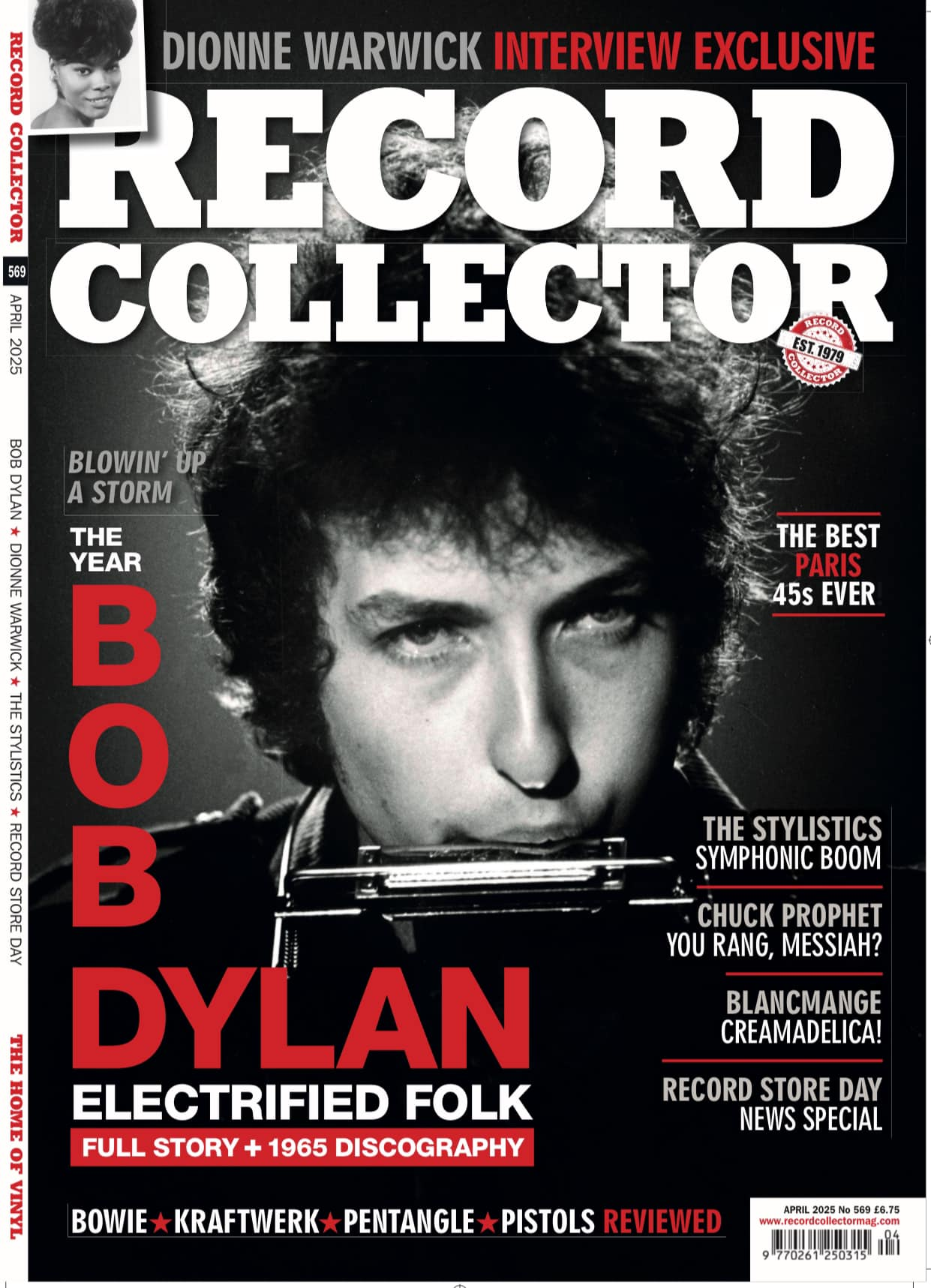
The latest issue of Record Collector homes in on Bob Dylan in 1965 and the music he made and the festivals he played that year that caused the teensiest bit of a fuss. Richie Unterberger examines Dylan’s seismic movements and output and detects early tremors circa 1963-4. Elsewhere, we talk to Dionne Warwick about some songs she recorded round about 1965 written by Bacharach & David – you may be familiar with them. We speak to the group behind the biggest selling UK album in the year before punk – that’ll be The Stylistics – and to Chuck Prophet and Blancmange. Separately, of course.
On March 17th, 1979 you could buy ‘Squeezing Out Sparks’, it is arguably both Graham Parker’s best album and one of the high points of the late seventies. Parker’s previous releases were not so well received commercially so Parker took his band the Rumour and his new work to a new label and producer, this was now a time of make or break. Recently Elvis Costello had just made commercial inroads with some of the same concepts he’d been exploring back on “Heat Treatment” and “Howlin’ Wind“, yet according to the revealing liner notes The Rumour was failing to catch fire on the new material until producer Jack Nitzsche told them to get serious and play the songs for what they were.
The result was an album of such brute force that Parker has yet to better it, and it became his breakthrough in the year of Elvis Costello’s Armed Forces and Joe Jackson’s Look Sharp! Fed by genuine anger and the energy of the ascending New Wave, the songs on ‘Squeezing Out Sparks’ burn everything from Hiroshima, “Discovering Japan” to the drug-infested bar scene and the wanna-be hipsters crawling through it, “Saturday Night Is Dead” to abortion in all its contradictory facets (“You Can’t Be Too Strong”) rumoured to be about a relationship with a Sydney radio DJette.
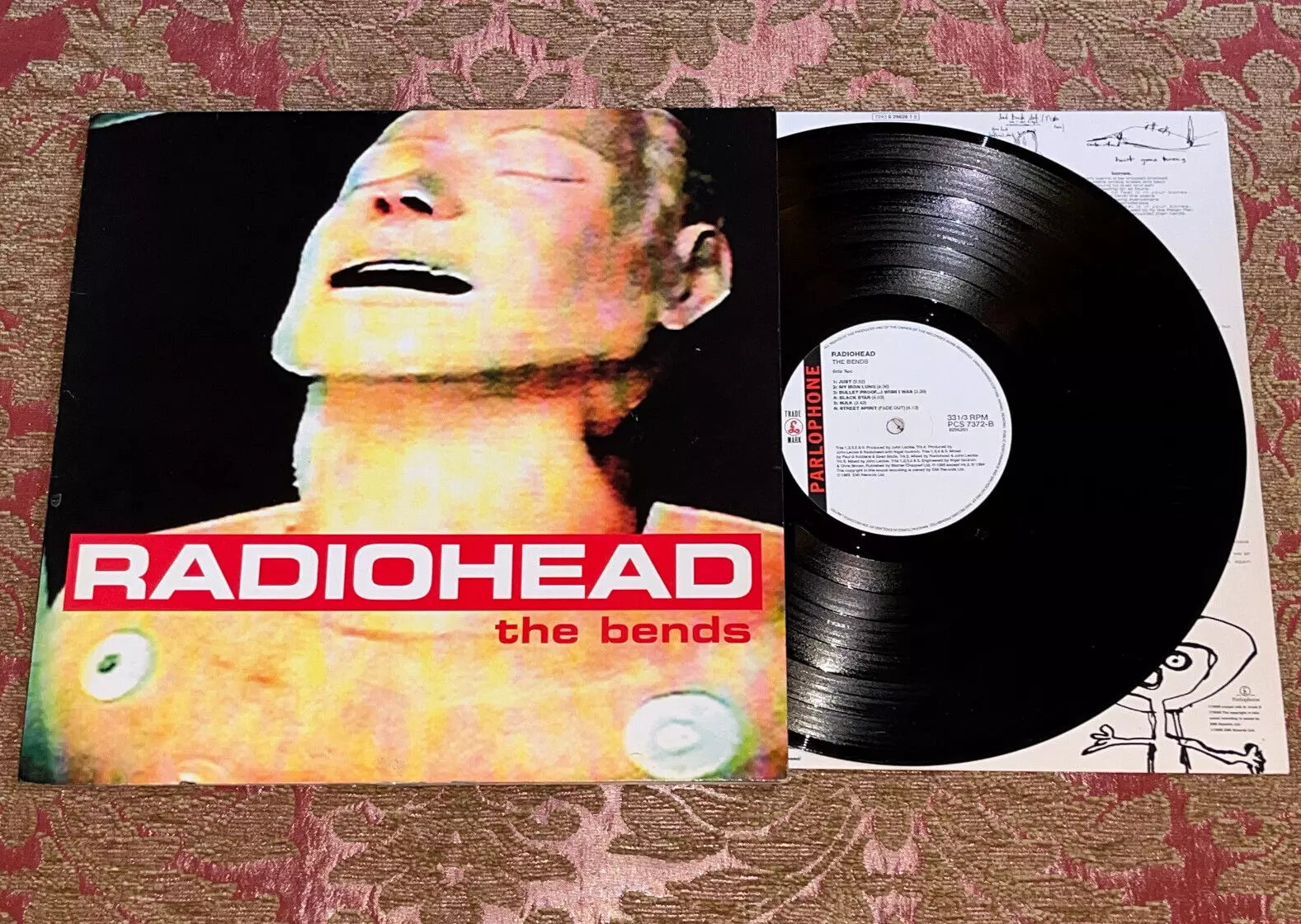
Having already demonstrated that Radiohead were capable of commercial success with the ’90s staple “Creep,” singer Thom Yorke steered the entire band in an entirely new direction. It all began with, of all things, him collaborating on the cover of this ground breaking LP with Stanley Donwood. But Yorke took it so far beyond the artwork, striding away from grunge into a considerably more experimental direction, from lyrics to introducing keyboards. Six charting singles sprang forth, with “My Iron Lung,”“Fake Plastic Trees” and the title track among them. This is yet another record on this list that demands to be listened to straight through not because every single song is so good but because it’s a total damn experience.
“The Bends” was different. The chem trails of grunge were still raining down on us. It sounds like a panic-addled diary typed out on a computer screen. It demands your attention and killed Radiohead’s early “Britpop” labels. It was everything for a middle schooler. “The Bends” still holds up after thirty years.
Radiohead was determined not to be just another Britpop or grunge group. “The Bends” was their first line of code to fill up an ominous blank screen after 1993’s “Pablo Honey” and the runaway “Creep” single that haunted them. Radiohead’s black mirror needed something colourful and brash to help them from falling into an endless abyss of narcissism and anxiety. “The Bends” filled that need.
This week marks the 30th anniversary of Radiohead’s sophomore-slump-dodger “The Bends”, which arrived March 13th, 1995. After three decades, the jury’s been in on “The Bends”. A hook-heavy album big enough to save the band from the cut-out bins of one-hit-wonderness, and arty enough to tee up its dystopian post-rock opus “OK Computer”, which followed in 1997, “The Bends” obliterated the band’s good-not-great 1993 debut “Pablo Honey” and its cursed hit “Creep.” And in the process, the album mastered the craft of angsty Britpop anthemia followers like Coldplay and Muse would use to fill stadiums for decades to come.
Suffice to say; “The Bends” has aged pretty well. The reviews it received upon its release, not so much. critic Kevin McKeough forecasted the future Rock Hall of Famers’ inevitable one-hit-wonder status, He chalked up his one-star review of “The Bends” to elements such as “Seattle wanna-be guitar parts,” calling the “clumsy, unpleasant guitar scorch” of “Bones” and the shimmering bad-trip psychedelia of “MyIron Lung” “particularly cringe-inducing.” Thom Yorke‘s ethereal vocals and woebegone melodies are tuneful enough but too self-absorbed to be catchy,”
Spin magazine’s Chuck Eddy was a little more redeeming, awarding “The Bends” a 5/10score with a review that put the album in league with contemporary sophomore efforts by the likes of Spin Doctors, Counting Crows and The Offspring, calling it “one of those follow-up albums [that] proves the band is afraid to be pigeonholed into the only style it’s very good at.”
Meanwhile, legendarily cantankerous Village Voice music critic Robert Christgau writing of Yorke’s lyrical angst and their accompanying three-guitar assault: “the words achieve precisely the same pitch of aesthetic necessity as the music, which is none at all.” None? At all? Has a take ever resonated so hot?
How did these scribes manage to miss the genius squalls of guitarist Johnny Greenwood generations then, now and in between found in alt-rock bangers like opener “Planet Telex” and “Just.” How could they be so cold to the visceral transcendence of ballads like “High and Dry” and “Fake Plastic Trees” — the album’s two biggest singles, and songs that took the melancholy loneliness and misfit despair of “Creep” to deeper levels? How was it not obvious to them that this band of Oxfordshire sonic architects were, this early on, well-studied and able enough to elevate their equally obvious college-rock influences like R.E.M., U2, The Smiths, Pixies and Pink Floyd with a devastating set of Britpop classics-on-arrival like “Bones,” “Black Star” and “Street Spirit (Fade Out)” — anthems that offered as much in the arena of head-haunting moods and melodies as they did spacious experimentation?
“Sulk”
“Sometimes you sulk / sometimes you burn / God rest your soul / When the loving comes and we’ve already gone / Just like your dad, you’ll never change.”
“Sulk” taps into Yorke’s early fascination with violent news headlines. The careening stadium rock song was inspired by a killing spree by a solitary shooter in Hungerford, England in 1987. As a teenager, I naturally glommed onto the defeatist lyrics above. They exalt the physical act of sulking into some type of odd narrative of a superhero battling themselves. Although this track is sitting in the basement of my personal ranking for “The Bends”, it epitomizes the internal wrestling between Britpop histrionics and post-rock composure that Radiohead embodied before diving headlong into studio experimentalism on future records. Trivia note: Yorke self-edited the concluding lyric “just shoot your gun” when “Sulk” was recorded in late 1994, since Kurt Cobain’s death was still casting a long shadow in the music world. He didn’t want anyone to mistake the lyrics as being about the late Nirvana leader. “Bones”
“I don’t want to be crippled and cracked / Shoulders, wrists, knees, and back / Ground to dust and ash / Crawling on all fours.”
Yorke has a lot of songs that highlight an almost unhealthy obsession with being incapacitated during this period in his life, as he inched closer to his thirties. Though he seems almost jovial in interviews these days after having children, “Bones” is the high watermark example of the old Thom. I listened to this song a lot when I was laid up last summer after breaking my left ankle ice skating. It’s a good song when you just feel deflated and want to connect with the raw energy of running away from our deepest fears: death and dismemberment. The lyrics always reminded me of Lot’s wife, when she turned into a pillar of salt after looking back at Sodom. That was always a stark image in my mind. Yorke might just be talking about the physical toll of touring, but he relays the sentiment at an almost Biblical scale.
“High and Dry”
“Drying up in conversation / You’ll be the one who cannot talk / All your insides fall to pieces / You just sit there wishing you could still make love.”
In a interview Yorke remembered his journey as a songwriter: “To begin with, writing songs was my way of dealing with shit. Early on it was all, ‘come inside my head and look at me.’ But that sort of thing doesn’t seem appropriate now. Tortured often seems the only way to do things early on, but that in itself becomes tired. By the time we were doing “Kid A” [their fourth album, released in 2000] I didn’t feel I was writing about myself at all. I was chopping up lines and pulling them out of a hat. They were emotional, but they weren’t anything to do with me.”
This song makes a good first impression solely from the vocal performance. “High and Dry,” which is a remix of an original demo from the “Pablo Honey”days, is often cheekily dedicated by Yorke to “older people, who don’t like loud music.” I’ve always been an old soul. “Bullet Proof…I Wish I Was”
“Wax me, mold me / Heat the pins and stab them in / You have turned me into this.”
Critics looking to psychoanalyze Thom Yorke’s depressive moods were initially attracted to this song’s tone of desperation like bugs to a porchlight. An acoustic version of “Bullet Proof” is an excellent companion piece to the “Fake Plastic Trees” single. It’s also beautiful, even without the guitar noise from Jonny Greenwood and Ed O’Brien. “Bullet Proof” resonated with me more during college after romantic heartbreaks, or times of yearning for romance. The gaping valleys surrounding the ellipsis in the middle of the track title in particular is tailormade for the text messaging age, when there are no words to communicate your knotted ball of feelings for the opposite sex. Periods become bullets in this track, and Radiohead knows how to drift within the spaces.
“Fake Plastic Trees”
“She looks like the real thing / She tastes like the real thing / My fake plastic love.”
You can get cheap and downplay the importance of “Fake Plastic Trees.” It’s a widely popular Radiohead song, after all. Sure, it may have been everywhere in the late ’90s and 2000s, a go-to school talent show staple for teenagers learning to play guitar. Remember when Thom Yorke had bleached blond hair? All of that doesn’t discount it being an incredible earworm that builds on itself like a musical Jacob’s Ladder. According to rock lore, Yorke went back to the studio after the band went to a Jeff Buckley concert and recorded the vocals in two takes. He then broke down and cried. “Fake Plastic Trees” casts a dirty light on the crass world of mass marketing and consumption. I’ve always loved the slow buildup as it grows from an acoustic dirge to a fully orchestrated menace.
“Black Star”
“Blame it on the black star / Blame it on the falling sky / Blame it on the satellite that beams me home.”
Jonny Greenwood’s influence becomes readily apparent on this track. R.E.M.’s Michael Stipe took ThomYorke under his wing when the band toured with Radiohead and Alanis Morisette and gave him a bit of advice about life in the public eye. The R.E.M. guitar jangle from Greenwood presages that early career connection between the bands, and is downright infectious. “The Bends” also saw the momentous entrance of Nigel Godrich’s influence, the band’s long time producer and de facto sixth member. He engineered “The Bends” and produced “Black Star.”
This is the beginning of a long time partnership that was only just starting up between the core group and Godrich. I’ve often inserted “Black Star” into my morning commute playlists—it had a hazy wake-up vibe, and I later discovered that Yorke joked that the song is about “getting back at 7 o’clock in the morning and gettin’ sexy.” I thought it was the most nihilistic song on the album.
“(Nice Dream)”
“I call up my friend, the good angel / But she’s out with her answerphone / She says that she’d love to come out but / The sea would electrocute us all.”
The swirling atmosphere for “(Nice Dream)” paves the way for Radiohead songs from the “Kid A” and Amnesiac” era. In a Matrix-like swap, the imaginary world turns into just a “nice dream” here, as the scales on the listeners’ eyes fall off. It smacks of the current online world, putting up a facade via TikTok or Instagram stories, when the reality is not nearly so rosy.
I found solitude in realizing that even when reality hits with an electric jolt, we can be strong enough to persevere, especially with family by our side.
“Just”
“Don’t get my sympathy / Hanging out the 15th floor / You’ve changed the locks three times / He still comes reeling through the door.”
Greenwood’s guitar playing is at its most intricate and commanding here, showing his love for the ever-ascending octatonic scale. Yorke challenged Greenwood in the studio to put as many chords into a song as possible, and this is the result. The music video for “Just” always fascinated me too, especially its cliffhanger ending where the camera zooms in on a middle-aged man’s mouth as he lies down in the middle of the road. What he ultimately says is up to the viewer, since the subtitles abruptly drop out.
“Planet Telex”
“You can force it but it will stay stung / You can crush it as dry as a bone / You can walk it home straight from school / You can kiss, you can break all the rules.”
This is one of my favourite opening tracks, It starts with the buzzing surge of the Roland Space Echo and reverb-heavy piano chords, and quickly veers into the shoegaze rock lane more than any other track on “The Bends”. It kickstarts the album so damn well. It’s a daydreaming song for sure, and helped define Radiohead’s purpose on the record and shake off early naysayers.
“The Bends”
“Where do we go from here? The planet is a gunboat in a sea of fear / And where are you?”
If you would have asked me to rank “The Bends” songs thirty years ago when I first listened to it, I would have easily put the title track at the top of my list. I was obsessed with its incredibly dark vibe, and thought a lot about hyperbaric chambers and saturation diving.
Saturation divers use a technique that allows them to reduce the risk of decompression sickness (“the bends”) when they work at great ocean depths for long periods of time. The concept still freaks me out, but there are people with claustrophilia who actually desire the confinement of small spaces. This song reminds me of all of that, and my latent anxiety about the bottom of the ocean. I still haven’t learned how to scuba dive. Maybe someday I’ll face my fears.
“Street Spirit (Fade Out)”
“This machine will, will not communicate / These thoughts and the strain I am under / be a world child, form a circle / before we all go under / and fade out again and fade out again.”
Yorke has often referred to the impact of Spotify on musicians and the industry as “the last desperate fart of a dying corpse.” When I first read that quote I laughed, as I occasionally do during Thom’s interviews. There’s an impishness to Yorke that I enjoy in live settings—and in his interactions with the press, there’s a side of him that I also see in myself. He delights in watching the establishment and industries we love straying away from old ideals and burning themselves down over and over, only to rise like the phoenix. “Street Spirit (Fade Out)” speaks to that intriguing conflict. Ed O’Brien’s arpeggiated guitar part uses an instrument created by the band’s guitar tech, Plank.
Yorke once called it the band’s “purest, saddest song.” It’s a spirit track for the downtrodden and brokenhearted, and it got me through multiple recessions and layoffs. “Street Spirit” was musically inspired by R.E.M. and Ben Okri’s 1991 novel The Famished Road. The book follows an abiku (“predestined to death”) spirit child living in an unnamed Nigerian city. This song always felt like that heavy weight of a straining culture above you, and the spirit fading out afterwards.
“My Iron Lung”
“We scratch our eternal itch / Our twentieth century bitch / and we are grateful for our iron lung.”
One of my all-time favourite stories from the making of “The Bends” centres on the sophomoric origins of the eerie album artwork. It’s actually just a grainy photograph taken from VHS footage of a CPR mannequin discovered at the University of Exeter. Radiohead were post-university twentysomethings at this point, fooling around while they created the artwork for the single “My Iron Lung.” A photograph of an actual iron lung wasn’t too appealing, so Stanley Donwood captured the now-iconic image by snapping a photo of a video playback with the CPR doll front and centre, looking toward the heavens.
Despite being lo-fi, it worked out—and Dorwood upped the ante with every Radiohead album cover after that.
“My Iron Lung” is the best song on the album for a variety of reasons, but for me it demarcates my transition into adulthood. I often turned it on to psych myself up before job interviews. It was Radiohead’s forceful reaction to 1993’s “Creep,” the young group’s hugely successful debut single off their debut LP, “Pablo Honey”. The cutting lyrics are self-referential and use an actual iron lung as a metaphor for the way “Creep” kept the band alive, but also crushed their true spirits as artists yearning for more adventurous sonic territories (“This is our new song / just like the last one / a total waste of time / my iron lung”).
This was a miniaturized detonation of an old song, whereas “Kid A”, years later, was an orchestrated dismantling of their discography thus far. The latter move opened a pathway to true reinvention every time they released something new. Radiohead will always be among the most cherished bands, “The Bends” was the beginning of that relationship.
Radiohead are:
Thom Yorke – lead vocals, guitars, piano; string arrangements
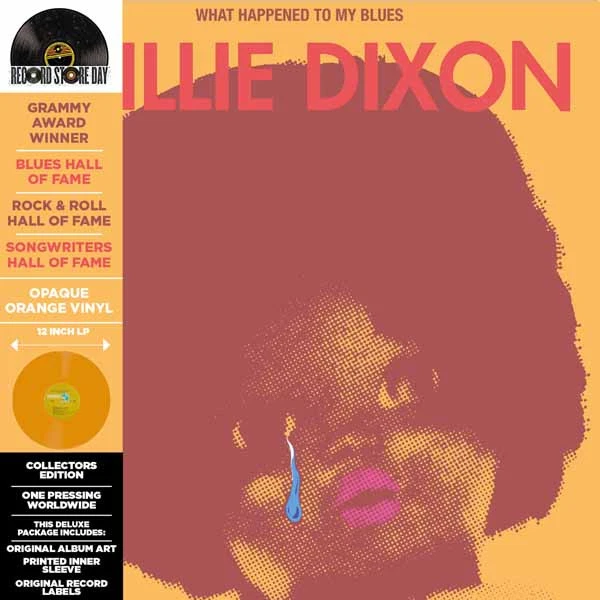
One of Willie Dixon’s finest albums as a leader, recorded after years of backing others at Chess Records. This raw, high-energy set was released on Chicago’s Ovation Records, allowing Dixon full creative freedom. Known for his bass mastery, Willie injects a deep funk groove into the blues, supported by Clifton James on tight drums, Buster Benton on guitar, Lafayette Leake on piano, and Carey Bell on harmonica.
The album pulses with gritty, electric energy on tracks like “Hold Me Baby,” “Shakin The Shack,” and “What Happened To My Blues,” showcasing Dixon’s undeniable influence and talent in shaping modern blues music.
Grammy Award Winner, Blues Hall of Fame, Rock n Roll Hall of Fame, Songwriters Hall of Fame – Next to Muddy Waters, Willie Dixon is recognized as the most influential person in shaping the post–World War II sound of the Chicago blues. “What Happened to My Blues” is known as Willie Dixon’s finest albums as a group leader. Vinyl package includes: OBI side strip, Cardboard jacket, printed inner sleeve and Bright Orange colour vinyl.
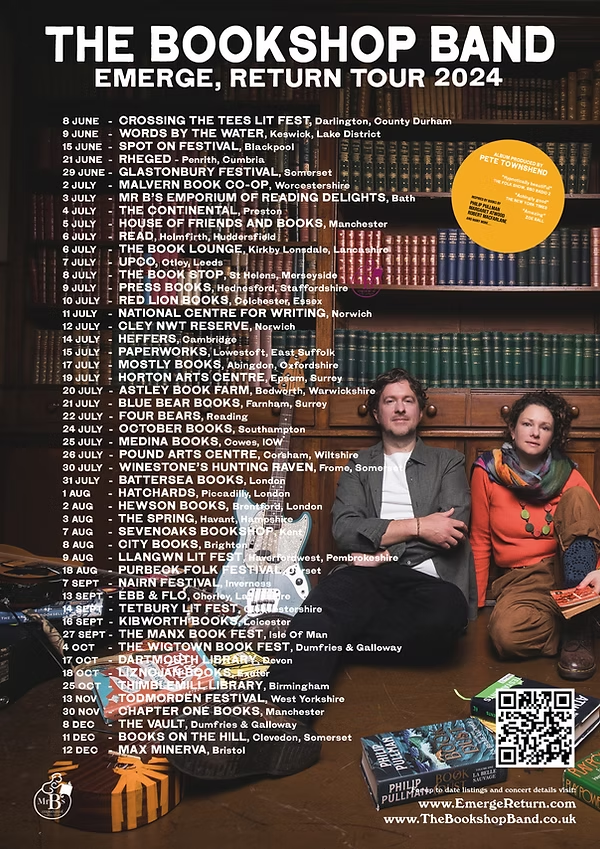
The Bookshop Band are the musical offspring of an artistic love-affair between a group of award winning folk songwriters, Beth Porter and Ben Please, and an independent bookshop in the UK, Mr B’s Emporium of Reading Delights. The songs are the musical outpouring of the band’s own response to books they have read, curated by the bookshop.
After hearing the band’s previous albums, Pete Townshend reached out and offered to produce their next record, and ended up playing on every track too. “EMERGE, RETURN” is the result of this and comes out on June 28th, 2024.
It features songs inspired by books by authors including Philip Pullman, Margaret Atwood, Shaun Bythell, Yann Martel, Carol Birch, Barney Norris, Robert Macfarlane, Charlotte and Emily Brontë, and Aldous Huxley. The cover art is by Stanley Donwood, and it was mixed by Nick Drake’s recording engineer, John Wood.
We are on a huge UK tour at the moment, kids in tow to promote our new album, so we thought it might be a nice moment to release this music video, of a song called “Why I Travel This Way“, inspired by The High Mountains Of Portugal, by Canadian author Yann Martel, who also features on the track, playing glockenspiel.
Filmed and edited by Ben Please, with help from all the fire crew at the glorious Eden Festival. Music by The Bookshop Band, ft. Pete Townshend. Music produced by Pete Townshend, engineered by Myles Clarke and Michael Nyondoro, mixed by John Wood.
LA psych band go Devo on the first single from their upcoming album “Trash Classic”.
The Los Angeles psych band Frankie & The Witch Fingers have announced a new album, “Trash Classic”, which will be out June 6th via Reverberation Appreciation Society / Greenway Records. They made it at LA’s Tiny Telephone Studio with producer Maryam Qudus (La Luz, Spacemoth).
First single “Economy” owes a lot to Devo/B-52’s both musically and thematically. The band say: “’Economy’ invades your brain like a late-night infomercial, ruthlessly selling the shiny nightmare of consumer paradise. Synthetic basslines pound like a debt collector that knows you’re home, while jagged guitars slice like overdue bills stamped in red. Urgent synth melodies buzz and ring like reminders to refill prescriptions you can’t afford. Everything throbs to a hammering blown-out beat, teetering on the edge of assembly-line-collapse. Cold electronically layered vocals chant over the frenzy: WORK. SPEND. REPEAT. Grotesque and irresistible, it’s all circling the drain.
Families sell their life-force for dinner while corporations rake in unimaginable profits from the very sickness they created. Sound familiar? By the time the electro-punk fuelled finale kicks into overdrive, it injects itself straight into your bloodstream, hijacking your senses and stripping everything down to its raw, naked truth. “Economy” distorts everyday despair into a mutant disco soundtrack—absurd, biting, and disturbingly fun.”
Frankie & The Witch Fingers will be in Austin this week for SXSW where they are playing a lot of shows,
Frankie and the Witch Fingers · Dylan Sizemore · Josh Menashe · Nikki Pickle · Nick Aguilar“Economy” will be released on Greenway 2025-03-11
Mannequin Pussy‘s music feels like a resilient and galvanizing shout that demands to be heard. Across four albums, the Philadelphia rock band that consists of Colins “Bear” Regisford (bass, vocals), KaleenReading (drums, percussion), Maxine Steen (guitar, synths), and Marisa Dabice (guitar, vocals) has made cathartic tunes about despairing times. “There’s just so much constantly going on that feels intentionally evil that trying to make something beautiful feels like a radical act,” says Dabice. “The ethos of this band has always been to bring people together.”
Their new album, “I Got Heaven”, which is out March 1st via Epitaph Records, is the band’s most fully realized recording yet. Over ten ambitious tracks which abruptly turn from searing punk to inviting alternative pop, the album is deeply concerned with desire, the power in being alone, and how to live in an unfeeling and unkind world. It’s a document of a band doubling down on their unshakable bond to make something furious, thrilling, and wholly alive. Following the 2019 release of their critically acclaimed third album “Patience”, Mannequin Pussy returned in 2021 for their EP “Perfect”. They toured that release relentlessly and added guitarist Maxine Steen to the band’s official lineup.
The band changed their entire creative formula, choosing to write together in the studio in Los Angeles with producer John Congleton, over slowly crafting tracks at home. “Everyone felt empowered to speak up about their own ideas to make this thing the best it could possibly be,” says Regisford.
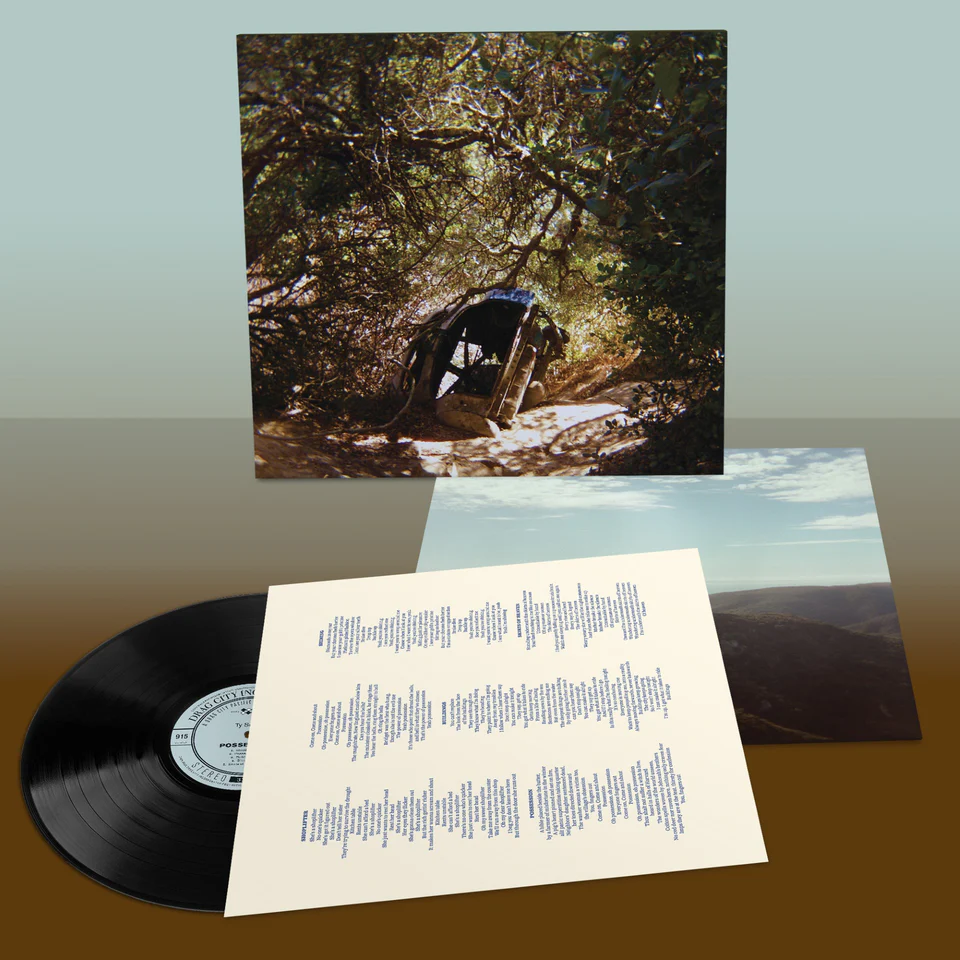
Ty Segall releases a lot of albums but his upcoming “Possession” could have much wider appeal.
The first single from the album is “Fantastic Tomb,” which shows off the ambition and tunefulness of “Possession”, not to mention Cronin’s sax arrangements. This is a real step up for Ty and you can listen below.
Ty Segall has announced a new album, “Possession“, which will be out May 30th via Drag City. This is his 16th solo album and Ty made it at his own Harmonizer studio, producing it himself. Mikal Cronin provided string and horn arrangements (he also plays sax), and lyrics were co-written with filmmaker and longtime associate Matt Yoka.
So for “Possession”, Ty’s 16th album, he strikes up the orchestra in his head with an abiding view of some quintessentially American stories, a quest channelled into ten non-stop bangers.
A year and a half removed from the trenchant identity opus of his “Three Bells” song cycle, Ty’s beamed himself out from deep within psychic interiors. Hitting the trail beneath the big skies of our good ol’ frontier empire, he’s on the hunt for new horizons—and it’s frankly astonishing to hear, at this mature point in his discography, the discovery of invigorated new sonics around every bend. That’s simply what Ty does with his music. Here, compulsive rhythm arrangements are joined in battle by sweeping movements of strings and horns that further the charge righteously.
One of the keys to this new music involved tapping an old friend and collaborator, filmmaker Matt Yoka, to write with him. As a non-musician, Matt’s language sense is different from the one Ty’s amassed as a player of music. With the trust they’ve developed over the years—brainstorming the visual worlds of “Goodbye Bread”, “Manipulator”, “Emotional Mugger”, and plenty more—they throw the conceptual ball back and forth to translate general vibes and feels into wicked lyric imagery, each acting as writer and editor in the process. Through these lyric sets, Ty found new scansion and different shapes suggesting the qualities of the songs, and of an overall arrangement sense. That’s where the other keys came in—piano keys! Ty’s been woodshedding on the 88s, the 76s and/or the 61s; they add new outlines and shadings to the music, fortifying his fantastic plastic vision left and right. Rife with singing guitar leads and Wizzardian brass n’ reeds lustily riffin’ on the banks of Ty’s harmony vocal choir,
“Fantastic Tomb” is from the Ty Segall album “Possession“, out on LP/CD/CS from Drag City on May 30th, 2025.
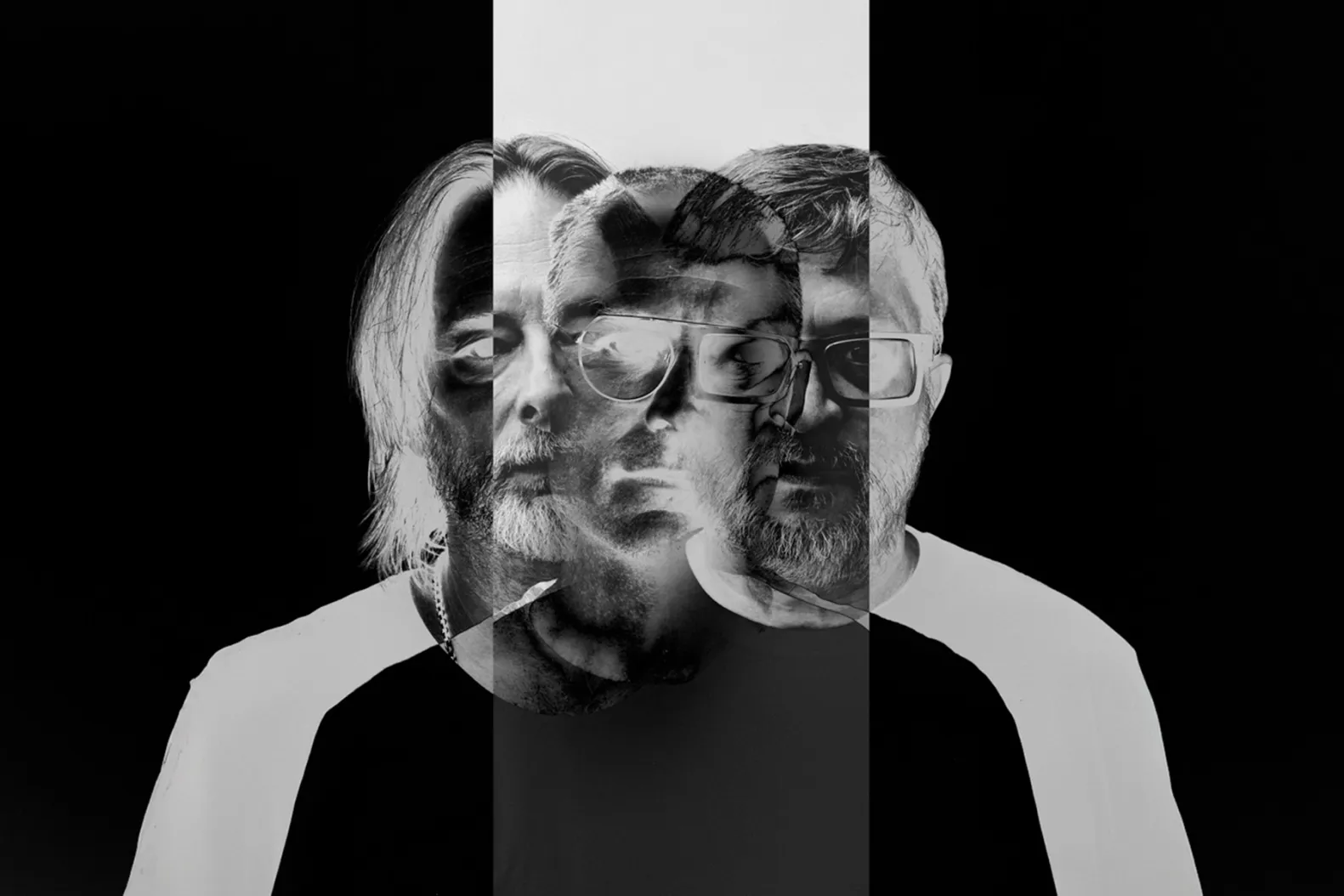
Radiohead haven’t released an album since 2016, but the band’s frontman, Thom Yorke, has been on an extraordinary run of studio creativity lately, laying down three great albums with the Smile, his band with Radiohead guitarist Jonny Greenwood and jazz drummer Tom Skinner. And it turns out that since 2020, Yorke has been quietly enmeshed in another collaboration, piecing together a sublime new album with veteran electronic producer Mark Pritchard. “Tall Tales”, due May 9th on Warp Records. It’s accompanied by an intensely trippy animated film by artist Jonathan Zawada, which is set for a one-day theatrical release sometime soon. The duo already dropped the eerie single “Back in the Game”; with a second song, “This Conversation Is Missing Your Voice,” .
From the haunted-house ballad “The White Cliffs” to the pulsing, drumless uplift of “The Spirit” (“I keep the spirit alive,” Yorke sings, in one of his most unabashedly anthemic moments since “The Bends“) to the eight-bit freak-out of “Gangsters,” “Tall Tales” feels like the most fully realized of Yorke’s non-band projects, a prog-tronic sonic journey with a dystopian kick that evokes the best of Radiohead. Pritchard, a Brit currently based in Australia, spent four years kicking tracks back and forth with Yorke for the album, with the singer manically layering and electronically treating his vocals and adding his own synth parts.
In 2012, Radiohead came to play Sydney, Australia. And at the time, a friend of mine became their second drummer — Clive Deamer, who’d drummed with Roni Size and Portishead and Robert Plant. I’d worked with him years ago and kind of kept in contact with him, and he said, “I can’t tell you at the moment, but something’s happening and I might be coming to Australia.” Obviously it was a secret kind of thing. Everything has to be kept secret with Radiohead.
I started sending him things, one of which became the single “Beautiful People” from my “Under the Sun” album. He tried three or four things, he was really busy at the time. When I heard “Beautiful People,” I said, “Look, this is amazing, let’s just finish that one and put it on the album.” And then kept in contact from there on in really, via e-mail. Just every now and again, we’d have a little catch-up.
Thom Yorke and Mark Pritchard reveal “Tall Tales” – their debut collaborative album, a decade in the making.
Landscapes of synth-pop, prog, dub, meet 70s synth, Joe Meek, Ivor Cutler, Library, kraut and classic Warp. Transmitted by visual artist and long time MP collaborator Jonathan Zawada.
“Tall Tales” is available Friday 9th May across digital and physical formats, including a limited first edition 2xLP and special edition CD – both including a 36-page booklet designed by Jonathan Zawada.






 The Fat Angel Sings