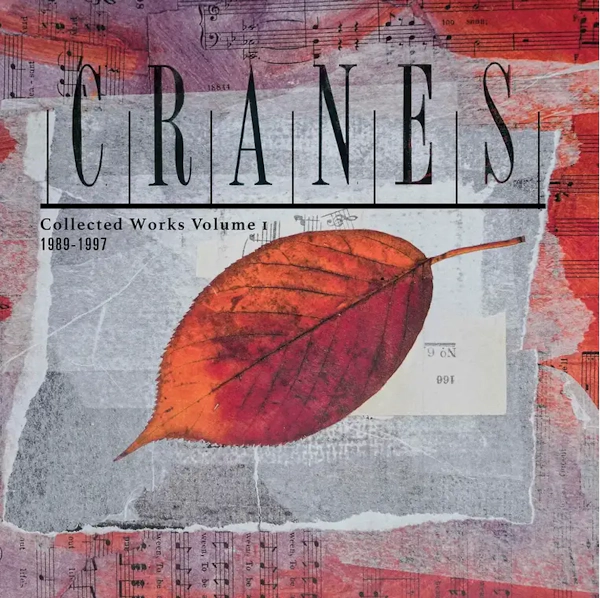
Extensive box set exploring Cranes’ output on the Dedicated label, 1989-1997. Includes albums, b-sides, remixes, rarities and live recordings. Curated in association with cranes founder and vocalist Alison Shaw. Artwork by 4ad graphic design legend Chris Bigg.
Formed in 1986 by siblings Alison and Jim Shaw, Cranes remain one of the most distinctive bands of the late 1980s and 1990s, their ever-mutating sound defying categorisation and existing outside of the zeitgeist. Their recorded output during their initial ten-year incarnation is collected together here for the first time, from the raw 1989 mini album “Self-Non-Self” (originally released on Bite Back!) through to the sophisticated 1997 epic “Population Four”.
Curated and overseen by singer Alison Shaw on behalf of the band, and resplendent in artwork by 4AD legend Chris Bigg (with detailed liner notes and discographic information), “Collected Works Vol 1” serves as timely reminder of Cranes’ magnificence as they evolved from stark, noisy soundscapes to bolder, more elaborate instrumentation and arrangements. With hints of ethereal rock, dream pop, shoegaze, industrial and neo- classical, theirs was a sound truly like no other.
A must for fans and a perfect all-in-one deep dive for the curious, “Collected Works Vol 1” is an emotionally charged time capsule showcasing one of the finest bands of the 1990s.
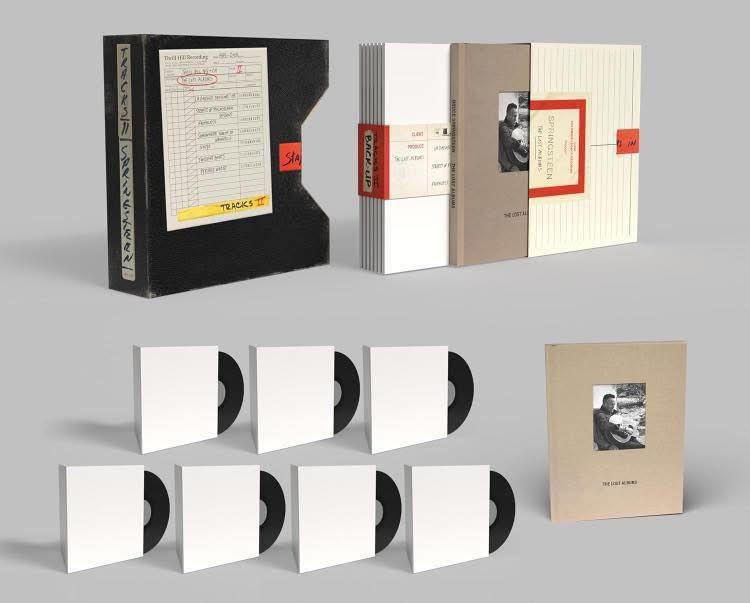
Bruce Springsteen will release a project called “Tracks II: The Lost Albums” the singer announced on social media Wednesday morning. No further information was provided, but the first volume of “Tracks” was 4-CD, 66-song collection of unreleased material from across his career that was issued in 1998.
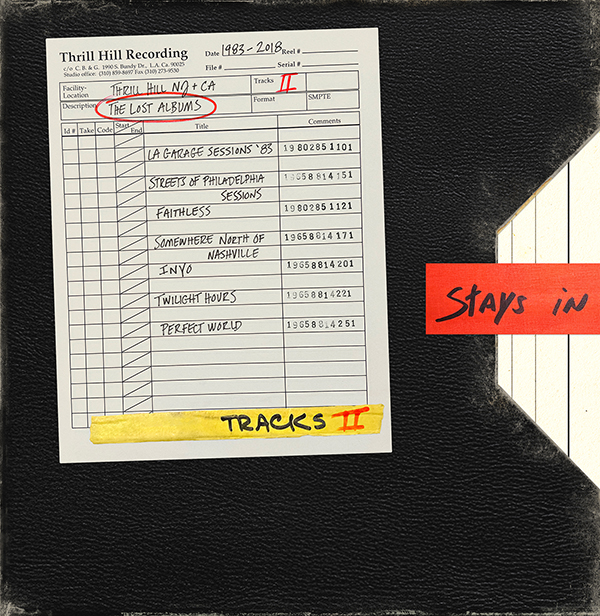
The video accompanying the announcement, which is soundtracked by instrumental music, shows studio paperwork dated from 1993 (the session for his Oscar-winning song “Streets of Philadelphia”) and 1997 and includes the tagline, “What was lost has now been found.” It also includes the date April 3rd, 2025 — tomorrow — but it’s unclear whether the album, or merely more information, will be unveiled on that day.
“TRACKS II: THE LOST ALBUMS are seven unreleased Bruce Springsteen albums recorded between 1983-2018. With 82 new songs, The Lost Albums completes chapters of Springsteen’s extensive trajectory, while offering a valuable insight into his life and work as an artist. ‘The Lost Albums” were complete records, some of them included until they were mixed and not published’, says Springsteen. ‘I’m glad that you finally have the opportunity to listen to them. I hope you enjoy them.’
From the lo-fi exploration of LA Garage Sessions ’83, which serves as a crucial link between “Nebraska” and “Born in the U.S.A.”, to the drum and synthesizer sounds of Streets of Philadelphia Sessions, The Lost Albums offers a context without precedent for Springsteen’s 35 prolific years of composition and home recording. “The ability to record at home whenever I wanted allowed me to go in a wide variety of different musical directions,” Springsteen explained. Throughout the album, this sonic experiment takes the form of film soundtracks (for a film that is never seen) in “Faithless”, country combos with pedal steel in Somewhere North of Nashville, frontier stories richly woven in Inyo, mid-sixth-century noir music with orchestra in Twilight Hours and E Street’s favourite rock in “Perfect World“. “The Lost Albums” are available in a limited edition of a nine LP and seven CDs, including the original packaging of each unreleased album, with a hardcover book bound on a 100-page canvas with photos from a few common archives, notes on each lost album by essayist Erik Flannigan and a personal introduction about Springsteen’s own project.”
Springsteen, who launches a European tour next month, teased the album earlier in the week, and his fan network immediately sprung into action, some not only accurately guessing what the project is, but also what might be on it.
Not surprisingly, the most popular guess was the full-band version of his “Nebraska” album, which Springsteen recorded but then abandoned in 1981 and ’82, electing instead to release his solo demos, as he felt they had a spirit and rawness that the band didn’t or couldn’t capture. With the biopic of the making of that album — “Deliver Me From Nowhere,” starring Jeremy Allen White — slated for release later this year, it seems likely that at least some of those songs will be on the collection.
Springsteen has released multiple archival collections since the first “Tracks” dropped nearly 27 years ago, including expanded anniversary editions of his classic albums “Born to Run,” “Darkness on the Edge of Town” and “The River,” as well as dozens of live recordings available on his website.
The first volume of “Tracks” spanned 1972-1995 but featured just five post-1990 recordings, so it seems likely that the bulk of the material from this new edition will be from the past 30 years. However, Vol. 1 featured just one “Nebraska” outtake, a glaring omission that has tantalized fans for decades.
Springsteen said in 2017, “We’ve made many more records than we released. Why didn’t we release those records? I didn’t think they were essential. I might have thought they were good, I might have had fun making them, and we’ve released plenty of that music [on archival collections over the years]. But over my entire work life, I felt like I released what was essential at a certain moment, and what I got in return was a very sharp definition of who I was, what I want to do, what I was singing about. And I still basically judge what I’m doing by the same set of rules.”
A 20-track, single CD / 2LP highlights release called “Selections From The Lost Albums Track” will also be available. “Tracks II: The Lost Albums” will be released by Sony on 27th June 2025.
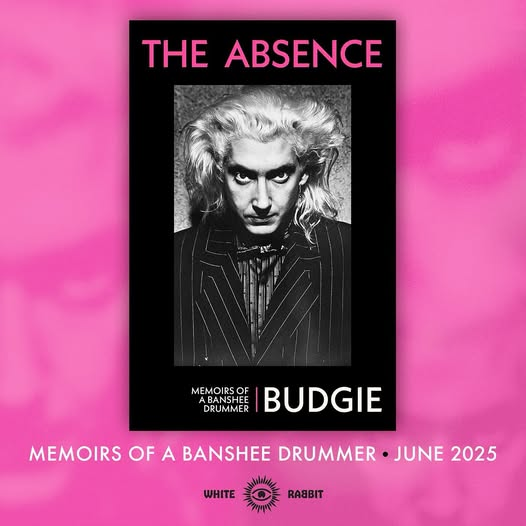
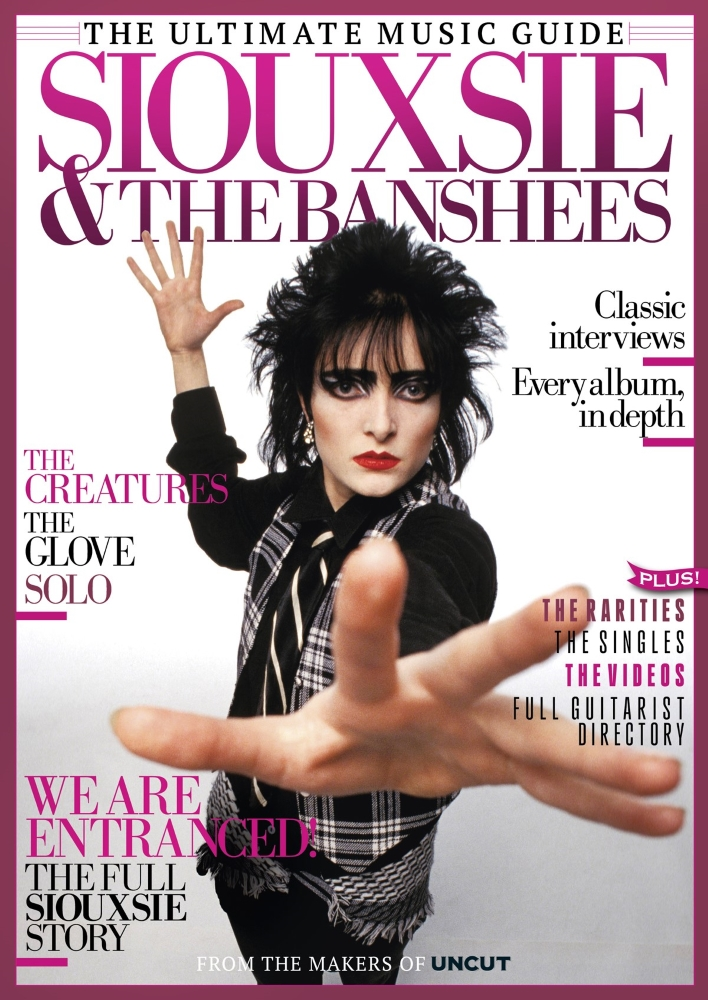
As a member of Big in Japan, The Slits and, most famously, Siouxsie and The Banshees and The Creatures, ‘Budgie’ became one of the era-defining drummers in the much-mythologised post punk scene of the late 1970s and early 1980s.
Growing up in working class St Helens in the 1960s, Peter Clarke lost his mum as a young boy and it’s her ‘absence’ that haunts the pages of this book. Disenchanted with art school inLiverpool, Peter became Budgie and befriended the likes of Jayne Casey, Holly Johnson, Pete Burns, Bill Drummond and other luminaires of the legendary Eric’s’ Club, before taking off for London and the big city heat of punk. Budgie’s unique technique and musical sensitivity endeared him to the all-female group The Slits, who asked him to play on their debut album “Cut”. Subsequent touring with former members of the Sex Pistols and others from the post punk aristocracy firmly established Budgie’s reputation for innovation.
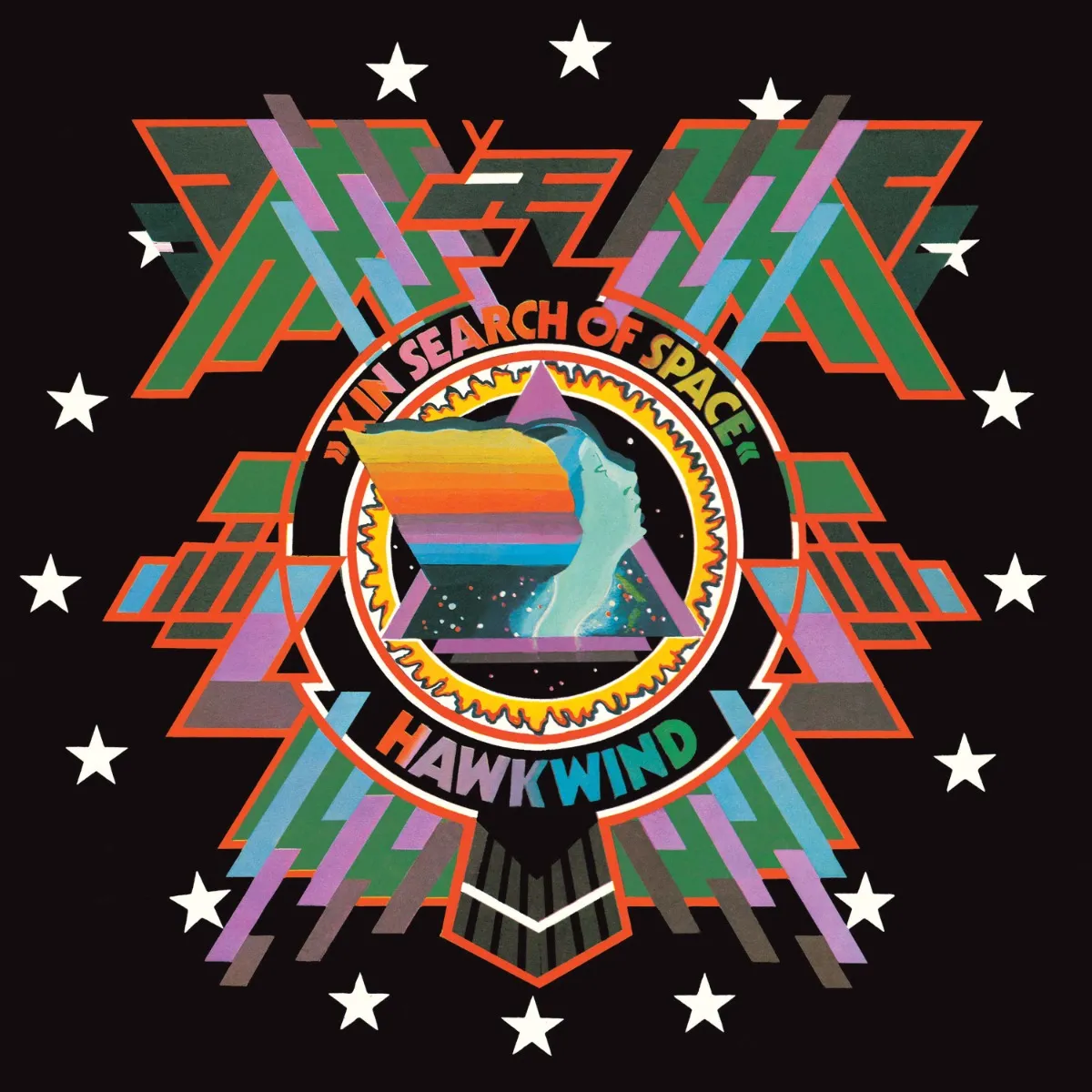
“When in 1973 Pink Floyd said ‘I’ll see you on the dark side of the Moon’, they didn’t realise that Hawkwind had been there, done that and bought the spacesuit a full two years previously. Released in October 1971, “In Search Of Space” the second studio album from Hawkwind, touched down a little over a year after the Hawks’ self-titled debut, and it’s light years ahead of that fledgling far-out fandango.
“This three-disc set includes the original album mix remastered, new stereo mixes, and a Blu-ray disc in 5.1 surround sound. (The big bonus is the inclusion of pamphlet The Hawkwind Log, available only with the earliest vinyl copies.)”
Bass player John A Harrison left just after recording the first album, replaced by Thomas Crimble who in turn was replaced by Dave Anderson from Amon Düül II for this album, and who in turn would be gone before its release. Electronics player Dik Mik Davies had also temporarily left so the band’s live sound engineer Del Dettmar was pulled in as a replacement, whilst Huw Lloyd-Langton had departed after a bad LSD experience at the Isle of Wight Festival.
Recorded in 1971, the album was Hawkwind’s first true masterwork, featuring such classic tracks as ‘You Shouldn’t Do That’, ‘Master of the Universe’ and ‘We Took the Wrong Step Years Ago’.“You Shouldn’t Do That” is an extended piece they had been playing live from Crimble’s time in the band and he asserts he should have received a writer’s credit for the central bass line on which this is based. It was recorded for a BBC Maida Vale session on 19 May 1971 for the Sounds of the 70s show, a bootleg version of the session can be found on The Text of Festival. It was the encore for the “Space Ritual” show but omitted from that album, later appearing in 1976 on the compilation album “Roadhawks”. It has been part of the live set at various times throughout their career,
“We Took the Wrong Step Years Ago” is a twelve string guitar number with a band jam in the middle section and its lyrics bemoan the direction of society. A new acoustic version of “We Took The Wrong Step Years Ago” was included on “The Road to Utopia” produced and arranged by Mike Batt with additional orchestrations.
“Adjust Me” is a band improvisation. “Children of the Sun” is an acoustic guitar number, although after the vocal passage the repeated heavy riff is augmented by electric guitars and bass. The bonus track “Seven by Seven”, originally the b-side to “Silver Machine”, uses the riff from late 1960s English psychedelic band Leviathan’s “Flames”.
‘In Search Of Space’ saw Hawkwind fully realise their unique brand of Space Rock and was greeted with acclaim upon its release in October 1971 and was the band’s first Top 20 hit. The record was subsequently and deservedly hailed as one of the Greatest Hundred British Rock albums of all time by Classic Rock magazine.
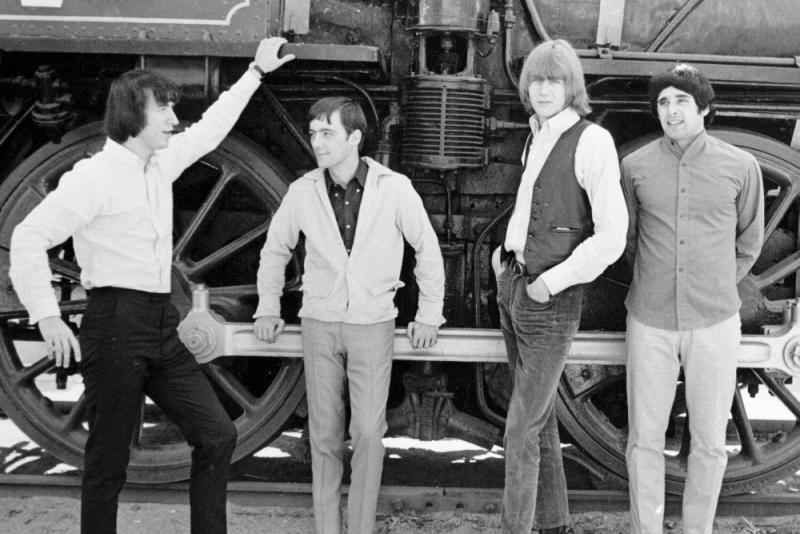
With their brilliant synthesis of folk and country, baroque and roll, San Francisco’s Beau Brummels made a major and lasting contribution to the lexicon of American popular music in the mid-1960s. ‘Turn Around: The Complete Recordings 1964-1970’ is the exhaustive overview of their legacy has so long deserved; presenting the band’s classic Autumn and Warner Brothers recordings in definitive fashion.
Boasting the stellar songcraft of Ron Elliott and the unique voice of Sal Valentino, the Brummels were amongst the first American units to respond to the British Invasion with innovation rather than imitation. The group remained popular and influential in the US long after their 1965 chart successes with ‘Laugh, Laugh’ and ‘Just A Little’, and once the act had devolved to the duo of Valentino and Elliott in 1967, the Beau Brummels moved to the forefront of Warner Brothers’ late 1960s pop renaissance with the albums ‘Triangle’ and ‘Bradley’s Barn’, the latter a visionary country-rock masterpiece.
Assembled, annotated and mastered by longtime Brummels’ aficionado Alec Palao, this major refurbishment of The Beau Brummels’ catalogue leaves no stone unturned. The original stereo album masters are accompanied by a comprehensive assortment of out- takes, alternate mixes and 45 RPM versions, and are further enhanced by rarities and unreleased demos drawn from the band’s own archives.
All the members of the Brummels also contribute to the instructive and heavily-illustrated history of the recordings, housed in a deluxe, handsomely appointed booklet art directed and designed by Steve Stanley.
“I do like this record. Despite their tremendously loser name, this group from America is pretty good. They have a sound of their own added to by Byrd-like guitar playing and Everly Brothers voices. In a funny way, it’s rather sexy.”
Although Penny Valentine’s verdict on The Beau Brummels’s “Don’t Talk to Strangers” edges towards damning the single with faint praise, it was positive and homed in on an important aspect of the San Francisco band – their Everly Brothers’s resonance. Readers of her Disc Weekly reviews column that mid-November in 1965 will have been well-aware of America’s decisive response to the wave of British bands clogging up their charts. It was an influential reaction: The Byrds impacted on The Beatles.
With their brilliant synthesis of folk and country, baroque and roll, San Francisco’s Beau Brummels made a major and lasting contribution to the lexicon of American popular music in the mid-1960s.
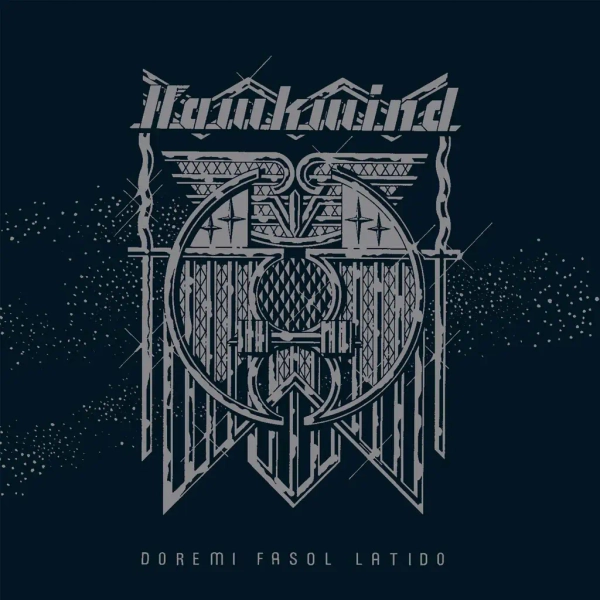
Recorded at Rockfield and Olympic studios in September and October 1972, the legendary album followed on the success of the band’s hit single ‘Silver Machine’ and was their first to feature Lemmy Kilmister on bass and vocals and Simon King on drums. Featuring such classic tracks as ‘Brainstorm’, ‘Space is Deep’, ‘Lord of Light’, ‘Down Through the Night’ and ‘Time We Left This World Today’, the album reached the UK Top 20 upon its release in November 1972.
The 2CD – This new edition set comprises 2CDs featuring a new remaster of the original album, along with superb new stereo mixes by Stephen W Tayler, including three session out-takes and new mixes of the single tracks ‘Urban Guerrilla’ and ‘Brainbox Pollution’. The release also has an illustrated booklet with new essay.
The 2LP and 2LP+set – This new edition has been remastered from the original master tapes, has been cut at Abbey Road Studios and is a facsimile of the original 1972 LP release with inner bag and poster. The release also includes a remastered facsimile bonus seven-inch picture sleeve single of the rare German 1972 single release of ‘Lord of Light’ b/w ‘Born to Go” (live)’.
3CD/2 Bluray – This limited edition deluxe boxed set comprises three CDs featuring a new remaster of the original album, along with superb new stereo mixes by Stephen W Tayler, including three session out-takes and new mixes of the single tracks ‘Urban Guerrilla’ and ‘Brainbox Pollution’. Also included is a stunning new mix of Hawkwind’s performance at the Greasy Truckers Party at the Roundhouse on 13th February 1972.
The set also includes two region-free Blu-Ray discs which feature Stephen W Tayler’s stunning new 5.1 Surround Sound mixes of “Doremi Fasol Latido” and bonus tracks and the complete live Greasy TruckersParty performance. An additional bonus feature is the 1973 promotional film of ‘Urban Guerrilla’
The set is completed with a 68-page illustrated book with new essay and a reproduction poster initially included with the first pressing of album in November 1972 making this boxed set the definitive release of this legendary album.
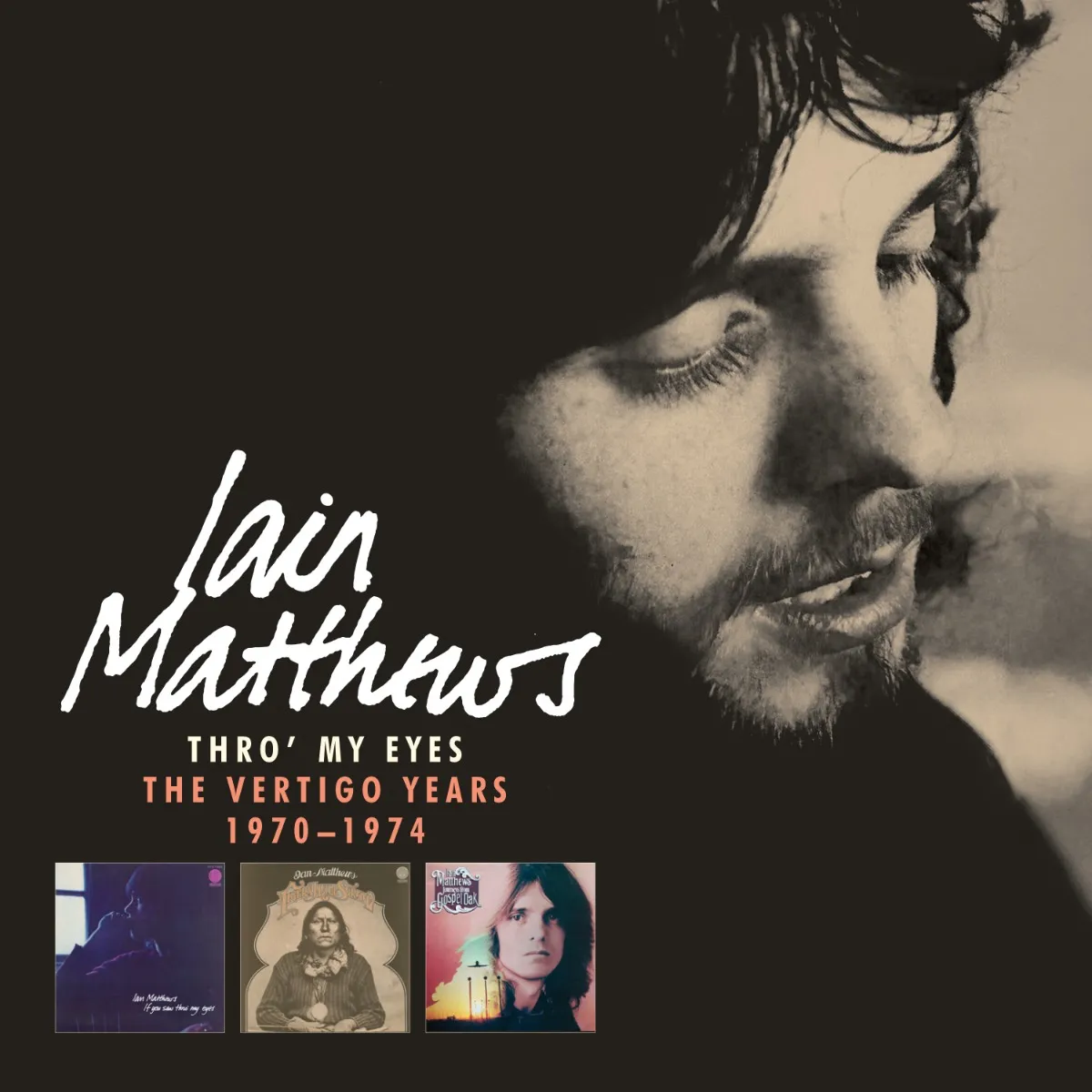
102-track, 5CD box set retrospective from singer/songwriter Iain Matthews. Features 2024 remasters of the three albums made for Vertigo Records at the start of his solo career in the early 1970s, and a live version of his first Vertigo album. The Box Set Includes 37 previously unreleased tracks, including a newly-compiled CD of live performances, ‘Vertigo Years 1971-2022’.
An original member of the folk rock band Fairport Convention during the band’s early period when they were heavily influenced by American folk rock and sang on their first three albums before from 1967 to 1969 before leaving to form his own band Matthews Southern Comfort and topping the UK charts in 1970 with Joni Mitchell’s ‘Woodstock’,
Iain Matthews can rightly be described as a music legend. In the 1970s, as well as recording solo albums for Vertigo, Elektra and CBS/ Columbia, he was also a founder member of Plainsong whose 6CD box set ‘Following Amelia’ can also be found on Cherry Red Records. Still making albums and playing live to this day, his career in the music business is a classic example of talent married to longevity.
This new box set, ‘Thro’ My Eyes: The Vertigo Years 1970-1974’, features the three original albums from his album deal with Vertigo – ‘If You Saw Thro’ My Eyes’, ‘Tigers Will Survive’, and ‘Journeys From Gospel Oak’ – alongside a wealth of previously unissued material from Iain’s archives, including for the first time on CD material recorded during his 1971 residency at the Bitter End in New York with future Plainsong members Andy Roberts and Bobby Ronga and former Fairport bandmate Richard Thompson. Also included in this comprehensive collection are Vertigo era tracks recorded live in Paris, a live version of his first solo album recorded during an 18-date tour of The Netherlands in 2003, and tracks from the now long out-of-print ‘Notebook Series’.
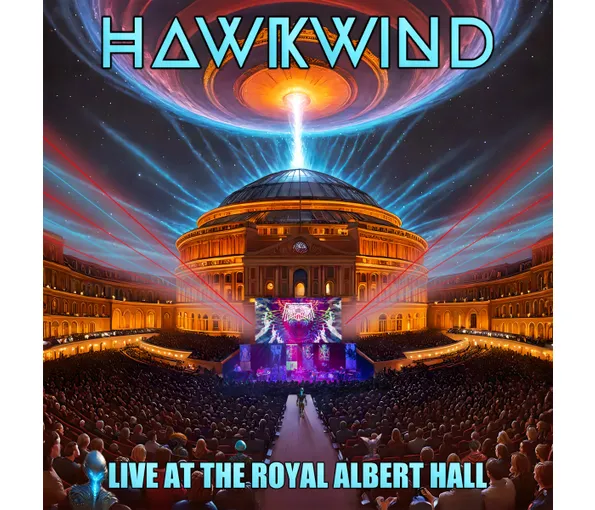
“Thank you all, let’s levitate together” says an obviously well-chuffed Dave Brock after the end of the scorching opening track “Levitation”, the curtain raiser to this fabulous set of songs at that wonderfully appointed, cavernous, and prestigious venue, The Royal Albert Hall. This celebratory rocket ride through the mighty Hawks’ back pages took place on Friday 29th September 2023 under the banner “An Evening of Sonic Destruction 50 Years On… Celebrating the Rituals and Odysseys of Space”. Where the title perhaps gave the erroneous impression that they would be belting through “Space Ritual”, it certainly was a celebration.
That the RAH is something of a time capsule is not lost on me, as this set does indeed cover a 50-year span, which in rock’n’roll terms is practically an epoch! Following the initial burst of levitated adrenalin rush, there is no let up as the band power through “You Better Believe It” and “Psychedelic Warlords“. Obviously, you can’t see it listening to the record, but you can sure feel octogenarian Dave’s visceral energy and joie-de-vivre coursing through every note. “Arrival In Utopia”, a mere 42 years young, keeps up the pace, and although you can’t hear it, again you can feel the ecstatic audience shouting along. This song also saw the unlikely figure of William Orbit walking on stage to man a second set of keyboards.
We had to have a rest at some point, even Dave did, so the beginning of “Rama – The Prophecy” provides a very brief opportunity to get one’s breath back, before it too gets on the space-boogie horse, and old heads are shaken anew. Apologies if this reads more like another live review than an album review, but I was there and it’s difficult to separate the album from the gig, the only thing that does are the sonics of this CD. This only attests to the quality of the recording in my view!
The standard of musicianship in the current band is as good if not better than any previous line up, and keyboard player Tim Lewis with his Hammond-like fills and electric piano, as well as the essential synthesiser swooshes and squiggles, is on top form. As this relatively long lasting line up all are, of course! Maybe they don’t possess the charisma of the classic line up of yore, but what band that has lasted this long does?
No doubt this recording was straight from the mixing desk, which might give it a sonic advantage over what we heard at that sound engineers’ nightmare of a venue, not that we cared on the night! When Prince Albert launched a Royal Commission to look at building a set of arts and science facilities at the site, following on from the success of the Great Exhibition in nearby Hyde Park in 1851, the thought of impending sonic attack from the good ship Hawkwind and all the other iconic rock acts that have played there over the years would not have been possible for the doomed prince to begin to imagine!
Before we revisit the classics juke box, 1985’s “The Beginning”, after its space-symphonic intro sees Dave pick up his acoustic to kick off the song section with a time-warping interlude of busker-strumming. Sounding vaguely Beatles-like, this song is a genuine respite from the open-throttle disappear in smoke nature of the rest of the set. Back down goes the needle in that juke box, and soon this jury is jumping to, and of course, shouting along to “Sprit Of The Age“. I can remember when that came out back in 1977, and it wasn’t every day you listened to a song that among other things, bemoans the loyalty of a sex-android replica! It still isn’t, come to think of it.
The audience, know every word and shout along with gusto. One of a few recent songs in the set, the short but sweet “Underwater City”, from last year’s “Stories Of Time And Space”, served as another calming interlude before the throttle is opened once more as the song leads into “Assault And Battery/Golden Void”. “Thank you all so much for coming. So lovely to see all your lovely faces” says Dave after the roar that greets the end of this fabulous number. And so we arrive in a stationary orbit above some far off unnamed planet in some godforsaken cold galaxy, and CD1 has come to an end.
At the gig there was no break, they just piled into 1992 single “Right To Decide”, which was new to me, and it fits perfectly into the general vibe, charging along at a pace. It is obvious from listening to this extended aural history that Hawkwind were and remain a huge influence on everything from punk to the rave scene and beyond, and nobody does it quite like them. Some wag…it may have been me…once referred to Hawkwind as “Status Quo with synthesisers”, but that’s damnable faint praise when you firstly consider that they practically invented a genre, and secondly when one considers all the bands that have followed in their wake wouldn’t sound remotely like they did, or do, were it not for the Mothership Hawkwind.
Good old Arthur Brown comes on for the Bob Calvert role, one he carries off with aplomb, and narrates the space poem “10 Seconds Of Forever” (here retitled “10th Second Of Forever“, and then we briefly delve deep into the “Space Ritual”, with “Born To Go”, a headbangin’ classic from 50+ years ago. I love this tune, and in all its brutal simplicity it is irresistible. This latest line up do it solid justice, and it’s as ‘eavy and ‘umble as it ever was. The version on “Greasy Truckers” is even better than the version on “Space Ritual”, if you ask me.
Cleverly inserted into the middle of “Born To Go” is a song written 50 years later, “Star Explorer”, again showing how easily it all fits together. Then… back into the time machine, we emerge in 1972 and the Ritual is continuing. We now find that we are subjected to a “Brainstorm!” it’s getting trippy in here. Some great synth work flies around the speeding riff, and the muscular rhythm section, tight a locknut drive this song through walls, nothing will get in its way.
“SPACE!”, loudly intones Arthur, from somewhere down the “Black Corridor”, before the band engage all rockets to escape the unfeeling impersonal blackness of the void, which does not live and does not die. Hawkwind are the “Masters Of The Universe“, the obvious banger of a set closer before we come in gently (well…sort of!) to land with “Welcome”. This band are so good, and they were definitely in the groove this autumn night in London. The sound on this CD is as good as can be, and it is yet another triumph for Cherry Red, Masters Of The Reissue!
The third CD in this set contains six songs played in rehearsals that were not on the eventual setlist and is a nice bonus. Featuring a couple of songs from the new album “Stories From Time And Space“, along with four other more recent numbers – if you can call 1992 recent?! – the highlight is the near quarter of an hour space-drifting “Practical Ability”, a song that that meanders along effortlessly, as if in a geo-stationary orbit. There’s some great drumming and synth work on it too.
The comprehensive booklet by Rob Goodwin that accompanies this set is up to the usual superlative Cherry Red standard, and whether or not the world needs yet another Hawkwind live album is moot, but I can’t recommend this set highly enough, While Dave Brock has his health the good spaceship Hawkwind will keep on keepin’ on. As Dave sings in “Lost Chances” “Look to the future, forget the past.”
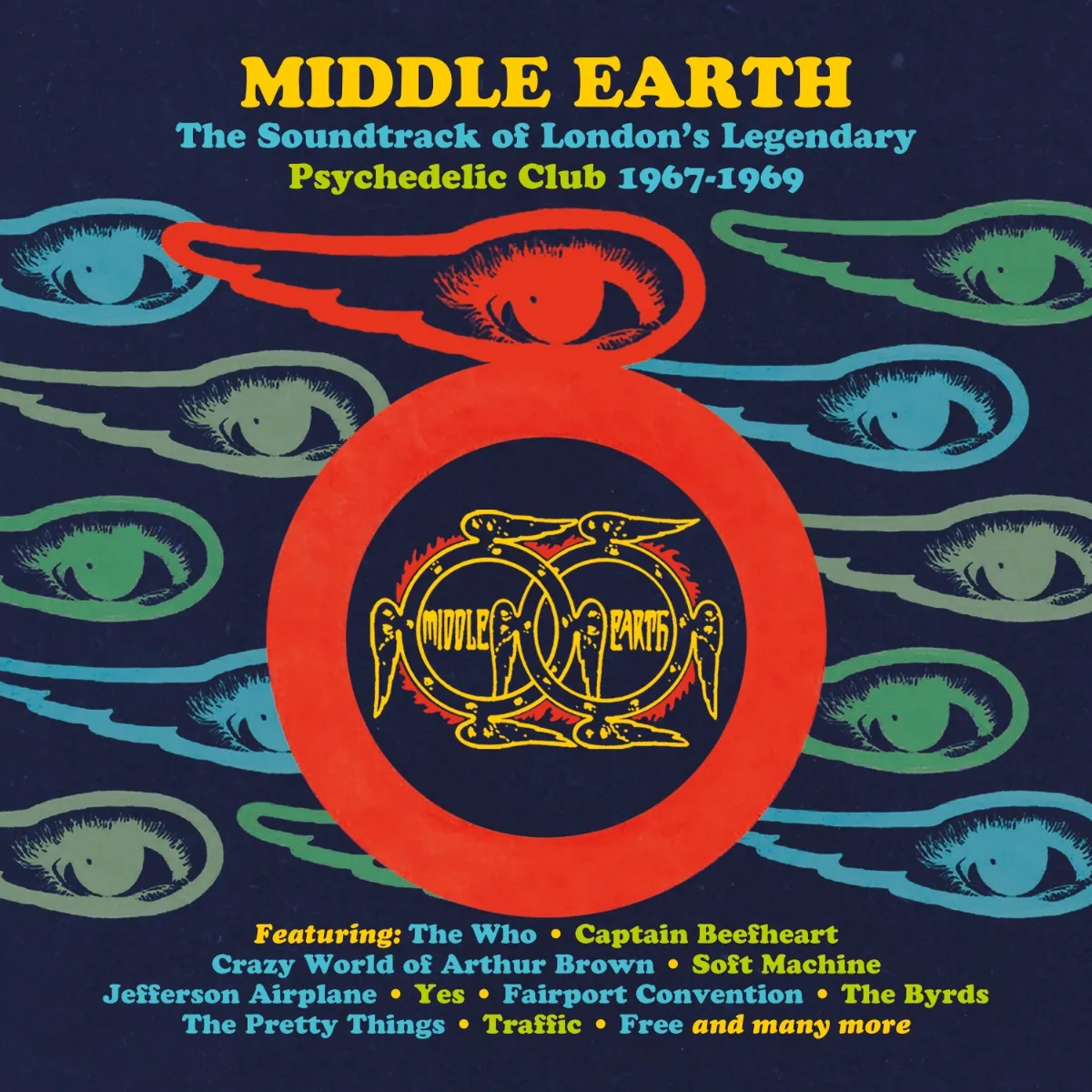
Starting out briefly as The Electric Garden, Middle Earth opened its doors in 1967 and immediately became the most happening club in London. More than just a home for UK bands that were pushing the boundaries of rock music, Middle Earth also attracted some of America’s finest exponents of psychedelic rock such as Captain Beefheart, The Byrds, The Fugs, Jefferson Airplane, and many more.
Fledgling UK acts that would go on to great things such as Soft Machine, Tomorrow (The In-Crowd),David Bowie (The Riot Squad), Yes, The Incredible String Band, Ten Years After, and Free were joined by more established acts like Traffic, Fleetwood Mac, The Who, The Pretty Things and The Yardbirds.
Cult favourites, who would never attain the commercial success of those just mentioned but are revered by those that know, include The Deviants, Dantalion’s Chariot, Elmer Gantry’s Velvet Opera, Third Ear Band, and Mabel Greer’s Toyshop, among others.
The club only last a few years but it’s timeline coincided neatly with the rapid and ever- developing rise of psychedelic rock in the UK and as such this compilation serves as the perfect guide to how the genre evolved.
Jeff Dexter, the house DJ and main man at Middle Earth, has been interviewed exclusively for this release and deep image research has thrown up many unseen images to round out what is the definitive document on the UK’s ultimate psychedelic rock club.




 The Fat Angel Sings