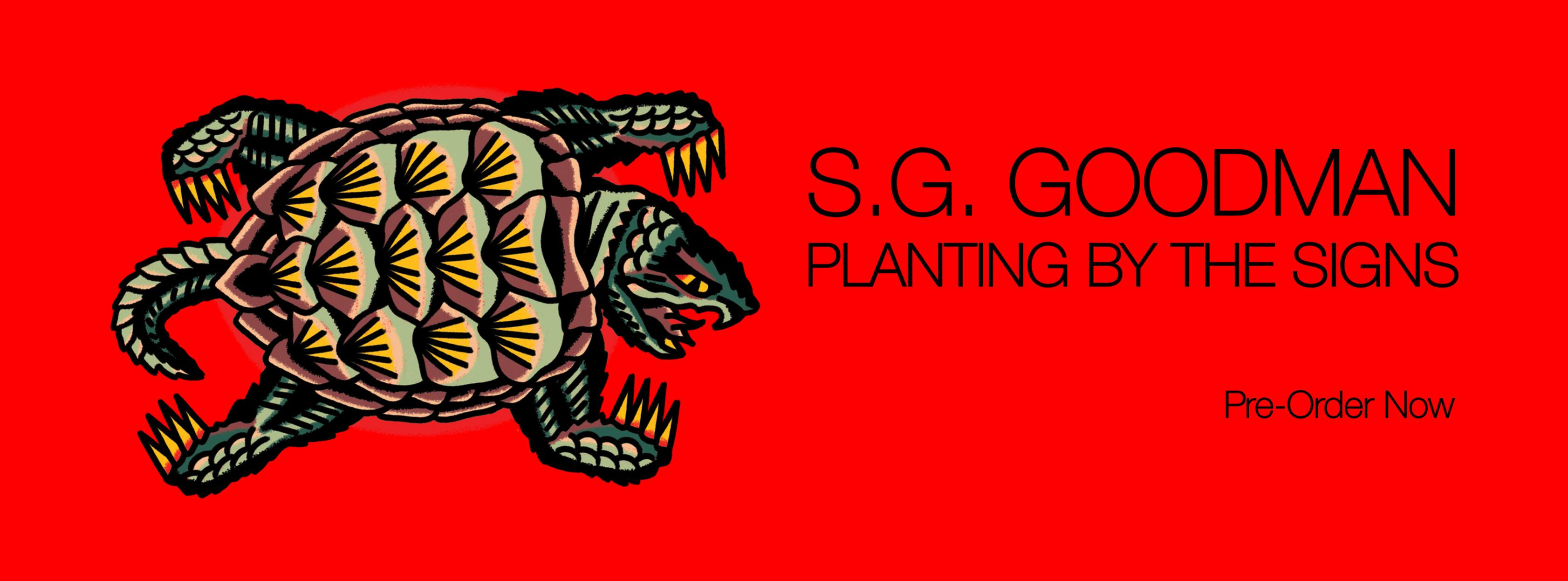
S.G. Goodman has teased a new album, “Planting by the Signs”, with the catchy, propulsive new song ‘Fire Sign’. “After touring relentlessly for 2 years, ‘living like the sun don’t shine / on the same dog’s ass everyday,’ as the song puts it, I came off the road questioning my purpose and choices,” Goodman explained. “People are quick to tell you that you are not working hard enough, but slow in telling you that you are working hard enough. That seems to be up to you, as well as your ‘why?’.
Despite this burnout and other personal setbacks, I found the fire to keep pushing and to make what I believe is my best record yet. ‘Who’ll put the fire out?’ The only person who can put my fire out is myself.”
Goodman recorded “Planting By The Signs” at the Nutt House in Sheffield, Alabama, alongside co-producer Drew Vandenberg (her co-producer on 2022’s Teeth Marks) and guitarist/songwriter Matt Rowan. Bonnie “Prince” Billy appears on a duet, “Nature’s Child”.
“Fire Sign” is taken from S.G. Goodman’s upcoming album ‘Planting by the Signs,’ out June 20th Slough Water Records / Thirty Tigers
When his cover of This Is Lorelei’s ‘Dancing in the Club’ was released, MJ Lenderman revealed that “Box for Buddy, Box for Star” was the album he listened to the most in 2024. By inviting him to take on the track for the record’s deluxe edition, Nate Amos expresses his own admiration by way of trust: someone like MJ Lenderman could only bring the song’s lonely desparation higher up the surface. Lenderman understands that fucking up your guitar means fucking up your heart, not just the other way round. He’ll slow down the song and draw out the lyrics to make their dissociation feel more personal than situational.
And he will, of course, take pleasure in singing the words “A loser never wins/ And I’m a loser, always been,” lifted as they seem from his own “Manning Fireworks“. More than self-lacerating, though, the cover arrives as a source of comfort, too: being your own worst enemy doesn’t mean you can’t be seen, or find yourself a little less alone.
This Is Lorelei announces “Box for Buddy, Box for Star” Deluxe, a new expanded version of prolific NYC artist Nate Amos’ (Water From Your Eyes, My Idea) critically acclaimed 2024 breakthrough record. The deluxe edition, out April 25th on Double Double Whammy, features collaborations with friends and family.
Alongside the announcement, This Is Lorelei shares “Dancing in the Club (MJ Lenderman Version)” a reimagining of the album cut that Lenderman has been performing live in recent shows. “Box For Buddy” was by far the album I listened to most in 2024. I had a great time re-recording ‘Dancing in the Club’ with Nate back in December.” says Lenderman. Amos adds “I really loved working on the MJ version of ‘Dancing in the Club’ – Jake is chill af and mad talented. More so than any other song I’ve written this one was dreamt up for others to sing, so it was pretty freaky watching it fall into place with someone like Jake handling lead vocals.”
“Box for Buddy, Box for Star” (Deluxe) is out April 25th, 2025 on Double Double Whammy
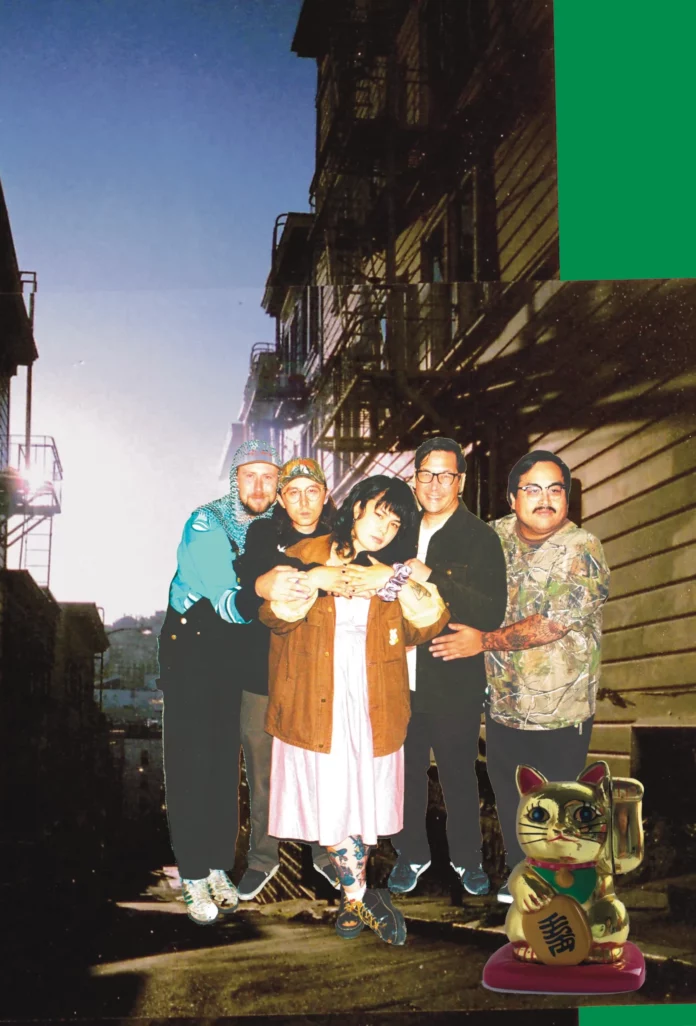
Star 99 is Saoirse, Chris, Thomas and Jeremy. On their sophomore LP, “Gaman”, Star 99 are still making punchy, exhilarating songs while pushing beyond – though not necessarily past – the twee sensibilities of their 2023 debut “Bitch Unlimited”, making way not just for the confrontational nature but the poetic nuances of their song writing. As Saoirse Alesandro and Thomas Romero trade vocals, revealing the core emotions that bind their songs – insecurity, resentment, isolation, often fuelled by the fire of generational trauma – you get less of a sense that these are separate people bringing songs than just two friends, in a band, facing similar strife’s – and getting through them. Which is, definitionally, the art of gaman.
Star 99 is reminiscent of Nebraska’s Tilly and the Wall, or maybe they’re not at all. Why the need to compare everything? Take a chance and seek out Star 99, get off the couch, live your life, fun is still there to be had, and Star 99 seems to know where it is.
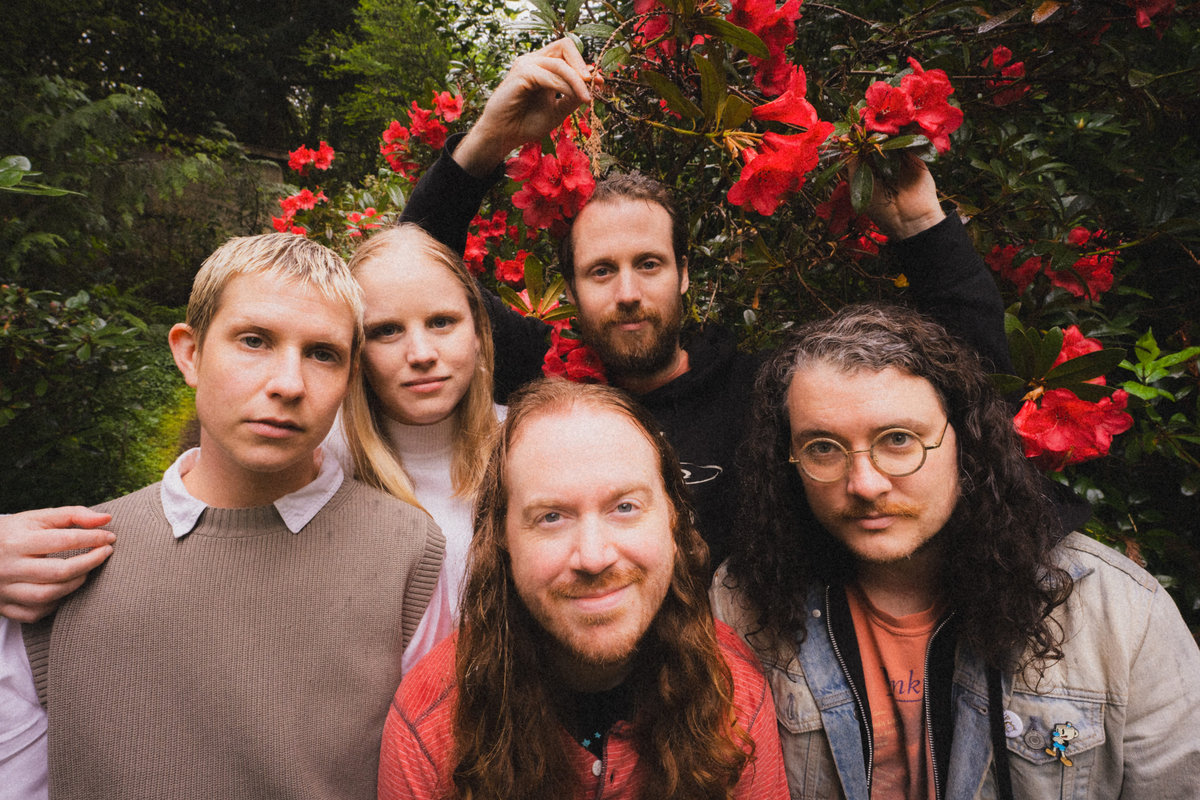
Great Grandpa released two albums at the tail end of the 2010s, both of which were among the best albums of the year. Plastic Cough is arguably the best album to end with a lengthy song about a zombie uprising that begins while you are incredibly stoned. “Four of Arrows” is an even better album with no zombies-related songs we can recall.
Great Grandpa’s music sounds so splendid, the lyrics so fantastically poetic, it’s easy to undermine their intimacy. “It’s closer when I see you, damn,” goes the hook on ‘Emma’, a highlight on their latest album “Patience, Moonbeam”, and they return to that damn for a cathartic explosion on the single ‘Doom’. The band’s first album in six years yearns and plays around for a sense of euphoria, and even if it sometimes falls short – of the feeling, not reeling you in – their synergy achieves a kind of unburdening that feels like a gift.
“All dark things in time define their meaning,” Al Menne sings on ‘Kid’, making Pat and Carrie Goodwyn’s mournful lyrics sound tenderly affirming. “And fold sharp ends/ Into their mouths.”
After releasing their sun-kissed, soulful debut “Evil Joy” in 2021, Fust – now a seven-piece featuring songwriter Aaron Dowdy, drummer Avery Sullivan, pianist Frank Meadows, guitarist John Wallace, multi-instrumentalist Justin Morris, fiddlist Libby Rodenbough, and bassist Oliver Child-Lanning – decamped to Drop of Sun to record “Genevieve” with producer Alex Farrar, with whom they reunited for their astounding new album, “Big Ugly”. Named after an unincorporated area in southern West Virginia, around which Dowdy’s family has deep roots, the record is conflicted yet aspirational: homey while grappling with the mystery of home, hopeful when hope rests between the promise of a new life and relenting in old, slow, ragged ways. As the title may suggest, it wrings beauty out of the most unexpected places, honing in the band’s knack for making small feelings appear monumental – that is, closer to their true experience.
“The enormous, long river of storytelling, fed by ancient headwaters, shoring up time, bounded by landscape and people and witness to the beauty and anguish of each. Deconstructed ballads and reveries of drunk ghosts, obtuse and palatable superimposed. The relatable not just accompanied but defined by the very weird. Kitchen-table images from a spotty memory, beater cars mystically lifted, characters coming and going, old friends on the porch. In this town everyone knows each other, knows each others’ business, and everyone’s got strange trouble. Big Ugly is beer-fisted radio country from a post-verbal hermit; “Oh what country, friends, is this,” a line from “Twelfth Night,” uttered by Viola after being shipwrecked on an unfamiliar shore, one that might hold new life or prove to be another disappointment. Nobody moves.
The voice is home, but home is a mystery. We get older and learn nothing, our world barely recognizable. We help each other out. We stay in a place that is losing its future, whether out of commitment or despondency. Big Ugly is Southern mountain rock, Southern lit, made and dedicated to the inextricable entity of land and people, to visions of community and utopia and testament to erosion. The country is a steady drum beat and fried guitar. The language is a dream.”
Performed by Aaron Dowdy: guitar, vocals, and synth Avery Sullivan: drums and percussion Frank Meadows: piano and percussion John Wallace: guitar and vocals Justin Morris: guitar, pedal steel, vocals Libby Rodenbough: fiddle and vocals Oliver Child-Lanning: bass, vocals, dulcimer, and synth
With help from Alex Farrar: guitar and lap steel (4) Dave Hartley: synths (5, 6) Jacob Bruner: horns (3, 11) John James Tourville: pedal steel (1, 3, 5, 8, 11) Merce Lemon: vocals (8)
Destroyer – “Dan’s Boogie” (Merge / Bella Union)After three albums where Dan Bejar flirted with dance music, he has embraced his inner lounge and cabaret singer on the fourteenth Destroyer album. The record opens with the kind of sweeping strings you might hear at the start of an awards show in the ’70s with Dan is your host for the evening, though he’s the kind that might slide up to you afterwards and ask, “Hey mister, you wanna buy some diamond rings?” “Dan’s Boogie” presents a world of faded glamour, like a ’40s noir film full of seedy locales and seedier locals. Dan told us he sees this one as “a mix of “Poison Season” and “Your Blues” in a lot of ways” and while you can hear that in the songs themselves, the production is like no other Destroyer album. John Collins, who has been Destroyer’s chief sonic architect since ’90s, has really outdone himself here with the sound design. There is something in the atmosphere of these arrangements that makes the room you’re listening in sound three times bigger than it is.
Collins shoots the album in widescreen technicolor, allowing us to see the stains of this tableau that would be hidden in black and white — musically speaking, of course — as Dan’s signature word salad style makes your head spin. As with the best Destroyer albums, and this is one of them, don’t worry about the details and meaning. Be like Dan at a Destroyer show: sit back, have a sip of a beverage, and revel in the world of sound he’s created.
“Dan’s Boogie” is, in true Destroyer fashion, a contradiction: a breakthrough album for Dan Bejar that began its life as a disappearing act and, as such, does things no Destroyer album to this point has ever done. Its nine songs imagine Bejar as a lounge singer, a hustler, and, at times, a supporting character in his own fantasies in nine all-timer Destroyer songs that have the urgency of a state secret hiding in the mind of a tortured spy.
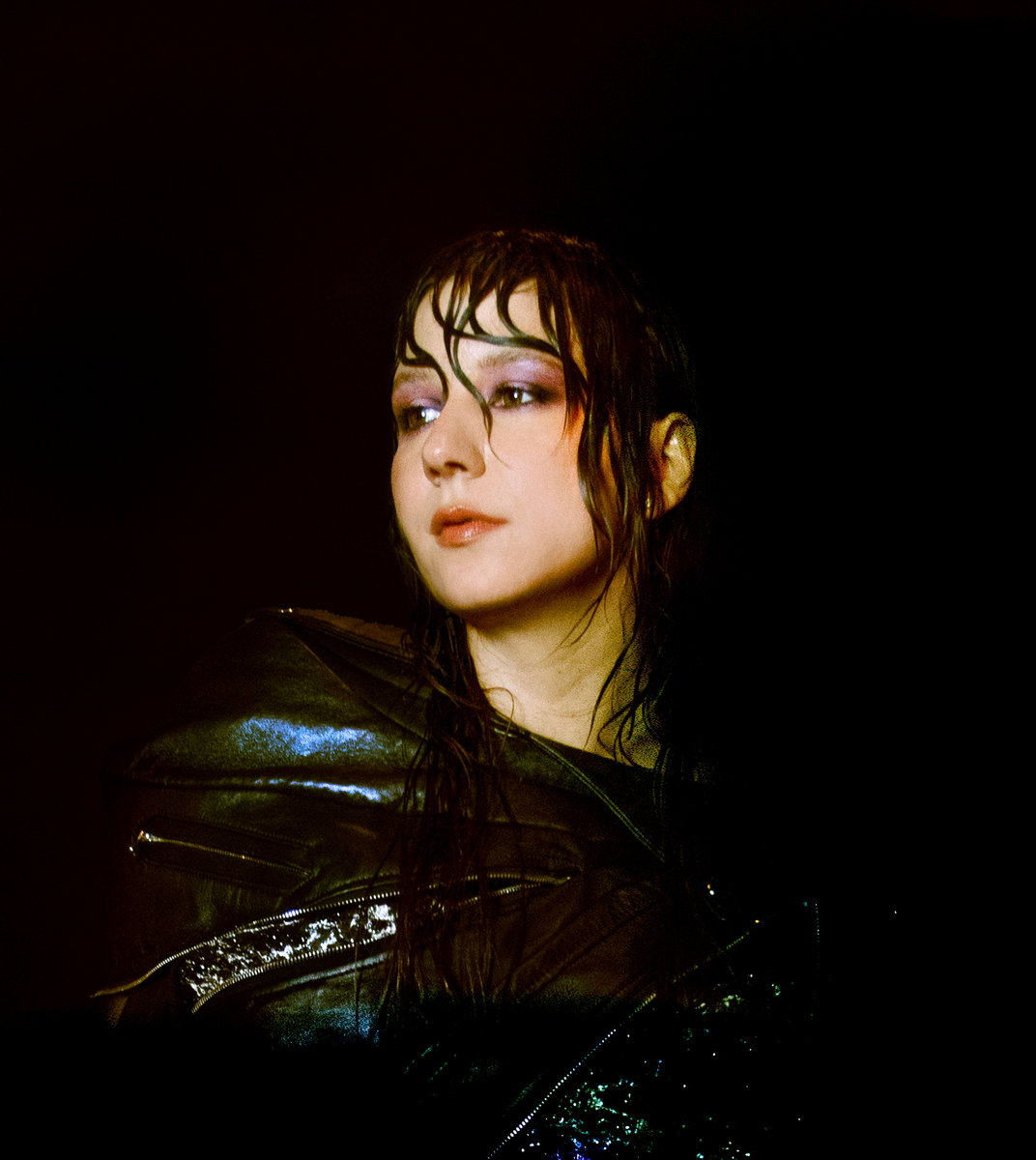
If the best word to describe the sound of “Halo on the Inside” is “nocturnal,” that’s because the process behind it was quite literally that, too. Haley Fohr, the Chicago-based artist who records as Circuit des Yeux, lived alone through the making of her “-io” follow-up, working 9pm to 5am (make sure you read that right: pm to am) down in her basement studio. As much as it serves as an exploration of Fohr’s inner world, or that of the characters she fashions, it’s also a challenge to transform her working space: into a gothic club, a dream, an ideal destination. Here, continuing to push the boundaries of her sound means forays into minimalism and throbbing dance music, harnessing the imagination – more than darkness itself – as the animating force. Her astoundingly operatic vocals must steer their way through vocal effects, layering, and whirlwinds of noise.
Haley Fohr (b. Dec 16 1988) is a vocalist, composer and singer-songwriter based in Chicago, Illinois. Her musical endeavors focus around our human condition, and her 10-year career as Circuit des Yeux has grown into one of America’s most successful efforts to connect the personal to the universal. She is most distinctly identified by her 4-octave voice and unique style of 12-string guitar.
Last fall, when Circuit des Yeux (aka CdY, aka Haley Fohr) released the stand-alone single “God Dick,” she described the song as a passage leading from the past toward things to come. “It served a chrysalis function,” she wrote of the track, which morphs between orchestral grandeur and shuddering electronic percussion. Leaning in deeper, Fohr called it, “A love banshee bursting through porcelain skin one hair at a time until, finally, the beast within is fully on display.”
Out March 14th, “Halo on the Inside” is the product of that metamorphosis. It is the butterfly and the beast – a rhapsodic, hedonistic, dance floor-adjacent, pagan-friendly, horns-adorning wall of sound and emotion. Halo on the Inside finds CdY renewed, recombinant, and thrillingly alien.
“I can make a radio break,” Fohr sings on the pulsing, John Carpenter-esque slasher rave of “Canopy of Eden.” On “Megaloner” – with its electro-stomp and surreal Donnie Darko-ish mood – she invokes “fate in all the fires you make” on her catchiest chorus to date. The two songs offer an opening jolt of dark and expansive pop, at once insular and empowered, strange and sensual.
A Chicago based musician, composer, and multidisciplinary artist, Fohr’s work defies easy categorization. It has encompassed critically acclaimed albums, free-form improvisation, painting, audio visual installations, and large ensemble compositions. She has performed in an anechoic chamber (a room with no echo), written for a 50-piece children’s choir, and plunged from a rooftop (under the supervision of a stunt-coordinator).
Bringing “Halo” to fruition involved numerous changes in Fohr’s typical methods of operation. She worked at night. Throughout the writing, Fohr was living alone, slipping down to her basement studio from 9 p.m. to 5 a.m. to free her mind, her voice, her hands. These late hours should not be understood as grim and isolative, though. It was a quiet space for uninhibited exploration. She turned herself loose on unfamiliar tools, winding her way through pedals and synthesizers, finding “play and melody through software malfunction and feedback.”
These graveyard shift writing sessions resulted in a revelation for the musician. “I found a very surprising, small voice in me, and it was deep, deep behind my heart,” Fohr says. She discovered it in the solitary quiet of her studio space, with the city outside hushed enough for Fohr to hear the rhythms of her organs in sync with one another—her own inner symphony. She continued working around that concept for eight more months, carving “Halo on the Inside” out of her reinvigorated relationships with solitude and herself. And then she looked outward.
A trip to Greece ignited in Fohr an interest in the character of Pan, the mythological, flute playing half-goat, half-man. His story of transformation, melody, fertility, and eventual demise served as a moodboard to the album’s rapturous, brightly burning moments. You can hear it in “Anthem Of Me,” as sci-fi pads, bit-crushed distortions, and cavernous kick drums dissolve into twinkling piano drops while Fohr’s siren-like voice calls: “It’s an anthem of me. It will rock you.”
The process was adjourned in a trip to Minneapolis to complete the record with producer Andrew Broder (Bon Iver, Moor Mother, Lambchop). The album’s centrepiece, “Cathexis”, puts the pair’s creative chemistry on full display. Haley’s seemingly limitless voice interplays with Broder’s cathartic guitar coda, offering perhaps the album’s most ascendant moment.
The center of “Halo” remains Fohr’s voice. It is a powerful, seemingly supernatural instrument — a four-octave span that can span gentle melodic hooks, animalistic bleats, and elemental wails. Here, Fohr makes use of its full range in maximalist compositions that swerve fearlessly between genres and styles. “Through the process of making this music I was able to rewind myself to a time before fear,” she says. “And in the absence of fear I found the intimate beat of sex, love, and melody”.
There’s shock in metamorphosis, “Halo On The Inside” tells us, but there’s also levity and beauty. A moment of seclusion and dislocation yielding to rebirth and ominous beauty.
Before going into the studio, Bob Mould‘s demo-making process typically involves preparing for the type of ornamentation that might eventually decorate a song. In the early stages of the recently released “Here We Go Crazy“, the former Hüsker Dü frontman’s 15th solo album and first in five years, his approach was so liberatingly straightforward that he found himself resisting the thought of any kind of unnecessary polish. At the studio, backed once again by his long-serving rhythm section of drummer Jon Wurster and bassist Jason Narducy, he had something of an “allergic reaction” to the synth options available to him; alongside long time engineer Beau Sorenson, he landed on a refined simplicity that only further invigorates the record’s visceral urgency. Breezing through in just over half an hour – though Mould handily controls the force of the wind – the record channels turbulence and uncertainty through concise, caffeinated rock songs powered by soaring hooks, crunchy, propulsive riffs, and some of the most taut song writing of his career. “Life is short and we need to try to enjoy it, and protect the people and the things that we love. The time to protest will come again.” Punk rock icon Bob Mould is back with an album to get you through another American Crisis
Times are dark, but our music doesn’t have to be: here Bob Mould discusses his new album “Here We Go Crazy“, the state of the world, unexpected collaborations and how to stay hopeful through a crisis
Mould tells us that “Here We Go Crazy” has “a number of contrasting themes: control and chaos, hyper-vigilance and helplessness, uncertainty and unconditional love.” And though it’s an album every bit as powerful, and focussed, and strong, as any in his back catalogue – and uses the same particularly orange President as its source material – “Here We Go Crazy” is a markedly different record, tonally, from its 2020 predecessor “Blue Hearts”.
A furious, righteous response to Donald Trump’s first presidency, that album found Mould singing like his head was on fire, not least on its lead single “American Crisis“, with its lyrical references to a “fucked up USA” and a “world turning darker every day”. It saw the veteran songwriter drawing comparisons between Trump’s reign and the evangelical right’s endorsement of Ronald Reagan’s two-term presidency in the 1980s, with Mould spitting “I never thought I’d see this bullshit again.”
Bob Mould is saying throughout “Here We Go Crazy“. An album which was purposefully announced on Trump’s inauguration day, if “Blue Hearts” was all about rage and defiance, this record puts forward an argument for taking comfort, solace and joy in simple pleasures, endorsing self-care and small victories, and celebrating love in the face of tyranny and turmoil. Where “Blue Hearts” was protest record, “Here We Go Crazy” is more of a survival manual, offering guidance to help steer troubled souls through these darkening days.
“Blue Hearts” was written as this dire warning, but it’ll be a crazy celebration if we make it to the other side,” he told British broadsheet newspaper The Guardian while promoting the record ahead of the 2020 presidential election. “I’m looking forward to the party.”
Last year, late in the evening of September 21st, still “soaking wet” from a typically committed solo show at a local “honky tonk” bar, Bob Mould could be seen slaloming around groups of Saturday night revellers crowding the streets of Urbana, Illinois, with his guitar slung over one shoulder.
He was heading for the city’s chic Gallery Art Bar, and upon reaching his destination, he rapped loudly on the venue’s back doors, and told the bemused security staff: “I’m doing a song with the headline act.”
Mould hadn’t previously met any of the members of Militarie Gun, but – having been turned on to the Los Angeles quintet’s 2023 debut album “Life Under The Gun” by his husband Don Fisher – he’d been talking up their merits to friends for the best part of a year. When he heard that one of his musical heroes was a fan of his band, Militarie Gun frontman Ian Shelton got in touch and they hatched a plan to perform Hüsker Dü classic “Makes No Sense At All” together.
“It was hilarious because I had no idea what I was about to walk into,” Mould says. “But I just said, Fuck it! Their drummer counts us in – ‘1,2,3…’ – and I’m like, ‘that’s the right speed’, and we just went for it. They have a much younger audience, who were very probably thinking, ‘Who’s this old guy?’, but then 30 seconds later they were like, ‘Holy shit!’
“Three minutes later I was back out the door, and those guys were chasing me down for selfies. It was completely nutty.” Shelton later enthused on Instagram, thanking Mould for “the honour”. Mould replied with a line befitting a true punk rock lifer: “All in a day’s work.”
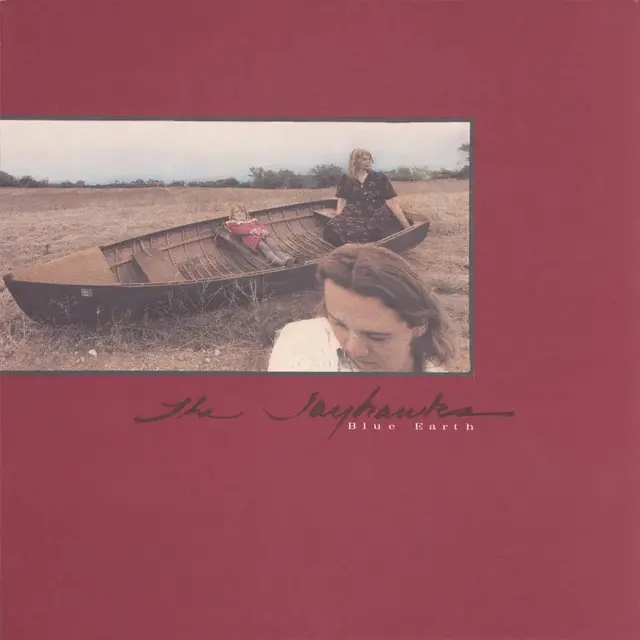
“Blue Earth” is a studio album by American alt country and alt rock band the Jayhawks, Originally released in 1989. After the local release of their debut album The Jayhawks, the band recorded a set of demos in order to attract a major label deal. Singer/guitarist Gary Louris was injured in a car accident and left the band. Their manager was able to interest Twin/Tone Records in releasing the demos. Louris went to the studio to overdub his guitar parts and ended up re-joining the band. The re-mixed demos were released as “Blue Earth” AllMusic, critic Jason Ankeny wrote that due to the songs originally being demos, they lack punch, and noted “the songs are simply too primitive to come to life in this setting. Nonetheless, the growth of the band’s songwriting skills over their debut is substantial…” Music critic Robert Christgau gave the album an A− rating, noting “Gram Parsons comparisons get you nowhere, but I’m not kidding—this is the obliquely songful follow-up the Burritos never made.
The Jayhawks’ second album, released on Twin-Tone Records. It has not been on LP since it was originally issued in 1989. Contains 7” EP with 4 bonus tracks never before on vinyl.
Liam Gallagher’s“Acoustic Sessions” features stripped-back versions of tracks from his 2019 album WhyMe, Why Not alongside Oasis classics “Cast No Shadow”, “Sad Song” and “Stand By Me”.
“Acoustic Sessions” was released digitally in January 2020 and is now available exclusively for Record Store Day 2025 as a limited edition colour-in-colour silver and blue vinyl. Each copy is individually hand pressed, making every copy unique.
The four-LP RSD Oasis album “Time Flies… 1994-2009” is already sold out in pre-order (that seems wrong), so I won’t bother going on about it. However, there are a few things to love about Gallager brother Liam’s stripped-to-the-bone “Acoustic Sessions” that warrant real attention. For vinyl heads, the record is done up in colour-in-colour silver and blue with each copy individually hand-pressed so that your Liam won’t be the same as my Liam. Then there are streamlined, sketchbook versions of songs from his 2019 solo album, “Why Me? Why Not”. to consider. Lastly, for those of you who didn’t get Oasis tickets or secure a copy of “Time Flies”…, Liam sings some of the band’s songs such as “Cast No Shadow,” “Sad Song,” and “Stand By Me.” .
Tracklisting , Side A: 1. Cast No Shadow 2. Now That I’ve Found You 3. Alright Now 4. Sad Song Side B: 5. Stand By Me 6. Once 7. Meadow 8. Once – Demo








 The Fat Angel Sings