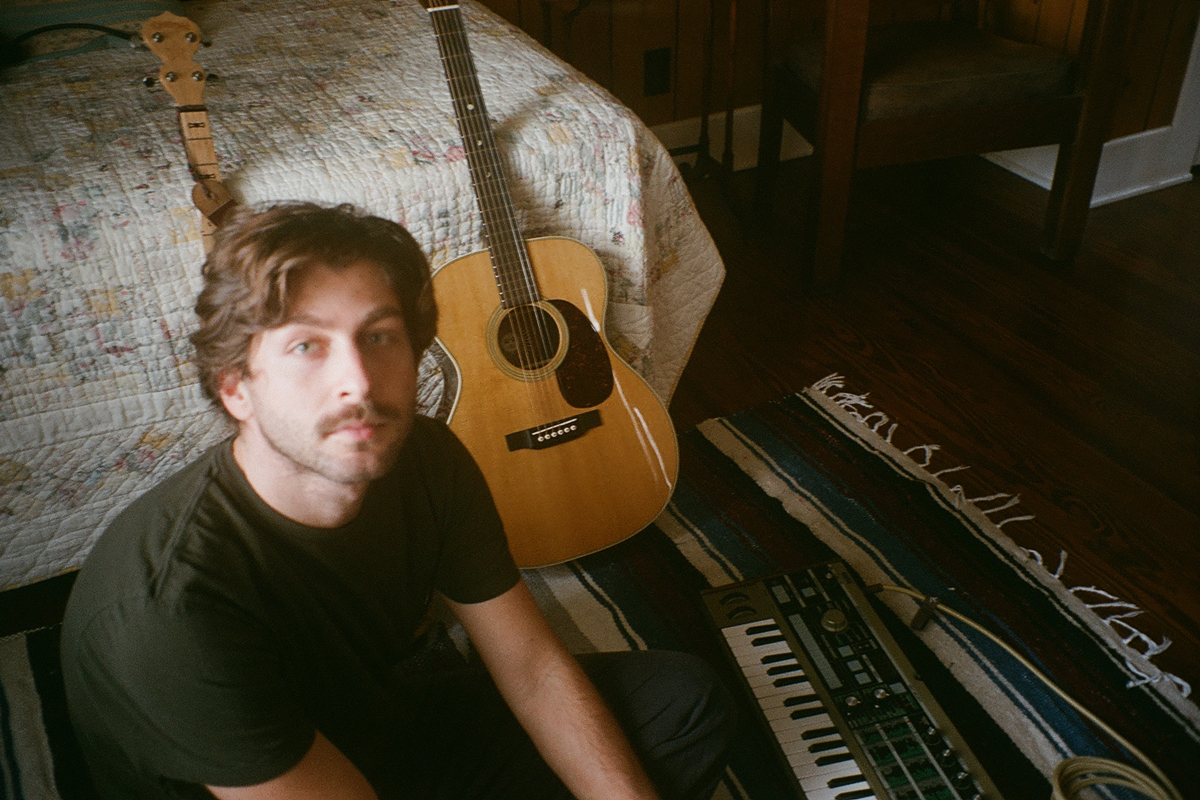
Nathan Williams returns to record company Fat Possum with a new album “Hideaway”, his seventh album with Wavves. Produced by TV on the Radio’s Dave Sitek, the new album was recorded in the garden shed in Williams’ parents’ backyard where he wrote much of his early work and, of course, released on the label that originally made him famous.
Wavves back with the music video for a new single, “Sinking Feeling” It’s the first piece of new music from NathanWilliams’ rock project since 2017’s “You’re Welcome”, and the first new song since his return to the Fat Possum roster. (Fat Possum released Wavves’ 2009 debut album, as well as the band’s breakout record King of the Beach.) The new track was produced by TV on the Radio’s Dave Sitek.
“‘Sinking Feeling’ is a song about a wave of depression that keeps coming back,” Nathan Williams said in a statement. “It’s that sinking feeling that drags you down and no matter what you do or where you go it follows you.”
Last year, Wavves reissued “King of the Beach” on vinyl. Plans to tour behind the 10th anniversary of the album were scrapped due to the pandemic .
Wavves will release new album Hideaway on July 16th and “Help Is On The Way” is the band at their most optimistic. Sounding like “Warning”-era Green Day, Nathan Williams makes peace with the world’s ills and floats on past with barely a care in the world.
“Across Hideaway‘s brief but impactful nine tracks, the album, is about what happens when you get old enough to take stock of the world around you and realize that no one is going to save you but yourself, and even that might be a tall order. “It’s real peaks and valleys with me,” Wavves’ Nathan Williams says. “I can be super optimistic and I can feel really good, and then I can hit a skid and it’s like an earthquake hits my life, and everything just falls apart. Some of it is my own doing, of course.” It’s this self awareness that permeates each of Hideaway’s songs, marking them each as mature reckonings with who he is. Hideaway features Williams’ most universal and urgent songs yet.”
Nathan Williams is back on Fat Possum Records, too Wavves are back with new single ‘Sinking Feeling’ out now on Fat Possum Records.
Their upcoming album ‘Hideaway’ due out on July 16th on Fat Possum Records.
“Sling”, is the second full-length from Clairo, was recorded at a moment when the young singer-songwriter was unsure if she wanted to continue pursuing music at all. Produced by Clairo and Jack Antonoff and recorded in a remote studio in upstate New York, the new LP takes sonic inspiration from those woodland surroundings. Across “Sling“, whose track “Blouse” features background vocals from Lorde, Clairo describes depression and being a young woman navigating the music industry.
When it was time to release a first single from Claire Cottrill’s hotly anticipated sophomore album under the name Clairo, somebody chose an interesting one: “Blouse” a downcast ballad about feeling sexualized and ignored that sounds like Phoebe Bridgers singing a Simon & Garfunkel song. The contrast between “Blouse” and Immunity provoked several questions: Was the single representative of the rest of the new album? Or would it turn out to be a curveball? Was it indicative of a change in direction for Clairo? Or was it just another one of her sad songs, this time stripped of the production touches of former Vampire Weekend studio wizard Rostam Batmanglij, whose influence is heavy throughout Immunity? A little more than a month later, Clairo’s new album “Sling” is here, and we have our answers.
Yes, “Blouse” is somewhat representative of the work as a whole, in that it is one of Cottrill’s sad songs—resolute, plainspoken, emotionally resonant, melodically inviting—and Batmanglij’s thumps and squiggles are nowhere to be found. In their place are string sections and horns, rubbery bass lines and warm organ tones, layered harmonies, hushed acoustic folk, modest indie-pop and ‘70s singer/songwriter vibes.
And in Rostam’s place is Jack Antonoff, super-producer to stars like Taylor Swift, Lana Del Rey, Lorde and The Chicks. Together, Antonoff and Cottrill recorded Sling at Allaire Studio on a verdant hilltop in upstate New York, where Cottrill found solace after a whirlwind few years that included Immunity’s success, lots of touring and, before all that, her viral rise. Which is probably why Sling sounds like a long exhale after a wild ride: constructive, much-needed, a little bit messy. And while setting Sling next to Immunity proves Cottrill has more than one pitch in her arsenal, it turns out her curveball is the one that’s most dazzling.
Here’s hoping she makes an album full of them someday.
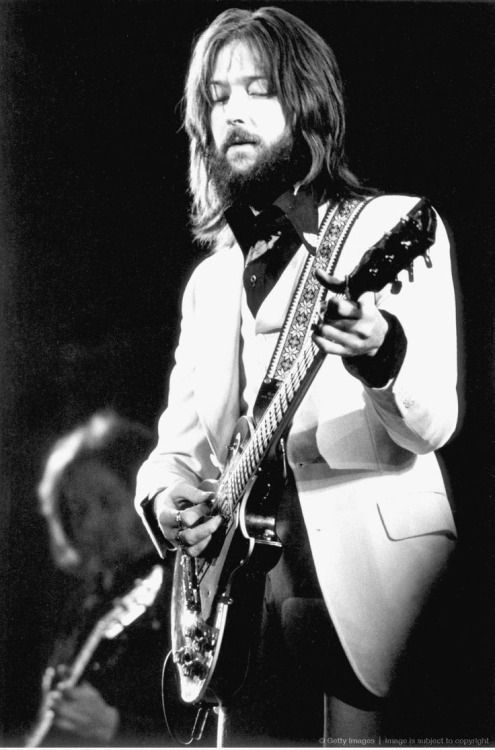
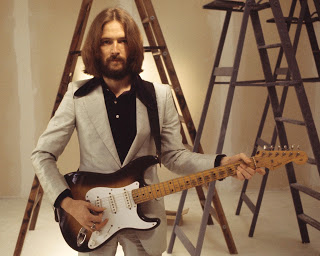
Who’s that bored-looking guy on the album cover? Sitting on a chair in a nearly empty room that seems to be in the process of decoration, his eyes look down, avoiding the camera. The cigarette in his right hand’s almost burned out, and a 1956 Fender Stratocaster with a sunburst finish leans unused against his leg. He looks to be in his mid-20s, bearded and long-haired, not unlike many of his generation in 1970, when the photo was taken. The only hint of panache is his snazzy cream-coloured suit. Could this be, possibly, the Guitar God Eric Clapton.
A new 4-CD deluxe anniversary edition of Eric Clapton’s first solo album will be released on August 20th, 2021, by Polydor Records. The self-titled album, originally released on August 16th, 1970, will be presented in three separate mixes: “The Delaney Bramlett Mix,” “The Tom Dowd Mix (The UK Version),” plus “The Eric Clapton Mix,” which is being released in full for the first time. This anniversary collection also includes singles and session outtakes.
Writing in his 2007 autobiography, Clapton described what happened to him in 1969 when he discovered Delaney and Bonnie Bramlett and invited their band to open the U.S. tour for his supergroup Blind Faith: “I was lost in Blind Faith.
I was the man in the hallway who has come out of one door, only to find it has closed behind him while another one is opening. Through that door were Delaney & Bonnie.” Bonnie was the daughter of an Illinois steelworker, and Delaney was raised in Mississippi, steeped in gospel and blues. The first white act signed to Memphis’ “Stax Records” label, D&B filled their band with stellar musicians (drummer Jim Gordon, saxophonist Bobby Keys, bassist Carl Radle, trumpeter Jim Price and organist Bobby Whitlock among them), and were key to the creation of both Clapton’s debut solo album and the other album he issued in 1970, “Layla and Other Assorted Love Songs“.
At loose ends after Blind Faith folded after a single album and tour, in late ’69 Clapton signed on as a touring member of Delaney and Bonnie and Friends, enjoying the easy going collaboration and “sheer joy of playing,” and the relative anonymity it afforded him as a sideman on stage. Early in the new year he began writing songs with Delaney Bramlett, which became the core of his first solo LP, which was released in July 1970.
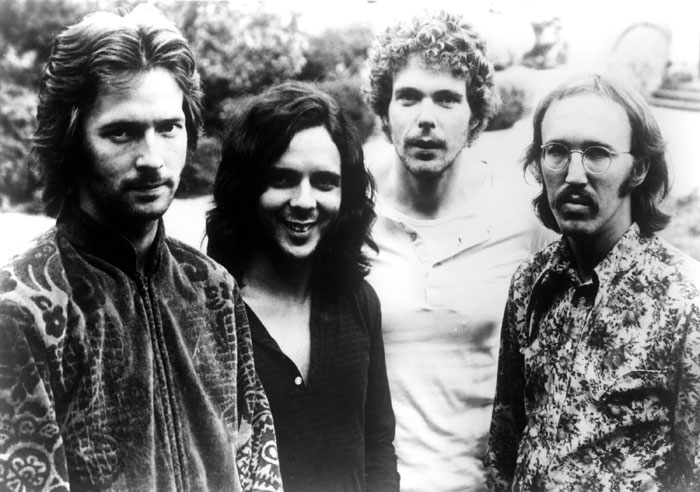
Beside Clapton, Bramlett and Russell, the personnel includes the other members of Clapton’s 1970 band Derek and the Dominos as well as guest spots from Stephen Stills, Rita Coolidge, Bonnie Bramlett, Sonny Curtis and others.
Later that year he also wrote with Whitlock in England, eventually recording those songs in sessions with DuaneAllman and most of the same musicians, dubbing the group Derek and the Dominos (more anonymity, which his record company had to counter by belatedly printing up “Derek is Eric” buttons). “I’ll never be able to repay Delaney for his belief in me,” Clapton later wrote. “He saw something I had stopped looking for in myself.”
Clapton had found new confidence in his singing, Delaney encouraging him with a sentence that stunned Eric: “God has given you this gift, and if you don’t use it He will take it away.” Mostly recorded at Village Recorders in Los Angeles when Clapton was staying at Delaney and Bonnie’s Sherman Oaks, California, house, some of the tunes were spontaneous creations: One day when nothing particular was planned, Leon Russell gave Clapton a line about how people viewed him, an idea that became “Blues Power,” with its opening lines, “I bet you didn’t think I knew how to rock and roll/Oh, I got the boogie-woogie right down in my very soul.” Clapton liked the informal atmosphere: “When I am trying to write songs, I like to leave things as unfinished as I can, so that whoever I am going to play the song with has a chance to influence, by the way they play it, the way the song will end up,” he later explained.
Still, the album is a sometimes uneasy blend of self-effacement and frontman swagger. Bramlett’s production and arrangements are dominant, and the disc sounds very much like the Delaney and Bonnie albums that preceded it. Clapton eschews the long, expeditionary solos he was known for, and keeps it succinct. Strangely, the opener, “Slunky,” is an energetic but simple instrumental jam led by Keys’ sax and Russell’s funky piano, with a so-so, somewhat clichéd, tinny-sounding Clapton solo. Why this was deemed worthy of starting such an important album is a mystery—Clapton doesn’t command the track or make it focus. Likewise, the following “Bad Boy” is a fairly standard blues written by Bramlett and Clapton, but it does have an excellent horn arrangement and biting guitar solos, fading out on what seems to be a brief Delaney-Clapton duel.
J.J. Cale’s “After Midnight,” with a driving march rhythm from Gordon, has rightly earned its iconic status as one of rock’s greatest recordings. The gospel chorus echoes Clapton, and his solo is precise and concise. Issued as the album’s lead single, it made the top 20 on Billboard’s singles chart and powered the LP, which debuted on the album chart on August. 1st, to a high of #13. (In 2006 Clapton and Cale finally issued a long-planned duo album, The Road to Escondido, which won them a Grammy.)
After the rather tepid self-penned ballad “Easy Now,” in which Clapton fairly obviously imitates his friend George Harrison, “Blues Power” brings the first side of the LP to an end. Here, everything comes together: fantastic guitar playing, a versatile vocal that ranges from grit to falsetto and another tremendous arrangement that bears the fingerprints of Leon Russell (with some bumping stop-start effects). If “Blues Power” had been placed first on the side, it would have blown listeners away from the start—as it is, it’s well-placed to make you want to turn the vinyl over.
The shuffle “Bottle of Red Wine” begins side two, with Bonnie and Clapton duetting to fine effect and Clapton’s guitar tone the clearest on the album. The track has a great spontaneous feel, thanks especially to Bonnie’s wailing fills. “Lovin’ You Lovin’ Me” and “Told You For the Last Time” (a Delaney co-write with Steve Cropper) are mid-tempo, country-gospel-flavoured tunes, with perfectly good Clapton vocals in service of second-tier songs.
After that, the album ends very strongly, with the R&B love song “Don’t Know Why” (Clapton’s guitar interjections are primo) and “Let It Rain,” which stretches out to over five minutes (the longest on the album). The track has a killer guitar figure to kick it off, and contains several very different instrumental sections, one of which features Stephen Stills’ guitar and has a hint of Buffalo Springfield. Clapton’s guitar work is closer to Blind Faith than anywhere else on the LP. “Let It Rain” wasn’t released as a single until 1972, and only barely scraped into the top 50, but it’s become a radio staple.
Despite his crucial participation, Delaney’s original sound mixes were rejected in favour of those by Atlantic Record’s in-house star producer Tom Dowd. Bramlett’s were finally released in 2006 as part of a “deluxe edition” double-CD, and contain their own delights and surprises, including a smashin version ofg “Blues Power” that bests the Dowd version. In the wake of the album’s modest commercial success, the worldwide “Clapton is God” graffiti probably diminished a bit. From Clapton’s point of view, that was “mission accomplished.”
The album received an expanded edition in 2021. Clapton, who turned 76 years of age on March 30th, 2021, continues to perform but is touring for the first time in years, with concerts scheduled for 2021 and 2022.
Manic Street Preachers have shared their new single ‘The Secret He Had Missed’, featuring bass player Julia Cumming from Sunflower Bean. Having previously spoken of his love for Sunflower Bean for Nicky Wire explained the new collaboration came from “a real fanboy thing”.
Sunflower Bean’s “Twenty Two In Blue” is just one of my favourite records of all time,” Wire said. “We were looking for something with no histrionics. We get really tired of singers just going up and down scales and showing off in the modern era. The genius of Abba is how the vocals are always so controlled, they’re never over the top.”
He continued: “Julia can do that easily anyway. She’s always really controlled and within herself. Once she got the Abba thing and the Billy Joel pianos she really enjoyed it and just breathed through it. She’s an unbelievably underrated talent.”
The song also comes with a cinematic video starring fellow Welsh star Aimee-Ffion Edwards ofPeaky Blinders, Skins and The Detectorists fame, directed by long time collaborator Kieran Evans.
Following on from the recent single “Orwellian”, ‘The Secret He Had Missed’ is the latest taster from the Welshrock band upcoming 14th album ‘The Ultra Vivid Lament’. One of two duets on the album – the other being ‘Blank Diary Entry’ featuring Mark Lanegan – the song is described as a “cousin” to the elegiac ‘The Girl Who Wanted To Be God’ from their classic fourth album ‘Everything Must Go’.
“It’s probably the most Abba-influenced track on the album, the piano track especially,” said Wire . “It all came out really naturally. It’s what we would call pop in our world – that glacial kind of controlled energy that comes out in something melancholic, but uplifting.”
Lyrically, the song was inspired by “the inner dynamics between family relationships” – particularly that of the celebrated Welsh painters Augustus John and Gwen John, who grew to fame at the turn of the 20th Century.
“It’s about by how opposite their lives were,” said Wire. “Augustus John was bohemian, reckless, amazingly talented but some might say wasted his talent. Then Gwen John was much more about the interior world, living an almost nun-like existence in France with very little possessions. It just goes to show how different it can turn out between a brother and sister.”
As for the sound of the rest of the record, Wire said that ‘The Ultra Vivid Lament’ would find a home with fans of the band’s more esoteric and experimental but “controlled” work.
“I think it’s got traces of ‘Lifeblood’ [2004] and ‘Futurology’ [2014], but I think it is a step into a new dimension, he explained. “It’s got the high modernism of ‘Futurology’ and the underplayed, glacial power of ‘Lifeblood’.
“I’m not going to pretend that we’re reinventing the wheel in terms of modernity, but it’s definitely framed within that era of time.”
The band will also be hitting the road in the months ahead, where Wire promised that the band would be playing “something different” to the usual set at their headline shows, offering “more deep cuts” alongside new material. “We can play every song off the album because we’ve rehearsed it so much,” he added. “I’m not saying that we’re going to play every song, but we’ve got the muscle memory.”
The new album, ‘The Ultra Vivid Lament’ is out 3rd September 2021
Eliza Shaddad returns with remarkable new album ‘The Woman You Want‘ due for release on 16th July 2021. Critically acclaimed Sudanese-Scottish artist Eliza Shaddad returns to the fore with the release of exquisite new album The Woman You Want. Raised across seven countries, Eliza Shaddad is the daughter of a Sudanese astrophysicist and a Scottish diplomat. A multi-linguist with a philosophy degree, Eliza studied jazz at London’s Guildhall before self- producing her first EP, recorded with Clean Bandit’s Jack Patterson. Eliza has released three EPs and one LP
Produced by BJ Jackson (Childcare/To Kill A King), mixed by Grammy Award winner Sam Okell (PJ Harvey/Celeste/Graham Coxon), mastered by Tim Rowkins (Rina Sawayama) and featuring guest appearances from the likes of Micheal Jablonka (Michael Kiwanuka) on guitar, ‘The Woman You Want’ is a journey that celebrates the full spread of Eliza’s musical range and writing prowess.
Sprawling from the introspective folk-influenced sounds of ‘Blossom’, to the sharp post-grunge strums of ‘Fine & Peachy’, to the achingly beautiful string-laden soundscapes of ‘In The Morning (Grandmother Song)’, Eliza’s raw riff-driven cinematic trademark sound is at the forefront throughout.
Lead single ‘Heaven’ is a call to hope and a plea to keep going. Written whilst Eliza was visiting family in hospital and then later in the first UK lockdown, the single and the video are a poignant reminder that life can get better and it’s worth holding on to. This theme is threaded through much of the album – Eliza Shaddad explains. “I was wrestling with the idea of wanting to be a better human, a better woman, a better wife, better friend, better daughter while writing and recording… and not really feeling capable of it… so I was asking myself all these questions – and as a result the record, and even the title ‘The Woman You Want’ is me trying to find a way out of that – and a direct challenge to what we expect of ourselves.”
More than anything, ‘The Woman You Want’ is Shaddad’s melding of the myriad, kaleidoscopic influences that make this such a vivid listening experience. It’s a reconciliation of culture, identity, the traditional and the brand new; the culmination of a year’s work and a moving portrait of a truly unique artist.
Released July 16th, 2021
All songs written by Eliza Shaddad Except Waiting Game; written by Eliza Shaddad and Ben Christophers.
Following a trip to Japan for two packed-out Tokyo shows at the start of 2020, Swimming Tapes suddenly found themselves, like most bands, unable to write and perform together. This stifling of creative output and collaboration drove LouPrice to start putting songs together himself; something he had done in partnership with his band-mates and best-friends for many years.
The result of this isolation is “Parkside Grooming” – a collection of indie-pop songs which see Price wear his heart on his sleeve, allowing himself to push past barriers and become far more personal with his song writing. Across the EP, he touches on the breakdown of his parents’ marriage when he was a child “Caroline”, anger and confusion about the government response to the pandemic “Figure It Out” / “Hit Me Up” and the financial stresses and strains of living in London as a musician “Hang Tight”.
Lou Price – Parkside Grooming released through Hand In Hive Records.
Released July 16th, 2021
Written, produced and recorded by Lou Price All instruments played by Lou Price Drum overdubs by Paddy Baird Backing vocals by Will Blackaby + Zoe Mead
If this isn’t the catchiest song since, I dunno “Crazy” or “Can’t Get You Out of My Head,” then I don’t know what would be. All I know is that I wish this song was 24 hours long and had 2000 verses. This has got to be the greatest debut single in years. I can’t decide what I like the most…. the hilarious filthy lyrics, the cold detached vocal style, the great bass line, the “excuse me – what” hook, the guitar freak-out… I love everything about this song. If the rest of the material is anywhere near as good as this then they’re going to be massive.
Already feeling a strong “Song of the Summer” vibe about this one. My summer anyway!
So far Wet Leg’s Rhian Teasdale and Hester Chambers have only released one song, via the Domino label, and this is it. There’s little information about them, other than what appears on the Domino Recording’s
Amidst a night of hazy scenes in their native Isle of Wight, Rhian Teasdale and Hester Chambers found themselves at the summit of a Ferris wheel.
They decided to start a band. The band is called Wet Leg. Arming themselves with guitars, a penchant for French disco, effervescent imaginations and a shared love of the The Ronettes and Jane Birkin, through to Ty Segall and Bjork, they set about making some recordings of their own.
Is that a Faust sample loaded into their drum machine? Wet Leg will be performing next weekend at the Latitude Festival in Suffolk, England.
Te Whanganui-a-Tara’s French For Rabbits have at last unveiled the title track to their forthcoming new album “The Overflow“, While sounding soothing and centred, the gorgeous dream-pop offering is in fact inspired by personal states of anxiety and near-panic, feelings familiar to many in our music community as Brooke Singer explained…
“Nobody needs to hear about the admin of an indie musician, but I can tell you – it could be a mountain higher than Everest if you let it… At times, I’ve found myself on the edge of burn-out and having panic attacks… I dream of living in a cabin by a river, with a dog and fireplace and a simple life with friends around for dinner. But I’m also filled to the brim with ideas for projects, new songs and new challenges…”
French For Rabbits have also released an enchanting, citrus-tinted video for their new single embodying the delicate balancing act of everyday living — directed, produced by and starring Singer with bandmates John Fitzgerald, Ben Lemi, Penelope Esplin and Hikurangi Schaverien-Kaa.
The Overflow is the title track from French for Rabbits’ forthcoming album which is being released by AAA records,Reckless Yes (UK).
“Always Repeating”, Runnner’s debut for Run For Cover Records, yearns for a sense of place. The project of the now LA-based songwriter/multi-instrumentalist Noah Weinman, Runnner’s poignant reflections on the isolation and anxiety caused by a sense of rootlessness radiate with wit and charm. While writing the songs that now span “Always Repeating”, he floated between Providence, Los Angeles, and New York. “It’s like I sing about these places yearning to be there, but also knowing full well that what I’m really missing is the people I met and the experiences I had,” Weinman explains. “I get restless and frustrated in my present, and romanticize my past while pushing myself into some different chapter—one that usually starts with me in a dark place and some songs in my journal. These songs end up being the constant for me over the years.” Always Repeating, self-produced and recorded wherever he called home at the time, documents this cycle of looking back and moving forward, of alienation changing to reconciliation.
The 10-track collection is composed of five re-recorded versions of songs that appeared on Runnner’s 2017 debut, “Awash”, and 2020’s “One of One” EP. Although the songs were written over the course of three years, all find Weinman grappling with the same thing: feelings of uncertainty about his life.
After leaving college, his friends, and his beloved life in Ohio, Weinman made the reluctant decision to move back to his hometown of Los Angeles; not because he wanted to, but because he wasn’t sure where else to go. It was an extremely isolating time and that existential dread pervades the music. “I began to feel like all of the people I knew and had met maybe never really existed,” Weinman explains. “I fell out of touch with everyone. It was really lonely. I wrote these songs as a way of reaching out and trying to reconnect. It’s interesting that the feelings I had then overlap with the feelings I’ve had in the past year, where everybody feels distant and far away.”
For Weinman, Runnner is primarily a solo endeavour with an ever-expanding musical community of musicians collaborating on his albums and shows, which at times have been known to feature up to a 7-piece live band (he also has a burgeoning career as a producer, notably working on Skullcrusher’s critically-acclaimed debut EP for Secretly Canadian). Weinman completed Always Repeating last fall in Western Massachusetts and Woodstock using a mobile studio set-up. He played the majority of the instruments himself, including guitar, bass, trumpet, banjo, piano and synth. The goal was to create the perfect balance of intimate and melancholy song writing through the lens of hi-fi/lo-fi dynamics, inspired by his favourite artists like Bon Iver, the Microphones, and Julien Baker. “I want it to feel honest and homemade and a little rough around the edges, but where the roughness doesn’t preclude somebody from engaging with the song,” Weinman explains. “Like you’re in the room listening to it all be made. I tried to preserve some artifacts of the process to help it feel present.”
The songs draw from personal emotions and experiences—with Weinman usually more interested in posing questions than in always providing answers—and are sometimes inspired by the works of writers such as Angela Pelster, Max Porter and Donald Barthelme. “Awash” embodies the feeling of being lost and adrift through its aching melody and acoustic riffs, while the pulsating “Urgent Care” uses humour and light-heartedness to touch on Weinman’s very real anxiety.
The relatable album opener, “Monochrome,” resonates as he tries fruitlessly to recall mundane and insignificant moments from his past. While the songs are about feeling alone, they also offer the hand of connection. “The act of writing songs and the time being alone making songs has been a way for me to work through those feelings,” Weinman says. “I write songs hoping for connection: if someone else feels less alone from listening to my music then I might also feel less alone.” He is looking towards the future, but he also knows that the songs on “Always Repeating” probably haven’t finished playing themselves out–and they probably never will.
Always Repeating ultimately tells the start of Weinman’s journey as Runnner, and his cyclical feelings of being connected and then disconnected from the world over and over again. This collection of songs reflects a constant, honest search for attachment and a sense of place–and a vulnerability that empathizes with listeners who may face that same challenge.
“When I first left college I was uncertain and afraid, and I knew I had changes ahead of me, but I wasn’t sure if I was ready to make them,” he recalls. “I was just circling in my own anxiety and indecision, and now I’m back to recording those same songs again, in a world that is in many ways more uncertain than it was then. Me struggling with loneliness and anxiety is true for all of the music I write. And pandemic or not, these songs would still feel relevant. I went through it then, I’m going through it now, and I’ll probably go through it again in a few years.”
“AlwaysRepeating”, Runnner’s debut for Run For Cover Records, yearns for a sense of place. The project of the now LA-based songwriter/multi-instrumentalist Noah Weinman, Runnner’s poignant reflections on the isolation and anxiety caused by a sense of rootlessness radiate with wit and charm.