Laura Stevenson’s new, self-titled studio album follows the heartbeat of the life-altering events. From the excitement and tribulations of giving birth to her first child during the COVID-19 pandemic to the powerful rage born from a turbulent situation in which someone she loves was harmed and nearly killed, the new collection is a dynamic and heartbreaking celebration of life. The album has already received rapturous acclaim across The Guardian, Brooklyn Vegan, NPR, Paste and Stereogum and more.
“Laura Stevenson” was produced by John Agnello (Kurt Vile, Hop Along, Dinosaur Jr.), and features long time collaborator and bandmate Jeff Rosenstock on guitar. While it is often emotionally heavy, Laura Stevenson never strays from its true motivating force: love. “The album was written as a sort of purge and a prayer,” Stevenson says. When it finally came time to record, she was pregnant with her first child. “It was a very intense experience to re-live all of the events of the previous year, while tracking these songs, with my daughter growing inside me, reliving all of that fear and pain and just wanting to protect her from the world that much more. It made me very raw.”
The album follows Stevenson’s 2019 career milestone “The Big Freeze” celebrated for its “finely detailed, wrenchingly intimate song writing” (All Songs Considered), and a 2020 NPR Tiny Desk (counted as one of the year’s 20 Best). Recorded at The Building in Marlboro, NY, “Laura Stevenson” is a sincere portrait of a human heart in all its vibrant colours. More than anything, it is about bearing one’s whole self in the face of those you love—uncomfortable, and exposed, but vital, present.
Released August 6th, 2021
“one of America’s best if most underrated songwriters.” –– The Guardian
The are very early demos done at the Miracle Legion loft on Chapel St in New Haven. It’s one of the first times we recorded as a 4 piece band. Our friend Rondo brought his 4 track reel to reel (4 track is the true way) over and we started recording all kinds of music. These 5 were new songs. Eventually they all ended up on different records. All but one. ‘It Cuts Into a Friend’ was a song we played live a lot, but somehow it got put away and forgotten. This happens, but now the wrong is righted. Miracle Legion were a Connecticut-based band that immediately sprang to life on the heels of a post-R.E.M. guitar rock boom, chiefly because lead singer Mark Mulcahy’s voice bore an uncanny resemblance to Michael Stipe’s, and the arpeggio guitar structures were akin to Peter Buck’s.
The interview is from out first ever UK tour. We were on a label called Making Waves and they had a great press department. We did tons of interviews including this one which is very detailed and possibly informative. I’m sorry but I don’t know who the interviewer is. Apologies to him. Nice work sir.
Released August 6th, 2021
The band: drums – Jeff ‘Baby’ Wiederschall bass – Joel ’Little Joe’ Potocsky vocals – Mark ‘K9’ Mulcahy guitar – Ray ‘Roy McCoy’ Neal
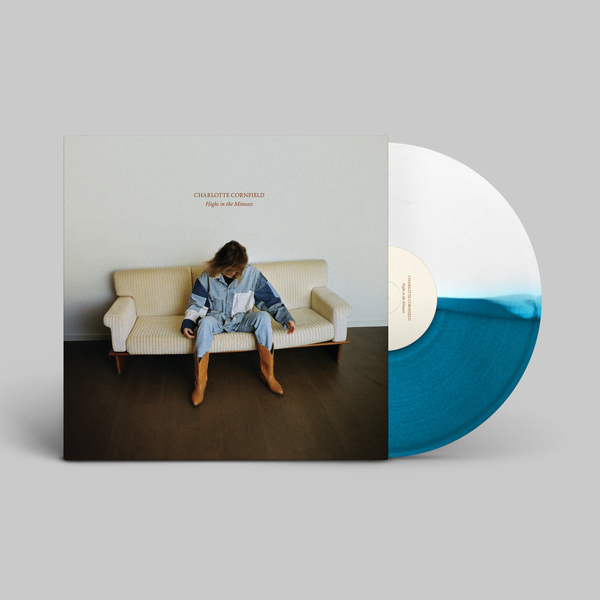
Introducing “Highs in the Minuses”, the new record from Charlotte Cornfield. Co-released via Double Double Whammy x Polyvinyl in the US, and Next Door Records in Canada. Available everywhere digitally on October 29th, 2021.–
After spending much of 2020 with her thoughts and instruments, Charlotte Cornfield knew it was time to take her new songs out of the house. She’d spent months writing a suite of evocative, autobiographical story-songs in near-solitude, and was ready for the immediate, regenerative experience of a band playing live in the studio. But this wasn’t mere pandemic-related longing. It was instead a long-simmering desire.
The Canadian singer, songwriter, and multi-instrumentalist’s 2019 album The Shape of Your Name had received widespread praise, including being longlisted for the coveted Polaris Music Prize. But it was a slow solo endeavor, written alone and meticulously recorded in fits and starts over the span of a few years. She’d even played most of its instruments. It was a mode that proved fruitful, if not inauthentic to the spirit of musical community Cornfield has dedicated herself to since childhood. After coming of age amid vibrant DIY scenes in her hometown Toronto, and forming lasting bonds in the music program at Montreal’s Concordia University, for “Highs in the Minuses” Cornfield knew she needed a cast that was representative of her journey — those friends and colleagues who’ve helped her become the incisive, witty, and generous writer and player she is.
Though the songs of Highs in the Minuses — her debut release on Polyvinyl and Double Double Whammy — are highly personal, Cornfield wanted their sonic quality to convey the communal, aleatoric energy of live performance. Channelling the spirit and working methods of Jason Molina, Neil Young, and Big Thief before her, she and the band allowed their psychic connection to convey the emotional interconnectedness that comes with stories of heartbreak, self-discovery, and new love. “I knew everyone was coming in prepared, but I was really excited to see what was going to happen spontaneously, and those ideas that happened really quickly,” Cornfield says. “It was so much about trusting who I was with and trying to capture the immediacy of the emotions in the songs.” So many of the tunes expose her messy corners, and an animate soundtrack played with equal parts heart seemed only fitting.
Cornfield (guitar, piano, vocals), bassist Alexandra Levy (Ada Lea) and drummer Liam O’Neill (Suuns) convened in Montreal at the studio of Howard Bilerman (Arcade Fire, Leonard Cohen). Cornfield and Bilerman originally met through a musician’s residency he founded at the Banff Centre for Arts and Creativity, situated in the idyllic cradle of the Canadian Rockies, and she knew he would be a perfect fit for her vision. “I feel really grateful that he was on the same page, in terms of focusing on the emotion,” she says. “He didn’t worry about all the little details that people can sweat about in the studio.” In just five days, with minimal takes and overdubs—and with contributions from guitarist Sam Gleason (Tim Baker) and Stars singer Amy Millan—they set Cornfield’s vivid mini-memoirs to an earthen folk-rock symphony. It ebbs and flows based on each song’s feeling: sturdy and buoyant in its jubilance and hope, and stripped back and vulnerable in its lonesomeness and pain.
Charlotte Cornfield – vocals, guitar, piano, bass, synth Liam O’Neill – drums, percussion Alexandra Levy – bass (1,3-5,10) Sam Gleason – guitar, synth (1, 2, 7-9, 11) Amy Millan – backing vocals (3) Howard Bilerman – noise (9)
“Headlines” is taken from Charlotte Cornfield’s album, Highs in the Minuses, out October 29th, 2021.
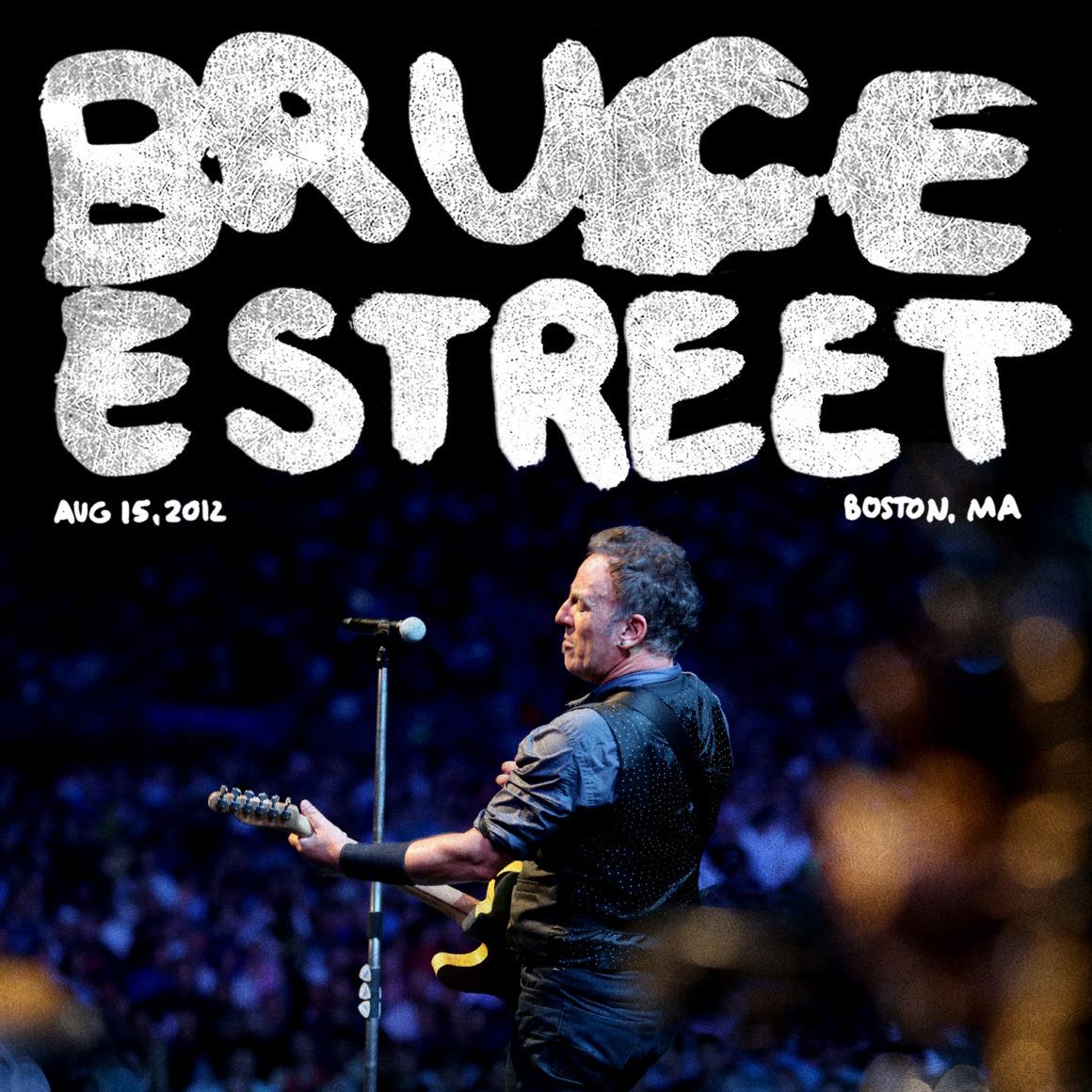
Returning to legendary Fenway Park, Springsteen and the E Street Band smash one over the Green Monster, putting 31 (songs) on the board, opening with “Take Me Out To The Ballgame” into “Thunder Road” performed a la 1975 by Bruce and Roy. From there, the show taps summertime vibes (“Hungry Heart,” “Sherry Darling,” “Summertime Blues” and “Girls In Their Summer Clothes”) and a bevy of super-fan rarities, including “Knock On Wood,” “Quarter To Three” and a holy trinity of “Thundercrack,” “Frankie” and the first “Prove It All Night” with the ’78 intro performed in the States in 32 years.
The bigger the venue, the more vibe matters. That’s not to say stadium shows in the US and especially Europe aren’t filled with long time fans hanging on every note. They always represent, holding up signs and requesting songs. But stadium concerts are inherently more inclusive, pulling in the one-show-per-tour types, their friends, and folks who just want a fun night out at the biggest event in town.
An audience composed of those who own Tracks and those who perhaps only own Greatest Hits can spur discord. How do you construct a show that delivers the friendly and familiar while still managing to delight those who know just how many times a particular song has been played on the tour?
Boston 8/15/12 stands as a model of how to satisfy both camps and then some. On a warm (and later wet) night at Fenway Park in Boston, Bruce throws a summer party where all are welcome and those with whom he and the band have a long-term relationship are recognized and rewarded.
Apropos of the venue, the show opens with a recording “Take Me Out to the Ballgame,” sending the cue that this is a participatory event. Roy Bittan and Bruce then surprise the Fenway faithful with another prelude: the stripped-down, piano arrangement of “Thunder Road” that opened shows in 1975.
It is fascinating to hear this version of “Thunder Road” (familiar to many as the first song on Live/1975-85) performed 37 years later by the same musicians—reinterpreting yet again their Born to Run tour reinterpretation of the original. In 2012, Bruce’s voice has a distinctly mature timbre, and his cadence and lyrical emphasis have shifted. Roy’s piano playing is less Broadway, still carrying the melody but in a slightly abstract expression. “Thunder Road ’75” is the first of three direct nods Bruce makes at Fenway to the way particular songs were performed in the ’70s.
Out of that sublime opening, Bruce declares, “Let’s start with the summertime hits!” The party has begun. In quick succession, we get “Hungry Heart,” “Sherry Darling,” a cover of Eddie Cochran’s “Summertime Blues,” and a request granted for Bruce’s own “Girls in Their Summer Clothes.” Springsteen’s controlled and precise singing on the Beach Boys-flavored “Summer Clothes” is impressive, especially given he had only performed it once before on the tour.
Boston 8/15/12 also does right by Springsteen’s then-current album, Wrecking Ball, hitting “We Take Care of Our Own,” “Death to My Hometown” and the title track in the first half of the set, plus “Shackled and Drawn” a couple of hours in. Along with “My City of Ruins,” the five songs form the spiritual backbone of the Wrecking Ball set and showcase the rich, rootsy sound of the expanded E Street Band.
Tracks-owning, sign-holding fans certainly got their money’s worth in an extraordinary five-song sequence that kicks off with a request for “Knock on Wood.” “If we don’t know this one we should be castigated,” says Bruce, who can be forgiven for not recalling that the band played “Knock on Wood” once before. At a 1976 show at the Ellis Auditorium in Memphis, Bruce invited “Knock on Wood” writer and singer Eddie Floyd to perform the tune with the E Street Band.
Some 36 years later, mental memories have faded but muscle memory remains, and the band performs “Knock on Wood” with aplomb. Max Weinberg is on point, Stevie Van Zandt channels Steve Cropper, and Bruce has big fun with his vocals. As for the horns, as Springsteen himself says, “Any self-respecting horn section should be able to pull this off.”
Next up, “for our old, old, old, old, old fans,” a marvelous, horn-led “Does This Bus Stop at 82nd Street?” The sprightly rendition features Bruce calling out the arrangement to the band. There’s even time for a percussion solo from Everett Bradley.
“We’re gonna go further back now,” Springsteen proclaims. “Back in the day we were opening up for a lot of unusual bands. We opened up for Anne Murray…Black Oak Arkansas…Brownsville Station…Sha Na Na…The Eagles…Chicago. Nobody knew who you were…You had to catch people’s ears, so we came up with these very convoluted songs that had a lot of moving parts. This was our first showstopper.”
That early-’70s showstopper, before “Rosalita” began serving the purpose, is the rollicking “Thundercrack.” Its thrilling twists and turns work as well to attract those unfamiliar in a stadium as they did in the clubs back in the day. Bruce gives props to his history in Beantown at the start of the song, saying that, unlike some other cities, “This is Boston, you guys are gonna know this one.” Following ten minutes of “Thundercrack,” Bruce honours another request many of us would co-sign with the second performance of “Frankie” on the tour and only the fourth of the modern era.
“Frankie” dates from the period between Born to Run and Darkness on the Edge of Town, having debuted on stage in early 1976; the song was then recorded, but ultimately not used, for both Darkness and Born in the U.S.A. The lilting, romantic mini-epic was finally released on Tracks and returned to the set for one-off appearances in 1999 and 2003 (at Fenway, in fact) that didn’t quite land.
The Boston performance of “Frankie” is enchanting, rearranged from the ’76 edition to include the horns and feature a new guitar solo in place of Clarence’s original sax break. Like “Thundercrack,” the sweet, hooky “Frankie” has the power to enchant newcomers and satisfy those who have longed to hear it played live.
If “Frankie” wasn’t enough, what came next was the coup de grace. There was a time when it seemed unimaginable Springsteen would play songs he hadn’t performed since the ’70s or early ‘80s. I followed the Tunnel of Love tour for two dozen dates in 1988, a stretch when the setlist remained unusually static and single additions to the show were regarded as momentous.
I’m trying to imagine this conversation taking place in 1988:
Prophetic Person: “In the future, there will be a show in Boston where Springsteen plays these five songs in a row: a cover of “Knock on Wood,” “Does This Bus Stop at 82nd Street?,” “Thundercrack,” and “Frankie.”
Me: “What? Are you insane? There is no WAY that will ever happen. And I thought you said five songs.”
Prophetic Person: “The fifth is “Prove It All Night” with the 1978 intro.
Springsteen playing songs he hasn’t done in decades is one thing; resurrecting arrangements from a specific tour is quite another. Yet thanks to some superfan in Spain who held up a sign at the Barcelona show in May, Bruce revisited the Darkness tour’s long and legendary piano-guitar intro to “Prove It All Night.”
The Boston show marks the first time the intro has been played in the US since a still-unexplained, two-show resurrection in Los Angeles in 1980. While not as fully developed as the original, the spirit of “Prove It All Night ‘78” remains intact, as brooding piano and searing guitar build to a crescendo to start the song. Coupled with “Thunder Road ‘75,” Boston 8/15/12 is the next best thing to a time machine.
A ’78 double-shot ensues with a bold “Darkness on the Edge of Town,” then a moment of fun. At the start of “Workingon the Highway” we hear an extended section of acoustic guitar strumming. What the Archive audio doesn’t capture at that moment is Bruce chugging a beer and snarfing a hot dog, both of which he’d been jonesing for all night.
Before the main set ends, we get another echo of famous song arrangements of the past. Of course it is too much to call it “Backstreets ’78”; Bruce does not revisit the “Sad Eyes” interlude from the Darkness tour. But by incorporating lines from Suicide’s “Dream Baby Dream,“ a cover that served as the striking show-closer for much of 2005’s Devils & Dust tour, he does take the middle break of “Backstreets” to a place reminiscent of that same stream-of-consciousness “Sad Eyes” feeling in an epic 10-minute reading.
The Fenway 2 encore opens with a brief, acoustic “Who’ll Stop the Rain,” acknowledging the drops that began falling mid-show, and slips neatly into “Rocky Ground,” the opening chords for which have never sounded more like “One Step Up.” Singer Michelle Moore crushes her vocals, as she did every night “Rocky Ground” was played.
After “Born to Run,” an abridged “Detroit Medley” yields to “Dancing in the Dark” before the tour premiere of “Quarter to Three.” The Gary U.S. Bonds classic is another sign request that Bruce quickly teaches to the backing singers, aided by the audience singing “Doh, doh” before the band has even begun. It’s yet another tip of the cap to the classic era, as “Quarter to Three” has only been played six times since the band reunited, and this might be the best of them.
As history dictates, Bruce shouts, “I’m just a prisoner of rock ‘n’ roll” to end the song, before shifting into “Tenth Avenue Freeze-out.” But there’s still time for one more. The Dropkick Murphys’ Ken Casey joins Bruce at the mic, trading vocals on “American Land” to close a Grand Slam night when Bruce gave the party people and the diehards everything they could have dreamed of.
Bruce Springsteen – Lead vocal, guitar, harmonica; Roy Bittan – Piano, keyboards, accordion; Nils Lofgren – Guitar, lap steel, backing vocal; Garry Tallent – Bass; Stevie Van Zandt – Electric and acoustic guitars, mandolin, backing vocal; Max Weinberg – Drums; Jake Clemons – Tenor saxophone, percussion, backing vocal; Charlie Giordano – Organ, keyboards, accordion; Soozie Tyrell – Violin, acoustic guitar, percussion, backing vocal; Everett Bradley – Percussion, backing vocal; Curtis King – Backing vocal, percussion; Cindy Mizelle – Backing vocal; Michelle Moore – Backing vocal; Barry Danielian – Trumpet; Clark Gayton – Trombone; Eddie Manion – Baritone and tenor saxophones; Curt Ramm – Trumpet
Containing White Denim’s first new music since the lockdown 30-day-album project “World As A Waiting Room“. “Crystal Bullets” was inspired by the groove of the great Bernard Purdie and the signature chopped and screwed production techniques of Houston, Texas’ late great DJ Screw. The final minute features the most sublime harmonised sax solo you’ll ever hear, leaving you wishing this was more than just a 2 track 12”…
White Denim just released two singles titled “Crystal Bullets” and “King Tears” in late July, but when the tracks were released as physical copies titled Crystal Bullets / King Tears to record stores there was a surprise. A week ahead of the release date, stores discovered that the 12″ single was actually a full surprise album, only available on vinyl, packaged as the original 12″ but with the full album on the record itself.
White Denim’s first ever 12” single is in fact their brand-new studio full-length! And it’s only available on vinyl.
“Crystal Bullets” was originally described upon its release, “[as a song] inspired by the groove of the great Bernard Purdie and the signature chopped and screwed production techniques of Houston, Texas’ DJ Screw. The final minute features the most sublime harmonized sax solo you’ll ever hear, leaving you wishing this was more than just a 2 track 12-inch…“
Crystal Bullets / King Tears is now available at record stores.
Of course this soundtrack album might be rated even higher as a relic, if musical considerations are not applied. Like all exploitative commerce based around the trippy era, it has an appealing tackiness. Those eager for a real revolution in the recording industry should look no further than the word “Revolution” itself, which has been the title of literally dozens of albums. In this case we have a product that was even connected to a film of the same name, with three fairly famous rock bands of the San Francisco scene providing tracks for the soundtrack. There’s Quicksilver Messenger Service, there’s The Steve Miller Band, and there’s the bluesy Mother Earth an eclectic American Blues rock band formed in 1967 in California, fronted by singer Tracey Nelson. The group were signed to Mercury Records, recording four albums. Mike Bloomfield played guitar on their 1968 release “Living with the Animals”. Boz Scaggs was a member of the group on their 1969 release “Make A Joyful Noise“.
Actually, all the tracks are kind of bluesy one way or another; that influence was never very far from any of the San Francisco psychedelic bands, except now and then when somebody really felt mellow. Most importantly, it should be stated that it is really difficult to knock an album that includes liner notes beginning with the following advice to the reader: “Next time you use the word revolution, you’d better include in your concept a beautiful blonde who went to San Francisco and illegally changed her name from Louise to Today.” And these words come from famous scribe Paul Krassner, no less. A few tomoorows later, nobody remembers Today Malone, an innocent blonde starlet who was at the centre of this film’s maelstrom-like scenario.
Probably the actress and the film were forgotten moments after the first release. All the tracks can be found on other recordings, but the compilation’s concept actually works to the advantage of the groups featured, none of whom sounded that great and all of whom had trouble creating an entirely listenable album. Vocalist Tracey Nelson has no problem dealing with a Percy Mayfield cover, on the other hand, one of the highlights of the set. “Babe I’m Gonna Leave You” is an enjoyable example of what was basically a required number for years in certain types of freaky coffeehouse venues.
Soundtrack of the cult film “Revolution”, produced and directed by the co-writer of track A1. Some lyrics were, ‘politically sensitive’ at the time,
The 3 bands featured were part of San Francisco’s Haight Ashbury scene in the late ’60s, around which the film’s subject is based. Also appearing in the film are the Ace Of Cups, Country Joe and the Fish and Dan Hicks.
Today Malone ”illegally changed her name from Louise to Today”. “Revolution” is a documentary film by Jack O’ Connell made in San Francisco in 1967. It was subsequently revived with added reminiscences.
Forever giants of the indie-pop scene, Hippo Campus are no strangers to euphoric riffs, sweetly sad compositions and emphatic moments of explosive bliss. They’re blessed with having a style that evolves with them, never finding themselves victim to walking down stale or uninspired paths, each new tune is as fresh and unique as the one that came before it – and thankfully, this is very much still the case on their latest venture, the magnificent, “Good Dog, Bad Dream” EP.
A sure contributor to why this EP stands out so boldly in the band’s discography is their approach to its production. Heading into the studio with no clear vision other than knowing they wanted to create great music, the lack of preconceptions only aided in creating their most cathartic work yet. Darkly comic lyricism fuses perfectly with scorching rhythms and deliciously experimental production, Hippo Campus find themselves at their most human and thus, their most alive..
Of course, the irregular nature of the EP’s creation leads to a whole plethora of different themes and topics being explored, resulting in a charmingly chaotic venture from the sensation of being stuck in one place, to the unexpected disillusionment of life in the spotlight. Hippo Campus tick as many boxes as they can, whilst managing to never create the overwhelming sensation of clutter.
“Deepfake” draws you in instantaneously with the existential opening lyrics, “I thought I was cool, but it turns out I’m a fake”. If Nathan Stocker doesn’t think he’s cool, then what does that make me? I asked myself after my third listen, but that’s a problem for another time. As the track continues, it delves deeper into lo-fi territory, with a chorus of fuzzy voices coming together for the climax. “Deepfake” unlocks something inside of you, something hidden under layers of bittersweet nostalgia and hints of self-hatred, what that is however never gets revealed, instead leaving you with a hankering for more of whatever you just felt.
The EP’s enigmatic closer, “Mojo Jojo”, takes the band into Hyperpop territory, unexpected, but very much welcome. It’s in these surprise moments where Hippo Campus shine. They’re blazenly themselves and are rightly celebrating all they’ve achieved in the last 6 years in a topsy-turvy eruption of unadulterated ecstasy.
Full of unanticipated glee and harrowing uncertainty,Good Dog, Bad Dream is perhaps one of the most exciting EP’s released in recent years, it’s true excellence.
When XTC finally downed guitars after the recording and release of Wasp Star, their last album to date, one of Andy’s ideas about what to do next, was to become a songwriter in the traditional sense, writing songs for others… It was something he had been asked to do throughout the XTC years, but never had the time. Songs were written. Songs were sent. Sometimes speculatively, often specifically requested, many tailor-made for an artist’s requirements, but then choppy waters could still lay ahead. Even where everyone seemed to think that newly written song A would be wonderful if recorded by singer B, whose manager C had initiated the request via music publisher D for album E on record label F…
Well, you begin to see the potential problems of such an approach – almost a quarter of the way through the alphabet and not a note recorded beyond Andy’s original demo. That’s without detailing the sort of horrendous politics that makes a fresh batch of alphabet spaghetti of any of the above as they interact. Still, songs are like children. A songwriter gives birth to them, feeds them, watches them grow before sending them out into the world.
So it’s unfair to abandon them as orphans just because their first experience outdoors might be a traumatic one of being cold shouldered. As a loving parent, Andy brought them all back together, re-Andy-fied them and buffed them up in his home studio, et voila! Here is the first selection of song siblings that resulted from all of this work, four brothers and sisters, happily reunited and presented as a family group aural snapshot for your entertainment and delight. The story has a happy ending after all. It is almost as if The Sound of Music, had been set in Swindon.
It was something he had been asked to do throughout the XTC years, but never had the time.
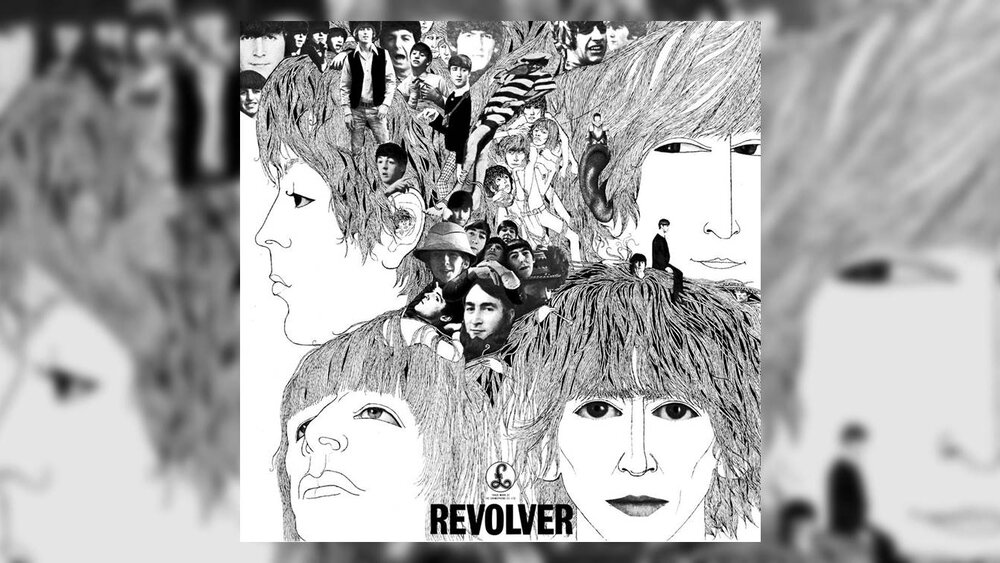
55 years ago today, The Beatles released their seventh studio album, ‘Revolver’, ultimately cementing their reputation as creative studio geniuses. During the recording process the band pushed all boundaries, using Indian instruments and musicians for ‘Love You To’, tape loops on ‘Tomorrow Never Knows’, backward recordings on ‘I’m Only Sleeping’, vari-speeding ‘Here, There and Everywhere’, and nothing but string instruments on ‘Eleanor Rigby’. Additionally, engineers George Martin and Geoff Emerick used non-traditional techniques to record Paul McCartney’s bass parts and Ringo’s drum parts, leading to the album’s heavy emphasis on rhythm. Even “Yellow Submarine” has its innovative moments with Martin and Emerick, alongside the Rolling Stones’Mick Jagger and Brian Jones, using bells, gongs, whistles, and more to create the track’s underwater atmosphere.
1966’s “Revolver” is the album that ultimately cemented The Beatles‘ reputation as creative studio geniuses atop the pyramid of commercial music at the time. It may not have the epic range of material as heard on “The White Album” released the following year, but Revolver marks the first time where the Beatles truly stepped outside of their comfort zone in the studio and expanded the idea of what rock and roll could be.
Coming off 1965’s Rubber Soul, the Beatles were at the peak of their fame. Yet, each member was growing increasingly disillusioned with all that was involved with “The Beatles” and their growing legion of fans. John Lennon was perhaps the most affected, causing a huge uproar in the United States when he proclaimed that the Beatles were “bigger than Jesus Christ.” The demands of the road, the size of the shows, and the non-stop schedule had pushed the band to their limits, so they cleared a few months from their calendar to give themselves time to prepare for their next album. The band used this time to delve deep into their new-found love of LSD–in particular Lennon and George Harrison–all the while experimenting with new instruments and styles of music in an attempt to augment their sound.
By 1966, their newly-discovered depths of creativity allowed the four musicians to embrace their studio environment with a new purpose while hoping to change the direction of their sound by using new recording techniques, instrumentation, and song arrangements. The resulting recordings were a slightly psychedelic-but-commercial mix of rock, orchestral, R&B, and Indian classical styles that re-invigorated the band and their fans.
When they finally entered Abbey Road Studios in April 1966, the band got right down to work and discovered, with the extended time they had to craft each song, their experimentation had reached new levels.
The album’s lyrical content was ground breaking as well. Lennon and Harrison’s contributions to the record were filled with psychedelic references, introspection, and questions about reality, while McCartney delved deeper into his lifelong exploration of love. This record marked the first time that Harrison and McCartney would stretch themselves as songwriters, leading to the Beatles’ first true collaborative album.
Specifically, Harrison’s political lyrics on “Taxman”–where he name-checks British Prime Minister Harold Wilson and Conservative Opposition leader Edward Heath–marked a huge shift for the Beatles, showing their willingness to get involved in the day’s social issues, not to mention lead off an album with a tune penned by the quiet Beatle. Also, the story that McCartney weaved together for “Eleanor Rigby” actually features lyrical contributions from all four members of the band, another shift from their song writing tradition until then. Of course, the loop-heavy mind-meld of “Tomorrow Never Knows” features Lennon at his most psychedelic, with lyrics inspired by the book The Psychedelic Experience: A Manual Based on the Tibetan Book of the Dead by Timothy Leary, Richard Alpert (a.k.a. Ram Dass), and Ralph Metzner.
Revolver is also the first Beatles album that featured songs performed not by the Beatles. “Love You To” features Harrison on sitar, but none of the other members of the band play on the track, as Harrison sought to emulate classical Indian music by bringing the London-based Asian Music Circle to Abbey Road to play tambura and tabla. “Eleanor Rigby” has Paul McCartney’s vocals, but the music itself was performed by a string octet arranged by George Martin, and the Beatles don’t play a single note on the track.
In the end, the Beatles had put together their most impressive album to date. “Revolver” definitively finished the pop chapter of the band’s career, and marked the beginning of their psychedelic period. Revolver blew everyone’s minds when it was released, and marked a new era not just for the band, but for the entire music world.
For some reason, however, the Beatles decided not to play any of their “Revolver” songs on their subsequent 1966 U.S. tour, which turned out to be their last, so the songs were never performed live by the band. Perhaps, the comfort of the studio, along with their new-found ability to use non-traditional musical methods to create their sound, rendered the live experience too boring for the Beatles, in addition to constantly playing shows where they were drowned out by the screams of teenage girls.
While the band’s time as pop music titans may be over, the recording of “Revolver” changed the band and opened the door to their most prolific era as songwriters and recording artists.
The album’s title, like that of Rubber Soul, was a pun, referring to both a kind of handgun and the “revolving” motion of the record as it is played on a turntable. The Beatles had difficulty coming up with this title. According to author Barry Miles, the name that the four had originally wanted was “Abracadabra”, until they discovered that another band had already used it (not Steve Miller Band’s). After that, opinion was split. John Lennon wanted to call it “Four Sides ofthe Eternal Triangle” and Ringo Starr suggested “After Geography”, playing on the title of The Rolling Stones’ recently released “Aftermath” LP. Other suggestions included “Magic Circles”, “Beatles on Safari”, “Pendulum” and, finally, “Revolver,” whose wordplay was the one that all four agreed upon.
The Beatles “Revolver” was released in the UK. The bands seventh album featured: ‘Taxman’, ‘Eleanor Rigby’, ‘I’m Only Sleeping’, ‘Here, There and Everywhere’, ‘She Said She Said’, ‘And Your Bird Can Sing’ and ‘Tomorrow Never Knows’.
Tomorrow Never Knows, by The Beatles The closing song on the album Revolver, While it’s the last song in the album order, it was the first song to be recorded for the album. It was also the first Beatles song to be recorded by Geoff Emerick as head engineer, at the age of 20. What a debut! John Lennon wrote the song in January 1966, with lyrics adapted from the book The Psychedelic Experience: A Manual Based on the Tibetan Book of the Dead by Timothy Leary. The book includes the sentence: “Whenever in doubt, turn off your mind, relax, float downstream.” A few song titles were suggested for the song including Mark I and The Void, but the final name came from a Ringoism that appears in an interview that the BBC conducted with the Beatles in 1964 after their return from their first US tour. Lennon told George Martin that he wanted to sound like a hundred chanting Tibetan monks. Emerick came up with the idea of wiring Lennon’s vocal through a Leslie rotating speaker, thus obtaining the desired effect. The speaker was usually connected to a Hammond organ, but Emerick used it as a stand alone effect and recorded the vocal as it came out of the revolving speaker.
The Beatles supplied a total of 30 or so tape loops to Martin, who selected 16 for use on the song. The tape loops were played on tape machines located at various studios of the Abbey Road building and controlled by EMI technicians in Studio Two. Each machine was monitored by one technician. The four Beatles controlled the faders on the mixing console while Martin varied the stereo panning and Emerick watched the meters. Eight of the tapes were used at one time, changed halfway through the song. According to Martin, the finished mix of the tape loops could not be repeated because of the complex and random way in which they were laid over the music. It was a never-to-be-repeated “performance”.
“Some people call my music dream-pop,” says Benjamin Cartel, a journeyman songwriter who’s never been afraid to blur the boundaries between styles. “I tend to resist being a ‘genre’ artist. I just want to make the best Benjamin Cartel music.”
Benjamin’s music has taken him across much of the world, first as a member of Kaiser Cartel whose critically-acclaimed albums earned the duo a spot in the folk-pop revival of the 21st century, and later as an adventurous solo artist. “Write At Home“, his fourth solo release, marks a new chapter in his unfolding story, rolling classic pop hooks, indie sensibilities, 1960s influences, and his own brand of American roots rock into a sound that’s at once fresh and familiar.
“Write At Home” is an album about departures and new arrivals. Cartel wrote the songs during a period that found him leaving New York, where his family had lived for four generations, and moving to eastern Kansas with his wife and twin toddlers. For years, he’d been creating melody-driven music informed by his observations of the world around him. Relocated to a new area, he suddenly found himself in a vastly narrowed world, spending nearly all his time in the same household. His new songs reflected that changing perspective, revolving around themes of looking inward, establishing a home base, navigating the complex relationships between parents and children, and stumbling toward self-improvement. Together, those songs formed a series of vignettes 10 little glimpses of life written by a man who relishes every little minute of it.
Write at Home, whose unique patchwork of sound — the horns and homespun acoustic guitars that punctuate “Calm Down”; the swooning steel guitar and heartland hooks that turn “Bad Ole Days” into a folk-rock anthem; the stomp-clap groove and pulsing synth-bass that give way to the lushly harmonized chorus of “Shut Inside” marks a change from Benjamin Cartel’s usual approach to the studio. At the album’s centre, though, remains his career-defining focus on melody.
“Write At Home” is a record that’s both timely and timeless. An album that speaks to our modern existence yet sources its influences from vintage artists and classic sounds. For Benjamin Cartel, it’s another slice-of-life observation the latest chapter in a story that continues to unfold with each album.
Cartel offers his own thoughts on the inspiration behind the song:
A ‘Summer Flame’ is a brief candle of a relationship that burned brightly in summer and burnt out by the fall. Though romantic and exciting, you may have also had the feeling it was not meant to last for whatever reason.
You may look back with joy, fondness, and perhaps sone sadness and longing too. You can’t help it you’re only human. This time in your life comes back to you like a beautiful song that you sing to yourself to remember.
The new video for “Summer Flame” is all Jangly guitars and breezy vocals coalesce in this bittersweet power pop morsel about a fleeting relationship. Cartel showcases restraint both in the instrumentation and in his own singing, delivering simple, catchy vocals that capture the emotions of the experience he is writing about. It takes a special kind of songwriter to create music that is somehow sad yet musically bright, and that is exactly what we get with “Summer Flame.” The video, of course, does a fantastic job at providing a visual to further illustrate the music.