Porridge Radio are one of the most vital new voices in alternative music, having gone from being darlings of the DIY underground to one of the UK’s most thrilling bands in the space of less than a year. Their barbed wit, lacerating intensity and potent blend of art-rock, indie-pop and post-punk sounds like little else around, and led their 2020 album “Every Bad” to make the nominees list for the coveted Mercury Music Prize.
For frontperson Dana Margolin, drummer Sam Yardley, keyboardist Georgie Stott and bassist MaddieRyall – who met in the seaside town of Brighton and formed Porridge Radio in 2014 – global recognition has been a long time coming, after years of self-releasing and music booking their own tours. In those eight years, Dana has gained a reputation as one of the most magnetic band leaders around with an ability to “devastate you with an emotional hurricane, then blindside you with a moment of bittersweet humour” (NME).
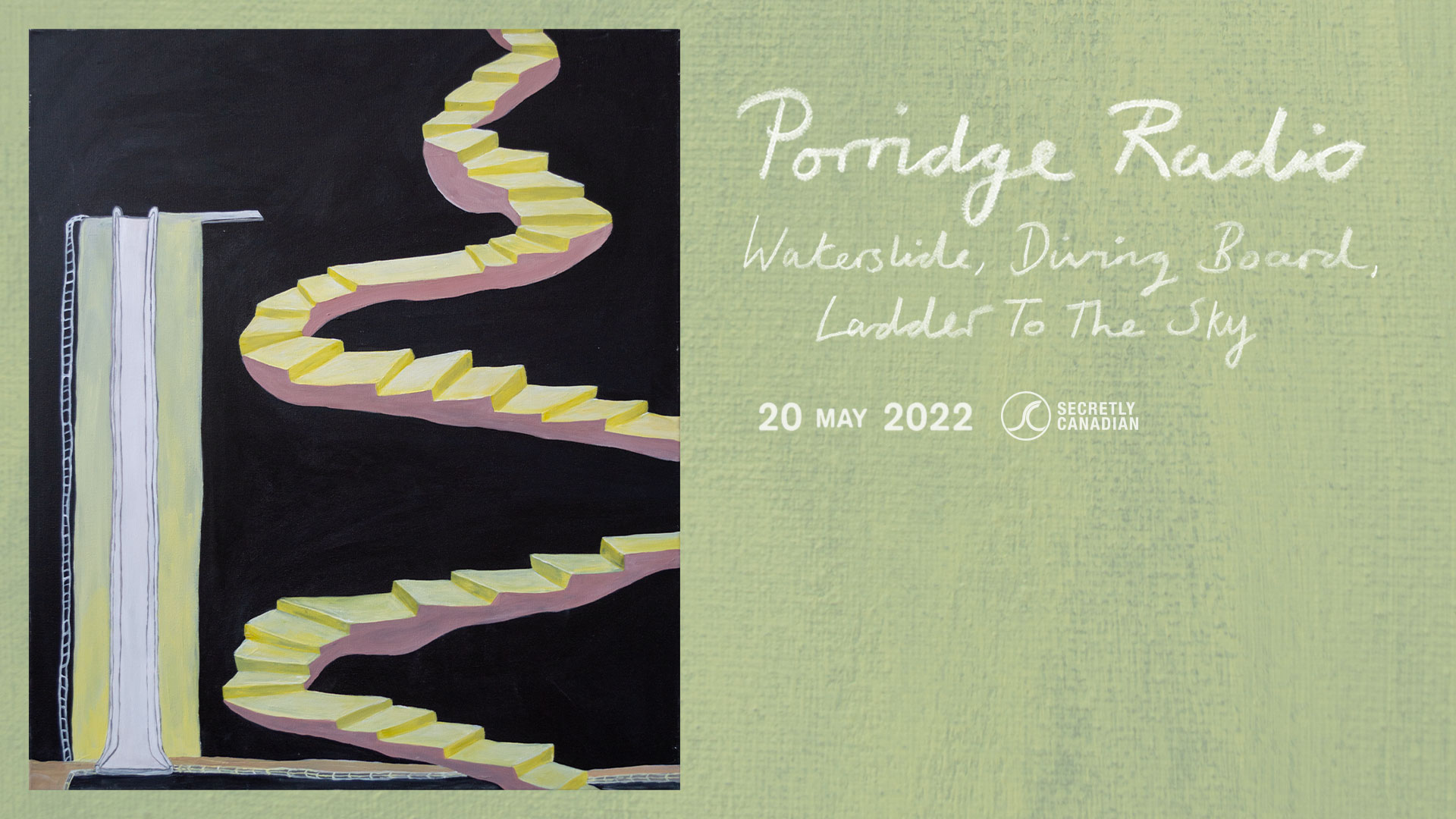
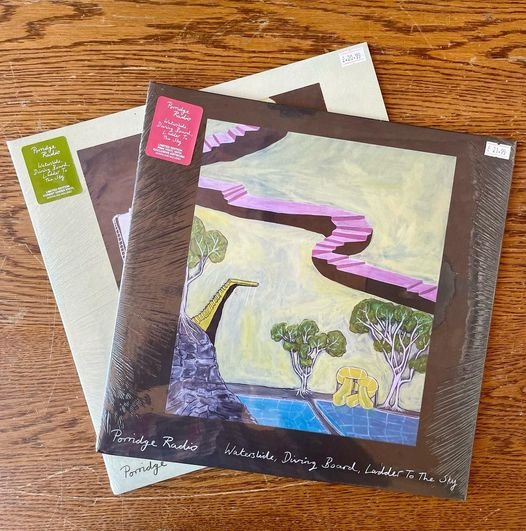
But if “Every Bad” established Dana’s lemon-sharp, heart-on-sleeve honesty, Porridge Radio’s third album takes that to anthemic new heights. “Waterslide, Diving Board, Ladder To The Sky” is the sound of someone in their late twenties facing down the disappointment of love, and life, and figuring out how to exist in the world, without claiming any answers. It’s also catchy as hell.
The title – which was partly inspired by a collage by the British surrealist Eileen Agar – speaks to the “joy, fear and endlessness” of the past few years. Dana’s songwriting and delivery is more confident, with the emotional incisiveness of artists like Mitski, Sharon Van Etten and Big Thief. Though it’s softer and more playful in places than “Every Bad’s” blowtorch ferocity, there are moments of powerful catharsis, ones that occur when you allow the full intensity of an experience to take hold.
In places, that no-holds-barred rawness is on a par with bands like Deftones (their panoramic metal is a key touchstone of “Waterslide, Diving Board, Ladder To The Sky”) or American emo, elevated by Yardley’s ambitious instrumentals. “I kept saying that I wanted everything to be ‘stadium-epic’ – like Coldplay,” says Dana.
With “Waterslide, Diving Board, Ladder To The Sky”, Porridge Radio have distilled their myriad influences down like they’re flipping through their own singular dial: dreamy yet intense, gentle but razor-edged, widescreen and yet totally intimate. People tell Dana that “Every Bad” got them through their cancer diagnosis, their break-up, their isolated lockdown. But with their new album, the band are taking a step up and spring-boarding into a bright, exciting unknown.
The video for “The Rip” above directed by Dana’s sister Ella is really something to behold. And a stunning animated video for “End Of Last Year” below.
The third full-length album by Brighton’s acclaimed indie types Porridge Radio. Following their Mercury Music Prize nominated album ‘Every Bad’, the album sees singer and songwriter Dana Margolin searching for a balance between the joy, fear and endlessness in her life through infectious indie anthems.
Being able to make another video with Ella Margolin was such a privilege, and the whole team was incredible. Ella had such a strong and clear vision for this video and brought so much energy to it which really carried us through a freezing and exhausting January night. Not sure if just any director could get me to jump of that terrifying giant thing at the end that many times just by saying ‘oh come on dans just one more time you promised you’d do it’.
“The Rip” by Porridge Radio from the forthcoming album ‘Waterslide, Diving Board, Ladder To The Sky’ out May 20th on Secretly Canadian.
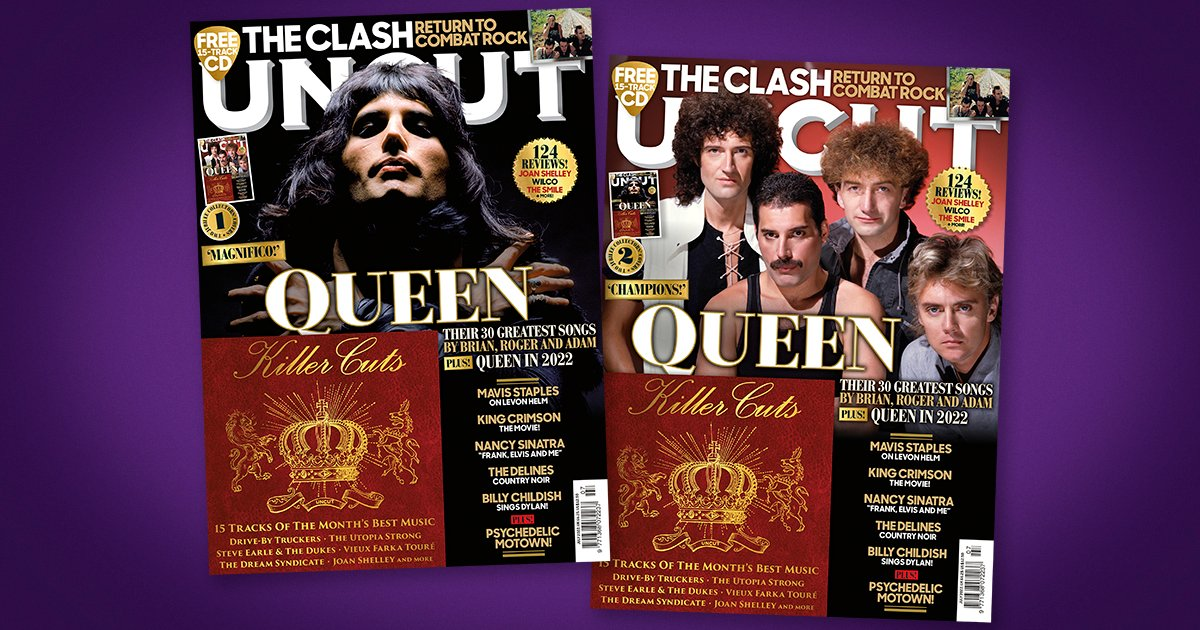
By Royal appointment! For the first time in an amazing 17 years, Queen grace the cover of Uncut Magazine this month – and there are two collectors covers to choose from. Inside, celebrate Queen’s 30 Greatest Songs, plus there’s The Clash, King Crimson, The Delines, Norman Whitfield, Billy Childish, Mavis Staples, Nancy Sinatra, Joan Shelley, Laura Veirs, Angel Olsen, a free, 15-track new music CD
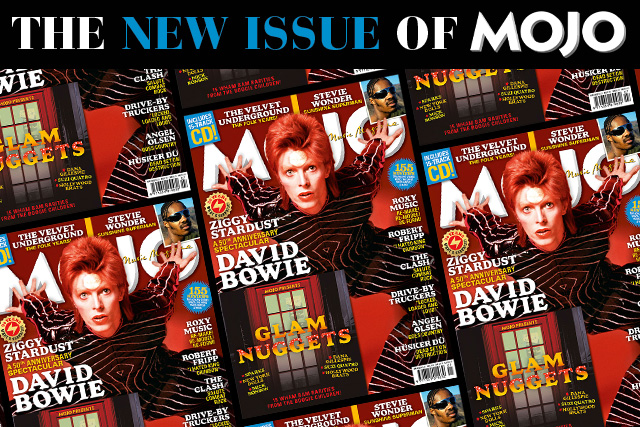
A very special edition of MOJO out now, to mark Ziggy Stardust turning 50 years of age. His conception date is a little hazy, as is the way of these things. But Ziggy was delivered in physical form to British record stores on June 16th, 1972, precipitating a short life and epic afterlife that has resonated more than those of most real superstars over the last five decades.
Our David Bowie -friendly guestlist is illustrious, featuring as it does two Spiders, a rock’n’roll-ready producer, an accommodating roadie, key eyewitnesses from Detroit’s Masonic Temple and Aylesbury’s Friars Club, an ultra-ambitious manager and, more ambitious still, Ziggy’s elusive “interpreter, negotiator and head mistress”, Angie Bowie. “If you don’t want to conquer the world, don’t waste my time,” she remembers.
Elsewhere in this new MOJO, we uncover a startling exclusive: The Velvet Underground’s unheard folk era! There’s a deep dive into Stevie Wonder’s revolutionary 1972. A provocative chat with Robert Fripp. New interviews with Roxy Music, Drive-By Truckers, Darlene Love, Joan Shelley, Built To Spill and the reluctant stars of C86. Plus The Clash, Angel Olsen, Hüsker Dü, Clare Grogan, Harvey Mandel, Wilco, Sun’s Signature, The Rolling Stones, Chris Blackwell, our How To Buy guide to Soul Jazz Records, and the highs and lows of celebrity weed.
Oh, and the issue comes with a CD of 15 connoisseur Glam Nuggets, including Bowie chums Mick Ronson and Dana Gillespie, Sparks, New York Dolls, Suzi Quatro, and many more underground subversives from the glitter-encrusted end of the ‘70s. In the words of the hitherto unheralded Rock Rebellion, “Let’s Go!”
Sharing a band name with a product like Cola, asks some interesting questions. Especially for one with such easily identified roots as Tim Darcy, Ben Stidworthy and drummer Evan Cartwright. Darcy and Stidworthy spent the past decade as members of Ought, the sprawling and poetic Montreal post-punk band whose new-wave indebted songs jutted in awkward yet appealing shapes across three studio albums before they called it quits in 2018. Cartwright, meanwhile, has played in bands including U.S.Girls and The Weather Station.
The trio formed Cola in 2019 and this week, May 20th, release debut album “Deep In View”. It’s an album filled with dystopian visions and the kind of paranoia that comes with spending your life doom scrolling 24/7. And yet, this bleak outlook is undercut by some of the strongest, and sweetest, melodic work across the members’ collective back catalogue. Spend a little time in Cola’s world and the name begins to sharpen into view: very few bands currently operating are able to capture the mass content era, specifically the way in which it leaves you feeling bloated but somehow empty, than they do.
“Ben and I had a flow writing this record where we would send each other demos every Friday,” explains Darcy. “It was a really motivating way to write, as I would spend the week working on something but then get the bonus of hearing what Ben had written when I sent him my track. I heard “Fulton Park” and was immediately excited to work on vocals for it. It’s such an interesting instrumental. These lush almost psychedelic guitars in the intro and chorus are paired with this really stripped down almost honky tonk verse. It conjured in my mind this kind of old west imagery. I suppose looking back on the lyrics now, that same kind of juxtaposition is present. Similar to Landers, it takes a look at the natural world and then the odd, magical, sometimes empty things that humans do on that landscape.”
In the run-up to the album release Cola are premiering album highlight “Fulton Park,” a twitchy pop nugget with a bouncing rhythm that gives way to Darcy’s surreal recollection of being “pulled over for imitating landscapes.” The song is brief but lush almost, Stidworthy’s almost psychedelic guitars rubbing up against a honky tonk-style verse. Speaking to The FADER, Darcy explained that the song “conjured in my mind this kind of old west imagery. I suppose looking back on the lyrics now, that same kind of juxtaposition is present. It takes a look at the natural world and then the odd, magical, sometimes empty things that humans do on that landscape.”
From Cola’s ‘Deep in View’ out May 20th on Fire Talk & Next DoorRecords.
Ty Segall‘s new album “Hello, Hi” is out this summer, and he’s just shared a second track from it. “Saturday Pt. 2” is nice and mellow with a killer sax solo courtesy of Freedom Band member Mikal Cronin.
Tossing down straight acoustic shots with electric guitar back, “Hello, Hi” rides through the valley of yer ol’ Canyon legends, finding an isolated place to unspool Ty’s copious reserves of nervous energy beneath an open sky. Swarms of harmony vocals caper among the clouds, but there’s a rider on the horizon, crossbow trained upon his very heart: the engine driving all the relationships of life, whether down Broadway or over the cliffs at night! Whatever doesn’t get killed is getting stronger all the time. A lean, mean deal, baked in saltwater and sunlight, compassion pouring out it’s beautiful blue eyes.
You can catch Ty Segall & The Freedom Band on tour this summer, and Shannon Lay will be opening the first leg of dates. While Shannon has previously played as part of The Freedom Band,
“Hello, Hi” is out July 22 via Drag City Records.
21st/22nd August Green Man Festival Brecon Beacons
“Dropout Boogie” will be released one day before the twentieth anniversary of The Black Keys’ first album,” The Big Come Up”. As they have done their entire career, the duo of Dan Auerbach and Patrick Carney wrote all of the material in the studio, and the new album captures a number of first takes that hark back to the stripped-down blues rock of their early days making music together in Akron, Ohio basements.
The blues-rock group The Black Keys is one of the biggest bands in the world. But the project originated from humble beginnings in small Akron, Ohio, some 20 years ago.
The Black Keys, which is comprised of frontman Dan Auerbach and drummer Patrick Carney, have more awards and accolades than can fit in the trunk of a pink Cadillac. The band’s new rollicking 10-song LP, Dropout Boogie, which is out Friday (May 13th).
Though their latest album “Dropout Boogie” has gotten mixed reviews, But I love The Black Keys‘ lead single “Wild Child”, The rousing stomper sees them going back to their blues rock roots, highlighted by Dan Auerbach’s gnarly guitars and Patrick Carney’s muscular drumbeats. Though the simple lyrics are directed to a woman the singer wants to love – “I just wanna hold you at the end of every day. Girl, I wanna please you, oh, I’m needing you to stay. The sun is gonna shine if you would just come out and play. Baby, won’t you show me your wild child ways” – the outrageous video portrays Auerbach and Carney as guys who show up for menial jobs at an out of control high school, then add to the overall mayhem.
The Black Keys also appeared on Jimmy Kimmel Live to showcase two of their recent singles, “Wild Child” and “It Ain’t Over.” The rock band offered a raucous, garage rock-infused take on the tracks — both of which appear their latest LP, “Dropout Boogie”.
Ushered in by lead single, “Wild Child”, “Dropout Boogie” features collaborations with Billy F. Gibbons (ZZ Top), Greg Cartwright (Reigning Sound), and Angelo Petraglia (Kings Of Leon). As they have done their entire career, the duo of Dan Auerbach and Patrick Carney wrote all the material in the studio, and the new album captures several first takes that hark back to the stripped-down blues rock of their early days making music together in Akron, Ohio, basements
Our upcoming 11th studio album “Dropout Boogie” is out on May 13
Sharon Van Etten contemplates life and love and the accompanying kaleidoscope of emotions.” Throughout her discography, consisting of six sublime studio albums, the singer/songwriter has consistently merged the dark and the dazzling, proving herself to be one of the best lyricists of the 2010s.
This Spring Sharon Van Etten released “We’ve Been Going About This All Wrong“, her sixth and most instrumentally diverse record in a storied 13-year career. Before releasing her debut, “Because I Was in Love“, in 2009, and forging a blueprint of heavy, sometimes sparse, emotional upheavals, Van Etten worked as a publicist for Ba DaBing Records and sold handmade, self-released CDs. Now, a half-dozen LPs and more than a decade later, Van Etten has never been side-lined by formulaic exhaustion each of her projects tap into similar emotional headspaces, but never flirt with redundancy. She’s enigmatic and self-aware; graceful and humorous understanding of what weight a song can hold, what reactions restraint can provoke.
Van Etten’s journey to where she is now has been a slow burn, as she’s patiently amassed a discography that’s always remaking itself sonically. Each record has built an empire out of the one predating it, and Van Etten’s work has become a cornerstone in indie rock through consistency, experimentation and brilliance—and her collaborations with Josh Homme, Norah Jones and Angel Olsen, among others, showcase her adaptability, how she can so comfortably fit into any song with anyone. (She’s even linking up with Julien Baker and reuniting with Olsen for the powerhouse Wild Hearts Tour this summer.)
As the Brooklyn singer/songwriter celebrates “We’ve Been Going About This All Wrong“, another triumphant document of romance, pitfalls and joys, in a discography patented by it, is highlighting each project’s acclaim. Below we look at all six Sharon Van Etten albums, which range from gentle acts of anti-romantic balladry to powerful declarations of hard-earned healing.
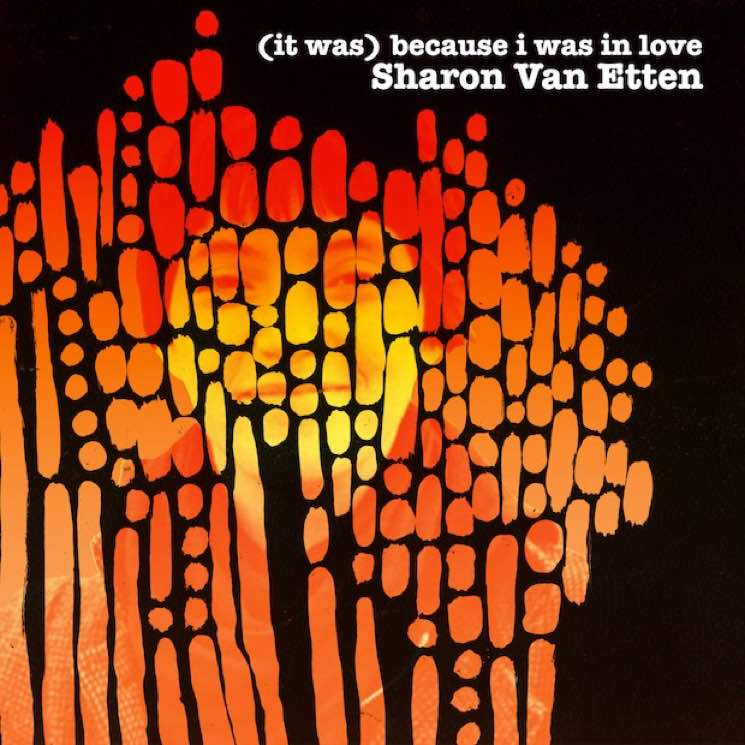
Because I Was in Love (2009)
Van Etten’s debut chronicles the balance between disaster and joy in love, exploring the improbability of easy, happy endings. It’s not as instrumentally rich as her subsequent records, but there’s a raw power that beautifully upends our perceptions of the bounds a singer/songwriter project has to abide by. The place of intimacy from which Van Etten has worked is always palpable and addicting, and “Because I Wasin Love” exists as proof.
Sharon Van Etten’s first recordings are among her most delicate. “Consolation Prize,” the second song on her debut “Because I Was In Love” is a spare and beautiful venture in plucking. The narrator of this tune doesn’t want to be someone’s last choice, or even their second. “The moral of the story / is don’t walk away again,” Van Etten warns. “No, I’ll never be your consolation prize.”
“For You” is still a standout in her catalogue, with that intoxicating “I was running home to you / I was hoping that you knew” melody; “I Wish I Knew” remains her most triumphant opener, as she immediately leans into the vulnerable song writing she’s made her blueprint. “I wish I knew what to do with you,” she sings on the track, capturing the gist of the entire record: a tender, brilliant testament to love’s greatest confusions.
Epic (2010)
With her second album, “Epic”, Van Etten perfectly built off her debut effort in a concise way, adding depth and rich textures to a shaped voice and daring, outspoken lyrics in just seven tracks. What sets her apart from many contemporaries is how she chooses to open herself up, as she chronicles second-person interactions with a memorable eye for self-analysis. “Don’t leave me now, you might love me back,” she sings on “One Day,” her best pre-“Tramp” tune.
On this track from 2010’s “epic”, Van Etten is all of a sudden an emboldened troubadour, chasing the sounds of an adventure. She starts the song unsure: “I was somewhat afraid / I was something.” But, after a too-short couple of minutes of bouncing drum and choral backing vocals, she’s awake and self-assured: “When I woke up I was already me / And I am not afraid / I am something.”
Sharon Van Etten is a master slow-burner, and “Love More,” the album kicker from “epic“, is a particularly beautiful shedding of the wax. Her retelling of an emotionally abusive relationship, and a way of coping with the aftermath of it, is sad but cathartic.
The synth-driven closing track “Love More” got a lot of attention because Bon Iver covered it, but, on its own, is one of Van Etten’s most affecting codas. (“You chained me like a dog in our room / It made me love, it made me love, it made me love more” is still a heater of a lyric couplet.) When “Because I Was in Love” arrived in our hearts in 2009, Van Etten was drawing comparisons to Marissa Nadler and Norah Jones (with whom she would later collaborate); by the time she wrote “Epic” a year later, she’d surpassed both of them completely.
Tramp (2012)
She pivoted to Jagjaguwar for her next album, “Tramp”, and has remained at the label since. But in the years since 2014, when that fourth record, “Are We There” arrived, something happened. Actually, a lot of things happened: Van Etten started a romantic relationship with her once-drummer and now-partner Zeke Hutchins, went back to school at Brooklyn College, secured a recurring role on the Netflix show The OA and had a baby—in that order.
It takes some courage to admit “I am bad at loving.” Using clever rhymes (“Well, well, hell”) and folksy acoustic guitar, Van Etten looks back on a soured relationship and shares the blame for its demise. The track, which Van Etten says was inspired by Leonard Cohen (and also the “Kevin” who’s referenced on the preceding track) is one of the best on “Tramp“.
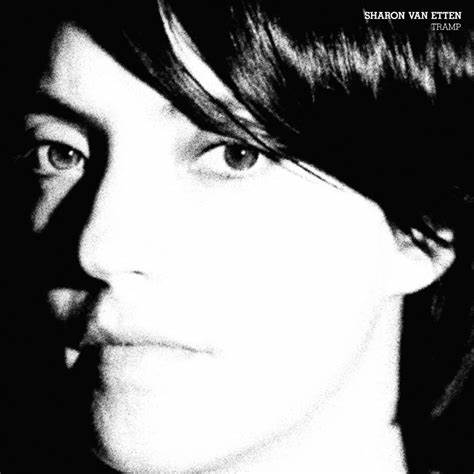
Produced by The National’s Aaron Dessner, “Tramp” is Van Etten’s most forward creation, littered with angry ballads of isolation and mistrust. The production of this record is plucky and visceral, an industrial precursor of the detouring, harmonious leap she would make, instrumentally, on “Are We There” two years later. When she goes up a register on the scoffing, jangly “Warsaw,” in come stark, clamorous echoes of that familiar heartache Van Etten has consistently plucked from her own emotional repertoire. But the shining parts of “Tramp” arrive when she comes back around and tilts the spotlight away from herself.
Love is torture. What do you do when a relationship is clearly toxic, but the feelings are so strong, so all-consuming? In the case of this song’s narrator, you freeze. Van Etten said writing the song was her “therapy.” But it might be useful for more than just herself: The signs of an unhealthy relationship (“Break my legs so I won’t walk to you / Cut my tongue so I can’t talk to you / Burn my skin so I can’t feel you”) show themselves in varying ways, and Van Etten’s assessment is a look at the very worst. But it’s a song that moves and stirs, drawing more empathy out of me than I knew was possible from an anti-love song.
On “Kevin’s,” she strains her voice while singing of someone else’s self-destruction, lamenting, “You dig your own grave / Buried in masculine pain all the time”; on “We Are Fine,” she helps a friend out of a panic attack.
During “Serpents,” the album’s lead single and Van Etten’s most eruptive and punishing track, she pleads for the simple act of consideration, belting, “I had a thought you would take me seriously,” before the memorable, racing choral breakdown.
Above it all, “Tramp” is about healing, both individually and in relationships. “I want my scars to help and heal,” she sings on “All I Can.” On the two previous records, Van Etten sang of a world stopped while the pain came rushing in; on “Tramp“, she decided to keep moving forward through the crumbling.
Are We There (2014)
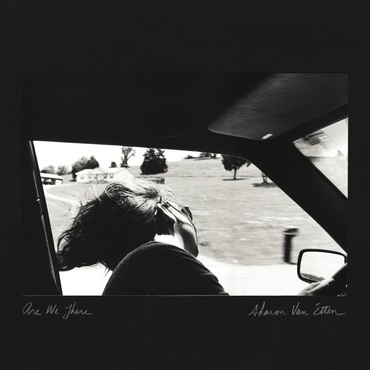
“Are We There” showcases what we’ve come to love about Van Etten: The New Yorker is self-possessed in the most beautiful ways. This record came into the peripherals of many listeners by way of Twin Peaks: The Return, when Van Etten performed “Tarifa” at the Bang Bang Bar at the end of episode six. Beyond that cameo, “Tarifa” is Van Etten’s prettiest song, sandwiched between the intoxicating, electronic “Our Love” and the nervous, stark “I Love You But I’m Lost.”
The heart of “Are We There” is its finale, “Every Timethe Sun Comes Up,” which endures as a declaration of the record’s anti-romantic ethos. “People say I’m a one-hit wonder / But what happens when I have two?” she sings on the track, before obliterating the song’s anonymous subject with the “I washed your dishes, but I shit in your bathroom” line. “Are WeThere” is a bridge between “Tramp” and “Remind Me Tomorrow”; an immense follow-up to the former and a bold, gentle predecessor to the latter.
While she’s spent plenty of time studying despair, Sharon Van Etten knows her way around a love song—a real one, with butterflies aplenty and googly, awestruck eyes for days. “Our Love” sort of straddles love’s light and dark sides. The chorus, just a repeated crooning of “it’s our love” and “in our love” and, eventually, “it’s all love” exists in the light side. The verses, however, are more uncertain. The droning drum loop lopes along as twangy, sorrowful guitar lulls you into a trance, leaving the listener with the responsibility of deciding whether or not this song has a happy ending. One thing’s for sure, though, someone rescued her from the bottom of the “well,” making everything else worth it.
How we approach that banality of everyday life, however, is up to us. Van Etten has said “Every Time theSun Comes Up,” a brooding and funny take on the humdrum, started as a joke, just the product of some late-night silliness with her bandmates, but that doesn’t make it any less smart. It’s both a look at burdernous rituals and some kind of deeply personal anecdote, but Van Etten makes them feel like one in the same. It’s a song about nothing and everything—and also weed (“People say I’m a one hit wonder / But what happens when I have two?”). Or—wait—was she actually referring to her well-performing singles? The great thing about Sharon Van Etten is that we’ll never need to know.
Remind Me Tomorrow (2019)
“Remind Me Tomorrow”careens from the almost-galloping pace of songs like “Comeback Kid” or the third-verse howl of single Seventeen, to more restrained and almost crooning tracks like “Malibu” or “I ToldYou Everything“.
The three singles ahead of the album—”Comeback Kid,” “Jupiter” and “Seventeen”—are intense and grandiose in a way we haven’t seen before from Van Etten. She’s working with a new toolbox, using more synth and beats and production. It’s an exciting display of rock ’n’ roll and a noticeable break from her folk-leaning beginnings,
The release of “Comeback Kid,” the first single from “Remind Me Tomorrow” was when we realized 1. the old Sharon can’t come to the phone right now and 2. the new Sharon is a dark queen. Of all the songs on this record, this slingshot is the most intense, and it also marks a pivotal point in Van Etten’s career, when she introduced us to a whole new trove of her capabilities as a musician. Van Etten returned with firepower, a song so loud and alive we couldn’t tune it out.
The intensity of “Seventeen” matches that of the two previously released singles from “Remind MeTomorrow, “Comeback Kid” and “Jupiter 4.” We’ve always counted on Van Etten to bring excellent lyrics and brooding melodies to the table, but we’ve never heard her like this—emboldened and chasing a darker, more driving strand of rock ‘n’ roll. “Seventeen” is almost Springsteen-esque in its grandiosity and nostalgia, though it’s more charged. The track’s companion video is, as Van Etten put it in a tweet, a “love letter” to New York City. In the clip, Van Etten chases a perfectly cast “shadow” of her former self (seriously—it’s eerie how similar these two look) around NYC, reckoning with her past and remembering when “she used to be 17.” The video is sentimental, but Van Etten is skeptical of youth’s glow, too: “I used to feel free, or was it just a dream?” she sings.
Van Etten gravitated towards synths on this record, thanks in part to indie archetype Michael Cera – they shared a practice space – which sees her formerly guitar-based music open up to new sonic textures. Yet the album remains anchored by Van Etten’s vulnerable, honest and good-humoured lyricism, which while haunted by a recurring “shadow”, glows with the loving perspective of a new mother.
We’ve Been Going About This All Wrong (2022)
“We’ve Been Going About This All Wrong” is a career-spanning Van Etten record. She elected to not share any singles prior to the album’s release, making a statement on artistic control, productivity and the dedication she has to her craft. The record beautifully taps into every era of Van Etten’s career, weaving in and out of acoustic ballads, synthy, atmospheric flickers and orchestral compositions fit for high-ceiling chambers or starry amphitheaters. It’s less a follow-up to “Remind Me Tomorrow” and more a first step towards something grander, something Van Etten perhaps hasn’t even figured out yet. “Born” is a magnetic, sprawling opera (“It was something like a window / And I wanted to break free”), while “Headspace” follows as a sensual, brash tune with inversely sublime lyrics (“I want to touch you in the dark”). Lyrically, Van Etten has stripped back her usual approach, trading in on-the-nose dissections for more accessible couplets about desire and moving on.
But instrumentally, she’s never been more experimental, electing to make these songs feel conversational through arrangements that perfectly complement her vocal performances. On every preceding project, Van Etten sounded like she was scratching at some kind of revelation; on “We’ve Been Going About This All Wrong“, she’s made peace with what she has, or hasn’t, discovered.
Arab Strap’s Aidan Moffat and The Twilight Sad’s James Graham join forces to make an album unlike any either have made before, “Killing This Time” is the first single by Gentle Sinners. Gentle Sinners are James Graham (The Twilight Sad) & someone else.
Aidan Moffat and James Graham have known each other for years, traveling in similar circles of Glasgow’s indie rock scene as frontmen for Arab Strap and The Twilight Sad, respectively. In 2021, Graham was moving out of the city he’d called home for most of his life and relocating to Northeast Scotland, and met up with Moffat before leaving town. A long admirer of Moffat’s work in and out of Arab Strap, Graham wanted his advice on working on a solo project. Moffatt in turn suggested they work together on something, and said he actually had some music he’d been working on he thought would be perfect.
“I really wanted to try something I’d never done before, which is make music for other people to sing to, and that sort of became a theme of the album,” Moffat says. “If we hadn’t done it before, we should definitely do it now.” Mission accomplished, above and beyond those intentions. Gentle Sinners sound like no other music either have made before.
“These Actions Cannot Be Undone” is grand, striking sophistipop, closer to Wild Beasts or The Associates than the widescreen anthemic indie rock that might come to mind with this pair. Graham almost sounds like a different person, often working in the upper registers of his voice. “Killing This Time” is a sweeping and synthy dancefloor thumper, while “Don’t Say Goodnight” weaves layers of Graham’s vocals with delicate strings and glitchy electronic flourishes.
There are a couple moments where Gentle Sinners go where you think — or maybe hope — they might. “Shores of Anhedonia” features Moffat’s distinctive, breathy and sinister spoken word delivery — “You know what it’s like when you stop to ask the Big Questions, but it’s a messy business and who needs the drama?” — paired with Graham’s plaintive wails of “I want to fade away.” This is drama we need and lyrically “These Actions Cannot Be Undone” is what you’d expect, with lots of weighty soul searching. But it’s a better that “Shores of Anhedonia” is the anomaly here, as this album offers surprises at every turn.
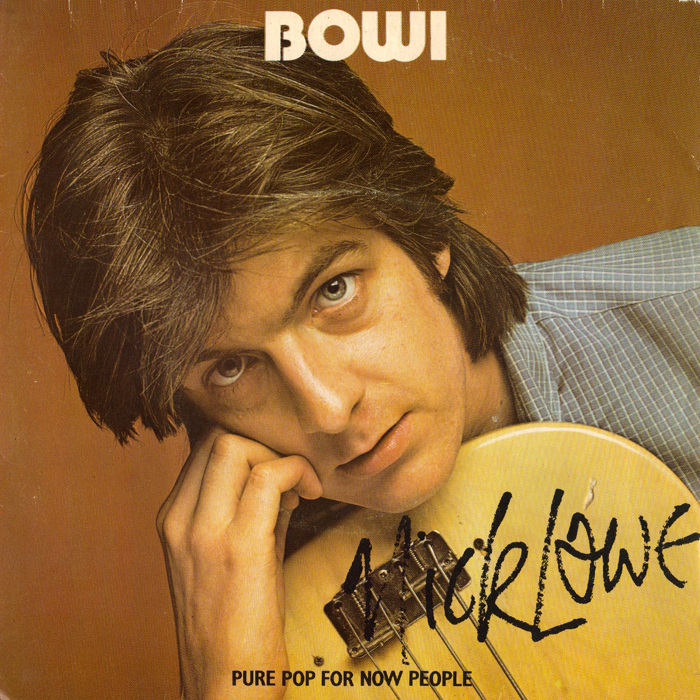
“Bowi” was the first EP released on Stiff Records. Recorded by Nick Lowe, who had also released the first Stiff single, the title and cover were intended as a humorous response to the David Bowie album “Low”, which had been released earlier in the year. Lowe decided that as Bowie had made an album with his name, but without the final “e”, he would reciprocate by making a record with Bowie’s name, also lacking the final “e”.
Of the four tracks on the EP, only “Marie Provost” was initially re-released on an album, 1978’s “Jesus of Cool” (issued as “Pure Pop for Now People” in the US), although all four tracks appear on the 2008 deluxe re-release edition of Jesus of Cool. The opening track “Born a Woman”, written by Martha Sharp, had previously been performed by Sandy Posey “as a lament about the world’s cruelty and inequality”, whereas Lowe sings it with glee, unclear whether he is “decrying the information he’s sharing or revelling in it”.
“Marie Provost” was written about the death of silent screen star Marie Prevost, whose body was discovered several days after she had died, alone and penniless in her Hollywood apartment. When she was found, she had bite marks on her legs, courtesy of her dog. That was the basis for the refrain, “She was a winner / that became the doggie’s dinner”, as well as other lines indicating that her pet dachshund had eaten her. In contrast to the sad content of the lyrics, which evoke the transitory nature of fame, the melody is deliberately “bouncy … with chiming guitars”
All songs written by Nick Lowe, except “Born a Woman” by Martha Sharpe.
“Born a Woman” (originally performed by Sandy Posey)