Kai Slater is obsessed with the past. For those of us who share his interests, that’s working out splendidly. Slater, a 21-year-old Chicago singer-songwriter, first gained renown as a member of Lifeguard, a trio whose noisy, melodic post-punk songs turn ’70s and ’80s classics into rocket fuel. He dresses like a mod dandy and publishes a handmade zine titled for NEU!’s krautrock classic “Hallogallo.” It’s not just that he devours the stylistic palette of the 20th century underground; he’s also keeping the flame for its DIY ethos, gritty and grounded in community.
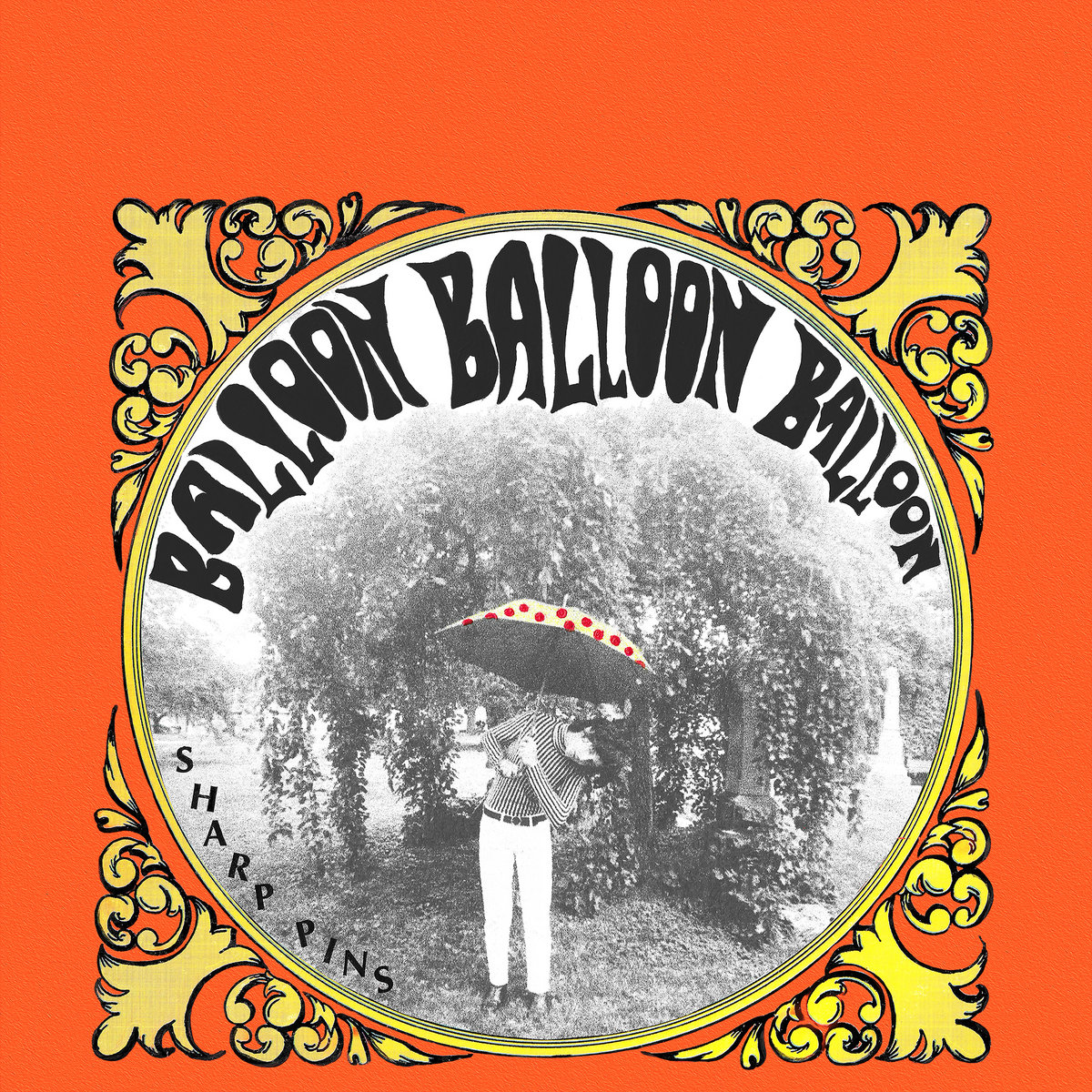
Kai Slater’s Sharp Pins have served up another single from their forthcoming LP “Balloon Balloon Balloon”. Following up ‘I Wanna Be Your Girl’ is the lonesome yet bouncy ‘I Don’t Have the Heart’.
Submission. That’s the word that comes to mind when tasked with spending time on the overwhelming pop planet that belongs to Kai Slater’s Sharp Pins. The universe only works when you submit: submit to love, submit to rock music. Submission to the power that comes from a kid wielding his guitar to craft impeccable guitar pop that stands in a pantheon of idols he joins with this record.
Of course it makes sense to be mad at first. Everyone was mad at Big Star for getting too close to the Beatles. And everyone will be mad at Sharp Pins for doing the same and then adding Guided by Voices into the mix. How dare he? The hubris. What 20 year old thinks they can out Robert Pollard the man himself? “Queen of Globes and Mirrors?” Criminal. With a worse crime of crafting songs so puzzlingly timeless, a listener may well believe they were poached from a lost Beatles tape. “I Don’t Have the Heart” and “(I Want to) Be Your Girl” genuinely confuse from when or where they were made.
But if “BalloonBalloonBalloon” reminds us of anything, it’s that only Kai can do this. With his 12-string and indefatigable obsession with pop music, Slater is uniquely equipped to carry the mantle of not only Pollard and Chilton, but the Byrds too, or the Temptations, the Four Tops, and every other artist trying to nail true love to tape. He employs the “asking for forgiveness not permission” tactic when tasked with borrowing from these greats, our only option is to forgive Slater for giving us these gems of rock n roll- propelling it from the past into a future so melodiously flawless, yet jagged and sincere, we can’t help but thank him too for rescuing the genre from irrelevance.
Because what Slater adds is entirely his own. An ineffable songwriting sensibility, that despite the heavy borrowing, can only be his. By the end of the album, you swallow whatever anger or incredulity you may have had and accept that yes, the Sharp Pins really are that good. Throughout the spanning but never indulgent LP, crafts a world peppered with small pop gems, so simply and stupidly good, they remind us another world is possible. Because it’s not just that the songs are impossible to get out of your head, which they are. It’s that Slater’s own devotion to this pursuit of the perfect pop song makes us believe it is not only possible, but enough to give life shape and colour again. Fall in Love Again is not a suggestion, it’s a requirement. Not just with a beautiful girl, of whom there are many on the album, but with the world itself. Perhaps only then will it be possible to push toward the future that 20 year old Slater himself dreams of, but in the meantime, we have his love letters to rock n’ roll and the world around it to keep us company.
“Sharp Pins tingle and jingle and spangle – acupuncture for the soul, threading a much-needed shot of 1965 into the tired hide of today. Or you could just say they’re a crack in the sky where the sun shines through. Or you could just say they’re fab!” – Robyn Hitchcock
When Robert Plant first stepped behind the Tiny Desk on a blustery Halloween afternoon, he took stock of the relatively stripped-down setup. “This is just like Live Aid,” he said with a smile. “I couldn’t hear myself there either.” He was referring to the fact we don’t amplify voices or use monitors so artists can hear themselves. But if ever there was someone up to the challenge, it’s Robert Plant. With a voice that’s only gotten better with age, Plant has deftly moved from the full-throated rock and swagger of LedZeppelin to the more restrained and profoundly beautiful folk, blues and roots music found on more recent recordings.
His latest solo album, “Saving Grace”, is a collection of covers that range from the traditional spiritual “Gospel Plough” to “It’s A Beautiful Day Today” by Moby Grape, a psychedelic rock band that, Plant says, still makes him “weepy.” Plant and his band perform both songs for this set, along with a version of “Higher Rock” by the singer-songwriter Martha Scanlan and Low’s “Everybody’s Song.”
They close with a new arrangement of “Gallows Pole,” another traditional Plant first reinterpreted for the “Led Zeppelin III” album in 1969.
SET LIST: “Gospel Plough” “Higher Rock” “Everybody’s Song” “It’s a Beautiful Day Today” “Gallows Pole” MUSICIANS: Robert Plant: vocals, harmonica Suzi Dian: vocals, accordion Matt Worley: guitar, banjo, cuatro, background vocals Tony Kelsey: guitar Barney Morse-Brown: cello Oli Jefferson: drums
As he continues to wind around the country with his high-concept live show, David Byrne has shared “T-Shirt,” a new studio single. The Talking Heads frontman’s latest offering follows his ninth solo studio album “Who Is The Sky?”, which arrived to widespread acclaim in September, and has been a setlist staple on the tour supporting his release. David Byrne and Brian Eno Reunite for New Song “T Shirt”:
“Eno co-wrote the song, which Byrne has been playing on his tour behind Who Is the Sky?
It comes with a visualizer featuring a sequence of varyingly heartwarming slogan T-shirts whose messages range from “Make America Gay Again” to “I’m with stupid” and “With a body like this, who needs hair?”
The song follows Byrne’s album “Who Is the Sky?“, released in September. ” it turns Byrne’s quirky introspection outward, yielding curiously insightful musings on human behavior. This time around, he’s turned his critical eye on the slogans printed on graphic t-shirts, gesturing wildly at the absurdity of clothing as a mode of communication. “Look at my shirt, my love,” he sings. “It’s the only way that I can talk to you.”
Sonically, Byrne’s latest is a jittery and infectious pop-funk anthem that’s right at home among the eye-popping shades of idiosyncratic art pop that colour “Who Is The Sky?” In his meticulously choreographed stage show, the artist and his ensemble of jumpsuit-clad dancers and instrumentalists perform the song before a series of common identity graphics, which also rotate in the official music video.
David Byrne has shared a new song that serves as a reunion with Brian Eno. Listen to “T Shirt,” co-written by the pair, out now on Matador Records:
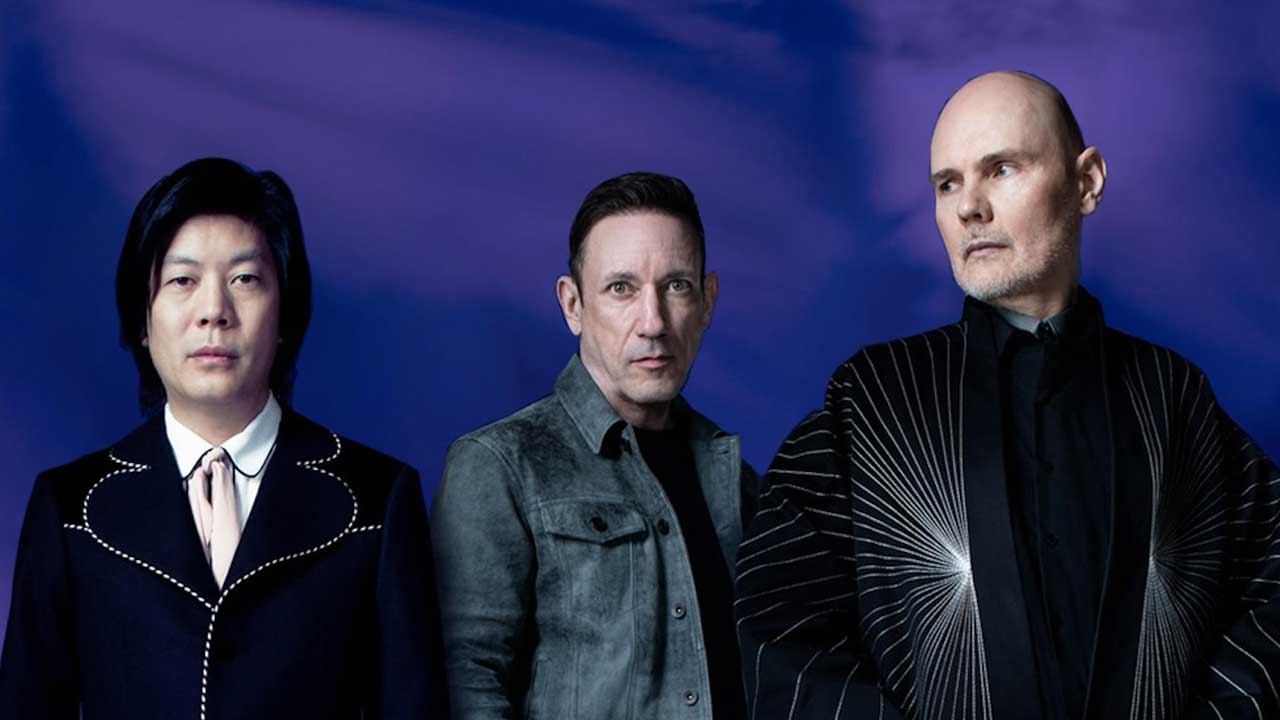
Rising from the underground music scene in Chicago, The Smashing Pumpkins emerged in 1988 with a sound that blended alternative rock, dream pop, and heavy metal influences. Founded by frontman Billy Corgan, the band initially started as a duo with guitarist James Iha, using a drum machine in their earliest performances. A pivotal moment came when bassist D’arcy Wretzky joined the line-up, bringing a new dimension to their sound. The final piece was drummer Jimmy Chamberlin, whose jazz-infused playing style transformed the band’s rhythm section. With this line-up solidified, The Smashing Pumpkins began performing around Chicago, steadily gaining attention for their dense, layered guitar work and emotionally charged compositions.
Formed in his native Chicago after a teenage stint in Florida with goth rockers The Marked and Deep Blue Dream (also featuring future Static-X frontman Wayne Static), Smashing Pumpkins were lumped in with the burgeoning grunge scene following the release of their 1991 debut album “Gish”. The artier cousins of their Seattle contemporaries, Corgan’s band – completed by bassist D’Arcy Wretzky, guitarist James Iha and drummer Jimmy Chamberlin – proudly wore many influences on their sleeve: goth, psychedelia, shoegaze, metal and, later, electronica.
After three decades, The Smashing Pumpkins leader Billy Corgan still has a message for music fans who insist on labelling the four-piece a grunge band. On the band’s TikTok account, a post read: “A fact that people can’t accept? Smashing Pumpkins sound is not grünge, has never been grunge, not against grunge, but SP ain’t it.”
Gish (1991)
Their debut album, “Gish“, arrived in 1991, produced by Butch Vig, who would later gain widespread recognition for his work with Nirvana. The album was a critical success, blending psychedelic and hard rock elements with a polished production that set it apart from the lo-fi aesthetics of many alternative rock contemporaries. While “Gish” garnered underground acclaim
Arriving several months before Nirvana’s “Nevermind”, the Smashing Pumpkins’ debut album, It was the first shot of the alternative revolution that transformed the rock & roll landscape of the ’90s. while Nirvana was a punk band, the Smashing Pumpkins and guitarist/vocalist Billy Corgan are arena-rockers, co-opting their metallic riffs and epic art-rock song structures with self-absorbed lyrical confessions. though Corgan’s lyrics fall apart upon close analysis, there’s no denying his gift for arrangements. like Brian May and Jimmy Page, he knows how to layer guitars for maximum effect, whether it’s on the pounding, sub-Sabbath rush of ‘i am one’ or the shimmering, psychedelic dream-pop surfaces of ‘rhinoceros.’ such musical moments like these, as well as the rushing ‘siva’ and the folky ‘daydream,’ which features D’arcy on lead vocals, demonstrate the Smashing Pumpkins’ potential.
Siamese Dream (1993)
It was their next album, “Siamese Dream” (1993), that catapulted them into the mainstream. Despite internal tensions and Corgan’s obsessive perfectionism in the studio, the album became a landmark of the era, featuring hits like “Today,” “Cherub Rock,” and “Disarm.” Featuring iconic singles “Rocket,” the album’s lush production, emotional lyrics, and layered guitars earned critical acclaim, cementing its place as one of the greatest rock albums of all time.
When ‘Siamese Dream’ was initially released in the summer of 1993 it was hailed as alternative rock’s first great post-nevermind hope. and while it has gone on to become an overwhelming commercial success, it has also helped further re-draw the artistic borders of ‘alternative’ music. by combining neo-psychedelic AOR guitars (band-members proudly claim boston as an influence) with “Pumpkin auteur Billy Corgan’s ‘outsider’ lyrical stance, ‘Siamese Dream’ creates a rebel image; but one with a wandering eye towards mainstream acceptance as well.
Consequently, Smashing Pumpkins are equally successful relating to young lollapaloozers and to classic rock radio. the album’s immediate attraction is plain to see. Corgan and co-producer Butch Vig have sculpted a sonic wall of guitars – in some cases, using up to 32 separate guitar tracks on a single song – that is electrifying in its sheer scope and power. along with Jimmy Chamberlin’s powerhouse drumming, guitarists Corgan and James Iha’s thick sound endows ‘Siamese Dream’ with a fresh feel that holds up even on repeated listens – and how many other ‘top ten’ albums can you say that about?
Fronting a band dogged by rumours of in-fighting and drug addictions, Corgan earned the reputation of being a benevolent dictator – one who doesn’t mince his words, at that – after it emerged that he overdubbed the majority of Wretzky and Iha’s takes on “Gish” and breakthrough follow-up “Siamese Dream”.
“You know, I gave them a year and a half to prepare for this record,” Corgan told Spin in 1993. “I’m surrounded by these people who I care about very much, yet they continue to keep failing me.”
After writing “Today“, one of the most beautiful songs ever written about suicidal ideations, Corgan eventually tapped in to a rich seam of creativity. His pursuit of perfection came at a personal cost – he overdubbed most of his bandmates’ parts – and later revealed that his work ethic ruined relationships and his mental health. That said, “Siamese Dream” is a genuinely perfect album,
Producer Butch Vig later confirmed that the frontman re-recorded “ninety per cent” of the album himself.
Mellon Collie And The Infinite Sadness (1995)
By 1995, The Smashing Pumpkins had reached new creative heights with “Mellon Collie and the Infinite Sadness”, an ambitious double album that showcased their versatility and grand artistic vision. Songs like “1979,” “Bullet with Butterfly Wings,” and “Tonight, Tonight” became defining tracks of the decade, propelling the album to multi-platinum status. The album debuted at number one on the Billboard 200 and received seven Grammy nominations, ultimately winning Best Hard Rock Performance for “Bullet with Butterfly Wings.” The success of “Mellon Collie” was followed by a gruelling world tour, solidifying the band’s reputation as one of the defining acts of the 1990s.
Produced by Billy Corgan, Flood, and Alan Moulder, the ambitious double album spans 28 tracks across two discs, blending art rock, grunge, and alternative metal. Propelled by hits like “Bullet with ButterflyWings,” “1979,” earned diamond certification in the U.S. Acclaimed for its emotional depth and scope, the album received seven Grammy nominations and remains a defining work of 1990s rock music.
“Siamese Dream” and the ambitious “Mellon Collie And The Infinite Sadness” made the band alt.rock superstars, but a string of unfortunate events – a drug overdose, death and divorce – shaped the electronica-influenced album “Adore” and marked a downturn in the band’s popularity.
Adore (1998)
The latter half of the decade brought turmoil. In 1996, touring keyboardist Jonathan Melvoin died from a heroin overdose, leading to the firing of Jimmy Chamberlin. The band’s next album, “Adore” (1998), was a drastic departure from their guitar-driven sound, incorporating electronic and gothic influences. While critically well-received and earning a Grammy nomination, it failed to match the commercial success of its predecessor.
The album reflected a period of personal and creative turmoil within the band. Although it received mixed commercial success, “Adore” earned critical acclaim for its emotional depth, mature song writing, and experimental production. The album later gained cult status and was reissued in 2014 with remastered tracks and rare material.
Corgan was consumed by grief after the loss of his mother and the end of his marriage, and “Adore” is an interesting meditation on loss. At turns glowering and sombre, tender and beautiful, it leans heavily into electronica territory and divided fans who were expecting a sequel to “Mellon Collie“.
While they would never again scale the heights of their mid-90s peak, Corgan – who was at one time the sole original member of the band before a partial reunion (minus Wretzky) in 2018 – has continued to evolve his music idea and band’s sound across 12 often disparate studio albums.
Machina – The Machines of God (2000) (2000)
These songs – or at least the majority of them – were supposed to feature on the original Machina/The Machines Of God. In a deliciously petty move, Corgan had 25 copies pressed on vinyl and sent out, with instructions to distribute it for free on the internet.
Chamberlin rejoined for the recording of “Machina/The Machines of God” (2000), but internal conflicts led to bassist D’arcy Wretzky’s departure before its release. The album’s experimental nature divided fans, and after a farewell tour, the band disbanded later that year.
Conceived as a concept album by frontman Billy Corgan, it marked the return of drummer Jimmy Chamberlin and was intended as the band’s final project before their 2000 breakup. Blending heavy guitar rock with electronic and industrial elements, the album explores themes of love, faith, and identity through the fictional story of “Glass and the Machines of God.” Despite mixed reviews and modest sales, “Machina” remains a cult favourite, celebrated for its ambitious concept and emotional depth.
With songs pitched somewhere between “Mellon Collie..“. and “Adore“, the album is one of light and shade. Snarling opener “The Everlasting Gaze” and the uplifting “Stand Inside Your Love” remain among SP’s career highlights.
Machina II/The Friends & Enemies of Modern Music (2000)
“Machina II / The Friends & Enemies of Modern Music” was the sixth studio album by rock band The Smashing Pumpkins, released for free online on September 2000. Issued through Billy Corgan’sConstantinople Records, only 25 vinyl copies were pressed and distributed to fans for digital sharing. The double LP, accompanied by three EPs, continues the conceptual story from “Machina/The Machines of God“. Combining dream-pop, synth-goth, and heavy rock influences, the album earned critical praise for its creativity. Remastered and expanded, both “Machina” albums were reissued together as Machina: Aranea Alba Editio .
Zeitgeist (2007)
Billy Corgan revived The Smashing Pumpkins in 2006 with drummer Jimmy Chamberlin, releasing the album “Zeitgeist” in 2007. There are some decent moments – single “Doomsday Clock” boasts a strong riff, while “Tarantula” has psychedelic touches that echo the bluster of the band’s earlier records – but taken overall it’s the one Smashing Pumpkins album you really don’t need in your collection.
Released on July 2007, through Martha’s Music and Reprise Records. Marking the band’s reunion after seven years, it features founding members with production by Roy Thomas Baker and Terry Date. The album blends heavy guitar riffs and political themes, highlighted by the lead single “Tarantula.”
Debuting at number two on the US Billboard 200, it was later certified Gold by the RIAA. Though receiving mixed reviews, “Zeitgeist” stands as a bold and energetic comeback showcasing the band’s signature alternative rock sound.
Corgan had added the guitarist Schroeder who said all those songs are amazing to play, but the first single, “Tarantula,” is especially fun. The riff is an homage to “Dark Lady” by the Scorpions. You can hear it’s the same opening if you listen to both. We’re all huge Scorpions fans—especially the Uli Jon Roth era—so that always sticks out.
Oceania (2012)
The album is part of the ambitious Teargarden by Kaleidyscope project. Featuring guitarist Jeff Schroeder, bassist Nicole Fiorentino, and drummer Mike Byrne, “Oceania” blends classic Pumpkins energy with modern, atmospheric sounds. The album debuted at number four on the Billboard 200 and received widespread critical acclaim for its emotional depth and strong song writing. Tracks like “The Celestials” and “My Love Is Winter” highlight its themes of love, alienation, and rediscovery.
Described by Corgan as an “album within an album”, and using a sizeable chunk of the abandoned Teargarden project, “Oceania” is the only Pumpkins album with bassist Nicole Fiorentino and drummer Mike Byrne,
This was really the first record Jeff Schroeder was a big part of as a guitar player. I recorded some singles and things before that, but this was my first proper album. And by this time, Jimmy Iha had left again, so we basically had a whole new line-up. But “Oceania” is a great album, and the title track is a beautiful song I love playing live. And I remember when this album came out, we played the whole thing live from beginning to end, which was challenging for us and the audience. But from a musical standpoint, it was tough because there’s a lot of movements and guitar parts.
It’s a shame this line-up was fleeting, as there’s a familiar chemistry which recalls the energy that propelled “Siamese Dream“. Highlights include the heavy clatter of opening tracks “Quasar” and “Panopticon“, the dreamlike “Pinwheels” and the Queen-esque pageantry of “The Chimera”. After 2007’s disappointing “Zeitgeist”, “Oceania” was a return to form.
Monuments To An Elegy (2014)
Over the next decade, the band’s line-up shifted frequently, with Corgan remaining the sole consistent member. Albums like “Oceania” (2012) and “Monuments to an Elegy” (2014) explored new sonic territories, but it was the return of original guitarist James Iha and drummer Jimmy Chamberlin in 2018 that sparked renewed excitement among fans.
This album is part of the ambitious Teargarden by Kaleidyscope project. Featuring Mötley Crüe’s Tommy Lee on drums, the record blends melodic rock with synth-pop influences. Songs like “Being Beige,” “One and All,” and “Drum + Fife” showcase a more direct and polished sound. Though it received generally positive reviews for its concise and emotional tone, “Monuments” is a surprisingly uplifting collection of lean pop-rock gems informed by a synth-rock bent. Album highlights include the guitar heavy single “One And All (We Are)”, “Drum + Fife”; was apparently given some post-production pep by Lee and reminded Corgan of “early U2 or Big Country”.
After years spent perpetrating what the Lassie Foundation called “pink noise pop,” Schroeder was given the chance of a lifetime when Billy Corgan tabbed him as James Iha’s replacement in a revamped Smashing Pumpkins line-up alongside Ginger Pooley, Jimmy Chamberlin, and Corgan in 2007.
Corgan added guitarist Schroeder who hit the ground running with the Pumpkins, embarking on massive world tours and playing an integral role alongside Corgan’s revolving troop of musicians en route to albums like “Teargaden by Kaleidyscope” (2009-2014), “Oceania” (2012), and “Monuments to an Elegy” (2014), before original guitarist James Iha returned in 2018, forming a triple-guitar attack.
Clocking in a just 32 minutes, Smashing Pumpkins’ ninth studio album is one of their shorter offerings. In fact, its follow-up “Shiny and Oh So Bright, Vol. 1 / LP: No Past. No Future. No Sun”. is about 50 seconds shorter. “Monuments To An Elegy” was originally supposed to be part of the ambitious “Teargarden by Kaleidyscope” project until it was quietly shelved in favour of its constituent parts being released in regular album formats. In summary: short and very sweet.
Shiny And Oh So Bright, Vol.1 (2018)
In June of 2018, The Smashing Pumpkins released their new single “Solara” ahead of their monumental Shiny And Oh So Bright Tour. The track was the first song in over 18 years to feature founding members Billy Corgan, James Iha, and Jimmy Chamberlin, alongside guitarist JeffSchroeder and offered the first glimpse of music from the newly reformed line-up. Now the band release their 10th studio album, “Shiny And Oh So Bright, Vol. 1 / LP: No Past. No Future. No Sun“, recorded at Shangri La Studios with legendary producer Rick Rubin.
Marking the long-awaited reunion of founding members the eight-track album delivers a blend of classic alternative rock and modern energy. Featuring singles “Silvery Sometimes (Ghosts),” and “Knights of Malta,” it showcases Billy Corgan’s introspective songwriting and rich instrumentation. The album received generally positive reviews for its melodic depth and nostalgic yet fresh sound.
Guitarist Schroeder stuck around for three more records in “Shiny and Oh So Bright, Vol. 1/LP: No Past. No Future. No Sun“. (2018), “Cyr” (2020), and “Atum: A Rock Opera in Three Acts” (2023), and additional mega tours before announcing his departure from the Pumpkins in the fall of 2023 for personal reasons and to pursue his own music.
But the album drags in places, too (hang your head in shame, Travels). The main criticism, however, is that at 31 minutes or so the album is frustratingly short.
Cyr (2020)
“Cyr” (2020), which leaned heavily into synthesizers and electronic textures. Where “Shiny And Oh SoBright” was something of a snack, “Cyr” offers repeated visits to the buffet table. With 20 songs and a running time of 72-minutes, this self-produced collection, Smashing Pumpkins’ eleventh full-length album, allowed Corgan to stretch out and explore new ground.
Working with Logic music software, he leans heavily on a synth-pop sound on the 80s-flavoured title track, Anno Satana, Ramona and the sinister pop of Wyttch. The lack of alt.rock riffs on the record will surprise – or alarm – the casual Pumpkins fan, but diehards have long accepted that Corgan is not the sort to dwell on one idea for too long.
Featuring 20 tracks, including singles like “Cyr” and “The Colour of Love,” the album explores modernity and reinvention. Accompanied by a five-part animated series titled In Ashes, “Cyr” highlights Corgan’s vision of creating contemporary music while maintaining The Smashing Pumpkins’ emotional depth and experimental edge.
Atum: A Rock Opera in Three Acts (2023)
“Atum: A Rock Opera in Three Acts” (2023), continued Billy Corgan’s penchant for ambitious storytelling, presenting a sprawling conceptual work spanning multiple albums. While their sound has evolved significantly over the years, The Smashing Pumpkins’ ability to reinvent themselves has kept them relevant in an ever-changing musical landscape. Their impact on alternative rock remains profound, with their catalogue continuing to influence new generations of musicians.
The Smashing Pumpkins presents “ATUM“, a rock opera in three acts. The album tells an epic interplanetary story set in the not-too-distant future. Each song stands on its own in the Pumpkins pantheon. This album is the final installment in a concept album trilogy that started with 1995’s “MellonCollie and the Infinite Sadness” and continued with 2000’s “Machina/The Machines of God”.
The line-up includes original band members William Corgan, James Iha, and Jimmy Chamberlin, along with guitarist Jeff Schroeder.
William Corgan had been working on the rock opera concept for years. The pandemic provided him with the time off the road to meticulously complete it in the grandiose way he had always intended.
A favorite to play is definitely “Beguiled.” We’ve released a couple more singles since this song, but this was the first from the newest album. It’s just this simple riff, but it’s one of those songs where it’s kinda like Zeppelin’s “Whole Lotta Love,” where it’s a couple of notes that are in the right place. When we get into that groove live, this is such a fun song to play.
A story set among the stars, “Atum” is meticulously crafted and draws on the diversity of styles which have informed their previous releases. There’s pop synth washes in “Hooligan” and “The Culling“, classic Pumpkins riffs in the likes of “Beguiled” and “The Good in Goodbye”, while the labyrinthine closing act has sublime moments that wouldn’t be out of place on a John Carpenter soundtrack.
The 33-track concept album serves as a sequel to “Mellon Collie and the Infinite Sadness” and “Machina/The Machines of God”. Blending alternative, progressive, and synth rock, it follows the story of Shiny, formerly Zero and Glass, exploring themes of legacy and redemption. Featuring singles “Spellbinding,” and “Empires,” the album received generally favourable reviews and charted globally, marking Jeff Schroeder’s final appearance with the band.
The sheer size and scope of this ambitious release may make some recoil, but for Corgan fanatics, there’s a vast, multi-layered story to be explored
Aghori Mhori Mei (2024)
A bruising and shadowy return to form from original Smashing Pumpkins members Jimmy Chamberlin, James Iha, and Billy Corgan. Written and produced by Billy Corgan, the album marks a return to the band’s signature rock sound, blending progressive rock, heavy metal, and alternative rock influences. Praised for its powerful guitar-driven energy reminiscent of “Siamese Dream” and “Mellon Collie and the Infinite Sadness”, the album received positive reviews from fans and critics alike, highlighting its nostalgic yet revitalized approach to modern rock.
Recorded in the immediate aftermath of their 33-song concept album, “Atum, Aghori Mhori Mei” harkens back to the band’s early 90’s canon; where guitars, bass, drums, and spiking vocals ruled.
Machina (Aranea Alba Editio) (2025)
The final album by the original/classic line-up, it kicks off with the brash, snotty one-two of “Glass” and “Cash Car Star” and the thunderous Dross. Elsewhere, the pace lessens on the chiming “Let Me Give the World To You” and the dreamlike fuzz-pop of “Go”.
Announced on the 31st of March, 2025 the long-awaited reissue of “Machina/The Machines ofGod” and “Machina II/The Friends & Enemies of Modern Music“—for the first time united in a completely remixed and remastered box set—was released October 2025. It contains a re-sequenced 48-track “Machina” and 32 bonus tracks containing demos, outtakes, and live performances. This marks the first time the two records have been officially united and comes after over a decade of fans’ anticipation.
Currently available as an 8-LP vinyl set exclusively through Billy & Chloe Corgan’s tea shop Madame ZuZu’s, CD and digital editions are expected to follow.
“Machina II” almost betters its predecessor. Almost.
Their legacy endures not only through their groundbreaking music but also through their fearless artistic evolution. From their earliest club performances in Chicago to headlining arenas worldwide, The Smashing Pumpkins remain one of the most influential rock bands of their generation, with a discography that continues to captivate listeners decades after their debut.
The discography of the Smashing Pumpkins consists of thirteen studio albums, four live albums, one digital live album series, nine compilation albums (including box sets and promotional releases), seven extended plays (including promotional releases), 66 singles (including promotional releases), five video albums, 37 music videos, and contributions to five soundtrack albums.
The Smashing Pumpkins discography is by turns sublime and challenging, but never, ever boring. And as one of rock’s more prolific songwriters, Corgan shows no sign of slowing down.
McGuinn, Clark & Hillman at the Calderone Concert Hall, Hempstead, NY September 8th, 1978, an American rock group consisting of Roger McGuinn, Gene Clark, and Chris Hillman, who were all former members of the band the Byrds. The group formed in 1977 and was partly modelled after Crosby, Stills,Nash & Young and, to a lesser extent, the Eagles. They were reasonably successful commercially in the United States, with their debut album and the single “Don’t You Write Her Off” reaching the the Billboard Hot 100.
Clark left the band in late 1979, due to his increasing drug abuse and deteriorating mental state, and therefore only participated in the recording of two albums with the group. A third album was released in late 1980 and credited to just McGuinn & Hillman alone, after which the duo split up in early 1981.
Roger McGuinn (guitar, vocals) Gene Clark (guitar, vocals) Chris Hillman (bass, mandolin, vocals) George Grantham (drums, vocals)
Between 1973 and 1977, McGuinn established his own solo career, releasing a number of solo albums and participating in Dylan’s Rolling Thunder Revue. Chris Hillman had been a member of the Flying Burrito Brothers and Stephen Stills Manassas after leaving the Byrds the first time; following the 1973 reunion, he became a member of the Souther–Hillman–Furay Band and released the solo albums “Slippin’ Away” (1976) and “Clear Sailin’ (1977). Clark had embarked on a critically acclaimed but commercially unsuccessful solo career after leaving the Byrds in 1966, and after the 1973 reunion he released the now regarded classic album “No Other” (1974) and “Two Sides to Every Story” (1977), which again met with enthusiastic reviews, but low sales.
Setlist: 1 – It Doesn’t Matter (cuts in) 0:00 2 – Release Me Girl 2:50 3 – Chimes Of Freedom 6:46 Broken guitar string 11:08 4 – Here She Comes Again12:05 5 – Feel A Whole Lot Better 14:56 6 – Mister Spaceman 17:53 7 – You Ain’t Goin’ Nowhere 20:42 8 – Feelin’ Higher 26:17 9 – Backstage Pass 30:14 10 – He Was A Friend Of Mine 34:42 11 – Chestnut Mare 37:26 12 – Turn, Turn, Turn 43:11 13 – Rock ‘n’ Roll Star 46:17 14 – Eight Miles High 49:32 Encore: 15 – Season’s Song (Bye, Bye Baby) 55:38
Rooted in London’s DIY scene and with a steady run of compelling singles and unpredictable live shows, Hank have gained a reputation for being “one of the best alternative acts in London right now” (So Young). On record, they slip between noise and melody, intimacy and dissonance, drawing comparisons to forebears like My Bloody Valentine, The Breeders and Beck, while their live performances only serve to elevate these contrasts.
Now, for the first time on vinyl, their first 2 EPs are released together as a mini album, as the third installment of Dinked’s exciting new ‘Early Doors’ series of limited and exclusive pressings for the best new bands around.
released as an exclusive Dinked Early Doors pressing of Twist Grip / Spiralic, the debut EPs from Hank, packed into a really super mini album. Rooted in London’s DIY scene and with a steady run of compelling singles and unpredictable live shows, the band have gained a reputation for being one of the best alternative acts in London right now.
Hank slip between noise and melody, intimacy and dissonance, drawing comparisons to forebears like My Bloody Valentine, The Breeders and Beck, while their live performances only serve to elevate these contrasts. Across these munificent recordings, you’ll hear guest spots from Sorry’s Asha Lorenz and Marco Pini (also RIP Magic, Slow Dance), Theo Bleak and Ben Romans-Hopcraft (Warmduscher).
Now, we bring you both of their excellent EPs along with a bonus track, ‘Spiralic’, all on vinyl for the first time – compiled into what is essentially a mini-album, and the perfect introduction to this fast-growing band.
With a steady run of compelling singles and unpredictable live shows, Hank have gained a reputation for being “one of the best alternative acts in London The past few years has seen formative performances at DIY parties and support slots alongside Been Stellar, Catcher, DEADLETTER, HighSchool, Mannequin Pussy, RIP Magic, Sorry, and Sunken, with this summer seeing them play their first headline shows across the UK as well as appearing at festivals including Left of the Dial and The Great Escape.
Their debut EP ‘Twist Grip’ set the tone, produced by Jamie Neville (Mark William Lewis, PVA) it earned quick attention with Still Listening Magazine naming it their EP of the Year for 2024. Their second EP ‘Spiralic’ came just six months later; again working with Neville, it showed their first EP was no fluke. From the expansive opener “Stand On Yr Star” to the probing “Temp Fix” (featuring Lola’s longtime friend Theo Bleak), “Spiralic” explores vulnerability, memory and unease through a circular motif of resurfacing thoughts (hence the title).
To close the year, both EPs are being released on vinyl for the first time, being collected as a mini-album as the third in the exciting series of Dinked’s exciting new ‘Early Doors’ series limited and exclusive pressings for the best new bands around. This special edition is also being expanded with second EP’s previously unheard title track “Spiralic” being added; a meditation on repetition, confrontation and escape the latter also designing the beautiful sleeve art that extends the record’s spiral theme into its physical form.
For Fans Of: Sorry, Mary In The Junkyard, Swirlies, The Breeders, voyeur, Man/Woman/Chainsaw, English Teacher
The Belair Lip Bombs—the Australian quartet of Maisie Everett, Mike Bradvica, Jimmy Droughton, and Daniel “Dev” Devlin—release “Back of My Hand,” the third single/video from their new album, Again, out October 31st via Third Man Records. In conjunction, they announce a spring US co-headline tour with dust. Following last month’s single, “Don’t Let Them Tell You (It’s Fair),” praised by Paste as “a saga of unpredictable volumes, skating through post-punk and country-rock like it’s no one’s business,” “Back of My Hand” puts on display Maisie’s soaring vocals.
The song undulates with an easygoing rhythm before bursting into Weezer-style guitar riffs on its heart-in-hand chorus. It’s another instance of the band’s total sincerity as Maisie implores a romantic connection to trust in the strength of their connection. “Writing the lyrics was an up-and-down process,” Maisie explains. “I wrote the second verse first, the night I got home from the rehearsal where we wrote the song. I got a bit stoned and laid in bed with a notepad and a pen and the lyrics and the melody kinda just poured out of me, which pretty much never happens, so I guess it was a fluke.”
“Again” marks a new chapter for Australia’s best-kept secret, who have been building a loyal local following since they first formed eight years ago with their earnestness and ultra-sticky power-pop song structures. Endlessly listenable, the album winkingly symbolizes The Belair Lip Bombs’ reintroduction to a global audience. In mapping out “Again”, they merged their individual influences more than ever to craft a no-skips collection of indie-rock anthems. It gives the group’s DIY indie-rock style a fresh coat of polish across 10 rollicking new tracks. Again was produced by the band, Nao Anzai (The Teskey Brothers), and Joe White (Rolling Blackouts Coastal Fever), marking the first time the Belair Lip Bombs worked with a producer,
The Belair Lip Bombs pull you in immediately with their self-coined “yearn-core” combination of quick-footed rhythms, warm and fuzzy guitar melodies, and Maisie’s cathartic vocals. As they move into an exciting new era of their careers, their unshakable friendship, wide-open hearts, and knack for foot-tapping melodies will no doubt endear them to legions of fans in search of musical transcendence.
On Wednesday, The Belair Lip Bombs will wrap up their first ever North American tour with Spacey Jane. Today’s newly announced co-headline dates with dust find the band making stops in New York City, Los Angeles, Chicago, and more. The band will play headline shows across Europe prior to the US tour.
“Some things are just destined for perfection; the Belair Lip Bombs’ latest comes with a gold medal pinned to it.”
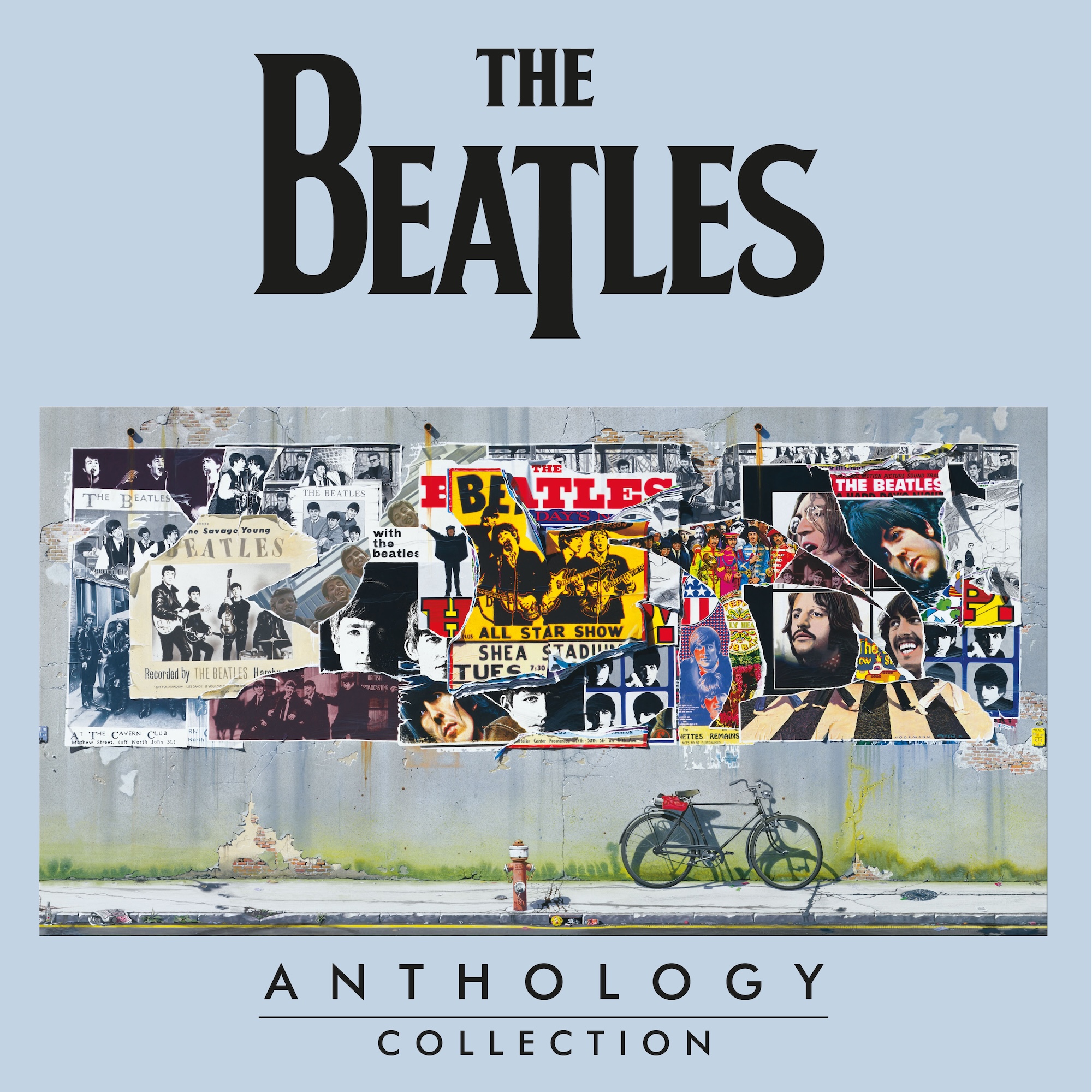
The Beatles’ landmark 1995 “Anthology” series has been restored and remastered in celebration of its 30th anniversary with 2025 updated releases on screen, as music collections and in print. The original documentary series, which ran across three nights in November ’95 on ABC-TV in the U.S. and on ITV in the U.K., has been expanded with a brand-new episode that includes previously unseen behind-the-scenes footage of Paul McCartney, George Harrison and Ringo Starr coming together between 1994 and 1995 to work on “The Anthology” and reflecting on their shared life with John Lennon as The Beatles.
From the August 21st announcement from Apple and Disney+: Instead of a standard treatment centered on an outside narrator and talking heads, “The Anthology” had the members telling their own story, with all its complexities and contradictions. It introduced The Beatles to new generations of viewers and listeners and marked the start of a creative and commercial afterlife that continues to this day.
The Beatles’ acclaimed “Anthology” documentary series has been restored and remastered. Along with the new episode, the program will stream exclusively on Disney+ beginning on November 26th. The original episodes trace the legendary journey that began in Liverpool and Hamburg and soon captivated the world. They bring to life the timeless stories — of Beatlemania, the band’s ground breaking arrival in the U.S., their role at the forefront of the 1960s counterculture, their spiritual exploration in India, and their eventual breakup. And through it all, the constant thread: the music, always the music.
The restoration has been overseen by Apple Corps’ production team, working with Peter Jackson’s Wingnut Films & Park Road Post teams along with Giles Martin, who has created new audio mixes for the majority of the featured music.
The musical side of “The Anthology Collection“, originally curated by George Martin, now remastered by Giles Martin, in the form of three double albums of rare material, a shadow story to the one told in the documentaries. They are an enthralling insight into the early development of songs that became the recorded masterpieces that resonate just as loudly today as they did when they were first recorded.
“The Anthology Collection” 12LP set includes the three ground breaking Anthology albums from the mid-1990s, remastered in 2025 by Giles Martin, plus a new compilation, “Anthology 4”. Containing 191 tracks, the collection’s studio outtakes, live performances, broadcasts and demos reveal the musical development of The Beatles from 1958 to the final single ‘Now And Then’ released in 2023.
“Anthology 4” features 13 previously unreleased tracks and 17 songs selected from Super Deluxe versions of five classic albums. In addition to fascinating outtakes dating from 1963 to 1969, the album includes new 2025 mixes by Jeff Lynne of ‘Free As A Bird’ and ‘Real Love’.
The original “Free As A Bird” music video has also been beautifully restored.
Furthermore, “Anthology 4″ presents 26 tracks that have never previously been released on vinyl.
Also on “Anthology 4” is “Helter Skelter (Second Version, Take 17),” one of 36 alternate versions featured on that set, including 13 that are previously unreleased. “[It] was a track we did in total madness and hysterics in the studio,” recalled Ringo, with Paul adding, “We just tried to get it louder. Guitars: can we have them sound louder? The drums: louder! We did it like that, because I like noise.”
Paul and George played guitar, with John taking over on bass. Apparently Ringo thrashed the drums so hard during takes that he declared, “I’ve got blisters on my fingers!” [Even though Take 17 ends with Paul calling out “keep that one, mark it fab,” the master take is 21.
Pressed on 180g black vinyl, each 3LP album will be housed within a triple gatefold sleeve, featuring the original art, sleevenotes by Mark Lewisohn, and restored photos for Anthology 1-3; Anthology 4 has brand new sleeve notes written by Kevin Howlett alongside photos. The outer slipcase features the original Klaus Voorman triptych art, and a 3/4 O-Card image of the band with detailed track listing.
The new-and-improved ‘Anthology’ will feature a new disc of 13 previously unreleased demos and session outtakes plus other rare recordings.
The full series will also be available to stream on Disney+, including a brand-new ninth episode featuring behind-the-scenes footage from the making of the original ‘Anthology.’ Rounding out the rerelease is a 368-page ‘Anthology’ book containing more than 1,300 photos, documents, artwork and other archival Beatles memorabilia.











 The Fat Angel Sings