The Eagles will celebrate the 50th anniversary (a little bit late) of their “One of These Nights” album with a new deluxe edition featuring previously unreleased music.
The expanded set arrives May featuring a new mix of the original album, plus Dolby Atmos and high resolution mixes as well. An unreleased 1975 concert featuring a previously unreleased 16-song performance by the legendary group rounds out the upcoming set.
The previously unavailable recording preserves the Eagles’ performance at the Sunshine Festival in Anaheim on September 28th, 1975. Recorded at the end of the tour for “One Of These Nights“, the show features DonHenley, Glenn Frey, Randy Meisner, Bernie Leadon, and Don Felder. Their set includes songs from that album as well as hits from the group’s first three records.
The show also finds the Eagles in a significant transition period, as it also marks Leadon’s final performance with the band in the classic era, while Joe Walsh, who would become an official member months later, joins the group for the encore, performing his song “Rocky Mountain Way.”
The band had been gaining momentum thanks to heavy touring and a steady stream of popular singles in the first few years of their career. But 1974’s “On the Border” took things up a notch, as they scored their first No. 1 single, thanks to “Best of My Love.”
The band was able to build on that positive development when “One of These Nights” arrived in June of 1975. The album soared to the top spot of the Billboard album charts, even as the seasons were changing within the group. It was the first full record for new recruit Don Felder, who had joined up in the closing moments of the sessions for “On the Border”.
The group as a whole, were also continuing to evolve. “We like to be a nice little country-rock band from Los Angeles – about half the time,” Don Henley said in 1975. “We wanted to get away from the ballad syndrome with ‘One of These Nights.’ With Don Felder in the band now, we can really rock. He’s made us nastier and did a great guitar solo on the single.”
But “One of These Nights” also ended up being the swan song for multi-instrumentalist Bernie Leadon who made his exit after touring in support of the album.
The Stone Temple Pilots‘ original line-up consisted of Scott Weiland fronting the band and singing singing lead vocals, Dean DeLeo on guitar and his brother Robert DeLeo playing bass. Rounding out the band was the mighty Eric Kretz on drums. These four brilliant musicians released some of the most exciting rock and roll music of the 1990s.
The Stone Temple Pilots merged the sounds of grunge-style bands like Nirvana and Mudhoney with the riffs of bands like Led Zeppelin and Black Sabbath. Within their music, one could also easily find the sounds of 60s Brit-pop.
“I’m not saying we’re better than everybody else,” Scott Weiland told RIP magazine in 1994, “but we’re a completely different entity than anyone else.”
It may sound like a bit of chest-puffing self-promotion — what band doesn’t want to think they’re unique? But Stone Temple Pilots needed this sort of instinct to survive. Starting with their multiplatinum 1992 debut, “Core”, they were swiftly written off as grunge copycats by critics who failed to notice the nuance and sophistication of their song writing.
On their next record, “Purple” the one they were promoting with that RIP interview, The band took their big leap, adding psychedelia, glam and even country rock to their toolbox. During their run with Weiland, who died from an overdose in 2015, they created one of the most distinctive catalogs from their era.
The frontman, with his chiseled features and old-school stage charisma, played the most obvious role in the band’s success. But he was also a versatile singer who could tackle whatever mood his bandmates threw at him — from the twang of “Interstate Love Song” to the metallic crunch of “Down.”
“He had a John Lennon-ish quality, a little bit of Jim Morrison and a touch of almost David Bowie,” Slash, Weiland’s bandmate in Velvet Revolver, wrote in his 2008 autobiography. “He was the best singer to come out in a long time, in my opinion.” But even after the mild revisionism that followed Weiland’s death, critics continue to sleep on this band’s gifts as players, writers of melody and, crucially, craftsmen of LPs as musical journeys. Below, we rank every Stone Temple Pilots studio album .
During their run with original singer Scott Weiland, they created one of the most unique and underrated catalogue’s from their era.
‘Stone Temple Pilots’ (2018)
A dark cloud seemed to be hovering over Stone Temple Pilots: Weiland, who long struggled with substance abuse, died in 2015, and Linkin Park frontman Chester Bennington, who’d temporarily replaced Weiland in STP, died from suicide in 2017. No one would have faulted the band for calling it quits, but the remaining trio moved forward with Jeff Gutt, best known for finishing runner-up on Season Three of The X Factor USA.
The Stone Temple Pilots song “Meadow” is the only track on this that does not feature the lead vocals of Scott Weiland.
The singer was a logical fit, armed with the same grit that made Weiland a star. But StoneTemple Pilots, the band’s second straight self-titled LP, lacks their classic charisma and harmonic depth. “The Art of Letting Go,” a rare highlight, nods to the more reflective, gently psychedelic moments on “Purple” or “Tiny Music ..”. , and opener “Middle of Nowhere” is STP at their hooky hard-rock best. But most of the album feels strangely generic, devoid of the personality their late singer always gave them.
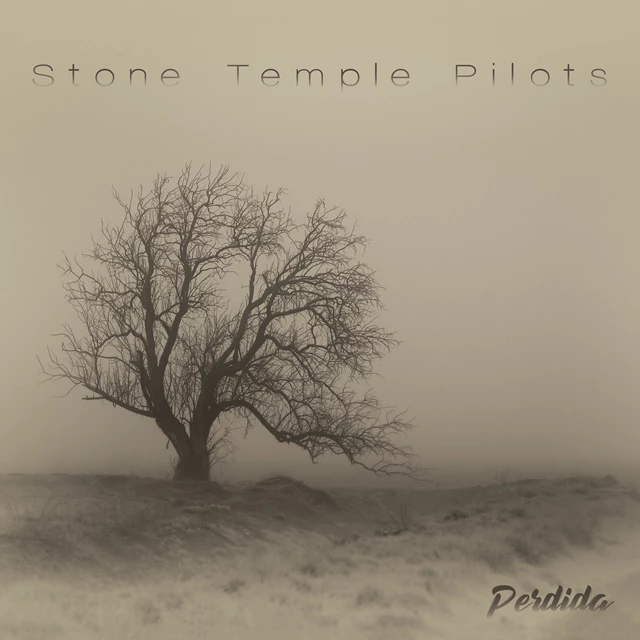
‘Perdida’ (2020)
STP has never been afraid to unplug, from the reflective folk-grunge of early ballad “Creep” to the straight-up country-rock twang of 2010’s “Maver.” So they were better-equipped than most hard rock bands to go acoustic — OK, 90% acoustic — like they do on “Perdida“. It was still a risky move, especially since this was only their second LP with Gutt, but the softer settings allow the band to stretch out: the 12-string shimmer on “Three Wishes,” the waltzing orchestrations on “Miles Away,” the Seals and Crofts-y soft-rock on the sweetly sullen “Years” (featuring bassist Robert DeLeo on lead vocals). You naturally crave some heaviness to break up the monochrome vibe, but “Perdida” is an admirable experiment for a group that could easily coast in legacy-rocker mode.
‘Stone Temple Pilots’ (2010)
“I would never want to make a record like that again,” Robert DeLeo told Yahoo, detailing the fractured sessions that spawned Stone Temple Pilots, their first LP in nine years. Weiland initially worked on vocals separately from his bandmates, causing creative and logistical challenges — many of which were resolved after recruiting outside producer Don Was, who pushed the band to play together in the same room again. That shift in approach makes sense when you hear the songs, which channel the raw immediacy of their early work. Sometimes that simplicity sounds reinvigorating, like on the snarling glam-rocker “Between the Lines” and the dreamy, hooky “Cinnamon.” Elsewhere — like on the boneheaded “Huckleberry Crumble,” which comes off like a lesser version of Aerosmith’s “Same OldSong and Dance” you wish they’d spent a bit more time in the refining stage.
Stone Temple Pilots’ sixth full-length arrived in 2010, marking the band’s return to the studio after nearly a decade away. The San Diego rock group, long established for early 90s albums “Core” and “Purple“, took a sharper, riff-driven approach here. ‘Between The Lines’ and ‘Take A Load Off’ drew radio play for their lean hooks, while deeper cuts like ‘Huckleberry Crumble’ and ‘First Kiss On Mars’ showed a band refusing to coast on reputation. Now reaching its fifteenth year, the record is being reissued on vinyl. ‘Hazy Daze’, ‘Bagman’ and ‘Peacoat’ hold their own next to the classics, giving the album the feel of a band testing themselves after years apart.
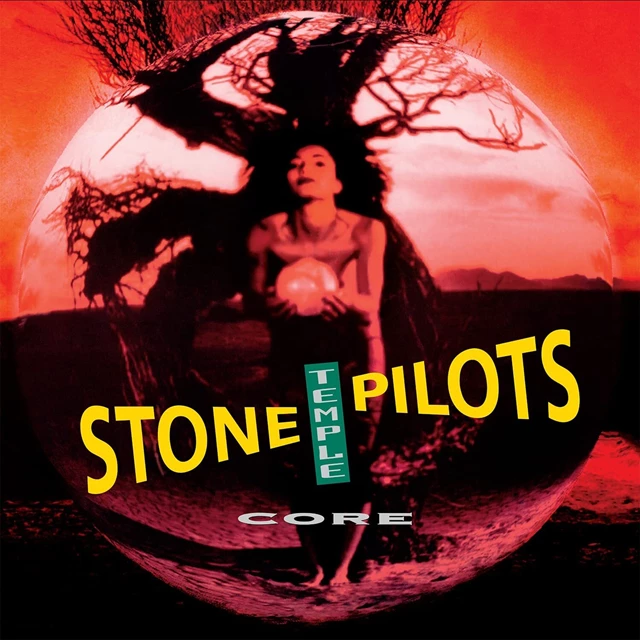
‘Core’ (1992)
“Core” was Stone Temple Pilots debut album. This was a great one. The album featured the bands four original members.
Few albums in rock history are more divisive even decades later than STP’s embryonic debut. Critics, salivating with snark in an era of rampant grunge plagiarism, fired missiles of dismissal — taking aim at the band’s brooding riffs and Weiland’s testosterone-heavy howl. There’s some truth to such complaints: The murky guitar sound and Weiland’s macho vocals on “Dead and Bloated” land somewhere between grunge parody and teenage tribute. But their melodic craft and sonic adventure, cornerstones of 1994’s “Purple”, lift “Core” above the hate — from the slow-burning strum-to-distortion dynamics of “Creep” to the shift into trippy folk a la Led Zeppelin III on “Sin.”
The classic Stone Temple Pilots song “Creep” was released on this album. The song was so perfectly titled because it sounded as if the band was creeping up on the listener with its slow but haunting groove that almost put the listener in a trace. The album was released in 1993. Scott Weiland has been quoted as saying that the song was inspired by Neil Young’s “Heart of Gold.”
Stone Temple Pilots‘ 1992 album, “Core”, is a classic of alternative rock that is characterized by heavy guitars, catchy melodies, and Scott Weiland’s distinctive vocals. The album’s standout track is ‘Plush,’ a power ballad that showcases Weiland’s soaring vocals and the band’s knack for writing memorable hooks. Other highlights include ‘Sex Type Thing,’ a driving rocker with a catchy chorus, and ‘Wicked Garden,’ an up-tempo song that shows the Weiland at his more aggressive best. Reaching number three on the Billboard 200 chart, “Core” is an essential album for fans of 90s alternative rock.
‘No. 4’ (1999)
After expanding and experimenting on “Tiny Music …” , STP re-examined their heaviest impulses on No. 4. In terms of sheer force, the uptempo songs hit harder than anything else in their catalogue including the grungiest moments of “Core”. And fortunately, they hadn’t lost their chops: Juggernauts like “No Way Out” and “Heaven & Hot Rods,” with their dynamic shifts and subtly nuanced riffs, put the entire nu-metal movement to shame. But the beauty of “No. 4″ is how, even in this less frilly context, the band maintained the melodic prowess of their last two LPs — like the tranquil singalong of “Sour Girl” and the Beach Boys-y backing vocals of “Church on Tuesday.”
This one is heavy, and we love it. The excellent track “Down,” was released on the band’s fourth album entitled “No. 4” released in 1999. Listen to that killer guitar solo! The recording of “Down” took place at the legendary NRG Recording Studios in North Hollywood, California, known for its state-of-the-art facilities and a roster of famous clients. The track’s production was overseen by producer Brendan O’Brien, who always knows how to get such a great full sound.
‘Shangri-La Dee Da’ (2001)
STP’s platinum hot streak ran cold with “Shangri-La Dee Da”, which reached only gold sales and peaked at a comparatively weak No. 9 on the Billboard 200. That isn’t a total shock, since almost nothing on album five — outside of the next-level hooky glam-rocker “Days of the Week” scanned as an obvious single. But as a front-to-back album experience, it rivals anything in their catalogue , leaning into their more psychedelic side on a handful of shimmering ballads (“Black Again,” “Bi-Polar Bear,” “Hello It’s Late”).
The great track “Days Of The Week” was released on the band’s fourth album, “Shangri-La Dee Da”. For most of their career, Stone Temple Pilots were a heavy band that released songs that mixed elements of metal, grunge, and hard rock. But there were moments when the band recorded songs that veered towards the pop world. This was one of them. And it was great!
They do crank out some aggressive hard rock for the sake of variety (“Coma,” “Hollywood Bitch,” which sounds like a not-so-distant cousin of their earlier hit “Big Bang Baby”), but “Shangri-La Dee Da” works best as a headphones album, documenting the band at their most exploratory.
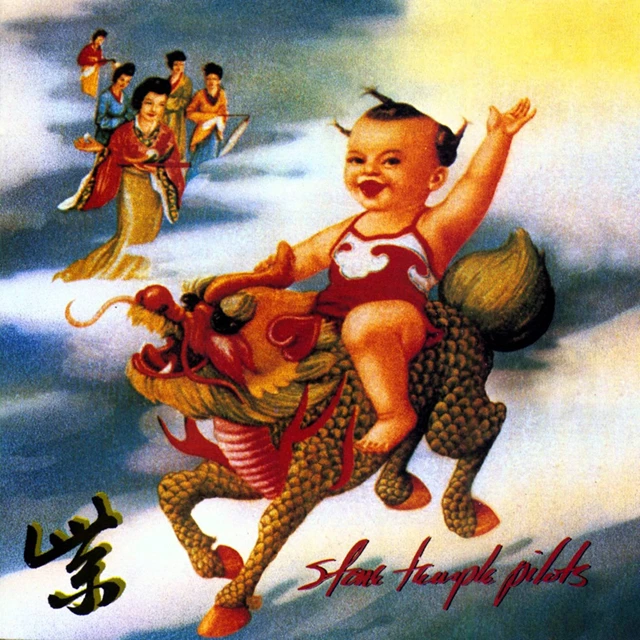
‘Purple’ (1994)
Stone Temple Pilots‘ second LP (1994) marked a shift from the rawness of their pilot album “Core” toward tighter song writing and broader sonic reach, layer-caking their readily established grunge sound in starker progressions and clearer Southern gothic baritones from Scott Weiland. ‘Vasoline’, ‘Big Empty’ and ‘Interstate Love Song’ still hit hard, yet deeper cuts like ‘Pretty Penny’, ‘Lounge Fly’ and ‘Silvergun Superman’ reveal the album’s layered charm.
The song “Big Empty” was released on “Purple” in 1994. It was released as the first single from the album. The song also found its way onto the soundtrack of the motion picture The Crow. The film starred Brandon Lee, the son of the legendary martial arts star, Bruce Lee. The recording of “Big Empty” was conducted at the legendary Harptone Studios,
Only 47 minutes long, but full of unexpected sonic flourishes, it’s now rediscovered in 45rpm form, thanks to Analogue Productions, compared to whom few do it better.
Probably regarded as one of the Stone Temple Pilots’ greatest songs. We struggled to choose between this and “Trippin”Stone Temple Pilots always balanced the line between the darkness and soul of grunge with the iconic guitar riffs and spirit of classic rock. This one leans a little more toward that Led Zeppelin sound with a bit of psychedelia oozing through. The song “Interstate Love Song” was released on “Purple” in 1994. It was released as the third single from the album
The killer track “Vasoline.” The song is featured on their second album, “Purple”, released in 1994. This song is a quintessential example of the band’s signature style, combining grunge-influenced guitar riffs with a cool, distinctly melodic approach. The recording of “Vasoline” took place at Southern Tracks Recording in Atlanta, Georgia. The song’s driving guitar riff, provided by Dean DeLeo, is instantly recognizable and stands as one of the best guitar riffs of the 1990s. The music video for “Vasoline” was directed by Kevin Kerslake.
Stone Temple Pilots reached a creative peak in the mid-’90s, riding the wave of “Core’s” multiplatinum success but also eager to silence their critics. “Purple” worked on both levels. It was their second straight blockbuster, topping the Billboard 200 and spawning some of alt-rock’s most timeless melodies (including the wistful open-road anthem “Interstate Love Song”). But these songs were also weightier and more artful, admirably moving beyond the grunge aesthetic that originally earned them so many insults. “Vasoline” is creepy and psychedelic, its incessant two-note riff rubbing up against Eric Kretz’s full-Bonham drumming; “Big Empty” takes the quiet-loud dynamic to its extreme, building from lounge-y, slide-guitar folk into primal hard rock; and “Pretty Penny” leans into trippy, sitar-like drones and complex rhythms
Here comes Stone Temple Pilots’ gatefold reissue of their seminal 1994 album, a pivotal moment in the 1990s grunge and alternative rock scene. Following the success of their debut, “Core”, “Purple” rocketed to number one on the Billboard 200 and achieved multi-platinum status worldwide.
The album’s standout single, ‘Interstate Love Song,’ became a defining anthem of the era, showcasing Stone Temple Pilots’ evolution from grunge newcomers to rock superstars. This reissue offers a fresh appreciation of the album’s potent blend of raw energy and introspective lyrics, with Scott Weiland’s exploration of themes like addiction, love, and self-discovery adding depth and authenticity. “Purple” is more than just a grunge album; it’s a show of the band’s artistic growth and enduring impact and this reissue provides fans with a chance to revisit or discover the powerful and emotionally resonant music that solidified their place in rock history.
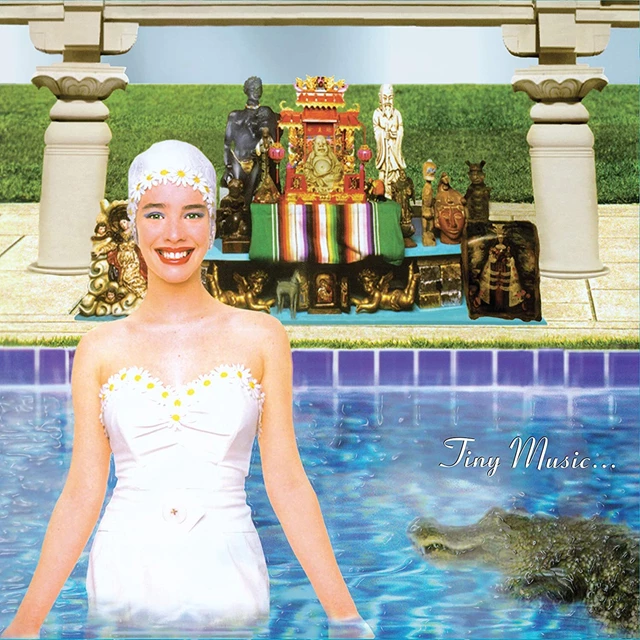
‘Tiny Music … Songs From the Vatican Gift Shop’ (1996)
They’d already made a quantum leap on “Purple”, experimenting with new textures and styles — but the band’s third LP was almost indefinable. The die is immediately cast, as they pivot pointedly from the instrumental lounge-funk of “Press Play” into the swaggering glam of “Pop’s Love Suicide” and the acidic alt-punk of “Tumble in the Rough.” Overall, they go just about everywhere: plunging deeper into psychedelia (“And So I Know”), flirting with Beatles-y pop (“Lady Picture Show”) and cranking up the amps when the moment feels right (“Trippin’ on a Hole in a Paper Heart,” featuring one of the era’s definitive rock guitar solos). Nothing “tiny” about it.
If there is one great example of the power of The Beatles and how they inspired so many bands even into the 1990s, it can be found right here on this John Lennon / Paul McCartney-inspired great rock and roll tune called “Lady Picture Show.” This is one of the best Stone Temple Pilots songs ever released and probably one of the most unknown.
“Trippin’ On A Hole In A Paper Heart.” This one is deep. This great song defines everything we love about the Stone Temple Pilots. The riffs, the darkness, the depth of the lyrics, and the brilliant, passionate musicianship roar considerably on this mesmerizing track. The song was nominated for a Grammy Award for Best Hard Rock Performance.
Stone Temple Pilots’ 1996 pivot from grunge scaffolding to something stranger and shinier comes remastered on Mobile Fidelity’s hybrid SACD; a hi-res edition cut from the original tapes. Recorded in a sprawling Californian ranch-turned-studio, the band ditched the confines of alt-rock purity for glam-flecked guitar pop, stoned psychedelia, garage crunch and warped lounge. It confused critics at the time, but “Tiny Music… Songs From The Vatican Gift Shop” has grown into its reputation, helped along by a vocal performance from Scott Weiland that drifts between smeared and swaggering, ragged and weirdly precise. Brendan O’Brien’s production brims with odd textures and giddy detours, as ‘Big Bang Baby’ borrows from ‘Jumpin’ Jack Flash’, while ‘Lady Picture Show’ veers into brittle melancholy. A record that made fun of the rules while rewriting them.
High Rise EP
“High Rise” is an EP by Stone Temple Pilots, released on October 2013, featuring Chester Bennington as the lead vocalist.
This marked a significant moment for the band as it was their first release without former lead vocalist Scott Weiland, who was fired in February 2013. Chester Bennington, known for his work with Linkin Park, took over as the lead vocalist for this EP.
The EP includes five tracks, with notable singles such as “Out of Time” and “Black Heart.” The music retains the classic Stone Temple Pilots sound while incorporating Bennington’s unique
vocal style which brought a fresh energy to the band. The EP received mixed reviewsfrom critics but was generally well- received by fans. It showcased the band’s ability to evolve while still honouring their roots in rock music.
Also check out Stone Temple Pilots “MTV Unplugged 1993”
‘Live at Rolling Rock 2001’
Unearth a missing chapter with the previously unreleased ‘Live at Rolling Rock 2001’, coming to Record Store Day on April 18! This exclusive 2LP Canary Yellow colored vinyl set features Stone Temple Pilots firing on all cylinders with a raw, powerful performance of ‘Shangri-La-Dee-Da’ tracks alongside massive hits like “Sex Type Thing” and “Interstate Love Song.”
Here is a list of their studio albums to date
Core (1992) Purple (1994) Tiny Music… Songs from the Vatican Gift Shop (1996) No. 4 (1999) Shangri-La Dee Da (2001) Stone Temple Pilots (2010) High Rise (2013) – EP Stone Temple Pilots (2018) Perdida (2020)
In addition to these, they have also released 3 compilation albums, 2 live albums, and 1 extended play
Alive in the Windy City. Live 2018 are among the Live recordings
“Country Joe” McDonald, who fronted the band Country Joe and the Fish and became an emblem of the 1960s antiwar counterculture through a prominent appearance at the Woodstock festival, died Saturday at age 84.
The singer, born Joseph Allen McDonald, died of Parkinson’s in Berkeley, according to a statement on the group’s social media and reported sources close to his wife.
McDonald’s best known song was “I-Feel-Like-I’m-Fixin’-to-Die Rag,” a Vietnam protest song he performed at the 1969 Woodstock Festival. The performance included the infamous call-and-response “Fish Cheer,” which had the audience spelling out the F-word at McDonald’s behest.
Born on January 1st, 1942, in Washington, D.C., McDonald grew up in El Monte, California, where he played trombone with dance bands on the weekends. He joined the Navy as a teenager — serving from 1959 to 1962 — before returning to L.A. to attend state college. He moved to the Bay area in 1965, where he co-founded Country Joe and the Fish with guitarist Barry Melton in Berkeley.
“It was suggested that the group be called Country Mao and the Fish because Mao Tse-tung said that the revolutionaries move like fish through the sea, and I said that was stupid,” he told the website Classic Bands. “It was suggested that we call it Country Joe and the Fish after Joseph Stalin.” Although, of course, he was the true “Joe” of the group’s moniker, the connection was not a big stretch: his communist parents had named him after Stalin.
The band released its debut album, “Electric Music for the Mind and Body,” in 1967. It did not include “I-Feel-Like-I’m-Fixin’-to-Die Rag” or “The Fish Cheer,” apparently due to fears of censorship, although it did include protest songs like “Superbird,” which satirized President Lyndon Johnson. The more controversial material made it onto their second album.
Of his famous protest song, McDonald said, “The important thing about the ‘Fixin’ to Die Rag’ was that it had a new point of view that did not blame soldiers for war. It just blamed the politicians and it blamed the manufacturers of weapons. It didn’t blame the soldiers. Someone who was in the military could sing the song, and the attitude is, ‘Whoopee, we’re all going to die.’ Most peace songs of the era blamed the soldiers for the war.”
Some of the Woodstock audience was already primed to join in on chanting “The Fish Cheer,” which had picked up notoriety after McDonald was charged with inciting lewd behavior for its appearance in a Massachusetts performance.
McDonald explained the group’s origins: “I moved to Berkeley in the summer of 1965, after the Free Speech Movement. So I came up here from southern California and got miraculously tapped into the folk music thing that was happening here at that time. I met Barry Melton at the University of California folk festival, and we hit it off. I started playing a few of my songs, and he played lead guitar. We were a duo. Then I met some other people, and Ed Denson, Mike Beardslee and I started putting out a little magazine called Rag Baby… a biweekly that had music articles and schedules of things that were happening around town, music and dancing and events. It was mostly focused on folk music and the folk scene.”
Of “Fixin’-to-Die Rag,” he said, “The only reason I could write those lyrics was having grown up in a socialist family. My parents were members of the Communist Party when I was born, but later became disenchanted with them. And then they became part of the Progressive Party and the left socialist parties that were around. I read the leftist newspapers and I was familiar with the basic tenets of socialism about the industrial complex that generates war. So I was able to write lyrics about the warmakers that profit from war, and I was able to write a lyric from the point of view of the soldier because I had been in the military.”
Additionally, he said, “I felt disenchanted from my parents, in a way. As far as politics, we didn’t have a very good relationship, so it was easy for me to say: ‘Come on mothers throughout the land, pack your boys off to Vietnam.’ And that sarcasm was a really nice thing, and GIs love sarcasm.”
McDonald continued to write songs addressing environmental issues and civil rights, releasing dozens of solo records after Country Joe and the Fish disbanded in 1971.
Fifty years after writing his signature song in 1965, he sang it at an anti-nuclear protest at Livermore Laboratory on the 70th anniversary of the bombing of Hiroshima.
In a 2016 interview, he said, “I find the concept of 50 years incomprehensible. But it’s indisputable because I have children and some of those children have children and I know that the math is right. And I just finished an album and the title of it is ’50’ because it’s 50 years since the first album. It’s called ‘Goodbye Blues.’ I didn’t die, so there you are. I’m still alive and I’m still doing something. Filling a need helps a lot, and it keeps me sane.”
He continued, “I grew up in a family of radical socialists, and quite honestly, I really get bored with the theory and speechifying of various movements and philosophies from the left. It doesn’t mean I don’t support them. But as an entertainer, I know that you can lose your audience. I’ve been doing this for a long, long time, and I consider myself a morale-booster for these causes. I don’t do it if I don’t support the cause and the ideas and the people that are doing it. It’s really quite remarkable what people are doing in many movements. I like to support these movements, because they are sometimes not mainstream and no one else is supporting them, and so I feel an obligation to do it. As an activist, I like to give a voice and to support people and movements that don’t have mainstream support and visibility. And I realize that my name has a certain notoriety and that my presence can be a morale-booster.”
Although complete information on his family was not immediately available, McDonald said in interviews that he had five children, and is known to be survived by his wife, Kathy.
“I’ve looked up to Mary Chapin Carpenter for half my life,” John Darnielle says of The Mountain Goats’ new pair of covers with Carpenter. “Getting to know her over the past few years has been such a pure pleasure, so when she asked about doing a split single where we pick songs to cover and help each other out on the effort, what could we say but ‘hell yes’? Mary Chapin picked a World Party song I’ve always loved, and I picked out a Christine Fellows song I can barely sing without crying. But I did it! Matt arranged it! This was a great joy for us, and I hope you dig it!”
The release features two beloved covers: “Put the Message in the Box,” by World Party, and “Migrations,” by Christine Fellows. Both tracks are available now digitally, and a limited-edition 7″ vinyl—pressed in both Tar and Clear variants—is available for pre-order in the MCC online store.
“John Darnielle and I have been friends for many years now, he’s been a dedicated correspondent and ally in all topics connected to song writing, recording, touring and the balancing act that a life involving these pursuits requires,” said Carpenter. “He also very kindly joined me in conversation on my podcast a few years back to talk about hope—what it means to him, what it looks like from where he stands, and the challenges of maintaining it in the times we are living in.
To have collaborated on these two favourite songs with John and the Mountain Goats has been a joy and a gift—joining our voices, singing these words from other favourite artists, and feeling the music deeply.”
“Put the Message In the Box” written by Karl Wallinger
San Francisco slowcore band Cindy have announced new album “Another Country” which will be out May via Tough Love. Say the band’s Karina Gill: “The title of this record, “Another Country“, refers to the James Baldwin novel of that name. The book has a kind of drama that makes sense to me. When I look around, the obvious explanations are not enough. The miasma of feelings and ideas that is supposed to account for it all, doesn’t.
Baldwin washes past that to longings that begin to explain. Cindy songs come out of the x-rays my particular brain makes out of what I see and experience. What you hear on this record is the result of collaboration with the members of Cindy that transforms that shadowy thing into full colour, fully fleshed.
Each of them, in music, is sure-footed and unblinking, and making this record together felt like, yes, yes, you see what I mean.” First single is a very pretty waltz-time slow dance.
Taken from the album, “Another Country”, out 1st May 2026 via Tough Love Records.
Jason V. Narducy is an American musician from Evanston, Illinois, After receiving a mandolin at the age of 7] and his first guitar at age nine Narducy started his music career, playing guitar and writing songs for his punk rock band, Verboten. Verboten is credited as inspiring Dave Grohl to pursue music, Narducy is featured in the Foo Fighters HBO documentary Sonic Highways.
After college, he formed an acoustic duo with cellist Alison Chesley called Jason & Alison. They released the full-length album “Woodshed” in 1994. Jason & Alison became a four-piece rock band called Verbow in 1996, adding drums and bass. Narducy was lead singer, guitarist, and songwriter on Verbow’s two full-length albums released on Epic Records: “Chronicles” (1997) and “White Out” (2000).
Verbow went on hiatus in 2002. Narducy formed the band Rockets Over Sweden which released an EP in 2004 titled “Penny Coliseum”. Verbow celebrated the release of “Live At Schubas” in 2010 with a sold-out reunion show in Chicago.
In 2005, Narducy began touring with Bob Mould (Hüsker Dü, Sugar) as bassist and backing vocalist. Narducy has since joined Mould in the studio and performed on Mould’s last six albums: “Silver Age”, “Beauty & Ruin”, “Patch the Sky”, “Sunshine Rock”, “Blue Hearts”, and “Here We Go Crazy“.
In June, 2013, Narducy began touring with Superchunk, filling in for bassist Laura Ballance as she deals with hyperacusis. He also played bass and sang backing vocals with Robert Pollard (Guided By Voices), Boston Spaceships, Eddie Vedder, Liz Phair, and The Pretenders.
Narducy’s current solo project is Split Single. Split Single released its debut record, “Fragmented World”, April 2014 with Britt Daniel playing bass guitar and Jon Wurster on drums.
In 2016, Split Single released its second album, “Metal Frames”, this time featuring Wurster and Wilco’s John Stirratt on bass. A third album, “Amplificado“, featuring Wurster and R.E.M.’s Mike Mills on bass and backing vocals, followed in 2021.
In 2022, Narducy announced that he would be touring with the band Sunny Day Real Estate on their reunion 2022 tour, playing guitar and providing backup vocals. In 2024, Narducy toured with Michael Shannon, performing R.E.M. songs including the “Murmur” album in its entirety.
In addition to “Murmur”, included all of REM’s debut EP, “Chronic Town“, a good chunk of Reckoning and then a smattering of songs from “Fables of the Reconstruction”, “Life’s Rich Pageant”, “Document”, “Out of Time“, a couple covers and more.
“It dumbfounds and delights me that we continue our crusade through this astounding catalogue of music from one of America’s most influential and unique bands,” Shannon says. “Now we find ourselves at a summit, we’re all pinching ourselves in disbelief to be so lucky. The most strange and beautiful adventure. Narducy adds: “I’m thrilled to join Michael and our band in celebrating the 40th anniversary of R.E.M.’s monumental fourth album. This impeccable collection of songs meant so much to me when I first heard them and they continue to inspire and invigorate me.”
Michael Shannon and Jason Narducy are on their third R.E.M. tribute tour, which this time out celebrates the 40th anniversary of “Lifes Rich Pageant”. around this time last year, when they were celebrating “Fables of the Reconstruction“, they had a very special guest on hand: R.E.M. frontman Michael Stipe.
Before Stipe came out, Shannon, Narducy, and their band, which included Jon Wurster (drums), John Stirratt (bass), Dag Juhlin (guitar), and Vijay Tellis-Nayak (keyboards), played “Lifes Rich Pageant” in track order, then moving on to other songs from throughout R.E.M.’s discography. Before playing “Fireplace,” Shannon asked the crowd if they’d like them to do “Document” next year, and said they’d give them a sneak preview. Lance Bangs was also on hand to film the proceedings;
In related news, Jason Narducy will release a memoir, “Mostly The Van”, . “It is a collection of stories I wrote involving some of the peculiar, awkward, and sometimes inspiring moments in my music life,” Jason says. “For instance, I completely forgot lyrics for a live Blue Note Records recording at Green Mill, during COVID lockdown I played ‘House of the Rising Sun’ with a man on his 70th birthday in his driveway – his first time playing with another person in 48 years, I delivered ‘non-discriminatory’ pizza to a homophonic pizza restaurant in Indiana, I got lost in a Nazi bunker in Hamburg with Bob Mould, and many more odd tales, mostly from the band van.
Sprints have channelled “the frustration of a generation stuck in ‘wait mode’ while everything burns” on their new single ‘Trickle Down’ The new single follows their cover of Le Tigre‘s ‘Deceptacon’, which was their first release since their second album ‘All That Is Over’.
Over the ominous buzz of the guitar line, vocalist Karla Chubb mocks ideas of trickle down economics: “Has anyone tried to explain trickle down economics to you in a bar?/I’m just waiting, my whole life is waiting/I’m just waiting for pay but losing cents on inflation,” she says. Chubb even name checks Amyl and the Sniffers frontwoman Amy Taylor – “I think I wanna give up, I wanna be Amy Taylor.”
Later, she turns her attention to the state of current politics: “They’re calling it free speech, it’s free hate, racism disguised as nationalism/A home that’s a tax haven, house crisis, humanity crisis.”
“Trickle Down” is about watching systems fail in slow motion, housing crisis, rising costs, culture wars, climate collapse, and being told to stay patient,” the band said in a press release. “It’s the frustration of a generation stuck in ‘wait mode’ while everything burns.”
SPRINTS’ new single, “Trickle Down”, is out now on cityslang and subpop.
The Who will release thei- July 2023 orchestral performance at the Eden Project as a live album in May. The rock legends played at the Cornwall site with the Heart of England Philharmonic Orchestra three years ago, and now it has been revealed that fans will be able to buy it as a live album.
The Who’s “Live at Eden Project” album is a landmark live recording from their July 2023 performance at Cornwall’s Eden Project. The concert, backed by the Heart of England Philharmonic Orchestra,
Set within one of the UK’s most sustainable and visually striking venues – a breathtaking network of biomes nestled in the Cornish countryside – the concert stands as a testament not only to The Who’s musical evolution but also to their enduring cultural relevance. The set showcased the band’s musical evolution and cultural relevance. The Eden Project’s natural acoustics provided a warm, detailed sonic environment, offering a clarity and intimacy unmatched by traditional stadium settings.
The album includes a strong and focused setlist, balancing hits like “Baba O’Riley” and “Pinball Wizard” with rarely performed gems such as “Cry If You Want,” “Anyway, Anyhow, Anywhere,” and “The Rock.” The album is available in various formats, including a 2-CD Digipak and a limited 3-LP gatefold edition pressed on recycled vinyl.
The 24-track album has been previewed with ‘Pinball Wizard’,
Before then, the guitarist spoke about the possibility of more new music from The Who. “I don’t think there is. If there was a need or a place for a Who album, could I write the songs for it within six weeks? Of course I fucking could, it’s a piece of cake. The problem is, I don’t think Roger wants to do it again.”
Townshend recently reflected on The Who coming to an end, saying that he and Daltrey “don’t communicate very well” and “have different needs as performers”. The musician also said the group were now “a Who tribute band”. It currently seems unlikely that there will be a final album from The Who. Townshend expressed his desire for the band to make another record last year, but said there was “a bit of a river to cross” in convincing Daltrey.
Vibrant, immersive, and uniquely alive, “Live at Eden Project” is the definitive document of The Who’s orchestral era – a recording that captures not only a legendary band in peak form but also the spirit of a venue whose environmental ethos and natural beauty mirror the band’s own commitment to evolution and innovation.
Curve were an English alternative rock and electronica duo from London, formed in 1990 and split in 2005. The band consisted of Toni Halliday (vocals, occasionally guitar) and Dean Garcia (bass, guitar, drums, programming) Garcia had played bass guitar as part of Eurythmics’ live band in 1983–84 and on two of their studio albums. Halliday also wrote the lyrics to the songs and they both contributed to song writing. Also an important collaborator was producer Alan Moulder, who helped them to shape their blend of heavy beats and densely layered guitar tracks set against Halliday’s vocals.
The London band Curve, cantered around the duo of vocalist Toni Halliday and multi-instrumentalist Dean Garcia, clearly tumbled into a specific groove and never left.
Post-punk was morphing into early “college” and “alternative” rock, including the shimmering reverberations of shoegaze and dream-pop. All of these were also folding back in new wave’s synths and digitized percussion that had taken off-ramps to an array of other club sounds like industrial, rap, and house music. The largely electronic rave movement then extended out from that branch of music’s family tree, as would its intertwined Madchester scene that often relied on more traditional band structures. Acidic keyboards, wiggly earworms, hypnotic grooves, and remixes were everywhere, with Curve deftly navigating these paths as they converged and diverged.
Not enough people know Curve’s music very well, if at all. they started up in late 1990, first ep came out in march 1991. beats were a big part of their music like MBV, or JaMC from the same time period. JaMC actually shared their drummer, Monti, for several years. both MBV and JaMC, plus Ride and many others, we engineered/produced by Alan Moulder. Alan and Toni were a couple, so he was always hanging out, and playing twisted guitars from time to time. some of the singles had vocal front mixes, and as Toni Halliday didn’t play an instrument at live shows, she was a prominent focal point. more often than not, she wasn’t shy and demure- she would hold the crowd in her left hand and a mic in her right.
They made a great bunch of music. After the first 4 EPs and 1st album, Dean Garcia continued to explore sonics in different areas. he had hints of edgy industrial beats earlier, but on “Cuckoo”, those elements really came out strong.
By their 4th or 5th album, they’d mostly gotten bored with the shoegaze song type ( perhaps also tired of the constant assaults by the Press in the mid-90s of any music that sounded remotely like shoegaze) by the mid 90s, ride and lush had veered towards britpop, Chapterhouse and Slowdive also went towards more ambient and electronic, then broke up. Pale Saints lasted til 95, and threw in the towel.
This band was (and still is) a definition of an alternative rock. Their music combines shoegaze, grunge, techno, breakbeat with even a slight touch of industrial and post-punk. Their texts are full of magical realism which reflects on everyday relationships in a highly allegorical/esoteric sort of way. All of this stuff is reinforced by incredibly insightful vocals of Toni Halliday and very skillful rhythm-section filled with all-consuming energy coming from these multi layered music styles in one place.
Check out their bandcamp page – a lot of goodies stored up there, including fan bootlegs. Curve was the elite. Highlights of Curve’s live career included a performance at the 1992 Glastonbury Festival.
Doppelgänger
As Curve, Halliday and Garcia released three acclaimed and increasingly successful EPs (“Blindfold”, “Frozen”, and “Cherry”) throughout 1991 on Anxious Records. They also made an impact on the UK album charts in 1992 with their debut studio album “Doppelgänger”.
They surpassed all expectations with their debut full-length, 1992’s “Doppelgänger“, which remains their most successful, highly regarded release. While most of “Doppelgänger’s” songs are massive rushes of energy, the band slows down at the end for the lush ambient drift of “Sandpit,” which might actually be the album’s best song overall.
Curve would continue making excellent albums and EPs after this one, and would influence countless dream pop, alternative dance, and even goth/industrial groups, but “Doppelgänger” remains their most powerful, essential release, and one of the best alternative albums of the early ’90s.
Moulder and Flood would handle Curve’s first LP “Doppelganger” in 1992, and then engineer, mix, or perform on almost everything Garcia and Halliday released as a duo over the next two decades. So pervasive was Moulder’s presence in particular that he ended up marrying Halliday.
Curve re-released the “Doppelganger” CD as a double album. This release included their first three EPs.
In 1992, the band released the compilation album “Pubic Fruit“, containing their first three EPs and an extended mix of the single “Faît Accompli”. Toni Halliday also featured on two songs (“Edge to Life” and “Bloodline”) from Recoil’s album, “Bloodline“. In 1993, Curve issued “Radio Sessions”, a compilation album of recordings made during their two sessions for John Peel’s show on the UK broadcasting station BBC Radio 1.
The appeal of the band’s early catalogue stretching to at least 1993’s sophomore LP “Cuckoo” stemmed primarily from playing and production that leaned into the sounds of goth, industrial, and shoegaze, their instrumentals and vocals swirling around like dust devils.
The “Horror Head” B-side “Falling Free,” for example, started off as a drum-pattern-powered workout but infamously got converted to hissing, burping IDM in a later Aphex Twin remix. The duo’s small roster of covers included Siouxsie and the Banshees and Tubeway Army, but their version of Donna Summer’s “I Feel Love” on an NME charity compilation found their takes on Giorgio Moroder’s classic melody and rhythm fighting through their distinctive fog of echo. The “Superblaster” single also gave us “Low and Behold,” with a spare, bassy keyboard up front in the mix to reinforce its sinister nature—”How we gloat/At others’ misfortune/A nation of reptiles/Given to nothing.”
The singles and B-sides that started to appear from “Doppelganger” forward showed Curve were comfortable dipping into percussion-heavy and dissonant experimentation. They also managed to create effortless techno synth lines that might have pleased Osborne even beyond his early presence at the duo’s sessions.
Cuckoo – (Expanded Edition)
Curve’s second studio album, the harder-edged “Cuckoo”. Curve have got to be one of the UK’s most unfortunate bands. Emerging out of the shoegazer scene with a new crossover sound that only a small section of the UK scene was ready for, the commercial failure of “Cuckoo” led them to split at the worst possible time.
Curve’s second album “Cuckoo” is more sophisticated, more seductive, less serrated, even squelchy in places than their debut, “Doppelganger“. A mature, fluent, and literary album, it hit the Top 30 on release in 1993. “Cuckoo” takes the listener from the established hallmarks and runs with them – over the horizon – to many new and rich areas of pop melodrama. Delicate and gorgeous moments sit easily with their simultaneously cool and incendiary sound. A more personal album, it is nonetheless metallic, unforgiving, Loud, clear. As with “Doppelganger” the album was produced by the band with Flood and Steve Osborne, and it was mixed by Alan Moulder. It is home to the lead tracks from singles “Blackerthreetracker” EP and “Superblaster” and is regarded by the band as their best piece of work.
The “Cuckoo” album was also re-released as a double album and included, amongst other songs, several remixes.
The British group went in a darker, moodier direction with 1993 follow-up “Cuckoo“. Opener “Missing Link” is furious and aggressive, coming closer to Ministry-style industrial than the group’s previous work, but other songs are slower, more atmospheric, and a bit more experimental. The songs still contain walls of searing guitar noise and thundering drums, but some of these tracks are a bit more spacious and reflective.
The percolating synths on songs like “Crystal” and “Unreadable Communication” come a bit closer to the then-developing trance style, and the slower songs anticipate the direction Massive Attack (and several other trip-hop groups) would take during the course of the decade. On the gentle “Left of Mother,” the group surprisingly incorporate acoustic guitars and strings, resulting in an earthly yet otherworldly combination which nevertheless sounds distinctly like Curve. “Superblaster” is a bit closer to the poppiness of “Doppelgänger’s” highlights, and was appropriately released as a single, but given that the chorus includes the line
“Have you got anything left to say before I shoot myself?,” it doesn’t come as much of a surprise that it wasn’t a hit. “Cuckoo” is riskier than its predecessor, and not as catchy, but it rewards repeated listening, and still stands among the band’s best work — Halliday has even stated that she considers it to be Curve’s best album.
2CD – 22 Tracks. This expanded 2CD edition includes the album plus the remixes and two previously unreleased tracks, the original versions of “Rising” and “Half The Time“, which have only previously been available in their remixed form. LP – 180 Gram Vinyl with Download. 10 Tracks.
Come Clean
Just as fans were beginning to wonder if the duo Curve would ever return from their self-imposed exile, they returned with their best album to date, “Come Clean“. Still combining largely electronic music with alternative hooks and lines, members Toni Halliday and Dean Garcia returned to a now-popular form of music they helped create years ago. Although the album’s two best tracks had previously appeared on their late-1997 EP “Chinese Burn” (the title tracks from both the EP and the full-length), there are plenty of other strong tracks in attendance.
“Come Clean”. Released in 1997, ”Chinese Burn” in its original form and remixed by the likes of Lunatic Calm criss-crossed IP universes from Marvel to Buffy the Vampire Slayer. The song’s smashing breakbeats and klaxon-like guitars from Garcia, paired with Halliday’s fuzzed-out vocals, all struck while The Prodigy and Chemical Brothers were hot. This was followed up by the midtempo “Coming Up Roses,” a ballad that stood out from the period’s aggressive focus on club floors and festival crowds.
Curve received high praise for 1996’s “Pink Girl with the Blues” EP and then arguably earned their broadest mainstream exposure with the lead single from their third album,
“Something Familiar” may be the band’s most melodically accessible track yet, while the extremely overdriven distortion and abrasive tones of “Dogbone” are just the opposite. Unlike many electronic bands, the duo makes it clear that they don’t just go for musical overkill, as evidenced by the slow electronic groove contained in “Killer Baby,” and the mid-paced dance-rock of “Cotton Candy.” “Come Clean” is the welcome return of a band that deserved attention when it first appeared years ago, and may get it in the electro-friendly late ’90s.
Locked in a contract dispute with Universal Music Group after the release of “Come Clean”, Halliday and Garcia would independently post songs to the World Wide Web that would later be gathered on the self-released “Open Day at the Hate Fest” in May of 2001.
Gift
Curve has had more of their share of ups and downs. Yet even when their career looked its bleakest, the band continued to make great music. When Estupendo/Universal told the band that their album “Gift” would be shelved, they continued to write and record. After posting several mp3s on their website, Toni Halliday and Dean Garcia had enough material to fill another album. As “Gift” was still tied up in legal battles with the major label, Curve independently released “Open Day” at the Hate Fest through their website. As the band enjoyed brisk sales of their self-release, they received word from Universal that “Gift” was put back on schedule and would be released on their Hip-O imprint.
It’s interesting to consider that “Gift” almost never saw the light of day. While it does fit in well with the band’s efforts, it sounds different enough to reveal that the duo has fresh ideas and an ability to write great melodies without recycling old ones. As “Come Clean” kicked things off with “Chinese Burn,” a gritty track featuring slick production, skittering beats, and a dirty, guitar-driven sound, “Hell Above Water” impressively introduces “Gift” with an edgy riff reminiscent of late-’90s Nine Inch Nails.
“Gift’s” title track follows and reveals one of the band’s slickest choruses, perfectly combining their up-tempo instrumental intensity with Toni Halliday’s sultry vocal work. Seemlessly flowing from menacing tracks like “Chainmail” and “Polaroid” to smoky, electronic-laden ballads like “Perish” and “Hung Up,” “Gift” is classic Curve with modern arrangements and energy. While mixing elements of rock and electronica together is old news for Curve, their songwriting seems more natural on this outing. Perhaps due to their more personal nature, Gift’s ten tracks are among Curve’s best. While bringing together an all-star mix of producers and performers, including Alan Moulder, Flood, AlanWilder (Depeche Mode, Recoil), and Ben Grosse (Filter), Halliday and Garcia showcase their unique knack for recording songs that feature an underlying darkness, even in their lighter moments. As Garbage and Sneaker Pimps have each scored commercial success with similar blends of female lead vocals, big beats, samples, and electric guitars, Curve shows that they are among the innovators of the form and prove themselves with one of their finest efforts.
The New Adventures Of Curve
“The New Adventures of Curve” isn’t so much different than the old ones. Since Curve’s fan base hasn’t exactly gone through a drastic shift between 1991 and 2002, it’s generally happy with the duo sticking to the same sound, which has shown very subtle variations from release to release. Since the duo’s first single, several groups have attempted to mimic that sound or use that formula — dark dance beats, blurs of grinding guitars, a vulnerable but deadly vocal command — to no good effect. Or, in Garbage’s case, that template has been shrewdly polished and taken to the mainstream to very good effect. Throughout all of this, Curve has retained a very specific sound, and their enduring relevance has also had a good deal to do with the production, which has given their records an up-to-date or ahead-of-the-times feel. Curve has the small market they occupy cornered.
So here’s another web-only exclusive from the group that neither stands up to their best work nor dilutes it. Roughly half of these songs would make a suitable backdrop for a scene in a Gregg Araki film, in which the bodies of two malnourished androgynymphs feverishly tangle. These roaring numbers, as always, are tempered with slower, quieter material. The biggest (possibly only) surprise is what’s stuck at the end of this disc: a strange little rave-up sung by multi-instrumentalist Dean Garcia. Despite the fact that their records no longer sound completely unique, Garcia and Toni Halliday continue to please their loyal fan base while the popularity they deserve eludes them.
“The New Adventures of Curve” would tie a bow on Garcia and Halliday’s formal partnership. Initially available only on Curve’s own website, “New Adventures” maintained the duo’s gothy come-hither image to the bitter end. Short on tracks but long on time, it hypnotized listeners for 5 to 7 synth-and-patch-filled minutes at a clip with reverberating sheet-metal percussion (“Nice and Easy”), introspective and methodical riffing (“Star”), jittery EBM (“Answers”), and even Deepsky’s progressive breaks mixed into “Cold Comfort.” It was the encore for the duo’s concert of a career together, referencing and recasting their strengths, influences, and planted seeds.
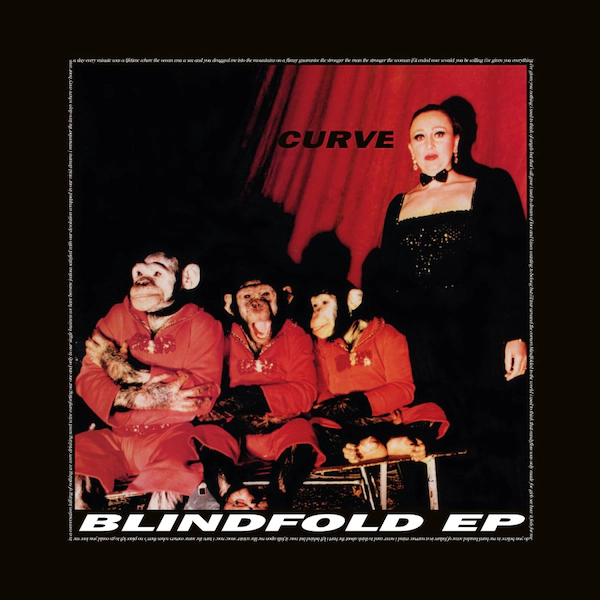
Producer Alan Moulder was a prominent collaborator who helped shape their blend of heavy beats and densely layered guitar tracks set against Halliday’s vocals. On March 4th, 1991, they released their debut EP “Blindfold” EP. The EP contained four tracks in total, “Ten Little Girls”, “I Speak Your Every Word”, “No Escape From Heaven” and the title track.
The English alternative rock duo Curve was founded in 1990 by Toni Halliday and Dean Garcia. After releasing their debut EP “Blindfold” in 1991, the duo returned after two months with their second EP Frozen. This 4-track set features “Coast Is Clear”, “The Colour Hurts”, “Zoo” and the title track. Just like the previous EP, “Frozen” was produced by Steve Osborne, who has worked with a wide variety of musicians, including Suede, New Order, Elbow, and U2 amongst others.
In 1991, they released their first three EPs, “Blindfold”, “Frozen” and “Cherry“. All three were produced by Steve Osborne, who also worked with U2, New Order and Simple Minds amongst others. The third EP “Cherry” was also known as “Clipped / Galaxy” and featured four tracks; “Clipped”, “Die Like A Dog”, “Galaxy” and the title track.
Curve released five studio albums in total (“Doppelgänger” in 1992, “Cuckoo” in 1993, “Come Clean” in 1998, “Gift” in 2001, and “The New Adventures of Curve” in 2002),
There has been five compilation albums (“Pubic Fruit” in 1992, “Radio Sessions” in 1993, “Open Day at the Hate Fest” in 2001, “The Way of Curve” in 2004, and “Rare and Unreleased” in 2010), and a string of EPs and singles.
Curve returned to the music business in 1996 with the EP “Pink Girl With the Blues”.
In 1997, they released “Chinese Burn”, the first single to be taken from their third studio album “Come Clean” (1998). The album is a set of songs displaying a more pronounced influence of electronic music than earlier releases.
Curve’s style described as a “towering monolith of guitar noise, dance tracks, dark goth, and airy melodies”. He also regarded the band’s music as a combination of “shoegazer atmospherics and techno beats”. Halliday cited Patti Smith and Nico, qualifying them as “marble giants”
Curve’s legacy best and brightest is the pair’s well-maintained Bandcamp page, sequestered from the rights and permissions issues of many streaming services. It holds just about every officially available song, rarities that appeared on special-edition physical and digital releases, studio mixes shelved by the band and their regular producers, unreleased remixes
Halliday has only sporadically re-entered the spotlight since then. She’s been a guest vocalist here and there, sang lead for Chatelaine and their 2010 album Take a Line for a Walk, and released the solo “Roll the Dice” EP in 2020. The Chatelaine music seems just a bit more satisfying overall as a curious slice of gothic chamber pop, while her vocals outpace the shiny synthpop production on her own release.
Garcia’s been far busier with production roles and as a player in multiple projects. His biggest name recognition might have come in KGC alongside members of KMFDM, while his longest-running concern has been SPC ECO, teaming with his daughter Rose Berlin to play loose and fast with shoegaze and various electronica subgenres. All of Garcia and Halliday’s newer outlets absolutely have wildly creative moments; none feel as purposefully in the pocket as Curve did.









:format(jpeg):mode_rgb():quality(90)/discogs-images/A-5373-1274614224.jpeg.jpg)




 The Fat Angel Sings