One year on from the release of acclaimed album “Rose Main Reading Room”, Peel Dream Magazine return with new mini album “Taurus“. Spanning eight previously unavailable tracks that were originally recorded for their lush and inviting 2024 full length release, “Taurus” offers a wider glimpse into songwriter Joseph Stevens’ process and creative output from those sessions.
The band, whose name nods to the BBC Radio 1 legend John Peel — arbiter of all things underground, quality, and (it must be said) “cool” — has since its inception been a genre-hopping experiment, jumping from motorik krautrock to shoegaze and space age pop.
On “Taurus”, Peel Dream Magazine remain explorative, drifting effortlessly continuing to twirl that lush kaleidoscope of indie rock they inhabit. From the warm breathiness of the Belle & Sebastian–like vocals on opener “Venus in Nadir” to the glimmering kosmische groove reminiscent of Stereolab on “Seek and Destroy,” Peel Dream Magazine know indie rock reaches its full potential when stacked vocal harmonies and guitars make room for every reverberation of a vibraphone, hum of a clarinet, and light tap of a cymbal—especially when they all combine for a standout track like “Believer.”
Although unbound by genre, Peel Dream Magazine still inhabit the sonic milieu of warm woodland tones and droning repetition. In the entrancing standout “Believer,” they evoke “Rose Main Reading Room’s” atmosphere through vocalist Olivia Babuka Black’s mantric melodies and Philip Glass-like woodwinds and mallets, bringing “Taurus” into focus as a welcoming companion piece to its predecessor.
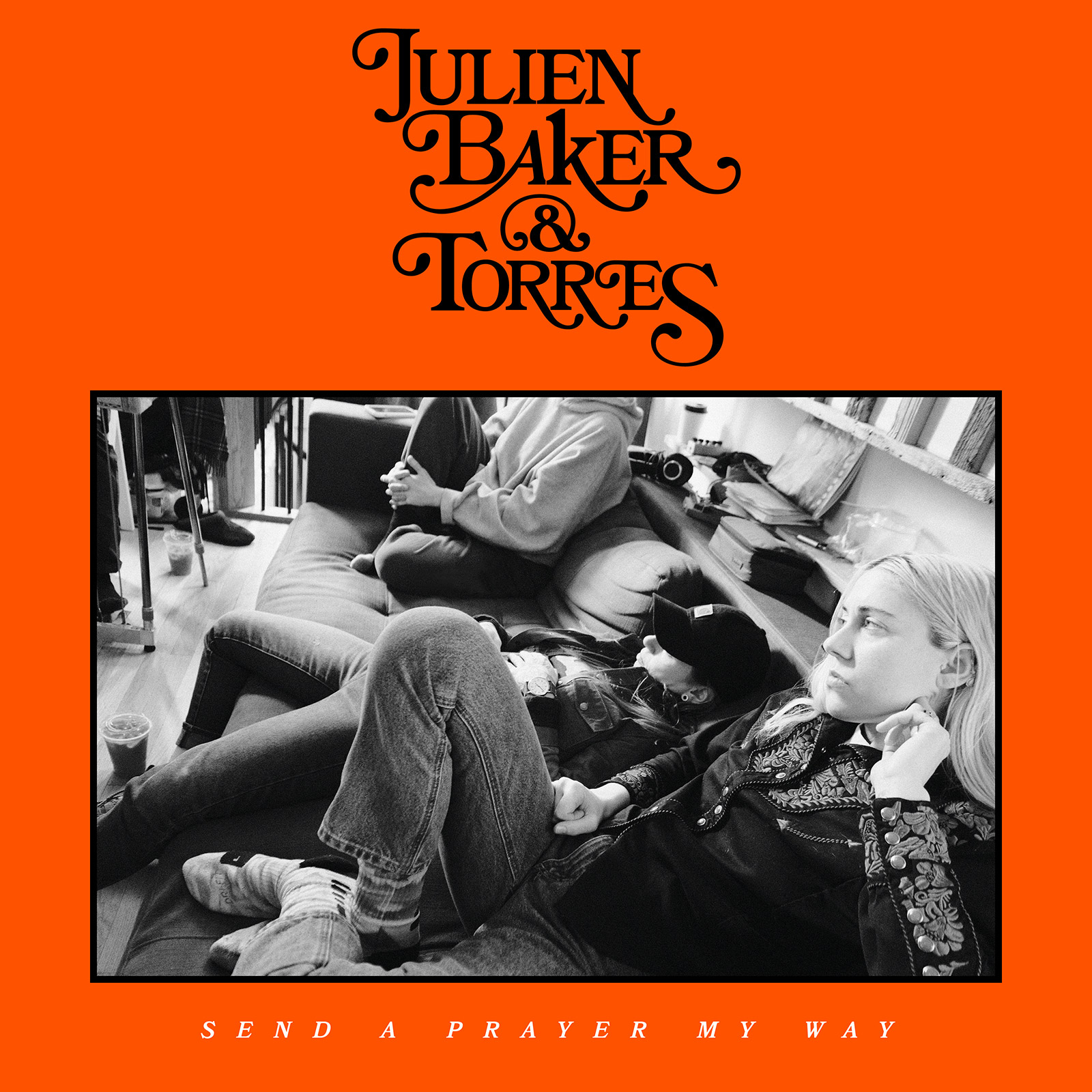
There is a moment on the ninth track of Jasmine Cruikshank’s debut album, “You Are The Morning“, where you can hear the indie rock singer-songwriter gently dissolve into tears. The song is called “New Shoes”, and, along with the rest of the album, it was produced by Phoebe Bridgers, Lucy Dacus, and Julien Baker—the three members of queer supergroup boygenius.
Cruikshank, framed on Zoom by a curtain of vibrant hair—one half hot pink, the other half electric blue—reveals that when she broke down towards the tail-end of recording the track, “Everyone came in and held me, and we left the audio in. It perfectly represented that atmosphere of mutual care.” At the time, going through a painful divorce, her marriage having ended after coming out to her then-spouse as a trans woman, Cruikshank and her music were luckily in safe hands.
Under the stage name jasmine.4.t, Cruikshank was the first artist from the United Kingdom to be signed to indie folk powerhouse Phoebe Bridgers’ Saddest Factory Records, which is also home to such names as indie pop three-piece Muna and chamber pop-rock band Sloppy Jane.
When asked to describe the experience of working so closely with the Grammy Award-winning artists, she says, laughing incredulously, “Wild. I still can’t believe that that happened. It’s so disconnected from anything I’ve ever done before.” She paints a picture of the recording process. “We were recording in Sound City, which is where Phoebe recorded her last album, “Punisher.”
It is also where legends such as Johnny Cash, Fleetwood Mac, and Neil Young, among countless others, have recorded – big boots to fill. “So we were using the same vocal tuning that she used. She really knew her way around. She was very keen on trying to get the perfect song, the perfect sound before hitting record.” It seems that Bridgers, Dacus, and Baker all brought different talents to the studio. “Phoebe just has an incredible ear for harmonies. She was doing a lot of the direction on vocal harmonies throughout the record,” Cruikshank explains.
“And Lucy and I go way back, so she had a lot more confidence to edit me, I think. Cutting a word from a line here and there to make the meaning more concise. Lucy has a really good knack for that. Julien has this incredible brain for guitar tones, which I think is one of the things that really holds the record together. It was amazing to have an authority on that.”
“Rain Dogs”, the eighth album by singer songwriter Tom Waits was released September 30th, in 1985. .
“A guy goes to the bathroom on the tire of a car, then a $70,000 car pulls up alongside and a woman with $150 stocking and a $700 shoe steps in a pool of blood, piss, and beer left by a guy who died a half hour before and is now lying cold somewhere on a slab.” Life in New York City according to Tom Waits.
Tom Waits had moved to New York from sunny California early in 1984, after releasing the album “swordfishtrombones”, a record that marked a drastic shift in his musical direction. Of the relocation to the Big Apple Waits said: “We moved here for the peace and quiet, you know. Somehow I was misinformed.” Perhaps not a tranquil city, but New York gave Tom Waits plenty of opportunities to observe the human condition, with a keen eye for people who live outside the mainstream. With his self-confessed tendency to ’gravitate towards abnormal behavior when I’m out on the street’, his songwriting after arriving in the city was a portrait of the down and outs, losers, out of luck drunkards and outcasts of society. The result was the milestone album “Rain Dogs”, a collection of songs with a loose thematic about life in the streets, or in particular, the gutters.
As a New York Times article from October 1985 observed, “Rain Dogs” is a haunting album, because it reminds us of the existence we would rather squeeze out of our vision. But given catastrophic bad luck, almost anybody could wind up there.”
The mood of the album settles upon you even before the needle drops on the record. The front cover, shot by Swedish photographer Anders Petersen, came from a collection of photos he took at the Café Lehmitz in Hamburg. The establishment was frequented by cab drivers, prostitutes and sailors who patronized it on shore leave. Petersen said about his photographs: “The people at the Café Lehmitz had a presence and a sincerity that I myself lacked. It was OK to be desperate, to be tender, to sit all alone or share the company of others. There was a great warmth and tolerance in this destitute setting.” Waits described the photograph as “Me and Liza Minnelli right after she got out of the Betty Ford Center.”
Waits unleashed his dark humour about the city of New York many times in interviews he gave in the mid-1980s. These are funny reads, but they give a glimpse into how he builds character stories by observing the world around him: “There is something interesting about Manhattan. Someone could stand out in the middle of Fourteenth Street stark naked, playing a trumpet with a dead pigeon on their head and no one would flinch. In fact, tomorrow there will probably be two guys like that. They’d be lease-letting, trying to get more subscribers.”
New York proved to be a fertile environment for Tom Waits, increasing his songwriting output. “Rain Dogs” contains 19 songs, many of them written in parallel to the songs that he planned for “Frank’s Wild Years” theatre show that premiered in 1986. Waits talked about how the city inspired him to write: “You can get in a taxi and just have him drive and start writing down words you see, information that is in your normal view: dry cleaners, custom tailors, alterations, electrical installations, Dunlop safety centre, lease, broker, sale…just start making a list of words that you see. And then you just kind of give yourself an assignment. You say, ‘I’m going to write a song and I’m going to use all these words in that song.’”
Another reason driving this outpour of songs had to do with a more earthly motive: royalties. After firing his manager Herb Cohen, he now owned his songs: “Maybe that’s why I write so many songs now, the songs I write now belong to me, not someone in the Bronx.”
Looking for a spot in New York to write and rehearse, Waits found a place on Washington Street which he described as ‘a little basement boiler room, a place where I can go at night and work and dream’. Sharing the space were non others than the Lounge Lizards, led by actor and sax player John Lurie.
That acquaintance led to future musical and acting collaborations between the two. Even more critical to the “Rain Dogs” album was Tom Waits reconnecting with Marc Ribot, a new recruit to the Lounge Lizards. Ribot, a guitar player with a knack for unusual sounds, first met Waits a few years earlier when the singer stayed in New York and Ribot was playing with Brenda and the Realtones. Waits quickly realized the potential of his unique guitar style and asked him to play on “Rain Dogs”. His contributions to the album were profound. Tom Waits on how Marc Ribot gets his sound: “He’s big on the devices. Appliances, guitar appliances. He has this whole apparatus made out of tinfoil and transistors that he kinda sticks on the guitar. Or he wraps the strings with gum, all kinds of things, just to get it to sound real industrial. It’s like he would take a blender, part of a blender, take the whole thing out and put it on the side of his guitar and it looks like a medical show.”
The album was recorded at the historic RCA studios, where 30 years earlier Elvis Presley recorded his first hit songs Hound Dog, Don’t Be Cruel and Blue Suede Shoes. Marc Ribot remembers the experience: “That was recorded in a big, old studio that doesn’t exist anymore – the old RCA Studio A on 6th Avenue in New York, Midtown. We just set up in the middle of this huge room and played like a garage band.”
One of “Rain Dogs’ most lasting achievements is its sonic experimentation. Tom Waits surrounded himself with like-minded musicians from the underground, avant-garde music scene in New York. They were after creating music that fell within the conventions of rock/pop music, but sounded nothing like typical rock/pop songs. Waits talked about that aspect of the album: “If I want a sound, I usually feel better if I’ve chased it and killed it, skinned it and cooked it. Most things you can get with a button nowadays. So if I was trying for a certain drum sound, my engineer would say: ‘Oh, for Christ’s sake, why are we wasting our time? Let’s just hit this little cup with a stick here, sample something, take a drum sound from another record and make it bigger in the mix, don’t worry about it.’ I’d say, ‘No, I would rather go in the bathroom and hit the door with a piece of two-by-four very hard.’”
Drummer Stephen Hodges, who plays on about half the songs on the album, recalls how Tom Waits asked him to play the drum set in a non-traditional way, avoiding cymbals and going for the tribal rhythms on the tom toms: “I can count on one hand and have a couple of fingers left over the number of single notes like ding, ding, ding I played on a cymbal with Tom Waits. He not only did not want a jazz trio, he did not want to hear a drum playing in that sibilance. He let marimba take over the 8th notes which was a really cool move.” Percussionist Michael Blair also mentioned the intentional lack of using cymbals on the album: “I am always very deliberate with my own use of cymbals, as the frequencies often distract from or obstruct the best parts of the guitar and voice sounds. So, I tend to stay out of the way. Stephen did, too.”
Lets get to the music, shall we? The album opens with the song “Singapore”. Tom Waits described a technique he used to come up with the idea of that song: “Sometimes I close my eyes real hard and I see a picture of what I want.” What materialized in his active mind was “Richard Burton with a bottle of festival brandy preparing to go on board a ship. I tried to make my voice like his.”
Waits recalled in an interview one of the lines in the song: “’In the kingdom of the blind the one-eyed man is king’ – I took that from Orwell I think.” He narrowly missed the mark by 400 years. The quote was coined by Dutch philosopher Desiderius Erasmus in the 16th century.
The new sonic adventures that Tom Waits took on this album hit you all at once from the first moment of that song. Most recognizable are his raspy voice and the jagged guitar lines by Ribot. Waits said about the guitarist that he “can sound like a mental institution and a car accident too”.
A sonic thread that goes through most of the songs on the album is the unique use of drums and percussion, the reason why Tom Waits described the instrumentation on his mid-1980s albums as a ‘junkyard orchestra’. Anything you can bang on was fair game on the album, and on “Singapore” the victim was a chest of drawers. Waits recalls: “On the last bar of the song the whole piece of furniture collapsed and there was nothing left of it. That’s what I think of when I hear the song. I see the pile of wood.” Michael Blair concurs: “One could say we showed a flagrant disrespect for home furnishings on that track.”
Blair came to work with Tom Waits through a recommendation from the album’s sound engineer Robert Musso. He talks about how his background appealed to the singer: “I was a trained percussionist with experience in avant-garde music and composers including Harry Partch, John Cage, and others. This combined with my ‘Ringo-esque’ drumming could be a good fit for the new songs.”
In 1983, after the release of “swordfishtrombones”, Tom Waits described the use of percussion instruments on his albums: “I’ve always been afraid of percussion for some reason. I was afraid of things sounding like a train wreck, like Buddy Rich having a seizure. I’ve made some strides; the bass marimbas, the boobams, metal long longs, African talking drums and so on.” Taking it to the next step, he could chose no better musician than Michael Blair, who came to the studio with a cavalry of percussion instruments in tow, and then some: “I brought in cases and cases of instruments to choose from. Tack drums from China, temple bowls from Japan, wood blocks from Thailand, 40 cymbals (many broken). Car parts, kitchen appliances. Zillions of shakers, tambourines, bells and gongs from all over the world. Three proper drum kits.”
You also heard a marimba on “Singapore”, and speaking of that wonderful instrument, listen to the next song where it takes a front seat. The combination of gongs, drums and the interlocking marimba rhythms on “Clap Hands” is fantastic. Interestingly the marimba parts were recorded on two separate recording sessions, first by Bobby Previte and then overdubbed by Michael Blair.
The lyrics of the song use the same rhyming rhythm used in The Clapping Song, a hit by Shirley Ellis in 1965.
Tom Waits’ family members get a mention in the next song, “Cemetery Polka“. Recalling snippets from family reunions, Waits recites the peculiarities of uncles Vernon, Biltmore, Violet Bill and Phil, and lest we forget auntie Maime.
In an interview Waits expressed regret over the name dropping of family members on that song: “Cemetery Polka” is a family album, a lot of my relatives are farmers, they’re eccentric, aren’t everyone’s relatives? Maybe it was stupid to put them on the album because now I get irate calls saying, Tom how can you talk about your Aunt Maime and your Uncle Biltmore like that?”
Here is a live version of the song from 1985, an opportunity to witness that magnificent junkyard orchestra. Transported 60 years back in time, this footage would have looked quite natural in a sweaty Berlin night club in the 1920s.
The next song was released as the first single from the album and is one of my favourites on it. “Jockey Full of Bourbon” has great imagery ala Damon Runyon’s classic short stories of the 1930s:
Shortly after his move to New York Waits met Jim Jarmusch at a party filled to the brim with celebrities. The grey-haired director recalls: “I’m kind of shy, and Tom seemed to be sort of in a corner also. He was sort of shy and guarded, yet he had an incredible sense of humour.” The two became good friends and Jarmusch invited Waits to play a role in his next film, a story of three down and out convicts who escape from a New Orleans jailhouse. The role had so much of Waits’ persona in it he hardly had to act.
We are talking, of course, about the classic independent cult movie “Down by Law”. It features one of the best opening sequences I know in cinema history, featuring the song “Jockey Full of Bourbon”. Starting with a shot of a stationary hearse in a cemetery, the camera travels thorough run-down urban and rural scenery, the song a perfect match to the visual.
The next song, “Tango Till They’re Sore“, is unique on this album for featuring Tom Waits playing a piano. This is an odd statement to make, given the singer’s stellar performances in the 1970s, usually in a piano trio setting. Waits talked about how the sound of a piano did not fit in with most of the songs on “Rain Dogs”: “I had a good band. I didn’t really feel compelled to sit down at the piano at all. The piano always brings me indoors, ya know? I was trying to explore some different ideas and some different places in the music and so the piano always feels like you know where you are. You can’t imagine a piano out in the yard unless it’s got some plastic over it, ya know?”
Excellent trombone part here by Bob Funk, member of Uptown Horns, a horn section group that toured with the Rolling Stones (“Steel Wheels”) and Robert Plant (“Honeydrippers”), and later played on The B52s’ hit Love Shack.
Speaking of the Rolling Stones, the next song features none other than Keith Richards, not a frequent guest musician on other artists’ albums. Waits on how they met: “We’re relatives, I didn’t realize it. We met in a women’s lingerie shop, we were buying brassieres for our wives.” Ok, scratch that, this is TomWaits being Tom Waits. Seriously, asking the rock n’ roll legend to play on the album started as a joke: “Somebody said, ‘Who do you want to play on the record?’ And I said, ‘Ah, Keith Richards …’ They said, ‘Call him right now.’ I was like, ‘Jesus, please don’t do that, I was just kiddin’ around.’” But the man of a thousand guitar licks was amiable and sent back a note “Let’s get the dance started.”
Richards plays on three songs on the album, one of them “Big Black Mariah”, where he expertly applies his trademark guitar style.Keithappeared on three tracks: “Big Black Mariah”, “Union Square” and “Blind Love” Waits tells this anecdote about how he got Richards to find the right part for the song: “I was trying to explain “Big Black Mariah” and finally I started to move in a certain way and he said, ‘Oh, why didn’t you do that to begin with? Now I know what you’re talking about.’”
Side one of the album ends with the song “Time“, in the best tradition of Tom Waits’ beautiful ballads you find in each of his albums. The imagery is again fantastic here, and you sometimes wonder what inspires him to come up with lines like these:
Well things are pretty lousy for a calendar girl, The boys just dive right off the cars and splash into the street. And when they’re on a roll she pulls a razor from her boot And a thousand pigeons fall around her feet.
Time to introduce another excellent musician who plays on most of the tracks on the album, bassist Larry Taylor. The veteran musician, best known as a member of the band Canned Heat with whom he performed at the Monterey International Pop Festival and Woodstock, met Tom Waits back in LA and played on his two previous albums “Heartattack and Vine” and “Swordfishtrombones”. Waits came to rely on Larry Taylor as the first musician to introduce a new song to: “Larry often served as the bed and the rock and the scout of a song’s destination. We fought. I can’t tell you how many times he threw the bass down in disgust, proclaiming, ‘I am not feeling it. I can’t play this shit,’ only to be coaxed back into the song and not only playing it, but helping to define it.”
The song took a whole new meaning when the dust settled after the 9/11 attacks in 2001. A week later the David Letterman Show resumed after the forced break, and featured a performance of the song by Tori Amos. The mood of the song and its lyrics had a memorable, healing effect on listeners.
The song features an accordion, a favourite instrument of Tom Waits at the time. It gets a featured solo spot at the opening of the next song, the title track that opens the second side of the album. Another great instrumentalist on the album is accordionist Bill Schimmel, a musician who helped putting the instrument back on the map and played it on the famous tango scene in the movie Scent of a Woman. Schimmel said of Tom Waits’ quest for new sounds: “Tom told me he wanted to use instruments nobody liked anymore. Somebody once said that every high-tech era is followed by a high-touch era, and nothing was more high-touch than the accordion. Tom was a proud Luddite.”
We are deep into the article and the album, so it is time to explain the meaning of its title. The original plan was to call the album Evening Train Wrecks, before deciding on the more apt “Rain Dogs”. What are Rain Dogs? One explanation by Waits: “You can get ’em in Coney Island. They’re little; they come in a bun. It’s just water in a bun, that’s all. It’s a bun that’s been . . . it’s a bun without a hot dog in it. It’s just . . . it’s been left out in the rain and they’re called a rain dog and they’re less expensive than a standard hot dog.” Another one: “A rain dog is anybody who eh . . . people who sleep in doorways; people who don’t have credit cards; people who don’t go to church; people who don’t have, ya know, a mortgage, ya know? Who fly in this whole plane by the seat of their pants. People who are going down the road . . . ya know?” Have your pick. I like one more explanation, taking dog for what it is – a dog: “You know dogs in the rain lose their way back home. They even seem to look up at you and ask if you can help them get back home. ‘Cause after it rains every place they peed on has been washed out. It’s like Mission Impossible. They go to sleep thinking the world is one way and they wake up and somebody moved the furniture.”
Talking about “Rain Dogs”, what about their brides? The short instrumental “Bride of Rain Dog” gives an opportunity for another musician to shine, this time reed player Ralph Carney who plays saxophones and clarinet on five tunes on the album.
Carney, who first met Waits when he was asked to play on a couple of tracks the singer wrote for the soundtrack of the documentary Streetwise (an excellent doc about homeless teenagers in 1984 Seattle), is featured even more prominently on the tour that followed “Rain Dogs”. Interviewed before starting that tour in London, Tom Waits referenced Ralph Carney’s odd sense of fashion: “I’ve told the band to smarten up. I will have to talk to my sax player, Ralph Carney, about his white socks, the white socks and the navy uniform, I’m not sure about that.” When Carney passed away in 2017, Waits posted this eulogy about him: “Ralph came from the land of strange and whimsical. He could be exploding like popping corn or stretched out like taffy, capable of circular breathing and punctuating and drawing shapes that dangled from your ears.”
Tom Waits created a tradition on his albums, many of them featuring a spoken word piece, a stream of conscience monologue set to background music. “Shore Leave” from “Swordfishtrombines” is a fine example. On “Rain Dogs” that honour goes to the song “9th & Hennepin“, named after a real intersection in Minneapolis. Waits, in one of his usual interview answers where the line between real life and fiction quickly blurs: “I was on 9th and Hennepin years ago in the middle of a pimp war, and 9th and Hennepin always stuck in my mind. To this day I’m sure there continues to be trouble at 9th and Hennepin. At this donut shop. They were playing ‘Our Day Will Come’ by Dinah Washington when these three 12-year-old pumps came in chinchilla coats armed with knives and, uh, forks and spoons and ladies and they started throwing them out in the street. Which was answered by live ammunition over their heads into our booth.”
We reach the last song in this article and also the best-known track from the album. It became a big hit for Rod Stewart when he covered it four years later. “Downtown Train” is as close as Waits got to a pop song on this album, and for that he needed a group of musicians outside the New York art and avant-garde community. Into the studio rolled guitarist G.E. Smith (Saturday Night Live, Hall and Oates), bassist Tony Levin (Peter Gabriel, King Crimson), drummer Mickey Curry (Hall and Oates, Bryan Adams), amassing hundreds of album credits between them. Tom Waits: “They were all well paid. All real nice guys. I tried that song with the other band and then . . . it just didn’t make it. So you can’t get the guys to play like this on some of the stuff. I just couldn’t find the right guys.”
The song was also the feature of a promo video directed by Jean Baptiste Mondino, an excellent choice if your goal was to produce a great looking black and white video clip for a pop song. A year earlier he swept the MTV awards with his clip for Don Henley’s The Boys of Summer, and in 1985 he filmed Sting’s sunning clip for the song Russians.
The clip gave visual to Tom Waits’ inhabitants of his inner world, which he summarized in an interview: “I’m still drawn to the ugly, I don’t know if it’s a flaw in my personality or something that happened when I was a child.”
Time to finish this review. I covered about half of the songs on the album, apologies if I skipped one of your favorites. If you are not familiar with the album, these songs should give you a pretty good idea what you are getting yourself into should you chose to buy the album (which you should).
Celebrating 49 years of ‘Blues For Allah’ today. The Dead’s eighth studio album, and third release on Grateful Dead Records, was recorded over four months at Bobby’s home studio in Mill Valley, CA. Infused with progressive jazz and Middle Eastern themes, the album remains a call for peace, harmony, and collaboration. The whole idea was to get back to that band thing, where the band makes the main contribution to the evolution of the material. – Jerry Garcia
“BLUES FOR ALLAH” is the Dead’s unique vision, a deeply humane parable that framed their own artistic renewal in the most inclusive, expansive terms. Fifty years later, it remains one of their most musically successful and resolutely experimental albums. – Nicholas G. Meriwether, Executive Director of the Grateful Dead Studies Association, “Blues For Allah” (50TH Anniversary Deluxe Edition) Liner Note Writer
When the Grateful Dead took a self-imposed hiatus in 1974 after their farewell run at Winterland, they left the road with no clear sense of when—or if—they’d return. A year later, the band surprised everyone when they reemerged with “Blues For Allah”, one of the most forward-thinking, sonically adventurous albums of their career.
The “Blues For Allah” (50TH ANNIVERSARY DELUXE EDITION) features a newly remastered version of the original album by GRAMMY® Award-winning engineer David Glasser, sourced from the original analogue tapes with speed correction and tape restoration by Plangent Processes.
The set also features almost two hours of unreleased recordings. Among the highlights are rehearsals from the band’s August 12th, 1975, soundcheck at San Francisco’s Great American Music Hall, including the album tracks “Sage & Spirit,” “Help On The Way,” “Slipknot!,” and “Franklin’s Tower.” The collection continues with performances from the June 21st, 1976, show at the Tower Theatre in Pennsylvania, spotlighting five “Blues For Allah” songs alongside favourites like “Eyes Of The World.” Rounding out the set are selections from Bill Graham’s SNACK (Students Need Athletics, Culture, and Kicks) Benefit at Kezar Stadium on March 23rd, 1975. Previously only available on the 2004 Beyond Description box set’s Bonus Disc, the recordings include one of only three known performances of “King Solomon’s Marbles.”
“Blues For Allah” saw the Grateful Dead attempt something they never had before—and never would again. They would make the record almost entirely without pre-written material.
Working at Bobby Weir’s home studio—just big enough to hold the band and their gear—the sessions took on an intimate, exploratory feel. Robert Hunter was back in the thick of it, writing lyrics on the spot as the songs took shape. Keith Godchaux’s keys gave the album its spacious texture, while Donna Jean’s harmony vocals elevated songs like “The Music Never Stopped.” “Crazy Fingers” became, in Phil Lesh’s words, “a marvelous essay in smoky ambiguity.” The mostly instrumental title suite pushed even further out, with Bill Kreutzmann saying it “bordered on acid-jazz composition.” Mickey Hart’s role was central, weaving percussion—and slowed-down field recordings of crickets—into a rich, immersive tapestry of sound.
one of the best three piece intros to an album of all time. I can’t listen to Help/Slip/Franklin’s individually without thinking somethings missing, The Great American Music Hall in San Francisco. The show they came out of retirement with this album.
After several mini-albums, the group exploded in popularity among the London underground, leading to a deal with 4AD, a label the group worshipped and took immense influence from (the band named themselves after a line a Siouxsie & The Banshees song). To kickstart the group’s notoriety stateside and in Japan, the label cobbled together all the mini-albums into one compilation.
In an interview with Melody Maker during their come-up, Lush‘s guitarist and vocalist EmmaAnderson said, “I remember when I couldn’t play, I wasn’t in a band, didn’t know anyone else who could play, and now we’ve got a record out on 4AD. I sometimes find it impossible to come to terms with what’s happening.” This statement sums up the naivety and pure energy of Lush‘s first major release, “Gala”.
Lush’s greatest strength lies in the intermingling harmonies of lead singer Miki Berenyi and Anderson, which both complement and crash over one another like ocean waves. The Cocteau Twins influence is heavy here, with all the vocals becoming barely discernible in the mix, swallowed up by the colossal guitars and fat ’80s drum beats. The influence grew with their follow-up “Spooky”, produced by Cocteau’s Robin Guthrie, which divided fans. With more production power behind it, the band shines; however, Guthrie’s touch is heavy, getting scarily close to the Twins’ sound. For the original, untouched listen, start with “Gala”.
Lush’s “Gala” was the band’s debut compilation album, comprising their earliest releases “Scar” (1989), “Mad Love” (1990), and “Sweetness and Light” (1990) in reverse chronological order, plus two additional tracks (a cover version of ABBA’s “Hey Hey Helen” and the extended Robin Guthrie mix of The Scar track “Scarlet”). It is considered one of the foundational works in the early shoegazing movement. The band’s line-up at the time was Miki Berenyi, Emma Anderson, Chris Acland, and Steve Rippon.Lush broke up in 1996, in part because of Acland’s suicide. They briefly reunited in 2015 and 2016 to tour and release the new EP, “Blind Spot“, before splitting again.
Originally released in 1990 as the band’s introduction to the US and Japanese markets, the compilation’s 35th anniversary is being celebrated with a 2025 reissue. Back in print for the first time since 1990, both the standard and deluxe editions are rounded out with 2025 Kevin Vanbergen remasters of the original tracklisting, deluxe edition artwork designed by Chris Bigg featuring original artwork by v23 (VaughanOliver and Chris Bigg), and a new biography written by Jenny Hval.
The “Gala” 35th Anniversary Edition follows the 2023 remasters of Lush’s three studio albums “Spooky”, “Split”, and “Lovelife”. Last year, Lush also partnered with the Criterion Channel on the release of A Far From Home Movie, a short film created by bassist Phil King and shared in memory of Chris Acland, which compiles candid Super8 footage taken by King during Lush’s tours from 1992-1996.
The reissue will be available as a deluxe box set, The box set will feature three coloured 12-inches and one 7-inch.as well as via regular vinyl, CD, and cassette reissues. All versions come out November 14th via 4AD Records.4AD is also releasing some new limited edition Lush merchandise—including two T-shirts, pin badges, and posters—to go with the reissue.
Lael Neale The minimalist singer/songwriter released a new album, “Altogether Stranger”, in April via Sub Pop. This week she released a brand new single, “Some Bright Morning,” It’s the latest in a long line of great singles and Songs from Neale.
Neale co-directed the video with regular collaborator Guy Blakeslee. She had this to say about it in a press release: “My dad is a farmer, and as I watch him working, day in and day out, I realize being an artist is very similar. Both are tending to work that is never done, in service of a broader life-long vision. There’s always more to do, new approaches to take, and leaps to make in the midst of mundane everyday tasks. You have to be motivated by a belief in what you are doing without attachment to the results. There’s a quiet satisfaction in the daily steps.”
The song is described as an outtake from “Altogether Stranger”.
Lael Neale has summoned the likes of Cate Le Bon and Margo Guryan on her newest single, “Some Bright Morning,” a charming folk-pop track that chases a glimmer of optimism. A quick turnaround after her latest album, “Altogether Stranger”, which came out in May, Neale’s new song carries on many of the merits of her past work, particularly her effervescent production. As a sweeping snare and tambourine establish the pace of the song, a bright synthesizer floats to the surface, and a tinny guitar wails in a solo that pans from left to right. Neale questions in the verses whether the dawn she dreams of will ever come, and if it does, “Will I ever see the light?” But she’s steadfast in her resolution to “get it right some bright morning,” and her hope is galvanizing. She brushes off her woes with a series of “doo doo doo”s as the song rounds out, and if you listen carefully, you may just hear the twinkle of the sun rising.
The first four seconds of “Life’s Work” feel like you’ve stumbled into the wrong movie theatre, a horror score leaking through the walls, before the finger-picked guitar seamlessly transforms into a delicate, twangy backdrop to Hannah Frances’ melodic gymnastics. Everything tilts, and tilts again: polyrhythms skitter, brass flares, and that central mantra—“learning to trust in spite of it is life’s work”—tightens like wire around the song’s spine. The melody slips sideways, the arrangement keeps layering more claws and teeth, until the whole thing feels like grief dressed up in vaudeville clothes: brutal, theatrical, a little absurd, melancholic in spite of itself.
You can hear Grizzly Bear’s Daniel Rossen’s collaboration in the architecture—careful, tensile layers rather than ornament—yet nothing blunts Frances’ voice, which cuts clear as glass through the din. There’s a mischief twining through the song, the melody unpredictable and cheeky, the words sitting light on her tongue, but no matter where the track turns, it can’t outrun the melancholy that seeps in—which is, of course, the point. Resilience isn’t stoicism; it’s motion, breath, re-entry. “Life’s Work” turns trust into labour, ritual, a spidery lattice, a grin stretching tight even as it trembles.
‘Life’s Work’ is a wonderful distillation of existential possibility. It is a riot of colour, trombone, acoustic and electric guitar, bass, cello, piano, and Hannah Frances’s remarkably expressive voice. When talking about the latest single to be taken from her forthcoming album, “Nested in Triangles” due out October the intuitive composer, vocalist, guitarist, and poet says:
“‘Life’s Work’ is a haywire and whimsical exploration of familial rupture and the impacts of growing up in a dysfunctional home. Featuring arrangements by Daniel Rossen of Grizzly Bear) and trombone by Andy Clausen, there’s a touch of theatrical gallows humour to this song as a musical juxtaposition to the interiority of pain that I am narrating. Learning to trust in spite of everything is our life’s work.”
‘Life’s Work’ is virtuosic. It is varied. It is vital. It is the sound of an artist both ahead and on top of their game. “Nested in Triangles” due out October 10th via Fire Talk
Lucy Kitchen’s latest single‘In My Corner,’ which was released last Friday via her own Bohemia RoseRecords and Make My Day Records.
Lucy Kitchen is a British folk singer-songwriter based in Romsey, Hampshire and is already forging a powerful reputation for herself as someone who musically is “exploring profound concepts of grief and loss, drawing inspiration from lyrical poets, nature, the seasons, and the art of creating beauty out of difficulty.”
Referencing conversations she had with her late husband Stephen, and talking about the new single, Lucy Kitchen says: : “We used to sit up and have these big life/death chats as we knew he didn’t have long to live at a certain point. I remember one night having a really big one about what I was going to do and me chucking out all these slightly crazy ideas and him just saying that he wanted me to really live my life and do whatever I wanted. A lot of this song comes out of that and has become one of my favourite tracks on the album.”
On this evidence alone, there is a raw, emotional honesty to Lucy Kitchen’s songwriting, a trait that is complemented by her assured self-possession and personal resilience. It is hard not to be moved by this song.
Midlake have announced their sixth studio album “A Bridge To Far” due out November 7th via Bella Union Records.
Produced by Sam Evian (Big Thief, Hannah Cohen, Cass McCombs) at The Echo Lab in Midlake’s hometown of Denton, Texas, the album features guest vocals from Madison Cunningham, Hannah Cohen and Meg Lui.
“Everything felt effortless and authentic,” says Midlake singer and frontman Eric Pulido. “We didn’t overthink things.”
Says Pulido says: “I wrote ‘The Ghouls’ after a conversation within our camp about everyone’s respective goals. The temptation to demonize the realities or challenges that exist and yet to face them head on and create something extraordinary.” Lead singer Eric Pulido describes the record as a reminder that, regardless of circumstance, there is a place — “not made of stone” — where one can find solace and strength. It’s a call to persevere, to “go bravely arm in arm and climb upon,” inviting listeners to transcend the darkness through connection and belief.
This is MIDLAKE at their most inspired and intentional, weaving together mythic storytelling and emotional clarity with the signature textures that have made them a touchstone in modern independent music.
Recorded in the band’s hometown of Denton, TX at The Echo Lab with acclaimed producer and mixer Sam Evian, “A Bridge To Far” captures the warmth and wildness of the band’s earliest recordings while pushing into luminous new territory. The first single, “The Ghouls,” arrives as a haunting and propulsive introduction to the record’s themes–equal parts spectral and cathartic.
‘Days Gone By.’ On the video that accompanies the song – the latest single from Midlake’s eagerly awaited sixth studio album the Emmy Award-nominated actor skips along the sidewalk and across the crosswalk in euphoric abandon.
It is then little wonder to know that Trent Crimm, the character that James Lance plays in the comedy-drama, Ted Lasso, sports a Midlake T-shirt in one of the episodes of this popular American TV series.
It is a beautiful song from a beautiful band and there will be ample opportunity to bag your very own Midlake T-shirt when the band from Denton, Texas come back over the Atlantic next year for a run of live dates in the UK and Europe.
Midlake’s A Bridge To Far is a cinematic and soulful return from the beloved Denton, TX band. Their sixth album, produced by Sam Evian, explores themes of hope, humility, and spiritual renewal. From the expansive “The Calling” to the introspective “Guardians,” which features Madison Cunningham, the record blends pastoral folk-rock with emotional clarity. Additional guest vocals from Hannah Cohen and Meg Lui add harmonic depth. Two decades in, Midlake continues to evolve, offering music that feels timeless, heartfelt, and deeply human.
Midlake’s 6th studio album ‘A Bridge To Far’ out November 7th, 2025. on Bella Union Records
The last word on an American classic band The Beau Brummels includes 228 newly remastered tracks across eight jam-packed compact discs in replica sleeves. famed for its rock songs in the ’60s. The band was formed in 1964 by singer Sal Valentino in San Francisco. Sal rose as an upcoming artist, appearing on local stations for his amazing singing. After bagging a deal to play regularly at a local club, Sal saw it wise to form a band. He reached out to Ron Elliot, his childhood friend who helped him in recruiting the other members of the band. Thanks to the band’s promising music career, disk jockeys Bobby Mitchell and Tom Donahue recruited The Beau Brummels to Autumn Records.
With 24 unreleased cuts, with many titles new to the cd format and available for the first time in period mono or fresh stereo mixes. Included an 88 page booklet with detailed liner notes and rare photos and memorabilia from the band’s personal collections with their brilliant synthesis of folk and country, baroque and roll, San Francisco’s Beau Brummels made a major and lasting contribution to the lexicon of American popular music in the mid-1960s. ‘Turn Around: the Complete Recordings 1964-1970’ is the exhaustive overview of their legacy has so long deserved; presenting the band’s classic autumn and Warner Brothers recordings in definitive fashion.
Boasting the stellar songcraft of Ron Elliott and the unique voice of Sal Valentino, the Beau Brummels were amongst the first American units to respond to the sound of the British invasion with innovation rather than imitation.
The group remained popular and influential in the us long after their 1965 chart successes.The band’s first releases were produced by Sly Stone of Sly & The Family Stone. It didn’t take long for the band to be critically acclaimed in the United States. Their debut single “Laugh, Laugh” ushered the band to imminent glory, having it rise to number fifteen “Laugh, Laugh” was the debut hit. The song came at a time when the American bands were fighting dominance by the British acts in their motherland. Some of the greatest British bands to beat included The Beatles, The Animals, The Zombies, and The Rolling Stones.
and ‘Just A Little’, and once the act had devolved to the duo of Valentino and Elliott in 1967, The band’s debut album “Introducing the Beau Brummels” (1965) included both of the high charting songs. Another song “Ain’t That Loving You” is one of the popular songs from the album “Introducing The Beau Brummels” (1965). “Still in Love with You Baby” is one of the musical gems from “Introducing the Beau Brummels” (1965). The song was penned by Ron Elliot, having it allude to a guy showcasing his love for a lady. His major hope is that the lady realizes how much in love he is with her. The song is delivered in a catchy tune, making it quite a memorable song from the band’s debut album.
If you love blues songs from the ’50s, you can probably tell that this song is not an original song by The Beau Brummels. The song is a cover of “Ain’t That Lovin’ You, Baby,” an upbeat hit by Jimmy Reed. Nevertheless, The Beau Brummels added glamour to the song with their performance thanks to the great instrumentation and musical arrangement.
Back in 1964, Bob Dylan released a song by the title “One Too Many Mornings” on his album “The TimesThey Are a-Changin“. The song was a treasure for Dylan and multiple artists who covered it. A while after Bob Dylan’s version, The Beau Brummels made a cover of the song.
The band would soon release its sophomore album, “The Beau Brummels, Volume 2” (1965). Some of the greatest hits from the album included “You Tell Me Why”Ron Elliot penned the song’s lyrics. it was a massive success and “Don’t Take to Strangers.” is another great hit from the band’s sophomore studio album. Thanks to the song’s unique harmonies that it sounds quite inventive. However, some critics have compared the song’s harmonies style to songs by The Byrds. However, the band no longer featured rhythm guitarist and harmonica player Declan Mulligan. Mulligan engaged the band in a lawsuit in 1966, claiming that he was unjustly discharged from The Beau Brummels. However, his efforts bore no fruits having the lawsuit unsuccessful. “Sad Little Girl.” is quite a sad release having it tell of a heartbreak that left a girl sad. Its lyrics show how the girl was left by her fiancé, who didn’t even say goodbye. All she is left with are tears rolling down her cheeks, and sad memories about her past failed relationship.
The Beau Brummels hit “Doesn’t Matter.” The song is featured on the band’s album “The Beau Brummels, Volume 2″ (1965). “Doesn’t Matter” is quite a mid-tempo melodic song. The singing might feel a little sluggish when the lead singer takes on the mic. However, its true vibe is best felt when the backing vocals to the lead singer’s vocals. “Just A Little” become the band’s highest-charting hit on the Billboard Hot 100 The song feels more of a folk-rock ballad.
The band guitarist Ron Elliot’s health started dwindling, suffering seizures due to his diabetic condition. This saw him become a rare performer for the band. His positions would be filled by Don Irving intermittently.
The Beau Brummels moved to the forefront of Warner s’ late 1960s pop renaissance, Before The Beau Brummels’ third album release, the band had reached a recording deal with Warner Bros. Records. Unreleased songs in the scheduled third studio album would later be featured on “San FrancSessions (2005), a compilation album.
“Good Time Music” is yet another of The Beau Brummels’ great cover songs. The song was initially released by the pop-rock act The Lovin’ Spoonful back in 1965. So instead, Warner Bros. Records suggested releasing an album featuring cover songs. The result was “Beau Brummels ’66″ (1966)
With the albums ‘Triangle’ and ‘Bradley’s Barn’, the latter a visionary country-rock masterpiece. assembled, annotated and mastered by longtime Brummels’ aficionado Alec Palao, Tougher times for the band were ushered in after its bass guitarist Ron Meagher was called up for military service. Ever since, The Beau Brummels barely achieved stability, and its star stopped shining, leading to the band’s disbandment.
This major refurbishment of the Beau Brummels’ catalogue leaves no stone unturned. the original stereo album masters are accompanied by a comprehensive assortment of outtakes, alternate mixes and 45 rpm versions, and are further enhanced by rarities and unreleased demos drawn from the band’s own archives. all the members of the Brummels also contribute to the instructive and heavilyillustrated history of the recordings, housed in a deluxe, handsomely appointed booklet.