This chapter of Suede is the group going from strength to strength, you can’t see them getting any better. They’re in their own realm at creating beautiful songs that soar and get into your heart like not many groups can. It sees Brett at his most majestic backed by the veteran sound of Gilbert, Osman,Codling and Oakes. Early single “Disintegrate” is as massive as ever until you get into “Dancing With The Europeans”. The title track, a dark gothic number, features a foreboding Osman bass line and Anderson combining spoken word with his trademark vocals and meaningful words that hark back to the sound of Teardrop Explodes and even a bit of The Horrors with a great drum beat crashing around with Oakes’ jangling guitars.
“Sweet Kid” is classic Suede that pulls punches with every note. Melodic and moody with a crisp drum sound and a trademark chorus from the masters. a glorious bag of songs that take your breath away. Does it do what “Autofiction” did? We say so.
Suede could be called many things, but boring isn’t one of them. Decades after their culture-shattering entry into the public consciousness as progenitors of Britpop, their tenth album vibrates with youthful vitality while brimming with age-appropriate lyrics that cast a darkness over middle age that’s as worrying as it is accurate.
In an interview earlier this year, the group’s bass player Mat Osman said “Antidepressants” is “very much Richard’s record,” referring to guitarist Richard Oakes, who joined Suede after the departure of Bernard Butler in 1994. Over the years, he’s woven his ’80s-rooted tastes (think The Cure, Echo and the Bunnymen, PiL) into the arty glam-rock Suede had established for themselves, and they come to a head here. Yet the album is anything but retro, and certainly not nostalgic. Produced by the group’s longtime collaborator Ed Buller, “Antidepressants” is one of the strongest of Suede’s career. It doesn’t carry the burden of Britpop, but even so, with its post-punk energy, it could easily have been Suede’s second release some three decades ago. Vocalist Brett Anderson spares no emotion in his razor-sharp words or unforgiving delivery, leaving the listener wrung out by his intelligent observations. The album is the second entry in the “Black and White” trilogy, preceded by the group’s “punk” album “Autofiction” in 2022, which leaves us wondering what they’ll come up with for the final installment.
Another great album by one of the best groups around.
If you’ve ever had the opportunity to attend a live Fleetwood Mac performance with the full or partial classic line up, there is really no convincing you here … you already know. Right out of the gate, in 1975, the live show reputation cultivated by the band Mick Fleetwood, John McVie, Christine McVie, Lindsey Buckingham and Stevie Nicks was almost immediately considered incendiary.
The musical dynamic between the members of this legendary ensemble is unmatched by most, then and now. In 1975, the band was on tour in support of their eponymously titled 1975 album, which was the first release to include the eventually legendary classic line-up, having now contained the likes of Buckingham/ Nicks.
“Live 1975” contains 13 live recordings from that legendary tour taken from performances at The Capitol Theater in Passaic, New Jersey, and from performances subsequently one week later at the Jorgensen Auditorium, located at the University of Connecticut in Storrs, Connecticut, both in October of that year. This archival live treasure contains four selections found on that record, including the legendary “Rhiannon,” and as well, earlier selections from the band’s previous albums, even those as far back as from the Peter Green era, such as the iconic “Oh Well.”
The playback sound of this 2025 Record Store Day Black Friday exclusive release is about as good as it gets for 1970s concert capture, which is actually well beyond very good. The band was fresh, excited and ready to show off for their audience, and that aspect comes through bright and clear with a hugely evident synergistic dynamic between each one of the members.
While the album was released as a vinyl exclusive limited to 5000 copies worldwide (first time ever on vinyl), there are still many chances to find this record online from RSD record store participants, or RSD goers who, unfortunately, make the purchase only for flipping purposes; either way, it is extremely and highly recommended. Fortunately, it is also available on a compact disc variant, which we believe is less limited. However, if you can’t find either, you can purchase a past copy of the deluxe edition reissue of the album, Fleetwood Mac, from 2018 (Reprise Records), which does contain the entire performances, but again, only on compact disc.
Fleetwood Mac “Live 1975” captures the incredible electricity of the band’s first tour with the legendary line-up of Stevie Nicks and Lindsey Buckingham joining Mick Fleetwood, John McVie and Christine McVie. Recorded 50 years ago at the Capitol Theatre (Passaic, NJ, 10/17/75) and Jorgensen Auditorium (University of Connecticut, Storrs, CT, 10/25/75), the album features the band’s recent hits “Rhiannon” and “Landslide” along with some early Fleetwood Mac favourites, including “Hypnotized” and “Oh Well.” Pressed on vinyl for the very first time!
Original Yes vocalist Jon Anderson, who hasn’t sung with the band since 2008, found a perfect band to perform the Yes catalog with—The Band Geeks, a group of New York-based musicians who caught his attention by creating letter-perfect video re-creations of Yes music during the COVID-19 pandemic. Following “True”, 2024’s release of new music with The Band Geeks, Anderson put out this splendid live album of Yes classics with the band. The playing is flawless—guitarist Andy Graziano, bassist Richie Castellano, and keyboardist Christopher Clark stand out for their interpretations of the parts originally played by Steve Howe, Chris Squire and Rick Wakeman/Tony Kaye, respectively. This two-CD set also comes with film of the concert (on DVD in this set).
With crystal-clear production by Castellano, pieces like “Awaken” and “Close to the Edge” are pitch perfect, and Anderson has lost none of his vocal power in his 80s. A wonderful gift for fans of classic Yes.
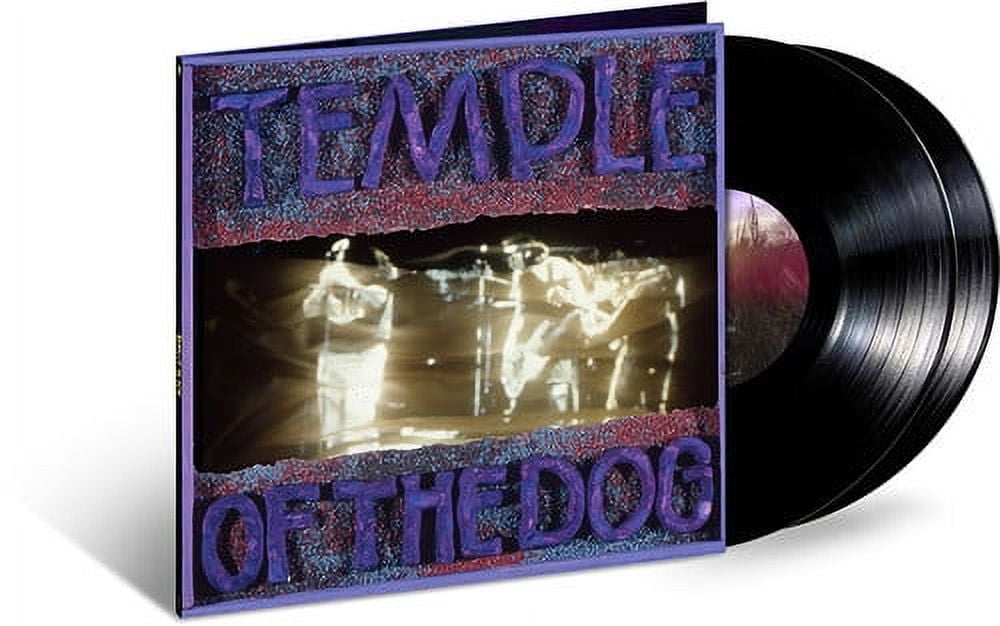
After the tragic death of Mother Love Bone frontman Andrew Wood, the surviving members teamed with Wood’s former roommate and Soundgarden frontman Chris Cornell to record a tribute album for their lost friend under the alias of Temple Of The Dog. Recorded in just 15 days, the self-titled record featured the melodic “Pushin’ Forward Back,” cautionary tale of addiction “Times Of Trouble,” and rocking 11 minute Wood’s dedication “Reach Down.” Temple Of The Dog was well received by critics but failed to fare well commercially, only gaining the public plaudits when re-released after the success of Pearl Jam and Soundgarden. Interesting fact; Eddie Vedder provided vocals on the cut “Hunger Strike.”
Temple of the Dog was actually released four months before Pearl Jam’s debut and nearly six months before Soundgarden’s seminal third LP. However, the album flew well below the radar of popular consciousness during the handful of months immediately following its release. Indeed it was only within the broader context of Ten and Badmotorfinger’s widespread success that people were compelled to reevaluate and embrace Temple of the Dog in a whole new light.
The story of the album’s genesis dates back even further, to the tragic circumstances that shook the Seattle music community on March 19th, 1990. This was the day that AndrewWood, the lead singer and songwriter for the influential bands Malfunkshun and Mother Love Bone, died from a heroin overdose at the age of 24. Reflecting on his friend and kindred musical spirit’s passing years later, Soundgarden frontman Chris Cornell confessed that “It wasn’t like this, ‘oh, he finally went and did it. We saw that coming.’ It wasn’t like that. It still had an air of real got-hit-by-a-bus kind of tragedy to it.
”Wood’s death came just days before the scheduled release of Mother Love Bone’s critically acclaimed debut album Apple, which would ultimately see the light of day four months later, courtesy of Stardog/Mercury Records.
As Cornell processed and grieved the loss of his friend, he found inspiration by way of composing a few songs in his friend’s honour. “Say Hello 2 Heaven” and “Reach Down” were the first compositions to emerge, representing considerably more subdued, melodic structures relative to the denser, more propulsive fare that defined Soundgarden’s signature heavy rock sound at the time. Encouraged by the songs’ direction, Cornell solicited the support of Wood’s Mother Love Bone bandmates and Pearl Jam founding members, Jeff Ament (bass) and Stone Gossard (rhythm guitar).
“The songs I wrote weren’t really stylistically like something my band Soundgarden would be used to playing or be natural for us to do,” Cornell explained during an April 1991 interview with radio station KISW. “But it was material that Andy really would have liked, so I didn’t really want to just throw it out the window or put it away in a box, y’know, put the tape away and never listen to it again. So I thought it would be good to make a single, and I thought it would be really great to record it with these guys,Stone and Jeff, because they were in his band and I just thought it would be a really fun thing to do.” Soon thereafter, the trio recruited Soundgarden drummer Matt Cameron (who also joined Pearl Jam in 1998), as well as future Pearl Jam co-founders Mike McCready (lead guitar) and Eddie Vedder (vocals).
The sextet branded themselves as Temple of the Dog, a nod to lyrics that Wood penned for the opening verse of Mother Love Bone’s “Man of Golden Words,” the ninth track on Apple (“Wanna show you something like the joy inside my heart / Seems I’ve been living in the temple of the dog / Where would I live, if I were a man of golden words? / Or would I live at all?”). Recorded in nimble fashion over the course of two weeks in November and December 1990 at Seattle’s famed London Bridge Studio and released in April 1991, the band’s self-titled debut album sold modestly at best in its first year in stores. But in the aftermath of Pearl Jam and Soundgarden’s dual breakthroughs later that year, the team at A&M Records seized the opportunity to capitalize on the bands’ collaboration, reissuing the album in the summer of 1992 and aggressively promoting the original lead single “Hunger Strike” to radio and MTV.
A harbinger of his song writing prowess that has evolved in thrilling ways with Soundgarden, Audioslave, and his solo career, Cornell wrote all ten songs that comprise Temple of the Dog. The aforementioned album opener and second single “Say Hello 2 Heaven” is the album’s most explicit and stirring tribute to Wood, with Cornell injecting the song with his unceasingly passionate vocals and penchant for unembellished introspection. Painfully poignant refrains such as “Now it seems like too much love / Is never enough” and “I never wanted / To write these words down for you / With the pages of phrases / Of things we’ll never do” shed light upon Cornell’s conflicted heart as he attempts to reconcile Wood’s death.
Clocking in at a generous eleven minutes and change, the gospel-tinged hymn “Reach Down” follows. Atop the moderately more amped-up arrangement, Cornell relays a dream he had of Wood before he adopts the perspective of his friend in reflecting upon his life and legacy (“And I’ve got room to spread my wings / And my messages of love, yeah / Love was my drug / But that’s not what I died of”). Written shortly after Cornell learned of Wood’s passing, the resonant “Reach Down” introduces a spiritual dimension to Cornell’s ruminations, which coalesce for an uplifting homage to his fallen friend.
The other eight songs that feature on Temple of the Dog were spawned from a handful of Cornell’s work-in-progress compositions and Ament and Gossard’s rough demos, which the band refined in the studio together. While the subtext within these songs is open to various interpretations, many of them can certainly be evaluated and contextualized in light of Wood’s death. The sobering “Times of Trouble” functions as Cornell’s desperate plea to a friend to avoid the futile solace of drug-fuelled escapism, while “Four Walled World” examines the metaphorical prison of a life constrained by pain and addiction, both serving as unequivocal allusions to Wood’s suffering and ultimate fate.
One of Cornell’s most enthralling vocal performances ever, album closer “All Night Thing” can most literally be interpreted as a man trying to find meaning within the ephemera of a one night stand or attempting to define a fledgling relationship that has no clear outcome. Or, within the broader context of the album’s predominant thematic thread, the songs can very well reference Wood and the permanence of his addictions, akin to a perpetual night.
Other notable standouts include the adrenalized third single “Pushin’ Forward Back,” which explores the push and pull of sustaining the support of a loved one, in this case the narrator’s mother. A prime showcase of McCready’s stellar guitar work, the somber “Call Me a Dog” depicts the struggles of a man confronted by the unreciprocated affection of a partner who believes he has not lived up to her unfair expectations.
The most instantly recognizable and universally beloved track here, of course, is the unforgettable “Hunger Strike,” in which Cornell and Vedder exchange identical verses atop a rather straightforward guitar-driven melody. In the book that accompanies Cameron Crowe’s Pearl Jam Twenty film documentary, a humbled Vedder recalls how he came to sing the second verse, explaining that “I just kind of stepped up and did it. And I remember being a little nervous about doing it, but [Cornell] was really happy about how it sounded, which was great. The fact that he asked me to be on that record, I mean, that’s the first time I was ever on a real record. So that could be one of my favourite songs that I’ve ever been on, or, for sure, the most meaningful.”
Upon cursory listen, “Hunger Strike” appears to rebuke the abuse of power, political, financial, psychological, or otherwise, with socialist, Robin Hood-like overtones of taking from the rich (“I don’t mind stealing bread from the mouths of decadence) while avoiding exploitation of the poor (“But I can’t feed on the powerless when my cup’s already overfilled”). “I was wanting to express the gratitude for my life, but also disdain for people where that’s not enough, where they want more,” Cornell confided in Pearl Jam Twenty. “There’s no way to really have a whole lot more than you need usually without taking from somebody else that can’t really afford to give it to you. It’s sort of about taking advantage of a person or people who really don’t have anything.”
But a closer inspection of the song’s lyrics suggest that “Hunger Strike” also contains the perspective of two bands bound for the big time, attempting to make sense of the fact that they are destined to soon benefit—financially and otherwise—from the same decadent, corporate machine they condemn, while many continue to suffer with far fewer means at their disposal.
In retrospect, Temple of the Dog is an amazing musical artifact that captures the convergence of two ambitious bands on the cusp of realizing their superpowers, global fame looming in the not too distant days ahead. A rare and unique proposition, indeed. “The camaraderie and the healthy competition part, I found later was unusual,” Cornell admitted in Pearl Jam Twenty. “And it was Johnny Ramone who actually pointed that out to me later, talking about the friendship he saw between Pearl Jam and Soundgarden, saying ‘I’ve never seen that before, New York wasn’t like that, we hated each other, we would screw each other up, at every turn if you could, you would mess the other band up.’ The best thing about it is, I think, that you learn from each other. And you’re inspired by each other. For me, Temple of the Dog grew out of that.”
The fact that the members of Temple of the Dog have performed these songs live on only a few occasions and never recorded again together only adds to Temple of the Dog’s undeniable mystique and brilliance, both of which are sure to endure for a long, long time to come.
Happy 25th Anniversary to Temple of the Dog’s eponymous debut album, originally released April 16th, 1991.
“Nick Cave & The Bad Seeds are about to deliver “Live God“, the stunning testament to The Wild GodTour, which wowed audiences across the U.K., Europe and North America in 2024 and ‘25. Across 15 live tracks (18 on the CD), the album captures the wildly transcendent nature of those unforgettable shows, which were, in Nick Cave’s own words, “an antidote to despair.” The tracklist includes performances of songs from the acclaimed 2024 studio album “Wild God”, as well as mind-blowing versions of catalogue favourites, such as “From Her To Eternity”, “Papa Won’t Leave You”, “Henry” and “Into My Arms”. The CD includes“Long Dark Night”, “White Elephant” and “O Wow O Wow (How Wonderful She Is).”
“Live God”, the brand new live album from Nick Cave & The Bad Seeds, is out now on premium double LP, double CD and streaming. The album has been met with critical acclaim across the media:
THE TIMES “A fitting testament to an album that captures Cave and his band at the height of their human powers”
CLASH “A fiery performance that breathes fresh life into some of their best-loved songs”
UNCUT “It might be hard to go back to the studio version after this shuddering, full-blooded testimony”
Recorded on The Wild God Tour in 2024 and 2025, the album captures the wildly transcendent nature of those unforgettable shows, which were, in Nick Cave’s own words, “an antidote to despair.”
Acclaimed singer, songwriter and performer Kathleen Edwards returns with her highly anticipated new album, “Billionaire”, on Dualtone Records. Evoking her debut, “Failer”, the new 10-song album is full of Edwards’ trademark lyrical sharpness and unflinching observations and was produced by Jason Isbell and Gena Johnson.
Celebrated as one of the forebears of modern alt- country and Americana music, Edwards is beloved by fans and fellow musicians, and praised by The New York Times for her, “droll, observant and unsparing tone that is all her own. In her best lines, Edwards has the conversational vernacular and emotional eloquence of a great short- story writer.”
Since debuting in 2003, Edwards has released five albums, including 2020’s “Total Freedom” — her frst after stepping away from music for almost a decade.
Released to overwhelming acclaim with pieces at The New Yorker, The New York Times , Rolling Stone and more, Pitchfork called it, “a creative breakthrough, written solely for the thrill of discovery,” while Rolling Stone declared it as, “devastatingly great.” Most recently, Edwards released a covers EP featuring special guests Isbell, Bahamas and Daniel Tashian and including renditions of Isbell’s “Traveling Alone,” BruceSpringsteen’s “Human Touch,” The Flaming Lips’ “Feeling Yourself Disintegrate,” Tom Petty’s “Crawling Back To You” and more. She has been nominated for multiple JUNO and Americana Awards and, in 2012, was awarded the SOCAN Songwriting Prize.
Italian doom metal alchemists MESSA released their new full-length album, “The Spin,” back in April through their new label home of Metal Blade Records. “This song is about the pressure we feel coming from the outside world. Expectation often is the root of pain and we sense the strain of the weight other people lay upon our shoulders. This song is born from our devotion to Killing Joke’s sonic language: our use of chorus-laden guitar tapestries and synthesizers is a nod to their work during the ‘80s.” – Messa
Sailing past their tenth anniversary in 2024, Italian band Messa take another step towards legendary status with their majestic fourth album ‘The Spin’, inviting the listener on a breathtaking journey across the wide open skies of their creative imagination, over a beautiful landscape of moods, twists and styles. From a basis in the band’s eclectic, self-defined ‘Scarlet Doom’ sound, ‘The Spin’ rises and falls, broods and bites, comforts and destroys, while resounding with both instinctive, compulsive magic and obsessive, concerted hard work.
“This song comes from the darkest place and the unfathomable void of oneself. Pain circles around, emerging violently and then drowning again in the depths. This is reflected in the riff: the descent scale keeps coming back and circles repetitively. The Dress“, in this case, is the gateway to a personal crucifix built with self-hatred and mirroring despair.”
After lighting up the underground with a triptych of increasingly distinctive and wondrous records – 2016’s ‘Belfry’, 2018’s ‘Feast for Water’ and 2022’s ‘Close’ – Messa are audibly equipped for the big leagues, and with the help of Metal Blade Records, ‘The Spin’ should ensure they attain them.
Dunne may be a singer/songwriter in the purely technical sense of the term, but he shares more in common on this album with the punks and new wave weirdos who turned up in lower Manhattan and the outer boroughs in the 70s and 80s, DIY misfits who came to crash the party and ended up building their own scene instead.
I never lived in New York, but growing up about 120 miles from the city, within TV antenna range of WPIX, Channel 11, I absorbed a lot of its culture as a kid. Brian Dunne’s terrific new album “Clams Casino” possesses that same kind of teleportation magic, albeit with less nostalgia and more melancholy. Over 10 songs, the Brooklyn singer-songwriter paints a vivid picture of what it’s like to eke out an existence as a 30-something artist in New York today: Joys are hard-won and fleeting, self-doubt rears its head hourly, and the struggle to constantly achieve, or perform achievement on social media, looms like a Scooby-Doo villain’s shadow.
Dunne captures all of that in the title track, a bouncy, bittersweet singalong that equates success with a baked seafood dish. “I’m just trying to have a good life/Clams casino on a Sunday night,” he sings, full of simple aspiration.
It’s a song about class, Dunne explains when asked why he’d write an homage to breadcrumbs, bacon, and bivalves. “It’s about where I’m from and where I hope to go, and all the shame and pride that comes with trying to outrun those circumstances,” he says. “I grew up in a super working-class family and I wear that as a badge of honor, but also, I’ve got serious delusions of grandeur and I don’t really know how to reconcile those two things.”
His reality — like having to buy his mattress secondhand — is always bringing him back to earth. “Why’s it so hard to have a good thing?” Dunne wonders throughout “Clam Casino.”
In lesser hands, such a question, especially from a young white male who plays guitar for a living, could come off as whining. But Dunne’s voice, lilting and keening, is rich with empathy. He knows it’s hard out there for everyone, and in the song’s final verse points the finger back at himself: “She said, ‘All you do is bitch and moan… You really don’t have it half bad.’”
That kind of self-awareness is a hallmark of Dunne’s writing on “Clams Casino”. In the deceptively ebullient “Play the Hits,” he acknowledges he’s aging out of the competitive Brooklyn arts scene. “All the kids down here/They all remind you of you/They’re a little big younger with a little bit more hunger,” he sings, before capping the verse with a sharp, self-inflicted wound — “And they look good in leather too.”
In the devastating “I Watched the Light,” about being ground down to the point where any glimmer is extinguished, he begins with an anecdote of someone turning tail. “Heard you were leaving, moving to Cleveland/Said it’s not as bad as it looks, or sounds/’Cause after a while, man, it’s all Ohio, man,” he rationalizes. When Dunne performed the song earlier this year for a room full of tourists at the Bluebird Cafe in Nashville, he apologized to anyone visiting from Ohio.
He needn’t have worried. “I Watched the Light,” like so many of the best songs on “Clams Casino”, establishes this as an album about the good and bad of New York — not Cleveland, nor anywhere else — without overtly saying so. In “Play the Hits,” he writes about the upheaval of vacating a one-bedroom apartment. “Rockland County,” meanwhile, fantasizes about the docility and ease of suburban life, where “you and I can live like townies” with farmers markets, supersized Targets, and abundant free parking. Dunne doesn’t declare it, but it’s clear he’s fleeing the city.
But Dunne, who is also a member of the cheeky band of songwriters known as Fantastic Cat, isn’t averse to dropping a pin to share his exact location. He fills “Max’s Kansas City” with a bevy of New York identifiers, from the defunct rock club of the title to a Lou Reed namecheck, as he wanders the downtown streets on an “endless search for meaning.”
After consuming “half a Xanax and an English tea,” he has a revelation, not that everything is going to be all right in his city, or in this quickly deteriorating world, but that he’s “got time to kill” to see how it ends. And that may be even more satisfying than a clam appetizer.
“Clams Casino” out on Missing Piece Records
released September 5th, 2025 All songs written and produced by Brian Dunne
Brian Dunne – Guitar, Vocals, Keys, Bass Dan Drohan – Drums, Percussion Alex Wright – Organ on “Living It Backwards” David Blumenthal – Horns on “Graveyard” Brian Lotze – Horns on “Graveyard”
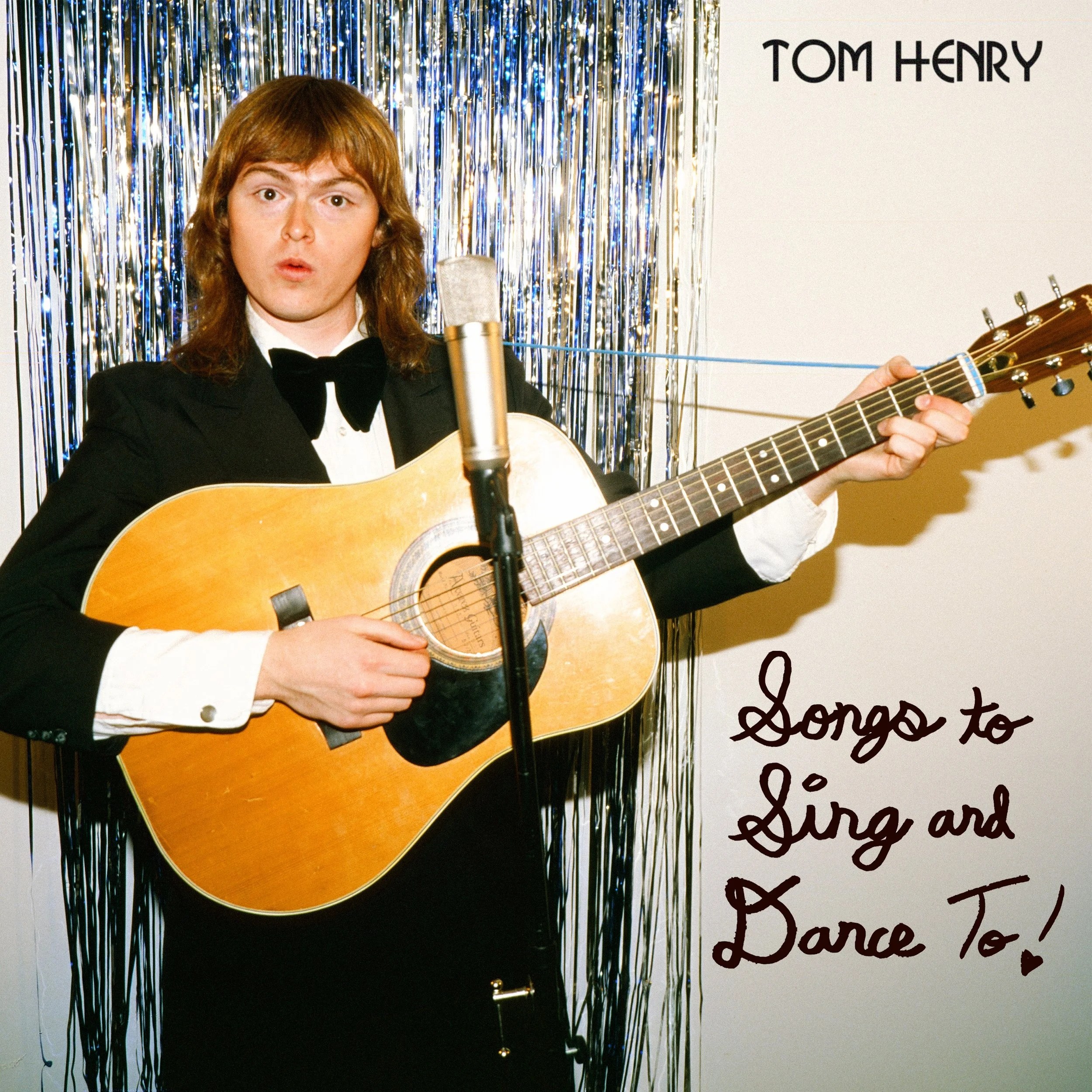
“Songs to Sing and Dance To” is the debut album by Chicago born LA based musician Tom Henry. Produced by Kai Slater of Sharp Pins and featuring contributions from him on nearly every track, the album includes twelve rock n’ roll songs to sing and dance to–influenced by power pop, garage rock, psych, and folk. The album was mixed & mastered by Jonny Bell (Tijuana Panthers, Young Guv, Hanni El Khatib) at Jazzcats in Long Beach.
Album opener “Close Your Eyes” kicks things off in the best of ways, mixing pop hooks with songwriting that’s straight from the heart ala Alex Chilton. Lead single “Bella” opens with jangly acoustic guitars before eventually building to an emotional climax of psych-punk energy, “I Miss You” leans into Big Star influenced power-pop, and “Arthouse” captures the thrill of a midnight movie with its garage-rock guitars and Farfisa organ, reminiscent of The Modern Lovers.
Meanwhile, the album’s B-Side is full of heavy hitters–“Oh, How I’ve Missed the Sun!” recalls The Raspberries, “Do You Wanna Be With Me?” co-written with bandmate Ben Jordan (The Private Eye) recalls the chiming folk-rock of the Byrds, and “The Mountains” mines country-folk influences complete with high lonesome pedal steel.
Guitar and Lead Vocals: Tom Henry Lead Guitar: Max Pugh Bass: Ben Jordan, Tom Henry Drums: Z Long Keys: Aidan Babuka Black Harmonies: Tom Henry, Kai Slater
Future Crib is a rock band founded in 2017 in Nashville, TN featuring Johnny Hopson, Julia Anderson,Bryce DuBray, and George Rezek. Produced by Future Crib Recorded at home in Nashville, TN.
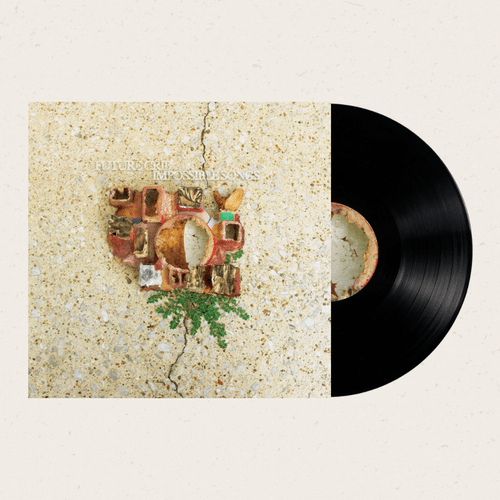
With the lessons learned from the production and extensive touring of their previous album, “Full Time Smile, Future Crib is back with their new album “Impossible Songs“. It showcases a departure from their typical sound both musically and technically. Adjusting to the departure of drummer Noah Pope, the band rebuilt their sound from the ground up, centering the recording process around their abilities as a live band and their long-held goal to complete the album process completely analog. Using no computers, digital editing, or one-click do-overs, the band rejects the shallow conveniences of modern recording in favor of the challenge of authenticity. In exchange they rid themselves of the distraction of endless decisions and perfectionism, putting the music first.
Future Crib’s 4th LP, “Impossible Songs“, is an all analogue endeavor that has been in the works since the beginning. The album, released on May 9th, 2025is available in various formats, including vinyl, cassette, and CD. It features a collection of modern indie songs with inter-twining harmonies and searching refrains. The album has been produced by Future Crib,
The album’s tracklist includes songs like “One Horse,” “Dweller,” “Clearance,” “Only a Wheel’s Worth,” “Particular,” “Inopportune,” “Good Company,” “Two Tons to Termites,” “Valley Song,” “The Way,” “Crush,” “Neighbors,” and “On the Plains.” Each song contributes to the album’s unique sound and storytelling.




 The Fat Angel Sings