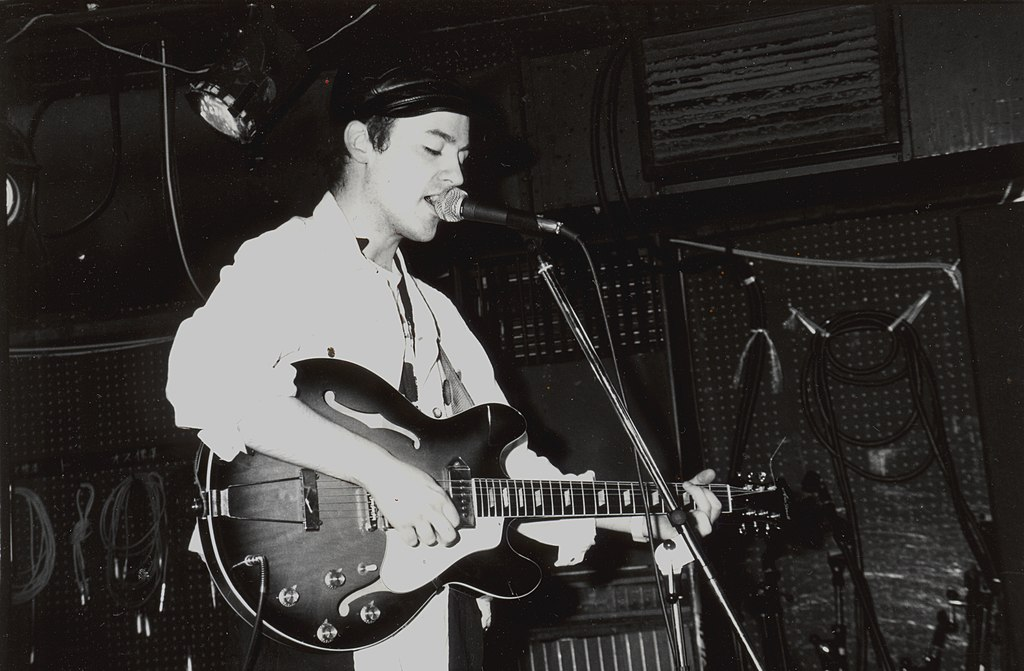
This week, New York-via-Chicago-based rock trio Horsegirl announced a new album, “Phonetics On andOn”, and shared its first single, “2468,” via a music video. They also announced some tour dates. “Phonetics On and On” is due out February 14th, 2025 via Matador.
“Phonetics On and On”is the band’s second album and the follow-up to 2022’s “Versions of ModernPerformance.
Horsegirl is Penelope Lowenstein (guitar, vocals), Nora Cheng (guitar, vocals), and Gigi Reece (drums). In the fall of 2022 the band relocated to NYC for Lowenstein and Reece to attend NYU. In January 2024 the trio returned to Chicago to record the album at The Loft, with Welsh singer/songwriter Cate Le Bon producing.
Taken from ‘Phonetics On and On,’ the new album from Horsegirl out February 14th, 2025 on Matador Records.
The Weather Station (the project of Toronto-based singer/songwriter Tamara Lindeman) is releasing a new album, “Humanhood”, on January 17th, 2025 via Fat Possum. This week she has shared its second single, “Window,” and announced some new tour dates. Linderman co-directed the song’s video with Philippe Léonard.
In a press release, Lindeman says the video was “filmed on the island of Notre-Dame-des-Sept-Douleurs, Quebec late one night with a battery powered projector, with many attempts to get that one perfect take. Philippe’s note to me was ‘you are the window.’”
Previously The Weather Station shared the album’s first single, “Neon Signs.” Lindeman co-directed the “Neon Signs” video with Jared Raab .
“Humanhood” follows 2021’s “Ignorance” and 2022’s companion album, “How Is It That I Should Look At the Stars”.
Linderman co-produced “Humanhood” with Marcus Paquin, recording it in the fall of 2023 at Canterbury Music Company. The main backing band on the album is drummer Kieran Adams, keyboardist Ben Boye, percussionist Philippe Melanson, reed-and-wind specialist Karen Ng, and bassist Ben Whiteley. The album also features Sam Amidon, James Elkington, and Joseph Shabason.
Stripes is a Brooklyn-based indie rock band led by singer/songwriter Izzy MK, operating within the blurred boundaries between jagged post punk and jangly indie rock. The band got their start while Izzy was living in Tucson, debuting with their first album “520” in 2019 and following with their 2021 home-recorded album, “How Should I Know?” Since then, Izzy relocated to New York and reformed the band with a new line-up, Riley Morgan on guitar, Mitchell Davis on bass, and Dave Possehl on drums.
Along the way, they also brought out more of their original punk edge, returning this year with their third full-length album, “Running + Hiding”, followed by a pair of new singles, “Operation: No Hell” and “So Fucked.” They’re back with another new track, “Forever, It Won’t Change,”.
“Forever, It Won’t Change” is equal parts catchy and disheveled, sporting all of the frayed edges of a garage rock rager alongside a rush of wiry hooks. The track’s verses buzz along in an acid-fried haze, laced with stabbing guitar lines and Izzy’s bleary vocal melodies. The tension builds to a breaking point before exploding outwards with the chorus. All of the knotted guitar lines quickly unspool into jangly and jagged pop chords, sprawling out beneath a massive sing-along melody. The resulting track is an unstoppable garage pop machine, steamrolling along with desperate, wild-eyed intensity until it crashes down into silence in it’s final moments.
The single cover also features Luna, a beloved canine friend of Stripes. “She embodies the yearning of the track; she’s an intensely emotional dog,” Izzy says. Possehl adds of the track, “We yearn for love and security in the same way a dog yearns for a tennis ball.”
The Horrors have a new album, “Night Life”, dur for release March 21sst, 2025 via Fiction Records. Now they have shared its third single, the seven-minute long “Lotus Eater.” The band collectively had this to say about the new single in a press release: “‘Lotus Eater’ has had several past lives. It was one of the first songs from the “Night Life” sessions that we felt really excited about—Rhys’ original lyric had a feeling that made me think of ‘5 Years’ by David Bowie, and I started to build on the idea.
“A lotus eater lives in a state of blissful ignorance, and the song to me describes the moment of coming back to reality. We wanted it to have a feeling of both melancholy and euphoria, letting go of the past and starting again. “The spoken word section was improvised in the studio, and the mid-section of chopped-up electronics came from Amelia’s world of synth programming. It feels almost like a sister track to ‘Sea Within a Sea’ in some ways, and it’s one of our favourite songs on the new album.”
Previously the band had shared the album’s first single, “The Silence That Remains,” Then they shared its second single, “Trial By Fire,” via a music video.
“Night Life” will be the band’s first new album in eight years and features a revised line-up. The Horrors’ last album was 2017’s “V“, although in 2021 they released “theLout” and “Against the Blade” EPs.
The band still features vocalist Faris Badwan and bassist Rhys Webb, but those founding members are now joined by new members Amelia Kidd on keyboards and Jordan Cook (of the band Telegram) on drums. Original member Joshua Hayward also plays guitar on the album. Absent are original members, keyboardist Tom Furse (who left the band in 2021) and drummer Joe Spurgeon.
Badwan and Webb began working on demos in Webb’s North London flat, with recording done in Los Angeles with producer Yves Rothman (Yves Tumor, Blondshell). The album was then finished in London along with guitarist Hayward. Kidd also contributed remotely from Glasgow.
Featuring performances from Caribou, Father John Misty, Black Country, New Road, Geordie Greep, JohnMaus, These New Puritans and more. End Of The Road Festival have announced the first wave of musical acts set to appear within the line- up for their forthcoming 2025 edition.
Descending upon the scenic pastures of Larmer Tree Gardens once more over three days in late August, today the beloved and long-running Dorset event have revealed Caribou, Father John Misty, Self Esteem and Sharon Van Etten as headliners of their looming edition with Black Country, New Road, Emma-Jean Thackray, black midi alumnus Geordie Greep, John Maus and These New Puritans among a slew of further notable and wide-ranging acts. With many more performers yet to be announced, full weekend ticketing options for End Of The Road Festival 2025 are available to purchase now.
Clarissa Connelly’s world reads like an intoxicating fantasy – set against a windswept Scandinavian landscape where sacred sites reverberate with ancient melodies and pre-Christian myths loom large. Connelly – a graduate of Copenhagen’s Rhythmic Music Conservatory alongside Astrid Sonne and ML Buch adapts this world for her third album: a wintry prog-pop opus that pulls at the tension between her awe at life’s beauty and existential fear.
Weaving new myths from old – including a 16th-century lament sung from the perspective of a dancing rose flower “Wee Rosebud”Connelly reimagines the theatrical mysticism of Kate Bush, Tori Amos and Enya as icy etherealism, with her crystalline voice leaving its frozen impression long after the final track has rung out. It’s a modern epic.
2024 was the year that Danish singer-songwriters became so prominent that they became a meme. Like ML Buch and Clarissa Connelly, Astrid Sonne – is a classically trained composer – has an ear for the off-kilter and unsettling. Second track “Do You Wanna”sets the tone, its thudding drums and mournful viola the uneasy backdrop to Sonne’s self-searching: “Do you wanna have a baby? Do you wanna bring people into this world?”she sings, dreamlike and disassociated.
Elsewhere, the spoken-word “Everything Is Unreal” is a mist-cloaked folk incantation over harpsichord and foreboding drum beat, while “Boost “is a creepy sound collage of handclaps, flute-like synths and ghostly pads, among other wunderkammer-ish thrills. Astrid Sonne is a Danish composer and viola player, currently based in London. Astrid Sonne has been carefully crafting different moods through electronic and acoustic instrumental endeavours. On “Great Doubt” this skill is refined, now with the distinct addition of the composer’s own vocal in front. The tone of each track is unmistakably Sonne’s, structured around contrasts through an impeccable sense of timing. Lyrics on the album are sparse, merely highlighting different scenes or emotional states of being, leaving the music to fill in the blanks
The album may be less than 30 minutes long, but the spell it casts during that time is unshakeable. released January 26th, 2024
It wasn’t just the nightmarish riffs or the spine-chilling vocal performances by singer Raygun Busch that made Oklahoma City’s Chat Pile one of noise-rock’s biggest breakout stars in 2022. Hidden within their Flenser debut “God’s Country”is an acute sense of empathy for those on the fringe of our society, paralyzed and weighed down by the evils of American greed and capitalism that swing the door open for few and slam it shut for most. On the album’s standout second track “Why,” Busch eschews any sense of poetry to rub our noses in perhaps the biggest injustice facing our country: our unwillingness as the world’s richest nation to solve our own unignorable homelessness situation.
“Why do people have to live outside,” Busch belts out over the course of the song, until all of the naive connotations of such a simplistic question are flipped to the point of being an unavoidable indictment on our collective apathy. As the song’s crushing instrumental picks up momentum like an avalanche sweeping up snow grooming vehicles from the slopes and using them as tools of destruction, Busch keeps the pressure on until the song’s final moments: “Real American horror story,” he snarls in disgust, “It’s a fucking tragedy.” With “Why,” Chat Pile remind us that we don’t deserve to be let off the hook.
Invoking the spirit of those gothic early 4AD artists – This Mortal Coil, Dead Can Dance and Bauhaus – Leeds trio Tristwch y Fenywod(“The Sadness of Women” in Welsh) lure us into their uncanny, eldritch world with outsider music steeped in ritual and intrigue. The temptation is hard to repel. Described by their label as a “Welsh-language, gothic, avant-rock power-coven”, these Leeds underground lifers have played only a handful of gigs together. Yet, their darkwave incantations – composed of stalking rhythms, the Gregorian chime of a homemade dual zither and darkly atmospheric electronics – possess all the bewitching power of a band several albums deep.
This is an ancient sound reborn, harnessing our primal longing for ceremony and magic. Exhumed from the depths of Leeds’ experimental underground, the trio consist of Gwretsien Ferch Lisbeth (Guttersnipe, The Ephemeron Loop), Leila Lygad (Hawthonn) and Sidni Sarffwraig (Slaylor Moon, The Courtneys).
Stark, striking and bewitching, Tristwch y Fenywod’s self-titled album is their debut studio recording, following just 10 gigs and a live demo. Formed in 2022, Tristwch y Fenywod (“The Sadness of Women”) record exclusively in the Welsh language, conjuring an eldritch, subterranean, alien folk music played on dual zither, electronic drums and bass guitar. With towering, siren-like vocals curling around the Welsh consonants, accompanied by stark, martial rhythms and swirling claw-plucked strings, Tristwch y Fenywod feels like an early 4AD recording dredged from the waters of an Anglesey swamp. The effect is simultaneously chilling and stirring.
The eight tracks on the record constitute what feels like a recently rediscovered, unholy grail of edgy, atmospheric, occult feminist goth emissions
Katie Gavin’s debut “What A Relief” taps into the unguarded self-possession and homespun pop sensibility of singers like Alanis Morissette, Fiona Apple and Ani DiFranco, and uses their tenacity as a north star for Gavin’s own trek towards self-discovery. “This record spans a lot of my life – it’s about having a really deep desire for connection, but also encountering all the obstacles that stood in my way to be able to achieve that, patterns of isolation or even boredom with the real work of love” they say.
On Katie Gavin’s“What a Relief”, we hear the powerhouse voice of Muna taking on different shades. There’s less of her band’s bombast, and more Lilith Fair-leaning string instrumentation, as Gavin weaves her influences, while frankly discussing generational trauma, failed relationships and loss. “Sanitized” is pure Fiona Apple worship, and on country parable “The Baton”, she’s channelling The Chicks’ Natalie Maines. Of course, there are moments where those irresistible Muna type melodies rear their heads – “Aftertaste” and “Casual Drug Use” could easily have been on Muna album–
but the best moments on this record are those that feel like they’re all Gavin. Despite the heavy subject matter, she sounds untethered, like she’s opening up, showing us who she is and what made her that way.
Written over the course of seven years, “What A Relief” comprises a set of songs that Gavin always loved but which “had something in them” that she and her bandmates felt didn’t quite fit within the universe they were trying to cultivate with Muna. Many of them were written on acoustic guitar, and are rooted in “a style of music that’s very much in my blood, and natural for me,” as typified by the Women and Songs CDs that Gavin loves, which compiled music by artists like Tracy Chapman, Tori Amos and Sarah McLachlan.
That openness of spirit is the overwhelming character of “What A Relief“, an album that’s refreshing in its willingness to accept people as they come, even as it remains in dogged pursuit of a life that’s kinder, wiser and more loving. Gavin’s explorations of desire and intimacy feel time-worn and necessary – songs that might teach a generation if not how to live, exactly, then at least how to look within oneself for guidance about how to move forward.
‘What A Relief’, out October 25th on Saddest Factory Records.