

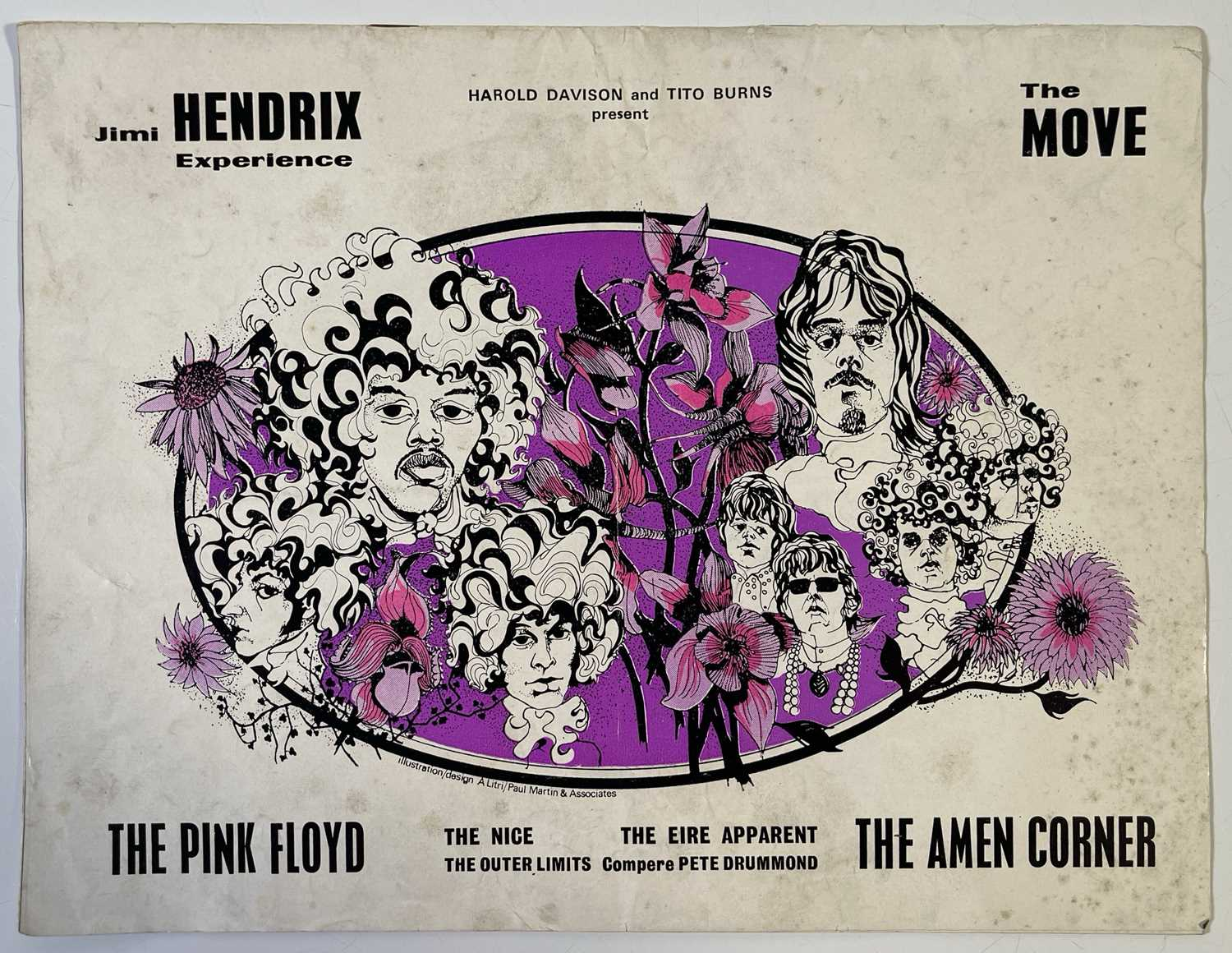
a concert programme for a date on the 1967 Jimi Hendrix tour, with (the) Pink Floyd, The Move and The Amen Corner sharing the bill.
a concert programme for a date on the 1967 Jimi Hendrix tour, with (the) Pink Floyd, The Move and The Amen Corner sharing the bill.

One of the greatest Rock ’n’ Roll Anthem’s of all time and most covered, garage-rock anthems of the 1960s. That was it, nothing more to it. Our boy is so taken by this glorious being whose name is “Gloria” that he’s going to shout her name all night; in fact, he’s gonna shout it every day. You could say he’s smitten.
Written by 18-year-old George Ivan Morrison, better known as Van, “Gloria” has received the Grammy Hall of Fame Award and is included in the Rock and Roll Hall of Fame’s 500 Songs That Shaped Rock and Roll—twice, although neither of the recorded versions cited is Morrison’s original. Perhaps that’s because “Gloria,” credited to Them, the Irish band Morrison fronted, was not a hit in the United States in its original form. It peaked at #93 on singles chart, slightly higher than its flip side, “Baby, Please Don’t Go.” In the U.K., “Gloria” was the B-side and “Baby, Please Don’t Go” what radio folks called at the time the “plug side.” The latter made the top 10; “Gloria” was noticed only by the few who bothered to turn the record over.
It should be noted that the “Gloria” from Van Morrison wasn’t even the first song by that name to make its presence known during the rock era. The tale told in that tune was pretty simple too. She’s Gloria. She’s not Marie. She’s not Sherie. Get her name right: Gloria. It seems this particular Gloria is “not in love with me.” That may change, the singers hope: “Well, maybe she’ll love me, but how am I to know?/And maybe she’ll want me, but how am I to know?” We never find out—as the song ends, Gloria still hasn’t come around.
In any case, the Gloria on the mind of Van Morrison in that summer of 1963, when he penned his song during an engagement in Germany with his group the Monarchs, bore little in common with doo-wop Gloria or disco Gloria. Morrison’s Gloria had one purpose in life: to please him.
It begins, inexplicably, with a description of her height:
“Like to tell you about my baby
You know she comes around
About five feet four
A-from her head to the ground”
She may be fairly short, the singer then explains, but she’s determined:
“You know she comes around here
Just about midnight
She make me feel so good, Lord
She make me feel all right”
The chorus follows, sung—one might say snarled—by the precocious red-headed Morrison, only five-foot-five himself and already so excited that a guitar solo is needed to give him a few seconds to catch his breath. But he’s just starting to get worked up. When he returns from the chorus, our young stud, a teasing organ riff helping him along, goes graphic. You can hear his lust:
“You know she comes around here
At just about midnight
She make me feel so good, Lord
I wanna say she make me feel all right
Comes a-walkin’ down my street
When she comes to my house
She knocks upon my door
And then she comes in my room
Yeah, an’ she make me feel alright”
Another chorus or two, the band builds its slinky, bluesy vamp to a frenzied crescendo, and Gloria and Van are presumably doing whatever.
The name’s six letters just happened to fit the particular rhythm he’d conjured up, sounded especially cool when shouted, and worked well with the three chords he assigned to his tune: E, D and A. (So easy, anyone can play it!) Morrison didn’t perform his new composition regularly until the year after he’d written it, upon his return to his home base of Northern Ireland from his stint in Germany. By that time, he’d decided to leave his then-current band, the Golden Eagles, and quickly hooked up with an already-working group called the Gamblers: Billy Harrison (guitar, vocals), Eric Wrixon (keyboards), Alan Henderson (bass) and Ronnie Milling (drums). Morrison both sang and played the saxophone.
A new, more memorable name was needed, they decided, and so they became Them, taken from a campy 1954 sci-fi film about colossal ants attacking L.A. “Gloria” made its debut when Them performed one of their regular gigs at Belfast’s Maritime Hotel. The song, Morrison once recalled, could last up to 20 minutes onstage, with long improvised sections that found him extending the story of his night time visitor every which way.
Decca Records took notice, and on July 1964, with Pat John McAuley replacing Wrixon on keyboards and session musicians filling in some of the parts, Them recorded “Gloria.”
Them steadily grew their audience not only in Ireland but in England, touring frequently, and soon set their sights on America, where, by mid-1965, the British Invasion was in full swing. Signed to Parrot Records in the U.S., Them sat back and waited for “Gloria”/“Baby, Please Don’t Go” to take off. And waited, and waited…
But Them simply did not make it in the U.S., even while they continued to score in the U.K. (the phenomenal “Here Comes the Night” hit the number #2 spring of ’65). By 1966, Morrison had decided it was time to strike out on his own. having released more than 40 albums and attained the status of rock god. Inducted into the Rock and Roll Hall of Fame in 1993, the famously curmudgeonly Van Morrison became the first living inductee to not attend his own ceremony.
“Gloria,” of course, did not die with Morrison’s split from Them. The song’s ascendance to garage-rock immortality seemingly every local rock ’n’ roll band worth its twang had discovered the tune despite its lack of airplay and sales, and had begun including it in their own sets. Among those was the Shadows of Knight, a band from the Chicago suburb of Mt. Prospect that took the British version of blues favoured by groups like the Rolling Stones, the Yardbirds and the Animals—and Them—and gave it a tough, soulful, Chicago-style toughening up.
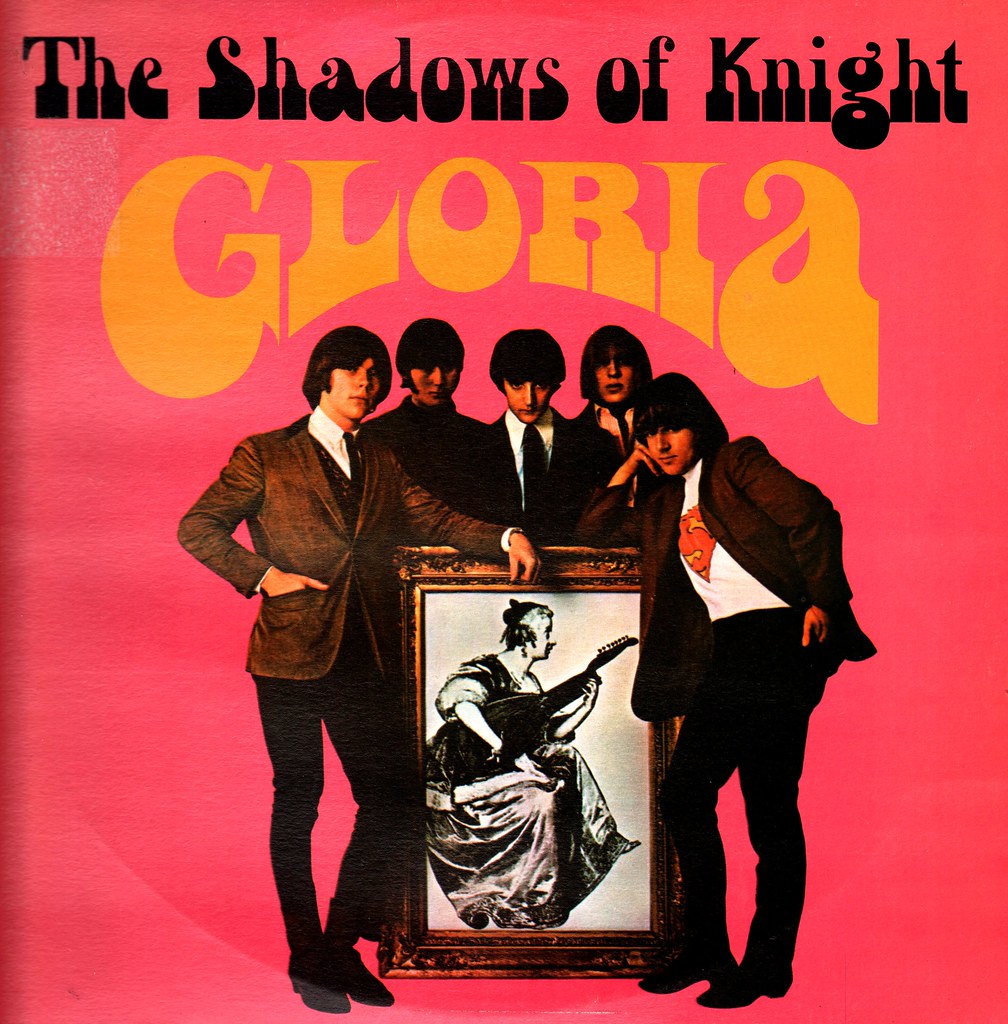
Fronted by 16-year-old Jim Sohns, the Shadows of Knight had formed in 1964 as the Shadows, but when it was pointed out to them that a very popular group existed in Britain by that name, they added the “of Knight” and carried on. Their live performances of “Gloria” went over well with audiences and when they were signed by the local Dunwich label, the group recorded its own take on “Gloria,” close in its approach and arrangement to the Irish original, changing a few words to make it radio-friendly in America (no more “She comes in my room”).
Released in December 1965, “Gloria” was a local hit at first, aired all over Chicago radio. Eventually, it was picked up by other stations around the country and on March 19, 1966, the Shadows of Knight’s “Gloria” entered the singles chart. “Gloria” went into temporary hibernation as the ’60s faded into the more cerebral 1970s. The garage sound in general became dormant as new offshoots of rock came into play. In 1972, rock journalist/record store clerk Lenny Kaye created, for Elektra Records, a two-LP collection of ’60s singles titled “Nuggets: Original Artyfacts from the First Psychedelic Era”, which included the Shadows of Knight’s cover of Bo Diddley’s “Oh Yeah,” their follow up single to “Gloria,” but only a few took notice of the album at first. (Later it would become massively influential and a must have in any collection.) Among the handful that did pay attention to “Nuggets”, however, were other budding musicians, who were growing tired of the excesses of ’70s rock and longing for a return to the simple, more aggressive sounds proffered by bands like the Shadows of Knight, the Standells, the Count Five and the Barbarians.
Among those who got what Kaye was offering was a young woman from New Jersey named Patti Smith, a poet who had begun setting her words to music onstage around New York City—with Lenny Kaye backing her on guitar. Signed by Clive Davis to his Arista Records in 1975, Patti Smith and her eponymous band cut their debut album.
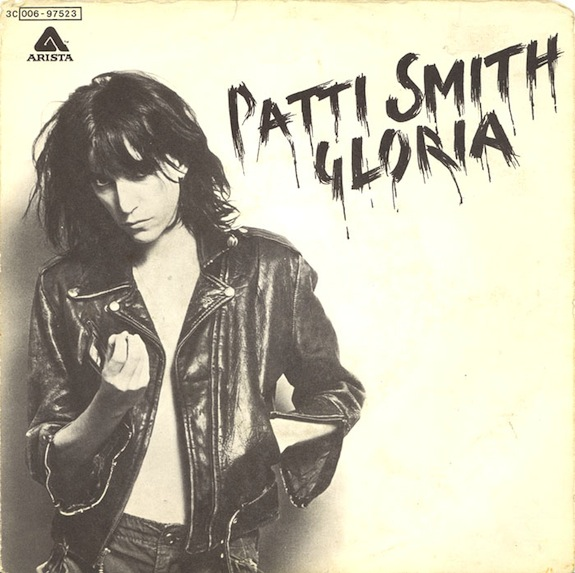
The album, “Horses”, launched with Smith’s own interpretation of the now-10-year-old Van Morrison tune, “Gloria,” which she retitled “Gloria: In Excelsis Deo” and reworked so completely that the familiar “G-L-O-R-I-A” chant doesn’t surface until halfway into its six minutes. Starting with the provocative lyric “Jesus died for somebody’s sins but not mine,” Smith’s slow-building “Gloria” is a tour de force of the emerging punk rock, nothing less than one of the most exhilarating and thought-provoking marriages of rock and poetry ever committed to tape.
“Horses” wasn’t a big hit, in early 1976. Although her concerts sold out and her reputation as an innovator was stellar, Smith wouldn’t enjoy a hit single until “Because the Night” in 1978, which she co-wrote with Bruce Springsteen. But she too, like Van Morrison, managed to survive any disappointing lack of early commercial success: Smith is still recording and live performing today (with Lenny Kaye still accompanying her) and her version of “Gloria” is considered a classic in its own right.
The song has, in fact, long lived a life of its own. Among those who’ve covered it over the decades are The Doors, who performed it between 1968 and ’70 and included it on their 1983 live album “Alive, She Cried”.
AC/DC covered the tune in their early days, U2 grafted it onto the ending of their song “Exit,” and David Bowie sang it on his 1990 Sound and Vision tour. The Jimi Hendrix Experience’s version can be found on a few different compilations and boxed sets, Tom Petty included it on his 2006 Highway Companion tour, and Bruce Springsteen has also been known to perform it at select live shows.
Iggy Pop’s 2011 album “Roadkill Rising” features his take, while Green Day, Bon Jovi, Robert Plant and the Grateful Dead have also bowed to its genius.
“Gloria” began life humbly, as a barely acknowledged vamp by an up-and-coming Irish blues-rocker. More than half a century later it’s recognized as a cornerstone of rock music.
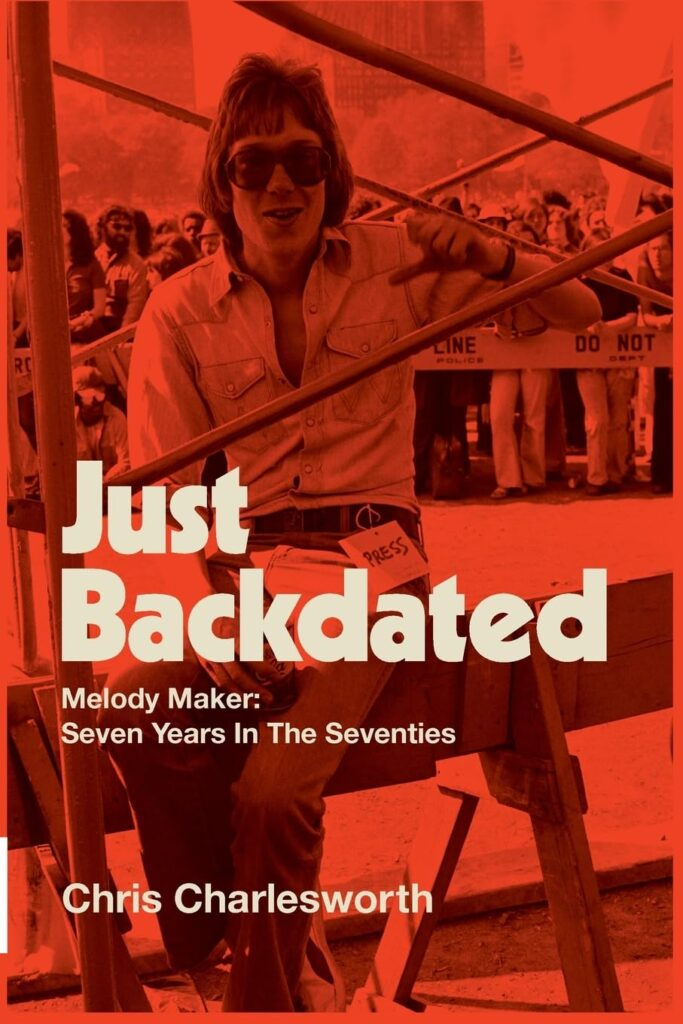
A veteran journalist for the U.K.’s best-selling music weekly has written his memoir about the era that he covered. Just Backdated – Melody Maker: Seven Years in the Seventies, comes from Chris Charlesworth who, between 1970 and 1977, was at Melody Maker in an era when rock stars fell over themselves to appear in its pages. It’ll be published on September 27th in the U.K.,
Initially the paper’s News Editor, Charlesworth was for four years the publication’s U.S. editor, based in New York, a unique position in music journalism, and in that time regularly rubbed shoulders with rock’s most iconic heroes.
From the publisher’s announcement: John Lennon, Paul McCartney, David Bowie, Rod Stewart, Elton John and dozens more found themselves face to face with Charlesworth. He went on tour in America with The Who, Led Zeppelin, Deep Purple and many others. He was at 27 concerts by the original Who, often backstage or onstage. Somewhere above Colorado he took the controls of Led Zeppelin’s private plane. He saw an unknown Elton John at a disastrous festival in 1970 and predicted he would become a world star. He ambushed Pink Floyd in Glasgow and chased Bob Dylan in New England.
“I never felt closer to The Who than I did in New York in June [1974],” Charlesworth writes. “I tried to maintain my neutrality with them but I admired them so much, both as a group and as individuals that becoming close to them was somehow important to me and, of course, it helped me get the hot Who scoops for Melody Maker.
“They were bound together musically but not socially. [And] they were not as rich as the world imagined them to be. To survive, they needed to work, performing live as often as possible, perfecting the show and pocketing the fees they could command. This had the additional benefit of making them the greatest live band in the world.”
Charlesworth watched Bruce Springsteen in Norfolk, Virginia, and acclaimed his flair 18 months before “Born To Run” was released. He was the first music writer to write about the nascent CBGBs scene in New York, introducing MM readers to Debbie Harry long before she became a household name. He identified Slade as future stars a year before they had their first hit single. His only regret was never seeing Elvis.
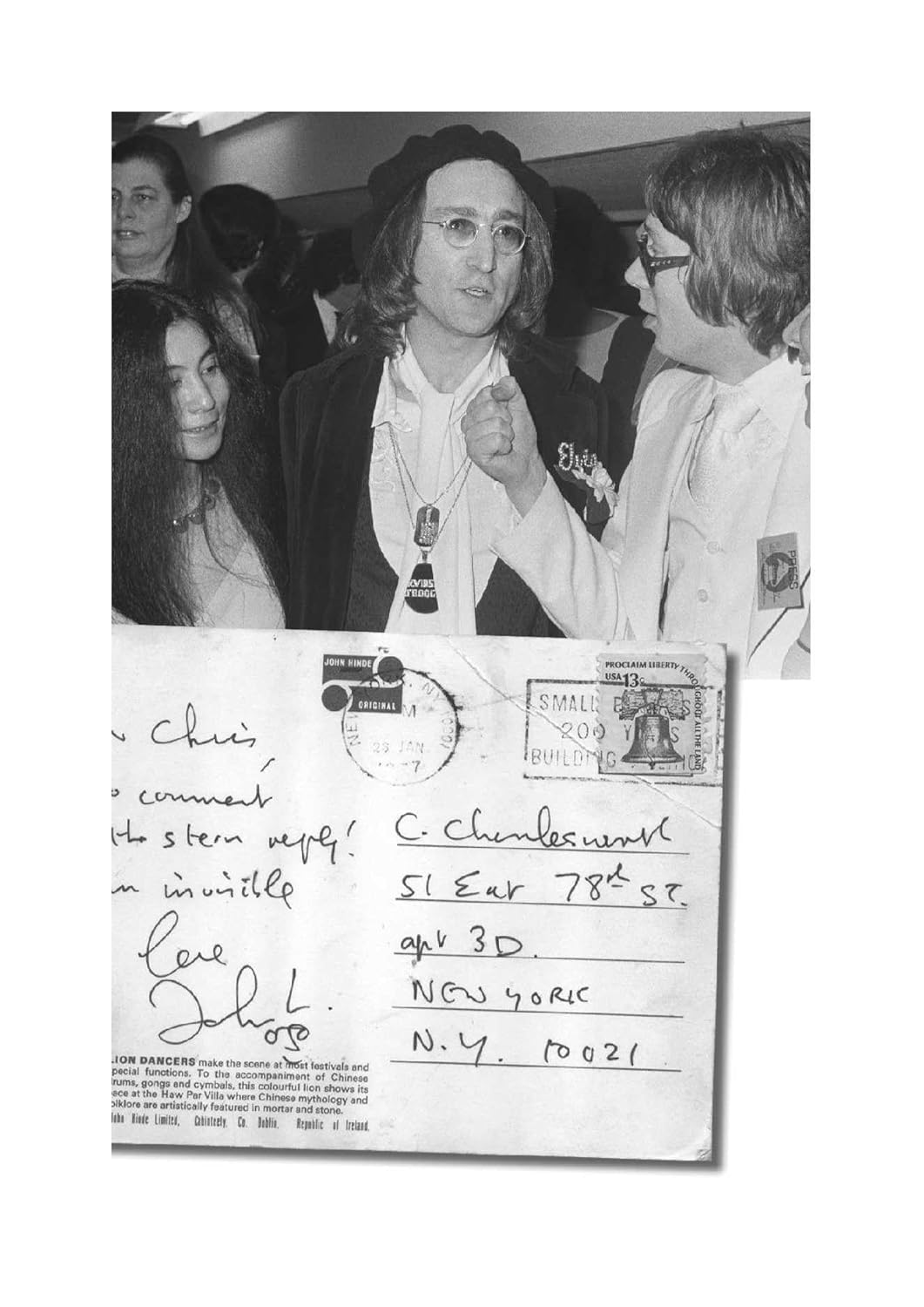
Charlesworth says: “Looking back now, from the perspective of the 21st century, what I did and who I met between 1970 and 1977 seems unreal, a fantasy. Unlike the tightly controlled situation we have today, it was access all areas for rock writers in those years. Perhaps John Lennon’s tragic murder was to blame for that tight control. John tops the list of those I hung out with, along with The Who, Led Zep, Bowie and many more, but my memoir does not name-drop for name-dropping’s sake, just tells it how it was when I was lucky enough to be slap band in the middle of it all.”
Just Backdated – Melody Maker: Seven Years in the Seventies , which takes its title from a lyric from The Who’s 1966 single, “Substitute,” is Illustrated with selected photographs by celebrated rock photographers Bob Gruen and Barrie Wentzell. Charlesworth later become the managing director of Omnibus Books, Britain’s biggest music book publisher, a role he held for over 30 years.

Radiohead have not released an album in more than eight years, but principal members Thom Yorke and Jonny Greenwood continue their hot streak with their other band the Smile, The Smile has officially announced “Cutouts”, after dropping a series of clues on social media. The album, their third, is set for release on October. 4th. “We lovingly submit our latest 45-minute (?) record “Cutouts,” the Smile said in an new statement, “to be swallowed up by the fast running stream, down into the giant ever-growing river and on to the sea.“Cutouts” is available for pre-order now on compact disc, black or white vinyl, cassette and digital formats.
New videos for “Zero Sum” and “Foreign Spies” were also released. See both clips,
Internet sleuths have been working feverishly to sort and solve clues from the supergroup featuring Thom Yorke and Jonny Greenwood from Radiohead and Sons of Kemet drummer Tom Skinner. One Instagram post, for instance, was said to spell out the words “three zero sum” when using a Polybius cipher. The best guess was that these clues hinted at song titles.
In the meantime, the Smile quietly released a new single in early August featuring a studio version of the 2024 concert staple “Don’t Get Me Started,” backed by “The Slip.” (Clues from a band tweet led another fan decoder to believe the song would be sixth on the track listing – and that turned out to be true.)
The single was produced and mixed by Sam Petts-Davies, who also helmed the Smile’s widely acclaimed “Wall of Eyes” from earlier this year. An accompanying video for “Don’t Get Me Started Again” was then released a week later.
“Cutouts” is also produced by Petts-Davies, with string accompaniment from the London Contemporary Orchestra. The album art was painted during the recording process by Stanley Donwood and Yorke.
“Wall of Eyes” followed the Smile’s debut, 2022’s “A Light for Attracting Attention“. The band also released a pair of live recordings after their first LP went to No. 5 in the U.K., “The Smile at Montreux Jazz Festival July 2022″ and “Europe: Live Recordings 2022″.
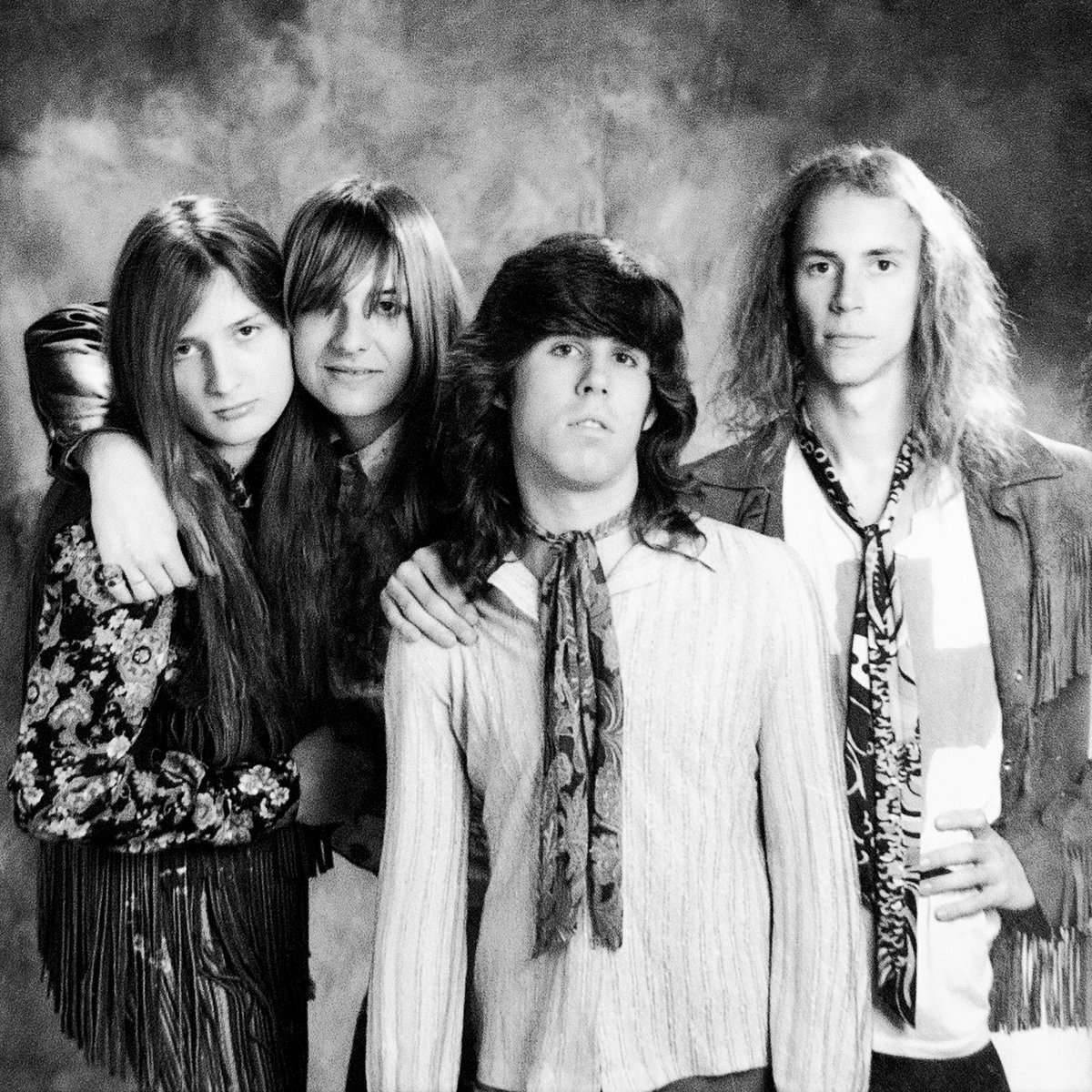
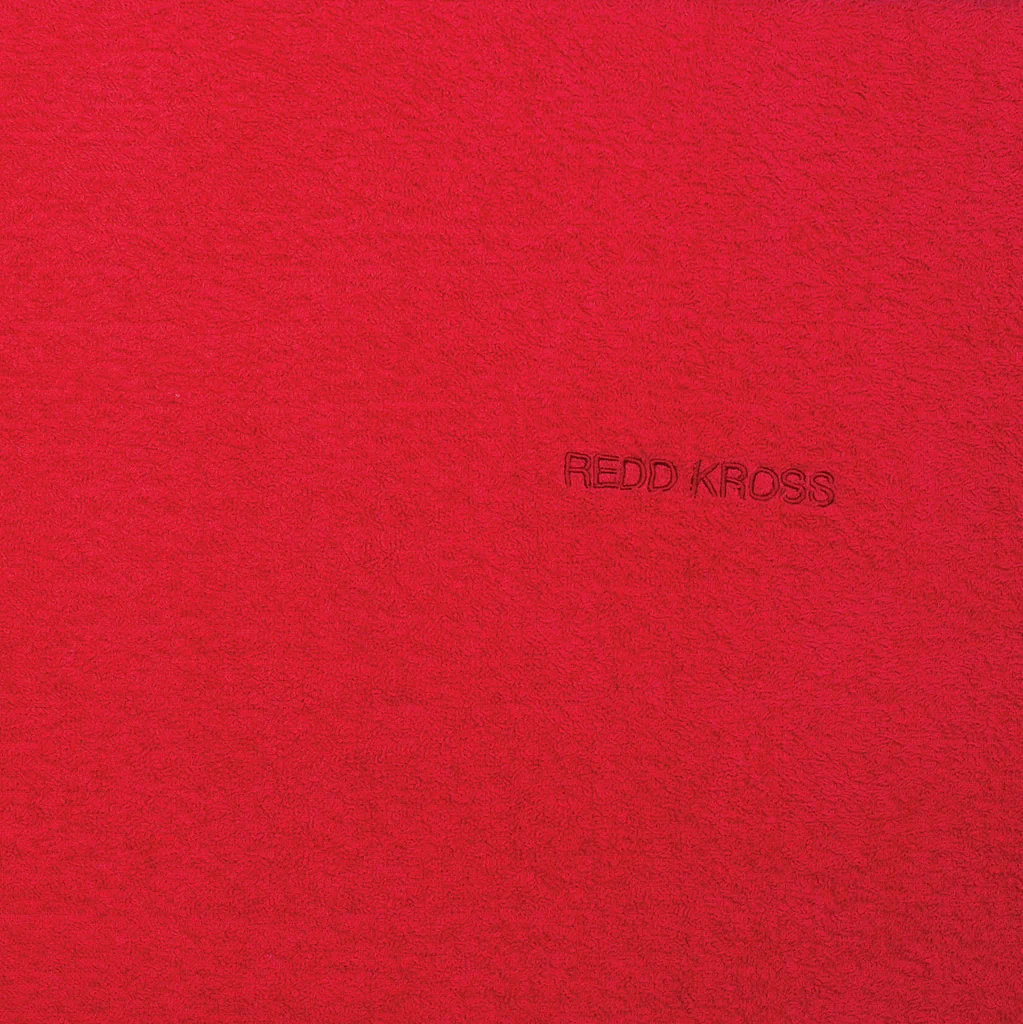
Do me a favor and name a band that has been good, for about 40 f’n years? Seems bloody unlikely, but Redd Kross are that band, and their 2024 album, simply and aptly titled “Redd Kross”, might just be the best thing they’ve ever done. Jeff and Steve McDonald (singer/guitarist and bassist/singer, respectively) helped put SoCal punk on the map in the late 1970’s as teenage miscreants. Need proof of their OG status? Redd Kross’s very first gig was opening for Black Flag. But what made Redd Kross so beloved—and so distinctive—was and still remains their eternally youthful, rainbow-streaked, Beatlesesque, Cheap Trick-influenced, 60’s-and-70’s-pop-culture-obsessed power-pop nuggets.
From their groovy 1987 touchstone “Neurotica” to their underappreciated 90’s-era output, then up through their 2012 comeback “Researching the Blues”, Redd Kross have trudged on—shredding through their debaucherous and glammed-out “bubble-grunge” without losing a bit of the fresh-faced euphoria they’re known for. While 2019’s “Beyond The Door” extended the hot streak started on “Researching the Blues”, the 18-song epic “Redd Kross” is on a whole other level of Technicolor goodness. The McDonalds—along with producer/multi-instrumentalist Josh Klinghoffer (the ex-Red Hot Chili Peppers guitarist and current Pearl Jam touring member) and guitarist Jason Shapiro—blow through one should-be hit after another in seemingly the blink of an eye. “Redd Kross” might be sprawling, but you won’t find even a flash of filler. Instead, it’s loaded with massive hooks, tingly-all-over melodies, singalong choruses, and sha-la-la harmonies.
The new album has all the wham-bam glam-meets-glitter punk thing they’ve always been aces at, then adds some well-earned nostalgia, some trenchant thoughts about modern life, plenty of rollicking humour, plus blazing anger too. The brothers McDonald came out of the pandemic ready to tear things up, and the release of “Redd Kross” is a bracing reminder that they are probably, most likely, definitely the best rock & roll band still daring to call themselves that.
Redd Kross “Redd Kross” (In The Red, 2024) The 9th studio album from this legendary California band lays down the power pop with a capital “P”! They have been making albums for 40+ years and sound like they’re still peaking.
Eighteen songs rip and rock through earworm melodies with overblown guitars in an irresistible blast of garage/punk energy. The McDonald brothers’ vocal harmonies feed off a reverence for the 60s and the pure exuberance of performing, while their guitars color the sound with feedback squalls and irresistible pop/punk chords. Bass and drums drive the rhythm with style and vigor. The songs call to every sense of rock ‘n’ roll immersion. Opener “Candy Coloured Catastrophe” sets the standard for this rollicking hour-long explosion of kick-ass melodic bliss. The following track, “Stunt Queen” rips into a punkier noise flair that shakes the speakers. This pattern of energy-driven songcraft permeates the album with one catchy tune after another. “Redd Kross” shimmers with the band’s trademark mix of hum-along hooks and high-spirited garage energy.
It’s a triumphant blast of electrified power pop that will charge your inputs with a revitalizing bolt of vibrant pop/rock musicianship. Like the wild-ass side of The Beatles, Guided By Voices, Sloan, The Nerves, The Wildhearts, Cheap Trick, Ash, Elf Power, Fountains Of Wayne, The Barraracudas, The Exploding Hearts, Joy Cleaner, The Rezillos, Painted Doll, The Boo Radleys.
Redd Kross have devoted their career to making subversive entertainment in a high pop celebrity style, reintroducing forbidden classic-rock tropes as melodies, harmonies, ripping musicianship, & primary colours-stuff that had (largely) been ditched in the underground rock’s post-punk, No Wave, hardcore, & sensitive-egghead scenes
To say we are excited about this release would be a gross understatement. We are over the moon to announce that we’re releasing the new album by one of our all-time favourite bands – REDD KROSS. This self-titled double LP (with artwork that pays tribute to another self titled LP) is the band’s ninth studio full length and it’s a monster! Eighteen brand new original songs that show that the McDonald brothers are at the peak of their powers. Vinyl comes in a gatefold sleeve with limited edition red vinyl. The band will be doing a full US tour this summer, a memoir about them will be hitting book stores soon and an amazing documentary titled Born Innocent: The Redd Kross Story is hitting theaters – 2024 is the year of Redd Kross!
releases June 28th, 2024
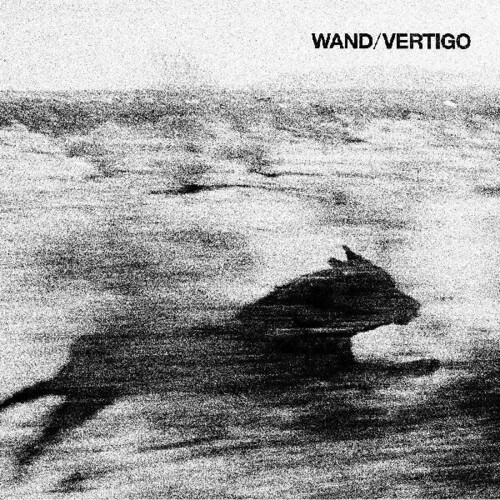
So, new-ish, in new ways anyway. But don’t . . . the new Wand’s built upon the exalted altars of old. There’s flashes of sentiment and tension, nudity and evasion, theatrical elevation, giant pieces chunked throughout alongside little bits of things. Since their 2014 debut, Ganglion Reef, the Los Angeles.-based Wand have braided garage, psych, and classic rock into a fuzzed-out whole that constantly swings between inspiration and tribute.
Sliding between the bodies in the street, cutting across the contrails that bisect our sky, Wand find melody and the anxiety beats as they hum the soundtrack for a new gravitational centre. Seeking connections against the plan of niche interest and anonymity, “Vertigo” is the sound of slippage, rocks of contradiction (in soft focus); feet lost, regained, lost again, a multi-chromatic swaying, more automatic, associative, directed, in time. “Vertigo” offers a lot of what makes Wand a moody delight, from the pulsating fuzzwave of “Hangman” to the dreamy horns and plinked keys of “Lifeboat.” It meanders with curiosity, having been semi-improvised in the writing process, and it’s rife with decades of comforting rock and folk landmarks.
For Corey Hanson lyrics are built around things he doesn’t want to do—things hidden, unsaid, and locked inside his brain. His high, smooth voice is a stark contrast to the nakedly hero-worshipping (or maybe oblivious channeling) of Pavement’s “Summer Babe” on “Smile,” which is practically a half-speed cover. Seventies Latin and soft-rock sounds soak the Santana-meets-Steely-Dan “Lifeboat,” and album closer “Seaweed Head” rolls like a Loaded outtake, a sun-faded poster for VU’s “I Found a Reason” hanging in their resin-stained practice room.
Wandies – and all conceivable others! Their new album release bonus offer for the hardcore among you: now, you can Turn On, Turn Off, and Tune Into the “Vertigo” Bundle – your choice of format on the new Wand record (LP-CD-or-CS), complete with Black Light Poster and Bumper Sticker!
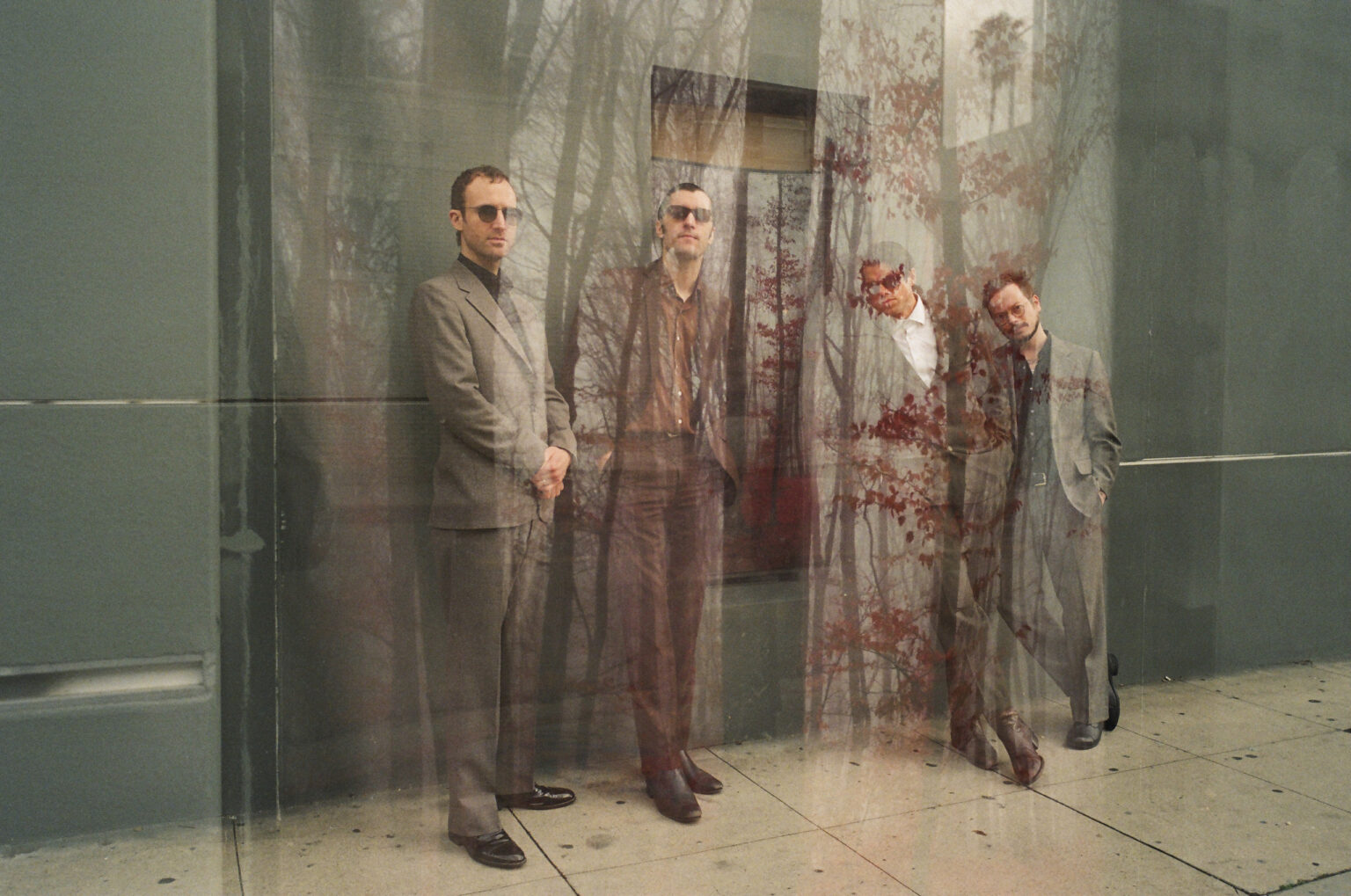

Tom Petty and The Heartbreakers‘ fifth studio album is getting a deluxe makeover. On October 18th, Geffen/UMe will revisit 1982’s oft-overlooked “Long After Dark”, originally released on Backstreet Records, in various formats including 1LP, 2LP, and 2CD+Blu-ray.
Petty was joined by Mike Campbell (lead guitar), Benmont Tench (keyboards), Stan Lynch (drums), and new recruit Howie Epstein (bass/backing vocals) as well as co-producer Jimmy Iovine for “Long After Dark”. The third and final of Petty’s three LPs on MCA imprint Backstreet, it followed 1979’s landmark “Damn the Torpedoes” and 1981’s “Hard Promises“, the final album to feature the original Heartbreakers line-up.
Bolstered by “You Got Lucky” as well as the single “Change of Heart” and the third single “Straight into Darkness” failed to chart – “Long After Dark” was assessed by Petty in an interview with Paul Zollo, shared in the press release for this reissue. He called it “a good little rock and roll record” but also “a tough record because I never knew if we were making the right decisions about songs.” The non-LP B-side of “Change of Heart,” “Heartbreakers Beach Party,” didn’t appear on CD until the box set “Playback”.
In addition to a remastered version of the original album sourced from master tapes, the expanded “Long After Dark” features a dozen bonus tracks, including songs that were discarded as Petty struggled to hit upon the right direction for the album.
Among these is his version of “Never Be You,” a 1985 Country chart-topper for Rosanne Cash; the pop-flavoured “Don’t Make Me Walk the Line;” and an uptempo treatment of Petty and Campbell’s “Ways to Be Wicked,” covered by Lone Justice on the band’s 1985 debut LP.
An extended version “Heartbreakers Beach Party” has also been discovered, as well as a number of tracks originally recorded by the band for French television. The bonus tracks have been mixed by Petty’s long time associate Ryan Ulyate. The Blu-ray Disc in the 2CD/1BD package contains high-resolution stereo and new Dolby Atmos mixes of the original album and bonus tracks, also mixed by Ulyate.
The Deluxe Edition of “Long After Dark” has been designed by Jeri Heiden, with liner notes by rock journalist and Tom Petty Radio host David Fricke, commentary from Jimmy Iovine and Cameron Crowe; and rare archival photographs by Dennis Callahan, Neal Preston, and Aaron Rapoport.
In addition to the 3-disc (2CD/1BD) set and black vinyl versions of the 1LP (remastered album only) and 2LP sets, vinyl variants include a 2LP pressing on 180-gram red-with-black-splatter vinyl (with a numbered, foil tip-on jacket) exclusive to TomPetty.com and a 1LP 180-gram turquoise pressing with a double-sided lithograph of Blaze Brooks’ illustrations, exclusive to indie record stores.
The Petty Legacy archives have been opened to share newly remastered video and audio from 1982-1983 to coincide with this release. The French TV performance of “Straight Into Darkness,” directed by Alan Bibby, is streaming now. The video (which aired on French television) captures the band performing at The Record Plant.
Look for Long After Dark: Deluxe Edition on October 18 from Geffen/UMe.
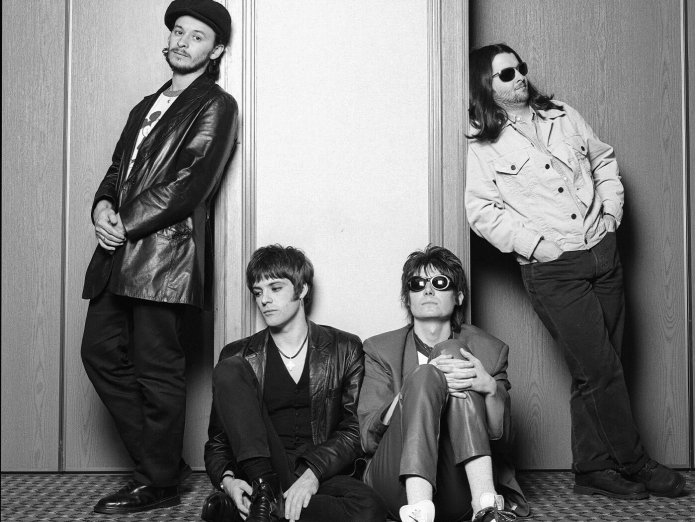
Released on August 30th, 1994, the Manic Street Preachers’ third album “The Holy Bible” remains one of the most unique, singular albums in history. The most ground breaking moments in music have rarely stemmed from those who’ve rigidly stuck to the blueprints for commercial success. It’s those artists who’ve made tough choices and hard-swerves into uncharted territory, that have made the most important dents. Few records have impacted listener consciousness quite like the third album from The Manic Street Preachers, “The Holy Bible”. A marked departure from the radio-friendly sheen of the preceding “Gold Against The Soul”, here was a document less preoccupied with garnering radio airplay than it was with ripping apart the foundations of the political systems that shaped an expanding, globalised world. Its broader conceit convincingly predicted the western world’s slide into a barbarous, fascistic future, while its citizens stand idly by, opiated by consumerism.
When the band began work on their third album at the start of 1994, all was not well within their camp. Drummer Sean Moore recalls that the Manics believed they had been “going a bit astray” with the cleaner, more Americanised sound of “Gold Against the Soul”, and a conscious decision was made to lean back into their more stripped-back British influences, artists such as Magazine, PIL, Gang of Four and Joy Division.
In parallel to its bleak broader concerns, “The Holy Bible” also serves as an act of brutal self-examination, with the band’s mercurial lyricist and chief aesthete Richey Edwards, regularly directing his wrath at himself throughout the album’s run-time, deconstructing his mental and physical health, most pointedly on the heart-rending “4st 7lb” – a song informed by his own battles with anorexia.
Charged with injecting Edwards’ disordered lyrical outpourings into suitably boiling arrangements, the Preachers’ central guitarist, James Dean Bradfield was the album’s musical lynchpin, and crafter of its many blistering guitar sounds. He bound Edwards’s often stream-of-consciousness tirades with a harsher edged gothic veneer – a far cry from the bright day-glo glam of the preceding album.
In a cramped Cardiff studio, Bradfield carefully sequenced complex broadsides of intimidating, sledgehammer power chords, coupled with melodic, serpentine leads and petrifying squalls of tension. As Bradfield said to journalist Ned Raggett at the time “We did it really quick. It’s more direct. I don’t think it makes concessions to the listener at all. It’s really honest, and it just goes for it.”
Sadly, it’s a record that’s often evaluated in the context of what happened next, with Richey Edwards’ tragic disappearance (and the eventual assumption of death) overshadowing many perceptions. Assessed on a purely musical level, “The Holy Bible” still stands as the Manic Street Preachers’ most blazingly intense, harrowingly dark and profoundly compelling work.
Though Edwards was its prime instigator, the collective agreement to pursue a darker direction had stemmed from a shared sense that the band was at an impasse, following the muted reception that met their previous record. “There was a realisation that we hadn’t got as big as we thought we would have.” Manics’ bassist and additional lyricist Nicky Wire reflected, who also admitted that the switch was spurred by the band wanting to be ‘100 per cent truer to ourselves’. James Dean Bradfield, too was conscious of the band beginning to slide into a predictably ‘rockist’ niche.
In pursuit of this truer sound, the band resisted label pressure to record in a luxurious studio in sun-drenched Barbados and instead decamped to Cardiff’s minuscule Sound Space Studios. It was here the four set to work on concocting the more upfront sound which was more in-keeping with their formative influences, such as Joy Division, The Clash and Magazine.
Though friend and engineer Alex Silva was on hand to capture and engineer the four, no overall producer was designated. Silva said that “I think at the time, the band had an ideal, James said that ‘No albums have been produced since Led Zeppelin III’. So in that case, they felt there was no need for a producer as such – maybe because the term ‘producer’ carried too much weight for them. I’m fine with my credit, I just recorded what was there.” Another guiding hand who would enter the frame later in the process came in the shape of mixer Mark Freegard, who said that the recording choice to initially capture the album on 1-inch tape factored into the demo-like sound the band were striving for.
For “The Holy Bible” sessions, Bradfield minimised the number of guitars, and stuck largely to his trusty white Gibson Les Paul; a staple instrument that he’d purchased from a Denmark Street guitar shop back in the early 1990s. It’s a guitar that has appeared in some form on every MSP record. “It is my most valuable six-stringed friend” he lovingly expressed. Bradfield also used a buttercream Fender Jazzmaster for a handful of other songs, including the tonal switch of the glistening open-G-forged “This Is Yesterday” – a gorgeous composition that serves as the record’s brightest moment, a lone glimmer of candlelight in the stygian abyss.
James used both a Marshall amp through a 4×12 cab, as well as a Vox AC30 throughout the recording, with the occasional use of Soldano amp, output through the same Marshall cab. Though this was the core of the rigid and deliberately minimal set-up, Bradfield’s Fender Twin Reverb was occasionally wheeled into the studio to wrangle a few more interesting tones. Pedals were also kept at a relative minimum, though an unmistakable BOSS Hyper-Fuzz (rumoured to have actually been owned by Richey Edwards) is regularly deployed. A CH-1 Super Chorus (with a super fast oscillation) augments the sound of Faster’s opening squeal and is used in more slowly oscillated form for the racing barrage of “Of Walking Abortion’s” intro.
Though Edwards shaped the record from a conceptual standpoint, he never actually recorded any guitar parts himself, entrusting the more capable Bradfield to meticulously lay down each part. On the resulting tour however, Richey was known for sporting an elegant Thinline Fender Telecaster (later to be used by Bradfield) as well as his own Les Paul Standard.
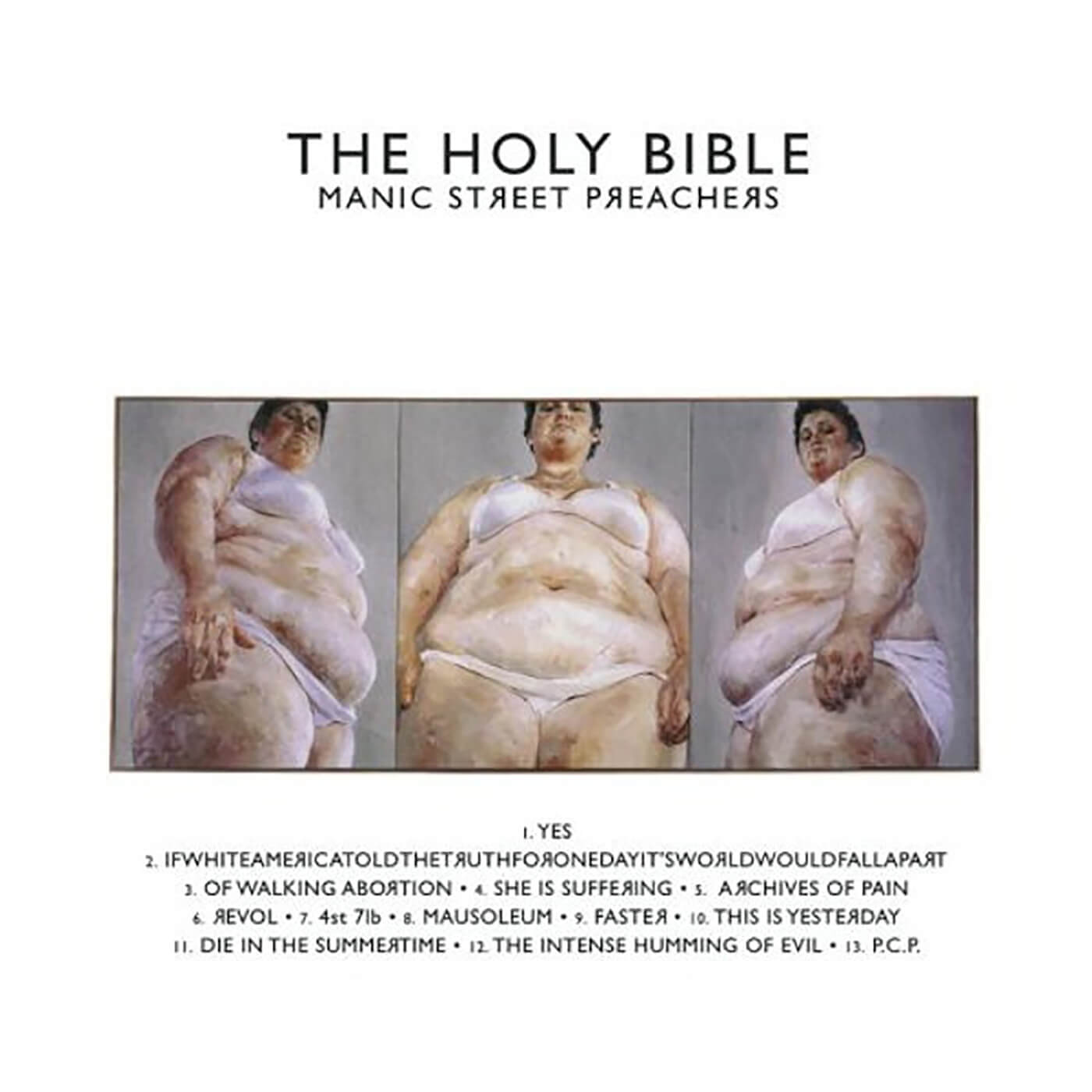
Working from Edwards’ unstructured, essay-like lyrics, James assembled tight chord sequences, layered with turbulent eddies of noise, while also slotting Richey’s words into immaculate top-line melodies. It was a challenging, unconventional approach; “Some of the lyrics confused me. Some were voyeuristic and some were coming from personal experience. I remember getting the lyrics to [album opener] “Yes” and thinking ‘You crazy fucker, how do I write music for this?’” he recalled in the liner notes for the tenth anniversary edition of the record.
The main reason why “The Holy Bible” still retains such power is Richey Edwards. It’s hard to think of many, if any, pieces of music that detail the very worst aspects of humanity in such stark and unflinching detail as Edwards does here. His lyrics wildly swing from selfish and scathing to pain, regret, self-loathing and isolation in the most shocking way.
From the outset, Bradfield’s supreme gift for riff-craft is palpable. Propulsive opener “Yes’s” lead riff in E major manages to set both the jogging pace of the track, while also being spiky enough to mirror the bubbling paranoia of its lyric. As Bradfield fiercely delivers Edwards’ fractured observations on the parallels between prostitution and the broader notion that ‘everyone has a price’, this lasooing, spritely riff keeps the arrangement energetic, trickling out the scale’s notes rhythmically while a punctuated hammer on G♯ from F♯ contributes to a sense of unease. Jumping to a fuzzed-up, punkier tone for what is technically a pre-chorus (though in reality serves as the first of two different choruses for the song), the band ramp up the intensity with a sequence that switches to A major, before sliding back to E, a tonal switch of a C♯ and G♯, before a leap to a B major bridges us toward the chorus proper – a cacophonous, doom-laden ascent from E to C♯m, leading us to a wavering wobble over the precipice of a 7th position E5 power chord. It’s an exhilarating start that decrees the shifting violent sonic tone of the record.
The volatility is kept as the second track’s laddering 6-note riff jostles for attention, untangling itself to reveal the ferocious assault of “Ifwhiteamericatoldthetruthforonedayit’sworldwouldfallapart”. In lieu of a conventional chord sequence, Bradfield arpeggiates a deathly-sounding Cmaj7 shape, fretted down in the E note of the A string on the 7th fret. This macabre motif frames a venomously spat lyric, as Edwards’ words unpick the hollow fallacy of the exported American dream. A hard-lurch into a rhythmically double stopped E major chord ushers in what sounds like a cavalry charge, surging down a hill, as drummer Sean Moore thunders on his kit militaristically, and James swings between four valiant-sounding chords.
This newer, more intense, version of the Manics wasn’t just the result of stomping on a fuzz pedal and hammering out a salvo of power-chords, Bradfield’s writing on “The Holy Bible” is more carefully constructed than ever. The spindly, palm-muted arpeggios of “She Is Suffering” sounds like an inverse, gothic re-working of The Police’s Every Breath You Take while the perilous atmosphere of the tense “Die In The Summertime” finds Bradfield creatively playing off Edward’s lyric with a rigid two-note riff. “It’s quite a muso album” Bradfield claimed at the 2015 NME Awards, “It’s all very interlocked with each other – and it’s very fast.”
Even a close listen to the record’s punchy post-punk triumvirate of Revol, Faster and P.C.P affirms Bradfield’s commitment to housing and enhancing Edwards’ potent themes above all. “Faster” in particular is notable for its squalling high-oscillation Chorus pedal wail, as well as its thorny, push-and-shove verse part; both sections built from two wildly different, but complementary, variations of the same two notes (G♯ and A). The pulsing heartbeat of the verse part allows for the record’s most fluid stream-of-consciousness tirade. “I remember reading the first line of “Faster” – ‘I am an architect, they call me a butcher.’ – and I thought ‘Fucking hell, I can’t fuck this up, I’ve got to write some great music to this”, Remembered Bradfield, .
Interspersed throughout the record, are a series of – often chilling – spoken word audio samples (captured with Sean Moore’s newly purchased S1000 Akai) taken from a range of films, documentaries and interviews. These clips preface the thematic concerns of the songs-proper, such as the haunting clip of Irene MacDonald, the mother of Jayne MacDonald – a victim of atrocious serial killer Peter Sutcliffe – which prologues Edwards’ capital punishment-oriented “Archives of Pain”. This song proved to be a controversial one, with a seemingly pro-death penalty lyric that would perturb analysts for decades to come. Driven by Nicky Wire’s sludgy bass line, James sheds some high register rivulets of sound before snapping in line with Wire’s brutal riff-march. Haunting chorus-soaked arpeggios frame its chorus section, as Edwards’ most sinister lyrics yet are delivered. A fittingly odd arrangement for a particularly grim piece.
At its darkest, “The Holy Bible” underscores its writer’s unrelentingly bleak outlook on humanity, and the shape of the systems that govern it. It’s unquestionably a troubled mind that lay behind “Of Walking Abortion’s” indictment of humanity’s indifference to suffering, “The Intense Humming of Evil’s” fragments of barbarous holocaust imagery and “Mausoleum’s” black-skied, corpse-ridden landscape. But, it’s “4st 7lb” where Edwards’ own personal pain reveals itself more candidly. The first song recorded for the album, this remorseless semi-self-portrait of a struggling anorexic, also illuminates his gift for poetic lyricism. For the track, Bradfield opted to set a tormented tone with an off-kilter, jittery riff, adrift amongst waves of feedback. The arrangement builds out with snaking fuzz riffs and staccato chord punctuation, as well as an ethereal, chorus-drenched second section, which features some harmonious Les Paul licks. It’s a painterly approach that wrings out every drop of the lyric’s underlying emotional heart.
Ever since its release on August 30th 1994, “The Holy Bible” has been held as the high watermark of the Manic Street Preachers’ recorded output. It was a plunge into the dark which ultimately proved greatly cathartic for many listeners, deeply securing the band in the hearts and minds of its fanbase.
As with Nirvana’s In Utero (released the same year) and Joy Divison’s Closer, it is routinely dissected by those looking for greater insight into the mental state of its lyricist, seeking deeper understanding of what happened next – the mystifying disappearance and assumed suicide of Richey Edwards, who was last seen on February 1st 1995.
Reflecting on the record’s twentieth anniversary, in an interview with NME, Nicky Wire said “On “The Holy Bible” I think [Richey] invented a new lyrical language, which wasn’t easy for James to fucking put music to!”, while Bradfield reflected that, in contrast to the album’s harrowing tone, the band had a good time making it; “We were all getting on really well. It felt like we were taking the band seriously again. It was like a big monolithic slab of stone had just planted itself in the middle of the band, and we just had to follow every route. It was a good feeling again. It kind of felt like a restart.”
Inevitably though, the grief that followed Edward’s disappearance, led James to pore over the making of their last work together, and Edwards’ increasingly self-destructive behaviour, such as his propensity to self-harm. “I think back to those times and I think, ‘Why didn’t we see the gathering storm,’ but we were still in thrall to the canon of visual work that Iggy Pop had done, and people like that. You know, we still felt as if we were part of rock’n’roll expressionism I suppose.” He said in “Assassinated Beauty”.
While the Manics strove on in the wake of Richey’s departure, filling out their discography with an extensive canon of records across the ensuing decades – including politically-charged infectious latest offering “The Ultra Vivid Lament” – the shadow of their third record hangs still looms over their legend.
Looking back at the NME Awards in 2015, James reflected; “It’s an album that represents a quite fraught, but quite happy time in our lives. We knew we were making something special. We felt we had nothing to lose. Richey wasn’t in such bad shape when we were actually making that record, it was the calm before the storm. Everything is indelibly etched in our hearts, in our minds, and in the music.”
Heartbroken as they were, and changed forever by their friend’s disappearance, James Dean Bradfield, Nicky Wire and Sean Moore chose to carry on, ultimately achieving far greater commercial success than “The Holy Bible” could ever have given them. To celebrate its 20th anniversary, the trio dusted off their army fatigues and played “The Holy Bible” in full on tour, but it was quite awkward to see these now happy and content middle aged men trying to replicate something so visceral.
In 2024, listening to “The Holy Bible” is a reminder of how gripping and stimulating it is to hear an artist truly, utterly unafraid to fearlessly confront and embrace the depths of the ugliest and most distressing parts of society. It remains one of the heaviest, most unique, special and singular albums in history.

The injustices in the music industry are numerous, extensive and outrageous. Budgie never became as big as ”the big three”; Black Sabbath, Deep Purple and Led Zeppelin. On the other hand, it’s only fair. Budgie didn’t belong on the pedestal among “the big three”, but they were better than most other contemporary bands around that time . Budgie stood beside the road and saw themselves being overtaken by less talented bands. Despite talent, dedication and hard work Budgie only achieved moderate success.
Budgie was formed in Cardiff in 1966 led by Burke Shelley (bass and vocals) and Brian Goddard (guitar). They soon found drummer Ray Phillips through an ad in the local paper. Tony Bourge (guitar) joined in 1967. They weren’t named “Budgie” from the beginning. In fact, they played a few gigs under the unglamorous name ”Hills Contemporary Grass” before changing their name to the more spectacular ”Six Ton Budgie”, then changed again to just “Budgie”. Often thought of as a cross between Black Sabbath and Rush, the underappreciated outfit has influenced countless acts, despite enduring countless line-up shifts throughout their history.
The story behind the band name is that they loved the idea of playing noisy, heavy rock and calling themselves after something diametrically opposed to that. Brian Goddard left the band early for family reasons. Since that time Budgie always were a three-piece line-up. The username Brocashelm really hit the head on the nail in a blog entry in The Metal Archives; “If you took Black Sabbath’s density, King Crimson’s peculiar song constructs, and added a dash of Rush’s overall style, you should get an idea of what’s going on here.” Budgie never really got the recognition they deserved. However, when Metallica, Iron Maiden and other bands later made covers of their songs they got a late but rightful redress.
Budgie suffered from bad press and lacked strong management of a Peter Grant-type (Led Zeppelin). Their record company MCA did nothing to promote them. At the same time, they were too abnormal. Quirky, humorous and playful lyrics, weird arrangements, banshee vocals, unexpected tempo changes and an unorthodox mix of hardness and softness. The most important reason for the lack of success was the absence of a big hit. “Breadfan”, “Crash Course In Brain Surgery” and “Zoom Club” came close.
Their first five albums; for MCA was their golden age.
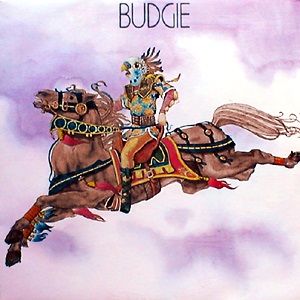
Budgie didn’t sell enough albums so that the members could retire to the countryside with a crawl distance from the local pub. First, there was a growing interest for early British heavy metal bands. Secondly the met a renowned producer, Rodger Bain (producer of Black Sabbath’s first three albums), who was on a talent spotting mission in Wales. Thirdly, they signed a contract with the big record company MCA Records. Their self-titled debut album is raw and brutal. The album was recorded at Rockfield Studios in Monmouth in South Wales in only four days on a eight track tape.
The album starts off with “Guts” which encompass their trademarks; nasal and high-pitched vocals, thick bass lines, proficient guitar riffs and pounding drums. Listening to “Guts” really highlights how underrated Budgie has been in the heavy metal scene. The song is characterized by its descending riffs, which perfectly complement the wonderfully twisted lyrics. Lyrically, “Guts” presents the perspective of a desperate soul who fails to recognize his own cruelty and arrogance toward the opposite gender. This depth in storytelling, combined with the band’s robust musical execution, showcases Budgie’s distinctive approach to heavy metal.
The second song “Everything In My Heart” is a delicate ballad and only one minute long. The heavy riffing is back again in the next song, “The Author”. Burke Shelley had a penchant for wordplay and pun. The fourth song is “Nude Disintegrating Parachutist Woman”. This song is a good example of their sound trademarks; weird arrangements, dynamic variations between hard and soft, shifts between mangling and sensitivity and last but not least unexpected tempo changes. The song is eight and a half minute long.
The first song on the flip side is “Rape of the Locks”, which bears many similarities with classic Black Sabbath. Second maybe to Toni Iommi, Tony Bourge was the riffmaster of early heavy metal. The next song is “All Night Petrol”, which is rather tiresome. The next to last song is a short ballad “You and I”, delivered in 1 minutes and 45 seconds. The album closing song is “Homicidal Suicidal”, a compact song to say the least. “Homicidal suicidal / Big time loser, big time boozer / Live and learn, let it burn / All time winner, you’re a sinner”.
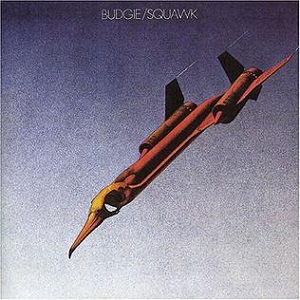
The self-titled debut album received moderately positive reviews at the time. It’s hard to believe today, but in the 1970s band’s would have an opportunity to grow and evolve through their albums and find its true shape and form. Even the big record companies had a certain element of patience. However, Budgie was bent and shaped from the very beginning. There was no difficult second album syndrome Budgie began to work on their second album called “Squawk” (a loud, harsh or discordant noise made by a bird or a person). Rodger Bain again got renewed trust as producer (co-producer is more correct). Budgie knew which song to place where. “Whiskey River” is a hard and driving opening song.
The second song “Rockin Man” got the guitar riffs, plink-plonk basslines and drums in the right places. In the third and extremely Beatles-inspired song “Rolling Home Again” it’s all clear that this album isn’t as focused as its predecessor. The fourth song “Make Me Happy” makes this fact even more clear. They were trying to combine different styles and made experiment. The order is restored in the next song “Hot As A Docker’s Armpit”, allegedly coined by Steve Marriott “Hot As a Docker’s Armpit,” This song distinguishes itself with its powerful, stomping, and stuttering riff, which is cleverly mirrored in the vocal melody. “Hot As a Docker’s Armpit” is a perfect introduction to Budgie’s heavy metal sound, drawing listeners in with its energetic progression that picks up pace halfway through the track. While you might momentarily think you’re hearing Geddy Lee from Rush, it’s actually Burke Shelley’s impressive vocals driving the song.
The song has the same song structure as many of Black Sabbath songs. The first song on the flip side is “Drugstore Woman”. This bluesy song is as simple as a shoe sole. The song seamlessly goes over into the instrumental “Bottled”. The next to last song on the album “Young Is A World” is one of the albums highlights. It begins as a meditative ballad and gets slightly harder. The song is a good example of the unexpected tempo changes. The closing song “Stranded” was inspired of a bass guitar riff from John Paul Jones (Led Zeppelin).
“Squawk” was recorded in two weeks in Rockfield Studios. The album isn’t as doom-sounding as the debut album. It’s more of heavy metal intermingled with acoustic interludes. However, the album meant that Budgie reached a larger audience and begin to tour extensively in UK and Europe. The album outshines the other MCA albums namely because of the album cover. It’s the work of legendary artist Roger Dean.
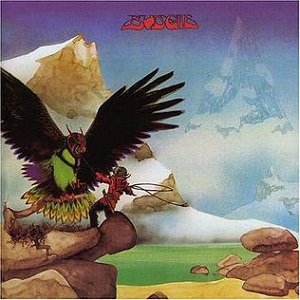
The third album “Never Turn Your Back On A Friend” is flawless. It veers more towards progressive rock than their previous two albums. Produced by Budgie and again recorded at Rockfield Studios. Album cover by Roger Dean. The opening song “Breadfan” which would later be covered by Metallica, further cementing Budgie’s influence in the metal genre. The song deals with the love of money (slang: bread) “Breadfan, open up your mind, open up your purse / Open up your bones, never, never gonna lose it.“ The song starts with one of best guitar riffs of early heavy metal. Speaking of unexpected tempo changes. In the middle of the song there’s a melodic interlude which goes over into the initial riff.
The next song is a cover of “Baby, Please Don’t Go”, a blues song popularized by Big Joe Williams in the 1930s. Budgie’s claim to fame in covering this classic song is the rolling basslines, rhythmic drums, catchy guitar and Shelley’s spectacular vocals.
The third song is a beautiful ballad “You Know I Always Love You”. The fourth song “You’re The Biggest Thing Since Powdered Milk” begins with a drum solo for nearly two minutes (it was the 1970s) before a guitar riff comes into play. This song has all the desirable attributes. This song title is a clever and romantic way to express feelings, infusing a bit of poetic flair and perhaps a sprinkle of exaggeration to capture someone’s attention. It’s possible that the humor and slight hyperbole in such phrases work wonders in making someone feel special and cherished. The idea that humor and heartfelt sincerity can combine to perfectly convey affection is what makes this song so charming. “You’re The Biggest Thing Since Powdered Milk” not only makes us smile with its unique title but also ushers in a vibe of playful and genuine adoration.
It’s gets even better in “In The Grip Of A Tyrefitter’s Hand”. captures this concept in a uniquely poetic way. The track explores the tough aspects of life through the metaphor of a tire fitter’s powerful grip. Just as a tire fitter’s hands are toughened by their demanding job, the song suggests that people, too, are shaped by the challenges they face, using this gripping imagery to delve into deeper themes of strength and perseverance in everyday life. This proves that Budgie were now a class act and also give a glimpse of what could have been. The next to last song is “Riding My Nightmare”, a ballad and maybe the weakest song on the album.
The closing song “Parents” still hits me with the same force after all these years. The music is mid-paced and acoustic. The lyrics are percipient. “When I was a little boy / They would say to me / Don’t go in the world and play / It’s bad company”. In just over ten minutes, Budgie delivered one of their most outstanding compositions ever with the song “Parents,” Described as an almost-perfect portrayal of romantic despair, “Parents” captivates with its poignant lyrics and emotive delivery. The song showcases the band at their best: Burke Shelley’s powerful vocals deeply resonate, while guitarist Tony Bourge impresses with a compelling single riff played to perfection. This track stands as a testament to Budgie’s ability to blend intricate musicianship with deeply affecting themes.
A standout track from this album, “You Know I’ll Always Love You,” surprised fans with its awe-inspiring lyrical themes and high-pitched vocals reminiscent of bands like Rush and Led Zeppelin. Discussing the soothing vocals on this song, it’s clear that Burke Shelley was an incredible asset to Budgie. His emotive performance in this beautiful track raises the question: Can heavy metal acts deliver such poignant expressions? Budgie answers this with a resounding yes, captivating listeners with a song that lasts just over two minutes.
A couple of verses later Shelley sings; “Wash your hands and up to bed / Mind your manners / Or you’re dead / Mind the cars cos you’ve got school on Monday”. Guitarist Tony Bourge makes his guitar sound like squeaking seagulls in the end of the song, maybe a nostalgic reference to the upbringing on the South Coast of Wales. Anyway, this is a groundbreaking album.
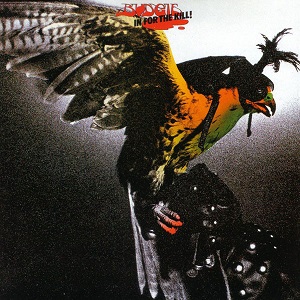
The fourth album “In For The Kill” is their masterwork. By this time drummer Ray Phillips had left the band and been replaced by Pete Boot. The album was produced by Budgie and recorded agian at Rockfield Studios and Lee Sound, Birmingham. Album cover by John Pasche Gull Graphics. The opening song “In For The Kill” is six and half minute of hard mangling with a thick bassline, a few but distinct guitar riffs and effective drumming. Next song is “Crash Course In Brain Surgery”. It was originally released in 1971 as a single. This is a catchy song with lyrics as weird as the title. The song “Crash Course in Brain Surgery” showcases the lyrical talents of Burke Shelley, Ray Phillips, and Tony Bourge, making it a standout track in Budgie’s discography. Its compelling lyrics and powerful delivery resonated well beyond its initial release, catching the attention of Metallica, who later covered the song, introducing it to a new generation of heavy metal fans.
The third song on the album is an acoustic song, “Wondering What Everyone Knows”. For once, Burke Shelley lowered the pace and sang in clear and beautiful way. The result is flabbergasting. Then is the suggestive “Zoom Club”. Almost eight minutes of droning heavy metal. Tony Bourge brings out his hardest riffs and solos. Distortion, echo and reverb – all at once. The bass and drums are exquisite. “Come on everyone of you g.I’s / You are the ones who can care / Speed on you wonderful dropouts / We’ll break the walls of this room in”. This grandiose song has stood the test of time. “In For The Kill” contains one of the best A-sides in early heavy metal.
The song encapsulates everything you’d expect from a quintessential heavy metal/hard rock release. Its powerful riffs and compelling lyrics perfectly align with the genre’s energy and intensity. The quality and impact of “In for The Kill” are so notable that it caught the attention of Van Halen, who added their cover of the track to their repertoire, further testament to its enduring appeal and influence in the rock music scene.
The flip side. The song “Hammer And Tongs” isn’t a nod to Led Zeppelin’s “Dazed And Confused”, it’s a deep bow. “Running From My Soul” is a straightforward rock’n’ roll song and doesn’t leave any mark in history. The closing song “Living On Your Own” is almost nine minutes long and wraps it all up.
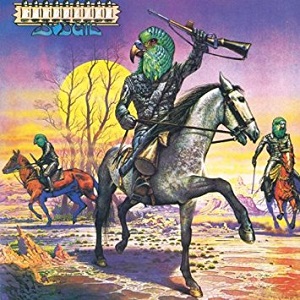
Nothing lasts forever. Even the longest, the most glittering reign must come to an end someday. The downfall of Budgie began with their fifth and last album for MCA, “Bandolier”. The album was produced by Budgie and recorded at Rockfield Studios and Mayfair Studios, London. The album illustration was made by Patrick Woodroffe. Drummer Pete Boot left the band and had been replaced by Steve Williams. The albums opens, as always, with a very strong song “Breaking All The House Rules”. But what happens next? The dreamy “Slipaway” is pure soul music and “Who Do You Want For Your Love” is a funky groove.
The order is restored on the flip side in “I Can’t See My Feelings”. The fierce guitar riffs, bass lines and pounding drums (including cowbells) are all there. The following song is a cover of Andy Fairweather Low’s “I Ain’t No Mountain” from his 1974 album “Spider Jiving”. Budgie ends the album in style with “Napoleon Bona-Part One” and “Napoleon Bona-Part Two”. Very witty and amusing song titles. “Bandolier” marks the end of the band’s golden age.
Since “Bandolier” they have released six further studio albums, four live albums and five compilation albums. Furthermore, they changed the line-up several times, disbanded and re-formed and since 2010 on a long-term hiatus. All resuscitation attempts were in vain after “Bandolier”.
Budgie has primarily been recognized as a hard rock and heavy metal band, yet their music also incorporates elements of progressive rock and funk, often infused with a sense of humour. The band’s unique sound has been described by many as a blend of Black Sabbath’s heavy riffs and Rush’s complex compositions. In particular, Burke Shelley’s high-pitched vocals have drawn comparisons to Rush’s Geddy Lee. Despite their relative obscurity in the early part of their career,
Dedicated to all jangly indie/guitar/jangle-pop
Show a little faith there's magic in the night
Horror, Science Fiction, Comic Books and More
IN MEMORY EVERYTHING SEEMS TO HAPPEN TO MUSIC - Tennessee Williams
A Celebration of Thrillers, Noire and Black Comedy by Pamela Lowe Saldana
Join me as I listen to every single #1 single!
Two Guys In Search of Great Music
Hoping to make the world more beautiful
hear ye, hear ye!
Celebrating music craftsmanship
Favorite song lists, reviews, featured indie artists, and music commentary.
A Blog About Music, Vinyl, More Music and (Sometimes) Music...
Eclectic reviews of ambient, psychedelic, post-rock, folk and progressive rock ... etc.!
A transparent attempt to promote a writing career
Quality articles about the golden age of music
Slow molasses drip under a tipped-up crescent moon.
Click Header to Return Home
to Rock, Country, Blues & Jazz
A Glasgow view of Americana and related music and writings.
Rewind the Review
A stroll down memory lane through my music collection
the best music of yesterday today and the tomorrow, every era every genre
 The Fat Angel Sings