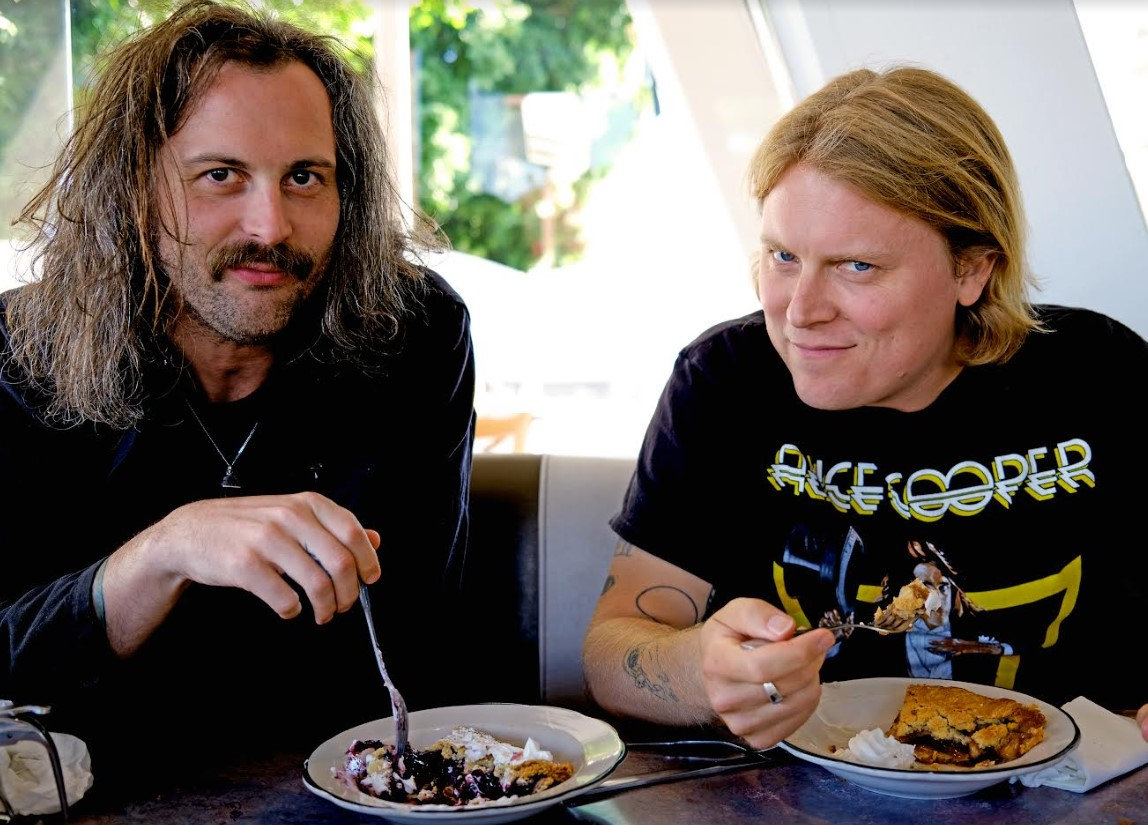
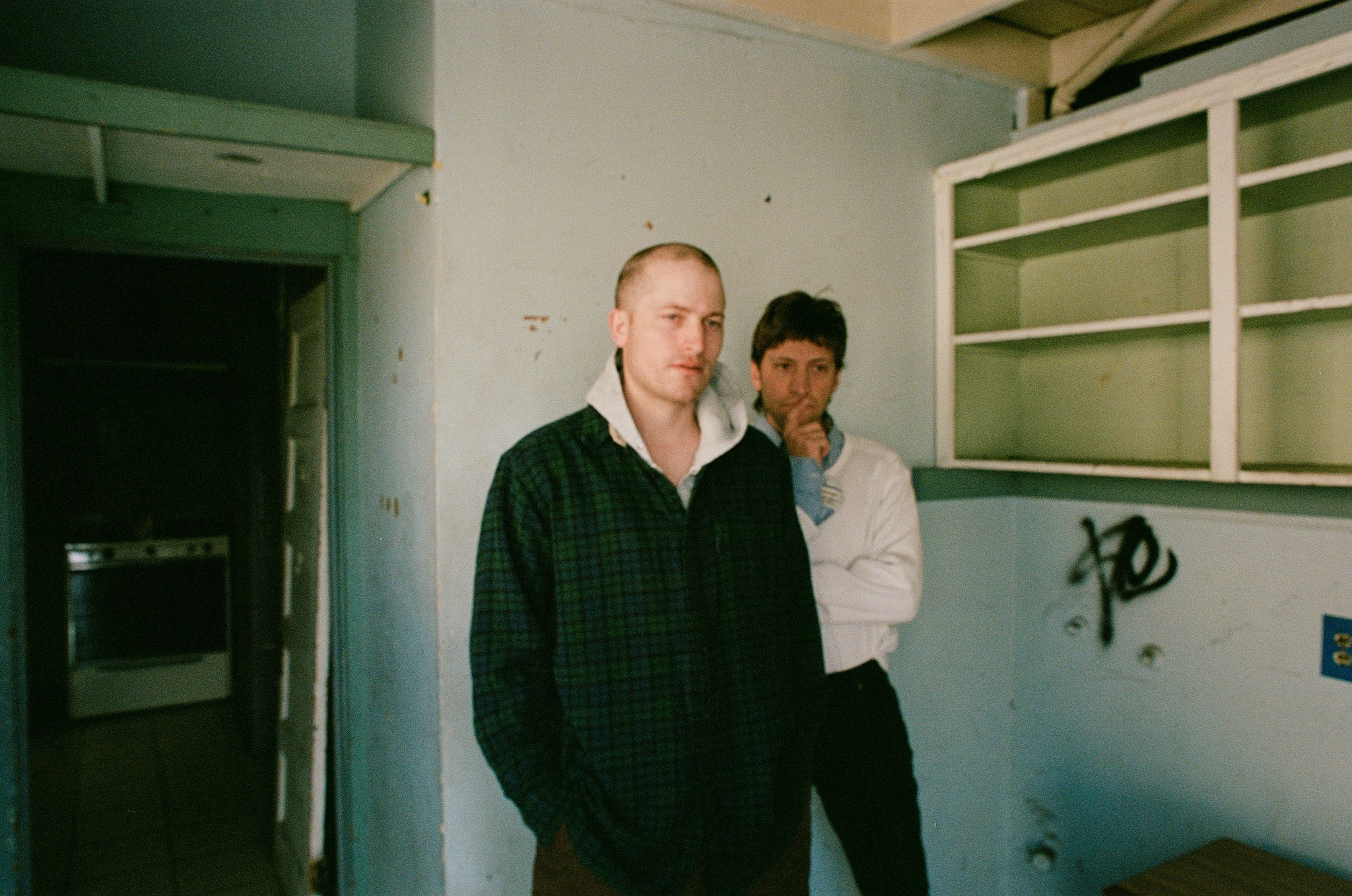
Ty Segall and Corey Madden of Color Green have formed the new duo Freckle, and will release their self-titled debut album on January 31st via Ty’s God? imprint through Drag City. There’s not a lot of concrete info about the project, but with both Ty and Corey part of the Los Angeles psych scene, they were bound to cross musical paths.
When a Freckle pops up, that’s when you know that the sun has gotten through. Don’t let ‘em tell you it’s skin damage – more like the sign of time well spent, as always, in the light. Freckle the band’s like that. Freckle is, then, a Californian, the hive mind of Corey Madden and Ty Segall. This LP reminds all of us that when the clouds are out you can still get sunburned.
The track “Taraval,” which is quite lovely ’60s-style acoustic psych pop, and Ty’s tenor and Corey’s baritone sound really good on the harmonies.
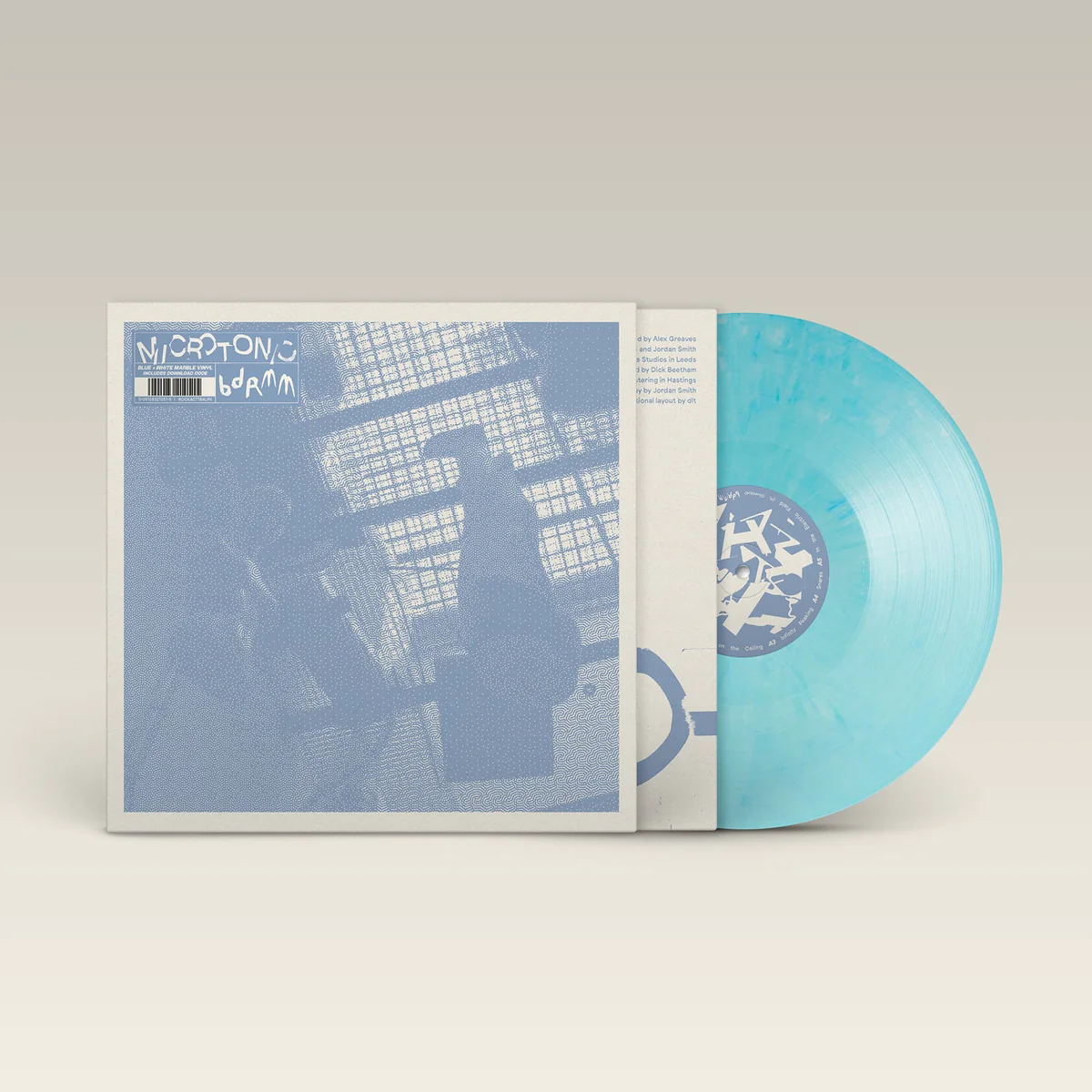
“I think this is the best thing we’ve ever done, it’s a proper step up.” It’s immediately clear that the Hull band have broken new ground on “Microtonic”. “The last album was essentially like a bridge between the two albums,” the band say of 2023’s “I Don’t Know“. “With that one we knew what we were trying to do but with this one we’ve fully cracked it.”
Bdrmm’s trademark sound hasn’t disappeared by any means, the band’s more guitar-heavy beginnings a blueprint and influence on many of the groups breaking through in the here and now, a time when shoegaze is enjoying its strongest revival since its inception in the 80s, but those guitars are now incorporated into a broader, more expansive and varied sonic palette. “Microtonic”, recorded with long-term band collaborator Alex Greaves, features guest appearances from Working Men’s Club and Olivesque of Nightbus.
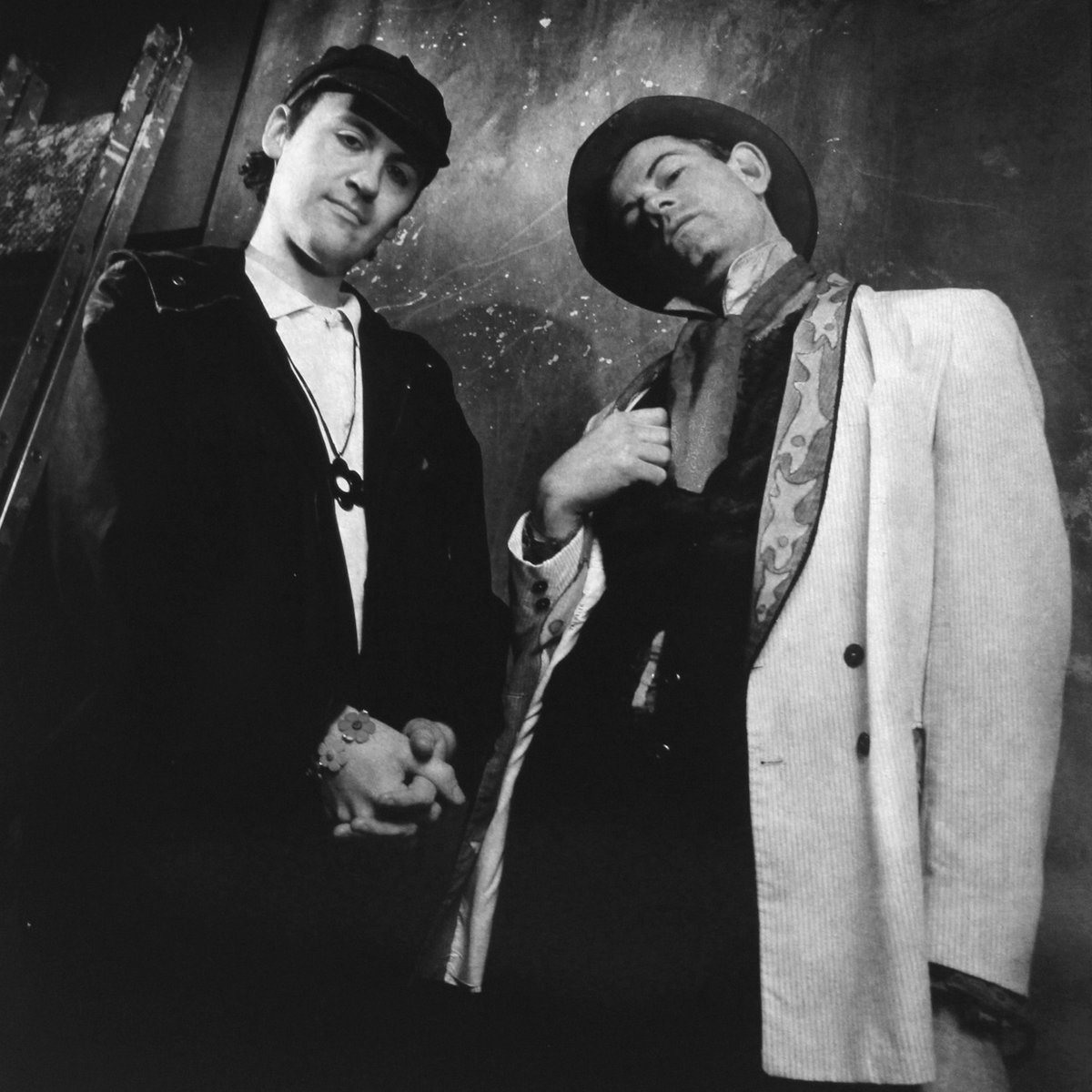
This new collection brings together classic radio sessions from Television Personalities, the masters of DIY post-punk and indie pop. Featuring two 80s BBC sessions that aired on John Peel and Andy Kershaw, along with a super rare 1992 WMBR set, this double LP features covers of Buzzcocks, The Raincoats and Daniel Johnston with previously unreleased songs and a bonus download WFMU session from 1993. “Catchy hooks and schoolboy wit are in abundant supply.”
The Television Personalities’ splendid DIY skills and loveable ramshackle persona led them on many a subversive trip both on record and playing live. But it was the radio that first introduced them to the world in a whirlwind of repeated spins. John Peel let outsiders everywhere tune in to their altered world. And, at the height of punk they parodied the new revolution, their single ‘Part Time Punks’ becoming a Peel staple, and the clamour to hear more eventually resulting in a session in 1980. Through the 80s, Daniel Treacy had matured into a gifted storyteller turned pop culture narrator who placed the modern world in his own hazy shade of focus. His songs were loveable, immediately identifiable and pin prick sharp; they were tidily observational, and often magically acute. This was a gifted raconteur, an inspiration and an essential alternative to the hiss and flutter of “normal” radio, a medium that by the late 80s had just about abandoned them.
‘Tune In, Turn On, Drop Out’ captures this pilgrim’s progress to pop nirvana, a psychedelic wonderland shaded by dark and brooding memories, all played out through a crackling transistor radio secreted under the pillow so that these sketches of society remain perfectly personal, a direct line into Dan’s psyche.
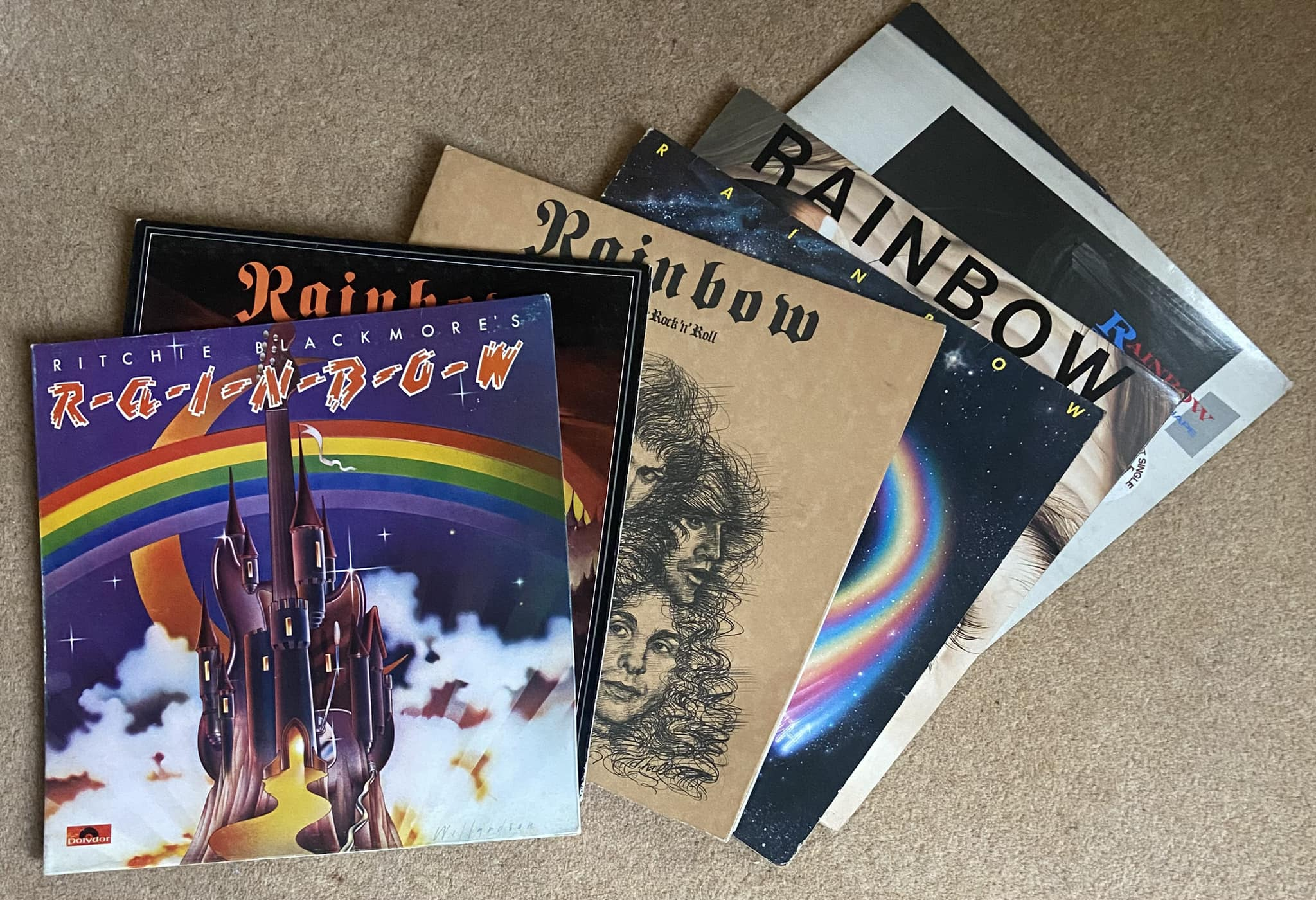
What began as a solo project by guitarist Ritchie Blackmore while he was then still a member of Deep Purple, grew into eight studio albums by a band that occupied The Man In Black’s time after he quit Purple following the “Stormbringer” album in 1975, until their comeback with “Perfect Strangers” in 1984.
On record, Rainbow’s greatest claim to fame – perhaps even above other-worldly guitar playing – was to launch the career of Ronnie James Dio before he left the band to join Black Sabbath in 1979.. The singer made only three Rainbow studio albums and once he was sacked the band quickly abandoned his sword-and-sorcery stylings to seek chart success. Rainbow’s early work primarily featured mystical lyrics with a neoclassical metal style, then went in a more pop-rock oriented direction following Dio’s departure from the group.
Three British musicians joined in 1979—singer Graham Bonnet, keyboardist Don Airey and then-former Deep Purple bassist Roger Glover—and this line-up gave the band their commercial breakthrough with the single “Since You Been Gone” from their album “Down to Earth”.
That came with the fourth record, on which Graham Bonnet sang, but then he was soon replaced by JoeLynn Turner. Rainbow never made two studio albums with the same line-up because, as Blackmore admits, he grew tired of member when they wanted more money, more limelight, or both.
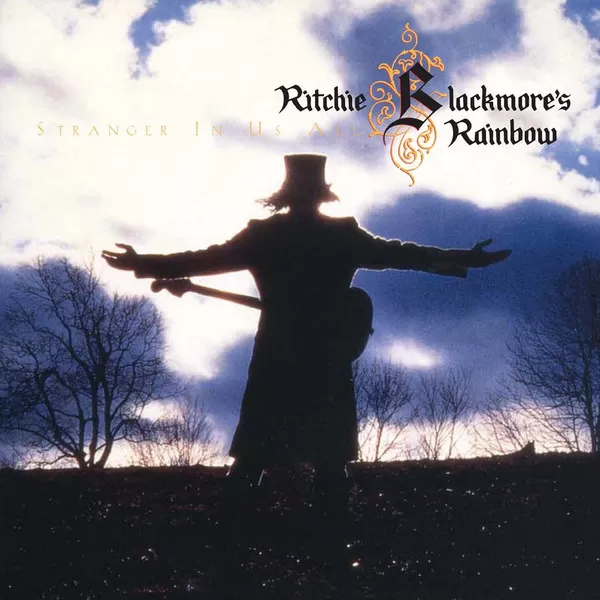
Ritchie Blackmore constantly sought songwriters. Delivering on this front were his ex-Purple bandmate Roger Glover (also serving as Rainbow’s producer and bassist) and Turner, who served on four and three albums, respectively. After breaking up in 1984, Blackmore reformed Rainbow in 1993 with a new line-up, which recorded their eighth and last studio album to date “Stranger in Us All” (1995). Blackmore’s change in direction, from rock to Renaissance and medieval-influenced music, led to Rainbow’s second dissolution in 1997. He revived the band once again in 2015, Their catalogue is a mixed quality and to complicate matters there’s an eighth studio album made 12 years after Rainbow initially folded, with yet another new line-up. Everything you see here should only be studio albums.
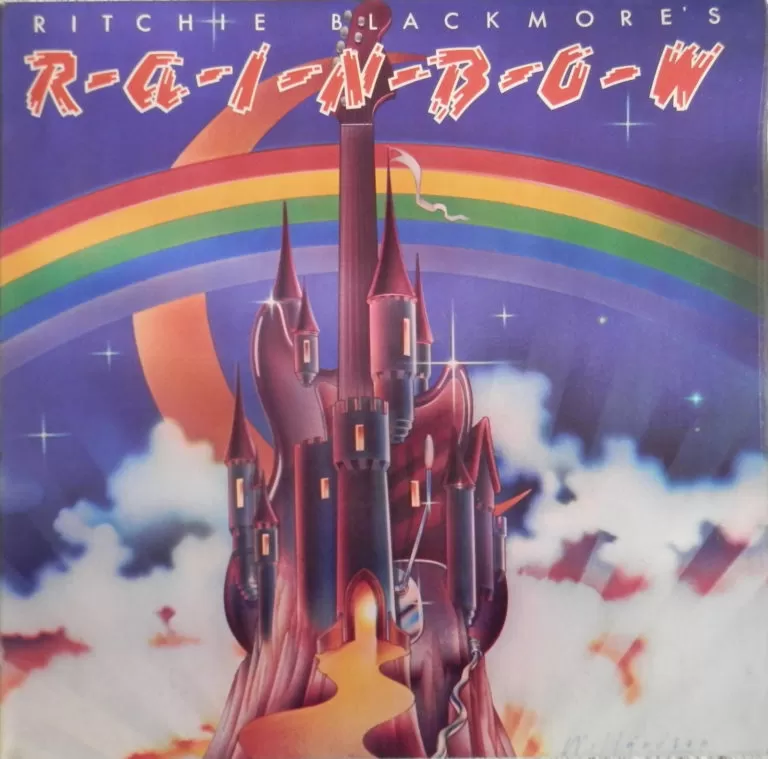
Ritchie Blackmore’s Rainbow (1975)
Rainbow’s debut album began as an experiment for Ritchie Blackmore, then still touring with Deep Purple, for which he hired their support band Elf (mainly for their singer Dio) to record a cover of “Black Sheep Of The Family“, then “Sixteenth Century Greensleeves“, for a potential single solo release.
“Ritchie Blackmore’s Rainbow”, which the exiting of Deep Purple the guitarist recorded somewhat on the fly, in a pique of newfound inspiration, with the help of Ronnie Dio and his then-backing band Elf. And a stellar first effort it was, too, packed with memorable baroque hard rockers, imaginatively reworked covers, and arguably the prettiest pure ballad of Blackmore’s career in the whimsical “Catch the Rainbow.”
The guitarist’s respect for and rapport with the singer was instant and soon an album containing classics-to-be “Man On The Silver Mountain (much loved by John Bonham) and a true classic rock song, “Catch The Rainbow” The albums slowest and longest song. Just a song that breathes with beautiful guitar and smooth vocals. , “Temple Of The King” and a hard-rocking instrumental cover of The Yardbirds’ “Still I’m Sad” emerged – along with Blackmore’s resignation from Deep Purple.
The rest of Elf didn’t macth the pedigree of Dio and Blackmore, and Martin Birch’s production is a little flat, but Rainbow never again delivered as many great songs on one album.
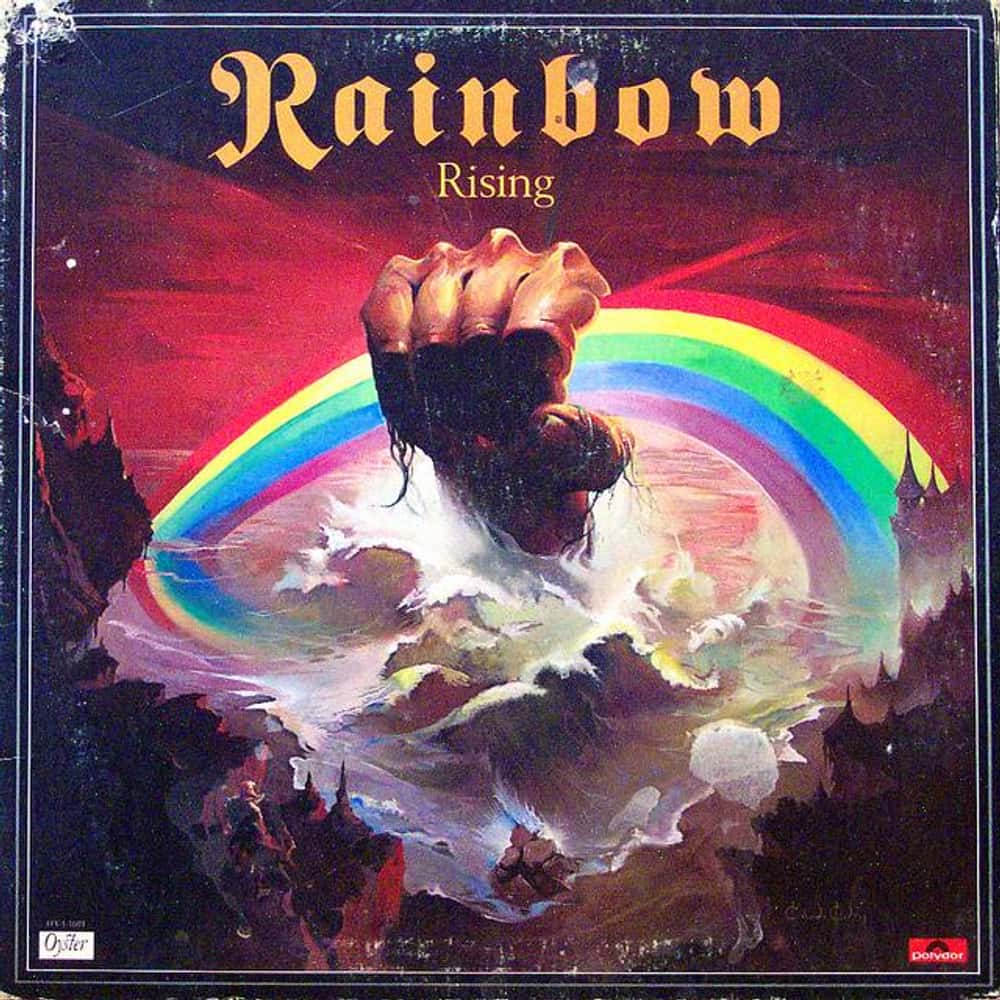
Rainbow Rising (1976)
The Second album “Rainbow Rising” contains just six songs and runs for less than 35 minutes, but is indisputably the jewel in the band’s crown. A year after their debut, Rainbow were much improved by the arrival of drummer Cozy Powell on thunderous drums alongside Jimmy Bain on bass. More importantly, Blackmore and Dio were on a creative hot streak that gave power even to three tracks overshadowed the highlights. The first of these highlights opens the album with a swirling keyboard introduction (played by the other new recruit, Tony Carey) then grows dramatically into the riff-driven mysticism of “Tarot Woman” with its epic synthesizer intro, courtesy of the talented Tony Carey, remains one of its most popular highlights — as crucial to establishing the definitive Rainbow sound as other “Rising” favourites like “Run With the Wolf”’ or “Starstruck.”
The fantasy stylings approach perfection, though, on side two. There, the pairing of two eight-and-a-half minutes epic tracks “Stargazer” which found the Blackmore/Dio partnership operating at the pinnacle of its creative powers and, with a little help from the Munich Philharmonic, inventing symphonic metal.
“Light In The Black” lyrically linked but stylistically very different – takes Rainbow to heights seldom matched by any other hard rock/power metal band.
Both songs feature guitar solos among Blackmore’s finest. The first (complete with swirling riff and orchestral backing) tells of a wizard who for nine years enslaves devotees to build a tower of stone from which he will fly; the second is a fast-and-furious reaction to the lie of the wizard’s failure. Together they are sublime. Cozy Powell, and Ronnie James Dio were becoming legendary at this time.
The album’s galloping epic, “A Light in the Black,” which brings this landmark to an extended climax rarely challenged before or since. That’s because this reeling juggernaut is a tour de force for all involved: with Dio wailing like a banshee, bassist Jimmy Bain and drummer Cozy Powell hammering away in rhythmic telepathy, and Blackmore challenging keyboardist Tony Carey to a deadly soloing joust as phenomenal as any he ever engaged in with Deep Purple organist Jon Lord.
If only this album was properly recorded, produced and mixed. The longtime fans have wanted that to happen ever since it was released. What a shame that you can’t really hear Jimmy Bain(on bass guitar)!!!His pulsing bass really helped propel those songs…and those heavy grooves with Cozy Powell….!!! Maybe,in the future this album will finally be remixed and produced in a way that allows every Instrument to be heard.” This is Rainbow at their very best.
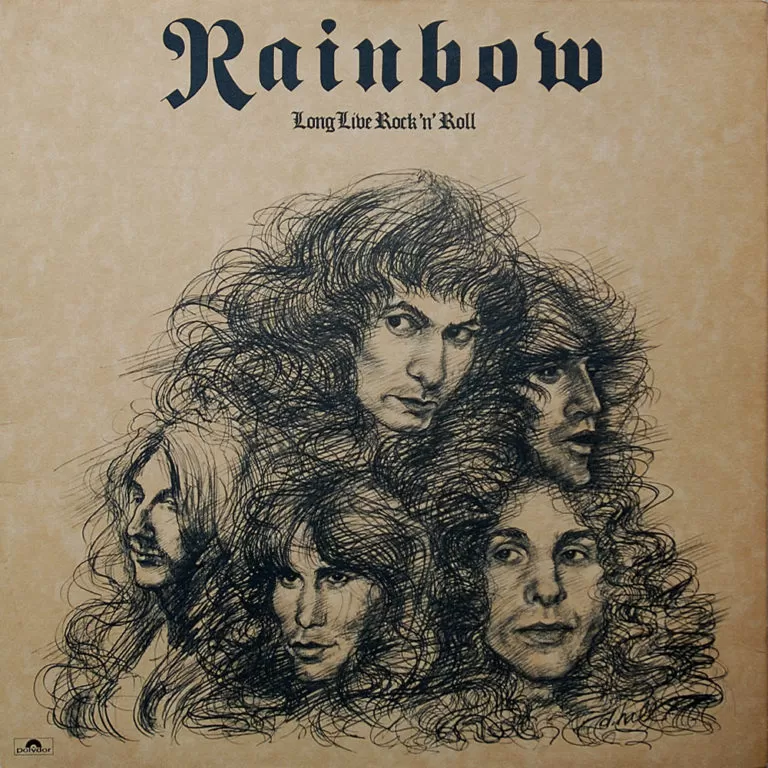
Long Live Rock’n’Roll (1978)
The third album of the Rainbow catalogue, the last to feature singer Ronnie James Dio, is a divisive one. It’s not really a patch on either of its predecessors but it does feature Dio and a scalding opening rocker in “Kill The King“, the near seven-minute epic “Gates Of Babylon” (a close relative of and worthy rival to Led Zeppelin’s Kashmir) plus the unexpectedly good-time slant of the title-track.
Words can barely describe the glory of the “Long Live Rock ‘n’ Roll” album’s centerpiece, which fuses Eastern scales and Blackmore’s deep love for classical music onto hard rock foundations as imposing as the granite walls surrounding that fabled city. This is heavy metal at its most majestic.
This album marks the end of the Dio era Rainbow, a trilogy of almost unbeatable, inspired, rock lps, which still resonate and provoke strong opinions amongst the hordes of fans who adore this style of heavy rock, to this day, Blackmore and Dio went their separate ways, Ritchie started to flirt with the american aor style of rock, whilst Ronnie re-appeared fronting a rejuvenated Ozzy-less Black Sabbath, and released two quite magnificent studio albums. “Long Live Rock N Roll” is another tour de force, only bettered by “Rising“.
“LA Connection” was a half-decent top 40 single in the UK, but “The Shed (Subtle)” is very poor. Dio aficionados always point to his superb singing on “Rainbow Eyes“, but others see that song as an atypical and over-long ballad whose main redeeming feature is its position at the end of the album because that makes it easier to skip.
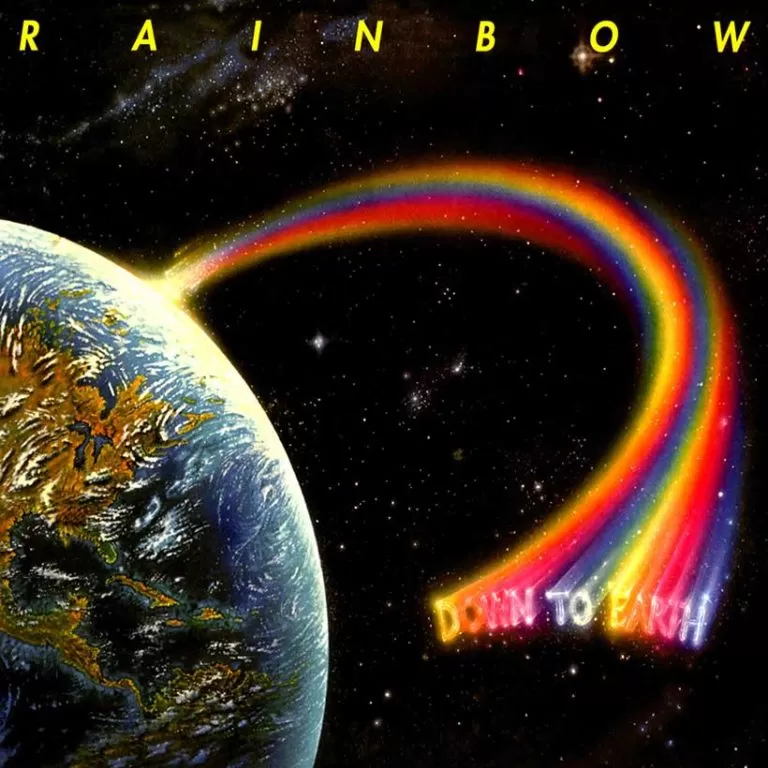
Down To Earth (1979)
No one really knew what to expect after Ronnie james Dio’s departure. But it wasn’t a hit single written by Russ Ballard called “Since You’ve Been Gone“. Nor was it a second hit, “All Night Long” (derided as sexist,) – much less Rainbow appearing on Top Of The Pops with a singer Graham Bonnet sporting a Hawaiian shirt and a Beach Boys haircut.
Rainbow had “gone mainstream” but did so at a time when the pre-MTV charts were open to rock acts muscling in. Alongside the singles, “Down To Earth delivered heavyweight counterpoints, not least the standout epic “Eyes Of The World”, the blues of “Love’s No Friend” and the frantic closer “Lost In Hollywood“, that connected the new Rainbow to the Dio era even as the funkier groove of Makin’ Love” pointed elsewhere.
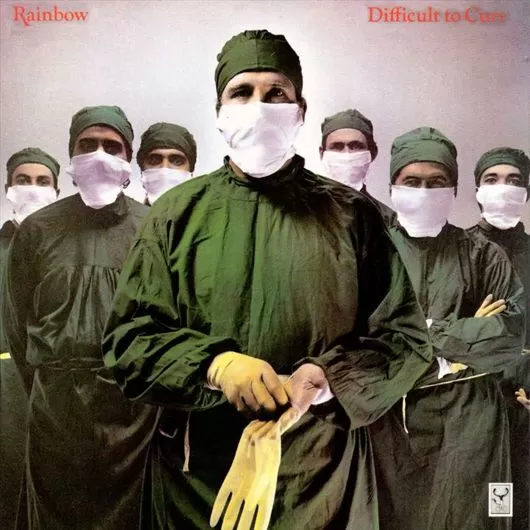
Difficult To Cure (1981)
The follow-up to 1979’s hit album Down To Earth was conceived as a second outing for Graham Bonnet – but he was sacked after the backing tracks had been recorded. So instead it became the first to feature Joe Lynn Turner – and also drummer Bobby Rondinelli (replacing Cozy Powell, who joined the MichaelSchenker Group). Blackmore is full of trademark driving riffs but this a band effort, not just the lead guitar. Joe Lynn Turner comes in as new vocalist and immediately hits the right notes, strong and powerful and a fine example of the classy Rainbow tradition of previous vocalists.
Many fans suggest the arrival of these two Americans (particularly the singer) saw Rainbow sacrifice their heritage in search of the US market . The tracks are almost all rockers, but “No Release” and the Hendrix-influenced blues of “Midtown Tunnel Vision” slow down the tempo a bit to give the listener a chance to catch breath. “I Surrender” did marvelously for a rock track in hitting number 3 in the UK singles chart.
Arguably, it fared better in the UK by spawning two hits: a cover of Russ Ballard’s I Surrender – which rose to number 3 and the Blackmore-Glover original “Can’t Happen Here“. Elsewhere, long-term fans enjoyed the guitar fireworks on the Jeff Beck-like instrumental “Vielleicht Das Nächste Mal (Maybe Next Time), the positively electrifying “Spotlight Kid”. and the Hendrix-influenced blues of “Midtown Tunnel Vision”.
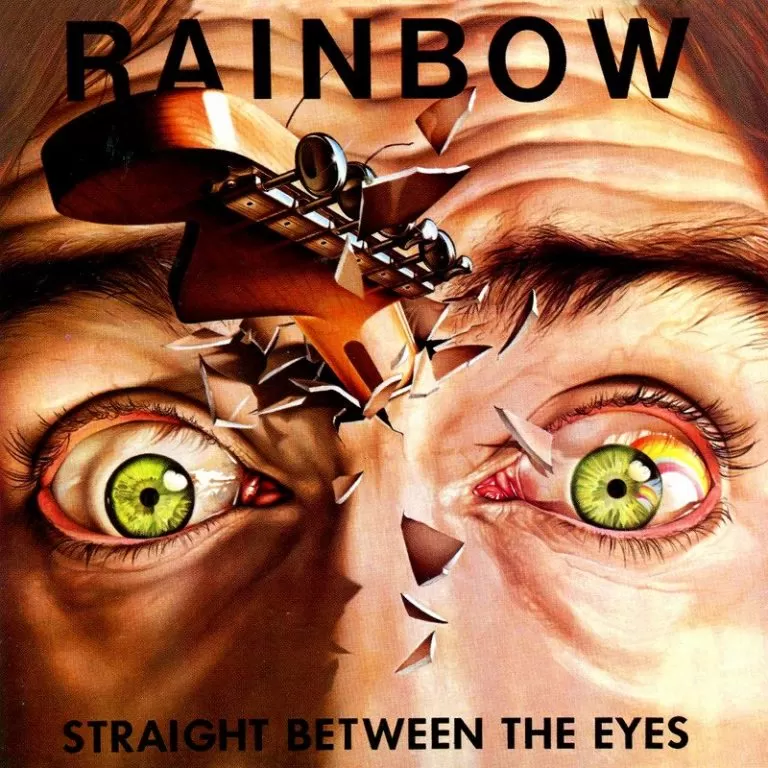
Straight Between The Eyes (1982)
This is a pretty consistent set of songs without reaching any great heights. I think the best of this lot is ‘Eyes of Fire’ maybe because its middle-eastern influences means it sounds more like something from the Dio era, It does have one really good song on it – the single “Stone Cold” but everything else suggests the band were devoid of fresh ideas. “Bring On The Night (Dream Chaser)” re-uses part of the “Gates Of Babylon” chorus; Tite Squeeze re-works the riff to another earlier Rainbow album track
“The Shed (Subtle); Tearing Out My Heart” plays like a new version of Purple’s “Mistreated” and “Eyes Of Fire” misfires badly as it steals a bit of everything Rainbow had ever succeeded with before, but omits craft. “Death Alley Driver” and “Power” were written to be played live but aren’t great studio cuts.
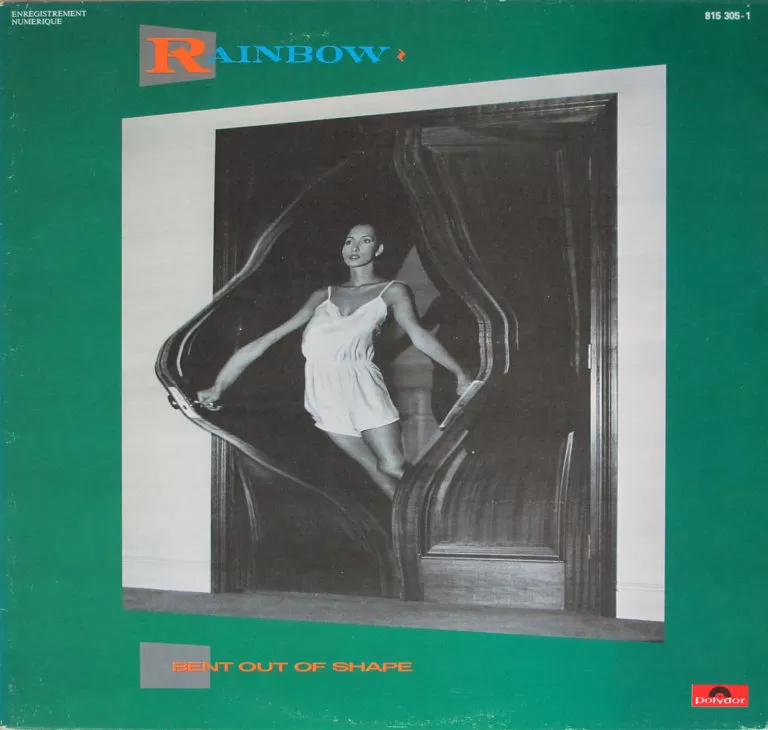
Bent Out Of Shape (1983)
The longer Rainbow continued, the harder it became to make a case for them. Come their seventh album , Blackmore was the only constant member and saw nothing weird about including a re-working of Howard Blake’s theme to the animated children’s film Snowman.
As producer, Roger Glover has widened their sonic horizon without losing sonic muscle, making sure that the album is, at its core, hard rock. “
Only “Firedance”, “Drinking With The Devil” and the instrumental “Anybody There” played to fans of the original Rainbow. The singles Street Of Dreams and “Can’t Let You Go” proved the AOR direction had some merit – even if the target was usually missed. Keyboard player Dave Rosenthal and drummer ChuckBurgi were last seen touring together in Billy Joel’s band.
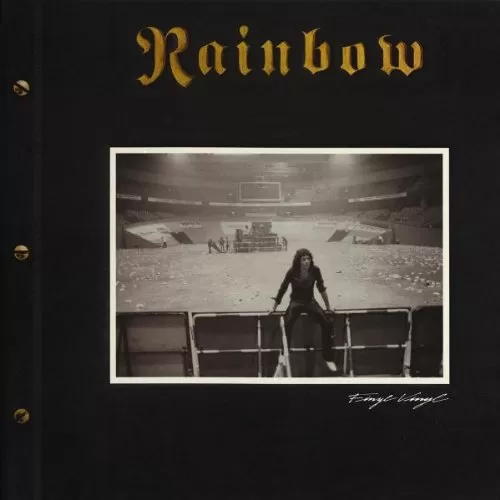
Final Vinyl – (1986)
“A take it or leave it souvenir for the Rainbow faithful, this mostly live retrospective is not surprisingly heavy on the Joe Lynn Turner era, Ritchie throwing a few bones to former relations Dio (too-long versions of “Man on the Silver Mountain” and “Long Live Rock ‘n’ Roll”) and Bonnett (“Since You’ve Been Gone” from the infamous Monsters of Rock Festival appearance). The JLT stuff is kept concise and powerful for the most part, stadium rockers like “Spotlight Kid” and “Power” working well on the big stage, a live with strings version of the stupid “Difficult to Cure” being the main clock watching moment. Main points of interest here though are the non-LP studio cuts, a cowbell-clunkin’ Down to Earth outtake, “Bad Girl,” and JLT sounding more like Paul Rodgers on the brawny B-side “Jealous Lover” both making this set worth some spare change for the curious, at least.”
Stranger In Us All (1995)
“Stranger in Us All” feels like Blackmore‘s shot-in-the-dark, semi-inspired effort to reconnect with his hard rock fan base. Around this same time, he was gearing up his Renaissance-flavored new age project, “Blackmore’s Night”.
Made after Blackmore had quit Deep Purple for the final time, this (like Rainbow’s first) was intended as a solo record but the label BMG Records insisted it be billed under the band’s name. The singer this time was Doogie White – whose strong and versatile voice has echoes of both Dio and Turner. White co-wrote most of the material with Blackmore who plays as if re-invigorated by songs close in style to Rainbow’s 1975 debut.
“Hunting Humans (Insatiable)” is strongest, but the haunting Ariel and the rock arrangement of Grieg’s Hall Of The Mountain King are also of superior quality. As the short-lived Ronnie Romero-fronted “Rainbow” of 2016 only played live, this remains the last rock album of Blackmore’s career – before he shifted direction entirely to Blackmore’s Night alongside (his now wife) Candice Night, who also features here.
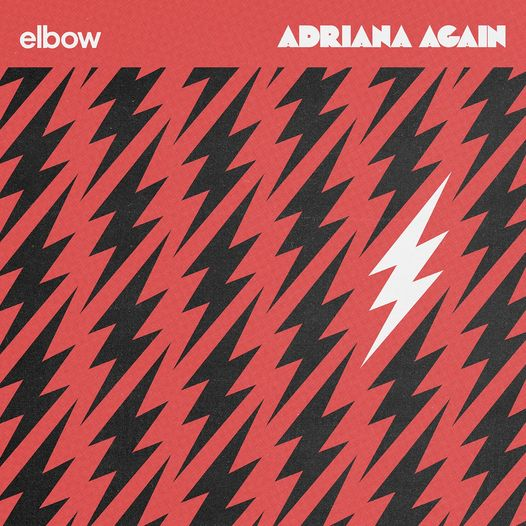
Elbow released the great “Audio Vertigo” earlier this year and are following it up with a new EP that will be out early next year. Details are still TBA but first single “Adriana Again” sounds very promising.
Elbow share the video for brand new single, the motorik-driven “Adriana Again” The Manchester quintet show a strong guitar-led krautrock influence on their brand new single, for which they have shared a brand new video and of which singer Guy Garvey says, “it’s got a groove but it’s got some pretty Sabbathy guitars on the chorus.” “It’s like we built a new vehicle for ourselves, and we wanted to give it another spin,” adds Garvey. “What we did with some trepidation in changing the sound for “Audio Vertigo” was so well received that we feel confident to keep pushing forward.”
Music video by Elbow performing “Adriana Again” Universal Music Operations Limited
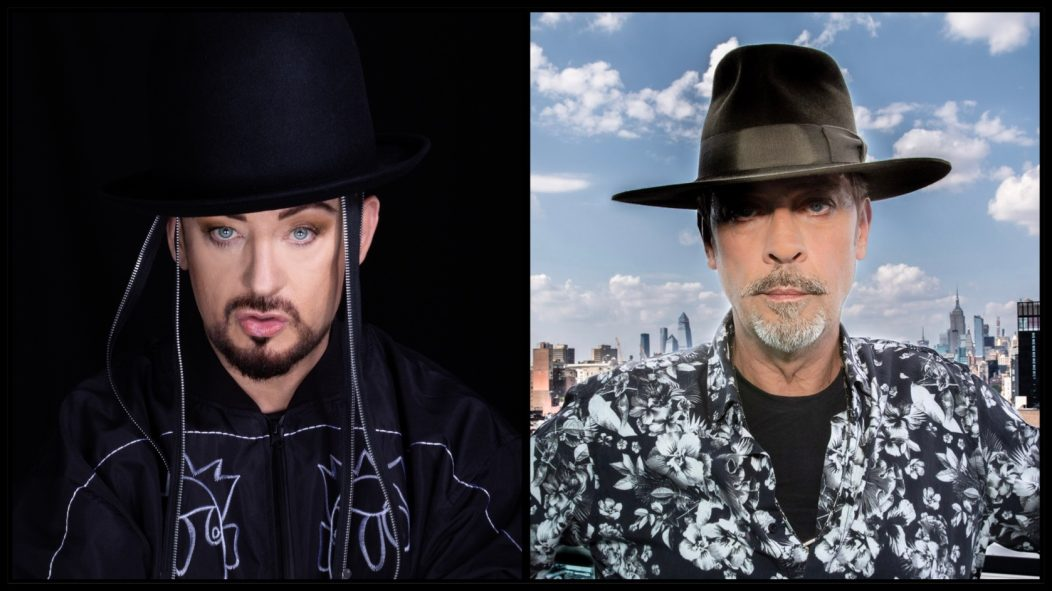
Here’s a collaboration you might not have seen coming: Bauhaus frontman Peter Murphy and CultureClub‘s Boy George teamed up for a new duet single, “Let The Flowers Grow” which was produced and co-written by Killing Joke bassist Youth.
“Let the Flowers Grow” is a beautiful new duet single from legendary artists Peter Murphy and Boy George. Epic orchestration and soaring vocal performances by both of these incredible artists create a deeply emotional masterpiece.
“It caught my ear for its melodic beauty as well as a Roy Orbison-like voice that sang the song,” says Murphy, who asked Youth if he could have a go at finishing the song, which he did. “When I heard the mix, I was satiated in every way,” says Boy George. “I have always loved Pete’s voice and his writing on this adds a beautiful darkness.
The production feels very epic, like Scott Walker.”
Hovvdy are following their self-titled 2024 double album with a new EP, “Live from Julie’s”, due out on November 22nd via Arts & Crafts. It features reimagined versions of songs from the double album, and they’ve shared a new rendition of “Bubba.” “Sonically this is the most vulnerable we’ve ever been,” they say. “When we make records, we’re always trying to craft this hyper-layered, expansive world; and as much as we love that approach, it’s easy to get lost in it.
With “Live at Julie’s” we wanted to peel everything back— just sit down and play the songs together.”
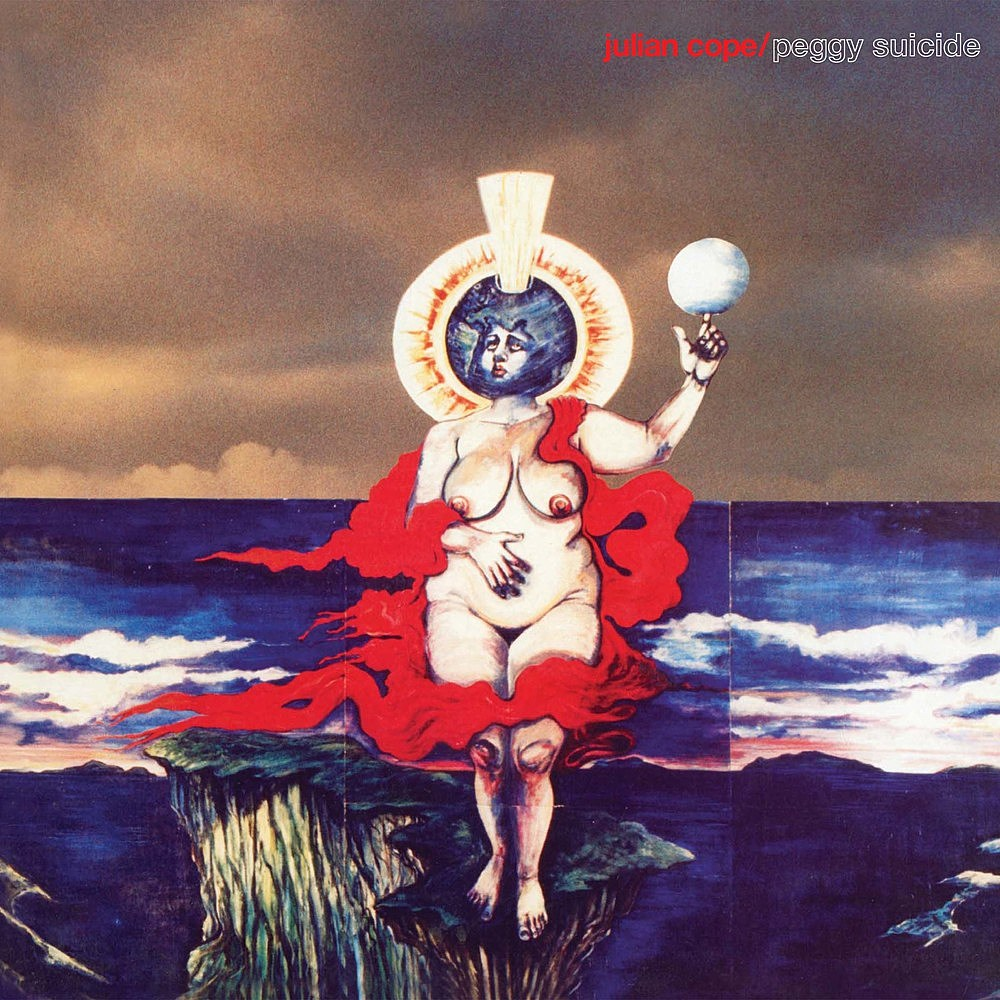
The sprawling, high-concept double protest album masterpiece from one of my personal musical heroes gets a reissue. With as much acid and other chemicals as Julian Cope most likely consumed during the ’80s, it’s a miracle the former Teardrop Explodes frontman could hold a spoon by 1991 let alone make the best album of his career. But that’s what he did on this psych-rock opus, a double album treatise on humankind’s disregard for its home, planet earth. This came after two separate attempts by major labels to turn him into a pop idol, and Cope had finally had enough, deciding to really let his hair down and fully let the freak flag fly (not that it was ever lower than half mast). He was still on Island Records, but he was now hanging out at Stonehenge, swimming with dolphins, and attending political protests as his 6’6″ alien alter ego, Sqwubbsy.
“Peggy Suicide” is a sprawling and brilliant statement, making room for hallucinogenic trips (“Double Vegetation,” “Not Raving But Drowning’), epics about the AIDS crisis (“Safesurfer”), punk rock burners (“Hanging Out and Hung Up on the Line”), and indictments of Margaret Thatcher (“Leperskin”) and the state of police in the UK (the Lenny Bruce sampling “Soldier Blue”). It’s also got some of his best-ever pop songs in “Beautiful Love,” “Head” and “If You Love Me At All.” In letting it all hang out, Cope created a an album that is definitely weird, weirdly welcoming and the best place for the uninitiated to start.
The former Cocteau Twins guitarist is back with his second solo EP of the year. “My EP “Astoria” picks up where my release “Atlas” had set off towards – a conclusion of a journey, like an arrival at a far-off destination,” Robin says. “I enjoy the continuity, and the EP format allows me to express these ideas in an episodic form,” Like on “Atlas”, Guthrie has refined his style so much that discerning what instruments you’re hearing is more difficult than ever before. It’s a watercolor approach to sound, with heavily treated guitars that wash over you like synthesizers — or maybe they are synths? — and delicate piano (which could also be guitar?) slowly descends down a pastel-colored spiral staircase.
Three of the four tracks feature drums that I will admit make me long for a voice — any voice, doesn’t have to be Liz — to enter the scene, but it’s the pure misty atmosphere of “Jura” that is “Astoria‘s” most Tran sportive moment. Whatever he’s playing, it’s as gorgeous and ethereal as ever. Let the mystery be.
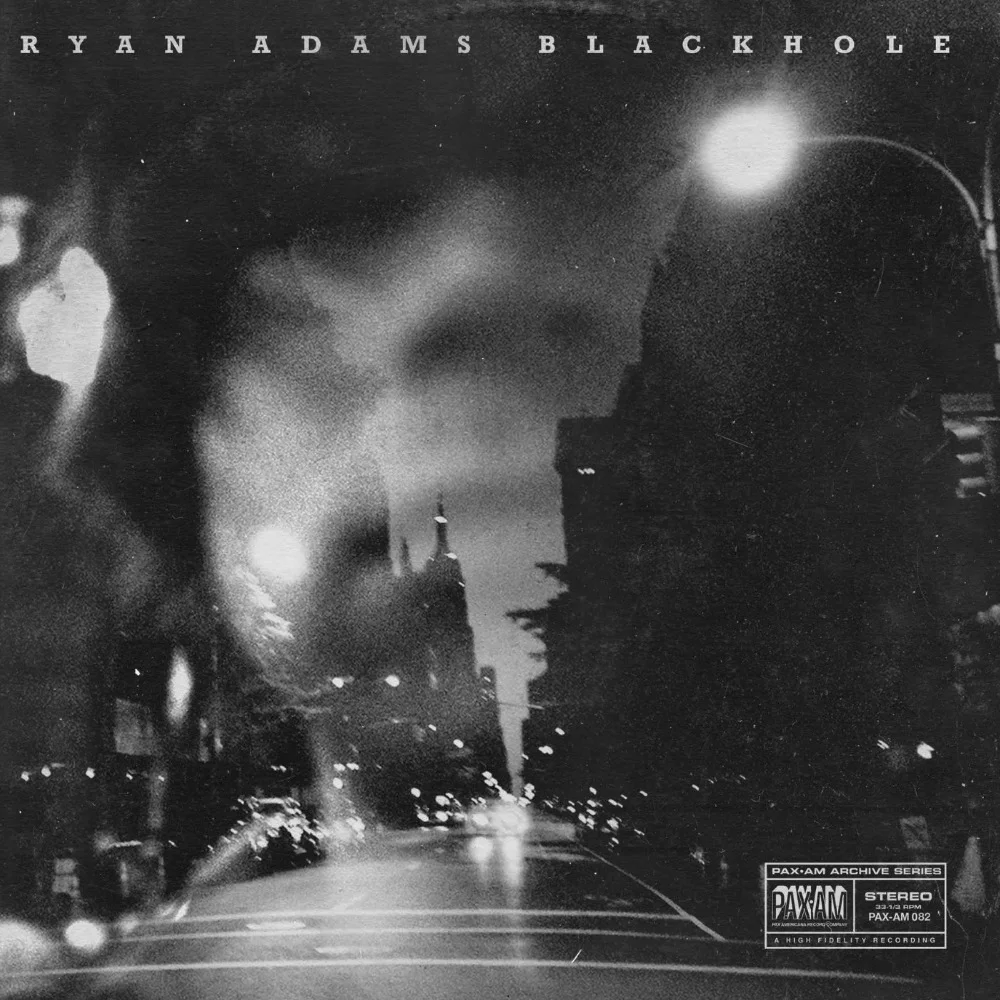
Ryan Adams’ infamous cult classic album “Blackhole” will be released on classic black vinyl and CD for the very first time. The album’s contents and final tracklisting have been widely speculated since its conception in the early 00’s. After nearly two decades of anticipation, Adams is now ready to unveil the official release of “Blackhole”. Featuring “Catherine”, heard only in live performances, alongside previously unheard material, “Blackhole” captures the raw, unfiltered emotion that defines Adam’s songwriting. The shelved album, first demoed in 2006, became heavily bootlegged, with fans circulating low-quality recordings and snippets from live performances, fuelling a demand for the album’s official release. This long-awaited, full-length album not only satisfies years of fan speculation, but also reclaims a crucial moment in Ryan Adam’s history.
With “Blackhole” finally set for release, here’s a look back at the album’s journey—its storied production, evolving versions, and near two-decade wait that made it one of Ryan’s most anticipated records. Adams began recording “Blackhole” over Christmas, intending it as an epic rock album. He described it as “a real serious effort to make a rock record, really epic and big.”
Initial demos for the album were completed. Reflecting on this period later, Adams called “Blackhole “the last record I made in the last days of the drugs.”
“Blackhole” was reportedly intended to be part of a 2006 trilogy alongside War and Peace and songs recorded for The Cardinals’ planned third album, “Star Wars”, but was ultimately rejected by Lost Highway. In an interview, Adams described “Blackhole” as an album that captured a particularly intense and transformative period in his life, saying, “You listen to it and think, ‘My God, this guy is gonna die.'”
Adams released ‘Disco Queen’ and ‘Tomorrowland’ as part of a digital singles series via his label Pax-Am. He remarked, “These songs are a taste of something from a different place—tracks that never quite found a home on an album, but still felt like they should be heard.” After years of work, Adams revisited the “Blackhole” tracks with producer Jamie Candiloro, “opening up the tracks” to create a new version of the album. He described the album as “Love Is Hell Part 3,” noting, “It took 4 years to make it… lots of shimmery guitar love on this.”
Adams returned to Blackhole at his Pax-Am studio, recording new material and reworking existing tracks. He revealed, “I think I’m finally ready, maybe, to release the “Blackhole” record… There’s been actually two versions of it which is pretty interesting.” He described the album further by saying, “Rescuing Blackhole was like rescuing my past. It’s like Love is Hell’s sister. In every way. In the most profound way.”


 The Fat Angel Sings