Wishy’s debut “Triple Seven” scratch a very specific itch: they’re fuzzed-out, honeyed takes on the kind of pop-punk, alternative rock, emo, and grunge that pervaded radio airwaves in the late ’90s and early 2000s. But even divorced from their nostalgic influences, the music is simply brimming with life. The guitars burn and smear, the drums whizz with momentum, the vocals from Kevin Krauter and Nina Pitchkites oscillate between high stakes belts and an earnest swoon; each piece of the Wishy rock song puzzle fits perfectly, even as their songwriting takes unexpected, lopsided turns.
You could call Wishy’s story a lucky one. After prior monikers and iterations, Wishy was born as a kaleidoscope of alternative music’s semi-recent history, with traces of shoegaze, grunge and power-pop swirling together. On “Triple Seven”, Indiana songwriters Kevin Krauter and Nina Pitchkites’ musical synergy proves itself to be a rare one–the kind that sounds like someone striking gold. Part sly wink and part warm gratitude, it’s only fitting their much anticipated full length debut is titled “Triple Seven”, where Wishy’s penchant for indelible poppy hooks is couched equally in pillowy atmospherics and scathing distortion.
By day Krauter works as a music teacher, giving drum and guitar lessons to students, while Pitchkites is a seamstress by trade and often makes embroidered merch for the band. Coming up in a scene defined by hardcore and emo, Krauter and Pitchkites instead found themselves writing melodies in their heads while driving to work, pulling music from the air and arriving at a blearier, more ethereal interpretation of Midwest expanse. Initially, their music oscillated between hazy dream-pop and heavier alt-rock.
The subject of their songs create a loose web of vignettes and snapshots, capturing Krauter and Pitchkites in a whirlwind couple of years — exiting the pandemic, embarking on an embryonic project, making sense of their musical pasts while forging a musical future alongside one another, each of them on a journey of self-acceptance and self-understanding. Sometimes gorgeous, sometimes festering, and always cathartic, “Triple Seven” is a vibrant and exhilarating document of self-discovery with the scope and heft of the bygone big-budget rock albums that inspired it.
Wishy’s debut LP ‘Triple Seven’ – out August 16th, 2024 via Winspear.
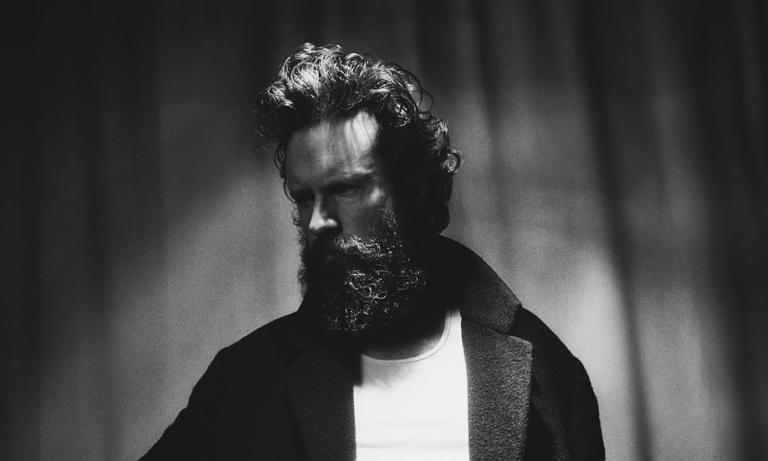
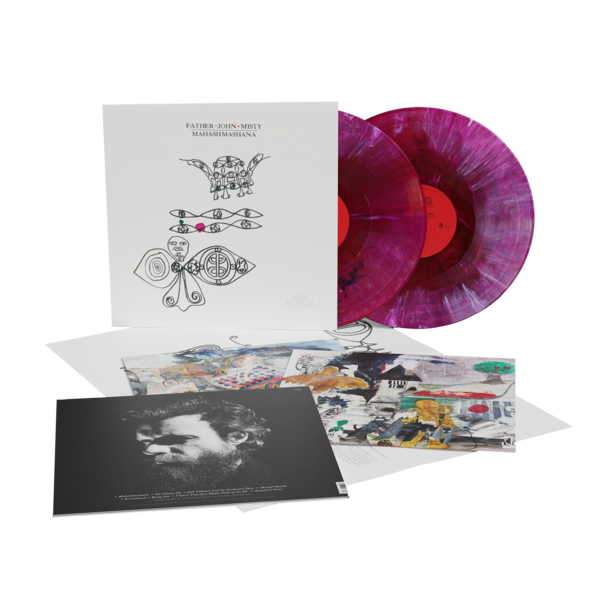
“Mahashmashana” ushers in a new chapter of existential reflection, as Josh Tillman captures the restless energy of society in decline. His latest album combines explosive rock anthems with poignant, mournful ballads, His new album is nine years after his breakthrough album “I Love You, Honeybear” turned Josh Tillman from a minor indie singer-songwriter (and the former drummer of The Fleet Foxes) into a critical cause célèbre, most people with any interest know broadly what to expect from a new release under the Father John Misty name. There will be blackly comic depictions of existential angst and apocalyptic dread. Songs that suggest life in the 21st century is basically unbearable and that the world is irredeemably screwed will vie with fourth wall-breaking moments where Tillman confesses his own complicity in screwing up the world. There will be barbed drawings of human relations, bleakly funny ruminations on ageing, self-lacerating reflections on his own music and career, stuff about Los Angeles, Tillman’s adopted home town, and, frequently, a lurid microcosm of all that’s wrong with the world.
Suffice to say that “Mahashmashana” ticks all those boxes. Indeed, it ticks quite a lot of them over the course of the opening title track, which sets a melody that evokes Father John’s most enduring musical touchstone, maybe the early 70s Elton John, to an arrangement that recalls the overripe Phil Spector production of George Harrison’s All Things Must Pass. It takes its name from a Sanskrit world meaning “great cremation ground” and alternates between describing “the next universal dawn” breaking over a silent world, and a troubled relationship between a man whose body is metaphorically compared to a chain of southern Californian gourmet food markets and a woman whose soul is a “fallen star”.
Modern-day life is “a scheme to enrich assholes”, Tillman avers, before poking his head through the fourth wall and taunting himself for his pomposity: “Such revelations,” he sings, with a parenthetical roll of the eyes, “which only singers can describe.”
But if “Mahashmashana” essentially occupies emotional territory that Tillman has mapped out over his last five albums, he keeps finding enthralling new ways to describe it: humanity, he suggests on “I GuessTime Makes Fools of Us All”, resembles “a himbo Ken doll” that God has made to “parachute into the Anthropocene” in order to “make things interesting”; “Against your will comes wisdom and 40 more years ahead” offers Summer’s Gone of the onset of middle age. He’s also very funny, as on Josh Tillman and the Accidental Dose, a kind of sequel to 2015’s scabrous “The Night Josh Tillman Came to Our Apartment”. Once again, the singer finds himself in trying company (“She put on Astral Weeks, said ‘I love jazz’ and winked at me / This is the last place I oughta be”), his discomfort compounded by the fact that the LSD he’s been microdosing has suddenly started to work a bit too vigorously, causing a painting of a clown on the wall to start speaking to him: he ends up in the street at dawn, apparently convinced, as the ruefully hungover often are, that he’s come to see things as they really are, ie unbearable.
Indeed, you’re sometimes struck by the sense that Tillman is saying things that plenty of other artists have already said, but putting it noticeably better than they have. “Mental Health” certainly isn’t the first song to opine that contemporary culture is making us unwell, the internet having helped create a culture of constant surveillance that encourages people to project a version of themselves that has no connection to reality, but it’s hard to think of anyone who’s put it more elegantly. We are living in a “panopticon”, where there’s no need for “guards and narcs” because we’re all spying on each other; online life reduces your identity to a “milk-white shadow”. Nor with more wit: “Mental health, mental health, no one knows you like yourself,” runs the chorus, adding: “You two should speak in the presence of a licensee” – whether marital, to conjoin these alienated souls, or publican.
You could argue that “Mahashmashana” is not an album built to change anyone’s mind: if you’ve already decided that Tillman is an insufferable smartarse, you can doubtless find evidence to support your claim among its dense, allusive songs. But you’d have a harder time arguing that he’s not a fantastic writer in both terms of melody – all nine tracks bear a tune that’s both beautiful and beautifully constructed – and the scope of his musical ambitions: the album nimbly leaps from Screamland’s white-knuckle take on electronic pop, strafed with the distorted guitar of Low’s Alan Sparhawk, to the sublime Great American Songbook pastiche of Summer’s Gone; from the gently discofied yacht rock of “I Guess Time Makes Fools of Us All” to Mental Health, which arrives drenched in strings and cooing, wordless female vocals redolent of late 50s/early 60s ballads and film soundtracks. He can, “Mahashmashana” suggests, master the lot: in fact, for a man who apparently spends a lot of time consumed by angst and portents of doom, Josh Tillman seems to be doing just fine.
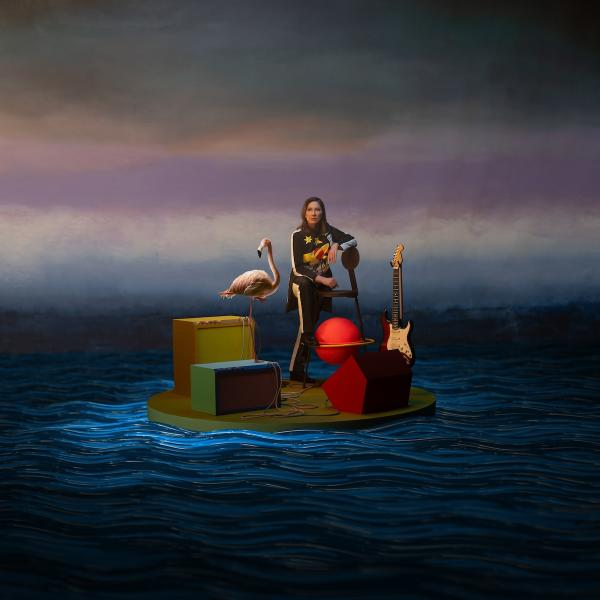
A totemic presence in indie and rock for decades as a member of Pixies and The Breeders, American musician Kim Deal presents her first ever solo album. “Nobody Loves You More“, as well as featuring the single ‘Coast’, includes songs that date back as far as 2011. Boasts engineering from the late Steve Albini plus contributions from her sister and bandmate Kelley Deal, Teenage Fanclub’s Raymond McGinley and members of Savages among others.
For her first-ever full-length solo album, Kim Deal leaned into the fact that she is fucking Kim Deal — indie rock legend of Pixies, The Breeders, and more. The record, “Nobody Loves You More”, is Deal through-and-through, from the personal stories that hide within the lyrics to the instantly recognizable brand of slackery perfectionism that makes her song writing so compelling. Deal didn’t need any more proof that she is indie royalty, but “Nobody Loves You More” still further cements her position as such.
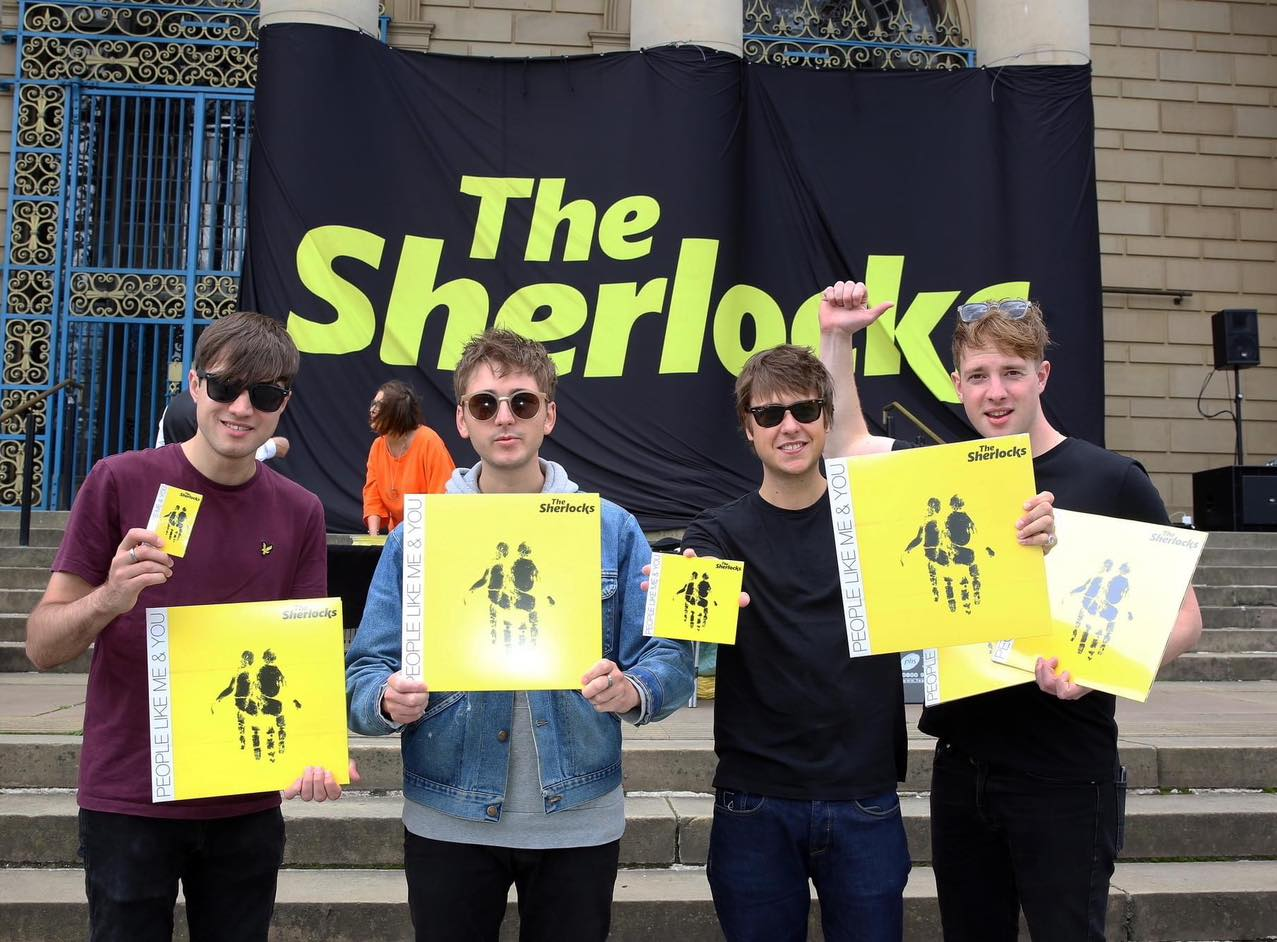
Delighted our new album ‘People Like Me & You’ was released 11th August. It’s the best album we’ve ever made & we can’t wait to share it with you all. These South Yorkshire lads are unstoppable! Each release has seen their star shine bigger and brighter and this one is no different – expect a right good tear up!. The Sherlocks are back with a bold statement with their fourth album and there’s no doubt that they mean business and with ‘People Like Me And You’. There’s an intensity that is palpable through every single track.
Sonically, the quarter has taken somewhat of an evolutionary leap taking inspiration from the likes of The Killers and Coldplay and it feels very much like a ‘coming of age’ record for the band who are offering an anthemic indie alt-rock sound that is atmospheric and euphoric in equal measure. It feels both fresh and nostalgic at the same time thanks to its indie-rock sensibilities with an electrifying injection of post-punk attitude for good measure. “Sirens’ is edgy but exhilarating with the band digging deep with a grittier and darker approach that is leaps and bounds away from their 2017 debut ‘Live For The Moment’ which weaved in stories of the hedonism of youth. Those quintessential Sherlocks themes are still there, but this is a more mature and dynamic sound that shows their sonic progression.
Opening track ‘Remember All The Girls’ sets the scene and is chock-full of pulse-racing rhythms. The hooky, guitar-driven energy is juxtaposed with poignancy and reflection with lines like ‘Everything is gonna change /How could it ever stay the same?’.
The Sherlocks thrive on playing live and the intensity from this has translated into the album. There’s plenty of crowd pleasing bangers and each of the 11 tracks have impressive arena-sized singalong choruses. ‘People Like Me & You’ is guaranteed to get you on the dancefloor where as the album closer ‘Watson’ see the Sherlocks really pushing their boundaries even further with a spoken word piece about their old bandmate ‘John Watson’ and expanding upon that into the complexities of the human condition.
Their biggest, brightest and most expansive record to date with production elements and fresh sonic touches that broaden their guitar/bass/drums foundations. It’s a collection filled with personal and quintessential Sherlocks lyrical themes that are informed by the passing of time and the realisation that everyone is stepping into different stages in their lives – touching upon nostalgia, ageing, flawed relationships and escaping the rat race on wild, woozy weekends.
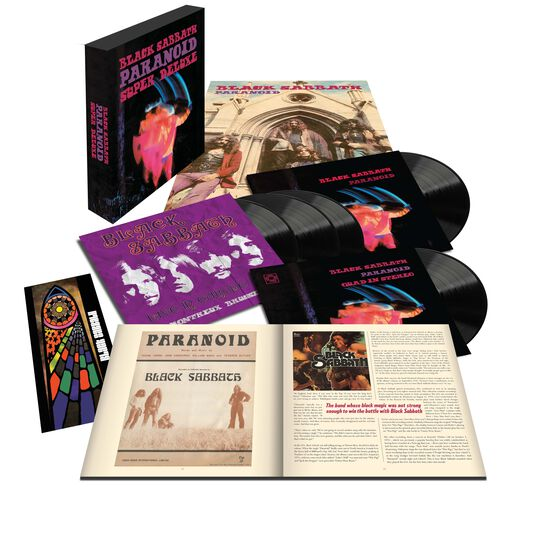
“PARANOID” Super Deluxe Edition includes the original album, in addition to a rare 1974 Quad Mix of the album folded down to stereo, plus two concerts from 1970, from Montreux and Brussels, that are pressed on vinyl for the first time. The five-LP set comes with a hardbound book with extensive liner notes featuring interviews with all four band members, rare photos, and memorabilia, a poster, as well as a replica of the tour book sold during the Paranoid tour.
PARANOID: Super Deluxe Edition first two LPs feature the original album plus a Quadraphonic Mix of the album. Originally released on vinyl and 8-track cartridge in 1974, but subsequently long out of print, the Quad Mix has now been made available as a fold-down to stereo mix on vinyl for this set.
The collection’s final three LPs mark the official vinyl debut of two 1970 live performances. The first was recorded on August 31st in Montreux, Switzerland shortly before the release of “Paranoid”. It captures the band, already a tight musical unit, thundering through new songs like “Hand Of Doom” and “Iron Man” while mixing in “N.I.B.” and “Behind The Wall Of Sleep” from their debut album. The second concert was recorded a few months later in Brussels during the band’s performance for Belgian television. Unofficial versions of this classic show have circulated in the past, but they’ve never sounded this good.
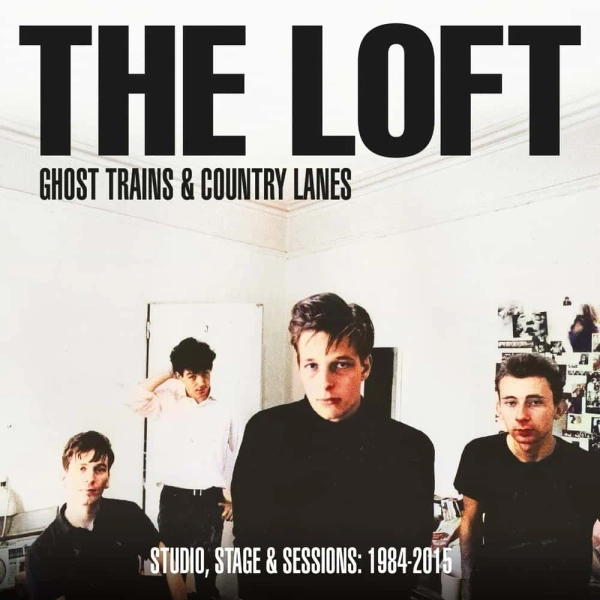
Compiled and coordinated by the band, “Ghost Trains and Country Lanes” expands on previous retrospectives of The Loft, adding those reunion recordings (including three previously unissued tracks), the Gideon Coe session and several live recordings from that historic performance at The Living Room back in 1984. (including many exclusive songs which were never recorded in the studio).
Among the first crop of Creation Records bands in the mid-1980s, The Loft seemed the most likely to break through. Following the success of The Smiths, guitar-based independent pop was in vogue, AlanMcGee’s Creation label was turning heads – its bands blending 60s psychedelia, the melodic end of punk and a new sound which would soon be immortalised on NME’s C86 cassette. And in this London quartet, Creation had their answer to bands like Television, The Only Ones or early Modern Lovers, offering taut, off-kilter songs with an irresistibly deadpan cool.
Sadly, after just two singles, 1984’s downbeat debut ‘Why Does The Rain’ and the punchier sequel, ‘Up The Hill And Down The Slope’ – an indie hit which the band performed live on TV show The Oxford Road Show, The Loft dissolved, with various members founding new bands The Weather Prophets, The Caretaker Race and The Wishing Stones. They left behind seven studio tracks, a BBC Radio 1 session for Janice Long and one track from a Creation LP documenting the scene’s roots in small club The Living Room.
However, The Loft’s legend endured, eventually prompting a reunion in the early 2000s with all four original members – singer/songwriter/guitarist Pete Astor, guitarist Andy Strickland, bassist Bill Price and drummer Dave Morgan. Alongside various well-received live shows, that led to a new single, ‘Model Village’ (2006) and more recently a session for Gideon Coe on BBC 6 Music (2015). The Loft’s reputation as founding fathers of a new breed of mid-80s indie pop continues to grow to this day, with the band often cited as an influence.
With new sleeve-notes by Danny Kelly, this is the definite tribute to The Loft.
When Indie meant genuinely independent, ‘jangly guitars’ and heroic outsiderdom the bands which get namechecked as being the originals and the archetype tend to be the TV Personalities, The June Brides and the Wedding Present. In fact, in retrospect, says Ged Babey (a goth at the time), one of the best, were The Loft. A band who brought a CBGB’s influence to Creation and who still sound magnificent all these years later.
Nearly 40 years on from their debut, the Creation Records pioneers The Loft went back into the BBC’s Maida Vale Studios to record a four-track session for Marc Riley & Gideon Coe. And guess what? We’re releasing it on vinyl and it’s utterly brilliant – three Loft originals (‘Beware’, ‘Ride’ and ‘Worm In My Brain’) and their classic cover version of Richard Hell’s ‘Time’.
Released on Ten-inch vinyl with sleeve notes from all four band members plus download codes and photos from the session by Ken Copsey.
The Loft notched up an impressive list of firsts for Creation Records artists back in the mid-1980s. First Creation band on TV, first to hit the top of the indie chart, first to be invited on to a major UK tour and, not least, first Creation band to record a coveted BBC radio session – for Janice Long’s Radio One show in 1984. Then they split up.
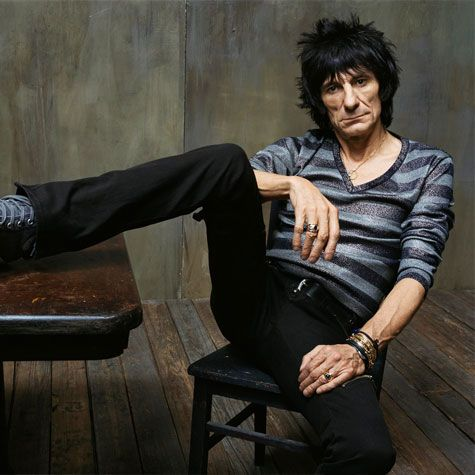
One of those classic, black-coiffed, skinny-jeaned British rock’n’rollers whose face is a road map of his career, is the great Ronnie Wood who comes from a long line of Middlesex water gypsies and his itinerant roots show through in a rich career that encompasses 60s groups The Birds, The Creation, Faces of course and a stint with Jeff Beck Group. Wood had begun his career in 1964, playing lead guitar with several British rhythm and blues bands in short succession, He joined the Jeff Beck Group in 1967 as a guitarist and bassist, playing on the albums “Truth” and “Beck-Ola”.
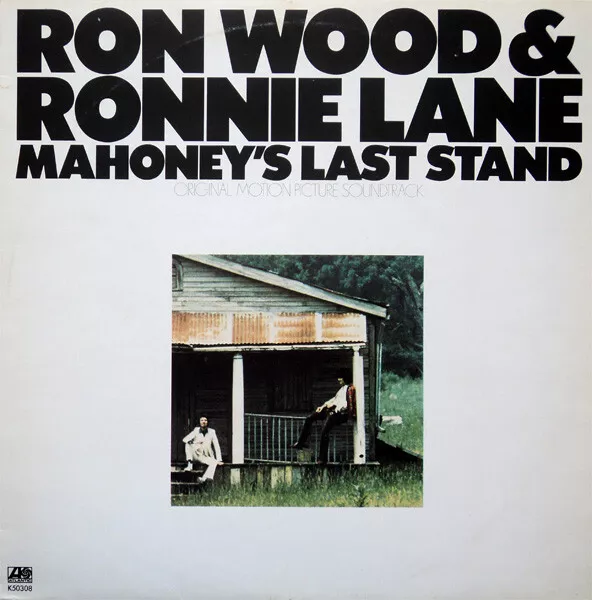
Latterly, his ongoing place in The Rolling Stones’ history, where he is far more than foil to Keith Richards, has made Ronnie a national treasure. His place at the forefront of British blues riff gods is assured via Faces epics such as ‘Stay With Me’, ‘Miss Judy’s Farm’ and ‘Too Bad’, but he is an accomplished folk guitarist as well, whose playing graces the best Rod Stewart albums. He has conjured many other minor miracles too, such as when his delicate acoustic meshes alongside fellow FacesRonnie Lane’s fretless bass on the gorgeous cockney lament ‘Debris’, or the wonderfully obscure ‘Just For The Moment’, from the 1972 (but released in ’76) soundtrack album for the Canadian movie “Mahoney’s Last Stand“.
And yet Ronnie also had his own albums to do, providing us with several real gems from the studio that, though packed with stellar mates and guests, still maintain their integrity.
Born in a council house in Yiewsley, Hillingdon, as a kid Ronnie Wood was known as Young Timber (his dad was Timber) and the pair toured the racetracks of the south England in a 24-piece harmonica band that gave Ronnie the taste for the high life. He began playing guitar in The Birds in 1964, moved on to the psych-rock outfit The Creation, and participated in Jeff Beck’s late 60s blues and rock mash-ups Truth and Beck-Ola. He joined Small Faces after Steve Marriott’s departure and lasted the course when they became Faces, also decorating Rod Stewart’s fine albums “An Old Raincoat, Will Never Let You Down”, “Gasoline Alley” and “Every Picture Tells A Story“. He joined the Stones when Mick Taylor left in 1975, and has played with them ever since.
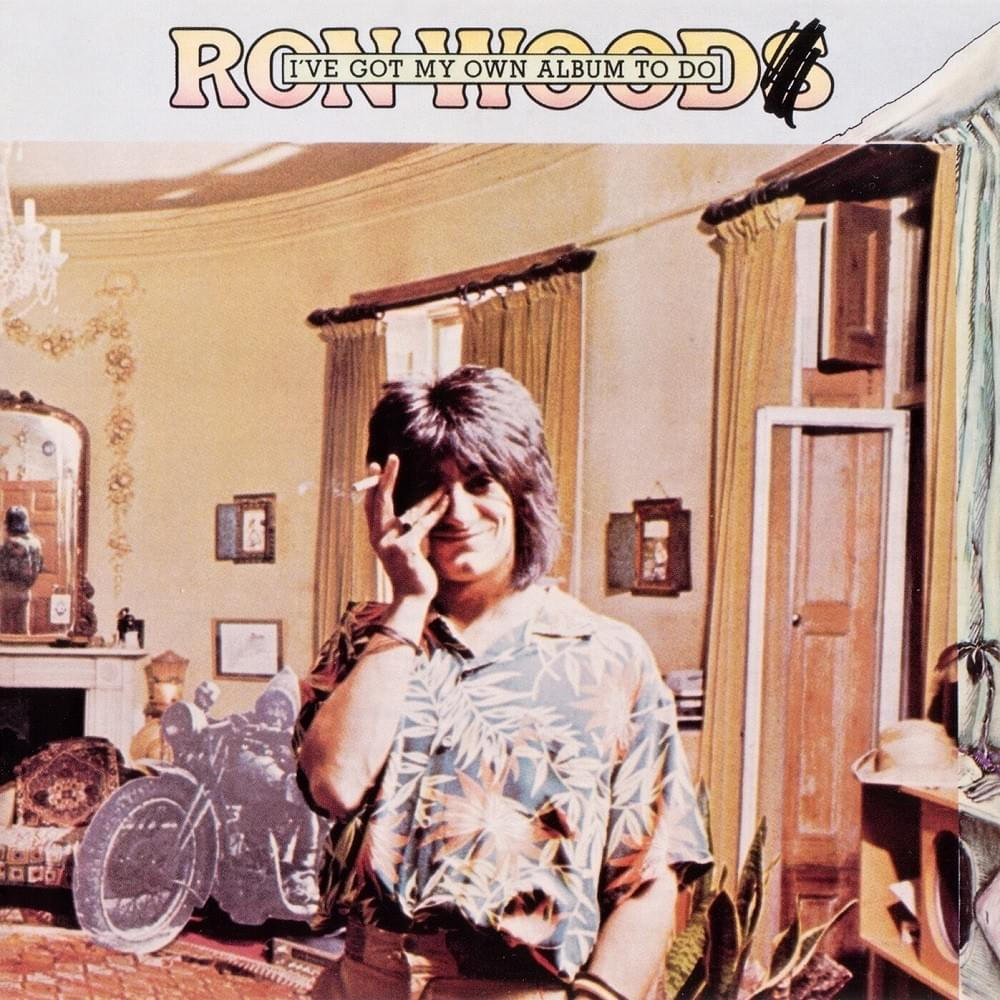
Ronnie Wood, ‘I’ve Got My Own Album to Do’ (1974)
Ronnie’s solo albums start with 1974’s “I’ve Got My Own Album To Do”. It’s only rock’n’roll, but we like that one. As Faces began to split, he started several solo projects, eventually recording his first solo LP, “I’ve Got My Own Album to Do“, in 1974. The album featured bandmate McLagan as well as former Beatle George Harrison and Keith Richards of the Rolling Stones, a longtime friend of Wood. Soon after Mick Taylor left the Rolling Stones, Richards invited Wood to join them; he did so in 1975,
Rod Stewart had already established a parallel solo career when Wood released his debut, and that basically finished the Faces. In a sign of things to come, future Rolling Stones bandmates Mick Jagger and Keith Richards sat in, as did Mick Taylor – the guitarist whom Wood ultimately replaced. Moving seamlessly from one Rock & Roll Hall of Fame band to the next was probably a smart idea, considering Wood was apparently so anonymous that the label misspelled his last name on the album cover. Always a good sport, Ronnie Wood simply scratched it out. He was headed to bigger things.
Richards, Mick Jagger, an uncredited David Bowie and George Harrison all appeared on it. So do most of Rod’s studio pals, including Martin Quittenton, Pete Sears and Stewart himself, as well as the stellar rhythm section of Willie Weeks and Andy Newmark, Faces Ian McLagan and Mick Taylor. Key tracks include the opener, ‘I Can Feel The Fire’, with Mick adding some of his finest backing vocals, and Harrison’s ‘Far East Man’, which also appears on Harrison’s Dark Horse album.
Ronnie Wood, ‘Now Look’ (1975)
Wood gave away some of the ragged charm of his debut, but gained the sharp and soulful insight of co-producer, co-writer and key backing vocalist Bobby Womack. Rather than dominating the proceedings, as Bernard Fowler seemed to on the later “Slide on This”, Womack perfectly meshed with Wood. Their terrific update of “Big Bayou” led to its appearance on Wood’s final tour with the Faces, then former singer Rod Stewart recorded his own version in 1976.
1975’s “Now Look” is remarkable for co-production from Bobby Womack and Ian McLagan, Jean Roussel’s masterful keyboards and a cracking version of the Ann Peebles soul classic ‘I Can’t Stand The Rain’, which give Woody a chance to show off his underrated pipes.
In 1972, Wood and Faces bassist Ronnie Lane composed the soundtrack to the film “Mahoney’s Last Stand” the soundtrack, which was released as an LP in 1976, also features Faces bandmates IanMcLagan and Kenney Jones, along with contributions from Pete Townshend and Ric Grech. Wood also performed with Townshend, Grech, Steve Winwood, Jim Capaldi at Clapton’s Rainbow Concert in 1973.
“Mahoney’s Last Stand”, credited to Wood and Lane, and produced in 1972 at Olympic Sound Studios by Glyn Johns, slipped through the net though it featured Lane’s then-accomplices Pete Townshend, Mickey Waller and Benny Gallacher, with the Stones’ horn men Jim Price and Bobby Keys adding extra atmosphere.
Ronnie Wood, ‘Gimme Some Neck’ (1979)
Wood was still capable of surprising before he sank into a comfy spot as junior member of the Rolling Stones. On “Gimme Some Neck“, that meant summoning a steady musical balance between the Faces and his next band. Wood wrote eight of 11 songs, then carved out a small supporting tour where fans got to hear a singer often unfavourably compared to Bob Dylan completely own this album’s best cover.
“Gimme Some Neck” did the business in the States and introduced us to his own original artwork, painting having been an obsession since he’d attended Ealing College Of Art. The obscure Bob Dylan song ‘Seven Days’ is the calling card here, but once again the back-ups read like a Who’s Who, with Mick Fleetwood, The Crusaders Robert Popwell,Traffic’s Dave Mason and Swamp Dogg inhabiting a most eclectic mix helmed by the equally iconoclastic London-born producer Roy Thomas Baker.
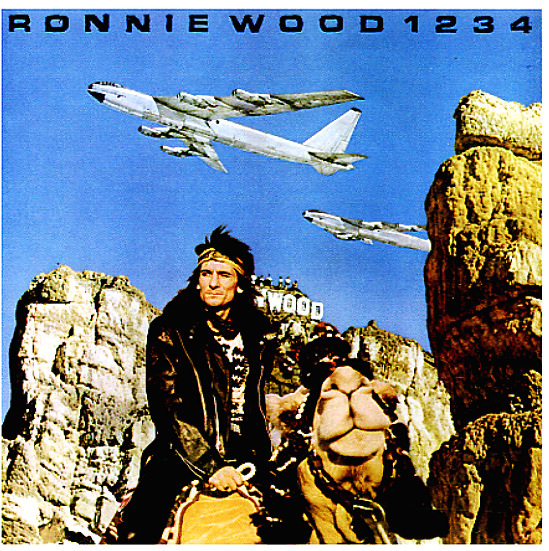
Ronnie Wood, ‘1234’ (1981)
Wood again works with a merry-go-round of musicians, changing the line up with each successive track. Worse, he seems to have released some of them without having, you know, actually finished. The results come off like a demo-dotted anthology-type package of odds and ends, rather than a cohesive look at where Wood was creatively at the dawn of a new decade. Perhaps unsurprisingly, this became the first of two solo albums – along with 2010’s “I Feel Like Playing” that finished at a deflating No. 164 on the chart.
Soul-funk brothers and cream-of-the-crop sessioneers joined Ronnie for “1234”, a real party-hard album enlivened by the Jagger-inspired ‘Redeyes’ and the Womack collaboration ‘Priceless’.
A stint with Bo Diddley resulted in The Gunslingers’ “Live At The Ritz“, packed full of great blues such as ‘Road Runner’, a new take on the Wood/Stewart track ‘Plynth (Water Down The Drain)’ and a breezy attempt at the Stones’ ‘Honky Tonk Women’. But the closer, Bo’s ‘Who Do You Love’, is the charm.
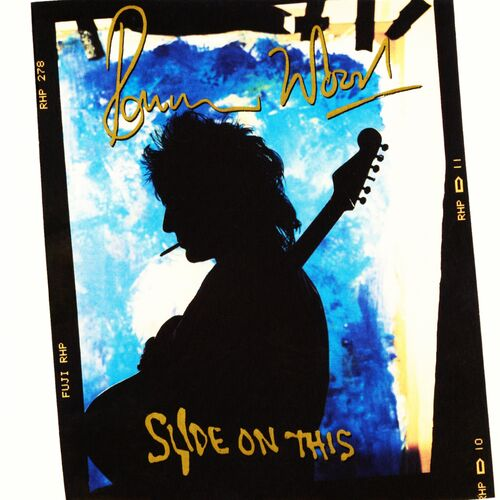
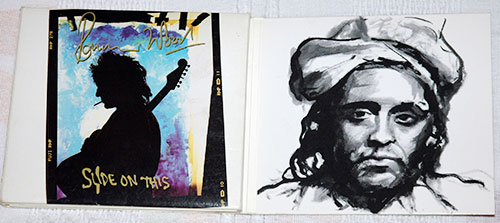
Ronnie Wood, ‘Slide on This’ (1992)
Something is probably amiss when critics talk more about the Wood paintings included in the reissue packaging than about the actual album. It’s understandable, really, considering how Wood seemed to disappear into “Slide on This”, as long time Rolling Stones collaborator Bernard Fowler moved to the fore. He sang, played keyboards and programmed the drums, while also co-writing nine of project’s 13 tracks. A virtual sideman on his own album, Wood closes with a creatively adrift remake of one of his own songs, “Breathe on Me” from Now Look.
“Slide On This” was recorded in Wood’s Irish home, with Bernard Fowler keeping the songs on a Southern soul tip, abetted by Allman Brother Chuck Leavell, neighbour Joe Elliott, from Def Leppard ,and U2’s The Edge. The drummers are Charlie Watts and Simon Kirke, and Michael Kamen provides string arrangements on another high-class outing. Try the version of George Clinton’s 1967 ditty ‘Testify’ which goes back to the Detroit soul days of The Parliaments.
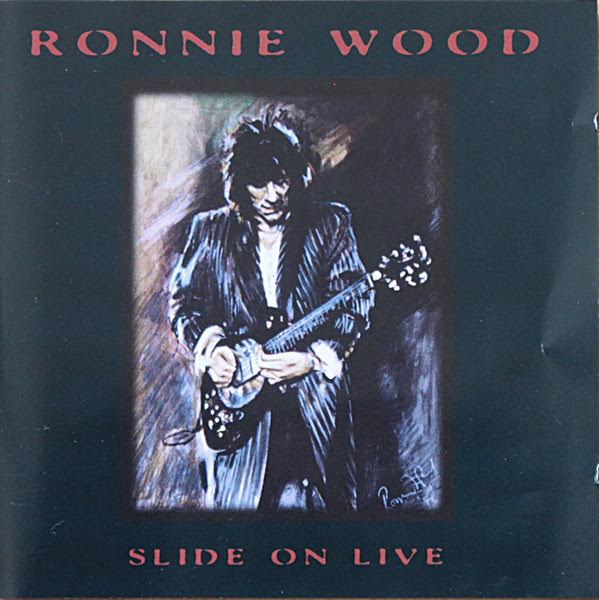
The live companion, “Slide On Live: Plugged In And Standing” (caught in the States and Japan), shows off the Wood ensemble on favourites such as ‘Stay With Me’, ‘Silicone Grown’ and Jagger/Richards/Wood’s ‘Pretty Beat Up’.
Ronnie Wood, – Not For Beginners (2001)
We waited until 2001 for what is probably Ron’s favourite album, “Not For Beginners”. He revisits a track cut by The Birds, ‘Leaving Here’, cheekily jumps to The Byrds’ ‘Rock’n’Roll Star’, enlists Dylan for ‘Interfere’ and ‘King Of Kings’, and makes sense of a cast list numbering Stereophonic frontman Kelly Jones, Elvis Presley’s Scotty Moore and DJ Fontana, as well as his own kids, Jesse and Leah. Definitely one of Woody’s best.
At this point, Ronnie Wood hadn’t made a solo album in nearly a decade. “Not for Beginners” made the case of a much longer wait. There were too few non-instrumental originals, too many outside collaborators and too few songs that rose above the project’s central pub-rock pretensions. Bob Dylan stops by for a croaky, though surprisingly effective, duet, but then so do Wood’s kids.
For a considered overview, the compilation Ronnie Wood Anthology: The Essential Collection criss-crosses his career. It’s a great place to get to know more about someone who’s a lot more complex than you may have ever expected, with visits to The Birds and everything thereafter up to the Stones.
The belated issue of The First Barbarians: Live From Kilburn is taken from a Gaumont State show going back to July 1974, with Ronnie and Keef in their raven-haired pomp bossing a sextet that buzzes and crackles with excitement.
Ronnie Wood, ‘I Feel Like Playing’ (2010)
In 2010 Ronnie released “I Feel Like Playing“, his seventh studio album; naturally, he did the cover art, and it is a great record. It features a string of guests and opens with Ronnie’s song, “Why You Wanna Go And Do A Thing Like That For” which shows his love for Dylan but also his skill as a songwriter. It sounds like a song that must have been recorded by everyone and deserves to be more widely heard: a 21st-century classic.
More like “I Feel Like Playing” … With a Group of Entirely Random Collaborators. Wood tries for the same good-time attitude as his best work, but he keeps stumbling over odd pairings with the likes of Slash, Bob Rock and Flea. It also feels weirdly disconnected from the troubles Wood was having in his private life (poorly received memoir, divorce, domestic incident with new girlfriend, rehab). Even Bobby Womack, returning after their triumphs together on 1975’s “Now Look“, can’t save this one.
Coming up do date we have “I Feel Like Playing“, on which a completely rehabilitated Ronnie mixes old- and new-school characters: Slash, Billy Gibbons, Beach Boy Blondie Chaplin, Darryl Jones, Flea, Jim Keltner, Ivan Neville, and an appearance or from Bobby Womack on four numbers, enjoying a swansong before his death, in 2014. Sure, this is typical all-star jam party fare, but that’s no bad thing. When Ronnie Wood throws a shindig you know you’re in for a real good time. There’s a little bit of everything on order at his buffet – rockers, reggae, blues and boogie.
Essentially a modest man, Wood has collaborated with all the above, as well as sharing the stage with Bowie and Prince. Oh, and don’t forget his laughing-his-head off appearance with Keith when they backed Dylan on ‘Blowin’ In The Wind’ at Live Aid in 1985, introduced by Jack Nicholson. He’s never pretended to reinvent the wheel, but still Ronnie Wood will take you rolling down the road. Enter his caravan of sound delights.
As a member of the Rolling Stones, Wood was inducted into the Rock and Roll Hall of Fame in 1989 and was inducted a second time, as a member of Faces, in 2012. In the Rolling Stones, Wood plays the slide guitar as Taylor and Brian Jones had done before him, and added lap steel and pedal steel guitar to the band. Wood’s guitar interplay with Richards often blurs the boundaries between lead and rhythm roles
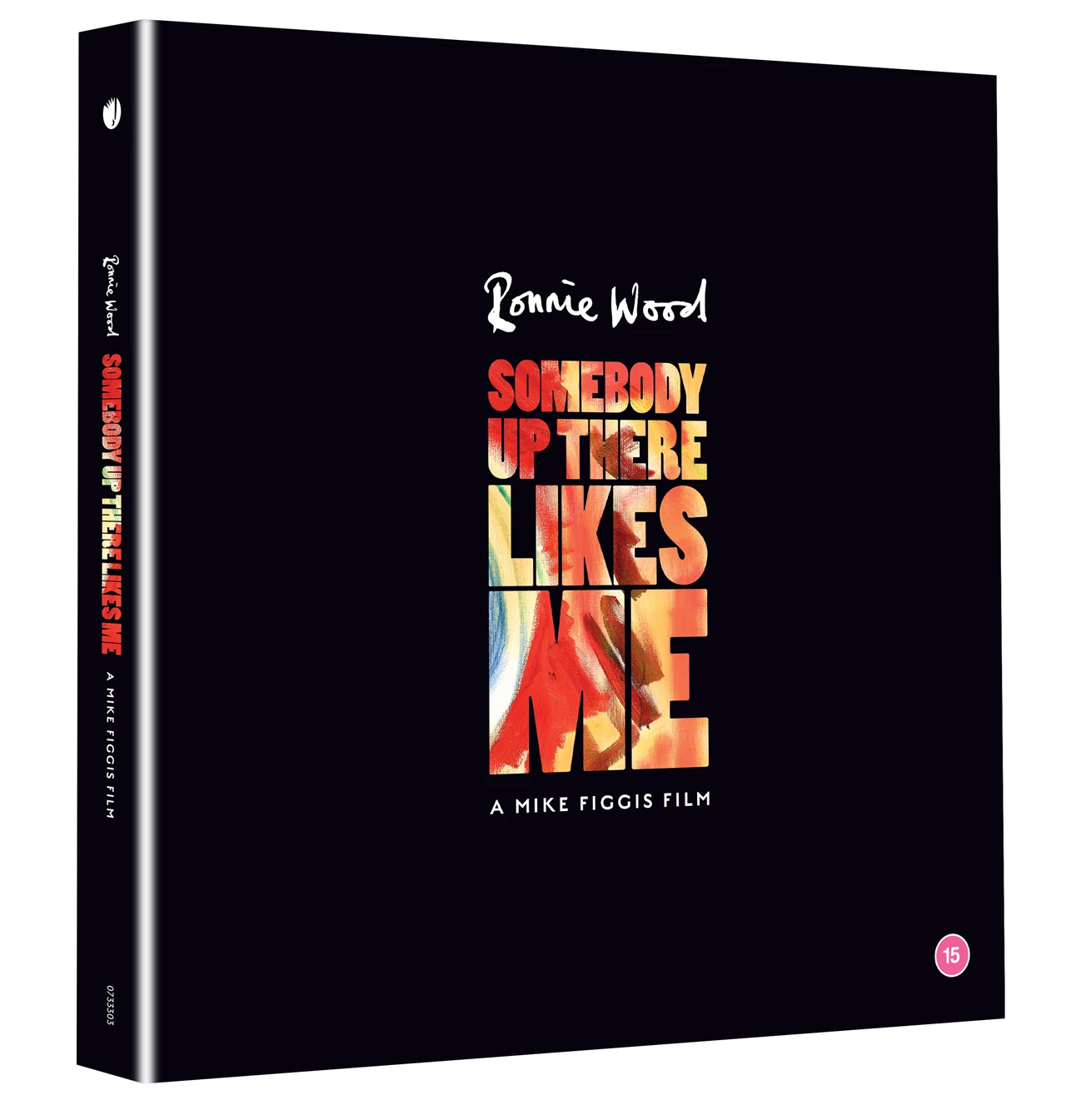
Mike Figgis directs this documentary focusing on the life of Rolling Stones guitarist Ronnie Wood. Featuring archive performance footage and interviews with Wood, his family and bandmates including Mick Jagger, Keith Richards and Rod Stewart, the film traces Wood’s career from buying his first guitar to playing with the Jeff Beck Group, Faces and The Rolling Stones, his struggles with drugs and alcohol, and also his love of painting.
Also check out “Live at the Ritz” with Bo Diddley, “Buried Alive: Live in Maryland” with the New Barbarians, Mad Lad: A Live Tribute to Chuck Berry, Mr. Luck – A Tribute to Jimmy Reed: Live at the Royal Albert Hall
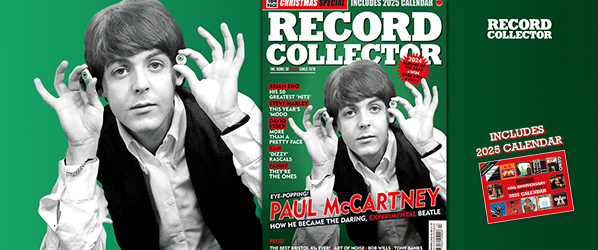
This month, the cover star is Paul McCartney. Looking wacky and fun. Holding a pair of green eyes, removed from their sockets. Photographed some time in the 60s when he was in a band you may have heard of called The Beatles. It captures him in a mischievous mood, even an experimental one, which suits the gist of the article: namely, that Paul was the ‘weird’ Beatle, the playful, adventurous one, the one likeliest to push the envelope and take the Fabs into uncharted musical areas. JR Moores, author of a new book on McCartney’s exploits in the 90s, argues in our cover feature that Paul’s penchant for the outré and ‘strange’ reaches way back to the mid-60s and continues to this day.
Elsewhere, David Essex is grilled by Bob Stanley in the RCInterview hot seat. Ian Shirley names artist-producer-collaborator Brian Eno’s50 ‘Greatest Hits’. We mark the passing of Steve Harley in 2024 with a reminder of his greatness, especially circa Cockney Rebel. Kris Needs speaks to sole survivor Irmin Schmidt about Can’s greatness, especially live. Continuing our ‘city singles’ series, prompted by RC’s 45th anniversary, Jeremy Allen picks 45 of the best 45s made by Bristol bands and singers. Jack Watkins hails Bob Wills the King of Western Swing. Charles Donovan meets 70s rock goddesses, Fanny. And we ask: who’s afraid of The Art Of Noise at 40? Plus, this issue comes with a 2025 calendar, continuing our 45th anniversary by focusing on the 45s of the year, 1980.






:format(jpeg):mode_rgb():quality(90)/discogs-images/R-1125471-1200237226.jpeg.jpg)


 The Fat Angel Sings