

The legendary Robin Trower continues his prolific period with the release of a brand-new studio album, “Come And Find Me”. The record will be released on 25th April via Provogue.
As he reaches his eighth decade, with a lifetime of accolades and a seminal body of music behind him, Robin Trower is still chasing the biggest high he knows. It always starts the same way, with a road-scuffed Fender Stratocaster and a revved-up Marshall amplifier, those skilful fingers exploring the fretboard until a riff sticks and a new song ignites. And from the cultural flashpoint of Sixties London with Procol Harum, through 1974’s stadium-filling “Bridge Of Sighs”, right up to this year’s acclaimed “Come And Find Me”, it’s these addictive moments of creation that have kept the guitarist vital, relevant and contemporary while his peers trade on past glories.
Fiery, thoughtful and fuelled by real human emotion in a time of machine-generated music, “Come And Find Me” is hardly the work of a rock icon resting on his laurels. On the contrary: keenly aware of passing time, Robin Trower has made it his late-period mission to capture as many shards of magic as possible.
The new single ‘A Little Bit Of Freedom’ is out now! It’s the first single from my upcoming album ‘Come & Find Me’ which will be released on April 25th, 2025.
TALKING HEADS – ” More Songs About Buildings and Food ” 3CD+blu-ray edition/ 4LP super deluxe Set
Posted: May 29, 2025 in MUSIC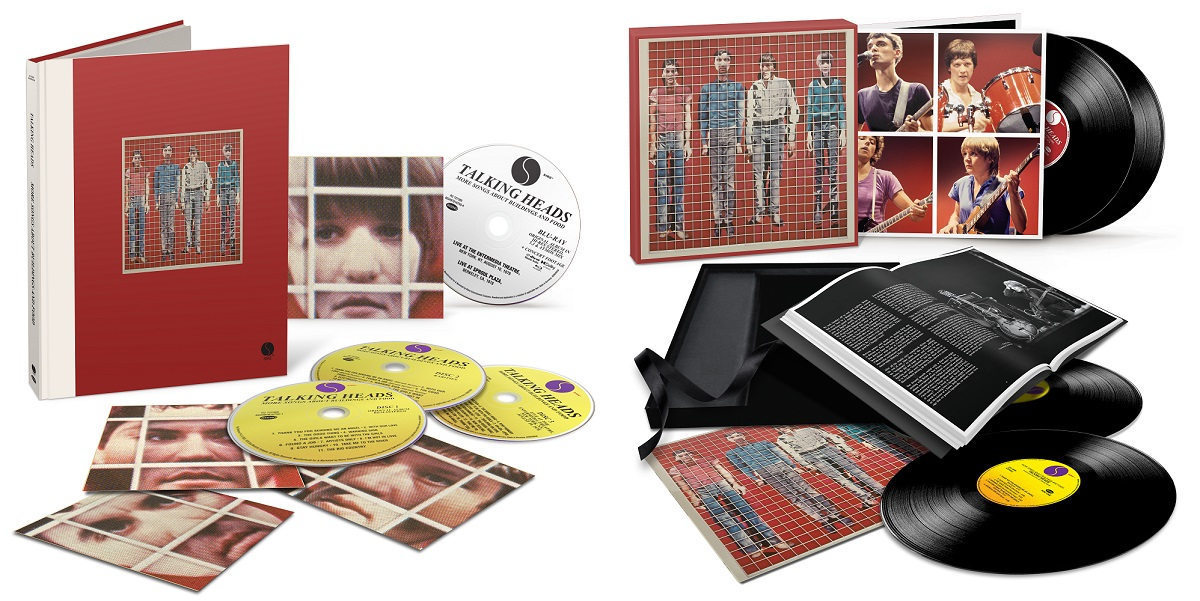
Rhino are too continue their Talking Heads reissue campaign with special super deluxe reissues of the band’s 1978 album “More Songs About Buildings and Food”. An expanded, Super Deluxe Edition of Talking Head’s second album, including discs of studio outtakes & live recordings from the period. The 3-CD & one-Blu-ray set will be available on July 25th & marks the band’s first collaboration with producer Brian Eno, who’d go on to work with the group on their two follow-up LPs, including the pivotal ‘Remain in Light’.
The 1978 album also includes Talking Heads’ first Top 40 single, a cover of Al Green’s “Take Me to the River” that reached #26. The upcoming reissue features a disc of rarities, most of them previously unreleased, including alternative versions of the album’s 11 songs. You can hear “Found a Job” from the new set below.
This set features the remastered album alongside a disc of rarities, including four previously unreleased alternate versions of album tracks. The set also includes a live recording of the band’s August 1978 show at New York’s Entermedia Theatre. Footage from that show and another at Sproul Plaza at the University of California, Berkeley, both appear on the Blu-ray set.
Additionally, there are Dolby Atmos and 5.1 surround sound mixes by E.T. Thorngren (R.I.P.) and Jerry Harrison, plus a high-resolution stereo version of the album. This comes packaged in a large format 60-page hardcover book with previously unseen photos and new liner notes with recollections from Tina Weymouth, David Byrne, Chris Frantz, and Harrison.
In addition to the 3CD+blu-ray edition there will be a 4LP super deluxe which has the remastered album, the rarities and the live show. A 2LP vinyl edition is also available.
This reissue of “More Songs About Buildings and Food” is released on 25th July 2025 via Rhino.
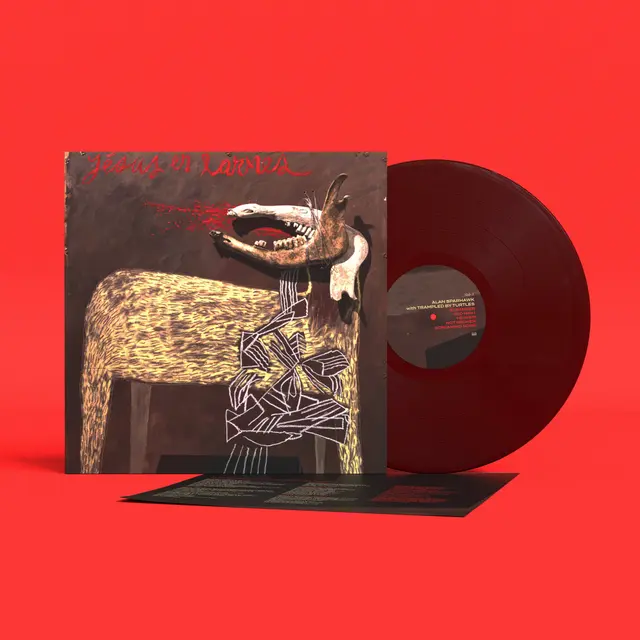
Alan Sparhawk of Low shares the official video for “Get Still”. With Trampled By Turtles is out this Friday!
Originally appearing in alternate form on Sparhawk’s 2024 release, “White Roses, My God”, this once abstract lyrical improvisation is now rendered clear as day, with lush acoustic instrumentation by fellow Duluth musical travellers Trampled by Turtles. For Sparhawk, revisiting the track meant understanding where it came from emotionally: “You want to be true to what you’re singing.”
No one can help you build something beautiful quite like those who know you best. Alan Sparhawk knows this well. In his years in Low, he built decades of stirring music with his wife and lifelong creative partner Mimi Parker. In recent years, he has performed around Minnesota with his son Cyrus in Dercho Rhythm Section, a funk band that also frequently features his daughter Hollis on vocals. There’s an irreplaceable naturalism that comes with this kind of dynamic. Those who know you understand you. They love you. They want to help you bring your greatest passions to fruition. So it made sense that Sparhawk would turn to fellow Duluth musicians Trampled By Turtles to realize his latest record. As friends and mentees of Low’s, taken under Sparhawk and Parker’s wing from their earliest days as a bar band, Trampled By Turtles have performed with Sparhawk countless times over the years. The Duluth ties run deep: “There’s a certain vibe that has to do with underdog syndrome, coming from a small town,” Sparhawk muses. “Some of it is the weird grind and slackness that being at the mercy of Mother Nature puts in you. It humbles you.” The two artists hold the kind of ironclad bond.
Following Parker’s passing in 2022, Trampled by Turtles invited Sparhawk to join them on tour to give him a space to be surrounded by friends. Occasionally, he would join them onstage. The outpouring of love was palpable every time they played together, a surge of warmth. When playing together is that powerful, why stop there? In winter, 2024, Sparhawk and Trampled by Turtles created “With Trampled by Turtles“, a record exactly as its name implies: Collective. Communal. Fraternal. Empathetic. A vessel for comfort, a reminder of the harmony that can exist when surrounded by those closest to you. Where “White Roses, My God”, Sparhawk’s last album, plunged headfirst into electronica and radical vocal modulation, “With Trampled by Turtles” leans into the folk and bluegrass stylings of its backing band, Sparhawk’s voice now completely unvarnished. “With Trampled by Turtles” is far more than just Alan Sparhawk and Trampled by Turtles.
It’s an affirmation of all the people who have been vital in Sparhawk’s life and music, and an opportunity to hold each of their gifts into the light. It’s producer Nat Harvie, who has been collaborating and performing with him for years. It’s Sparhawk’s daughter Hollis, who duets with her father on “Not Broken.” And it’s Mimi Parker, too: “Too High,” “Princess Road Surgery,” and “Not Broken” were all tracks she and Sparhawk had been working on in the last few years.
These songs finally found a setting that stirringly commemorates them, bolstered by a full ensemble to make every note sing. Their presence is a kind of eternal connection to Parker, a way her musical grace will keep flourishing.
the album ‘With Trampled by Turtles,’ out on Sub Pop Records on May 30th, 2025



As the end of the first quarter of the 21st century inches ever closer, our planet precariously teeters from one crisis to the next. Rather than passively sit back and watch, the high-energy Irish guitar quintet Gurriers are firing on all cylinders and confronting the ills of the modern world on their debut album, “Come and See”, a truly thrilling collection of razor-sharp progressive punk songs.
Recorded in Leeds at the Nave with Alex Greaves, “Come and See” blasts off to an explosive start with “Nausea”, giving the concept of Jean Paul Sartre’s classic novel of the same name a furious sonic makeover. Guitars screech like sirens, creating a curiously catchy clarion call for an album of raucous reflection.
“Come and See” explores many themes, be they the end of the world, the disenfranchised youth of Dublin, emigrant friends, the rise of the far right, desensitisation to violence, a pope struggling with belief and love amongst other things. “Nausea” examine how existential mundanity in the 21st century is now essentially lived in the digital realm, and society has blindly sleepwalked into this actuality without realising the full extent of its corrosive damage. Underpaid and overworked content moderators are forced to watch unspeakable horrors, as social media platforms drip feed its users dopamine, further distracting an already overstimulated and distorted cartoonish world from the harsh glare of too much reality.
“Des Goblin” channels the hypnotic energy of dance music and notes how modern narcissism is fuelled by an addiction to online personas. “Close Call” turns up the ferocious guitar intensity to eleven, a fierce hybrid of guitar pop with industrial techno sensibilities. “Dipping Out” is like a post-post-punk version of an Adam Curtis documentary, as the band cite his classic HyperNormalisation as a major source of inspiration. One line perfectly nails the disillusionment of contemporary youth, “Failed by a system that never really lets you exist.” Indeed, if Gurriers weren’t in a band they’d probably be part of a generation leaving Ireland in their droves, driven out by the soaring cost of living and the unattainability of home ownership, left to “live in debt and die in freedom”.
“No More Photos” opens with the memorable line, “Gentlemen, no fighting in the bathroom please. You’ve been caught doing too many Es” and proceeds to reference Caravaggio. Following a brief instrumental respite, simply titled “Interlude”, the album closes with a breathtaking final flourish of songs and a soaring title track, which tantalisingly hints towards an even more expansive, wide-screen sound for a future chapter. “Approachable” is a tongue-in-cheek anthem mourning the rise of the far right (“Damn, I was born in the wrong era”) that kicks off with a monstrous killer riff. “Top Of The Bill” combines an intricate guitar melody with blasts of noise and a knockout chorus, a live favourite and perfect example of how well Gurriers craft inimitable and intense pop music.
Taking their name from an antiquated and somewhat charming Irish term for lout, ruffian, or street urchin, Gurriers formed in January 2020, initially comprising Dan Hoff on lead vocals, Ben O’Neill on guitar and backing vocals, Mark MacCormack on guitar, Pierce O’Callaghan on drums and Emmet White on bass, who has since amicably left the band and been replaced by Charlie McCarthy.
Hailing from various parts of Ireland, Gurriers met in Dublin. They believed they were destined to connect creatively in a meaningful way, so they formed a band. We don’t need to dwell too much on how events in early 2020 temporarily stalled their progress. “All we wanted to do was be back in a room together and practice,” Dan Hoff recalls. “I remember one stage screaming into my pillow because of the extended lockdowns.”
Instead of doom scrolling on their phones, baking banana bread, or bingeing on box sets, Gurriers seized an opportunity to hone their vision and advance their ambition. Over numerous Zoom calls, they meticulously discussed every single aspect of the band, plotting strategies at a time when venues, studios, and rehearsal rooms were shuttered shut. The silence spurned the fledgling group on to make a bigger, more beautifully abrasive noise.
Thanks to a productive pandemic, when Gurriers played their first gig on Halloween 2021 at Dublin’s Workman’s Club, they’d evolved remarkably as a band. On the back of earlier singles including “Sign of The Times” and “Nausea”, they have received the seal of approval from The Needle Drop’s legendary Anthony Fantano and prestigious support from Steve Lamacq and Huw Stephens of BBC Radio 6 Music culminating in their most recent single “Des Goblin” making it up to BBC Radio 6 Music’s A-List at 6, not bad for an unsigned band self-releasing their own music.
Gurriers played festivals throughout Europe and beyond, including SWN, Mad Cool, Reeperbahn, Left of the Dial, London Calling, Latitude, Haldern Pop, Off, The Great Escape, Pukkelpop, Pitchfork Music Festival London, Electric Picnic and All Together Now. Scheduled to play South by Southwest in Austin, Texas last March, Gurriers pulled out alongside virtually all other Irish participants, boycotting the event due to its sponsorship by the US Army. This October, Gurriers will embark on their biggest tour to date in support of their blistering debut.
Inspired by timeless first records by The Strokes, Arctic Monkeys, The Chemical Brothers, and Black Midi, Gurriers’ first album is no ordinary debut, but an exhilarating statement of intent by five people fed up with tiptoeing politely around the chaos.
GENESIS – ” The Rainbow Theatre Finsbury Park, London ” 20th October 1973,
Posted: May 26, 2025 in MUSIC
Genesis’ stunning concert at the Rainbow Theatre, in Finsbury Park, London, on 20th October 1973,
From the “Selling England By The Pound” Tour this is an epic song performed on stage by Peter Gabriel, Tony Banks, Phil Collins, Steve Hackett and Mike Rutherford. This double album showcases Genesis’ stunning concert. Genesis released their fifth studio album, “Selling England by the Pound“, on 28th September 1973. The album was supported with concert tour of Europe and North America from September 1973 to May 1974.
The prog rock giants Genesis caught in live action in London in late 1973, a mere month after the release of their “Selling England By The Pound” album. This is what many claim to be the band at the height of their powers, with their highly celebrated “Foxtrot” album not long behind them, hitting their experimental, quirky time signature peak and with Peter Gabriel still commanding the microphone. Opening with the thrusting ‘Watcher of the Skies’, Tony Banks’ keyboard stabs almost rave-like in their stabbing power, they hurtle through tracks from the latest offering ‘The Cinema Show’, ‘Battle of Epping Forest’ and the anthemic ‘I Know What I Like’ alongside “Nursey Cryme” album fan favourite ‘The Musical Box’ and a version of the epic ‘Supper’s Ready’ that stretches to nearly 24 minutes here. ‘More Fool Me’, meanwhile, which sees drummer Phil Collins step forward to sing its folksy, almost Bee Gees-like pop strains, points to where the band would be in a handful of years’ time.
Featured here, are a number of cuts from that landmark album, including fan favourites such as “Firth of Fifth”, “Dancing with the Moonlight Knight”, “The Cinema Show” and “I Know What I Like (In Your Wardrobe)”, alongside prog classics such as “The Musical Box” and “Supper’s Ready“, that stretches out over Side Four.
Richard Manuel: His Life And Music, From The Hawks And Bob Dylan To The Band By Stephen T. Lewis
Posted: May 25, 2025 in MUSIC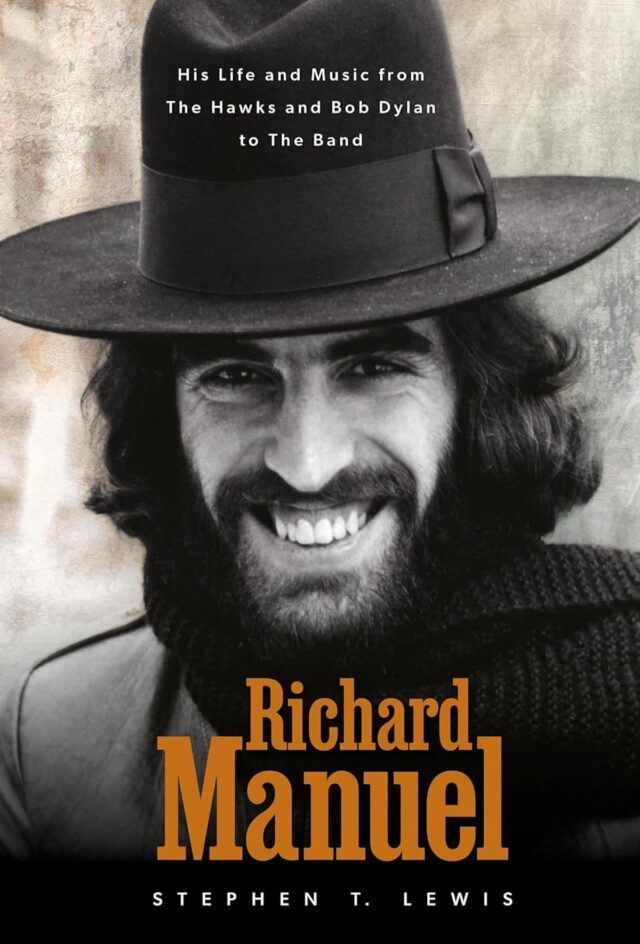
“Richard Manuel was a fearless original. Sweetly soulful as a vocalist and endearingly creative as a songwriter and multi-instrumentalist, he was a vital part of some of rock ’n’ roll’s pivotal moments, including Bob Dylan’s controversial move to electric music, the original Woodstock festival, and the legendary Last Waltz. Through thoughtful research and analysis, this book places Manuel’s troubled yet inspired spirit within a musical and historical context. For the first time, Manuel’s compositions and performances are critiqued with expert commentary — alongside new interviews with family, friends, and fellow musicians, including Eric Clapton and Van Morrison. The story traces Manuel’s journey from Stratford, Ont., to Woodstock, N.Y., and beyond, beginning with his first band, The Revols, then singing the blues with Robbie Robertson, Levon Helm, Rick Danko and Garth Hudson in The Hawks, the group that would later become The Band. Manuel’s influence was profound, his distinctive vocals infusing songs with emotion and depth. His song writing flourished in classics like “Tears of Rage”, cowritten with Dylan, and “We Can Talk”. His keyboard work added a lovable funkiness to the Band’s sound, blending elements of rock, folk, country, and blues into what would become the genesis of Americana. Despite The Band’s successes, Manuel struggled with personal demons, battling addiction and inner turmoil. Looking beyond his human frailty, this book celebrates Manuel’s immeasurable contributions to music, ensuring that memories of his voice and artistry endure.”

