Allegra Krieger has been busy; her fifth album, “Art of the Unseen Infinity Machine” arrived just over a year after last year’s great “I Keep My Feet On The Fragile Plane”, and less than a year after its collection of b-sides. It’s also a clear step forward from “Fragile Plane“, incorporating a wider range of sounds and collaborators into her sombre, ’70s-folk-inspired sound, from the fully fleshed out indie rock of “Never Arriving” to “How Do You Sleep”, which is scorched with noisy guitar. Krieger’s juxtapositions of NYC as a place where beauty and tragedy live side by side are sharp as ever — she calls the city “my favourite place in the whole wide world” on “Into Eternity,” but it’s also where she escaped a fire in her Chinatown apartment building that killed four of her neighbours last summer, inspiring “One or the Other.” Her incisive observations have the same quiet staying power of her melodies, and both stick around long after you’ve first heard them.
Allegra Krieger (vox, guitar, piano) Kevin Copeland (bass), Jacob Matheus (guitar), Will Alexander (drums)
released September 13th, 2024
All songs written by Allegra Krieger and recorded at Figure 8 Recording in Brooklyn, New York. November 2023
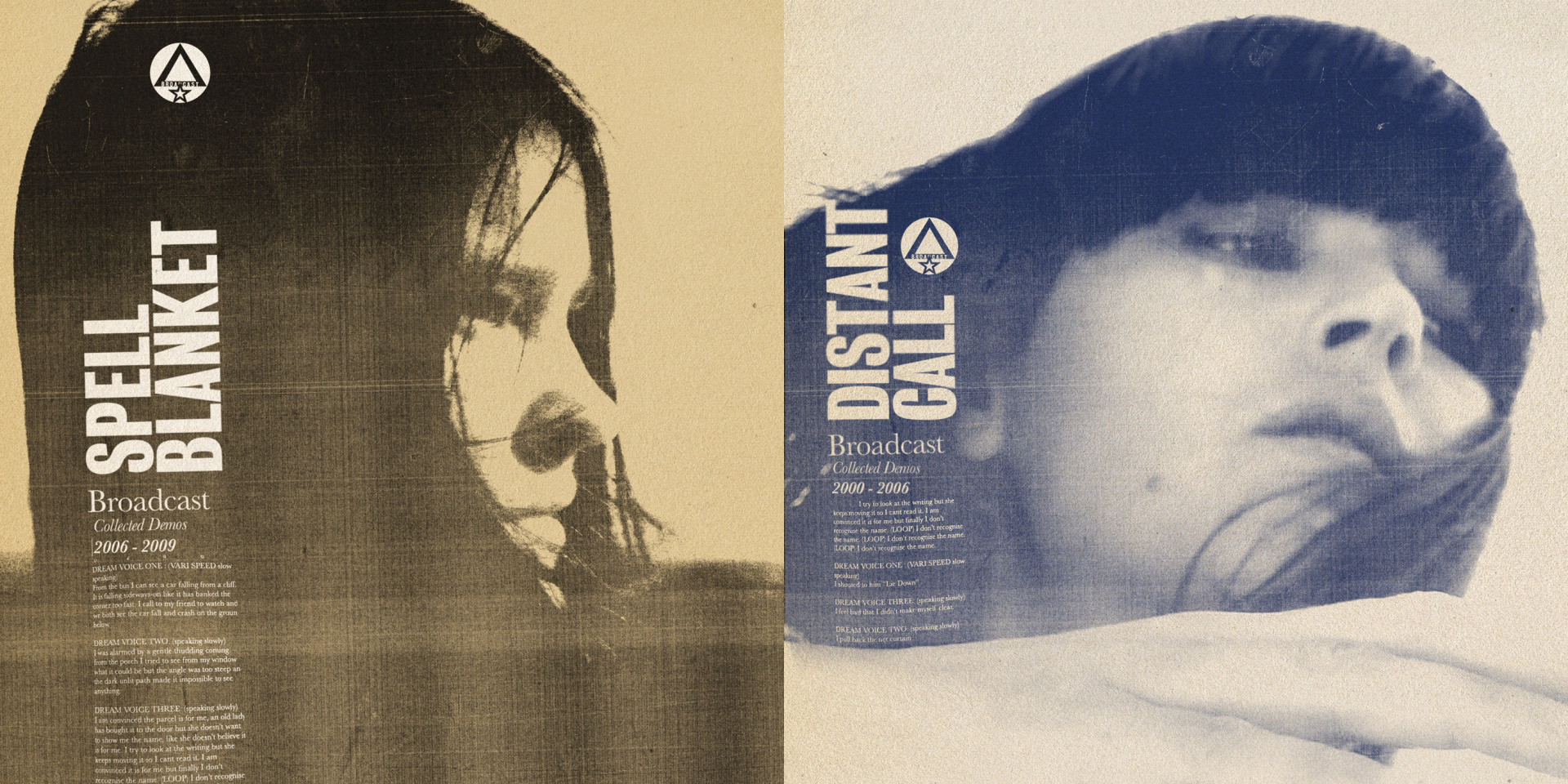
Broadcast’s last release, “Distant Call” opens with appropriate poignancy, with a demo version of ‘Tears In The Typing Pool’ from “Tender Buttons“, the band’s third album. Coloured by dreamy melancholy, the song centres on the idea of letting go – the key theme to its parent album, which was released shortly after the death of singer Trish Keenan’s father.
Delivered through the pink noise of four-track tape, the lulling ballad takes one to a fluid temporal realm where serotinal 60s baroque pop fragility merges with the urban balladry of Elliott Smith. The undulating pace, punctuated by soft downstrokes on acoustic guitar, is steady, just like the ticking clock or the passing time.
Broadcast ceased to be in 2011 when Trish Keenan died from the H1N1 flu. We’ll never truly know what might’ve been, but “Spell Blanket” collects demos she and bandmate James Cargill had made from 2006 – 2009 following their final studio album, 2005’s “Tender Buttons”. Most of these 26 songs fall firmly into “song sketch” territory, not more than Trish and a guitar or keyboard, and sometimes it’s just her singing into a tape recorder (or answering machine) but her voice and melodies still have the power to bewitch even without Broadcast’s full sound lab at full power. “Distant Call“, meanwhile, offers up demos from 2000 – 2006, with skeletal versions of songs fans would come to know and love. Any chance to hear more from Keenan is welcome and worthy of cherishing.
“Distant Call” follows May’s “Spell Blanket – Collected Demos 2006-2009“, which looked into what would be the collective’s fifth album, built out of the demos that Keenan left after her tragic passing in 2011 at the age of 42. The singer had contracted pneumonia during the band’s tour in Australia. Though the band understandably ceased to be, Broadcast co-founder James Cargill announced that the demos left by Trish would form a new album. The resulting record was built of sonic ephemera from seance-like recitations and sketches, featuring everything from cut-up lyrics to more developed compositions that showed a quirky psych and freak-folk flavour. “Distant Call“, however, reflects on previously released tracks as relics from an unreachable and, indeed, distant past. The ghostly sound of demo recordings emphasises the record as a farewell to the band and a memorial to Keenan. Notably, “Distant Call” is released on the singer’s birthday, 28th September.
TrishKeenan’s softly intoning vocals were the defining stylistic element of Broadcast’s sound, where pagan folk sensibility meets quirky psychedelia. Originally from The Future Crayon, ‘Still Feels Like Tears’ is more instant, channelling the vulnerability and tenderness of Vashti Bunyan’s Just Another Diamond Day and nursery rhymes. The combination of psych and folk is best captured on beguiling ‘Come Back To Me’, a hypnotic arpeggio-led chant of a song, bringing to mind The Mock Turtles’ cover of ‘The Willow Song’ from The Wicker Man. This is one of the two previously unheard tracks. The second is ‘Please Call To Book’, recorded by Keenan in the wake of the Let’s Write A Song project where Broadcast fans were encouraged to send lyrics on a postcard.
Whilst it is somewhat overused in the contemporary culture framework, the term hauntology inevitably comes to mind for those entering the realm of Broadcast. Having initially emerged as a vehicle for their appreciation for the futuristic music of the 1960s, Broadcast boldly traversed temporal dimensions. Both Cargill and Keenan had attended a psychedelic revival night at Birmingham’s Sensateria Club where the two heard the first and only album by The United States and America, originally released in 1968 and later described by Keenan as a “bible”.
The core of “Distant Call”, however,is the material from the band’s most mature albums “Haha Sound” and “Tender Buttons”. Both were more experimental and less retro-oriented than their debut Noise Made By People, making references from John Barry to the Doctor Who soundtrack. Talking to Stool Pigeon, Keenan said that unlike the first album “Ha Ha Sound” was like a jewellery box, full of sparkling things”. It is therefore remarkable to hear charmingly plain versions of initially lush sounding ‘O How I Miss You’ and the dizzyingly ecstatic waltz of ‘Ominous Cloud’.
Still, the minimalist folky sound recalls another earlier project of Trish Keenan – her duo Hayward Winters also featuring Birmingham musician Jude Owens. Given that the narrative of folk music disobeys the concept of time, this too is intrinsically ghostly. The haunting nature of these stripped-down demo versions is reinforced by the spectral presence of the singer, whose persona has inevitably undergone mythologisation akin to other prematurely deceased artists. Keenan’s interest in the occult, her unusual childhood (in an interview with Ben Cardew of Stool Pigeonthe artist said that she had been brought up by a sex worker) and her retromaniac stance come to the fore. It’s interesting to see how the media’s image of Broadcast transformed after Keenan’s passing – changing from cult band to something “quietly beguilingly influential,” as The Guardian’s obituary of Keenan put it, citing tributes from Graham Coxon and The Decemberists’ frontman Colin Meloy.
Nevertheless, in juxtaposition with the complexity of Broadcast’s studio albums, “Distant Call” is a reminder of how different the image an artist offers through their music can be from their personality. “Keenan would send her friends CDs of music she’d discovered or TV shows she had enjoyed”, wrote Stephen Worthy in The Guardian a few days after the singer’s death. “Life was an exercise in discovery, and she wanted to share it with everyone”. After her passing, a link to a freshly-made compilation of psych and world music was posted to the public on Twitter. Keenan had made it for a friend who received it before the band went to Australia. The existence of these demos suggests that she treated her audience, too, as friends with whom she was eager to share, whether via songs, memories or her physical presence.
This Jingle-janglin gypsy tornado of sound hailing from Charleston, West Virginia.
No Depression says, “No one, and I mean no one, is doing what Sierra Ferrell is doing, be it in her songwriting, arrangements, or delivery,” with her spellbinding voice and time-bending sensibilities, Ferrell makes music that’s as fantastically vagabond as the artist herself. On “Trail Of Flowers”, her highly-anticipated follow up to, “Long Time Coming“, Ferrell shares a dozen songs beautifully unbound by genre or era, instantly transporting her audience to an infinitely more enchanted world.
The decade-long surge of non-mainstream country artists has been decidedly dude-heavy—it’s Zachs and Jasons and Tylers just about all the way down. How refreshing, then, to experience the steady rise of Sierra Ferrell, a distinctive singer, skilled songwriter, and downright ancient soul originally from West Virginia. For years, she has made music that sounds like it should be crackling out of an antique radio: vintage jazz and ragtime, old-time fiddle tunes, rockabilly, blues, murder ballads, the occasional yodel, and so on. “Trail Of Flowers” offers more of the same, but the song=craft is sharper, the arrangements fuller and the production crisp and crystal clear. It’s a record that just sounds incredible, which only brings out all the colourful charms of Ferrell’s tunes—like precious family heirlooms polished up and properly displayed for all to see.
Produced by Gary Paczosa (Alison Krauss, Dwight Yoakam, Gillian Welch) and Eddie Spear (Zach Bryan, Brandi Carlile, Chris Stapleton) Other musicians featured on the album include Aksel Coe, Geoff Saunders, Billy Contreras, Joshua Rilko, Oliver Craven, and Mike Rojas, plus Nikki Lane and Lucas Nelson on background vocals for two tracks.
Now more than ever, we need love. That’s more or less the message behind the music of Willi Carlisle, a folk singer and songwriter originally from the American Midwest, though he sounds like he’s from another time entirely. On his stunning third album “Critterland”, Carlisle empties his distinctive artistic arsenal—banjo, squeezebox, encyclopedic knowledge of old-time musical styles, even seven minutes of spoken word—and spins deeply moving tales of anguished hearts, broken families, discarded dreams, and, importantly, the beauty and deliverance of a life lived in the presence of love.
Now more than ever, we need each other. Now more than ever, we need Willi Carlisle.
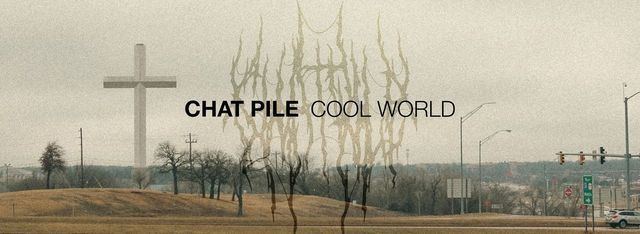
For their second album, Chat Pile have zoomed out. Their 2022 debut LP “God’s Country” saw them taking a look at the dark underbelly of American society, and “Cool World” goes global by looking at disasters all around the world and how they affect each other and, ultimately, us. It’s a theme that hit especially hard this year, and Chat Pile match their global dread with a backdrop that’s even bigger, heavier, and harder to pigeonhole than their beloved debut. It ranges from somber, gothy moments to sludgy noise rock to straight-up extreme metal, with lots of other ground covered in between. In a time where it feels like things just keep getting worse, this album makes for a perfectly bleak soundtrack.
Cool World had its work cut out, following in the footsteps of “God’s Country“, one of the most lauded noise-rock records in recent memory. With its thundering mix of sludge, metal and post-punk – centred around eerie, dissonant riffs and the guttural, anguished vocals of Raygun Busch – the album channels emotion in a more widescreen format than its predecessor. Songs like “Masc” are haunting and cathartic, blending a deepening exploration of surreal lyricism with raw, unfiltered energy.
The production is deliberately claustrophobic, intensifying the sense of unease while offering only fleeting moments of relief.“Cool World” is an unsettling, thought-provoking trip that continues Chat Pile’s exploration of existential dread, delivering a sonic experience that is as challenging as it is compelling.
Like the towering mounds of toxic waste from which it gets its namesake, the music of Oklahoma City noise rock quartet Chat Pile is a suffocating, grotesque embodiment of the existential anguish that has defined the 21st Century. It figures that a band with this abrasive, unrelenting, and outlandish of a sound has struck as strong of a chord as it has. Dread has replaced the American dream, and Chat Pile’s music is a poignant reminder of that shift – a portrait of an American rock band moulded by a society defined by its cold and cruel power systems.
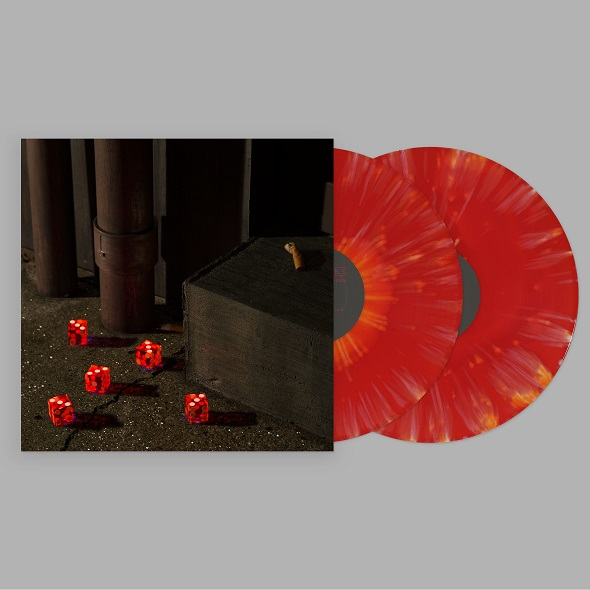
The indie-folk-er is back with a rollicking roll of the dice – this picks right up from where ‘Down In The Weeds’ left off and slots right in amongst classics such as ‘Lifted’ and ‘Fevers & Mirrors’.’Five Dice, All Threes’ is a record of uncommon intensity and tenderness, communal exorcism and personal excavation. On the self-produced album, Bright Eyes embrace the elusive quality that has made them so enduring and influential across generations and genres, bringing their homespun sound from an Omaha bedroom to devoted audiences around the world. In Conor Oberst’s songwriting lies a promise that our loneliest thoughts and feelings can take on grander shapes when passed between friends, blasted through speakers, or shouted among crowds.
This time around, the band invites such like-minded voices onto the record with them, with notable guest appearances from Cat Power (“All Threes”), The National’s Matt Berninger (“The Time I Have Left”), and Alex Orange Drink, the frontman of the New York punk band, The So So Glos, who co-wrote several songs and shares a climactic verse in the surging “Rainbow Overpass.”
When they hit the studio with Oberst’s longtime bandmates — the multi-instrumentalist and producer, Mike Mogis, the keyboardist and arranger, Nate Walcott — they opted for a fast-paced approach that drew inspiration from formative influences like The Replacements and Frank Black. They sought textures that burst from the mix like gnarly splashes of paint on a blank canvas; they opted for first takes and spontaneous decisions. ‘Five Dice, All Threes’ thrashes and squirms and resists classification. In the brilliant expanse of “El Capitan,” they blend a galloping rhythm you might find in a Johnny Cash standard with a swell of funereal horns, shouted vocals, and lyrics that read like a sobering farewell between twin souls. “So they’re burning you an effigy,” Oberst sings. “Well, that happens to me all the time!” For every striking turn in his lyrics, the band knows just how to complement him.
On one level, ‘Five Dice, All Threes’ may be the most fun album in the Bright Eyes catalogue, filled with singalong hooks and buzzing performances. And yet, sitting alongside these adrenalized rockers that sound beamed in directly from the garage, you will find contemplative, psychedelic material like the heartbreaking “Tiny Suicides” and “All Threes,” a song whose jazzy piano solo and free-associative lyrics feel totally unprecedented in the Bright Eyes catalog. As per usual, the music comes loaded with subtext that invites deep listening—the signature touch of a band who has always honored the album as its own exalted work of art. In the game of threes, the titular move would indicate a perfect roll. Perfection, however, means something different in the world of Bright Eyes, where our flaws are what grants us authority and finding meaning is only possible if we bear witness to the dark, winding journey to get there.
On ‘Five Dice, All Threes’, Bright Eyes embrace these beliefs with music that feels thrillingly alive, as if we were all in the room with them, shouting along and gaining the strength to move forward together. It doesn’t just sound like classic Bright Eyes. It sounds like their future, too.
released September 20th, 2024
Bright Eyes is: Conor Oberst (vocal, acoustic and electric guitars, baritone acoustic guitar) Mike Mogis (pedal steel, electric guitar, manjo, dobro, mandolin, banjo) Nathaniel Walcott (piano, trumpet, synthesizers, organs, mellotron, electric piano, celeste, glockenspiel, string and horn arrangements)
Nilüfer Yanya formally announced her new album “My Method Actor”, released September 13th on Ninja Tune. The news arrived alongside the release of her new single, the near-title track “Method Actor,” and follows her recent single “Like I Say (I runaway),” which the New York Times described as, “reveling in contrasting textures” and The FADER called, “a jolting return.” Putting herself in an unnamed character’s shoes, “Method Actor” portrays a mini-life story in under four minutes. The accompanying visualiser was shot in an old hotel in Benidorm, Spain and is a one take video capturing Nilüfer sitting down to share the song’s story.
Speaking about “Method Actor” Nilüfer describes how the concept for the song came together, “I was researching method acting – and from what I read, it’s based on finding this one memory in your life, a life-altering, life-changing memory. The reason why some people find method acting traumatic and maybe not safe mentally, is because you’re always going back to that moment. It can be good or bad but you’re always feeding off the energy, something that’s defined you – and that’s what helps you become the character. It’s a bit like being a musician. When you’re performing, you’re still trying to invoke the energy and emotion of when you first wrote it,
The softer sound of Nilüfer Yanya’s third album, “My Method Actor“, belies a crop of new anxieties for the effortlessly innovative British singer and guitarist. She wrestles with the strangeness of growing older without ticking off the boxes that define how a person should be as they approach 30—married, entertaining motherhood, and otherwise settling down. “Shut up and raise a glass if you’re not sure!” she exclaims on “Keep on Dancing,” before launching into “Like I Say (I Runaway),” whose music video features Yanya literally absconding from the wedding altar at the very last second.
But these worries go down easy, set to finger-picked acoustic guitar that melts into the reliable snap of a drum machine. She might “feel shame the modern way” on “Faith’s Late” or find herself “dreaming of the end” on “Made Out of Memory” but on “My Method Actor”, Yanya wraps her vocals in layers of gossamer guitar, sounding fully in command even as she mines the depths of her own neuroses.
“I’m too much,” Bill Ryder-Jones admits on “I Know That It’s Like This (Baby)” before adding, “but I’ll never be enough for you I know,” all while still finding the beauty in a doomed relationship. That’s “IechydDa”, the former Coral member’s first solo album in five years, in a nutshell, where joy and deep sadness are processed as one emotion. Ryder-Jones has the kind of gentle, warmly melancholic voice that is perfect for material and melodies like these—some of his best-ever songs—and it’s all made more vibrant via orchestral arrangements and even a children’s choir. In less talented hands, this could all be too much, but “Iechyd Da” is just enough.
Beautifully produced and rich in scope – “Iechyd Da” is Bill Ryder-Jones’ most ambitious record to date. At times joyous and grand, at others intimate and heartbreaking, the past few years spent producing other artists have provided that gentle nudge to expand into new territory, from kids choirs and tender strings to dramatically re-contextualised disco samples.
“It’s been incredible making this,” he says. “Despite all the life stuff that’s happened, it has brought me immense happiness. I’ve always railed against it when people ask if making a record is cathartic but I’d have to admit that this one really was.”
released January 12th, 2024 Domino Recording Co Ltd
Growing Stone is songwriter Skylar Sarkis from Rochester, NY, It’s not every day you hear someone who’s mastered the quiet and the loud the way Skylar Sarkis has. When he’s not busting eardrums with his punk band Taking Meds, he’s embracing sad, sombre singer/songwriters like Arab Strap, Smog, Sun Kil Moon, Sparklehorse, Mount Eerie, and Leonard Cohen with his solo project Growing Stone.
“Death of a Momma’s Boy” is his second album under the name Growing Stone album and best yet, with gentle acoustic guitars, gorgeous string and horn arrangements, some light drumming, and deeply pained, personal singing and song writing from Skylar. It’s an album he wrote entirely sober, and says it’s “about feeling the actual pain, not feeling the consequences of avoiding it.”
Musicians: Skylar Sarkis: vocals, bass, guitar, harmonica, percussion, piano, drum programming Jimmy Montague: drums, keys, cello, viola, violin, lap steel, percussion Matt Battle: drums on track 6 Jacob McCabe: trumpet on tracks 2 and 5
All songs written by Skylar Sarkis except track 8 which was written by Warren Zevon
Martha Skye Murphy is both a rookie and a veteran, as “Um” is her first proper album but far from her introduction to making music. She has EPs, singles, collaborations, and an electronic opera (Postcards Home) dating back to 2016, and her impressive résumé goes back even further than that; she sang on a Nick Cave song that sound-tracked the opening credits of John Hillcoat’s The Proposition when she was just nine years old. (She again collaborated with Cave in her teens when she sang on 2013’s “Push the Sky Away.)
Meaning shifts throughout Martha Skye Murphy’s debut album ‘Um’ with songs that meld moments of baroque beauty with crashes of electronic noise, employing textures that are by turns organic and artificial, hi-fi and lo-fi. Collaborations with the likes of Claire Rousay and Roy Montgomery are finely intertwined with the fruits of rigorous studio sessions with producer Ethan P. Flynn.
Lyrically Murphy conjures images inspired by everything from Ancient Roman hand-binding torture to a Fred and Ginger tap routine. A deep sense of longing and echoes of lost, distant memory haunt the record. On the album, the artist says she wanted “the listener to feel disoriented, erotically charged by the intimacy of a bedroom, then catapulted into a desert.”





 The Fat Angel Sings