Hailing from Cork, indie hot tip Cardinals are set to finally unveil their debut album ‘Masquerade’!
Back in 2024, Cardinals’ Euan Manning told NME he wanted the band’s debut album to be a “classic”. The Cork five-piece will unveil their attempt at that lofty title imminently, with Manning describing the record as “peeling back the ‘masquerade’ or the facade we all put up” via 10 vulnerable and visceral pieces of storytelling.
Irish band Cardinals have announced a few US tour dates, Dates kick off May 7 in Somerville, MA and stops include Brooklyn (Main Drag Music on May 8), Los Angeles, and Seattle.
Cardinals have also shared a new song from from their upcoming debut album, “Masquerade”. “‘I Like You’ is the first song we wrote with the album in mind,” says frontman Euan Manning. “After a very long period of not working on anything, we started and finished this some bright morning last February in our practice studio.
It felt cathartic, a completely grounding moment after feeling slightly lost for months. The first lyric is stripped/paraphrased from the tune ‘My Funny Valentine.’ I don’t think it was written by Chet Baker but that’s the version we know.” You can watch a live version of “I Like You” and listen to the studio version below.
My new album, “Cruel World”, is going to be out on 10th April, I am genuinely obsessed with it
Holly Humberstone returns with her highly anticipated second album, “Cruel World”, set for release on 10th April 2026. One of the defining voices of her generation, Holly delivers a record that lives in the tension between pain and pleasure, where chaos and acceptance sit side by side.
I wrote ‘To Love Somebody’ after watching someone close to me go through a brutal heartbreak. I think loving hard is a painful thing, but it’s part of the human experience x
Renowned for her forensic songwriting – earning an Ivor Novello nomination for her debut EP and winning the BRIT Rising Star in 2022 – Holly has evolved into a global force whose lucid, emotionally piercing storytelling resonates far beyond her own walls.
On “Cruel World”, she escapes into a dark fairytale of her own making, where childhood relics, monsters and memory collide, resulting in her most immersive, introspective and compelling body of work to date.
Freddie King – “Feeling Alright: The Complete Jazz Pulsation Concert 1975“. Presented as a box set, this release captures King late in his career but still playing with raw authority, blending Texas blues power with a tight live band at full force.
Never-Before-Released Freddie King 1975 Live ‘Album Feeling Alright: The Complete 1975 Nancy Jazz Pulsation Concerts’
Deluxe package includes appreciations from his daughter, Wanda King, as well as ZZ Top’s Billy Gibbons, plus liner notes by author Cary Baker
Slotted for release by Elemental Music exclusively for Record Store Day on April 18, 2026, ‘Feeling Alright: The Complete 1975 Nancy Jazz Pulsation Concerts’ is a limited-edition 3-LP set capturing blues guitar giant Freddie King live before more than 50,000 fans at France’s Nancy Jazz Pulsations Festival in October 1975 — the final full year of his life.
Previously unreleased and sourced from original ORTF (Office de radiodiffusion-télévision française) recordings, the newly restored 180-gram vinyl setdocuments an essential blues artist whose ferocious guitar tone, commanding singing, and genre-bridging vision helped reshape modern blues and rock.
Issued in cooperation with the Freddie King Estate, the set is produced by award-winning reissue producer Zev Feldman, widely known as the “Jazz Detective” for his celebrated archival discoveries. Mixing and sound restoration for the recordings was done by Marc Doutrepont (EQuuS), with mastering by Matthew Lutthans at The Mastering Lab. CD and digital editions will follow on April 24.
Freddie King — the Texas Cannonball — carved out his place in blues history by fusing raw tradition with explosive modern energy. With his stinging thumb-and-fingerpick attack, he delivered instrumentals like “Hide Away” and “Sen-Sa-Shun” that became essential study pieces for generations of guitarists, while his impassioned singing — notably on “Have You Ever Loved a Woman,” included here — matched the fire of his guitar. Onstage, his commanding presence and sheer force of delivery gave the blues a rock ’n’ roll intensity that directly influenced players from Eric Clapton to Stevie Ray Vaughan.
The expansive set moves easily from King’s classic instrumentals — including “Sen-Sa-Shun,” paired in a medley with Magic Sam’s “Lookin’ Good” — to signature vocal performances such as “Have You Ever Loved a Woman,” seguéd into B.B. King’s “Whole Lot of Lovin’.” King also delivers powerful readings of blues standards including “Sweet Little Angel,” “Got My Mojo Working,” “The Things I Used to Do,” “Sweet Home Chicago,” “Messin’ with the Kid,” “Danger Zone,” and “Stormy Monday.”
Drawing from the rock musicians he helped inspire, King also includes two rock staples that had become part of his live repertoire: Dave Mason’s “Feelin’ Alright” (popularized by Traffic and Joe Cocker) and Don Nix’s “Goin’ Down.” In all, the collection features sixteen performances across six sides of vinyl.
The performance represents a convergence of Freddie King’s single years and album years — Texas swing, Chicago club-honed blues, and later rock-infused work shaped alongside Leon Russell and Don Nix — delivered with authority before an international audience at one of Europe’s premier festivals.
The album features King on guitar and vocals, joined by Alvin Hemphill on organ; Ed Lively, guitar; Lewis Stephens, piano; Benny Turner on bass; and Calep Emphrey, drums.
King was appearing at the Nancy Jazz Pulsations Festival as part of what Stephens — who played keyboards in his band during those overseas dates — recalls as a “blistering” five- or six-week run through France. “Freddie had truly hit his stride as a blues-rock star in Europe and the U.S.,” he reflects.
The set includes liner notes by music journalist and historian Cary Baker, author of Down on the Corner: Adventures in Busking and Street Music, along with comments from reissue producer Zev Feldman and appreciations from King’s daughter and estate administrator Wanda King, as well as ZZ Top guitarist Billy F. Gibbons. As Gibbons writes, “At this show in Nancy — just a year before his untimely departure — the Texas Cannonball poured it on in a big way.”
As Feldman notes in his reissue producer’s statement: “Freddie King is and remains a king indeed — a defining figure in blues and rock guitar. These recordings capture a moment when he was transcending audiences and influencing players around the world. It’s also been deeply meaningful to work with his daughter, Wanda King, as we set out not only to release this music, but to celebrate Freddie’s legacy and the impact he made. These performances present him at his very best — and they’re thrilling to hear.”
50 years of Tom Petty and the Heartbreakers. The only sad thing about celebrating that milestone? TP himself isn’t here to enjoy it.
Our deluxe, updated and expanded Ultimate Music Guide gives him the send-off he deserves: 148 pages covering every album (including new box sets and deluxe editions), plus classic interviews from the archives. Mike Campbell and Benmont Tench share fond memories of the Tom Petty legacy, and we go inside the making of the classic “Wildflowers” album.
Celebrating 50 years of Tom Petty and the Heartbreakers we present the deluxe, 148-page edition of our Ultimate Music Guide to Tom Petty. In one of the new additions to the magazine, Mike Campbell (for 30 years Petty’s lieutenant, both with the Heartbreakers and in his solo work) looks back on the Petty he knew, one year on from his passing.
He recalls for us Petty at his final show: “His face was beaming. I remember thinking, ‘This guy loves what he’s doing, and he wouldn’t want to be anywhere else than where he is right now,
Punk At 50 *AND* Miles Davis on the cover of the new MOJO!
The latest issue of MOJO features a choice of anniversary covers. One celebrates the Golden Jubilee of UK punk’s Year Zero. The other salutes Miles Davis – music’s ultimate re-inventor – who would have been 100 this spring.
Inside the magazine, premier punk historian Jon Savage revisits 1976, while new interviews with the Sex Pistols’ Steve Jones, Paul Cook and Glen Matlock take us back into the trenches. Meanwhile, Miles Davis’ extraordinary life and work prompts an in-depth exploration – from bebop to space-funk and beyond!
Also in the issue: Grateful Dead’s Bob Weir eulogised; Red Hot Chili Peppers’s bass maven Flea flies solo; The Specials’ Terry Hall remembered; Courtney Barnett returns. Plus: The Beach Boys unheard; The Kinks unseen; The Black Crowes; Happy Mondays; Shabaka Hutchings; The Hold Steady; Funkadelic; Faust; NRBQ; Osees; David Bowie’s gaff; all back to Michael Imperioli’s; and more!
This month’s cover CD is 100 Miles: The Classic Sounds Of Miles Davis & Friends. Fifteen giant steps in jazz featuring this month’s co-cover star as band leader or key sideman, with Charlie Parker, Cannonball Adderley, Sonny Rollins, ‘Rubberlegs’ Williams and more!
The new issue of MOJO is on UK newsstands from Tuesday 17th February
The brand-new album from Hiss Golden Messenger and the first release with Chrysalis Records.
“I’m People” is a vivid, deeply human album born from a period of rupture, renewal, and vast American wandering. Written across Bolinas, the North Carolina Piedmont, and a Santa Fe motel room, the record traces the artist’s search for clarity through landscapes both external and internal. These songs move through heartbreak, aging, fatherhood, desire, disillusionment, and the hard-won hope that remains after the spirit has been scraped bare. Produced with Josh Kaufman at Dreamland, a decommissioned church outside Woodstock, the album carries the warmth of musicians playing live in a circle, stained-glass light filtering across guitars, drums, and upright bass. Contributions from Bruce Hornsby, Sam Beam, Marcus King, Sara Watkins, Amy Helm, Eric D. Johnson, and members of Dawes enrich a sound world that feels immediate, vulnerable, and fully alive.
“I’m People” is an intensely human record, and so one that needed to feel immediate, vulnerable, and fully dancing; something you could touch, sing along to, know about, recognize, relate with. I know what the record is to me and I bet it’s not so dissimilar from what it’s about to you, at least in the broad strokes: The heartbreak and exhilaration, the absolute black comedy of being a person on this razor’s edge that is America circa 2025. What other choice do we have than to be hopeful?” – MC Taylor on “I’m People”.
Into this world of chaos, I want to tell you all that Hiss Golden Messenger has a new record coming out May 1st 2026, on Chrysalis Records. The first single ‘In the Middle of It’ is out out now wherever you stream music.
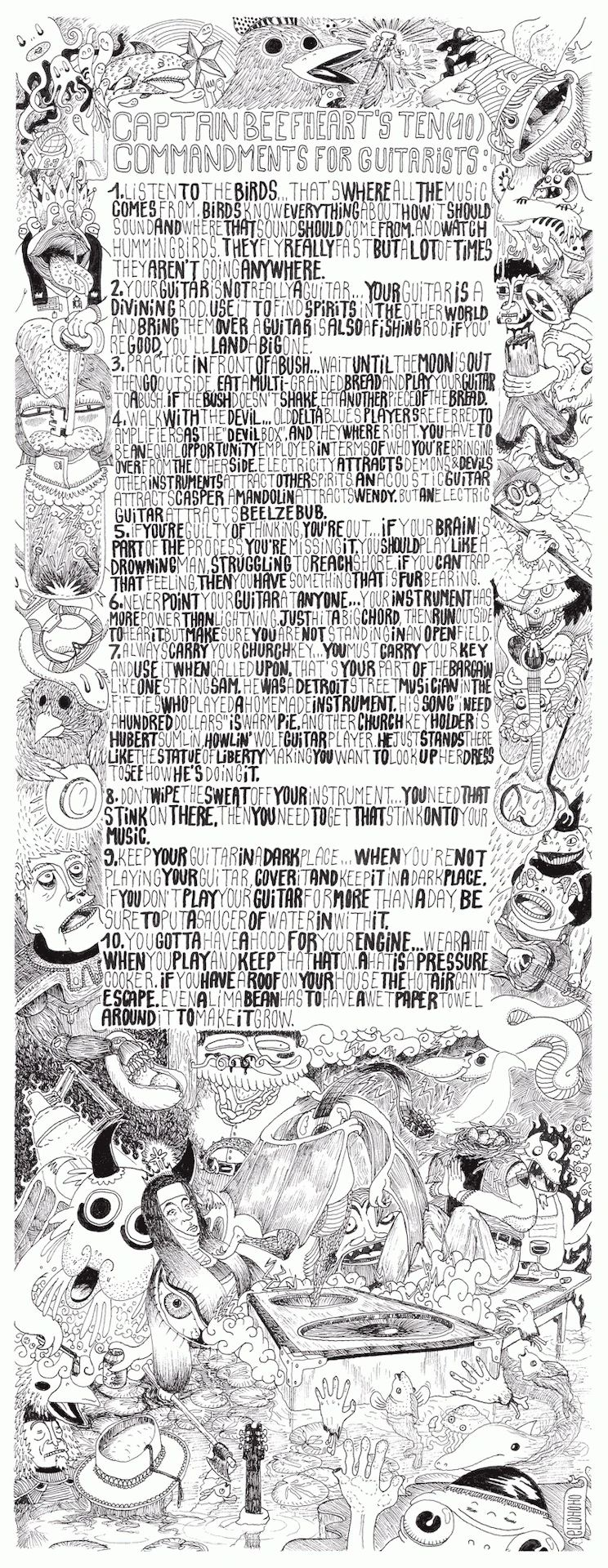
Captain Beefheart’s “Trout Mask Replica” (1969) is the ultimate love-it-or-hate-it record – a surreal, sprawling double album that still baffles and beguiles. Produced by fellow maverick Frank Zappa, it collides Delta blues, free jazz chaos, spoken-word poetry, and jagged avant-garde composition. To detractors, it sounds like four musicians all playing different songs at once; to fans, it’s a once-in-a-lifetime masterpiece of imagination and nerve.
The legend of its creation only adds to the mystique. Beefheart (Don Van Vliet) allegedly ruled rehearsals with near cult-like intensity, keeping his band sequestered in a rented house, drilling them through impossible time signatures until they could replicate his strange ideas with absolute precision. What sounds like drunken chaos is, in fact, meticulously arranged dissonance.
Upon release, critics were divided between awe and ridicule, and listeners remain just as split. Some still swear it’s unlistenable, while others – from Matt Groening to Tom Waits – hail it as one of rock’s greatest achievements. Over 50 years on, “Trout Mask Replica” remains the gold standard of polarising albums: a work of uncompromising strangeness that defies the middle ground.
One of Ahmet Zappa’s favourite memories of Captain Beefheart is the time he called the Zappa household to relate a particularly memorable dream.
“The fucking greatest [call] that ever happened to me was when he called and said, ‘Hell-ooooo, is your mo-other there?’” Zappa told Rolling Stone, imitating Don Van Vliet’s signature warble. “‘Because I had a dream I wanted to tell her about.’”
Gail Zappa wasn’t home, but Ahmet couldn’t fight his curiosity; he asked the Magic Band leader what he’d dreamed of. “I had a dream that I had a platypus in a briefcase,” Van Vliet said, then hung up.
As the son of mad musical genius Frank Zappa, Ahmet grew up already immersed in the legacy of Beefheart, whose music his father produced and released. And now, as a co-trustee of the Zappa Family Trust, he’s the custodian of some of Van Vliet’s catalogue, including his weirdest and most-lauded record, 1969’s “Trout Mask Replica”.
That album — which landed at Number 58 on Rolling Stone’s 2003 500 Greatest Albums of All Time list — has long been unavailable on streaming and digital outlets. Now, Ahmet is set to introduce the art-rock classic to a new generation: On Friday, the record drops on hi-res streaming service Qobuz, moving to all streaming and digital platforms in 30 days.
The record is accompanied by a refreshed version of the cover — which features Van Vliet wearing a decaying trout head on his face — created from the original photo print. Beefheart collector Paul R. Dickinson Jr. supplied the photo to cover designer Mike Mesker. The audio was remastered in 2012 by Bob Ludwig at Gateway Mastering.
A rare holdout from streaming, “Trout Mask” was previously only available on physical media. According to Zappa, the reason for this is pretty simple: He just hadn’t had time to attend to it. “We’re so focused on Zappa, and we’re a small team,” he says, explaining that much of the seven-person staff’s energy is reserved for the ever-growing collection of Zappa reissues.
“A dream would be to do a really great [box set],” he adds, envisioning a prospective release that would complement Revenant’s 1999 Beefheart rarities box. “We’re completists. [But] I don’t know that enough people love or respect Beefheart’s music as much as we do, you know? I don’t say that to be a jerk about it. The better way of saying it is, we want more people to discover what an amazing artist he is.” Streaming is key, Zappa believes, to that discovery.
The mythology surrounding “Trout Mask‘s” recording is almost as captivating as the album’s collection of musical skits and off-kilter mumblings. A cult-like (the elder Zappa’s word) collection of musicians, Beefheart’s Magic Band reportedly spent eight months in a rented house in L.A. rehearsing the record’s 28 tracks. Neighbours have recalled Van Vliet wandering around in a giant witch hat and starved band members going on a shoplifting spree, only to be bailed out by Zappa himself.
In his book Captain Beefheart: The Biography, Mike Barnes outlines some of VanVliet’s more eccentric requests, one of which involved having a plant surgeon come check on the health of various trees abutting the house lest they get scared of the music and fall on the roof.
Zappa initially wanted to record the album in that house — drums in the bedroom, bass clarinet in the kitchen, vocals in the bathroom — but Van Vliet rebelled. “Don got paranoid, accused me of trying to do the album on the cheap, and demanded to go into a real studio,” Zappa said in his 1989 autobiography, The Real Frank Zappa Book. He also recalled how Van Vliet declined to wear headphones while recording, instead standing in the studio and singing as loudly as possible along to whatever music he could hear through the glass. That technique, among other eccentricities, contributed to the delightful, literally offbeat sound of “Trout Mask” tracks like the opener,“Frownland.”
“It’s an extraordinary record,” Ahmet says. “It’s challenging to listen to in the same way that some of my dad’s music can be very challenging to listen to. You always discover something new, or at least I do.” Famous fans including legendary BBC DJ John Peel and Simpsons creator Matt Groening would agree; as they explain in Barnes’ book, both initially struggled with “Trout Mask“, then came to regard it as their single favourite album.
“There are many reasons why I like the record — not just for the music but for the connection, the fact that they were teenage friends, childhood friends, and there are not many relationships like that that Frank had,” Zappa adds. “Frank took it on as a labour of love, for one of his dearest friends. That’s why I think the record’s so special. That’s what I hear when I listen to it.”
King Crimson’s third album “Lizard” was released in 1970. Described at the time by one critic as “The abyss where modern jazz and rock meet”,with its clashing styles, whirling improvisations, soaring classical-tinged themes and dramatic showcases, “Lizard” remains a remarkable album in the King Crimson catalogue. Given the ambitious ground it attempted to cover it is perhaps no surprise that it still has the capacity to polarise opinion amongst fans and band members alike.
This was King Crimson’s third album it is their strangest detour: a dense, dazzling swirl of free-jazz brass, knotty time signatures, and surrealist imagery. Jon Anderson of Yes even drops by for a guest vocal, adding to its otherworldly aura. The music veers between moments of startling beauty and dizzying dissonance, demanding patience and repeat listens. For many, it’s a bewildering misstep; for devoted fans, a bold, beguiling plunge into uncharted prog waters.
The album featured a guest performance from Yes vocalist Jon Anderson. He had been approached by Greg Lake who had relayed Fripp’s interest in having the singer record with King Crimson. “I said OK and gave him my number and then about three months later Bob rang me up and said I’m going to record next month,” Anderson remembers. He had no idea what he was going to sing until he turned up at Wessex, and then couldn’t help but smile when he saw the title. “Prince Rupert was the name of a train that would go past our school every Wednesday and I thought it’s so bizarre that he wrote this song which I sang and it had that kind of connection.
Afterwards I told Bob that story, and you know Bob Fripp, he just said ‘Oh. Thank you, Jon. Bye.’” laughs Anderson.
While“Cirkus” from the album was performed by the “Islands“-era line-up in 1971 it was not until the formation of the current incarnation of the group that tracks such as “Dawn Song”, “The Battle Of Glass Tears” “and “Prince Rupert’sLament” were played in concert for the very first time.
Mister Stormy has unearthed part of a session recorded during the making of King Crimson’s third studio album, “Lizard“. Taken directly from the 1970 session reels, the piece has Fripp working with oboist and cor anglais player, Robin Miller on the atmospheric “Dawn Song“. In this early take we hear how the piece was put together. Featuring Fripp on electric piano talking Robin Miller through the piece, we also hear Gordon Haskell’s vocal.
“Dawn Song” run-through and rehearsal
The album’s striking cover was executed by Gini Barris, who as Julie Felix’s housekeeper at the time had a KingCrimson connection through the folk singer’s managers, David Enthoven and John Gaydon. Commissioned by Peter Sinfield, and with only a set of lyrics to work with, over the next three months Barris seeded her beautiful illuminated lettering design with all kinds of commentaries and allusions upon the world suggested by the lyrics.
Geese recorded a Tiny Desk Concert in December, and it’s out now, featuring three songs off one of our favourite albums of 2025, ‘Getting Killed’ – “Husbands,”“Cobra,” and “Half Real.”
When Geese stopped by the NPR Music office in December, bassist Dominic DiGesu geeked out with a bag of trinkets to display on the Desk: a small, toy goose gifted to them on tour, a stuffed Snoopy, a figurine of Sonic cradling Jesus, Minecraft sticky notes and a Mets hat. Since the release of 2025’s “Getting Killed”, the critical and fan reception has been wild and hard to parse — even my colleagues at All Songs Considered dove into the phenomenon. But here, the members of Geese ignore the noise and lean into their decade of collaboration together.
Geese’s set is charmingly earnest and a bit melancholy, focused on the quieter moments of “Getting Killed”. It’s truly the band in its purest form. Frontperson Cameron Winter sings seated, gazing out as he strums his guitar. Emily Green shines bright here, keeping the pulse of the band as she plays guitar with a jagged edge. The rest of the lot play mostly with their eyes closed, locked into the songs they’ve been touring with since last spring. As the music swells, like in “Half Real,” Geese soars.
SET LIST “Husbands” “Cobra” “Half Real”
MUSICIANS Cameron Winter: vocals, guitar Emily Green: guitar Dominic DiGesu: bass Max Bassin: drums Sam Revaz: piano, keys, electronics




 The Fat Angel Sings