The Sherlocks are a British indie/alternative band hailing from Bolton upon Dearne, Barnsley, SouthYorkshire. With their catchy melodies and energetic performances, they have gained a loyal following in the music scene. Known for their distinctive sound and heartfelt lyrics, The Sherlocks continue to captivate audiences with their unique blend of indie rock and alternative music.
Formed in 2010 the band consists of brothers, Kiaran & Brandon Crook along with Alex Procter & Trent Jackson. . They first gained recognition with their debut single which received widespread acclaim. Since then, The Sherlocks have released several successful albums including “Everything Must Make Sense” being the last.
With their infectious energy and captivating stage presence, The Sherlocks have become known for delivering unforgettable live performances. Their passion for music shines through in every song they create, making them a must-see act for any music lover.
“In Your Hands” is the brand new single from The Sherlocks.
“Trilateral Machine’ on a limited run of rusty red vinyl. Flip Top Head knows when to shift things around, making this EP such a visceral listen. Though they’re still honing their voice, Flip Top Head has all the hallmarks of a truly unique sound.
While there are plenty of post-punk and orchestral art rock bands vying for attention, there is a searing originality that marks Flip Top Head apart. The six-piece group from Brighton showcase the full range of their influences on their second EP
“avant-garde art-rock packed with wry lyricism…there is a searing originality that marks Flip Top Head apart” – NME
“Ambitious acts like Man/Woman/Chainsaw, The Orchestra (For Now) and Flip Top Head are forging a new vanguard…” – CLASH
“packs a lyrical punch, transforming the mundane into the remarkable in a way that’s characteristic of Larkin’s poetry.” – So Young Magazine
“A stirring, seismic package…striking a delicate balance between experimental and accessible” – DIY
released January 23rd, 2026
All songs written and performed by Flip Top Head. Additional songwriting by Alfie Beer. Produced by Theo Verney.
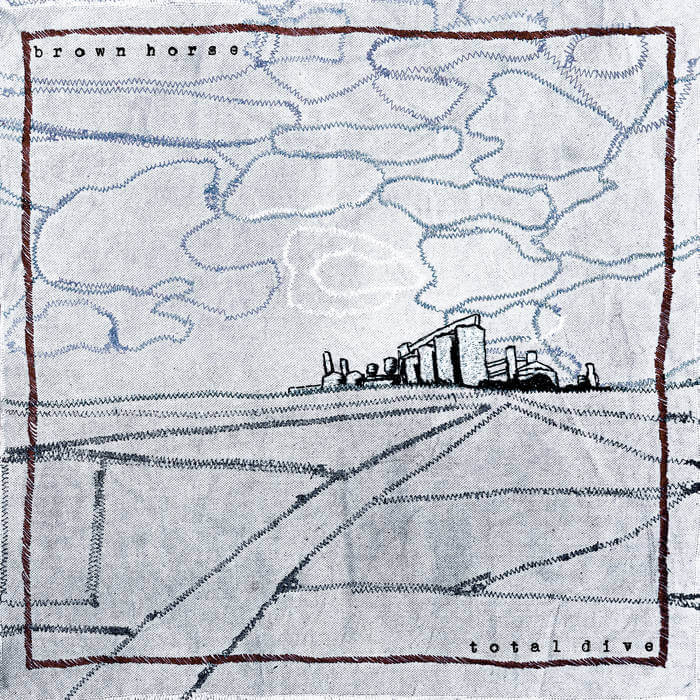
The new Brown Horse single’s got an immediate buy-in from vocalist Nyle Holihan: “I like the voices on the radio, I like the feeling of changing lanes.” That sounds good to me. If you missed out on “All the Right Weaknesses” last year you can still reserve a spot for “Total Dive” in a few months. “Twisters” is a twangy ace in the hole with Neve Cariad singing backup—country guitars in bold lettering, whacked-out pickers each with a lead foot on their fuzz pedals.
This is lubed-up rock and roll—road-worn riffage you can catch a fix from anytime. If you’re a Jason Molina fan you’re gonna dig a barroom blitz like this, because Brown Horse are rambling around in a strange, disarming grin. It’s a good pocket to be in, especially when Emma Tovell’s pedal steel starts crying. “I hope a whip of lightning cuts me right in two” means something to me. “Twisters” rules because it’s spilling out all over the place.
We’ve been talking about Brown Horse as sort of the UK’s answer to MJ Lenderman/Wednesday type indie-country bands, and this new single from their upcoming third album “Total Dive” is a very fine example of why they deserve that title.
The album “Total Dive” is out April 10th 2026 on Loose Music.
Low co-founder Alan Sparhawk has shared two new songs featuring Eric Pollard on Drums and Sparhawk’s son, Cyrus Sparhawk, on bass.
Sparhawk shares about both singles: “JCMF”: This is a song I’ve had for a few years, but couldn’t find the right way to play or record it. We started playing it last year in the Alan Sparhawk Solo Band, on tour, and with each month, the sentiment of the song only increased. I feel like the song has become a rebuke against the fascist/authoritarian streak that several world leaders have taken on and to the people who have been blinded into supporting them.
“No More Darkness”: Inspired by a David Lynch quote (“Don’t fight the darkness. Don’t even worry about the darkness. Turn on the light and the darkness goes. Turn up the light of pure consciousness. Negativity goes.”) This song reminds me to choose light in especially dark times. We were ending our set with this tune all year, and it is my wish for everyone, especially those who feel alone.
Both tracks were written, composed, and produced at 20 Below Studio in Duluth, MN, with Nat Harvie mixing. They feature Sparhawk on Guitar/Vocals, Eric Pollard on Drums and Sparhawk’s son, Cyrus Sparhawk, on Bass.
Sparhawk will be donating a portion of his royalties from these songs to the International Institute of Minnesota.
Buck Meek (who you may know from Big Thief, his joint releases with bandmate Adrianne Lenker, or perhaps just from his solo stuff already!)
“The Mirror” is scheduled for release at the end of February. There’s a tender power, countered by immutable vulnerability. With an uncanny curiosity, Meek reveals the uniqueness in the mundane. “The Mirror” searches for new meaning and the familiar is reframed through Meek’s singular voice.
Just months after Big Thief had released one of our favourite albums of 2025 with “Double Infinity”, Big Thief guitarist Buck Meek announced his next solo album, The Mirror, due 2/27 via 4AD. It was made with his Big Thief bandmate James Krivchenia and Big Thief vocalist Adrianne Lenker contributes to it too, so it shouldn’t be a big surprise that you can hear a lot of Big Thief’s magic coming through on lead single “Gasoline.” It’s the kind of strummy folk rock that Buck Meek does so well, but it’s also got some of those art rock tendencies that came through on “Double Infinity“, making it just a little more far-out than what we usually get from Buck’s solo career.
“Cost of Living Adjustment” is the sort-of self-titled album from Cola, the Montreal trio of Tim Darcy (vocals/guitar), Ben Stidworthy (bass), and Evan Cartwright (percussion). C.O.L.A. — an acronym for “Cost of Living Adjustment” — is a fitting conceptual framework for the band’s third record. Why? Because C.O.L.A.considers, among other things, socialism vs. hell. It considers: rolling the dice of life. The erie and sweet pangs that nostalgia can provoke.
Following two studio LPs which earned the trio praise from Rolling Stone(Best Indie Rock Albums of 2024), Pitchfork (Best Rock Albums of 2024), Stereogum(Best Songs of 2022) and more,” Cost of LivingAdjustment” is abstract, oblique, sometimes strange, whatever you want to call it. But it is also beautiful, in the classic sense. Beautiful like a painting can be beautiful. It touches on the sublime. It is Cola, the band, at their very best.
Here’s the first single from Cola’s upcoming album “Cost of Living Adjustment”.
from Cola’s new album, “Cost of Living Adjustment”, out May 8th via Fire Talk Records
Julia Cumming of Sunflower Bean has announced her debut solo album, “Julia“, due out April 24 via Partisan. The first single is “My Life,” and she says, “This song came after a period of intense pressure, the culmination of writing through the pandemic and the years spent in the rhythm of touring, recording, and trying to find my place within it all…Then something shifted. It was liberation, and I knew immediately it was the beginning of something new. It’s clear ‘My Life’ would open the album, because it’s the thesis. The seed that started everything.”
“My Life” by Julia Cumming from Julia, out April 24th on Partisan Records
Foo Fighters just previewed an album’s worth of songs last week, so if you guessed that meant a new album would be announced soon, you guessed right! The band’s first album since 2023’s invigorated “But Here We Are” and first since Ilan Rubin joined as the new Foos drummer is called “Your Favorite Toy” and it arrives on April 24 via Roswell/RCA. It was “recorded at home,” co-produced by FooFighters and Oliver Roman, engineered by Oliver Roman, and mixed by Mark “Spike” Stent. Pre-order the LP or CD in the BV shop.
They also just released the title track, a song that finds the Foo Fighters in fuzzed-out garage rock territory, with Dave Grohl leaning into his love of stuff like The Stooges and The Sonics. It’s pretty undeniably a ripper, and you can check it out below. The album also features last year’s grungy “Asking For A Friend.”
“’Your Favorite Toy’ really was the key that unlocked the tone and energetic direction of the new album,” Dave says. “We stumbled upon it after experimenting with different sounds and dynamics for over a year, and the day it took shape I knew that we had to follow its lead. It was the fuse to the powder keg of songs we wound up recording for this record. It feels new.”
Foo Fighters’ lineup for this album is Dave Grohl, Nate Mendel, Chris Shiflett, Pat Smear, Rami Jaffee and Ilan Rubin.
All upcoming Foo Fighters tour dates (including shows with Mannequin Pussy, Gouge Away, IDLES, Queens of the Stone Age, Die Spitz, Otoboke Beaker, Fat Dog, and more)
Parcels does not shy away from abundance. The Australian quintet’s songs often feature a myriad of guitars, rivaling piano and synths, slinky basslines, pulsing drums and four (yes, four) vocalists. But the group opens its Tiny Desk concert with a secret weapon: hauntingly bare harmonies, backed only by gentle keys and guitar, that transform a snippet of the irresistibly catchy “Leaveyourlove” into a solemn oath of devotion.
It’s a stunningly stripped-down choice for a band that can — and does — properly rock out, with explosive live performances that turn its glossy, electro-pop studio albums into transcendental dance parties, collective rituals of movement and joy in which the crowd becomes a key sixth band member. But it’s also a return to the band’s roots. Parcels started out as a group of high school friends, jamming together in the idyllic seaside town of Byron Bay. After graduation, they relocated to Berlin, where their early days were spent busking on the streets, performing bluegrass covers of pop songs.
At the Tiny Desk, evenly spaced out and in a ceaseless, mischievous musical dialogue with one another, Parcels’ egalitarian ethos is front and center: There is no lead singer, there is no frontman. As an instrument-wielding boy band, the group converses with a fluidity that taps into the psychedelic playground of the Grateful Dead and dances into the hypnotic electronica of Giorgio Moroder. Sunlit melodies melt into one another; a cascade of soulful voices guides listeners from the early days of Parcels’ discography to the magnetic bliss of the band’s newly released album, “Loved”. Both the record and the performance emanate the magic of spending a decade making art with your best pals.
SET LIST “Leaveyourlove” “Tieduprightnow” “Ifyoucall” “Yougotmefeeling” “Gamesofluck” “Finallyover”
“Loved” is Parcels’ third album, exuberant and euphoric, yet also reflective. It’s a record of unity – with each other, with the listeners, in the grooves – and that’s indisputable.
“We do have a purpose as a band to our audience: we’re giving people joy,” says guitarist/vocalist Jules Crommelin. “I see it as spirit, and it’s an incredibly powerful thing.”
The album includes tracks like “Safeandsound” and “Yougotmefeeling.” Parcels are back and brighter and more pop than ever.
Queen’s second album, originally released in March 1974, is getting remixed, remastered and expanded to five CDs in March.
The 5CD/2LP Queen II Collector’s Edition box set features a 2026 mix of the album and will be available on March 27th. Brian May and Roger Taylor serve as executive producers for the set, which includes previously unheard outtakes and demos, live tracks and radio sessions from the era.
Arguably the heaviest Queen album, Queen II was originally released in 1974 and widely heralded as their first true masterpiece. With Brian May and Roger Taylor as executive producers, the album has been stunningly mixed by the team of Justin Shirley-Smith, Joshua J Macrae and Kris Fredriksson.
“Queen II” was the single biggest leap we ever made,” said May in a press release announcing the box. “That’s when we really started making music the way we wanted to, rather than the way we were being pushed into recording it.”
“With “Queen II”, I couldn’t believe how much work we put into it,” noted Taylor. “I think we felt we were evolving our own sound. We were pioneering this sort of multitracking thing. It gave you a tremendous palette, massive choral effects with just three of us singing.”
In addition to the new mix of the original album, the upcoming reissue will include discs featuring session tracks, BBC recordings and live performances.
The new Queen II: Collector’s Edition features a newly mixed and remastered version of the original album. It also features a disc of previously unreleased album sessions, including multiple takes and demo versions of album tracks “The Loser in the End” and “The March of the Black Queen.”
Backing tracks for the LP’s songs are also included on a disc. Another CD features Queen’s appearances on BBC radio programs in 1973 and 1974, when they performed songs from “Queen II”, including “Nevermore,” “White Queen (As It Began),” and others.
The fifth and final disc includes live tracks of several album songs, recorded at the Rainbow and Hammersmith Odeon in March 1974 and December 1975.


.jpeg?crop=3:2)




 The Fat Angel Sings