The Black Crowes have revealed that their new studio album, “A Pound of Feathers”, will be released on March 13th, 2026, via Silver Arrow Records. As promised in a press release, the new album promises to “push their iconic blend of blues, soul and rock into electrifying new terrain.“ Commenting on the new project, lead singer and frontman Chris Robinson revealed that they made the entire album in eight to ten days.
Robinson went on, “Bringing the high and inspiration from “Happiness Bastards” into this album, it was a natural progression. We experimented more, we wrote on instinct, and how we were feeling in the moment. Rich brought a spontaneity to the record that I can’t describe, but it’s the best shit he’s ever done.”
Rick Robinson agreed, stating that the album feels “transformative” for the pair, adding, “Going back to our roots, we felt that spark in the studio and how we work together. Lighting a fire that hits harder, more jagged but is still true to our musical essence.”
Their last album, “Happiness Bastards“, was released in 2024. Subsequently, it was nominated ‘Best Rock Album’ at the 2025 Grammy Awards. However, The Rolling Stones ended up taking home the award for their project, “Hackney Diamonds”.
With ‘Profane Prophecy’, the band opens with fun, funky lyricism: “My pedigree and debauchery is my claim to fame / the profane prophecy has got me in its sweet embrace.
The recently released “Pound of Feathers” marks the second new album in three years from the resurgent Black Crowes, who’ve also issued an EP of cool covers and a live recording celebrating their debut album. The new music only bolsters a sturdy Rock Hall resume that includes almost eight million albums sold in the U.S. alone.
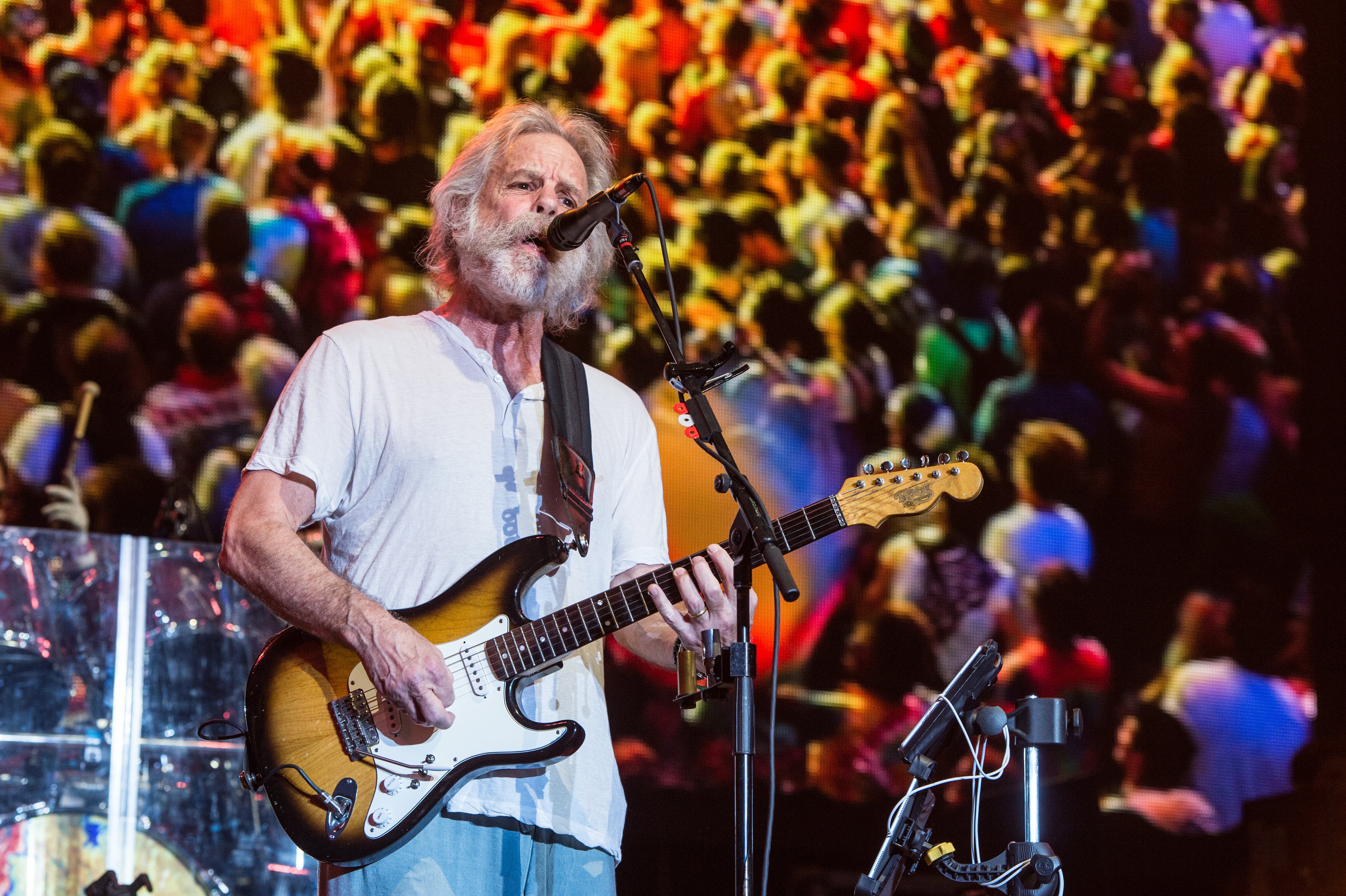
Bob Weir, guitarist, vocalist, and co-founder of the Grateful Dead, has passed away at age 78. “It is with profound sadness that we share the passing of Bobby Weir,” the post said. “He transitioned peacefully, surrounded by loved ones, after courageously beating cancer as only Bobby could. Unfortunately, he succumbed to underlying lung issues.” The family said his “final months reflected the same spirit that defined his life. Diagnosed in July, he began treatment only weeks before returning to his hometown stage for a three-night celebration of 60 years of music at Golden Gate Park. Those performances, emotional, soulful, and full of light, were not farewells, but gifts. Another act of resilience.”
Born on the Bay in October 1947, Weir began playing guitar at age 13 after failing to figure out the piano and trumpet. His dyslexia got him kicked out of every school he attended, until he wound up at Fountain Valley in Colorado, where he’d meet future Grateful Dead lyricist John Perry Barlow. When Weir was 16, he and a buddy caught a whiff of banjo music in a Palo Alto back alley on New Year’s Eve. They followed the trail all the way to Dana Morgan’s Music Store, where a 21-year-old music teacher named Jerry Garcia was picking. He and Weir spent the night jamming together and struck up a group together, which Weir likened to the Beatles if they were a jug band. “What we saw them doing was impossibly attractive,” he said. “I couldn’t think of anything else more worth doing.
They called themselves Mother McCree’s Uptown Jug Champions and then, later, the Warlocks. Eventually they sorted the name out: the Grateful Dead.
Weir played rhythm guitar and sang lead on many Dead tunes. He ran point on a few of my favorites, like “Playing in the Band,” “Estimated Prophet,” and “Sugar Magnolia,” one of the best songs in the English language. Weir’s guitar playing wasn’t strong at first, but by the time drummer Mickey Hart left the band temporarily in 1971, he was one of the best around.
His voicings were clearer than ever. “I found myself astonished, delighted, and excited beyond measure at what Bobby was doing,” bassist Phil Lesh, who later called Weir’s style “quirky, whimsical, and goofy,” commented. He would tinker with slide guitar in the ‘70s, picking up ideas from hard bop pianist McCoyTyner and gospel players like Rev. Gary Davis. Weir was also a catalyst in a couple other bands, including Kingfish, RatDog, Scraping the Children, Further, Bobby and the Midnites, the Bob Weir Band, and, most notably (alongside Mickey Hart, Bill Kreutzmann, and John Mayer), Dead & Company. Weir made his solo record, “Ace”, in 1972, and his last solo record, “Blue Mountain“, in 2016.
Weir’s passing marks the third Dead member to die since 2024, joining the late Phil Lesh and Donna Jean Godchaux-MacKay across the bridge.
When I produce a Tiny Desk Concert, one of my most important jobs is to make sure they run on time and that the performance sticks to our set time limit (roughly 15-minutes). So when Bob Weir and Wolf Bros achieved lift-off during a pre-show sound-check, it was my unthinkable responsibility to tell the guy who practically invented the jam band to… stop jamming. Weir is a founding member of Grateful Dead, a band that launched countless jams from 1965 until the death of lead guitarist Jerry Garcia in 1995. And it also fell to me to keep looking at my watch during the performance, even as I realized that my favourite “Dark Star” jams alone lasted well beyond our fifteen-minute performance window. But the magic space behind the Desk has a way of bringing sharp focus to the task at hand, leading to exquisite performances that go well beyond the pale. Such was the case in this gig by Bobby and his Wolf Bros, Jay Lane (drums) and Don Was (bass), as they played a set that was rich in Grateful Dead lore and that will likely create new memories for the Deadheads who were in the room and beyond. “Only a River,” from Weir’s 2016 solo album “Blue Mountain”, feels like a memorial to Jerry Garcia, with a reference to the Shenandoah River, a body of water Garcia famously made reference to on the song, “A Shenandoah Lullaby.” Weir turns the chorus into a mantra and seems to evoke the spirit of his fallen bandmate. And what would a Grateful Dead-related performance be without a Bob Dylan song? The intimacy of the Tiny Desk turns Weir into a sage Master Storyteller during a version of “When I Paint My Masterpiece” with its reference to Botticelli and a lonely Roman hotel room. With the addition of special guest, Mikaela Davis on harp, the final stretch of two Hunter-Garcia tunes takes on legendary status. When Weir switches to electric guitar midway during “Bird Song,” I looked at my watch because I knew we were in for some time travel. And the band didn’t disappoint as the rhythmic interplay between Weir and Davis showed off his singular rhythm guitar style, honed from more than thirty years of playing alongside one the most idiosyncratic lead guitarists in modern music. And I ain’t gonna lie: I teared up at the end of “Ripple,” Grateful Dead’s fifty-year-old sing-along from their album “American Beauty“. And it wasn’t because of the treat of being just five feet from the action, but because of the song’s celebration of hope and optimism, found in the spirit of all of the band’s music. Bob Weir continues to evoke that spirit every time he picks up a guitar; and as we all sang along at the end, we evoked that spirit too: “Let there be songs, to fill the air.” Indeed.
SET LIST “Only a River”‘ “When I Paint My Masterpiece” “Bird Song” “Ripple” MUSICIANS Bob Weir: vocals, guitar; Don Was: upright bass; Jay Lane: drums, vocals; Mikaela Davis: harp, vocals
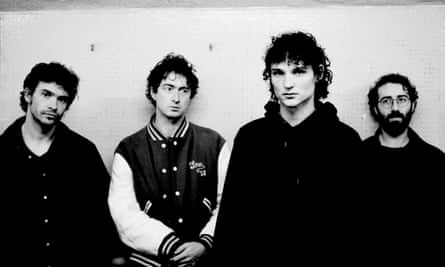
For Mandy, Indiana, the truth is the only way through. On their Sacred Bones debut “URGH“, the four-piece – vocalist Valentine Caulfield, guitarist and producer Scott Fair, synth player Simon Catling, and drummer Alex Macdougall – are a force of uncanny nature, grafting together a record that is as much a call to action as a parlay into oblivion and transcendence. Across the ten tracks, the band interpolate their own unconventional language into a mantra for self-determination and resilience, forging a template for a brighter future before it fades to black.
“Cursive” begins with a wait, as this steady, hypnotic pulse percusses like the foreword to a beat drop. Then: a pause. Alex Macdougall’s hand drumming clatters into Valentine Caulfield, who uses the French language as an instrument of static. The song’s itchy rhythms bleed into Simon Catling’s synthesizers, which grow abrasive, violent like knives breaking through muscle. Short breaths hang onto the melody until Scott Fair’s guitar blasts skronk and suffer like screams beneath a cauterized wound. “I dance while waiting for the world to disappear, and my dreams refuse to be held on a leash,” Caulfield rattles. Her bandmates respond by turning her sideways. Mandy, Indiana traffic in the unease of bang. “Cursive” is ecstatic art cloaked in disharmonic madness and textural heresy.
Four diabolical Mancs arrive speaking in tongues and then cut them all out.
This is dance music that splinters and squirms and suffocates. the upcoming album “URGH” out on February 06th, 2026 on Sacred Bones Records.
In 21 minutes, this New York band’s debut chews you up and spits you out the other side in a tentacular whirr of rototoms, guitars that shriek and whine like neglected machinery, erratic tempos and frontman Zack Borzone’s choked-out vocals. The way the record lurches and reels brings to mind the classic horror film scene in which a human undergoes a violent, magnificent transformation into some sort of beast: much like Gilla Band’s Most Normal, “45 Pounds” is a font of mutant rock pleasures.
With every one of “45 Pounds’ feverish slices of panicked, post-punk clangour, New York’s YHWH Nailgun displayed an unnatural gift for hammering a groove or hooky beat amid the most twisted industrial forms. Erratic, fizzing with electrolyte energy, and seemingly convulsing between brittle snaps of terse disquiet and gargantuan slabs of metallic engulfs, YHWH Nailgun seized the senses and transported them to a realm of sheer somatic heft sincerely sounding like no one else before them.
The key to “45 Pounds’ pugnacious marvel is the electric synergy between each member. Each of their aural elements collapsing and crumpling into each other with teeming, wriggling, insectoid anxiety, YHWH Nailgun spat out their electronica whirlwinds with an effortless sense of ever-changing metamorphosis, each cut across “45 Pounds’ barely 20 minutes, never quite sure of its final form. This all makes for a fascinating immersion into their world, scoring the buzzing, noisy contemporary we’re all forced to wade through. Burnishing a truly unique voice in the crowded world of industrial, YHWGNailgun summoned an explosive debut of an arcane, otherworldly aura.
YHWH Nailgun’s debut is noisy, clipped, and physical, built around jagged guitar, twitchy electronics, and songs that often hit like short bursts rather than long builds.
Pitchfork framed the record around the band’s live-wire intensity and the AD 93 connection. The pre-release run also made the point clearly, especially with the 86-second “Sickle Walk” getting a Best New Track nod.
It’s confrontational music, but it’s structured, not random
“Earthstar Mountain” is an ode to curiosity. It asks what it means to live a life: how do we decide which direction to take? How do we stay there? And what happens when the rug is pulled from under our feet?
Once again working with her partner and collaborator Sam Evian at their home studio Flying Cloud,Hannah Cohen’s fourth full-length album “Earthstar Mountain” is a keepsake of Cohen’s time in the Catskills, built over the course of 2020-2024. As blurred, shimmering memories come into focus to produce a collage of echoes and sonic souvenirs.
The essence of a great album is the execution of an idea. Not in a technical, virtuosic sense or even an experimental sense that opens up the possibilities of a new musical world. But execution of ideas in the way of truthfulness, where the songs within an album feel inherently linked to the artistic voice of the musician. “Earthstar Mountain” is the clearest example of that I have seen in years. There’s a familiarity to the arrangements, be it on the upbeat indie of ‘Draggin’ or the groove-laden pop of ‘Summer Sweat’, but it’s all presented through the lens of Hannah Cohen.
Here is a wonderful live version of the Fleetwood Mac-y standout from Hannah Cohen’s excellent album “Earthstar Mountain”.
Despite whatever influences she is taken from, each song feels like an extension of her, as though she is wasting no energy trying to be somebody else and instead operating in her own sphere of confidence. This album just feels right; it feels simple, and at best, it feels meditative. It’s almost like music medicine that slows you down and crystallises your attention to be calmly focused on entering the alluring world of Cohen’s artistry.
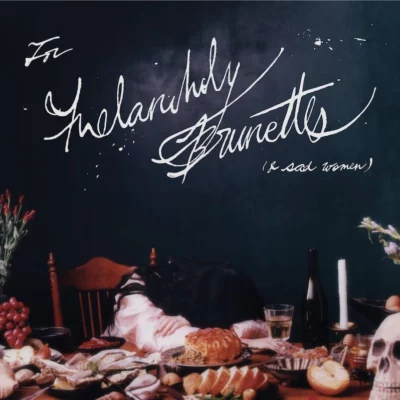
The title of Japanese Breakfast’s album, “For Melancholy Brunettes (& sad women)“, comes from the record’s first single, “Orlando In Love.” It’s a retelling of Orlando Innamorato, a Renaissance poem by Matteo Maria Boiardo, in which a knight pursues a princess through forests and castles and duels and wars. In singer, guitarist, and lyricist Michelle Zauner’s hands, the tale turns into the story of a poet living in a Winnebago by the sea who is tempted by a siren’s song. Temptation is a major theme of the album, and Zauner drew from her experience with becoming an overnight sensation after the success of her 2021 memoir, “Crying In H Mart”. Japanese Breakfast has been a cool-kid bellwether since their 2016 debut, “Psychopomp“, but with Zauner’s newfound mainstream fame, “For Melancholy Brunettes (& sad women)” might be the band’s major breakout, too.
Michelle Zauner has had a whirlwind few years, having released the best selling memoir “Crying In H Mart” as well as her acclaimed 2021 Japanese Breakfast album, “Jubilee”, which earned her two Grammy nominations. Her latest, “For Melancholy Brunettes (& sad women)“, finds Zauner scaling back, examining the “perils of desire” on a more understated set of songs produced by Blake Mills. Its first single, “Orlando In Love,” is gorgeously orchestrated, a more ornate kind of chamber pop than the brighter new wave of a song like “Be Sweet.”
from ‘For Melancholy Brunettes (& sad women)’, out March 21st on Dead Oceans.
Picture Parlour are an English indie rock band formed in Manchester by Katherine Parlour (vocals and guitar) and Ella Risi (guitar). Their line-up is completed by Kitty Fitz (bass/rhythm guitar), Joey Django (rhythm guitar/bass) and Michael Nash (drums).
It’s surreal to finally be releasing our first ever album, we have played this moment out in our heads repeatedly since we first picked up a guitar, and we can’t wait to share the journey.
The making of this record saw us screaming at each other, holding one another while we cried, and being in complete awe of everyone we’ve worked with on it. We recorded opposite a cemetery in East Iris Studios, Nashville, where we just about dodged being 6 feet under ourselves. It was the most fulfilling, hysterical and unforgettable 3 weeks of our lives, and we hope you guys love this record as much as we loved making it. So enough, and WELCOME TO THE PARLOUR.
The band performed their debut show in December 2022 at the Windmill in Brixton and immediately became regular performers there. The band released their debut single, “Norwegian Wood”, on 19th June 2023, which was followed by “Judgement Day” on 18th October 2023.
The Liverpudlian rock outfit’s debut EP was worth the wait. Singer and front-woman Katherine Parlour has such a distinctive voice and guitarist Ella Risi leads the charge with infectious riffs and ripping solos. With an almost baroque and art-rock feel, the album is both uplifting and nostalgic, with plenty of reflection on the journey which has got this under-appreciated duo (and their backing band) to this point. I think it is only a matter of time before they are commanding far larger venues.
Three years after their debut album, caroline returned in gloriously off-kilter fashion with ‘Total euphoria’. Driven by stabbing guitar, drums that never quite gel into place, and keyboards that hover radiantly but never quite in sync, you’re left wondering how the song could possibly amount to a sound befitting its title, but the experimental UK outfit naturally gets there. The instrumentation doesn’t cohere so much as endlessly revolve into something greater than the sum of its part, something blissfully communal, especially as Jasper Llewellyn and Magdalena McLean start singing in unison. The ambiguous betrayal at the song’s emotional core is never resolved, but you somehow get it, totally.
“Three years on from the release of their self-titled debut album, London eight-piece band Caroline deliver “Caroline 2”. In one way, it picks up where its predecessor left off — 2022’s sublime self-titled debut concluded with “Natural Death“, where they also explored the possibilities of interlocking off-kilter guitar patterns — but in many, many others, it finds them breaking new ground. Those two worlds on the opener are only the beginning. “One of the fundamental themes is the idea of different things happening at once, things that are very different from each other but also simultaneous,” says Jasper Llewellyn, who forms the songwriting core of the band with Mike O’Malley and Casper Hughes. It makes for a record of extraordinary scope — where the organic and the artificial, the harsh and the beautiful, the pristine and the hazy all clash and combine. “The first record was a compilation, but this one is a declaration,” says Llewellyn. We were just about an eight-person band on the last one, but now we’re a proper eight-person band.”
DEERHOOF long ago established themselves as one of the greatest rock groups ever to stride the earth, the furiously inventive quartet releases new albums on the schedule of a young band still hungry for its first break. Their latest album‘Noble and Godlike in Ruin’ (their 19th studio album) is either a portrait of a world descending into monstrous hate, dehumanization, and dollar signs, or a haunting self-portrait of band-as-monster, singing tirelessly of love, increasingly alienated from that world. Songs crash and break apart, then reassemble in surprising and delightful new fashion. The music is joyful and foreboding, cybernetic and deeply human, all at once. Strings that evoke avant-garde chamber music and classic horror-film soundtracks bounce off guitar and bass lines that chug on impervious to the creeping dread.
The drums are sometimes filtered to sound almost electronic, but no computer could come up with rhythms so funky and dynamic, with each minute variation from one snare hit to the next conveying worlds of possibility. The world may be going down, but Deerhoof is going down swinging.
It’s simply amazing that this US/Japanese quartet is now celebrating their 31st year. Though Deerhoof long ago established itself as one of the greatest rock groups ever to stride the earth—and if you think that’s hyperbole, you haven’t spent enough time listening to Deerhoof —the furiously inventive quartet releases new albums on the schedule of a young band still hungry for its first break. As “Noble and Godlike in Ruin” reaffirms, each one discovers some previously unknown combination of candy-coated hard-rock riffs and free-jazz percussive freakouts, sideways J-pop hooks and fearsome dissonance, trenchant social commentary and surrealist humour. This music is joyful and foreboding, cybernetic and deeply human, carrying an implicit note of defiant optimism in their refusal to bow to convention or received wisdom. Fronting it all is Satomi Matsuzaki’s inimitable alto, whose plainspoken calm can seem strangely outside of the band’s maelstrom. Deerhoof is defined by such paradoxes.
The beloved songwriter is back putting her expressive voice as an artist at the forefront whilst pushing her sonic evolution to mesmerising heights. Renowned multi-disciplinary artist Ezra Furman marks a landmark in her career with the announcement her 10th studio album “Goodbye Small Head”, due out May via Bella Union. Written during a maelstrom of overwhelm, the album title is a nuanced homage to the 1999 Sleater-Kinney single “Get Up”.
Hi my name is Ezra Furman this is the press release for my new record. I don’t trust nobody and that’s why I had to write this myself.
“Goodbye Small Head” is the name of this record. Twelve songs, twelve variations on the experience of completely losing control, whether by weakness, illness, mysticism, BDSM, drugs, heartbreak or just living in a sick society with one’s eyes open. These songs are vivid with overwhelm. They’re not about someone going off the rails, they are inside that person’s heart. The songwriting here is a revision to William Wordsworth’s famous proclamation that “Poetry is the spontaneous overflow of powerful feelings: it takes its origin from emotion recollected in tranquility.” I can agree with that, except for the tranquility part. This poetry, my poetry, arrived in the midst of the storm. It was written as I teetered toward the edge. (I did the edits once I was safe again.)
The band and I had had a run of records that were very communal, very first person plural. We, us, ours. I was trying to exist in and create a shared space with my audience, make anthems for taking care of one another in dark times. But there does come a time when a woman is left alone in a room to unravel. And you need anthems for those times too.
“GSH” also reflects a band reaching a new peak of our powers. If I were a music journalist, I would call this an orchestral emo prog-rock record sprinkled with samples. Thank goodness I’m not a music journalist! I think of this music as cinematic and intense. A friend of mine said it sounded like “the coolest movie soundtrack of 1997,” and I’m quite pleased with that description. We’ve incorporated a small string section into eight of the twelve tracks, and are using samples for the first time—nothing you’d recognize, just some uncredited singing that Sam found online, chopped into beautifully evocative bits. Other than that, this record features something that’s become nearly an anachronism: a band that’s been playing real instruments together for over a decade, intuitively in touch with each other as musicians. Four players in a room together who know exactly how to respond to one another.
We recorded in Chicago with Brian Deck producing; a return to both my city of origin and my producer of origin, since Deck produced my first rock’n’roll records many years ago (“Banging Down the Doors” (2007) and “Inside the Human Body” (2008) by Ezra Furman & the Harpoons). In some way I think I was trying to return to some much younger mindset, when all the intensity and fear and emotion of life was less mediated by adult coping mechanisms. When it was all brand new with no filter.
Though I wrote parts of it earlier, I think the making of this album really began on the morning of April 11th 2023, when I woke suddenly ill, limped into the bathroom and lost consciousness. At the hospital they gave me all the tests and told me that actually, I wasn’t sick, and I could go home now. (Thanks, fellas!) I stayed in bed for months, exhausted and in pain, no doctor offering any convincing explanation or cure.
After a while I began hemorrhaging songs. Many of these songs arrived unexpectedly and left my body violently. All of them seemed to be steeped in the helpless transcendence of being suddenly overcome, undone. The lyrics to album opener “Grand Mal” and its following companion “Sudden Storm” were written in one hypomanic sitting after talking to an epileptic friend about the mystical quality of certain major seizures. “Jump Out” is a panicked rocker for realizing you are going to have to leap from a moving vehicle because the driver has no intention of letting you out. “Power of the Moon” is an existentialist wrestling match with whoever’s in charge of the universe, and “Submission” is the combination of dread and relief felt when you realize the long-suffering “good guys” have no chance against 21st-century forces of evil. And that’s just Side A.
Is it dark? Yeah! Is it also wonder-struck, laced with psychedelic beauty, triumphant in its wounded way? Yeah again. And by the end of it, the whole thing flames out in a burst of good old-fashioned rock and roll, a desperate cover of underappreciated genius Alex Walton’s bottomlessly yearning “I Need the Angel.”
The title, “Goodbye Small Head” is a lyric from the 1999 Sleater-Kinney single “Get Up,” a phrase breathlessly, almost ecstatically intoned by Corin Tucker as she contemplates death and the dissolution of the self. There’s something about that dissolution that is both horrible and absolutely gorgeous. We fear losing ourselves and we want it more than anything. That’s where this record lives. That’s what this kind of music offers us: a look over the edge into the frightening and beautiful realm that lies beyond ordinary life. Have a look with me, won’t you?
From start to finish, “Goodbye Small Head” is a masterclass in the beauty of letting it all go, At the heart of all of that, Ezra Furman focuses on the art of finding liberation during trying times and emerging from the other side feeling more powerful than ever.
The overarching major of the entire record centres around not confining itself to one thing while also not oversimplifying the themes it tackles, many of them overlapping or coinciding to concoct a picture of the convoluted nature of life itself. In this world, experiences can be complex and frustrating, but ultimately, it’s about rising on top and being yourself, even in the flames.