Containing White Denim’s first new music since the lockdown 30-day-album project “World As A Waiting Room“. “Crystal Bullets” was inspired by the groove of the great Bernard Purdie and the signature chopped and screwed production techniques of Houston, Texas’ late great DJ Screw. The final minute features the most sublime harmonised sax solo you’ll ever hear, leaving you wishing this was more than just a 2 track 12”…
White Denim just released two singles titled “Crystal Bullets” and “King Tears” in late July, but when the tracks were released as physical copies titled Crystal Bullets / King Tears to record stores there was a surprise. A week ahead of the release date, stores discovered that the 12″ single was actually a full surprise album, only available on vinyl, packaged as the original 12″ but with the full album on the record itself.
White Denim’s first ever 12” single is in fact their brand-new studio full-length! And it’s only available on vinyl.
“Crystal Bullets” was originally described upon its release, “[as a song] inspired by the groove of the great Bernard Purdie and the signature chopped and screwed production techniques of Houston, Texas’ DJ Screw. The final minute features the most sublime harmonized sax solo you’ll ever hear, leaving you wishing this was more than just a 2 track 12-inch…“
Crystal Bullets / King Tears is now available at record stores.
Of course this soundtrack album might be rated even higher as a relic, if musical considerations are not applied. Like all exploitative commerce based around the trippy era, it has an appealing tackiness. Those eager for a real revolution in the recording industry should look no further than the word “Revolution” itself, which has been the title of literally dozens of albums. In this case we have a product that was even connected to a film of the same name, with three fairly famous rock bands of the San Francisco scene providing tracks for the soundtrack. There’s Quicksilver Messenger Service, there’s The Steve Miller Band, and there’s the bluesy Mother Earth an eclectic American Blues rock band formed in 1967 in California, fronted by singer Tracey Nelson. The group were signed to Mercury Records, recording four albums. Mike Bloomfield played guitar on their 1968 release “Living with the Animals”. Boz Scaggs was a member of the group on their 1969 release “Make A Joyful Noise“.
Actually, all the tracks are kind of bluesy one way or another; that influence was never very far from any of the San Francisco psychedelic bands, except now and then when somebody really felt mellow. Most importantly, it should be stated that it is really difficult to knock an album that includes liner notes beginning with the following advice to the reader: “Next time you use the word revolution, you’d better include in your concept a beautiful blonde who went to San Francisco and illegally changed her name from Louise to Today.” And these words come from famous scribe Paul Krassner, no less. A few tomoorows later, nobody remembers Today Malone, an innocent blonde starlet who was at the centre of this film’s maelstrom-like scenario.
Probably the actress and the film were forgotten moments after the first release. All the tracks can be found on other recordings, but the compilation’s concept actually works to the advantage of the groups featured, none of whom sounded that great and all of whom had trouble creating an entirely listenable album. Vocalist Tracey Nelson has no problem dealing with a Percy Mayfield cover, on the other hand, one of the highlights of the set. “Babe I’m Gonna Leave You” is an enjoyable example of what was basically a required number for years in certain types of freaky coffeehouse venues.
Soundtrack of the cult film “Revolution”, produced and directed by the co-writer of track A1. Some lyrics were, ‘politically sensitive’ at the time,
The 3 bands featured were part of San Francisco’s Haight Ashbury scene in the late ’60s, around which the film’s subject is based. Also appearing in the film are the Ace Of Cups, Country Joe and the Fish and Dan Hicks.
Today Malone ”illegally changed her name from Louise to Today”. “Revolution” is a documentary film by Jack O’ Connell made in San Francisco in 1967. It was subsequently revived with added reminiscences.
Forever giants of the indie-pop scene, Hippo Campus are no strangers to euphoric riffs, sweetly sad compositions and emphatic moments of explosive bliss. They’re blessed with having a style that evolves with them, never finding themselves victim to walking down stale or uninspired paths, each new tune is as fresh and unique as the one that came before it – and thankfully, this is very much still the case on their latest venture, the magnificent, “Good Dog, Bad Dream” EP.
A sure contributor to why this EP stands out so boldly in the band’s discography is their approach to its production. Heading into the studio with no clear vision other than knowing they wanted to create great music, the lack of preconceptions only aided in creating their most cathartic work yet. Darkly comic lyricism fuses perfectly with scorching rhythms and deliciously experimental production, Hippo Campus find themselves at their most human and thus, their most alive..
Of course, the irregular nature of the EP’s creation leads to a whole plethora of different themes and topics being explored, resulting in a charmingly chaotic venture from the sensation of being stuck in one place, to the unexpected disillusionment of life in the spotlight. Hippo Campus tick as many boxes as they can, whilst managing to never create the overwhelming sensation of clutter.
“Deepfake” draws you in instantaneously with the existential opening lyrics, “I thought I was cool, but it turns out I’m a fake”. If Nathan Stocker doesn’t think he’s cool, then what does that make me? I asked myself after my third listen, but that’s a problem for another time. As the track continues, it delves deeper into lo-fi territory, with a chorus of fuzzy voices coming together for the climax. “Deepfake” unlocks something inside of you, something hidden under layers of bittersweet nostalgia and hints of self-hatred, what that is however never gets revealed, instead leaving you with a hankering for more of whatever you just felt.
The EP’s enigmatic closer, “Mojo Jojo”, takes the band into Hyperpop territory, unexpected, but very much welcome. It’s in these surprise moments where Hippo Campus shine. They’re blazenly themselves and are rightly celebrating all they’ve achieved in the last 6 years in a topsy-turvy eruption of unadulterated ecstasy.
Full of unanticipated glee and harrowing uncertainty,Good Dog, Bad Dream is perhaps one of the most exciting EP’s released in recent years, it’s true excellence.
When XTC finally downed guitars after the recording and release of Wasp Star, their last album to date, one of Andy’s ideas about what to do next, was to become a songwriter in the traditional sense, writing songs for others… It was something he had been asked to do throughout the XTC years, but never had the time. Songs were written. Songs were sent. Sometimes speculatively, often specifically requested, many tailor-made for an artist’s requirements, but then choppy waters could still lay ahead. Even where everyone seemed to think that newly written song A would be wonderful if recorded by singer B, whose manager C had initiated the request via music publisher D for album E on record label F…
Well, you begin to see the potential problems of such an approach – almost a quarter of the way through the alphabet and not a note recorded beyond Andy’s original demo. That’s without detailing the sort of horrendous politics that makes a fresh batch of alphabet spaghetti of any of the above as they interact. Still, songs are like children. A songwriter gives birth to them, feeds them, watches them grow before sending them out into the world.
So it’s unfair to abandon them as orphans just because their first experience outdoors might be a traumatic one of being cold shouldered. As a loving parent, Andy brought them all back together, re-Andy-fied them and buffed them up in his home studio, et voila! Here is the first selection of song siblings that resulted from all of this work, four brothers and sisters, happily reunited and presented as a family group aural snapshot for your entertainment and delight. The story has a happy ending after all. It is almost as if The Sound of Music, had been set in Swindon.
It was something he had been asked to do throughout the XTC years, but never had the time.
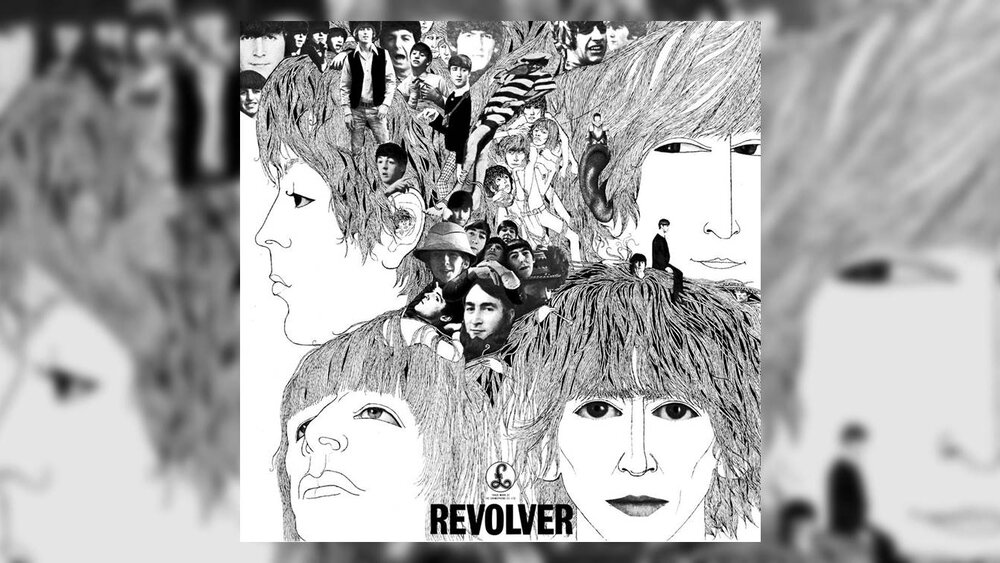
55 years ago today, The Beatles released their seventh studio album, ‘Revolver’, ultimately cementing their reputation as creative studio geniuses. During the recording process the band pushed all boundaries, using Indian instruments and musicians for ‘Love You To’, tape loops on ‘Tomorrow Never Knows’, backward recordings on ‘I’m Only Sleeping’, vari-speeding ‘Here, There and Everywhere’, and nothing but string instruments on ‘Eleanor Rigby’. Additionally, engineers George Martin and Geoff Emerick used non-traditional techniques to record Paul McCartney’s bass parts and Ringo’s drum parts, leading to the album’s heavy emphasis on rhythm. Even “Yellow Submarine” has its innovative moments with Martin and Emerick, alongside the Rolling Stones’Mick Jagger and Brian Jones, using bells, gongs, whistles, and more to create the track’s underwater atmosphere.
1966’s “Revolver” is the album that ultimately cemented The Beatles‘ reputation as creative studio geniuses atop the pyramid of commercial music at the time. It may not have the epic range of material as heard on “The White Album” released the following year, but Revolver marks the first time where the Beatles truly stepped outside of their comfort zone in the studio and expanded the idea of what rock and roll could be.
Coming off 1965’s Rubber Soul, the Beatles were at the peak of their fame. Yet, each member was growing increasingly disillusioned with all that was involved with “The Beatles” and their growing legion of fans. John Lennon was perhaps the most affected, causing a huge uproar in the United States when he proclaimed that the Beatles were “bigger than Jesus Christ.” The demands of the road, the size of the shows, and the non-stop schedule had pushed the band to their limits, so they cleared a few months from their calendar to give themselves time to prepare for their next album. The band used this time to delve deep into their new-found love of LSD–in particular Lennon and George Harrison–all the while experimenting with new instruments and styles of music in an attempt to augment their sound.
By 1966, their newly-discovered depths of creativity allowed the four musicians to embrace their studio environment with a new purpose while hoping to change the direction of their sound by using new recording techniques, instrumentation, and song arrangements. The resulting recordings were a slightly psychedelic-but-commercial mix of rock, orchestral, R&B, and Indian classical styles that re-invigorated the band and their fans.
When they finally entered Abbey Road Studios in April 1966, the band got right down to work and discovered, with the extended time they had to craft each song, their experimentation had reached new levels.
The album’s lyrical content was ground breaking as well. Lennon and Harrison’s contributions to the record were filled with psychedelic references, introspection, and questions about reality, while McCartney delved deeper into his lifelong exploration of love. This record marked the first time that Harrison and McCartney would stretch themselves as songwriters, leading to the Beatles’ first true collaborative album.
Specifically, Harrison’s political lyrics on “Taxman”–where he name-checks British Prime Minister Harold Wilson and Conservative Opposition leader Edward Heath–marked a huge shift for the Beatles, showing their willingness to get involved in the day’s social issues, not to mention lead off an album with a tune penned by the quiet Beatle. Also, the story that McCartney weaved together for “Eleanor Rigby” actually features lyrical contributions from all four members of the band, another shift from their song writing tradition until then. Of course, the loop-heavy mind-meld of “Tomorrow Never Knows” features Lennon at his most psychedelic, with lyrics inspired by the book The Psychedelic Experience: A Manual Based on the Tibetan Book of the Dead by Timothy Leary, Richard Alpert (a.k.a. Ram Dass), and Ralph Metzner.
Revolver is also the first Beatles album that featured songs performed not by the Beatles. “Love You To” features Harrison on sitar, but none of the other members of the band play on the track, as Harrison sought to emulate classical Indian music by bringing the London-based Asian Music Circle to Abbey Road to play tambura and tabla. “Eleanor Rigby” has Paul McCartney’s vocals, but the music itself was performed by a string octet arranged by George Martin, and the Beatles don’t play a single note on the track.
In the end, the Beatles had put together their most impressive album to date. “Revolver” definitively finished the pop chapter of the band’s career, and marked the beginning of their psychedelic period. Revolver blew everyone’s minds when it was released, and marked a new era not just for the band, but for the entire music world.
For some reason, however, the Beatles decided not to play any of their “Revolver” songs on their subsequent 1966 U.S. tour, which turned out to be their last, so the songs were never performed live by the band. Perhaps, the comfort of the studio, along with their new-found ability to use non-traditional musical methods to create their sound, rendered the live experience too boring for the Beatles, in addition to constantly playing shows where they were drowned out by the screams of teenage girls.
While the band’s time as pop music titans may be over, the recording of “Revolver” changed the band and opened the door to their most prolific era as songwriters and recording artists.
The album’s title, like that of Rubber Soul, was a pun, referring to both a kind of handgun and the “revolving” motion of the record as it is played on a turntable. The Beatles had difficulty coming up with this title. According to author Barry Miles, the name that the four had originally wanted was “Abracadabra”, until they discovered that another band had already used it (not Steve Miller Band’s). After that, opinion was split. John Lennon wanted to call it “Four Sides ofthe Eternal Triangle” and Ringo Starr suggested “After Geography”, playing on the title of The Rolling Stones’ recently released “Aftermath” LP. Other suggestions included “Magic Circles”, “Beatles on Safari”, “Pendulum” and, finally, “Revolver,” whose wordplay was the one that all four agreed upon.
The Beatles “Revolver” was released in the UK. The bands seventh album featured: ‘Taxman’, ‘Eleanor Rigby’, ‘I’m Only Sleeping’, ‘Here, There and Everywhere’, ‘She Said She Said’, ‘And Your Bird Can Sing’ and ‘Tomorrow Never Knows’.
Tomorrow Never Knows, by The Beatles The closing song on the album Revolver, While it’s the last song in the album order, it was the first song to be recorded for the album. It was also the first Beatles song to be recorded by Geoff Emerick as head engineer, at the age of 20. What a debut! John Lennon wrote the song in January 1966, with lyrics adapted from the book The Psychedelic Experience: A Manual Based on the Tibetan Book of the Dead by Timothy Leary. The book includes the sentence: “Whenever in doubt, turn off your mind, relax, float downstream.” A few song titles were suggested for the song including Mark I and The Void, but the final name came from a Ringoism that appears in an interview that the BBC conducted with the Beatles in 1964 after their return from their first US tour. Lennon told George Martin that he wanted to sound like a hundred chanting Tibetan monks. Emerick came up with the idea of wiring Lennon’s vocal through a Leslie rotating speaker, thus obtaining the desired effect. The speaker was usually connected to a Hammond organ, but Emerick used it as a stand alone effect and recorded the vocal as it came out of the revolving speaker.
The Beatles supplied a total of 30 or so tape loops to Martin, who selected 16 for use on the song. The tape loops were played on tape machines located at various studios of the Abbey Road building and controlled by EMI technicians in Studio Two. Each machine was monitored by one technician. The four Beatles controlled the faders on the mixing console while Martin varied the stereo panning and Emerick watched the meters. Eight of the tapes were used at one time, changed halfway through the song. According to Martin, the finished mix of the tape loops could not be repeated because of the complex and random way in which they were laid over the music. It was a never-to-be-repeated “performance”.
“Some people call my music dream-pop,” says Benjamin Cartel, a journeyman songwriter who’s never been afraid to blur the boundaries between styles. “I tend to resist being a ‘genre’ artist. I just want to make the best Benjamin Cartel music.”
Benjamin’s music has taken him across much of the world, first as a member of Kaiser Cartel whose critically-acclaimed albums earned the duo a spot in the folk-pop revival of the 21st century, and later as an adventurous solo artist. “Write At Home“, his fourth solo release, marks a new chapter in his unfolding story, rolling classic pop hooks, indie sensibilities, 1960s influences, and his own brand of American roots rock into a sound that’s at once fresh and familiar.
“Write At Home” is an album about departures and new arrivals. Cartel wrote the songs during a period that found him leaving New York, where his family had lived for four generations, and moving to eastern Kansas with his wife and twin toddlers. For years, he’d been creating melody-driven music informed by his observations of the world around him. Relocated to a new area, he suddenly found himself in a vastly narrowed world, spending nearly all his time in the same household. His new songs reflected that changing perspective, revolving around themes of looking inward, establishing a home base, navigating the complex relationships between parents and children, and stumbling toward self-improvement. Together, those songs formed a series of vignettes 10 little glimpses of life written by a man who relishes every little minute of it.
Write at Home, whose unique patchwork of sound — the horns and homespun acoustic guitars that punctuate “Calm Down”; the swooning steel guitar and heartland hooks that turn “Bad Ole Days” into a folk-rock anthem; the stomp-clap groove and pulsing synth-bass that give way to the lushly harmonized chorus of “Shut Inside” marks a change from Benjamin Cartel’s usual approach to the studio. At the album’s centre, though, remains his career-defining focus on melody.
“Write At Home” is a record that’s both timely and timeless. An album that speaks to our modern existence yet sources its influences from vintage artists and classic sounds. For Benjamin Cartel, it’s another slice-of-life observation the latest chapter in a story that continues to unfold with each album.
Cartel offers his own thoughts on the inspiration behind the song:
A ‘Summer Flame’ is a brief candle of a relationship that burned brightly in summer and burnt out by the fall. Though romantic and exciting, you may have also had the feeling it was not meant to last for whatever reason.
You may look back with joy, fondness, and perhaps sone sadness and longing too. You can’t help it you’re only human. This time in your life comes back to you like a beautiful song that you sing to yourself to remember.
The new video for “Summer Flame” is all Jangly guitars and breezy vocals coalesce in this bittersweet power pop morsel about a fleeting relationship. Cartel showcases restraint both in the instrumentation and in his own singing, delivering simple, catchy vocals that capture the emotions of the experience he is writing about. It takes a special kind of songwriter to create music that is somehow sad yet musically bright, and that is exactly what we get with “Summer Flame.” The video, of course, does a fantastic job at providing a visual to further illustrate the music.
Having originally been born as a solo drum machine project by Bert Hoover, Hooveriii (pronounced “Hoover Three”) has now evolved into it’s true final form – a six member band adept at creating their own brand of psychedelic space rock. And after almost a decade in, the band is set to release their sophomore album and debut for The Reverberation Appreciation Society, “Water For The Frogs”. Influenced by Iggy’s The Idiot, Bowie’s Berlin records, and Soft Machine, the LP sees the band creating their own version of prog rock, circa 2021.
In 2019, Hooveriii took their live show to Europe for the first time. Bert Hoover shares, “seeing all the old cities and beautiful landscapes while becoming closer as a band had a huge impact on this album. A lot of our favourite music came from the Krautrock scene in Germany from the late 60’s-70’s, and when we had a day off in Furth, Germany, we spent most of it writing the record,” he continues, “we were able to rehearse in an old German bunker that has been converted to rehearsal space. It definitely had a strange energy that helped give this album light.”
The debut album by Emma-Jean Thackray feels exactly like the sort of thing we’ve been longing for over the last 12 months: a transcendent, human, shared experience. Across its 49 minutes, Yellow draws glowing lines between ‘70s jazz fusion and P-Funk, the cosmic invocations of Sun Ra and Alice Coltrane, and the gorgeous orchestration of the Beach Boys.
“I wanted the whole thing to sound like a psychedelic trip,” explains Thackray. “You put on the first track, it takes you through this intense experience for almost an hour, and then you emerge on the other side transformed.” The result is an album that speaks the language of positivity, as rich lyrically as it is musically. You might best understand what Thackray does through reference to auteur figures like Brian Wilson or Madlib, who straddle instrumentation, arrangement and production in order to bring the sound in their head to fruition.
British jazz musician Emma-Jean Thackray makes music that’s transcendent, with an album that explores spirituality in all of its variations. On her debut album Yellow, Thackray’s dance-aligned interpretation of jazz is a psychedelic foray into the subconscious, guided by her incredible vocals that nestle deep into the crevices of our minds. Her intention is written all over the album as she dances around her skilled backing band in a gentle unification of their ideas, digging deep into the meanings of dualism and human connection. This pursuit is something to be reminded of, and Thackray nudges the audience with care.
As a composer, producer, singer, multi-instrumentalist and DJ, Emma is just as at home working with the London Symphony Orchestra as she is hosting her show on Worldwide FM. Production credits and collaborations include the likes of Squid, Makaya McCraven, BLU and Pinty.
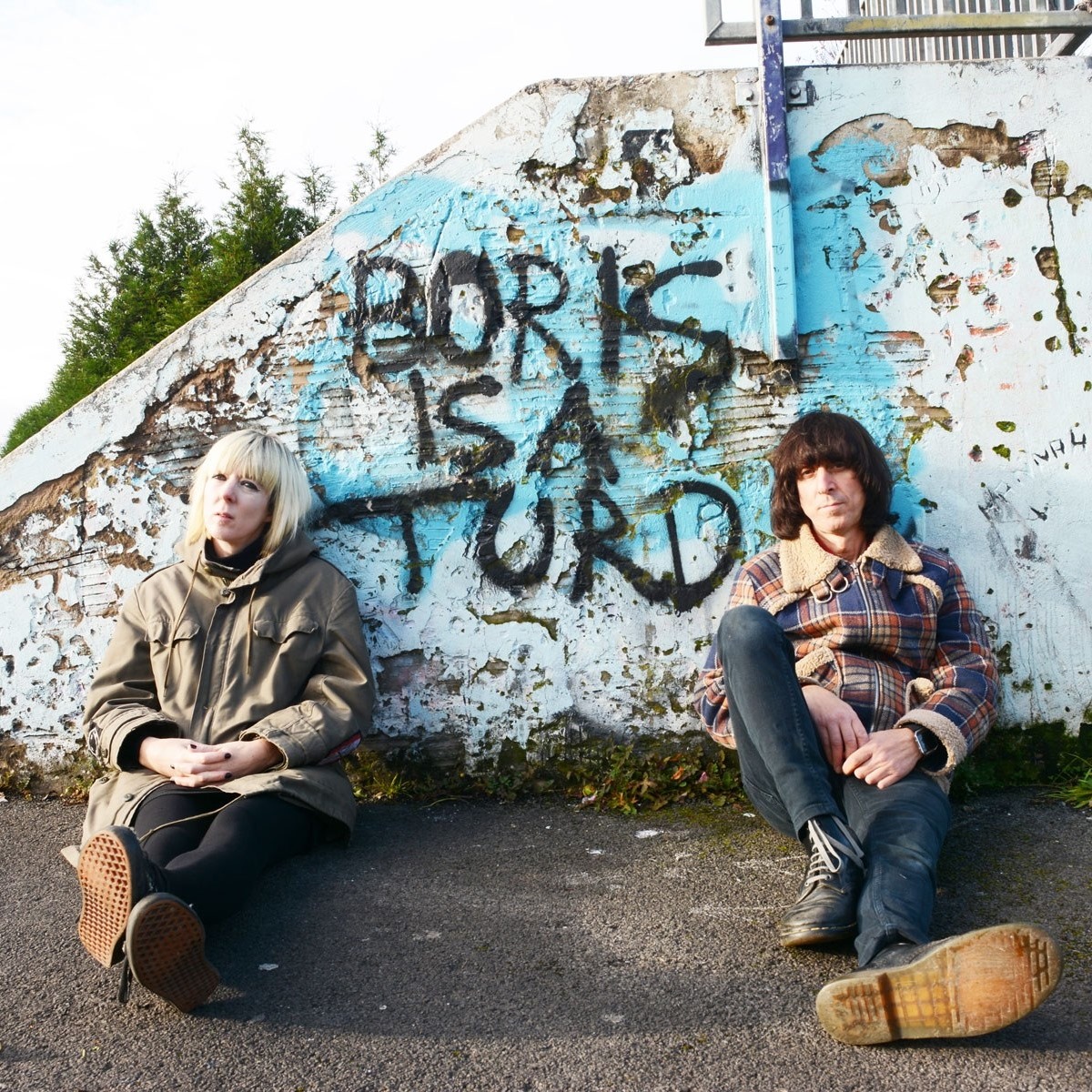
The Lovely Eggs are a psych-punk rock duo from Lancaster, England who have teamed up with the legend himself, Iggy Pop, on their new single, “I, Moron.”
The slice of punk and garage rock has a classic chugging anthemic punk feel to it that is perfectly suited for the occasional vocal contributions of Iggy. The song is perfectly timed considering the state of the world these days.
The Lovely Eggs release their brand new single “I, Moron” featuring Iggy Pop on Egg Records. The vinyl comes with eye watering art-work by illustrator Casey Raymond. Backed by a B Side cover of Iggy Pop’s “Dum Dum Boys” from his 1977 album ‘The Idiot’. Being in The Lovely Eggs we’re kind of used to surreal experiences but collaborating with Iggy Pop takes the biscuit,” exclaims singer/guitarist Holly Ross. “It’s actually unbelievable. For him just to say nothing but “moron” over and over again fitted in with the sentiment of the song perfectly. He just Got it. We are all morons. In a world of moronic things. In a world of moronic ideas. You are moron. I am Moron. We are Moron.”
I, Moron. The new single by The Lovely Eggs Featuring Iggy Pop Out July 9th, 2021
The Sasami -produced third album by Los Angeles musician and a member of Kevin Morby’s band Meg Duffy is a breakthrough, touching on everything from rangy Americana to Robyn-indebted dance pop. Meg Duffy’s new album as Hand Habits radiates un: It’s unburdened, unbridled, unhurried, unashamed, unfamiliar, unfussy; it unearths, unravels, uncovers, understands. And — although this is one of music writing’s most pathologically overused uns — it’s unprecedented.
Unlike 2019’s spare, gorgeously still “placeholder”, “Fun House”, out October 22nd on Saddle Creek Records, is lush, bright, in constant forward motion, in a constant state of change. Duffy’s third and best record, it possesses some grimy, earthen magic — the result of hard work, to be sure, but also of their seemingly alchemical connection with producer Sasami, who pushed Duffy to find a more daring, more truthful place within their music. “For this record, I was allowing myself to shine a light on memories and experiences that I’ve had,” Duffy says, “Rather than running away from them.”
Hand Habits, the project of Los Angeles-based musician Meg Duffy (they/them), is back with their new album Fun House is the most ambitious Hand Habits album to date. Produced by Sasami Ashworth (SASAMI) and engineered by Kyle Thomas (King Tuff), the record was not intended as a reaction to the pandemic, but it was very much the result of taking a difficult, if much-needed, moment of pause. Emboldened by going into therapy and coaxed by Ashworth to push the songs into unexpected new shapes, the resulting music is more acutely personal and stylistically adventurous than anything you’ve heard from Hand Habits before. The push/pull of styles, paired with songs that move deftly between the present and past, give the record a wildly diverse, hall of mirrors quality that befits its name. Where previous Hand Habits records could be fairly insular affairs, Fun House feels ebullient, lush, a fully-realized conversation.
Although Duffy stresses that Fun House is decidedly not a pandemic record — and with its blushing synths and rangy solos and grandiose acapella breaks, it certainly doesn’t sound like one — they say that the seeds of the album began as the pandemic took off. After years of touring and session work, both as Hand Habits and in the bands of SylvanEsso and Kevin Morby, among others, Duffy was worn out. “I had been touring for a very long time, and not addressing kind of, like bare minimum self care, and emotional responsibility. And I think I started getting really angry. And I couldn’t really understand where that anger was coming from,” they say. Therapy was a good start in addressing their emotional discontent, as was a new, more honest, more trusting record. “I couldn’t continue to not address the unease I think that I had been experiencing for a long time. I think it would have been easier. But maybe not in the long run.”
Hand Habits – “Aquamarine” from Fun House out October 22nd, 2021





 The Fat Angel Sings