This week, Wombo unveiled their new single/video, “Neon Bog,” taken from their forthcoming album, “Danger in Fives” (out August 8th). The track’s video is an eleborate set up of surreal practical effects (helmed by the band’s own Cameron Lowe) that distills Wombo’s singular essence. It’s the perfect companion for the “off-kilter, whimsical gem” (Stereogum).
“Danger in Fives” isn’t a reintroduction; it’s a reminder. Throughout the record, Wombo not only enhance their formula, but routinely perfect it. Maintaining the confidence of their last full-length, 2022’s “Fairy Rust,” “Danger in Fives” reconnects with the intuition that led their wild experiments on the 2020 debut LP “Blossomlooksdownuponus”. The elements central to Wombo remain true, and are only strengthened across a near-decade of crafting mesmeric rock.
But that’s not all! We’ve got some limited “Danger in Fives” tees up for pre-order now! Designed by Cam, modeled by Sydney, and blessed by Joel. These tees are avail inblack (unisex) and white (baby tee) — stock is very limited so get your orders in before there’s nothing left to order
& while we’re at it — you got your Wombo tickets yet? Big tour right around the corner & the first support slot is officially spoken for. Fire Talk extended fam shower curtain will be joining the band on the east coast,
from Wombo’s new album, “Danger in Fives”, out August 8th on Fire Talk
On it’s release in 1977, Johnny Thunders & the Heartbreakers’ “L.A.M.F.” had a mastering fault, widely condemned as a ‘muddy mix’. Track Records went bust and the master was lost – so subsequent releases were compiled from outtake or re-mixes. Forty-four years later, the master has been found in an attic, and the classic punk album “L.A.M.F.” can at last be heard as the band and producers intended!
Soon after leaving the New York Dolls, guitarist Johnny Thunders and drummer Jerry Nolan formed theHeartbreakers with Television refugee Richard Hell. Their only album, 1977’s “L.A.M.F.”, is a cornerstone of the New York City punk scene, with songs like “Chinese Rocks” — cowritten by Dee Dee Ramone, whose band later recorded a version — chronicling drug abuse, perpetual disappointment and failure.
Found in an Attic – a punk rock archaeological discovery – a copy master of the original 1977 Track Records tape, without the ‘mud’!
This classic punk album, recorded in London by the New York band featuring two New York Dolls, was always controversial – and not just for the acronym. Upon release on Track Records in 1977, it was widely condemned for having a ‘muddy mix’ – later found to be a mastering fault. When Track went bust the following year, manager Lee Black Childers burgled the office and liberated the tapes – he found everything except the master-tape.
Originally saddled with a muddy, barely listenable mix, the Heartbreakers’ only album has been the center of discussion for decades. One thing is clear: The songs are almost uniformly great, anchored in mid-’70s power pop and on-the-horizon punk rock. Johnny Thunders and Jerry Nolan cut their teeth in punk pioneers New York Dolls, so the sentiments are genuine. That energy blazes through the opening cut “Born to Lose.”
Subsequent releases were remixed from the multi-tracks or compiled from outtake mixes – the ‘lost ’77 mixes’ in 1994 being well-received and the version most known ever since. A lift from the vinyl didn’t achieve much clarity. Meanwhile, fans found the ’77 cassette version didn’t have the infamous ‘mud’, nor did certain European vinyl matrixes.
In 2020 a chance meeting led to Daniel Secunda’s archives. He was an old-school music biz pioneer who became a Track Records director – and the Heartbreakers “L.A.M.F.” co-producer. Among his many tape boxes were two with no artist name, marked ‘Copy Master 12.7.77’. They turned out to be a crystal-clear “L.A.M.F.”, just as the band and producers intended it.
Wombo’s third album, “Danger in Fives”, isn’t a reintroduction; it’s a reminder. Throughout “Danger inFives”, Wombo — the Louisville-bred three-piece of Sydney Chadwick (bass/vocals), Cameron Lowe (guitar), and Joel Taylor (drums) — not only enhance their formula, but routinely perfect it.
The 11 tracks on “Danger in Fives” fine tune Wombo’s enchanting alchemy while firmly pushing the band into new territory. Wombo first connected in Louisville in 2016 and have crafted a unique lane over the near-decade since forming, contorting post-punk structures into uncanny shapes.
today the band is dropping its final advance single, “S.T. Tilted.” It comes alongside another unreal video helmed by the band, and it’s a perfect distillation of Wombo’s unique sound: hypnotic vocals, frantic guitars, and incisive drumming.
On “Danger in Fives” they twist another knot into their belt, and come out creatively renewed. Throughout “Danger in Fives”, it’s clear what has made Wombo one of the most respected bands in their class, and it’s thrilling to hear them command new terrain.
Wombo’s new album, “Danger in Fives”, out August 8th on Fire TalkRecords
Australian experimental outfit King Gizzard & The Lizard Wizard have built a well-earned reputation as one of the most prolific, adventurous and inventive bands of all time. Since 2010, the band have released 25 studio albums, which range from expansive jazz-rock, to spaghetti Western soundscapes, semi-acoustic cosmic ballads, sci-fi prog, kaleidoscopic garage rock, thrash metal, explorations of microtonal tunings, kraut-rock and more. King Gizzard’s prolific nature has led them to release music at a frenetic pace, and their intense desire to seek out new sounds and follow new creative paths means that every one of their multitude of releases sounds different from the last. Often released in swift progression of one another (notably, the band released five albums in 2017, and again in 2022, with three in the month of October 2022 alone) King Gizzard have taken the traditional rules of the industry of music making and thrown them out the window. Their intense stage shows and the puzzle-like intricacies of their records have attracted a global fanbase of dedicated Gizzheads, while their Bootlegger program – which sees the band make their music available to independent record labels for free – results in hundreds of variations of certain releases, across vinyl, cassette and CD. Formed in 2010 in Melbourne, Australia, by a group of friends who jammed casually, the line up consists of Stu Mackenzie, Ambrose Kenny-Smith, Cook Craig, Joey Walker, Lucas Harwood, and Michael Cavanagh.
Yo indie labels, bootleggers, fans, weirdos. We’ve got a deal for ya…if anyone wants to release this show, you’re free to do so. Feel free to get creative with it if you like – it’s yours. Directed, produced & shot by Heaps Keen @heapskeenfilms, aka Jackson Devereux & Allen Dobbins Recorded by our sound crew: Sam Joseph, Joe Santarpia, Grace Reader, Gaspard De Meulemeester Lights and visuals by Terrence Ankeny and Jason Galea King Gizzard are: Amby Kenny-Smith, Mickey Cavanagh, Cookie Craig, Joey Walker, Lukey Harwood and Stu Mackenzie
Recorded live at The Gorge Amphitheatre on September 14th, 2024.
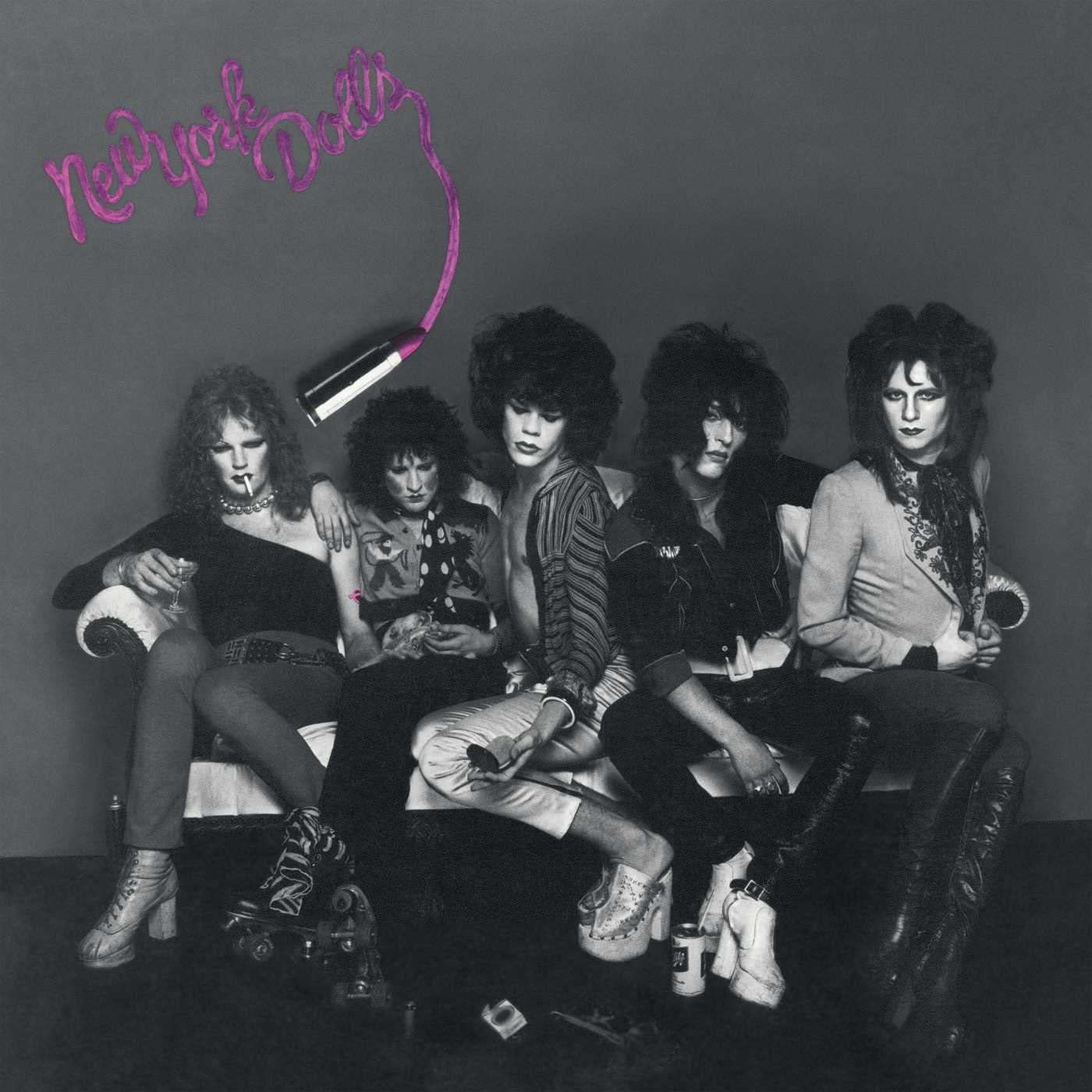
In 1972, when rock & roll was all but dead in Manhattan, five cross-dressing glam punks from the boroughs convened and began hammering out sub-Chuck Berry rock for the downtown in-crowd. It took another year before a record company dared to sign them, thus foisting The New York Dolls on an essentially uninterested world. Taking their cue from the band’s guitarist/Keef-alike Johnny Thunders, hardcore Dolls fans pooh-poohed Todd Rundgren’s production as wimpy: twenty-five years after its release, songs like “Personality Crisis” and “Looking for a Kiss” sound more trashily invigorating than ever.
Declared both the Best New Band and Worst Band in Creemmagazine’s year-end poll, the New York Dolls were nothing if not polarizing when their self-titled first album hit the streets. Back then they were occasionally crossdressing Lower Manhattan gutter punks that – despite packing such NYC venues their debut, released July 27, 1973.
Today, they are hailed as innovators and visionaries. What a difference time can sometimes make. The album was recorded in eight days at New York City’s Record Plant and mixed in half a day. During the process there was no love lost between the band and the album’s producer Todd Rundgren, who disdained the quintet as amateurish. Their aura of danger, recklessness, flamboyance and decadence was borne out by a trail of death: original drummer Billy Murcia died in 1972 from an overdose; guitarist Johnny Thunders (a longtime heroin addict) in 1991 from indeterminate causes that could have been ill health, drugs and/or foul play; drummer Jerry Nolan the next year from chronic health problems.
They had emerged from a residency in New York’s Mercer Arts Center as both pariahs and icons.
Now considered proto-punks, the Dolls were a bridge from glam and early hard rock to punk (the band’s late-in-career manager was Malcolm McLaren, who went on manage the Sex Pistols). They were an inspiration for Kiss and such later metals bands as Motley Crüe, Guns N’ Roses and Hanoi Rocks. Today such album tracks as “Personality Crisis,” “Trash,” “Looking for a Kiss” and “Jet Boy” are regarded by some as rock classics, and the LP is seen as one of rock music’s great debut records.
In 2004 original members Johansen, Syl Sylvain and Arthur Kane reunited to play London’s Meltdown festival, invited by that year’s curator, Morrisey. Kane died later that year from leukemia. Johansen and Sylvain released a new Dolls album in 2006, and another in 2009 that was produced by – of all people – Rundgren.Sylvain died on January 13th, 2021.
The New York Dolls is a powerhouse of Stones swagger, bluesy attitude, garage punk sloppiness and 60s girl group pastiche. From the opening scream of “Personality Crisis” via the social commentary of “Vietnamese baby” and chronicling of NY’s demi-monde in “Looking For A Kiss”, “Subway Train” or “Bad Girl” it appealed equally to fans of the MC5, glam or heavy metal. No one at this time had combined all this into a single band. The riffs of Johnny Thunders and the bawling of David Johansen gave birth to big hair metal as well as punk and still sounds like the end of civilisation. Their follow-up was so rightly named, “Too Much Too Soon”
This week, Bright Eyes shared a new song, “1st World Blues,” that is influenced by ska music and is a takedown of late stage capitalism, with references to Reaganomics and large chain stores such as Hot Topic and Old Navy. It is accompanied by a lyric video (which plays more like a regular music video.
Bright Eyes is Conor Oberst, Mike Mogis, and Nathaniel Wolcott. The band collectively had this to say about the song in a press release: “‘1st World Blues’ is an homage to ska in all its waves. From Desmond Decker to Tim Armstrong, we’re just happy to add our track to the bin.
The video is inspired by NYC 90s hip hop, which like ska, has a long tradition of unifying people and using celebratory music to convey subversive political themes. To be played loud. Windows down. Summertime.”
MOJO’s finest writing on Nick Cave in a single deluxe volume.
Forty-five years ago, Nick Cave and his band The Birthday Party relocated from Melbourne, Australia to London, England, lured by the city’s thriving post-punk scene and the endless possibilities the capital promised. It was the start of a musical, spiritual and, indeed, chemical journey that would see Cave evolve from The Birthday Party’s unholy goth pin-up into a careworn songwriter of rare depth, beauty and transcendent power, abetted by his darkly suave backing group The Bad Seeds.
To celebrate the singer’s extraordinary career, MOJO magazine has brought together its finest writing on Cave in a new, deluxe 132-page bookazine. Drawing on over 30 years of exclusive interviews and in-depth features, we unravel the story of how Cave turned from troubled Melbourne teenager into fearsome goth frontman, and how his complex relationship with hard drugs and religion would feed into The Bad Seeds’ ever richer, darker and more sexually charged music.
Phil Sutcliffe’s piece on his early years touches on the traumatic loss of the singer’s father when he was 21, news of which arrived while Cave was detained in a Melbourne police station, while Andrew Male investigates how The Birthday Party’s violence – on-stage and on-record – was superseded by the fascinating fruits of The Bad Seeds’ experimental mid-’80s years in Berlin.
As the 1980s progressed, so did Cave’s descent into substance abuse, which an early ’90s move to Brazil and the hit “Murder Ballads” LP – featuring duets with Kylie Minogue and Polly Harvey – did little to stop. But, as James McNair’s revelatory – and occasionally testy – interview with the singer from 1997 reveals, he was slowly turning a corner into sobriety, the hymnal and timeless “Into My Arms” from “The Boatman’s Call” album tellingly written after attending church in rehab.
In the 2000s, a cleaned-up Cave unexpectedly transformed into a cultural icon, and Dorian Lynskey’s panoramic survey of the singer’s latter years – marked by the tragic loss of his son in 2015 – explores why. And, for your entertainment and enlightenment, we also present our choice of Cave’s 50 Greatest Songs Illustrated with rare and iconic photographs, Mojo Collectors’ Series: NICK CAVE is an essential purchase for Bad Seeds fans and all music connoisseurs.
Ron Gallo’s “Too Tired To Love You” — both the studio version of his new single and the live performance “Too Tired To Love You (Live at Basilica San Vitale)” — capturing the emotional cost of now.
Ron Gallo is an ever-evolving artist whose work straddles the line between confrontational and compassionate, absurd and sincere. With a career defined by sharp wit, garage-punk chaos, and existential inquiry, he’s long used music to wrestle with the contradictions of modern life.
After years of genre-hopping, world touring, and throwing punches at society’s failings, Gallo now finds himself in a quieter but no less urgent mode, one rooted in clarity, immediacy, and a return to the essence of his song writing.
Gallo’s past work includes the acclaimed “Heavy Meta” (2017), the genre-defying “Peacemeal” (2020), the fiery “Foreground Music” (2023), and most recently, “7AM Songs of Resistance“. Now entering a new chapter, Gallo is reconnecting with what first drew him to music: words, voice, and the urgency to say something real — before the world fully falls apart.
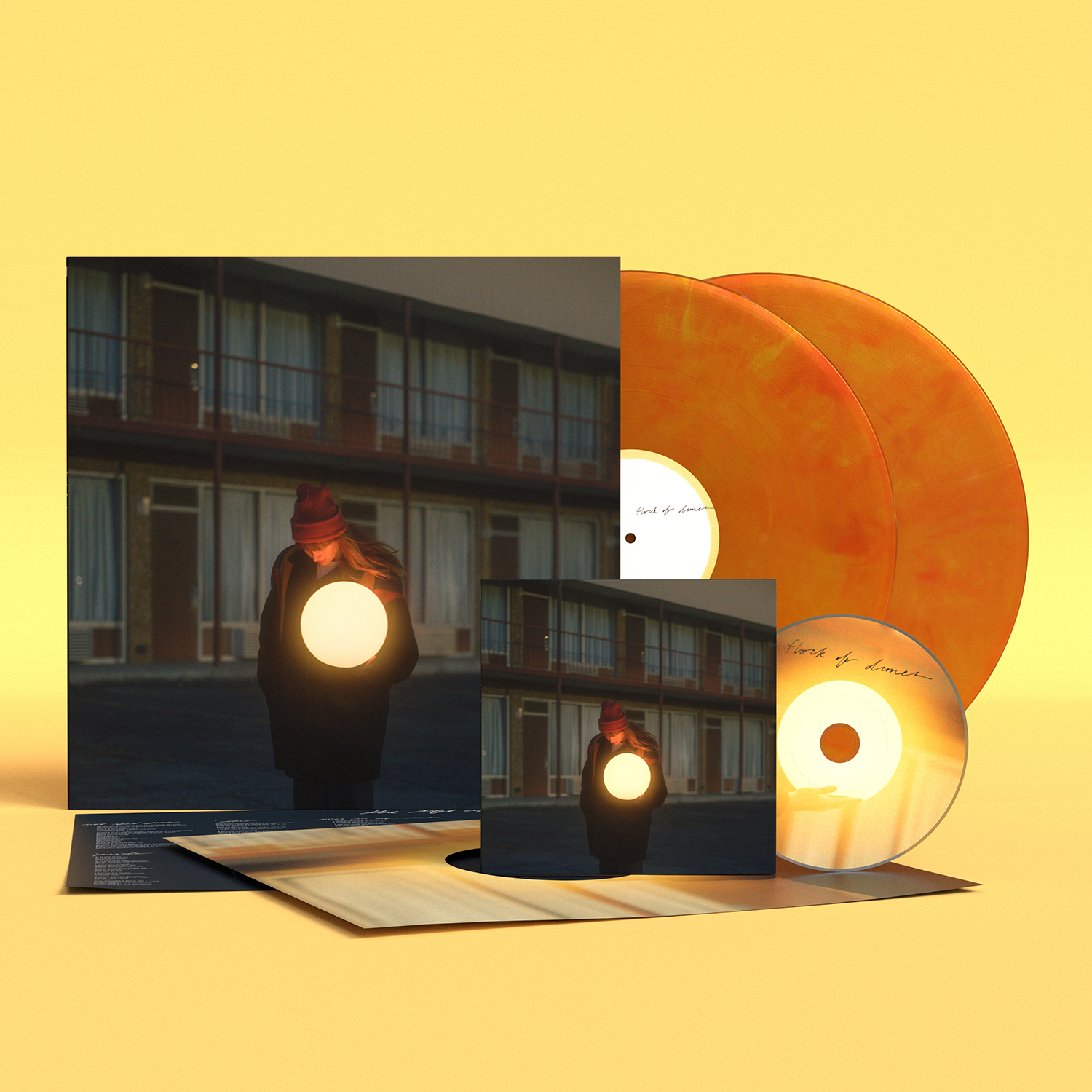
Flock Of Dimes next record, “The Life You Save“, will be released on Sub Pop on October 10th, 2025. You can listen to the first single, “Long After Midnight,” and watch its accompanying video, directed by Spence Kelly. Put succinctly, this record is about addiction, co-dependency, and trying to learn how to find peace in the face of others’ suffering. The story of this record is one that I’ve shied away from addressing directly, because in many ways I didn’t yet have the perspective I needed to understand that it was also mine to tell.
I am so proud of this record—not just because of the songs, but because the fact that it exists and I am sharing it with you means that I am further along on my own path towards peace than I ever dreamed I could go. If you see yourself in any part of this short description, this record is also for you.
I produced this record myself with indispensable help from Adrian Olsen (engineer/mixer), Nick Sanborn (additional production), and many brilliant musicians: Alan Good Parker, TJ Maiani, Jacob Ungerleider, Matt McCaughan, Adam Schatz, Caroline Shaw, and Meg Duffy. It was recorded at Betty’s in NC (add. engineering by Alli Rogers) and at Montrose Recordings in LA, and was mastered by Huntley Miller.
Last but not least: I’m going on tour! I’ll be taking a killer band
A collection of 1980s classic American power pop has been released this summer by Cherry Red Records.“I Wanna Be a Teen Again: American Power Pop 1980-1989 arrived July 18th, 2025. The 3-CD set, spanning more than 75 tracks from such recording artists as the Bangles, Marshall Crenshaw, DwightTwilley, and Katrina and the Waves,
From the label’s May announcement: In 1979, The Knack kicked open the doors for a global power pop explosion, and a year or so later, almost as quickly, the doors closed again, but not before a mass of their contemporaries followed them through. Soon, a bunch of others got caught up in the excitement and the record business relearned the power of guitar-driven pop – the first few years of the ’80s were as exciting for power pop as the last couple of the 70s had been, and even when it returned to the underground, the music continued to flow throughout the decade. Other acts represented in the collection include the Romantics, Eric Carmen, Rick Springfield, the Go-Go’s, the Smithereens, and Cheap Trick.
“I Wanna Be A Teen Again” follows the 80s power pop explosion from its hypocentre early in the decade to its enduring late period gems, exploring both leading and lesser lights, the old hands and new talents who made it such an exciting musical happening. By the middle of the decade, the term power pop had been all but retired, but a handful of new bands found success by avoiding it, whilst new movements, including the Paisley Underground and indie pop, helped keep others alive under new brandings. All the while a small number of holdouts, the pop equivalent of the soldiers lost in the jungle after the war had ended, strove to keep the music and the name alive.
Packed with classic cuts and long-overlooked rough diamonds, and appearing at a time when new outfits like The Lemon Twigs pick through the body of 80s power pop for material and inspiration and some key artists like Redd Kross and The Bangles are celebrated in books and film, I Wanna Be A Teen Again is a timely examination and celebration of this action-packed era and its thrilling sounds.





 The Fat Angel Sings