Embracing 2022 with everything they’ve got, ARIA winners Spacey Jane have a huge year ahead of them. In the midst of a stack of international touring, with some US and UK shows sold out months in advance, the four piece are gearing up to release their second album “Here Comes Everybody” on Friday, June 10th.
Taken from the working title of Wilco’s seminal album “Yankee Hotel Foxtrot” (one of the bands’ favourite albums) “Here Comes Everybody” began life at the start of the lockdowns in 2020 and features already released tracks “Lunchtime” and “Lots of Nothing”. Lead singer Caleb Harper talks through the themes of “Here Comes Everybody“.
“Our first record (Sunlight) discussed personal experiences of mine and it was a blessing to see how many people related to those stories. I want this record to be for youth persevering and thriving emotionally under the weight of our generational burden made up of climate change, COVID etc. Feeling like you have the responsibility of your entire future on your shoulders without any say in what happens creates anxiety and uncertainty. I think COVID took away the sense of unity that gives young people assurances in such times. I know music isn’t a replacement for taking control and galvanizing positive change, but I hope this record can soundtrack some of those moments in people’s lives.”
Latest single “Sitting Up” further reflects the overarching album themes.
“I wrote this about the way I was feeling and behaving when I was in my final semester of uni before dropping out. I left quite unceremoniously by not showing up to any of my final exams or handing in final assessments. I had no idea who I was, I was seriously depressed and completely spinning out. I felt like I’d created this terrible facade of myself for all of these people that I knew and that really I hadn’t been myself around someone or been truthful about my feelings in years. I didn’t care about my life or what I was doing to my body, I thought I was going to end up dead if I didn’t fix something. I felt like I was the only one going through those feelings and even though that wasn’t true, it made me feel so alone.”
Spacey Jane have announced their new album“Here Comes Everybody” is out Friday, June 10th.
Following on from their album “Fantasies Of A Stay At Home Psychopath”, Manchester band The Blinders release the first part of their two-part EP, “Electric Kool-Aid“. The EP is the band’s first release since becoming a quintet, broadening their instrumentation with the addition of second guitarist EoghanClifford, Johnny James on keys and Thomas Castrey on drums.
Title track “Electric Kool-Aid“, opens the EP, standing at just over a minute long. Short yet sweet, the opener reintroduces listeners to the iconic tones of vocalist Thomas Haywood’s guitar that work in harmony with Charlie McGough’s bass before ambient vocals kick in to repeat the EP’s title.
“Barefoot Across Your Water” follows, spotlighting Johnny James’ skills on keys. A romantic, sincere number, the track sees five piece brings something new to the table – showcasing each member’s talents and how they work blissfully with Thomas Haywood’s vocals that propel the track forward.
Next follows the EP’s lead single, “City We Call Love“. Now a key part of the band’s live shows, since being debuted on tour last August, this track holds stunning metaphors about the links between a city and the feeling of love, whilst pairing them with strong, menacing instrumentation to build what remains to be a stand out number on “Electric Kool-Aid (Part I)”.
A track that was left off of the band’s second album, “Fantasies Of A Stay At Home Psychopath”. Now given its time to shine, The Writer is given a new lease of life within “Electric Kool-Aid (Part I)”, filled with intensity and political frustration, before calming slightly for its middle and bursting into life once again.
Last not least, “I Hate To See You Tortured”, sees the band wear their hearts on their sleeves. Showing immense control and passion with an anthemic chorus, with this track The Blinders prove that sometimes change can be for the better. Featuring what could be some of Thomas Haywood’s strongest lyrics to date – “I Hate To See You Tortured “closes the EP perfectly.
Electric Kool-Aid (Pt. 1) is EP will now come on January 21st..
London four-piece Crows will release their highly anticipated second album, ‘Beware Believers’, on April 1st 2022 via Bad Vibrations Records. Conjuring a dark and visceral post-punk that’s been hardened by years of notoriously rowdy live shows, Crows have amassed a legion of die-hard fans since they formed back in 2015 and cultivated a singular, much-adored presence in the British alternative music scene. Equal parts ferocious and hedonistic, the incoming ‘Beware Believers’ LP arrives off the back of their critically acclaimed 2019 debut ‘Silver Tongues’, international touring and festival appearances, and shared stages with the likes of IDLES, Wolf Alice, Girl Band, Metz, Slaves and Protomartyr.
Following the release of their long-awaited debut album on the IDLES-run Balley Records back in 2019, Crows immediately set to work on its follow-up and by January 2020 they were already back in the studio tracking what would become the ‘Beware Believers’ LP – and then Covid hit. “Once we knew Covid was here to stay, we took the first break we’ve taken since we released our first single ‘Pray’ in 2015. Being locked down for three months unable to finish the last bits of the record was very frustrating but it did mean we could come back to the album with fresh ears and make sure it sounded like it should: a true representation of Crows.”
Loud, cathartic and abrasive – a quintessential Crows record it certainly is. “Beware Believers” has felt like a marathon, a real endurance test that’s been a long, winding road filled with highs and lows and plenty of twists and turns”, frontman James Cox says: “The majority of the themes on the album came from what was going on in the world around Summer 2019 when we started writing the album. Covid wasn’t in our lives and the biggest impact was Brexit and the madness our government were putting us through. I was reading a lot of J.G. Ballard and Kurt Vonnegut, mad dystopian novels, whilst all this craziness was going on around us and it was a weird headspace to get into.”
‘Room 156’ is lifted from ‘Beware Believers’, the new album from Crows due out April 1st 2022 on BadVibrations Records.
New album from Crows out April 1st 2022 via Bad Vibrations Records. Standard version comes on 180g bone-coloured vinyl. Deluxe version comes in a heavy tip-on printed gatefold sleeve on 180g black vinyl.
Southern California’s Dream, Ivory – a duo composed of brothers Christian and Louie Baello – shares the new video for the single, “Blue,” from their self-titled debut album on AWAL records.“Dream, Ivory” is the product of long hours spent in their Lake Elsinore bedroom, Christian helming the production and Louie growing into lead vocalist. Only 11 months apart, the Baellos shared everything – clothes, toys, and music. “We played rock-paper-scissors to choose who got to keep a Gorillaz album; Louie won and I cried the entire way home,” says Christian. “He ended up giving it to me because he felt bad.”
Raised in a Filipino household, Christian and Louie’s parents wanted them to be stars. “Ever since we were kids, our Dad would always tell us that our star is shining, and will forever shine on,” say the brothers. Their parents enrolled them in piano lessons, which they both hated at the time. “We would dread going to class, because we wanted to go and play like the other kids. Now, we are so grateful that we had the opportunity.” Their earliest musical experiments included re-enacting guitar solos from performance videos they watched online and sharing their own cover songs on YouTube, which would be the impetus to creating their own art.
“When we first started Dream, Ivory I was still in high school and it was a way of self-expression,” says Louie. Dream, Ivory’s hazy and melancholic atmosphere was inspired by bands such as Beach Fossils, Slow Dive, and Beach House. “Blue” is an enthralling glimpse into their collaborative energy. “It’s a typical ‘heartbreak song,” adds Louie. The accompanying video was produced by Hungry Ghosts, and is the first in a series of new videos the band will be sharing ahead of more new music in 2022.
This single is from their debut self-titled record, out now.
It takes just seconds of Catcher’s music to see how they’ve managed to become one of NYC’s hottest guitar-wielding prospects. The fuzzy squall heard on their early singles is alive with the same gripping malaise that made Iceage and Protomartyr such pace-setting forces. And it’s made all the more impressive that the stony-faced gang have carved all this attention off the back of visceral live shows and just a handful of releases. Hop aboard early…While post-punk has never really left NYC, it’s fair to say it’s been enjoying somewhat of a resurgence of late thanks to bands like Nation of Language and Geese. But whereas most bands under the broad banner of post-punk take a more nuanced, formalist approach, Catcher deal primarily in blunt force trauma.
To build word of mouth off live performance is a challenge during normal times, but to do it when gigs are scarce takes a seismic force of nature. Enter Brooklyn’sCatcher, who have enjoyed a lightning quick ascent despite the pandemic-induced slowdown. In the past year and half since Austin Eichler and Wilson Chestney relocated from Texas, the now six-piece’s furious post-punk din has shaken venues across NYC to their foundations, with frontman Eichler leading the charge, stalking the stage with a singular, confrontational intensity.
Catcher seem to have arrived at precisely the right moment to remind a city of starved concert-goers how visceral and exhilarating a live show can be. And as far as Chestney is concerned, the feeling is mutual: “The first time I ever played a show back in Texas, I knew this is what I was going to do. It was almost like I had no choice anymore because it was clear nothing was going to fulfill me the way this does.”
Eichler and Chestney met in Texas while attending film school; Chestney because of a long-held interest, Eichler because he dropped out of a history course and was “already racking up student debt, so I might as well learn something I knew nothing about.” Both had previously dabbled in music and began to collaborate, though not with any specific intention at first.
While Vini Reilly’s The Durutti Column made its name with those early Factory Records offerings, the project’s output actually stretches out far beyond Tony Wilson’s label.
Once Factory shut up shop in the early 1990s, The Durutti Column went on to have runs with the Artful and Kooky imprints. Reilly had been with the latter for a few years by the time he issued ‘Sunlight to Blue… Blue to Blackness’, and his time on Kooky had already made for a couple of intriguing LPs. By and large, 2004’s ‘Tempus Fugit’ and 2007’s ‘Sporadic Three’ had felt like logical progressions of the project’s dreamstate style, their echo-drenched guitar fugues spooling out like golden-hour light. However, the exploratory vision of those early Durutti Column records remained, and as such one could sometimes find the music’s pleasantness jarred by some dancehall or industrial techno import.
‘Sunlight to Blue… Blue to Blackness’ is a fairly typical period-piece for this era of Reilly’s work. The 2008 LP is a modest affair – it’s not as artsy as the 80s stuff, nor does it serve up the acid-/baggy-tinged wanderings of early post-Factory offerings like ‘Fidelity’. Nevertheless, the Durutti DNA continues to run here. If you stripped the drums out from certain parts of 1983’s ‘Another Setting’, say, and maybe swapped electric guitars/synths for acoustic tones, you’d end up with tracks like the first two entries here.
‘Glimpse’ and ‘Contact’ set out the stall for ‘Sunlight to Blue… Blue to Blackness’ with filigree loveliness. Despite Vini Reilly’s advancing years when he made this music, there is a distinctly adolescent quality to these sun-dappled lilts. I don’t say that to imply that this stuff is immature – I mean it in the sense that there’s at once a wide-eyed quality about these tunes and also a sense of slightly dislocated unease, of emotional churn in repose, which carries through from DC’s early output. It’s a feeling which persists for the first half of ‘Sunlight to Blue… Blue to Blackness’, finding voice in both further noodling adventures such as ‘Ged’ – heard now, the meandering guitar work here makes me think of someone like William Tyler – and the Durutti-goes-Dylan ‘Messages’.
Having kept things largely instrumental for the opening stages, Reilly starts to usher vocals in as ‘Sunlight to Blue… Blue to Blackness’ progresses. By and large, the sung tracks largely maintain the album’s air of wistful contemplation, but as with ‘Tempus Fugit’ and ‘Sporadic Three’ there are exceptions. The most obvious outlier is ‘Never Known Version’, the LP’s sixth cut and the first here with a real sense of urgency. Yes, the track is echo-drenched, but with its murmured vocalising and dem bow beat this intriguing diversion could pass for a post-imperial phase Pet Shop Boys demo. Elsewhere, ‘Demo For Gathering Dust’ may not be as stark an outlier as ‘Never Known Version’, but it’s whirlwind of bluesy licks brings a similar injection of speed.
And while they may not switch up the pace, there’s variation to be found at the more sombre sections of ‘Sunlight to Blue… Blue to Blackness’ as well – particularly those in which one discerns keyboards amidst the guitars. Poppy Morgan collaboration ‘Ananda’ is a stately highlight, with Morgan’s deft piano work bearing the influence of Frédéric Chopin and Philip Glass, and while it may be more filigree the cascading spool of chords and textures on closer ‘Grief’ bring similar ceremony to proceedings – as do those parts of the record where one can hear Reilly employing the evocative tones of his flamenco guitar, for instance on ‘Cup A Soup Romance’.
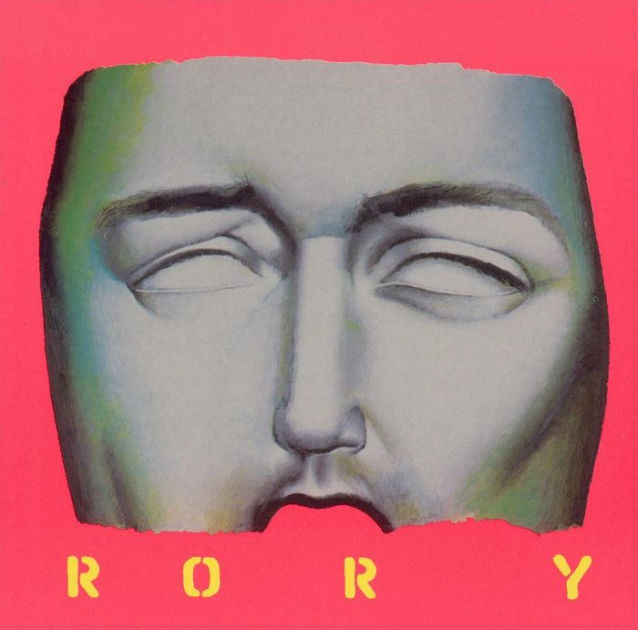
By the end of 1976, Rory Gallagher had harnessed a prodigious talent and admirable work ethic to reap sizeable rewards. With six critically-acclaimed studio albums and two landmark live LPs under his belt, the much-admired Irish troubadour had amassed a formidable solo catalogue, while his fearsome live reputation ensured his global fanbase had continued to expand.
In 1977, however, the wider music scene made an unexpected handbrake turn, thanks to the arrival of punk and bands like The Ramones, Sex Pistols, and The Clash: outfits whose collective mission (at least initially) was to take a flamethrower to established rock acts who they believed displayed an unnecessary excess of virtuosity.
Though his raw passion and street-level integrity ensured he was spared the new breed’s rod, punk nonetheless had a bearing on Rory Gallagher’s immediate future. After pioneering (and headlining) Ireland’s first-ever open-air rock concert, Macroom Mountain Dew Festival, in June ’77, Gallagher led his band through a six-month world tour, after which he attended Sex Pistols’ final US show, at San Francisco’s Winterland Ballroom, in January 1978.
At the time the Pistols hit town, Gallagher and company had just finished an album’s worth of sessions in California with producer Elliot Mazer (The Band, Neil Young, Janis Joplin), but after his admiration for the Pistols’ raw, nihilistic energy compounded his frustration with the Mazer-helmed sessions’ complicated mixing process, Rory felt some radical changes were required.
Scrapping the sessions, Gallagher reconfigured his band’s line-up, retaining bassist Gerry McAvoy but dispensing with keyboardist Lou Martin and replacing drummer Rod de’Ath with ex-Sensational AlexHarvey Band skinsman Ted McKenna. Trimmed down to their fighting weight, this new power trio relocated to Cologne to record October 1978’s “Photo-Finish“.
While the resulting album was largely devoid of discernible blues influences, it was still stuffed with highlights such as the bruising rockers “Shadow Play” and “The Last Of The Independents,” and the fierce, rockabilly-flavoured “Cruise On Out.”
Reverting back to a trio, Gallagher toughens up his sound and blazes through some robust blues rockers like “Last of the Independents,” “Shadow Play,” and “Brute Force & Ignorance” (one of his best hard rock riffs) with nervy energy. Gallagher’s swampy side emerges on “Cloak & Dagger,” another song that explores his fascination with B-movie gumshoes, a common theme for the Irish blues-rocker. His guitar work is typically excellent throughout, especially on “Overnight Bag,” as he overdubs himself on acoustic. Still, the album has a samey feel due to some of the song writing not being quite up to snuff, and a few tracks, like the moody, slow-burning “Fuel to the Fire,” stretched well past its breaking point to over six minutes. Of the two additional tunes, “Early Warning” is a typically rugged chunky rocker, and “Juke BoxAnnie” explores the guitarist’s jaunty, slightly funky country style. There is a remarkable clarity and fullness to the bass, along with a definition that exposes heretofore unheard instruments like the mandolin on “Brute Force…” and handclaps on “Cruise on Out,” both previously buried in the mix.
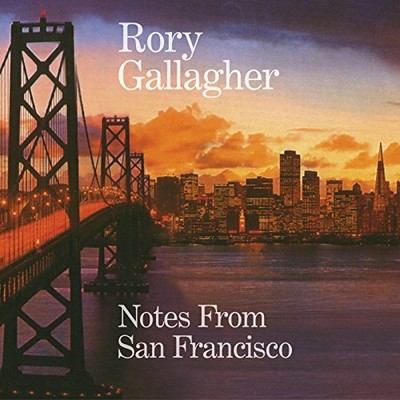
“Photo-Finish” also included newly recorded takes of songs from the San Francisco sessions, among them “Overnight Bag” and “Mississippi Sheiks,” but in 2011 devotees finally got to hear the Elliot Mazer sessions in full, when Eagle Rock released the excellent “Notes From San Francisco“. The long-shelved session included radically different slants on “Photo-Finish” staples, such as a potent, electric violin-assisted take of “Mississippi Sheiks” and a sax-enhanced “Brute Force And Ignorance.” The long-awaited posthumous release also delighted fans with the inclusion of a stonking December ’79 live set from San Francisco’s Old Waldorf.
Gallagher spent much of 1979 enhancing his reputation on the road in the US, and his next album, August 1979’s “Top Priority“, again found him weighing in with a hook-heavy set of high-quality anthemic rock’n’roll. Ballads and acoustic forays were again noticeably absent, yet “Top Priority” included numerous Gallagher essentials courtesy of the exuberant “Just Hit Town,” the Southern rock-styled “Bad Penny” and the moody, magnificent “Philby.”
Indulging his love for spy stories and film noir, Gallagher based the latter song upon the real-life story of Kim Philby, the notorious Cold War-era British double agent for the Soviet Union, and he even employed Pete Townshend’s coral electric sitar to lend a tinge of Eastern Bloc-flavoured mystique to one of his most evocative tracks.
Following the release of “Top Priority”, Rory and his loyal troops spent another year circumnavigating the planet, with August 1980’s live album, “Stage Struck”, documenting the Gallagher/McAvoy/McKenna line-up in all its combustible glory.
Following the excellent reportire of live albums “Live In Europe” and the tumultuous “Irish Tour ’74″, this third live missive more than held its own, with the road-tightened trio dispatching adrenalized versions of recent favourites “Shadow Play,” “Follow Me,” and the biker anthem “Shinkicker” with venomous aplomb, and Rory showing off his slide guitar mastery on “The Last Of The Independents” and the robust contemporary blues, “Keychain.”
Few rock acts of the day could compete with Rory Gallagher, Gerry McAvoy, and Ted McKenna at full throttle, but after “Stage Struck”, Gallagher again reconfigured his band, replacing McKenna with Brendan O’Neill and drafting in former Brinsley Schwartz keyboardist Bob Andrews. The new line-up cut their teeth with May 1982’s “Jinx“, for which Rory also brought in saxophonist Dick Parry, renowned for his contributions to Pink Floyd’s legendary “The Dark Side Of The Moon“.
Guitarist Gallagher’s third officially released live album (during his lifetime) captures him on a grinding world tour in 1979 and 1980, pumping out blues-rockers with requisite aggression, yet none of the charm and subtlety that made his previous concert recordings so essential. While the live shows might have gone down well on-stage, when they’re transferred to album, some of the excitement is lost, and instead of Gallagher’s classy, snappy, eclectic mix of blues, folk, and rock, “Stage Struck” sounds like plodding, second-rate Bad Company. All the songs push the five-minute mark, but none have the sizzle and compactness of Gallagher’s best work. He sounds like he’s going though the motions for the first time in his career, making this a below par, if not quite valueless document.
Accordingly, “Jinx” was broader in scope, with muscular rockers such as “Big Guns” and “Bourbon” interspersed with subtler material such as the glorious, bluesy ballad “Easy Come, Easy Go” and a potent, Delta-style cover of Louisiana Red’s “Ride On Red, Ride On” wherein Gallagher dug deep to produce one of his most breath taking electric slide solos.
Rory Gallagher sounds inspired throughout “Jinx”, gamely leading new drummer Brendan O’Neill and keyboardist Bob Andrews through the blues-rock paces, even though the guitarist’s personal fortunes were on a downslide from which they would never recover. “Big Guns” and “Bourbon,” the album’s opening selections find Rory in full fiery form, tossing out muscular guitar lines and fiery solos with descriptive lyrics catering to his infatuation with American gangsters. The album also features two of his best, and least known, songs in the spooky, paranoid title track, complete with simmering sax section, boiling tom-tom drums as well as his own stealthy harmonica, and “Easy Come Easy Go,” a beautiful, bluesy ballad where Rory double tracks his acoustic and electric guitars. Gallagher’s tough vocals take on a new emotional depth not previously heard, and are particularly poignant throughout. Diving into the blues, Lightnin’ Slims’ “Nothin’ but the Devil,” one of the two songs added for this reissue, is an acoustic solo showpiece revealing Gallagher’s delta roots and substantial slide abilities. Louisiana Red’s “Ride On Red, Ride On” is a crackling double-time burner with Rory charging through with an appropriately whisky-soaked approach and a shimmering electric slide solo.
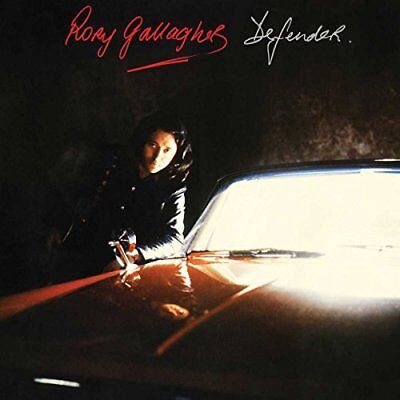
Though a distinguished release, “Jinx” proved to be Rory Gallagher’s Chrysalis swansong. He continued to tour relentlessly, becoming one of the first Western rock artists to perform Eastern Bloc dates in 1985, but five years elapsed before “Defender” appeared on his own label, Capo, through Demon Records.
Topping the UK independent chart, “Defender” was another choice release, with Gallagher relaying a tale of dire financial straits on the Sun Studios-style rockabilly of “Loanshark Blues”; revisiting his love of hard-boiled detective fiction on the smouldering “Continental Op”; and throwing in a convincingly gritty take of Sonny Boy Williamson’s “Don’t Start Me Talking.”
“Defender” is another quality blues-rock offering. Although Gallagher is in fine tough form here and it was his debut release for his own indie label, there is little difference between this and some of his less stellar ’70s albums like “Top Priority” and “Photo-Finish“. The pounding, guitar-heavy opener “Kickback City” sounds more like hairy rockers Bad Company than anything approaching the deep Chicago and country blues Gallagher dearly loved.
The quality picks up substantially as the volume subsides on “Loanshark Blues,” but by-the-books crunch-rockers like “Failsafe Day” and the unfortunately titled “Road to Hell” don’t bode well for Gallagher moving out from an increasingly formulaic pigeonhole. There are a few corkers here like “Continental Op,” a blazing riff that stands with Gallagher’s best work and revisits his familiar cloak-and-dagger theme. The swampy, less abrasive “I Ain’t No Saint” also pushes the quality up a few notches, as does his gritty version of Sonny Boy Williamson’s “Don’t Start Me to Talking,” the bluesiest song on the disc and one of the few times he pulls out his greasy slide. “Seven Days” is the lone acoustic track and it’s a good one, with piano and harp accompaniment and Gallagher singing like he means it as he takes the part of a criminal fleeing from the electric chair.
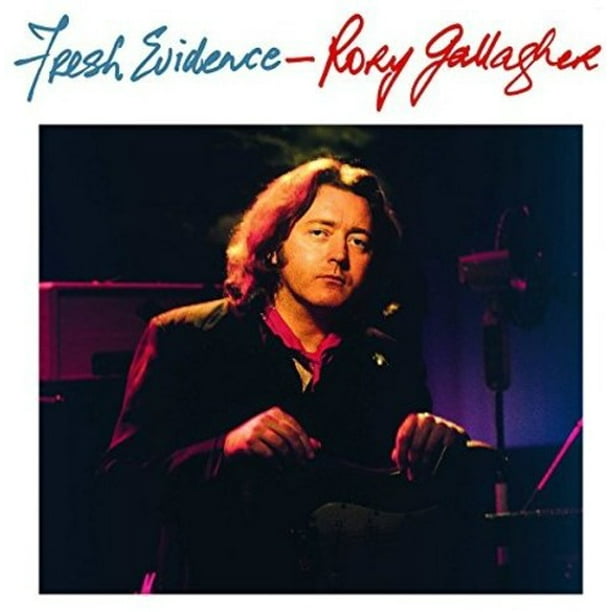
Though a well-heeled return to the fray, “Defender” was arguably usurped by May 1990’s “Fresh Evidence”, which – though nobody realized it at the time – would be the last album Rory Gallagher released during his lifetime. It was also one of his best, with an eclectic spread of material ranging from the proud, defiant pugilist’s tale, “Kid Gloves,” to the Clifton Chenier-inspired “King Of Zydeco” and the redemptive “Heaven’s Gate,” which took its cue from Robert Johnson’s chilling blues standard “Hellhound On My Trail.”
“Fresh Evidence” strongly suggested a whole new phase in Rory Gallagher’s career was set to unfold, but while he followed it up with an extensive world tour in 1991, and further significant shows, including a legendary soiree at the inaugural Cork Jazz Festival in 1993, ill health gradually slowed him down. In 1995, Rory Gallagher passed away from complications following a liver transplant, aged just 47.
His estimable music, however, continues to defy the ravages of time, and his dextrous, all-acoustic posthumous set, “Wheels Within Wheels”, adds a dignified final coda to one of the most inspirational bodies of work laid down in the name of rock’n’roll.
Although best known for his barnstorming blues-rock, Irish guitarist Rory Gallagher had a softer side, too. All of his studio albums contain at least one acoustic folk-blues track, and Gallagher included an unplugged set in the majority of his live shows way before that was fashionable. Almost eight years after his death, Rory’s brother Donal compiled a 14-track collection of previously unreleased work dedicated to Gallagher’s folkier approach. It’s the second such posthumous album (the terrific live and very electric “BBC Sessions” came out in 1999), and focuses on an important if lesser recognized aspect of the guitarist’s career.
It’s also an eclectic set that shifts from melodic ballads (“Wheels Within Wheels”) to instrumental modified flamenco “Flight to Paradise” with classical guitarist Juan Martin and solo Delta blues (a studio take of Tony Joe White’s “As the Crow Flies,” the live version of which was a highlight of “Irish Tour”. And that’s just the first three songs. Unreleased gems such as “Lonesome Highway” sound like classic Gallagher (this even features a plugged-in solo), but the disc is most successful when it unearths rare collaborations with Martin Carthy, Bert Jansch, and Scottish skiffle legend Lonnie Donegan. The latter is caught live on a rousing version of “Goin’ to My Hometown,” one of this album’s many highlights. The heavily bootlegged “The Cuckoo,” also finds official release in a stirring version assisted by Roland Van Campenhout on second guitar. Three live tunes with stripped-down accompaniment from Béla Fleck on banjo and harmonica master Mark Feltham find Gallagher running through a seemingly improvised medley of “Amazing Grace,”Robert Johnson’s “Walking Blues,” and BillMonroe’s “Blue Moon of Kentucky,” showing just how diverse Gallagher’s tastes were.
Brighton guitar gang making danceable indie gems, It’d be pretty impossible to go to a Lime Garden show and not immediately want to go home and form your own band. They have such a nonchalant swagger, sense of fun and irresistibly good tunes that it just makes you want to be up there yourself as one of them. Few bands can achieve that this early in their career.
Fast-rising Brighton newcomers Lime Garden release a new physical single on So Young Records. With each release, Lime Garden continue to prove themselves one of indie’s hottest prospects and begin the new year with a host of Ones To Watch tips behind them – landing spots on the NME 100, Dork Hype List, and DIY Class of 2022.
‘Clockwork’ finds Lime Garden stomping through a futuristic world where dark-disco basslines and deadpan delivery are in audio ascendency. Singer Chloe Howard explains: “‘Clockwork’ was written at a time when we were feeling trapped in the cycle of our everyday lives. We wanted to capture that sense of being caught in a continuous loop where emotions sometimes lead us to a dark and frantic mindset.”
‘Marbles’ follows previous single ‘Clockwork’ and finds Lime Garden turning up the distorted-disco dial to the max, and in the process creating a bouncing (disco) ball of infectious nervous energy. Singer Chloe Howard explains: “‘Marbles’ is about the realisation that you’re not sharing the same lifestyle as those around you. It’s about overthinking that comparison to the point where you question your own sanity or direction in life. It tells the story of an individual on a journey of self-discovery that the listener is witnessing from afar but with access to their internal monologue.”






:format(jpeg):mode_rgb():quality(90)/discogs-images/R-2068812-1413471226-1524.jpeg.jpg)
:format(jpeg):mode_rgb():quality(90)/discogs-images/R-4709549-1372969645-1355.jpeg.jpg)


 The Fat Angel Sings