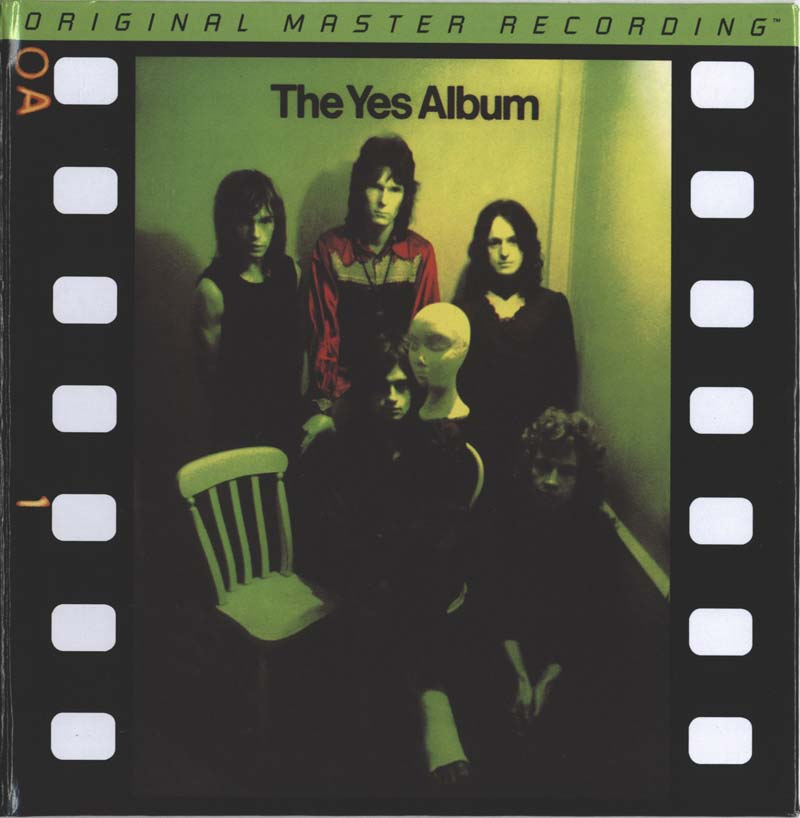
After two musically solid but poor-selling albums, the five-piece psychedelic-progressive rock group Yes privately suspected their label Atlantic was looking for some serious commercial progress in order to justify keeping them under contract. In late spring 1970 they retired to a farm in Devon, England, for rehearsals with a “make or break” attitude.
This was to be their first album of entirely original material. Vocalist Jon Anderson , drummer Bill Bruford, keyboardist Tony Kaye and bass player Chris Squire were integrating their new guitarist Steve Howe, after original member Peter Banks left in April. Howe, who’d previously been with the “freakbeat” band Tomorrow, was at home in a number of genres, including folk, blues and country, and was soon exerting a strong influence on the group sound as they wrote and rehearsed new material. His main axe was the Gibson semi-acoustic ES-175, often considered a jazz guitar. He was the type of versatile player who could take advantage of it. He could play powerful block chords, wail jagged solo lines, flat-pick or fingerpick; whatever it took, he supplied it.
Bruford was likewise able to be subtle one minute and crash the next. Using a jazz approach, he tended to imply the main beat rather than always state it as a rock drummer would. His approach was defined by variety. Squire played bass like a lead instrument, generally with a heavy-gauge pick. Like the Who’s John Entwistle, he sounded at times like a low-pitched guitarist rather than a harmonic accompanist, part of the rhythm section. Kaye had trained as a concert pianist, but he’d abandoned classical music for pop, playing a Vox Continental in various groups before joining Yes in 1968 and settling on the Hammond B-3 organ as his main squeeze.
Anderson sang in a high tenor, and was responsible for most of the group’s lyrics, which tended toward the mystical, pastoral and mythological. Yes’ producer-engineer Eddy Offord described how the group teased Anderson for his wordplay: “The band gave him such a hard time. They’d all say to him, ‘John, your fucking lyrics don’t make any sense at all! What is this river/mountain stuff?’” Offord says Anderson would always explain, “I use words as colours, for the sounds of the words, not the actual meaning.”
Working at Advision Studios in London during autumn 1970, the group aimed for precision and even perfection. Most of the time Squire and Bruford recorded their parts and all other instruments and vocals were meticulously stacked on top, filling the 16 tracks available. Recording their complex, multi-part songs sometimes in takes as short as 30 seconds, they redesigned and edited pieces together as they went. Some heavily rehearsed sections were wedded to spontaneous studio creations. Offord was so expert that for much of the time the listener can’t hear the seams.
In an interview for yesworld.com, Offord recalled, “Bill Bruford didn’t like Jon messing with the tracks once they were recorded. I remember we were trying something—Jon wanted to have some echo in the background—and Bill got up and yelled, ‘Why don’t you put the whole fucking record in the background with echo then?’ .
The nine-minute “Yours Is No Disgrace” kicks off the LP with a show of force, a sort of warped tango rhythm with Bruford and Howe assertively locked in, extremely prominent bass work, a Howe transitional solo and Kaye’s organ holding the strands together. Anderson and harmony vocals don’t enter until 1:30, with a tempo change, a Hammond B-3 bed and lyrics that are both evocative and opaque: “Yesterday a morning came, a smile upon your face/Caesar’s palace, morning glory, silly human race.”
Instrumental effects and changes in dynamics and tempo continue to oscillate, circling back like a classical sonata to theme and variations. There are sections that sound like prime King Crimson or Genesis; the arrangement keeps us guessing. At the 6:00 mark, Howe performs a dazzling series of solos in different styles, but isn’t allowed to linger before Anderson re-enters. At this point the lyrics are even wilder: “Battleships confide in me and tell me where you are/Shining flying, purple wolfhound, show me where you are.”
Strangely, the next track is “Clap,” a Chet Atkins-style acoustic guitar piece recorded at Howe’s very first live gig with Yes, at the London Lyceum on July 17th, 1970. Incorrectly and unfortunately listed as “The Clap” on the original LP, it’s a fine showcase for Howe, but what it’s doing sequenced between “Yours Is No Disgrace” and another nine-minute epic, “Starship Trooper,” is a mystery. Surely such a contrast would have worked better tucked somewhere on side two? Howe laid down a longer version of “Clap” at Advision, but it wasn’t released until 2003 when Rhino issued an expanded CD of the album.
“Starship Trooper” is in three parts running together, with “Life Seeker” written by Anderson, “Disillusion” by Squire and Howe’s “Würm.”Anderson’s at his peak, and again the instrumentalists are constantly impressive and in motion. Listen to Bruford’s variations as he moves around the kit and Squire puts in spectacular punctuation. At one point, Howe’s guitar track is run through a flanger, giving it a synthetic sound. He also does another Atkins-like country backing for a multi-tracked vocal grouping. Howe’s final section is a solid rocker that pounds a couple of chords into submission, Kaye dominating the background and Howe up front.
Side two begins with a two-parter meshing Anderson’s “Your Move” and Squire’s “All Good People.” The first half, with lyrics that use a game of chess as a metaphor for relationships, was released as a single and did get some AM airplay, but the FM dial took to the whole thing and made it ubiquitous, helping “The YesAlbum” on its slow but steady trek to gold record status when released on February 19th, 1971. It’s one of Yes’ most melodic and even fun tracks, all the while quoting multiple John Lennon lyrics, and Anderson turns out to be right about the shape of the words being more important than the literal meaning.
“Your Move” utilizes a drum-bass tape loop, which was Offord’s solution to a frustrating session in which Bruford and Squire laboured hard but couldn’t get it right for long enough. Listen for Howe’s overdubbed 12-string. Squire’s bouncy “All Good People” is about as jaunty as Yes ever got, and it’s remained a fan favourite for 50 years.
“A Venture,” written by Anderson, fades in on Kaye’s delicate piano, Howe chimes in and the track becomes a very upbeat romp. On an extended version, released in 2014 as part of a deluxe CD/Blu-ray reissue supervised and remixed by Steve Wilson, there’s nearly two minutes of extra soloing, Howe and Bruford doing some excellent work. Offord has said he regrets the early fade on the original LP.
The album concludes with the strong “Perpetual Change.” It’s got a very cinematic, dramatic opening, after which Howe does a brief countrified electric solo, and the tumult dies out for Anderson’s gentle entry. The choppy main theme re-enters (listen what Bruford does here), and then, true to the title, it switches back into a lower gear. Much of the track consists of two overdubbed Yes bands playing in different time signatures.
“The Yes Album” was very successful, and Yes was at last well-established as one of rock’s perennial stadium-filling acts. It would be Kaye’s last album with the group (until he returned to the line-up more than a decade later). They wanted him to integrate synthesizers and other electronic sounds into the mix, and he wasn’t having it. His replacement, Rick Wakeman, was more than amenable, and Yes’ next discs, “Fragile” and “Close To The Edge“, were even bigger hits. The behemoth “Tales From TopographicOceans“, which partisans cite as the apotheosis of ’70s prog-rock, was waiting in the wings.
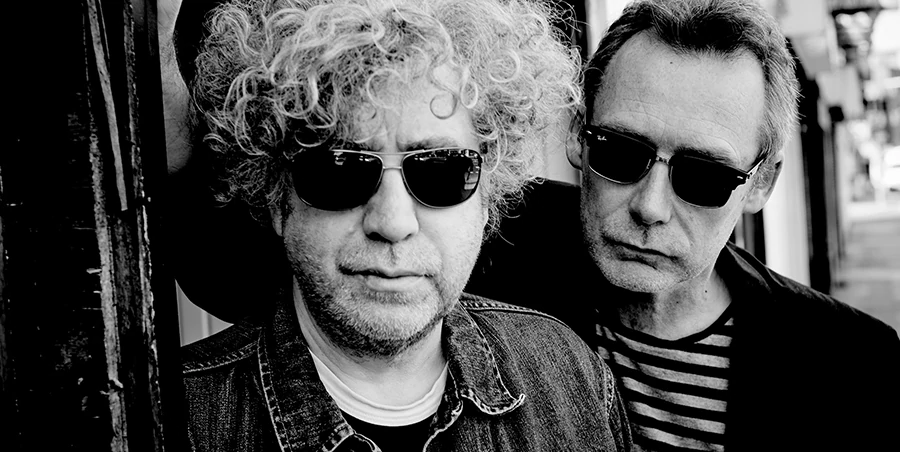
It’s such a huge honour to finally be able to tell you all that the mighty The Jesus And Mary Chain have signed to Fuzz Club! The Mary Chain have been an inspiration to pretty much every band we’ve ever worked with and our musical landscape would be very different had it not been for the Reid brothers so we could not be more excited to have welcomed them to the family. The band have been busy working on new music and we’ll be bringing you that alongside new live albums and reissues of their earlier works starting off with reissues of ‘Damage and Joy’ and ‘Live At Barrowland’ which are available to order here: TJAMC.lnk.to/reissues
‘Damage And Joy’ comes as a double LP on 180g black, ultra-clear or splatter vinyl in a heavy gatefold sleeve with printed inner sleeves, remastered audio, alternative track order, booklet and 3 bonus tracks (‘Ono Yoko’, ‘The Two Of Us’ feat. Sky Ferreira, ‘Black and Blues’ feat. Isobel Campbell).
There are also CDs and a limited cassette run (/250) available. Capturing ‘Psychocandy’ album live in its entirety, the ‘Live At Barrowland’ reissue will arrive on 180g black or splatter vinyl in a gatefold sleeve with alternative artwork and a booklet containing photos from the ‘Psychocandy’ tour and an interview with Jim, William and Alan McGee. The vinyl download card, CD and cassette (/250) and download card included with the vinyl include the 7 bonus tracks from the prelude set on the night (including ‘April Skies’, ‘Head On’ and ‘Reverence’)
“Damage And Joy”
Originally released in 2017 on the band’s own label Artificial Plastic and now reissued by Fuzz Club Records, “Damage And Joy” is the seventh studio album from Scottish alt-rock legends The Jesus and Mary Chain. The long-awaited follow-up to 1998’s “Munki”, “Damage And Joy” was the band’s first studio album in nearly two decades and contained brand new material alongside reimagined versions of songs that had been released in various forms by the Reid brothers in between the Mary Chain’s 1999 break-up and 2007 reunion. Co-produced by Youth (Killing Joke) and featuring the lead singles ‘Amputation’ and ‘All Things Pass’, ‘Damage and Joy’ also featured guest appearances from Scottish singer-songwriter Isobel Campbell (‘The Two of Us’, ‘Song For A Secret’) and American alt-pop star Sky Ferreira (‘Black And Blues’).
“Damage And Joy” is now being given a deluxe, expanded vinyl reissue. The double LP is reissued on both black and coloured 180 gram vinyl with remastered audio by Pete Maher (U2, The Rolling Stones, Jack White, Liam Gallagher), a heavy tip-on-printed gatefold sleeve, printed inner-sleeves and a 16-page booklet, plus bonus tracks and an alternative track-order. Included in this reissue and available on vinyl for the very first time is ‘Ono Yoko’ (originally only available on the Japanese CD version of the album), as well as alternative versions of ‘The Two Of Us’ featuring Sky Ferreira and ‘Black And Blues’ featuring Isobel Campbell.
“Live at Barrowland”
In November 2014 The Jesus and Mary Chain celebrated three decades of their incendiary cult-classic debut album, “Psychocandy“, with a run of tour dates in which the infamous Scottish group played the album in full for the very first time in the band’s history. As part of the “Psychocandy” tour, the Mary Chain descended on Glasgow’s Barrowland Ballroom – a legendary venue down the road from where the Reid brothers grew up in neighbouring East Kilbride – and tore through the songs that would propel them to worldwide acclaim upon “Psychocandy’s” release in 1985.
The Barrowland performance – an equal-parts deafening and blinding assault on the senses – was cut to vinyl by engineer Noel Summerville and originally released in 2015. Fast forward to 2022 and the “Live at Barrowland” album is now reissued by Fuzz Club Records. The 2022 reissue comes with new artwork.
The influence that “Psychocandy” and its pioneering sonic belligerence had on popular music cannot be overstated. Taking bittersweet pop melodies and tearing them up apart through the medium of buzzsaw guitars, ear-piercing feedback and an unapologetic hostility towards their listeners, the band’s breakthrough album experimented with noise in a way that had never been done before and would inspire for generations to come. “The Live At Barrowland” LP captures ‘Psychocandy’s complete 14 tracks in a live setting and in all their boundary-pushing and feedback-ridden glory. The CD version of the reissue and download card with the vinyl feature seven bonus tracks taken from the prelude set on the night, including such fan-favourites as ‘April Skies’, ‘Head On’ and ‘Reverence’.
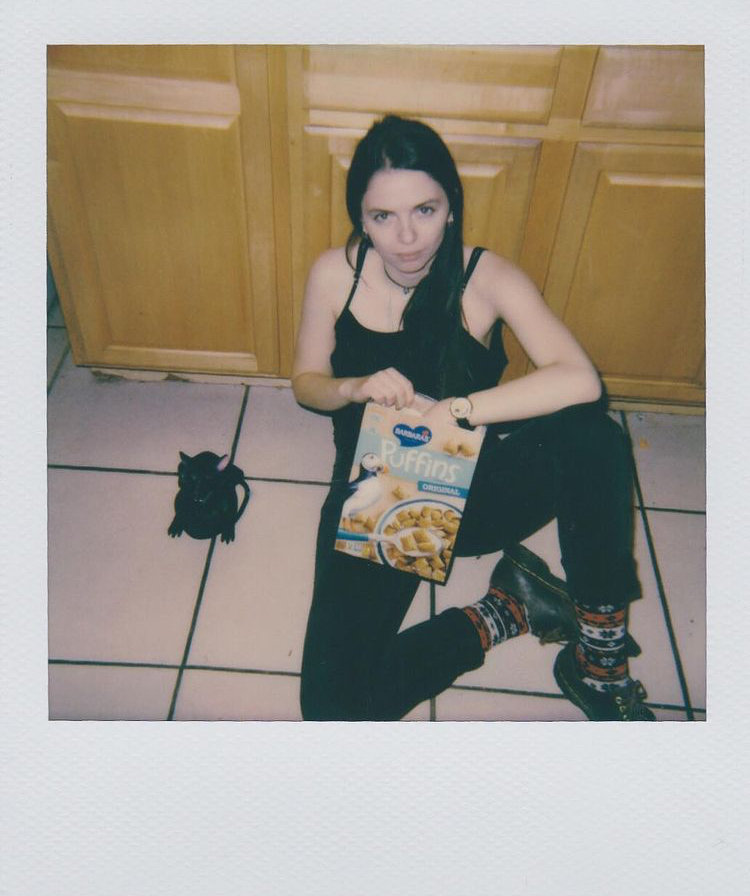
There’s something nostalgic about Alix Page. Page describes her sound as “confessional songwriting,” with “production inspired by coming-of-age movies and huge ’80s soundscapes” — and she’s so right.
Ruminating on memories of a past relationship is a dangerous place to get stuck, but what happens when it’s your subconscious that keeps pulling you back in? 19-year-old singer-songwriter Alix Page’s latest single “Radiohead” is a case study on the ghost of relationships past and all that’s been left in its wreckage. Pulled from her upcoming debut EP “Old News”, Released in January, the melancholic single arrives with an emotionally simmering music video seeping into the feeling of having your favourite band ruined by an ex that your mind just won’t let go of, even when you sleep.
“It’s not just about being sad after a breakup, it’s about grieving and growing up and healing from it.”
“I wrote “Radiohead” after I had a dream about an ex,” says Page . “It was super innocent, like a rom-com montage of us moving into an apartment and painting it together. It caught me really off guard because we hadn’t talked in months, and it made me realize that I still had a lot of unresolved feelings about our relationship and the breakup. Out of all the songs on the EP, I’m really proud of the vocal performance on this one. I think using one take for the whole song made the emotion of it build naturally.”
The visual finds Page sitting on a stage all alone. Opening on a tight shot of the singer, the camera pans outward at a crawling pace, first unveiling the unlit candles and balloons scattered around her, then the auditorium seats stretched out in front of her completely empty save for a doting couple with a knack for public displays of affection under a spotlight not necessarily the target audience for a breakup song.
There’s definitely a rock edge to it, but her EP is four tracks and less than 15 minutes long. Taking cues from American indie pop bands from the late 90s/early 00s, “Old News” is decent enough to leave you wanting more than an EP at some point soon.
Currently on the road with Gracie Abrams, Page, who draws inspiration from songwriters like Phoebe Bridgers, the production of Imogen Heap and Brandon Flowers’ voice and emotion, is quickly paving a way for herself.
“I think there’s a little bit of humour in the titular line,” she explains. “It’s definitely more complicated than just feeling sad that you can’t listen to a certain band without thinking of a certain person. The temper tantrum I throw at the end kind of adds something cheeky to the whole thing and I’m really happy with how it came out. Smashing a guitar is wayyyy harder than it looks.”
Wenatchee, Washington outfit Datura returned at the end of January with “Arcano Chemical”, a brooding piece of post-punk Goth meets early eighties New Wave that is somewhere between The Cure in their early days and Balthazar with nods to Visage and Viet Cong along the way. Intense barely covers it. And those icy cold Will Sergeant style guitars are utterly compelling. Tremendous stuff, especially the strangely uplifting ‘Sapphire‘.
Datura’s sound recalls goth-rock and post-rock influences like The Cure, Siouxsie and the Banshees, Bauhaus, The Chameleons, Depeche Mode, and early Dead Can Dance.
Appealing to fans of the new indie movement with artists like Skullcrusher, Squirrel Flower and Gia Margaret to ever-present reference points such as Mazzy Star and Grouper, forthcoming album “anna” follows Oregon In A Day, a self-released record which enjoyed organic support from the likes of LA Weekly and IMPOSE, and sees Gracie move the listener with a combination of sombre, slow-burning, grunge-tinged bedroom-rock , floating, heartwarming indie-pop and classic acoustic song writing.
Throughout “anna”, Los Angeles singer-songwriter Ann Grace Gray aka Gracie Gray’s voice rises and falls like a downy feather in a breeze. One minute it hits your ears like a cool, sharp wind, the next it’s a warm flutter. Gray says her debut album, recorded and produced at home, is ‘about holding onto love for yourself through all of life’s changes’, a sentiment that authentically plays out through its often delicate arrangements of acoustic guitar, piano and the lightest touch of percussion and intimate lyrics that cut to the bone.
Gray paints in much darker tones on ‘Happiness’, ‘Love You’ and ‘Dig’, which take their cues from grunge, slow-core and folk-drone, with shades of Grouper or Squirrel Flower. Ultimately, “anna” is a gentle, slow-burning night time gem that hints that there is a powerful emotional presence somewhere behind all this, out of sight, contained for now.
Released February 4th, 2022
Gracie Gray Written, produced, recorded/engineered, co-mixed, bass, synth, percussion, drums on 9, piano, vocals, guitars, Mike DeLuccia – Additional engineering on all but 7 and 10. Drums on all but 3, 7, and 10.
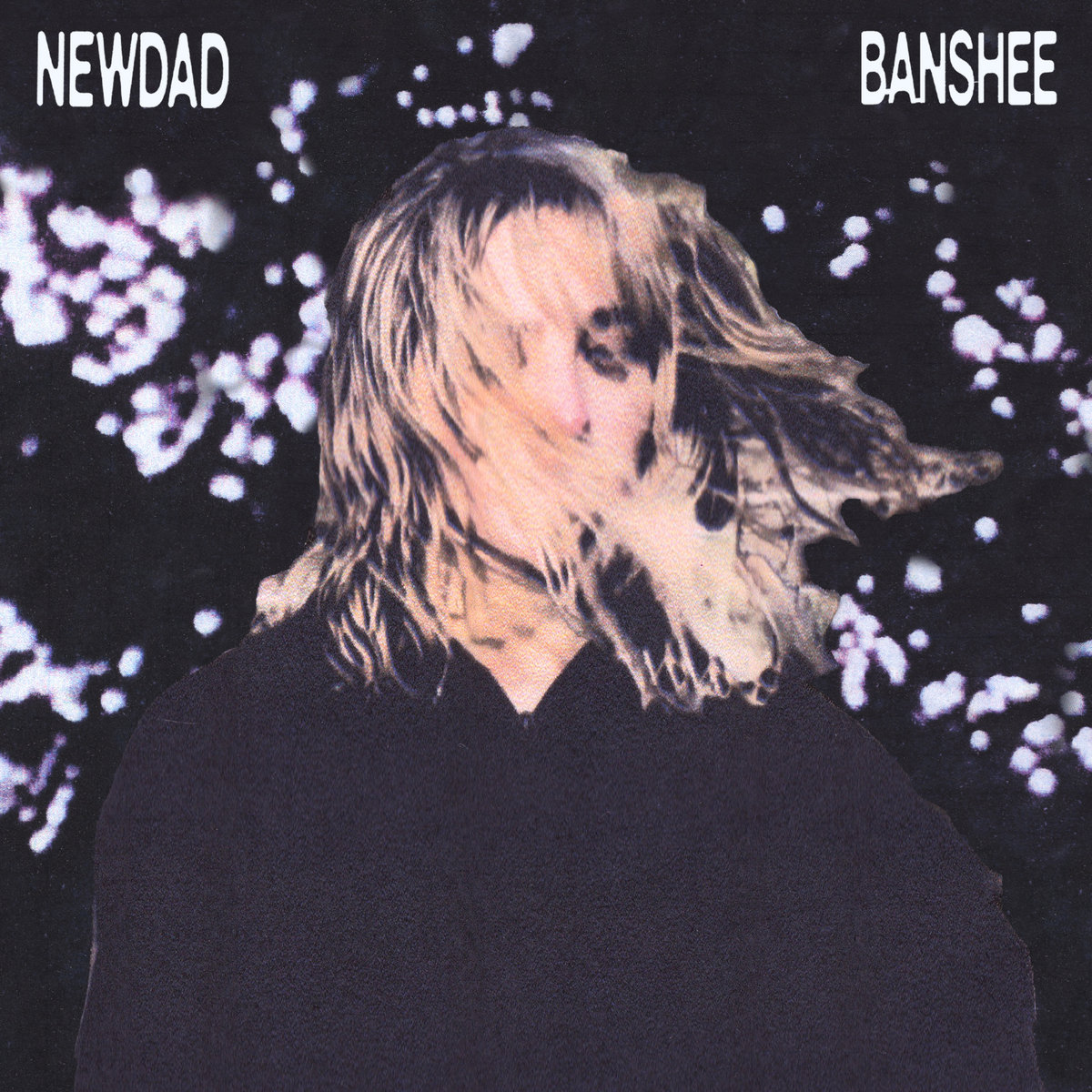
Challengingly tender; New Dad are the latest dream pop sensation to be causing a storm. Transforming turbulent lyrics into magnificent songs awash with beautiful melodies, shimmering guitars and soft yet assured vocals; the West Ireland band are already reaching international fame. They announce a tour in support of their soon to be released second EP “Banshee“.
It’s been a big year for the band, firstly because of the release of their remarkable debut EP “Waves“. Recorded in Belfast with producer Chris Ryan, the crucial 12” includes two BBC 6music a-list singles “I Don’t Recognise You” and “Blue” amongst the six tracks and marked New Dad as one of the most vital bands of the year. Now, they also drop their latest single “Ladybird”; a gorgeous song that looks at the reality of relationships which can so easily breakdown in the face of fear and everyday struggles.
“I wrote the song after watching the film ‘Ladybird’. The chord progression reminded me of the Dave Matthew’s song that’s played throughout the film so I initially named it after that, so ‘Ladybird’ was just a working title. I then wrote the lyrics about the difficult part of relationships and the struggle we sometimes face when we’re away from someone and the fears and anxieties we have about what they’re doing or if they’re okay, I realised this coincided with the relationship between the mother and daughter in the film so the title ended up being pretty fitting. It’s about the give and take in any relationship really and about the struggles of being away from someone you care about.” – Julie Dawson
NewDad are Julie Dawson (vocals/rhythm guitar), Sean O’Dowd (lead guitar), Fiachra Parslow (drums) and Áindle O’Beirn (bass).
“Ladybird” will feature on NewDad’s forthcoming second EP “Banshee” which is schedule for release early next year and will be promoted by a newly announced tour that sees the Galway gang hit the road during Spring 2022.
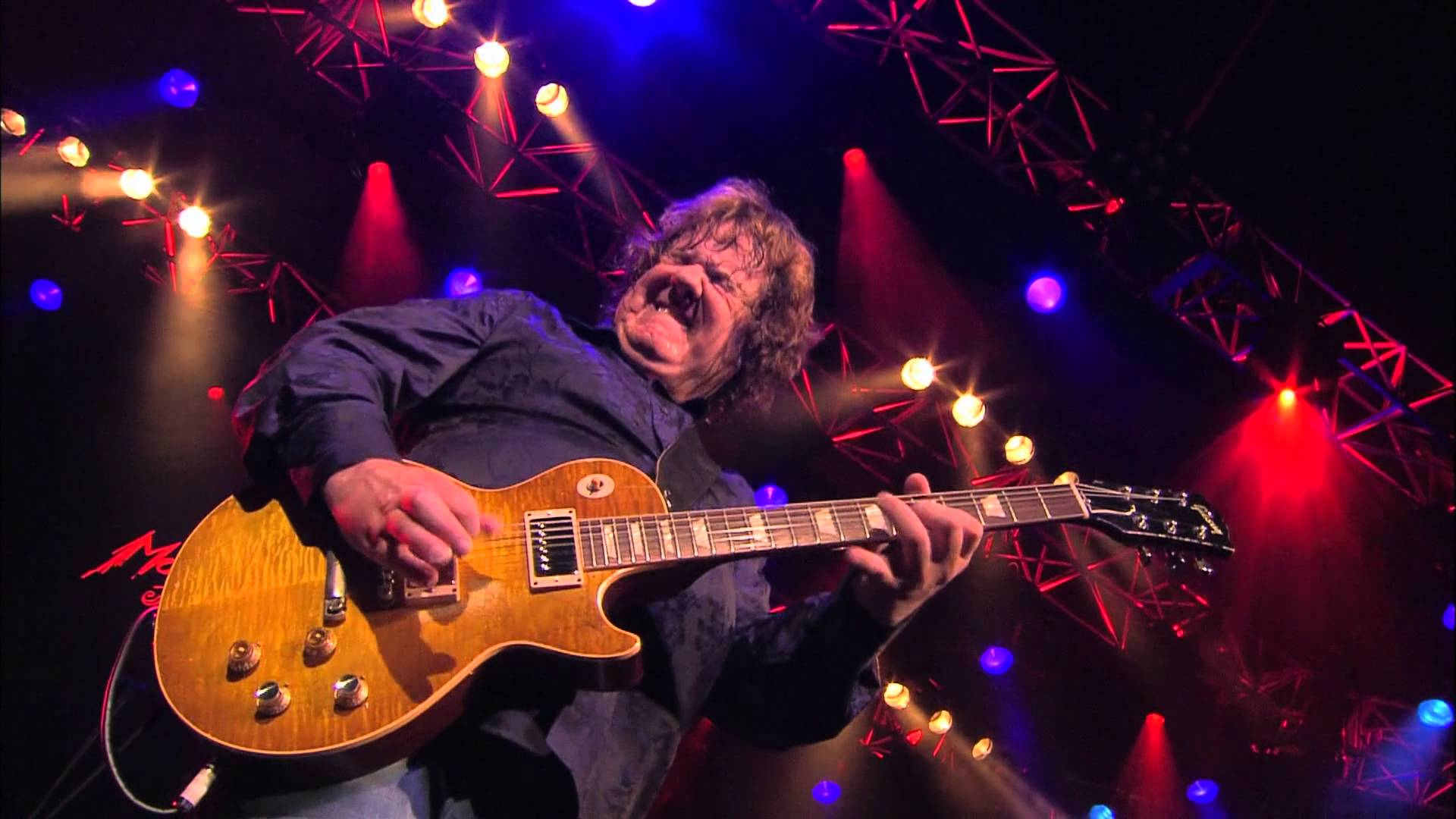
With Thin Lizzy, on his solo albums and playing jazz rock, Gary Moore proved himself to be one of the greatest guitarists of his generation. The death of Irish guitar hero Gary Moore at the age of 58, on February 6th, 2011, was marked by numerous tributes. Moore was remembered by Ozzy Osbourne as “a phenomenal musician”, by Queen’s Roger Taylor as “a virtuoso”, by Scott Gorham, who played alongside Moore in Thin Lizzy, as “a great player and a great guy”. And when Eric Clapton performed at the Royal Albert Hall in April 2011, he played an acoustic version of Moore’s “Still Got The Blues” a dedication from one guitar great to another.
Robert William Gary Moore was born in Belfast on April 4th, 1952. He was just 16 when he first made a name for himself as a member of Dublin-based blues rock group Skid Row during Moore’s time with the group, they recorded three albums and toured with The Allman Brothers. Three years later, he decided to pursue a solo career. However, it didn’t take off, so he replaced Eric Bell in Thin Lizzy. The first time he was with the band was for a short time. However, in 1977, he joined the group full-time when Brian Robertson left.. And it was at this early stage of his career that he formed a lasting bond with Phil Lynott, who was briefly the singer in Skid Row before going on to lead Ireland’s greatest rock band, Thin Lizzy.
Moore joined Thin Lizzy for a short period in 1974, and later returned twice. He made just one album with the band, “Black Rose“, in 1979. But he and Lynott were made for each other, and they continued working together for many years until Lynott’s death in 1986.
Moore had a remarkably broad stylistic range. In the late 70s he recorded three albums of jazz rock fusion with Colosseum II. But it was as a hard rock guitarist that he made much of his best music, both with ThinLizzy and then as a solo artist, and it was as a blues player that he made a successful reinvention in the latter part of his career, beginning with the “Still Got The Blues” album in 1990.
In 1994 Moore lived out a teenage fantasy when he joined Clapton’s former Cream bandmates Jack Bruce and Ginger Baker in the short-lived project BBM. In ’95 he also paid tribute to his greatest influence, original Fleetwood Mac guitarist Peter Green, with the covers album “Blues For Greeny“.
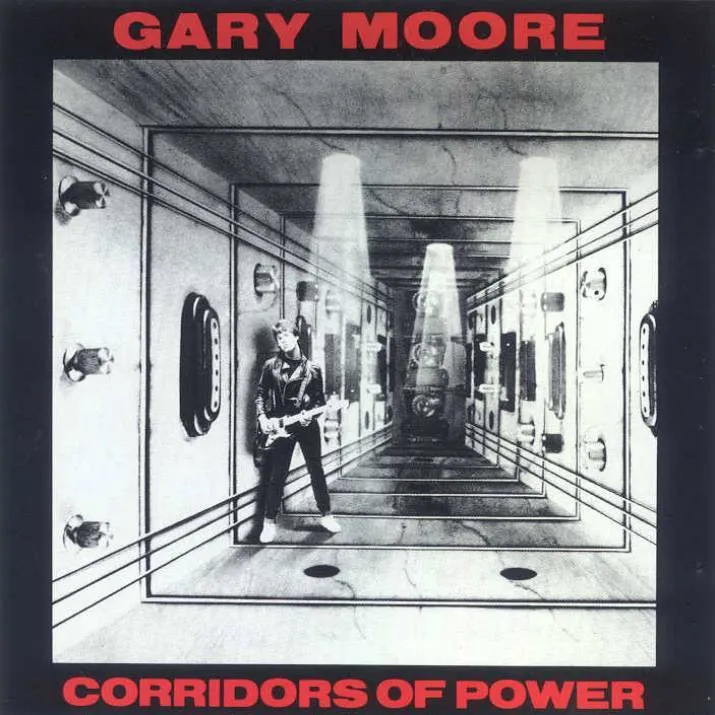
Gary Moore – Corridors Of Power (1982)
This, Moore’s best solo album, is a hard rock tour de force on which he stamped his authority as a major star in his own right. Backed by a band of the highest calibre – drummer Ian Paice (Deep Purple/Whitesnake), bassist Neil Murray (Whitesnake) and keyboard player Tommy Eyre (Joe Cocker) – Moore proved a ballsy singer as well as a shit-hot guitarist.
The album begins with the scorcher “Don’t Take Me For A Loser”, (a tune I fell for right off the bat), the melodic power ballad “Always Gonna You”,Gary let’s it loose on this one. His ballad “Falling In Love With You”, the guitar shredding of “End Of The World”, with ex-Cream bassist, vocalist Jack Bruce, (should be on everyone’s top hard rock tunes of all-time lists!). The slashing “Rockin’ Every Night”, just good old style hard pounding rock. The hard blues sound of “Cold Hearted”, and the slow burning blues-rocker “I Can’t Wait Until Tomorrow”, with great organ work by Eyre and smouldering guitar by Gary.”
“Corridors Of Power” has many great songs: the crunching “Don’t Take Me For A Loser“, power ballad “Always Gonna Love You“, and the self-explanatory “Rockin’ Every Night“. And on “End Of TheWorld” Moore’s fast fingers whipped up a convincing approximation of the apocalypse.
Gary Moore – Dirty Fingers (1983)
One of the Irish guitar player’s best albums, although a not very known one. It’s strong, and Gary still wasn’t the lead singer on those days (1981). Strong hard-rock, a shattering version of “Don’t Let me be Misunderstood”, among other pieces of unforgetable rocking
Gary Moore – Still Got The Blues (1990)
By the end of the 80s, Moore had tired of hard rock. This much was evident on his laboured ’89 album “After The War”. He responded by going back to his roots – playing electric blues. Moore did many experiments with multiple genres. This song is a return to the genre that started him on his musical path. The harmony is smooth and infectious, one of the songs you feel at a cellular level. Even though the lyrics are sorrowful, there’s a warmth absent in many songs of the same genre.
He was rewarded both with critical acclaim and a hit record. “Still Got The Blues” – which featured guest appearances from blues legends Albert Collins and Albert King, and George Harrison (Moore returned the favour for Harrison’s supergroup Traveling Wilburys) went Top 20 in the UK and was Moore’s only top 100 album in the US.
An excellent Blues album by a guy who is more well-known for rock. Listening to “Still Got The Blues” you would think that Gary Moore has been a bluesman all his life (which at his roots he has been). The album opens with “Moving On”; a high energy driving song. This is followed by “Oh Pretty Woman” and “Walking By Myself” (two more high energy songs that will make your feet tap). Moore slows things down with ‘Still Got The Blues” (a song that you would think every bluesman would do). The song “Texas Strut” fools you by starting out slow and simple, but erupts into a shuffle that will have your feet tapping again (it’s also cool how Moore gives credit to those who came from Texas).
And with this album’s soulful, stinging title track he created a modern blues classic.
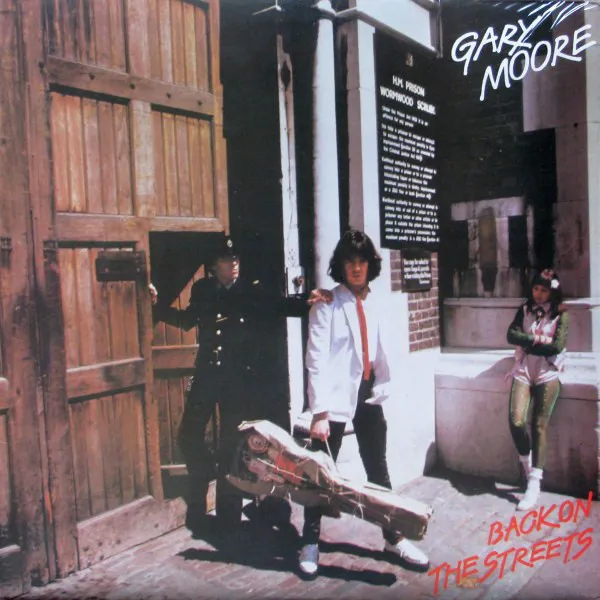
Gary Moore – Back On The Streets (1978)
“Fantastic album from legendary string-meister Moore. I’d say this is his best solo album by far (only ‘Corridors Of Power’ comes close) and that he was in his absolute prime on this recording. The playing on it is simply fabulous – tasteful, melodic, fast and fiery – a wonderful combination of technique and feel (his singing ain’t bad either!)”
This was Moore’s first proper solo album, but Phil Lynott also played a key role in “Back On The Streets”. And by the time the album was released, he’d coaxed the guitarist back to Thin Lizzy. Lynott took the lead vocal on “Parisienne Walkways“, which would become Moore’s signature hit.
The pair also reworked Lizzy’s “Don’t Believe A Word” in its original slow blues format to brilliant effect, and had a blast with Lynott’s tongue-in-cheek song “Fanatical Fascists”. Moore showed off his chops on two jazz-rock instrumentals, but it was on the album’s kick-ass title track that he really let rip – as only he could.
Thinking about Paris evokes many different images. However, blues is typically not one of them. However, the mix of Paris in the spring lyrics with interludes of guitar solos takes Paris from cliché to otherworldly. The line “oh, I could write you paragraphs about my own Parisienne days” is apropos because, much like a picture, this song paints stunning imagery.
Gary Moore – G-Force (1980)
Having quit Thin Lizzy for the final time in July 1979 amid rows over Lynott and Gorham’s drug use, Moore settled briefly in LA – where, bizarrely, he hooked up with two of the most infamous druggies in the business. First, he worked with Ozzy Osbourne. When that didn’t gel he formed a new band, G-Force, with Glenn Hughes. But Hughes was promptly fired and the G-Force album was completed with a new singer, Willie Dee.
It’s Moore’s lost classic, full of punchy hard rock. And on the explosive double-whammy of “White Knuckles/Rockin’ And Rollin’.
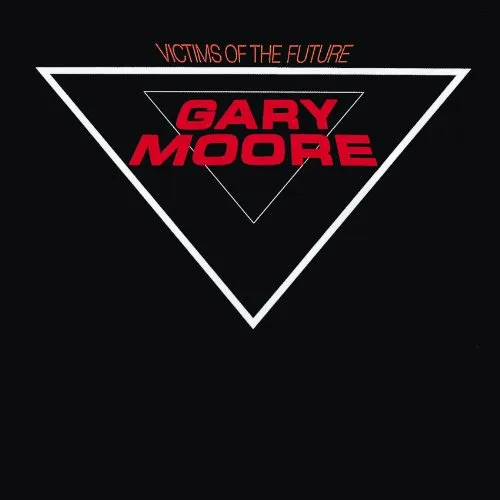
Gary Moore – Victims Of The Future (1984)
The follow-up to “Corridors Of Power” was essentially a repeat performance: “Murder In The Skies” is as cataclysmic as “End Of The World; Teenage Idol” is as gonzoid as “Rockin’ Every Night“; and, having nailed a killer version of Free’s “Wishing Well” on “Corridors“, on Victims Moore did likewise with The Yardbirds’ “Shapes Of Things“, with backing vocals from of all people Slade’s foghorn Noddy Holder.
Gary Moore teamed up with Deep Purple drummer extraordinaire Ian Paice and legends Neil Murray and Jack Bruce for this 1982 set of metal guitar pyrotechnics augmented by well written songs and a soulful vocal delivery. Gary shines all over this album of course but what really stands out here is IanPaice’s authoritative drumming.
On “Empty Rooms”Moore softens down his style for a more stylized track. Even though, once in a while, there is a brief guitar interlude to break the sadness of the lyrics. Even though it is rare for a synthesizer to stand out without seeming forced and overproduced, it’s executed well when accompanied by a few additional sparse instruments. As the music unfolds, it discards much of the melancholy opening for a brief guitar solo before returning to the downcast lyrics of someone who is learning to live with a part of themselves missing.
“Victims Of The Future” also includes Moore’s second-most famous rock ballad, “Empty Rooms“, and an epic title track. At Donington in 1984, Moore faced off against Eddie Van Halen and Angus Young in a battle of the guitar heroes. And he won.
“Victims Of The Future” is a genuine heavy metal album. The title and opening track sets the mood for the CD, putting great 80’s metal with nuclear anxiety right on the table. “Shapes of Things” will take you back to the Summer of ’83, when Gary dominated even US rock radio with this track. Maybe you’ve forgotten this fantastic rocker and maybe you didn’t even know at the time who it was. It’s actually a cover of an old Yardbirds song, but you’ve never heard a makeover like this! The ferocious, galloping rocker “Murder In The Skies” relays the true tale of a commercial passenger jet shot down by communist fighter planes during some of the most intense moments of the cold war. “Empty Rooms” is one of his best tunes on here. I loved this album back in the 80’s and it still rocks today. Gary Moore has always been a killer guitarist and he showcases his chops to great effect on this release.
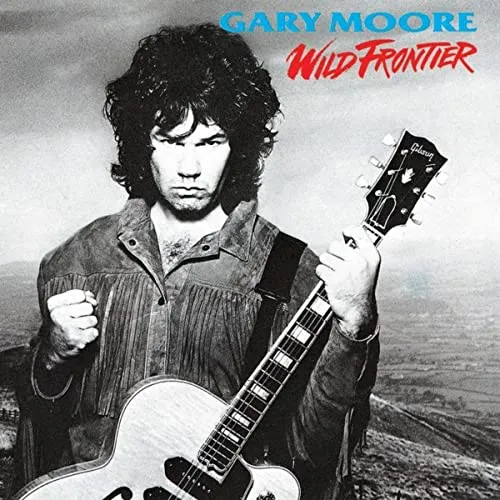
Gary Moore – Wild Frontier (1987)
The first album Moore recorded after the death of his friend Phil Lynott, “Wild Frontier” carried a simple dedication on its cover: ‘For Philip’. Moore had written the album’s title track for Lynott to sing. In the end, the song and the album would serve as an epitaph. One has to agree that “Wild Frontiers” is another slice of hard rock brilliance, outcome of the enviable musical talent of Moore.“Thunder Rising” is one of the most devastating hard rockers ever, the mega-emotional “The Loner”, the impossibly epic “Over The Hills And Far Away”, the AOR-ish “Strangers In The Darkness”; and of course “Wild Frontier” which carries-dare I say- the greatest melodic guitar line ever. From there onwards you get the heartbreaker “Take a Little Time”, and equally enjoyable “Friday On My Mind”.
You simply can not beat the choruses, the guitars, the harmonies and the lyricism on this album!”
On the “Loner” the listener can hear some of Moore’s experimentation at the beginning of the song. Although it sounds Native American in sections, there is still a lot of his most significant influence, blues. As the song progresses, the guitar becomes more gritty. However, the chords sway in and out of more hopeful arcs. Another element that blows this song out of the water is the intermittent drum lick punctuations, just forceful enough to jolt you from the soft atmospheric music.
On his way to the Wild Frontier, Gary Moore found himself at a cross roads: certainly, Heavy Rock wasn’t just for hard men on motorbikes anymore but nor was it necessarily for a solely white audience either: Moore and his producer were clearly cognisant of the change ushered in by Aerosmith’s collaboration with Run DMC on “Walk this Way” – alas all it culminated in during this session was a fairly lame rap remix of his excellent Easybeats cover, “Friday On My Mind”. In other ways Moore was returning to his Irish roots – there is a definite Gaelic feel to the cover of Big Country’s “Over the Hills and Far Away”, the title track, In any case I think this return to the roots was a good thing – certainly much more bona fide than the blues “renaissance” he would subsequently experience – and it sets this record apart from most of the others that were coming out at the time.
Moore’s voice sounds more sinister on “Over The Hills And Far Away” than he does on others. With the addition of drums, a touch of Celtic instrumentation, and lyrics that read like a creepy Victorian children’s book, this song is anthemic mastery. This song is another example of Moore’s love of experimentation, especially since it has many different genres.
There is a flavour of Moore’s and Thin Lizzy’s Irish heritage in “Over The Hills And Far Away”, a Top 20 hit, and in “Johnny Boy“, the album’s closing eulogy. And on “The Loner”, an instrumental written by ex-Jeff Beck Group keyboard player Max Middleton, Moore’s playing has a deep and powerful emotive quality. “Wild Frontier” was the perfect tribute to Lynott.
Gary Moore – Run For Cover (1985)
After the G-Force debacle in 1980, Glenn Hughes was understandably surprised when Moore brought him in as co-creator on “Run For Cover”.Glenn Hughes plays bass and sings on “Reach for the Sky”, “Out of My System”, “All messed Up” and “Nothing to Loose” being the more uplifting, glamorous and popular side of the album. Phil Lynott, on the other hand, performs lead vocals and bass on “Military Man”, a song he had intentionally written for his own project as well as sharing a vocal duet with Gary on “Out in the Fields” which turned out to be Moore’s biggest European hit single to that point. Both songs represent the album’s more aggressive side with strong ties to the previous album “Victims of the Future”. Moore, for his part sings lead on “Listen to Your Heart Beat” and “Empty Rooms” the album’s ballads with the latter standing as the record’s second hit single. As before Gary’s guitar work is extraordinary delivering the appropriate tone (melody-wise) for each and every tune on “Run For Cover”.
But, once again, this dream team quickly turned sour. Hughes was a crack addict, and when Moore found out he was promptly fired. The overlays of African instruments that open the song “Out In the Fields” are only a brief pause before it launches into dynamic guitar riffs and propulsive drum beats. The triumphal music is similar to Europe’s The Final Countdown. Whenever there’s a guitar solo in this song, it sounds like an impromptu jam session kept on the final track.
As a result, Hughes featured on only half of the album, and delivered a great lead vocal on “Reach For TheSky“. But the best tracks were the two that Moore recorded with Phil Lynott: the classic top five hit “Out In The Fields”, and “Military Man”, originally written for Lynott’s post-Lizzy band Grand Slam. These tracks were Lynott’s last great performances. The sound of some songs is very 80s and dated. Overall a worthwhile if inconsistent album.
After Hours (1992)
“It was Gary’s second blues album making his fans understand that the brilliant hard rock six-string sorcerer was into slightly different musical genre. Not too many guitarists and singers could have done this, but Gary did. The album helped him to solidify his status on stage and hit lists at the same time, which was or still is another extraordinary achievement.”
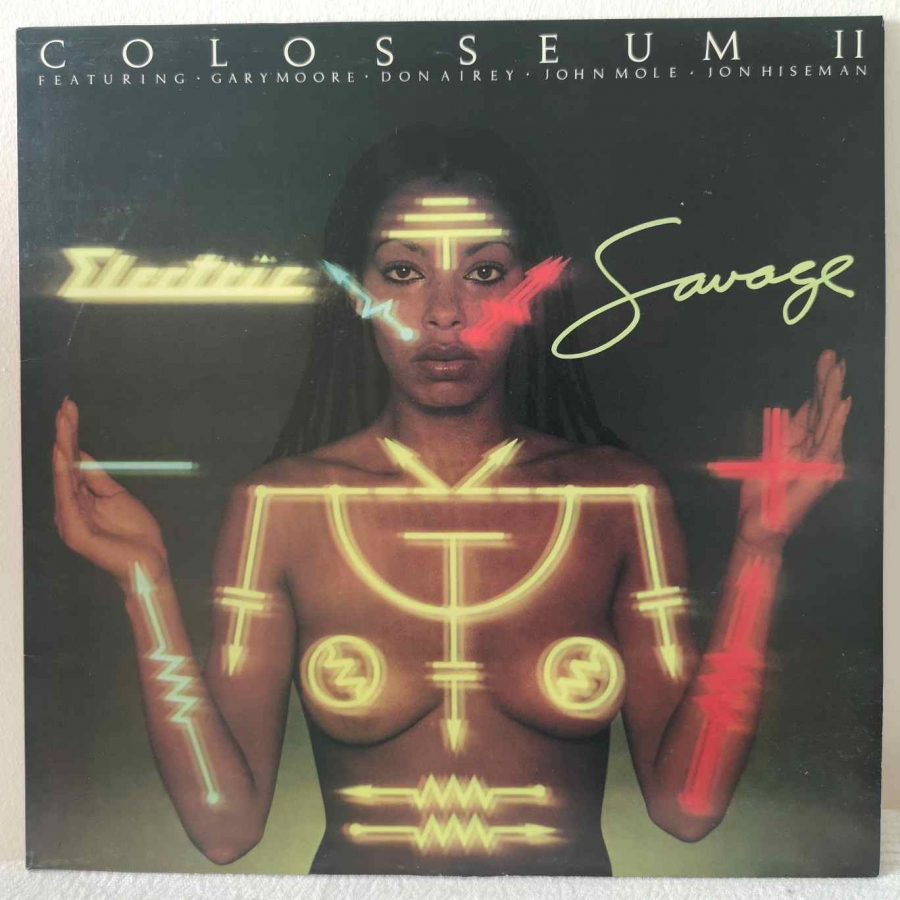
Colosseum II – Electric Savage (1977)
Colosseum ll Elecrtic Savage released in 1977… 8 songs of pure jazz/ rock fusion bliss. Drummer extraordinare Hiseman’s band kills it. with Don and Gary it’s an absolutely classic albums Don Airey On Keys and the great Gary Moore on guitar of course the one and only Jon H on drums playing unbelievable.
As Spinal Tap discovered, jazz-rock fusion isn’t for everyone. But it was in this idiom that Gary Moore really stretched himself as a musician. In 1975 he teamed up with drummer Jon Hiseman to form Colosseum II, the successor to Hiseman’s pioneering late-60s fusion group Colosseum. And of the three albums recorded by Colosseum II, “Electric Savage“, the second, is the best.
Also featuring future Rainbow/ Deep Purple keyboard player Don Airey and bassist John Mole, who replaced original member Neil Murray, the album showcases a level of virtuosity that makes Yes sound like a punk band.
Blues For Greeny (1995)
This is probably one of the finest albums ever recorded, let alone best guitar/blues/rock/whatever. At the very least, this inspiring and affectionate tribute, along with Moore’s live appearances, helped returned Green to a new generation of guitar players, and a welcome antidote to the ubiquitous shred of the time (nothing wrong with shred, mind, proud owner of a scalloped neck myself).”
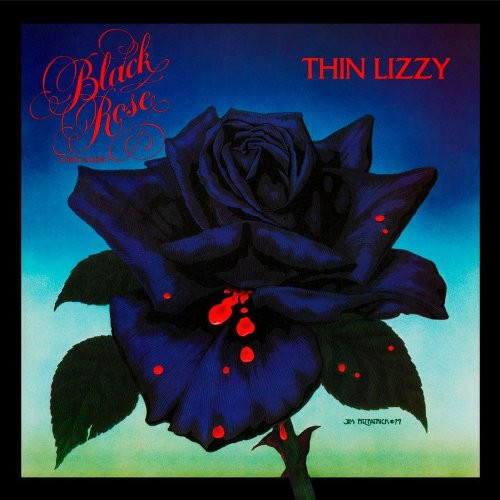
Thin Lizzy – Black Rose (1979)
Thin Lizzy’s 1974 album Nightlife featured Moore on one song, their classic ballad “Still In Love With You“. But in his third and final stint with the band, he stuck around long enough to record a whole album. And it was the best he ever made. Come 1978, Moore was ready to rejoin Thin Lizzy and he would go on to help write and record the band’s most successful studio album “Black Rose: A Rock Legend“, which was released in 1979. The album’s title track, in particular, features some incredible playing and guitar arrangements, combining four traditional songs into one seven-minute spectacular.
Moore put a rocket up Lizzy’s arse. His blistering double-tracked guitar solo on the hit single “Waiting For An Alibi” had fellow Lizzy guitarist Scott Gorham joking, “Fuck you, Gary!” And as Gorham later stated: “It was Gary’s idea to bring the Irish-ness back into Thin Lizzy.” The result was the album’s rollicking, beautiful, mythic title track, “Roisin Dubh (Black Rose) A Rock Legend“.
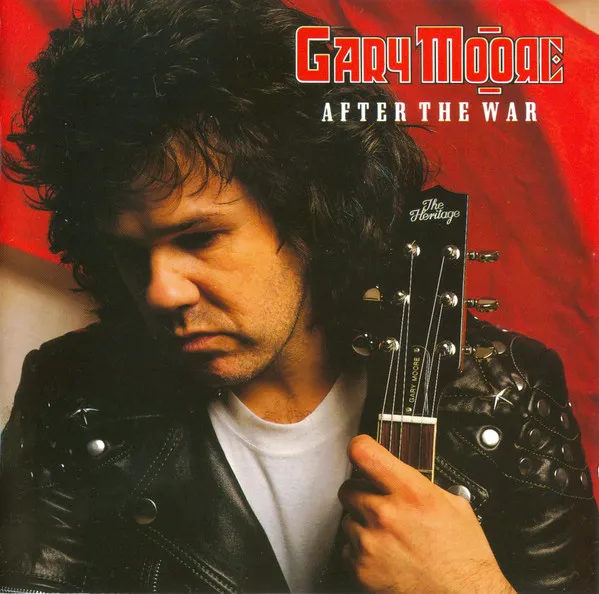
After The War (1989)
This material is a direct representation of that same characteristic. I love his Irish laments and sentiments. He also is so playful with his picking on Zeppelin emulators on the track “Led Clones“. A little fusion here a little blues there with all the adept talent, skill, and technique that forged his music on the anvil of genius. When someone condemns Gary for having produced hard rock in the eighties I simply say to myself-Yeah, I can tell your not a musician ! He played everything he was capable of performing.”
Moore was himself an inspiration, to a generation of rock guitarists including Slash, Randy Rhoads, Joe Bonamassa and, not least, Vivian Campbell, who in 2011 took time out from Def Leppard to play Moore’s role in the reunited Thin Lizzy.
“Gary didn’t fuck about when it came to playing guitar,” says Campbell. “There was a full-force physicality to the way he played. He didn’t just play fast, he played furious. That was the difference between Gary Moore and other guitarists – that intensity.”
In a career dating back to the 1960s he has played with bands/artists including Thin Lizzy, Colosseum II, Greg Lake and blues-rock band Skid Row as well as having a successful solo career. Among many cameo apperances over the years, he performed the lead guitar solo on “She’s My Baby” from the album Traveling Wilburys Vol. 3. For most of his career, Moore was also heavily associated with Peter Green’s famed 1959 Gibson Les Paul guitar. Moore was later honoured by Gibson and Fender with several signature model guitars of his own.
Moore started performing at a young age, having picked up a battered acoustic guitar at the age of eight, and got his first quality guitar at the age of fourteen, learning to play the right-handed instrument in the standard way despite being left handed. His career lasted over thirty years.
After debuting with 2016’s enchanting “Swell to Great“, U.K. psych-folk outfit Modern Studies spent the next half-decade testing the boundaries of their unique sound. The group’s ambitious follow-up, “Welcome Strangers”, seemed to receive the full bore of their creative might while 2020’s “Weight of the Sun” was a much more downplayed foray into contemporary dream pop. With album number four, Modern Studies migrate toward their tonal centre, collating their best attributes into a consistent and very appealing set of songs. As ever, the combined voices of Emily Scott and Rob St. John are the band’s true north, guiding the music through the quiet glades of “Comfort Me” and the winding stream of “Two Swimmers,” occasionally dipping into harmony, but more often in unison. The mood of “We AreThere” is rich and loamy with hints of ancient Albion folk tradition and an insistent baroque pop presence thanks to its many fine string parts.
The album’s lyrical meeting of naturalist poetry and inward exploration only enhances the beguiling arrangements, which lean more toward the organic than some of the group’s more recent synth-driven work. Perhaps the best of the bunch is “Wild Ocean,” a magnificent specimen of lotic psych-pop that stands among the best songs Modern Studies have produced.
Sweeping strings carry Modern Studies into unchartered terrain on their new album ‘We Are There’, flying high above their psych-folk roots, it’s an epic journey that’s exquisitely delivered, transcending categories, nodding to Brubeck, Low, Talk Talk, Jim O’Rourke and Pentangle, making music that is ready to cross over in these modern times with songs of substance.
Through the hazy daze of a smoky folk opus, Modern Studies craft rich soundtracks, stuttering Super-8 sketches from a washed-out world of melancholy, hand-tinted and tantalising. Lullaby couplets blossom into gorgeous chamber pop melodies, the drama unfolding behind Emily Scott’s plaintive vocal; part Julie London, part Sandy Denny, a little bit Kate Bush, with a hushed sigh of Joni.
The primary piano/guitar/bass/drums instrumental combination drives the ship with a sense of energetic reserve, especially on some of the more dynamic cuts like “Won’t Be Long” and “Do You Wanna,” over which the harmonic convergence of strings and voices plays out. As a collection, We Are There feels sophisticated yet elemental in its fine construction. It sounds like the work of a band who know themselves and trust their instincts.
We’re chuffed to inform that we finished our fourth studio album ‘Present Tense’ and it’s coming out on Polyvinyl and PIAS Australia on March 18th year of the tiger 2022!
Yumi Zouma’s Josh Burgess likens the band’s song writing process to gardening, “Someone brings in a seed and through collaboration, it grows into a song that is vastly different from its original form.” Like any garden, this one requires dedicated tending, a practice that seems rather inconvenient if not straight-up difficult, considering the fact that the four members live in disparate parts of the world – calling New York, London, and New Zealand home – but long-distance has always been a feature of their song writing process, not a bug. Their new album, “Present Tense“, is the product of those efforts, a work Christie Simpson describes as “a gallery wall displaying these different moments in each of our lives. A process of curation, revisiting the past and making it relevant to the present.”
You might assume that while some artists have struggled to rethink their processes during a pandemic, Yumi Zouma would be perfectly suited to lockdown, but the opposite proved to be true. Without looming tour dates driving them to release new music, the prolific band found themselves at a standstill. On the day that the World Health Organisation declared COVID-19 a pandemic, the band released their third LP, “Truth or Consequences“, via Polyvinyl, and had sold out their first American tour. After YumiZouma’s first show in Washington DC, the tour was cancelled and the four members went their separate ways, an experience memorialized on “Present Tense” opener “Give It Hell.” “It was disorientating,” Charlie Ryder admits. “We generally work at a quick clip and average about a record a year, but with no foreseeable plans, we lost our momentum.”
So they set a date. By September 1st, 2021, the album needed to be finished, regardless of whether they’d be able to tour it or even meet to record together. Before the September deadline goaded the band into action, they had what felt like endless amounts of time to record the album. What began in fits and starts became a committed practice again as Yumi Zouma dug through demos from as early as 2018 to collaborate on and make relevant to the peculiar moment in time the band, and world, was experiencing. “The lyrics on these songs feel like premonitions, in some regards,” Simpson reflects. “So much has changed for us, both personally and as a band, that things I wrote because the words sounded good together now speak to me in ways I didn’t anticipate.”
Remote and in-person sessions in studios in Wellington, Florence, New York, Los Angeles, and London all played a role, and Yumi Zouma brought in new collaborators from different disciplines to broaden their sound. Studio recordings of drummer Olivia Campion were incorporated into every song, while pedal steel, pianos, saxophones, woodwinds, and strings were played by friends around the globe who were able to lend their talents and support. The band enlisted multiple mixers in Ash Workman (Christine & The Queens, Metronomy), Kenny Gilmore (Weyes Blood, Julia Holter), and Jake Aron (Grizzly Bear, Chairlift), and recruited the mastering expertise of Antoine Chabert (Daft Punk, Charlotte Gainsbourg) for the first time. “This is our fourth album, so we wanted to pivot slightly, create more extreme versions of songs,” Ryder says. “Working with other artists helped with that, and took us far outside of our normal comfort zone.”
You can hear the impulse on “In The Eyes Of Our Love,” a song that’s seemingly twice as fast as any prior release, and closer to the classic rock of Dire Straits than the dream pop aesthetics that the band has built their career on so far. Campion’s drums crash in hard from the outset, sending the accompanying band into a revelry that only breaks upon arriving at the first bridge, when Simpson sings: “But we won’t lose sight of what we said/ I’ll sing from the dirt instead.”
There’s a defiance heard throughout “Present Tense“, a refusal to bend to what might seem fated, communicated not only through lyrics but in the boldness of these arrangements, metamorphosing between tracks without ever losing momentum. The triumphant chorus of “Where The Light Used To Lay” belies any of the pain beneath its surface, a technique Simpson likens to the work of folk-adjacent rock acts like Bruce Springsteen and Phoebe Bridgers. “We wanted quiet moments to give into a big, brash chorus, something that approaches cliché,” Simpson says. “The chorus feels like a dramatic encapsulation of who we want to be as a band,” Ryder adds.
Two years away from the road gave Yumi Zouma a new appreciation for the friendship they’ve sustained and the opportunity an abundance of time off-cycle offered. “We used to run on adrenaline, and if a song wasn’t working we’d just nip it in the bud and move on. This process gave us the opportunity to really sit with songs and rethink them until they felt like they belonged in the collection,” Burgess says. Album closer “Astral Projection” is one such song, originally conceived by Burgess, who felt as if he’d been handed a sliver of brilliance after the song had been rewritten and abandoned by Ryder and Simpson. “It was as if I’d been given this rescue cat who had the potential to be great,” he says, laughing.
Between them, the song developed into a bass-driven slowburner, moody and oddly prescient,“A hint of panic can do wonders for distance,” Simpson sings, her voice mirrored by Burgess’s. The outro twinkles like a summer skyline at dusk, violets and grays intermingling with the bright glow of a thousand open windows. “I daydream about playing that one live,” Burgess says. “In bed, I’ll close my eyes before sleep and imagine the drumbeat kicking in.” It’s a craving the members of Yumi Zouma all share, one they hope will be satiated someday soon. Dedicated to an embattled past, “Present Tense” is the band’s offering to a tenuous future.“ To 2020, and the memory of all that was lost,” they write in the album’s liner notes. “Kia Kaha.”
Releases March 18th, 2022
All songs written, recorded, and produced by Yumi Zouma
















 The Fat Angel Sings