The Chameleons return with their first album in 24 years, sporting a rock renovation to their signature sound, The Post-punk greats The Chameleons never seemed to catch a break. They signed to major label Epic in the early ’80s and looked like real contenders to be the next U2, only to get dropped after their first single. Soon after, Big Country and Echo & The Bunnymen eclipsed them.
After two great albums on tiny indie Statik Records, they signed to Geffen for their fantastic third record, 1986’s “Strange Times”, only to break up the next year following their manager’s death. The original line-up reformed in 2000, released the pretty good “Why Call It Anything” in 2001, and did some incredible tours , but old wounds never healed and they split again in 2003. Frontman/bassist Mark Burgess carried on as ChameleonsVOX, sometimes with powerhouse original drummer John Lever, who sadly died in 2017.
Burgess put together a new Chameleons line up in 2021 with original guitarist Reg Smithies (a rift remains with other guitarist Dave Fielding), plus Stephen Rice on guitar and Todd Demma on drums.
An album has been promised ever since, and here it is: “Arctic Moon”, their first in 24 years. Burgess says it signals a departure from the sound of earlier albums, and represents “a new chapter.” It’s not that much of a departure, though without Fielding distinctive, sharp rhythm guitar we don’t quite get that classic Chameleons sound. I appreciate that they didn’t just get someone to imitate his style, which they easily could have done.
The arrangements lean more “rock” this time, including an arm-swaying piano ballad (“Free of It”) complete with a traditional soaring guitar solo. Still, the melodies are distinctly Burgess’, as are his full-throated vocals. There are a few new classics for the canon: ripping opener “Where Are You?,” the ascending “Lady Strange” with its very Chameleons chorus and ringing guitars, and closer “Savoirs Are aDangerous Thing,” which proves Burgess’ lyrical skills remain sharp. And like their other albums, “ArcticMoon” comes wrapped in Smithies’ distinctive, surreal cover art. It’s a worthy addition to The Chameleons’ legacy.
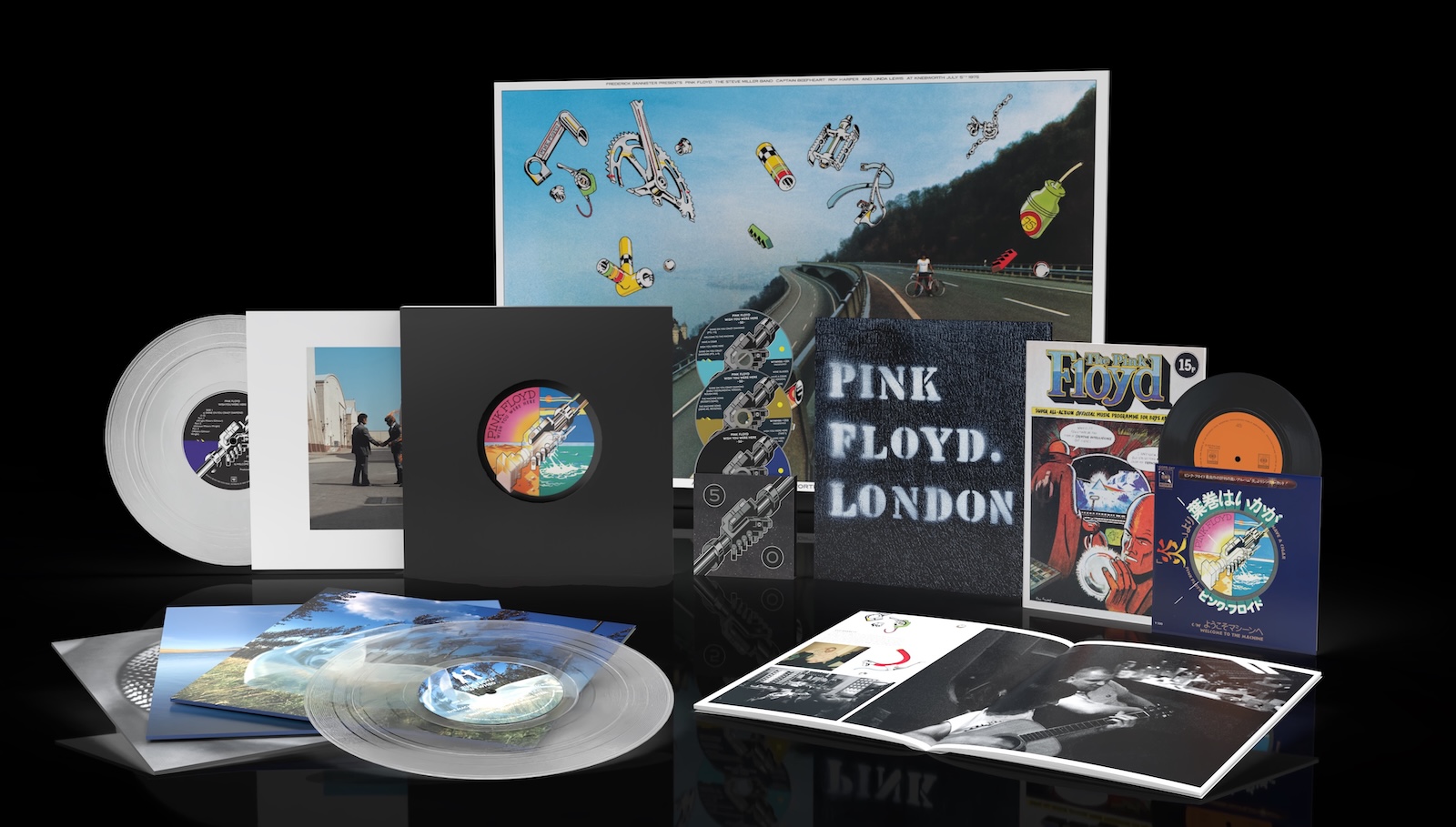
Pink Floyd‘s “Wish You Were Here” was released 50 years ago (September 12th, 1975) and to celebrate they’re releasing a Deluxe Edition reissue on December 12th via Sony Music. It will be available as a 2-CD set, a three-LP set, a Blu-ray, a digital edition, and a Super Deluxe Edition box set.
Half a century to the day since its original 1975 release, Pink Floyd have announced the 50th anniversary edition of their era-defining album “Wish You Were Here“. Out December 12th via Sony Music, “Wish You Were Here 50” gives fans an exciting new perspective into one of Pink Floyd’s most iconic and best-loved records. The 50th anniversary edition features multiple discs of rarities – at the core of this special collection are six previously unreleased alternate versions and demos presenting Pink Floyd’s eighth studio album in a brand new way that demands repeat listening.
“Wish You Were Here 50” will be released in multiple formats including 3LP, 2CD, Blu-ray, digital and a Deluxe Box Set. The digital release includes the original 1975 album, featuring a new Dolby Atmos mix by James Guthrie, whose work with Pink Floyd dates back to 1979’s “The Wall”. It also includes 25 bonus tracks made up of nine studio rarities, and 16 live recordings captured by the renowned bootlegger MikeMillard at Pink Floyd’s Los Angeles Sports Arena concert on April 26th 1975, now receiving its first official release.
The live audio has been meticulously restored and remastered by Steven Wilson. The Blu-ray edition also gives fans the chance to see three concert screen films from the band’s 1975 tour, plus a Storm Thorgerson short film.
The 3LP and 2CD formats include the original album and the nine studio bonus tracks. The Deluxe Box Set includes all 2CD, 3LP (on exclusive clear vinyl) and Blu-Ray material, plus a fourth clear vinyl LP,“Live At Wembley 1974”, a replica Japanese 7” Single of “Have A Cigar” b/w “Welcome To The Machine“, a hardcover book including unseen photographs, a comic book tour programme and Knebworth concert poster. Exclusive 50th Anniversary Merchandise along with Limited Edition product releases will also be available at PinkFloyd.com.
To celebrate the album announcement, a previously unheard early demo recording of ‘Welcome to the Machine’ originally titled ‘The Machine Song’ is also released . Shorter in length than the epic original, ‘The Machine Song (Demo #2, Revisited)’ gives fans an exciting preview of what to expect from “Wish You Were Here 50”. Other studio rarities to be released include ‘The Machine Song (Roger’s demo),’ the first home demo of the song that Roger Waters originally brought to the band, a previously unheard instrumental mix of the track ‘Wish You Were Here’ showcasing David Gilmour’s pedal steel guitar, and for the first time, a complete ‘Shine On You Crazy Diamond (Pts. 1-9)’ that joins together the two halves of the song, newly mixed in stereo by James Guthrie.
“Wish You Were Here” has been a mainstay on all-time greatest albums lists for decades. The multi-Platinum-selling #1 hit record was Pink Floyd’s first to reach the top of the charts on both sides of the Atlantic, becoming the band’s fastest selling album. In 1973, “The Dark Side of the Moon” had taken Pink Floyd from a hugely successful breakout British band to one of the biggest rock groups on the planet. “Wish You Were Here” was the band’s powerful response to their newfound global fame.
Featuring the multi-part eulogy to Syd Barrett ‘Shine On You Crazy Diamond’, the hypnotic ‘Welcome To The Machine’, the scathing ‘Have a Cigar’ with its immortal line “Oh by the way, which one’s Pink?” famously sung not by Waters or Gilmour, but by non band-member Roy Harper, and the essential title track, “Wish You Were Here” is undoubtedly one of the most important album releases in the history of popular music.
The record’s themes of absence, isolation, transience, and comment on the insincerity of the music business are embodied in the iconic album artwork. The visual puns developed by Storm Thorgerson and Aubrey ‘Po’ Powell at Hipgnosis remain instantly recognisable visual statements today.
Remembering that time, Aubrey ‘Po’ Powell said:
“In the 1970s, album covers were equally as important as the music, because the cover helped to sell the record. Record stores would carry 10,000 different images in album sleeves, so what we were doing had to look different and stand out amongst the crowd.
I remember turning around to Storm and saying, how are we going to set a man on fire? Because there was no digital way of doing it in those days. He said, Po, you’re just going to have to do it for real. That was it.
One has to remember that Pink Floyd were the only band on EMI and Capitol Records who had the rights to the creative – in terms of album cover – besides the Beatles. That’s why we were allowed to do what we wanted. It was brilliant. Just the same way that Pink Floyd were a very inventive band at the time, so were Hipgnosis. We were determined to keep that abstract, enigmatic image alive and hence, we were able to do that for Pink Floyd.”
In 2025 the ardent support and fascination surrounding Pink Floyd’s music remains. The newly restored version of their ground breaking 1972 film Pink Floyd at Pompeii – MCMLXXII stormed box offices around the world, with the live album debuting at #1 on the UK Albums Chart, marking the band’s first UK chart-topper in eleven years and the seventh in their career. The film was praised by critics and audiences the world over, with The Guardian describing it as a “mesmerically peculiar portrait of a band on cusp of greatness.”
50 years since its release, “Wish You Were Here” sounds as resonant and vital as ever, and in reaching this milestone deserves to be celebrated anew. This special anniversary edition allows fans, for the first time, to delve deeper into a pivotal moment in Pink Floyd’s history.
The Super Deluxe box set contains the LPs, CDs and Blu-ray plus a fourth clear vinyl LP featuring their live performance from Wembley Stadium in 1974, a replica of the Japanese 7″ of “Have a Cigar,” a hardcover book with unseen photographs, a comic book tour program, and a Knebworth poster.
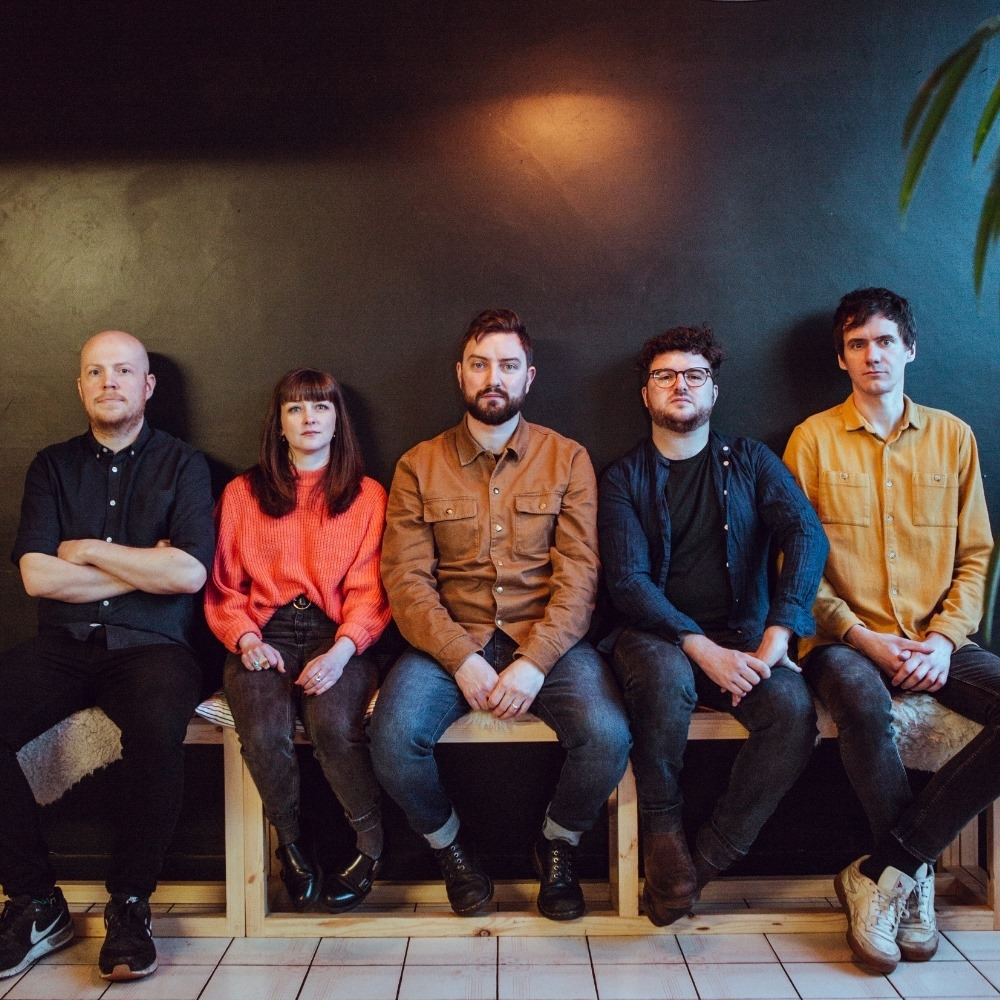
Having recently celebrated the 15th anniversary of their acclaimed debut album “Boots Met My Face”, Admiral Fallow return in 2025 with ‘Avalanche’, a brand new single and their first new music since 2021’s “The Idea Of You” LP.
This release was the band’s first venture on the Chemikal Underground label (Arab Strap, The Delgados, Phantom Band) and that relationship continues with ‘Avalanche’, the band’s tender new single which subtly kickstarts a brand new chapter for the Scottish five-piece. Where “The Idea of You” sang of friendship and carefree adventure, ‘Avalanche’ finds the band in a new territory – the song written by Louis Abbott following the birth of his daughter in 2022. “It tells the story of the day she joined us in the world,” Abbott says of the new single. “I wrote the words very early one morning in Spring as she lay sleeping next to me on the couch.” An elegant undertaking, sonically ‘Avalanche’ is defined by the rise and fall in temperature that swings back-and-forth throughout. Opening in gentle light, Abbott’s plaintive voice sings quiet details of his life as a new father, before the whole thing bursts into something bolder, the full band swelling into life and crafting something altogether more euphoric.
That push-and-pull, of fiery passion and tender restraint, has been a key aspect of the band’s sound, honed over the course of four full-length albums that have seen them championed by the likes of MOJO, Uncut, The Skinny, and more. On ‘Avalanche’, Admiral Fallow’s grasp of both colourful expression and muted delicacy feels as quietly fascinating as ever before.
At a time when the Rolling Stones were forbidden from singing about spending the night together on national television, the Velvet Underground was crafting songs about such taboo subjects as illegal drugs, sadomasochism and black angels of death. And that was just on their debut. Throughout their first three albums, VU continued to challenge societal norms through their lyrics and rock music itself through their unorthodox instrumental approach. Their sound was theirs alone, which proved to be an obstacle when it came to sales. The majority of popular music fans simply weren’t ready for the bleakly beautiful vision of VU. But for those who were, this LP trilogy was a clarion call, drawing together the outsiders who felt disenfranchised and unfulfilled by Top Forty fodder. Like time release capsules, these LPs became catalysts for change as they spread from city to city and were consumed by adventurous listeners.
Bands formed, scenes coalesced and new musical paths emerged which would eventually branch off into punk, alternative, indie and more. Take a sample from any underground music genre and you’re likely to find VU DNA pulsing through its core.
As the alternative scene grew, so did the legend of the Velvet Underground. However, with relatively few of the original LPs in circulation, finding them could be difficult and, as a result, more people had probably heard OF the band than had actually heard their music. The emergence of compact discs in the mid-80s, along with a groundswell of VU-influenced bands singing their praises, finally got their music into wider distribution.
This beautiful, deluxe boxed set gathers the rare mono versions of the band’s first three studio albums along with the superior mono version of Nico’s Chelsea Girl and a definitive edition of the band’s unfinished fourth album! Mastered by Bob Irwin, cut by Kevin Gray, and pressed at RTI,this collection is an essential purchase for the discerning vinyl devotee. For all tomorrow’s parties, this is your soundtrack.
Includes: The Velvet Underground & Nico White Light/White Heat The Velvet Underground 1969 Nico: Chelsea Girl
Since the release of their 2023 debut LP ‘Good Time’, Austin TX outfit DAIISTAR have spent the last couple of years touring relentlessly and spreading their baggy noise-pop good times across North America and Europe – be that headline runs of their own or tours supporting the likes of Brian Jonestown Massacre, The Black Angels, The Dandy Warhols and LA Witch. When over in the UK in September 2024, they holed up at London’s Lightship 95 studio – a floating studio on the Thames – to record this “Fuzz Club Session” LP, which is set to be released digitally and on limited coloured vinyl on September 26th, alongside a series of videos from the session.
DAIISTAR’s ten-track “Fuzz Club Session” LP – number 21 in the series – perfectly captures the band’s road-hardened blend of shoegaze, neo-psychedelia and Madchester-inspired grooves, featuring standout tracks from ‘Good Time’ such as ‘Star Starter’, ‘Tracemaker’, ‘Parallel’ and ‘Repeater’. It also includes their euphoric single ‘Clear’, a ‘Good Time’ outtake released on a limited 7″ last year, as well as their cover of Primal Scream’s ‘Burning Wheel’ which is now available on vinyl for the very first time.
‘Star Starter’ is taken from DAIISTAR’s upcoming Fuzz Club “Session” LP released September 26th 2025.
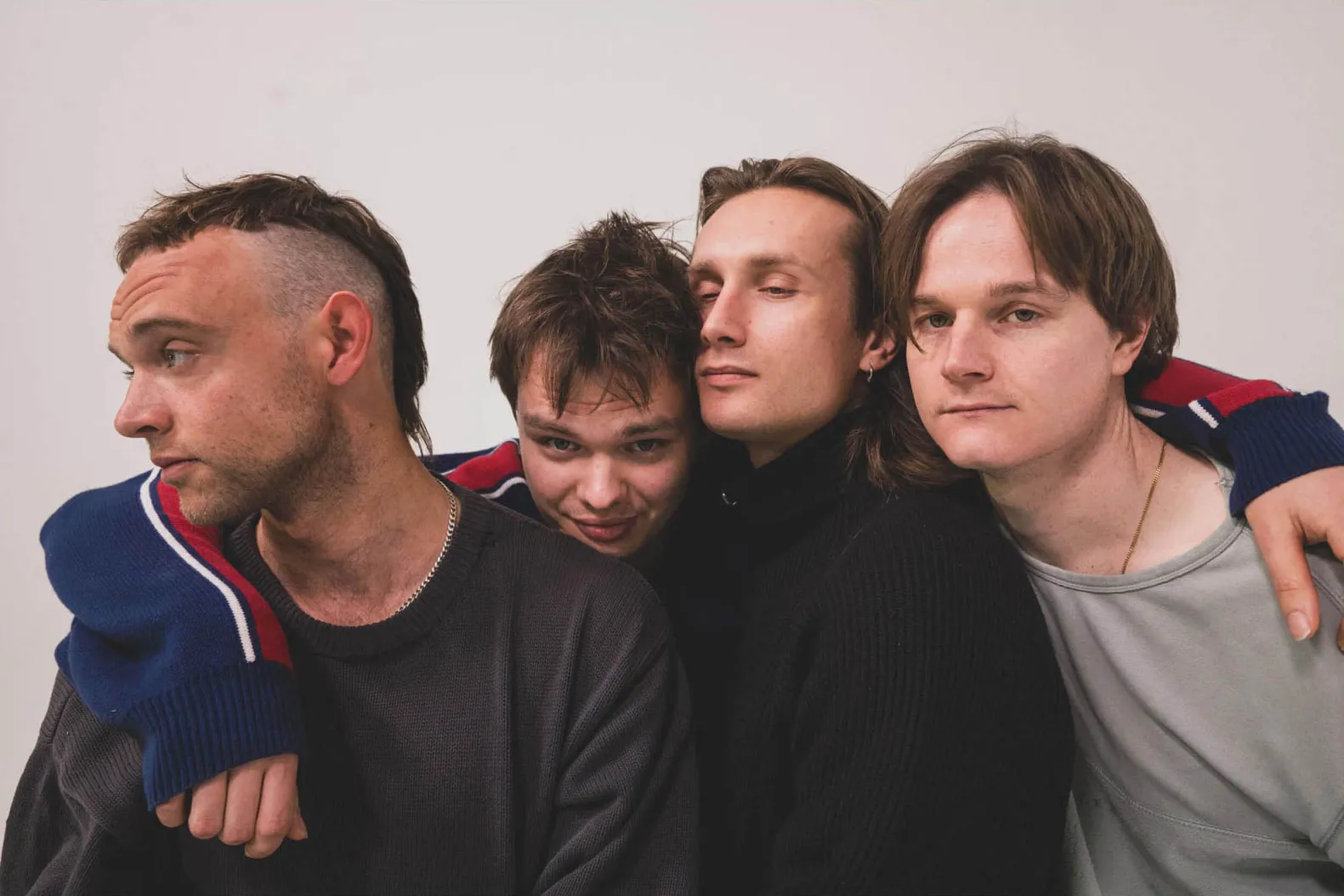
Wunderhorse frontman Jacob Slater’s Wi-Fi is spotty — “Fucking nightmare on my end,” he says. He’s taking this Zoom call from the south of Morocco, where he’s spent the last four Januarys “surfing and doing nothing else.” The 28-year-old U.K. musician has grown accustomed to this kind of reset every so often. After his rambunctious but short-lived stint as the frontman of the post-punk trio Dead Pretties came to an end in 2017, he took refuge on the coast of Cornwall, picking up odd jobs, working as a surfing instructor, and taking a part as the Sex Pistols’ drummer in the TV miniseries Pistol.
“It was kind of a baptism by fire,” he recalls of that time. “[Dead Pretties] formed when I was 17 and by the time I was 20, it was all kind of gone. It was very quick.” He remembers the following years as quiet and intense, during which he came down from some “bad habits” he’d developed. “I think it’s been published someplace, ‘Ah, he went teetotal, he went sober.’ It’s not quite the case, but I just didn’t indulge myself in those ways. It was getting in the way of my own life and definitely in the way of creativity.”
Wunderhorse began in 2020 as a solo project. It quickly became clear that the vision was too big to remain a one-man endeavor, and Slater recruited old friends Harry Fowler (guitar), Jamie Staples (drums), and Pete Woodin (bass). Wunderhorse released their excellent debut, “Cub“, two years later, and their second album, “Midas”, this past summer, both garnering glowing critical acclaim. With their dark, distinctive melodies and rupturing guitar riffs, these albums are the sound of seasoned rockers who are skilled at evoking the Nineties indie-guitar recombination of the moment.
Naturally, comparisons run rampant. Rolling Stone’s Jon Dolan spoke for many when he described “Midas‘ title track as “Nirvana’s In Utero crossed with Radiohead’s The Bends.” A quick scan of the r/wunderhorse Subreddit finds plenty of similarly bold sentiments: “If this band was Radiohead, “Midas” would be their Pablo Honey.” “‘Rain’ is so good. This is our “Nevermind.”
Slater’s thoughts on this high praise? “I’ll take that,” he says. “The aim is to find a voice that’s totally ours, but when you first come out, people sort of gauge what you’re like. So I don’t take any sort of offense to that, especially not when it’s bands of the caliber of Nirvana and Radiohead.”
“Just when you think you’ve heard just about all the retro-Nineties indie-guitar recombinations you need in one lifetime, these U.K. malcontents come up with one so ingenious, and yet so palm-smacking-forehead obvious it seems criminal no one’s thought of it before. To wit: “Midas”, the title track from their great second album, sounds like Nirvana’s In Utero crossed with Radiohead’s The Bends. And it bangs like Hades. That’s it. That’s there tro-Nineties indie-guitar recombination.Sometimes it really is the simple things.” – Rolling Stone
Slater says he was brought up by the “great songwriters.” His dad played Joni Mitchell and Bob Dylan around the house, and he remembers writing his first song when he was 12 years old. He describes the experience as “magic.”
“It was like something had come from somewhere more ethereal,” he says. “It was the first time I felt touched by that, and I haven’t really looked back since. It’s such a unique feeling. I just wanted to make it my life.”
He wrote the tracks from “Cub” and “Midas” over a long span of time, with the oldest songs going back to his late teens. “It’s kind of weird playing that stuff now,” he says. “It feels like somebody else wrote that. I don’t really know who that was now.” But that’s OK, he adds: “I think the fact that certain songs make you a little bit uncomfortable, that’s part of the vulnerability that comes along with being an artist as you change and move. Not every skin you wore is going to fit anymore, and you just have to find a way to live with that.”
These days, Slater is making more room for collaboration. “I’m still writing the bones of everything, but the sound of the band now is much bigger than just me,” he says. For “Midas”, the band tapped Grammy-winning producer Craig Silvey (whose credits include mixing Portishead’s Third and the National’s Trouble Will Find Me).
“He totally changed the way we even listen to music,” Slater says. “We’d sit down every day and listen to songs that we’d known our whole lives and he’d point things out and say, ‘Isn’t it interesting they’ve done that?’ or ‘They’re using the room mics there, and then they’re taking this out and they’re letting this bleed.’ You could visualize this song that was so familiar, whether it’s Neil Young or a Stones track or something, and suddenly I could see it in a whole different dimension in my head.”
The band is spending much of 2025 on the road, bringing songs from “Midas” to life for the first time. “I’m still forming a relationship with lots of those songs in terms of a life context. All I want to play now is just that record,” Slater says.
Wunderhorse have taken pages out of the books of acts like Sam Fender and Fontaines D.C., both of whom they’ve supported on tour. “All those guys have reminded me, like, ‘You’re human too and you and the band are at the centre of this thing,” he continues. “You have autonomy as a person and as an artist to be able to make decisions and make your own calls and respect yourself.’”
As for what’s next for Wunderhorse? “Just keep trying to put one foot in front of the other, really,” says Slater. “I’m definitely always writing stuff. Sometimes I go, ‘Oh, maybe that’s for Wunderhorse, maybe it’s something to keep in the vaults.’ I think there’s some things cooking.”
Radiohead have just announced “Hail to the Thief Live Recordings 2003-2009” – a new live album that allowed the band to re-evaluate their relationship with their 6th studio album, “Hail To The Thief“.
This is available to pre-order now as a one-off pressing, set for release on 31st October. It draws together performances of songs in London, Amsterdam, Buenos Aires, and Dublin between 2003 and 2009. The album was mixed by Ben Baptie and mastered by Matt Colton.
Speaking about the new live album, Thom Yorke says: “In the process of thinking of how to build arrangements for the Shakespeare Hamlet/Hail To The Thief theatre production, I asked to hear some archive live recordings of the songs. I was shocked by the kind of energy behind the way we played. I barely recognised us, and it helped me find a way forward. We decided to get these live recordings mixed and released (it would have been insane to keep them for ourselves). It has all been a very cathartic process. We very much hope you enjoy them.”
Thom Yorke recently co-created the critically acclaimed Hamlet Hail to the Thief, a frenetic adaptation of Shakespeare’sHamlet, set to a deconstructed score of reworked songs from 2003’s “Hail to theThief”. Rolling Stone UK said of the new production, “The biggest testament to Yorke and his co-writers that these worlds collide so seamlessly, as if they were always meant to be together.”
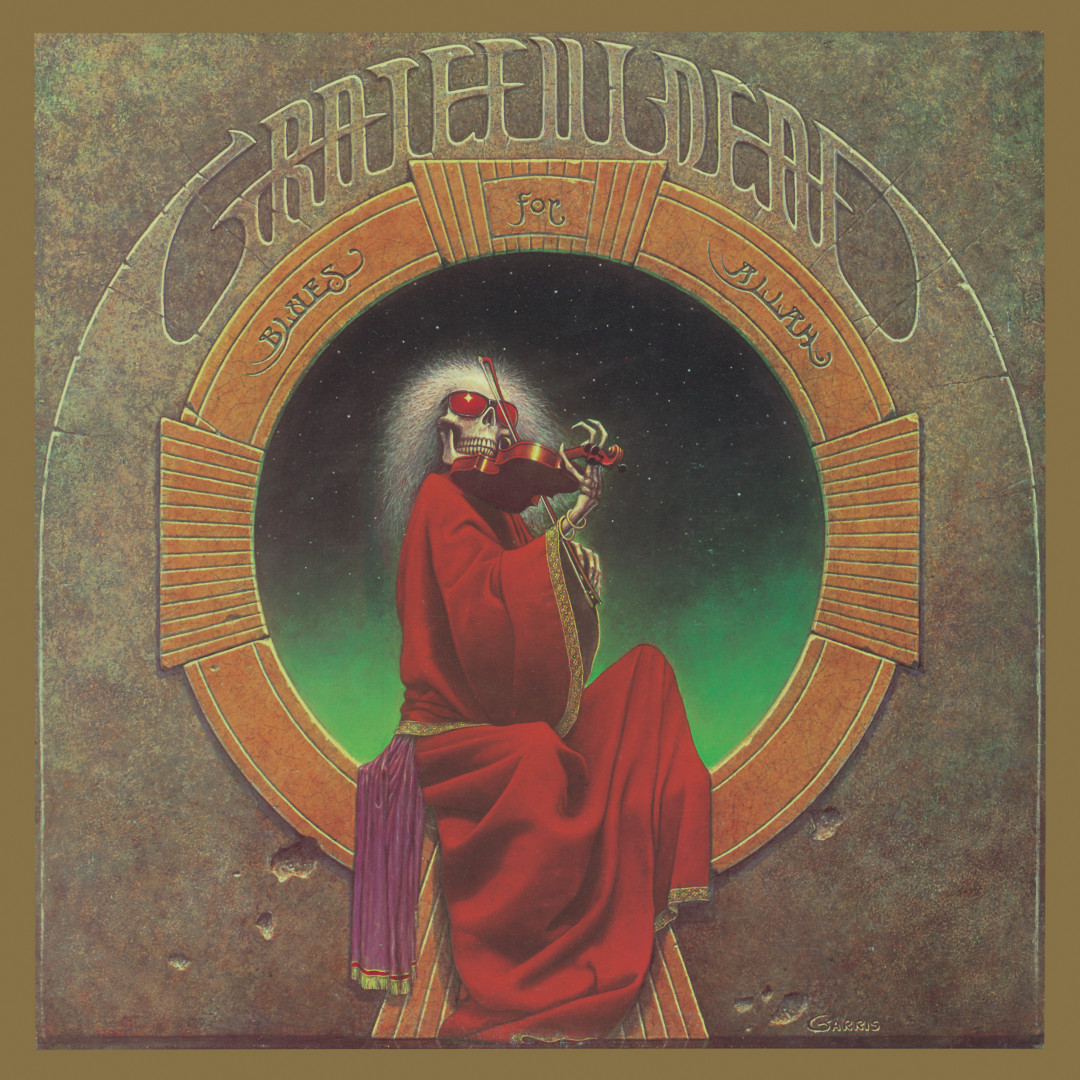
“Blues For Allah” is the 8th album and 3rd released on Dead’s own label, Grateful Dead Records. In their 10th year, the Grateful Dead recorded one of their most ambitious albums since the late 1960s, with songwriting and songs that were as out-there, jam-filled, and as psychedelic as the music they were making in 1968-1969.
The Grateful Dead’s self-released September 1975 LP “Blues for Allah” is many a Deadhead’s almost favourite album. It is indeed home to a near-perfect dizzying blend of ultra-tight playing, funk-forward, progressive, jazz-fusion-oriented music wrapped up in a handful of incredibly catchy tunes. Much of this music went on to become concert staples for the band as well, and now this pivotal Dead album rightly sees a 50th anniversary 180g 1LP reissue via Rhino.
When the Grateful Dead took a self-imposed hiatus in 1974 after their farewell October run at Winterland Ballroom, they left the road with no clear sense of when—or if—they’d return. A year later, they surprised everyone with Blues for Allah, which the band recorded in novel fashion at Bob Weir‘s home studio almost entirely without pre-written material. Robert Hunter wrote lyrics on the spot. Keith Godchaux‘s keys gave the album spacious texture. Donna Jean Godchaux‘s harmonies added new layers to songs like “The Music Never Stopped”. “Crazy Fingers” became, in late bassist Phil Lesh‘s words, “a marvellous essay in smoky ambiguity.” Drummer Bill Kreutzmann noted the title suite “bordered on acid-jazz composition,” a notion underscored by Mickey Hart‘s incorporation of unorthodox sounds including field recordings of crickets.
In 2022 I had the pleasure of remixing Grateful Dead’s albums American Beauty and Europe 72 in Atmos. However 3 years before that I had also been invited to create a new mix of their 1975 album Blues for Allah, which for whatever reason never got the green-light at the time. Now to celebrate the album’s 50th anniversary the SW version will finally be issued, and even better it’s being made available in high resolution on a physical blu-ray which includes my 2019 stereo, instrumental stereo, and 5.1 mixes, plus a 2022 Atmos mix.
It also has 2 bonus alternate stereo mixes, including a version of the 12 minute title track which includes many parts that were not used in the original. I’m happy about all this, it sounds great (well I think), and it’s my favourite Dead album, their most experimental and progressive you might say. So better late than never. Steven Wilson .
In October 1974, the Grateful Dead had established an undeniable following that cemented their status as cultural iconoclasts, bred from the beatnik movement’s rejection of conformity. A tribe of originalists with nearly a decade of gigs under their belts, the band performed what they believed was their final stint of concerts at San Francisco’s Winterland, dubbed the “farewell run.” What followed was a self-imposed hiatus, which would come to an end a year later with the surprise release of Blues for Allah.
Emerging on September 1st, 1975, the original collection of music presented essential compositions, including the three-movement suite: “Help On The Way” / “Slipknot!” and “Franklin’s Tower,” a still cherished piece in the Dead’s catalog. Surfacing as a fan favourite, Blues for Allah houses the group’s concert anthem, the John Perry Barlow and Bobby Weir co-write, “The Music Never Stopped,” the eastern influenced title track, and striking instrumentals: “King Solomon’s Marbles,” “Sand Castles and Glass Camels,” and the light and fluttery “Sage & Spirit.”
Now, in recognition of Blues for Allah’s 50th anniversary, a deluxe edition of the Grateful Dead’s eighth studio album has been remastered and prepared for release on September 12th, 2025. The revisited collection will be available as a 3CD set and on digital streaming platforms. It features a newly remastered version of the original album by Grammy Award-winning engineer David Glasser. He sourced from the original analogue tapes, which underwent speed correction and tape restoration by Plangent Processes.
The Grateful Dead have shared a previously unreleased recording of “Crazy Fingers” from their August 12th, 1975 soundcheck at San Francisco’s Great American Music Hall. The track is one of many newly unearthed recordings included on the upcoming ‘Blues for Allah’ (50th Anniversary Deluxe Edition),’ due out September 12th via Rhino.
“One of the most ethereally psychedelic lyrics in the entire Grateful Dead canon, this beautiful ballad by Jerry Garcia and Robert Hunter is like a beautiful dreamscape, like a feather drifting from the sky and landing gently,” said band archivist David Lemieux. “This rendition is from the Dead’s rehearsal/soundcheck at the Great American Music Hall… the day before the classic ‘One From The Vault’ show. Practice makes perfect!”
As a significant inclusion in the forthcoming release, the revisited set turns over 2 hours of previously unreleased recordings. Included is the band’s August 12th, 1975, soundcheck at San Francisco’s Great American Music Hall, which captures renditions of album features: “Sage & Spirit,” “Help On The Way,”“Slipknot!,” and “Franklin’s Tower.” As an added feature, performances from the group’s June 21st, 1976, show at the Tower Theatre in Pennsylvania draw attention to fiveBlues for Allah tracks, and “Eyes of the World.”
A final feature of the collection turns over song selections from Bill Graham’s SNACK (Students Need Athletics, Culture, and Kicks) Benefit at Kezar Stadium on March 23rd, 1975, previously included on the 2004 Beyond Description box set’s Bonus Disc. It also housed one of only three known live performances of the “King Solomon’s Marbles.” Vinyl enthusiasts can purchase a 180-gram black picture disc and limited-edition “Midnight Fire” custom vinyl, exclusive to Dead.net.
The first single from the revisited set, “The Music Never Stopped,” is now available to stream. Grateful Dead Legacy Manager and Archivist David Lemieux commented, “This fanciful take of life on the road, the journey of Dead Heads, and the magic the Grateful Dead brought from town to town was a fan favourite every time it was played.”
Blues for Allahrepresented a studio reset for the band, who tried a different approach to making this set by rejecting the pre-writing process and allowing the songs to emerge in the moment. “The whole idea was to get back to that band thing, where the band makes the main contribution to the evolution of the material,” Garcia explained.
Working at Bobby Weir’s home studio, which had just enough space to house the ensemble and their equipment, the session evolved into an intimate exchange of ideas, characterized by an exploratory approach that pushed the boundaries of what they were capable of generating.
“Blues for Allah is the Dead’s unique vision, a deeply humane parable that framed their own artistic renewal in the most inclusive, expansive terms,” writes Nicholas G. Meriwether, Executive Director of the Grateful Dead Studies Association and author of the set’s liner notes. “Fifty years later, it remains one of their most musically successful and resolutely experimental albums.”
“BLUES FOR ALLAH is the Dead’s unique vision, a deeply humane parable that framed their own artistic renewal in the most inclusive, expansive terms. Fifty years later, it remains one of their most musically successful and resolutely experimental albums.” Nicholas G. Meriwether, Executive Director of the Grateful Dead Studies Association
This week, Wombo unveiled their new single/video, “Neon Bog,” taken from their forthcoming album, “Danger in Fives” (out August 8th). The track’s video is an eleborate set up of surreal practical effects (helmed by the band’s own Cameron Lowe) that distills Wombo’s singular essence. It’s the perfect companion for the “off-kilter, whimsical gem” (Stereogum).
“Danger in Fives” isn’t a reintroduction; it’s a reminder. Throughout the record, Wombo not only enhance their formula, but routinely perfect it. Maintaining the confidence of their last full-length, 2022’s “Fairy Rust,” “Danger in Fives” reconnects with the intuition that led their wild experiments on the 2020 debut LP “Blossomlooksdownuponus”. The elements central to Wombo remain true, and are only strengthened across a near-decade of crafting mesmeric rock.
But that’s not all! We’ve got some limited “Danger in Fives” tees up for pre-order now! Designed by Cam, modeled by Sydney, and blessed by Joel. These tees are avail inblack (unisex) and white (baby tee) — stock is very limited so get your orders in before there’s nothing left to order
& while we’re at it — you got your Wombo tickets yet? Big tour right around the corner & the first support slot is officially spoken for. Fire Talk extended fam shower curtain will be joining the band on the east coast,
from Wombo’s new album, “Danger in Fives”, out August 8th on Fire Talk
On it’s release in 1977, Johnny Thunders & the Heartbreakers’ “L.A.M.F.” had a mastering fault, widely condemned as a ‘muddy mix’. Track Records went bust and the master was lost – so subsequent releases were compiled from outtake or re-mixes. Forty-four years later, the master has been found in an attic, and the classic punk album “L.A.M.F.” can at last be heard as the band and producers intended!
Soon after leaving the New York Dolls, guitarist Johnny Thunders and drummer Jerry Nolan formed theHeartbreakers with Television refugee Richard Hell. Their only album, 1977’s “L.A.M.F.”, is a cornerstone of the New York City punk scene, with songs like “Chinese Rocks” — cowritten by Dee Dee Ramone, whose band later recorded a version — chronicling drug abuse, perpetual disappointment and failure.
Found in an Attic – a punk rock archaeological discovery – a copy master of the original 1977 Track Records tape, without the ‘mud’!
This classic punk album, recorded in London by the New York band featuring two New York Dolls, was always controversial – and not just for the acronym. Upon release on Track Records in 1977, it was widely condemned for having a ‘muddy mix’ – later found to be a mastering fault. When Track went bust the following year, manager Lee Black Childers burgled the office and liberated the tapes – he found everything except the master-tape.
Originally saddled with a muddy, barely listenable mix, the Heartbreakers’ only album has been the center of discussion for decades. One thing is clear: The songs are almost uniformly great, anchored in mid-’70s power pop and on-the-horizon punk rock. Johnny Thunders and Jerry Nolan cut their teeth in punk pioneers New York Dolls, so the sentiments are genuine. That energy blazes through the opening cut “Born to Lose.”
Subsequent releases were remixed from the multi-tracks or compiled from outtake mixes – the ‘lost ’77 mixes’ in 1994 being well-received and the version most known ever since. A lift from the vinyl didn’t achieve much clarity. Meanwhile, fans found the ’77 cassette version didn’t have the infamous ‘mud’, nor did certain European vinyl matrixes.
In 2020 a chance meeting led to Daniel Secunda’s archives. He was an old-school music biz pioneer who became a Track Records director – and the Heartbreakers “L.A.M.F.” co-producer. Among his many tape boxes were two with no artist name, marked ‘Copy Master 12.7.77’. They turned out to be a crystal-clear “L.A.M.F.”, just as the band and producers intended it.



 The Fat Angel Sings