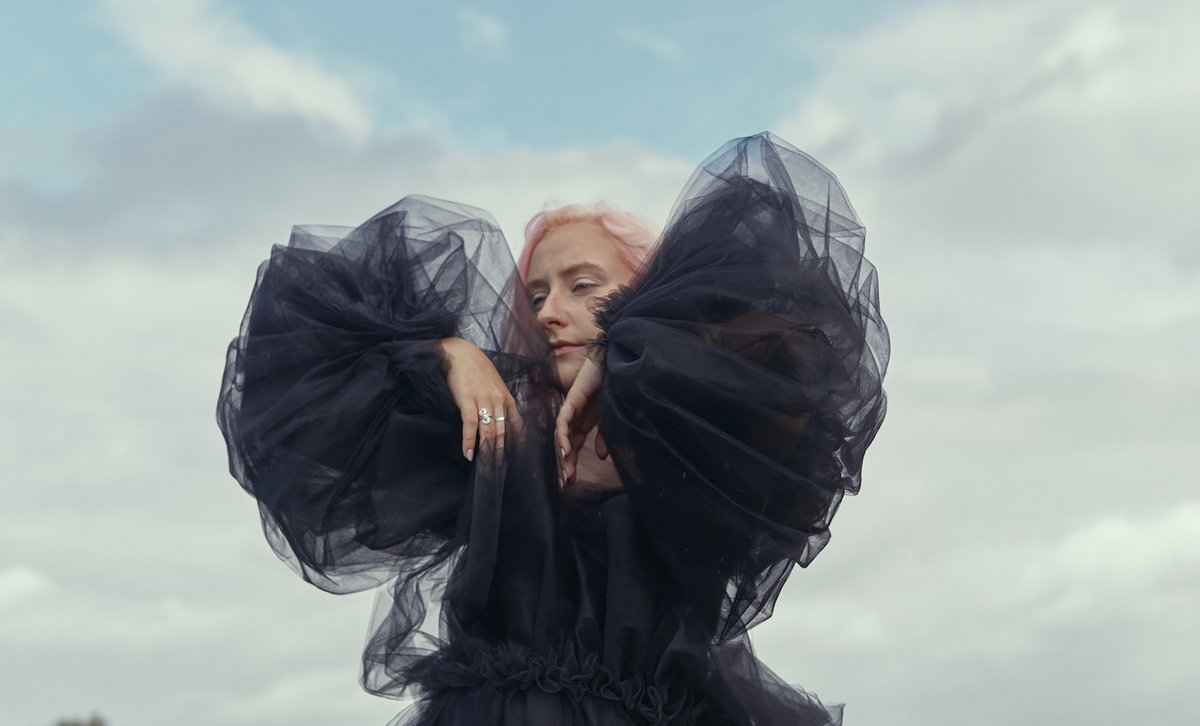
Fears is London-based Irish artist, musician and producer Constance Keane. Combining reflective electronics, acoustic samples, and haunting vocals with organic visuals, Fears invites the listener on an ethereal journey, blurring the boundaries between music and visual art. Her minimalist approach centres on emotive subjects, which are all-at-once deeply personal yet remarkably universal. Constance Keane follows up last year’s Oíche, with a new song dedicated to her friend Sophie GwenWilliams who passed away recently, and whose cello playing is featured on the track.
An accompanying video directed by Zoe Greenway, was filmed in Maharees in Kerry.
“Sophie was an incredible artist and a very close friend of mine. We did a filmed performance together last March, thinking we’d get a chance to record it ‘properly’ in a studio, but she passed away before we could. Zoe and I dedicate the video for “16” to her memory. I had made her a dress for the original performance out of pink tulle – the same fabric I have with me in the video. She was a really inspirational and encouraging person, and I wanted to create something that shows how I carry her with me, even though I no longer have her physically here.”
Williams was a performer, trans activist, chair of queer art collective The 343 and co-founded the organisation We Exist. The instrumentals were recorded during a live performance, the one and only time they played the track together.
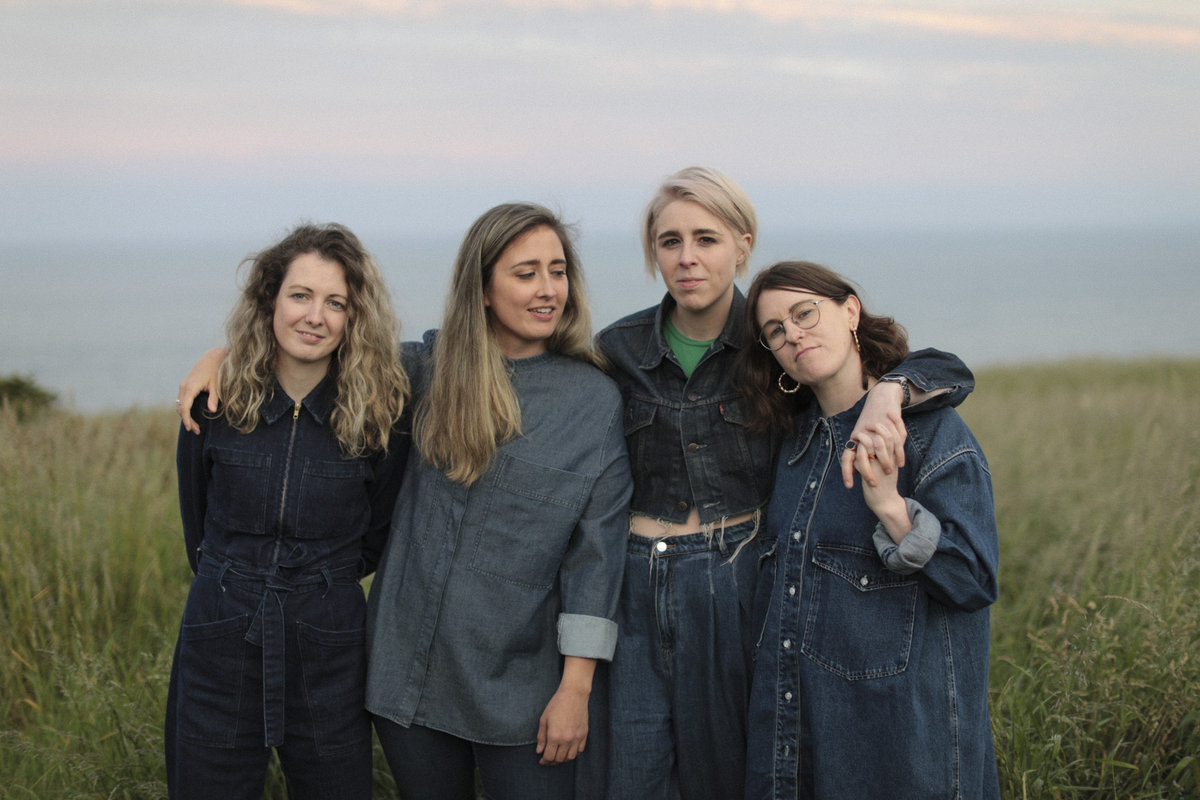
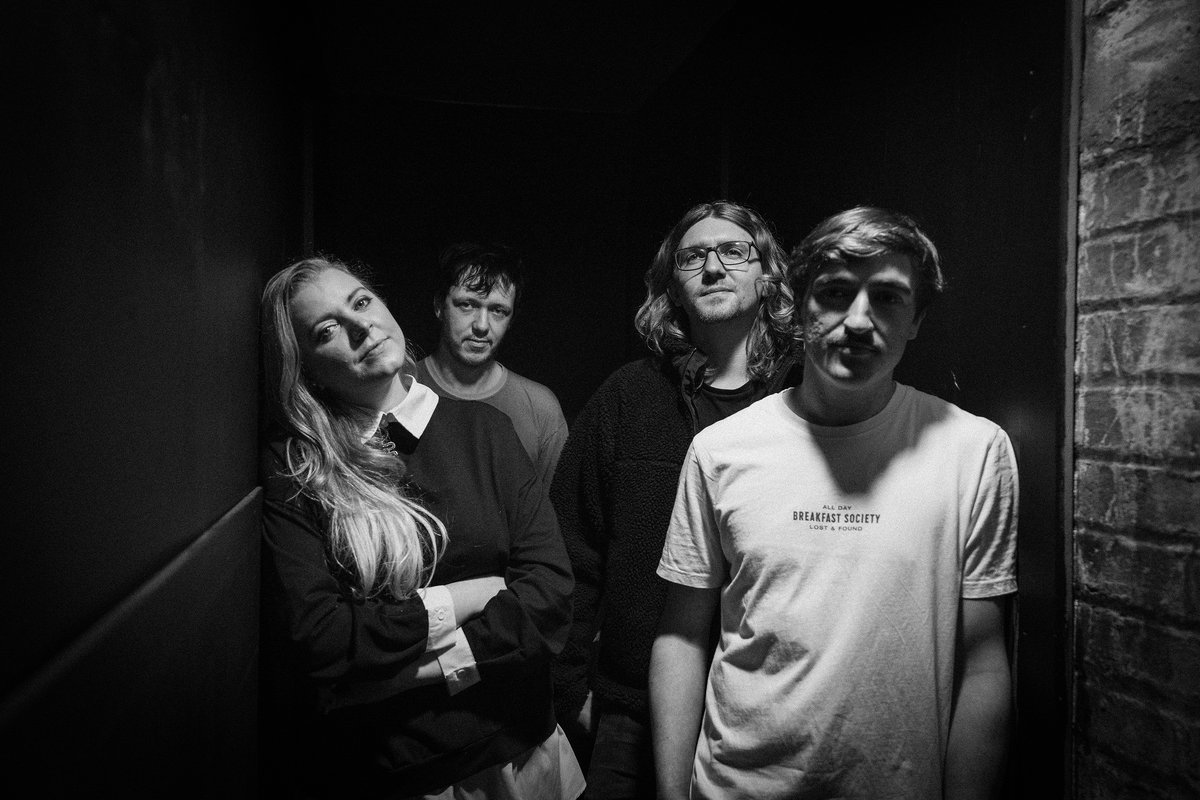
As they head off to SXSW in Texas, ahead of their US tour, Pillow Queens share another new single and video from their forthcoming album“Leave The Light On” due on April 1st.
Singer Pamela Connolly says the song is inspired by Sisyphus and ” tries to convey a perpetual hopelessness of debt and striving for an ideal that can never be achieved.”
Pillow Queens are a 4-piece from Dublin, Ireland. Their debut album ‘In Waiting’ was released in September 2020.
New album ‘Leave the Light On’ comes out April 1st.
Kevin Rowland’s Dexys Midnight Runners are most famous for their 1982 hit “Come on Eileen” It topped the U.S. and U.K charts, and has become a permanent staple on best of the ’80s mixes.
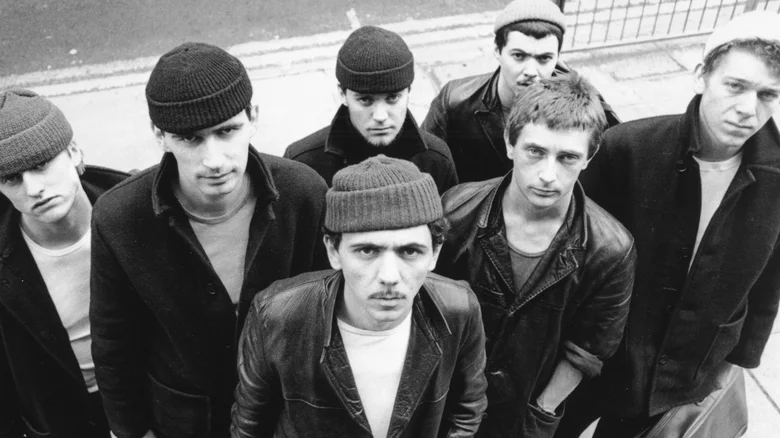
Dexys Midnight Runners (currently officially known as Dexys, their former nickname, styled without an apostrophe) An English band with soul influences from Birmingham, who achieved major commercial success in the early to mid-1980s. They are best known in the UK for their songs “Come On Eileen” and “Geno”, with extensive airplay on MTV, they are associated with the Second British Invasion. The band broke up in 1987, with Rowland becoming a solo artist. After two failed restart attempts, Dexys was reformed by Rowland in 2003 with some new members, as well as a few returning members from the band’s original line-up. Dexys released their fourth album in 2012 and a fifth followed in 2016.
The band itself was just as much of an anomaly as the song. They appeared on “Top of the Pops” after synthy Duran Duran, wearing worn denim overalls and playing trombones, fiddles, and accordions. Their influences were often more than a decade old, and the band’s sound often has more in common with Celtic folk and American soul. They are often associated with the rough, lived-in style that they wore in the music video for “Come on Eileen” but, their look actually changed often. For one album, the band dressed in a style inspired by New York dock workers, for another, professional suits and skirts.
The band’s unique sound and style was largely the work of songwriter and frontman Kevin Rowland, who was notorious for being a controlling perfectionist when it came to his artistic vision.
Dexys Midnight Runners was a band uniquely of its time and place. Kevin Rowland, founder and frontman of Dexys Midnight Runners, was a teenager in the late ’60s and early ’70s, but his early life experiences made him the perfect person to write songs that appealed to the disillusioned youth of ’80s England.
Before Kevin Rowland started Dexys Midnight Runners, he was in a punk band known as The Killjoys.
In a 1977 interview, Rowland described how Birmingham’s punk scene had started out relatively “laid back” compared to the thriving scene in London. Despite this, the group were able to release several songs with the label Damaged Goods. The label has stated that Rowland tried to use his then-girlfriend and bassist’s sexuality to get more attention for the band.
After the breakup of The Killjoys, Kevin Rowland and Kevin Archer formed their soul band. As improbable as it might seem for a young man from Birmingham in the late ’70s to go from punk to soul, this was actually part of a wider trend known as the Northern Soul Scene.
Rowland and Kevin Archer put an ad in Melody Maker, looking for members for their new band. They auditioned more than 30 people for their new band, ultimately settling on around eight performers. Trombone player “Big” Jim Paterson described joining Dexys Midnight Runners as “a fluke.”
As described by bassist Peter Williams in a BBC documentary, they were hoping to achieve a sound that had “a brassy sound but … the aggression and immediacy that punk rock had.” Keyboardist Mick Talbot stated that the band, “was something that came out of Birmingham, and it couldn’t have come from anywhere else. It was very much an appreciation of American R&B,
After Dexys Midnight Runners broke up, Rowland struggled with addiction. he was dealing with guilt over his behavior in Dexys. “I had lots of demons and pain in me, but they really came out in the last three years of my cocaine addiction,” Rowland told Vice. “It just became my life; it took over … I got into a program of recovery in ’93, and that was like my protection. I’m still in it, and I’ve been clean ever since.”
Along with everything else, Kevin Rowland designed the look of the band, including their fashion. One look was inspired by NYC dock workers, such as those featured in “On the Waterfront.” Their most iconic look, however, was the one worn for the “Come on Eileen” video. While the success of their video made people associate the band with the rough denim look, it was actually only the band’s wardrobe for about a year before Rowland moved on to something else. “We were into the idea of being scruffy, but of course only in exactly the right kind of way,”
Rowland may have had the ideas for the band’s unique fashion, but the looks were actually made by costume designer Debbie Baxter. Baxter would present drawings of potential looks to the band. One of these were the “denim dungarees” that would become the band’s signature style. They tried weathering their own denim by boiling it in Rowland’s kitchen, but they ultimately went with actually used pieces. The band was “in tatters” at the time, and it was difficult to get everyone on board with the non-traditional look.
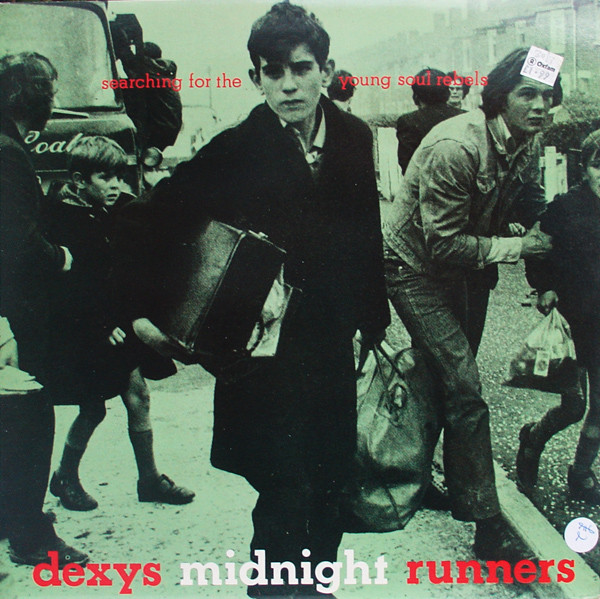
Searching For The Young Soul Rebels (1980)
When this album first came out it was like nothing I had ever heard before. When the sound of a radio being tuned and hitting bits of songs before going out of ‘focus’ again, followed by the call and response bit, followed by Rowland as Gospel Minister: ‘For God’s sake burn it down’ – then that brass section kicks in … well, you just wanted to jump up and dance all night with a swagger.
From the album cover art inwards and outwards, this is amazing stuff.
As described on Dexys was truly leaning into their Northern Soul origins for this song. The name is a reference to soul singer Geno Washington. The entire first album was powered by horns and had an old soul feel. Transports you not only into a 1968 hot and sweaty night-club soul revue, but actually inside the shoes of a fan of Geno, an artist who never had a hit single but who had a great reputation as a live act around the clubs.
It’s one of those singles the likes of which you’ve never heard before, but once you crack the code, you’re in forever. So many great bits, the fade-in “Geno” chant, the brilliant “gather” run-up to the chorus (“I can see that inspiration…”) and especially the extended horn break, before the final chorus.”
Excellent soul album with hints of pop, jazz, and folk. Excellent songs, obviously, “Geno“, is a standout, but there is plenty of good songs here. Kevin Rowland is a brilliant songwriter but he never wrote that much and that’s probably why he is underrated. Still, this is a fine debut record from a great artist.”
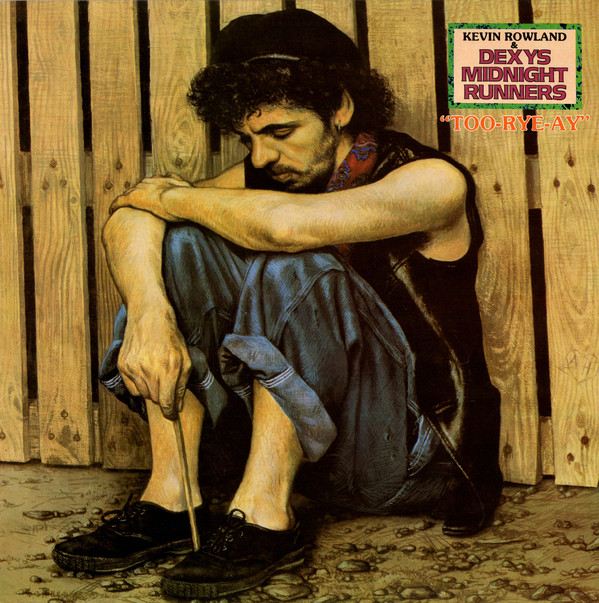
Too-Rye-Ay (1982)
For the second album, “Too Rye Aye” which featured “Come on Eileen,” their sound gained another influence: Celtic folk. You just can’t go wrong with this album. A brilliant record full of great songs. It flows amazingly well considering it was a sort of compilation album because it certainly feels like it’s all part of a plan. Lovely songs in, old, liars A-E, and until I believe in my soul. The obvious highlight though is the wonderful, “Come on Eileen“, simply one of the best singles of the eighties.
“Too-Rye-Ay”, despite the raggle-taggle fiddles and gypsy stylings, is at its best a brilliant Ppp! record. Rowland turns in some fine trademark ballads like “Old and Liars A to E”, but it’s when the tempo rises and he starts evangelising that the album truly takes off. “Jackie Wilson Said” swings with a glee that Van Morrison’s original never quite achieved. A furious version of “Plan B” segues into I’ll Show You” without missing a beat. “Plan B” could be a love song of sorts but I think it’s more likely about Kevin Rowland’s plan to launch the new Dexys after most of the original members had left to form The Bureau. The song is addressed to another member of Dexys who’s stood by him , and “Plan B” was the new Dexys. The “whispers more than loud enough” refers to tensions in the old band and the band members turning against him.”
As for the titular “Eileen”, Rowland used to claim that she was his ex-girlfriend. In an interview, he admitted that she was a “composite” that he used to depict “Catholic repression.” He described the experience of “being a teenager, surrounded by Irish Catholic girls you couldn’t touch, but at the same time with these overpowering feelings of lust which you’re not supposed to have.”
The highlight though is “Let’s Make This Precious“. The opening horns are the point where “Too-Rye-Ay” most closely resembles Dexys debut, and the lyrics are a typical manifesto asking for something better without ever quite nailing specifics, but the whole thing has a sheen that just makes the song sound … exciting! Plus it’s got handclaps, great pop records should always have handclaps.
Like many of Dexys’ songs, there is a reference to another musician. In this case, Johnny Ray, who was popular in the ’50s, with the generation before Rowland’s own (hence the lyric, “we can sing just like our fathers.”) The song has been interpreted as being about someone desperate to get out of his hometown (where people are “beaten down” and “resigned to their fate,”) and find happiness elsewhere. Whether or not the song is autobiographical has never been explicitly stated, but it would seem to parallel elements of Rowland’s experience.
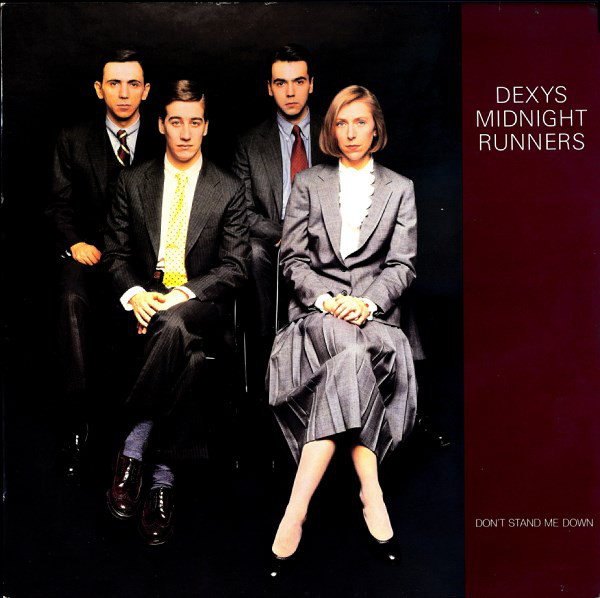
Don’t Stand Me Down (1985)
The next album was called “Don’t Stand Me Down.” It was more ambitious than any Dexys album ever before. It took nine months to write, featured spoken word dialogue, and the songs were between five and 12 minutes long. Rowland again changed the band’s look for the album, this time featuring mostly smart office attire. Rowland refused to record the album unless it could be recorded live, with all of the band members playing at the same time. He initially refused to release a single, believing that the album worked best when listened to as a full album, in the right order. After listening to the demo, a manager warned Rowland that it might not be successful, but Rowland wasn’t deterred. He felt he had nothing to lose.
I don’t know exactly what to say about this record, it is certainly good, full of the great northern soul instrumentals that Kevin Rowland and the group perfected on their last album, where the major difference between this album and any other Rowland album is the huge ambition that goes into the lyrics, a good portion of the album is spoken word sections of dialogue and kind of plays out as a story through the record.”
“This Is What She’s Like” doomed to become the band’s first non-charting single since “Liars A to E” it’s an absolute corker once you give it a chance to sink into your skull and, track by track, “Don’t Stand MeDown” unfolds to become not the ugly duckling of Dexy’s Midnight Runners’ hit-packed catalogue, but the new dawn that could should have finally exorcised “Eileen” . And when it didn’t, the band broke up.
The album did terribly at the time, both rejected by critics and the public. Today, it is still obscure, but it has gained a great deal of critical respect. Fans of the band often consider it the best work of Dexys Midnight Runners. But in 2003 they toured that year, playing most of “Don’t Stand Me Down“, and I sat/stood/whatever in the Royal Concert Hall in Nottingham with tears in my eyes. (Of happiness in case anyone is still reading).
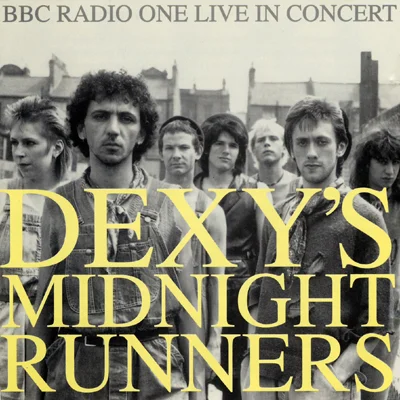
BBC Radio One Live In Concert by Dexys Midnight Runners (1993)
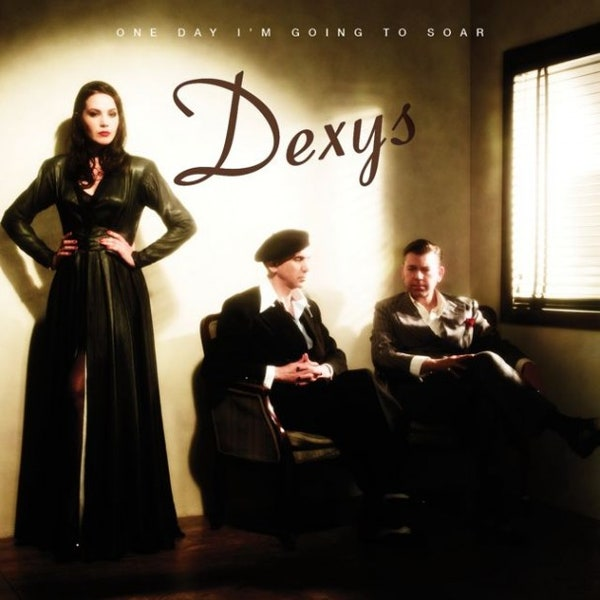
One Day I’m Going To Soar (2012)
There is the prominent feel of a storyline arc throughout these songs and its no surprise to see the band performing these songs in album order in old theatres it has that feel of a musical in places . But don’t let that put you off this is a brilliant album and its so amazing to hear Rowland back , vocally strong and in full control again . “One Day I’m Going to Soar”, the band’s first release since 1985’s poorly received “Don’t Stand Me Down“, Opening track “Now” sets the eccentric tone immediately, as its stately piano riffs and mournful violins make way for a contrasting folksy stomp featuring a typically rousing chant of “Attack! Attack!” while elsewhere, there are solid forays into ’70s string-soaked disco (“I’m Always Going to Love You”), lounge bar jazz-soul (“Me”), and best of all, The seductive “She Got aWiggle”. Ever the showman, Rowland’s theatrical tendencies are still as ham-fisted as they were in his heyday, as evident on the melodramatic cabaret number “Look,” as on “Incapable of Love,” a battle of the sexes duet featuring the equally overblown tones of Madeleine Hyland.
There’s little need for such a “subtlety of a sledgehammer” approach as Rowland’s highly confessional lyrics are dramatic enough on their own. Appearing to revel in picking his own personality apart, there are spoken word notes to self, declarations of independence, and tales of self-loathing, all of which make you feel like you’ve wandered into a brutally honest but utterly compelling therapy session. “One Day I’m Going to Soar” hardly justifies the almost-three-decade wait, but it’s as marvellously idiosyncratic as any long time fan could hope to expect.
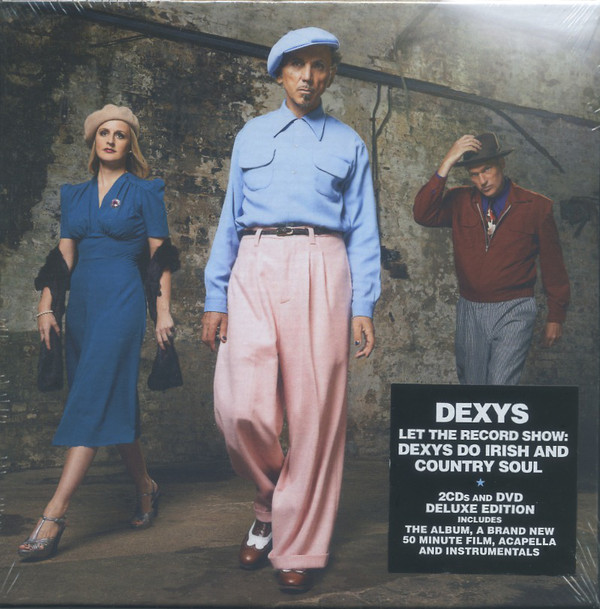
Let The Record Show: Dexy’s Do Irish And Country Soul (2016)
The album is as good as you might have hoped, if you’ve heard and enjoyed the band’s reunion CD from 2012, “One Day I’m Going To Soar”. “One Day” was the 4th Dexys’ album, It was a fine follow-up, showing little signs of the band’s age. On the 2016 album “Let The Record Show”, the band sounds as if they’re still rolling off the momentum of “One Day”. Kevin’s singing on the new album is slightly restrained, but he keeps you hanging in there none-the-less, with his phrasing and passion.”
After coming back in 2012 with a newly shortened name (Dexys), many former bandmembers on board, and an album harking back to the vintage days of the mid-’80s and stocked with songs that were quintessentially Rowland, the group slimmed down to the core of Rowland, vocalist Sean Read, and viola player Lucy Morgan and again did something unexpected. The idea of Rowland doing covers isn’t so daft, considering he’d done two albums of them in the ’90s — it was more the songs they covered and the way they approached them.
Half the album is a follow-up to a plan hatched in the ’80s (after Too-Rye-Ay) to take traditional Irish standards and give them the full Dexys treatment. That makes sense enough. The rest of the album is a wildly diverse batch of tunes, like the LeAnn Rimes ballad “How Do I Live” and Joni Mitchell’s “Both Sides Now,” that one would never expect Dexys to cover. No matter the song or style, the band takes a firmly middle-of-the-road approach to all of them, ladling goopy strings and tinkling pianos on top of everything and taking everything at a very relaxed pace. It’s an interesting choice, one that ironically makes “Let the Record Show” the most normal-sounding of all Dexys albums despite its eccentricities.
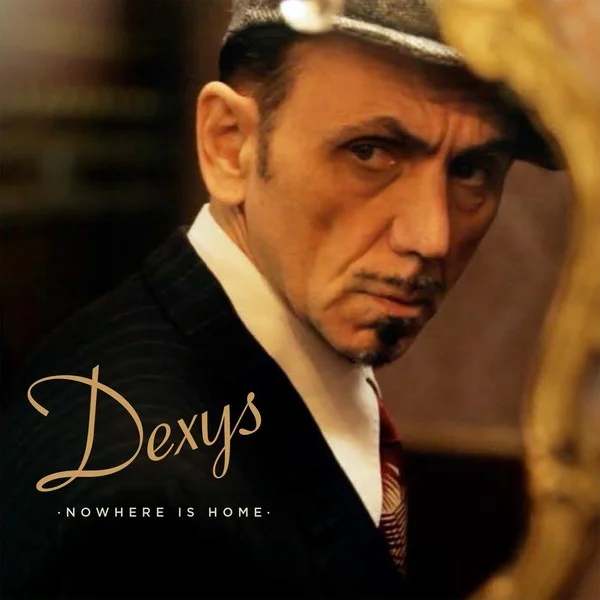
Nowhere Is Home – Live at Duke of York’s Theatre
Should you own all Dexy’s albums? Almost certainly, and a Best Of is essential too, to gather up the various gems that never made it to an LP.
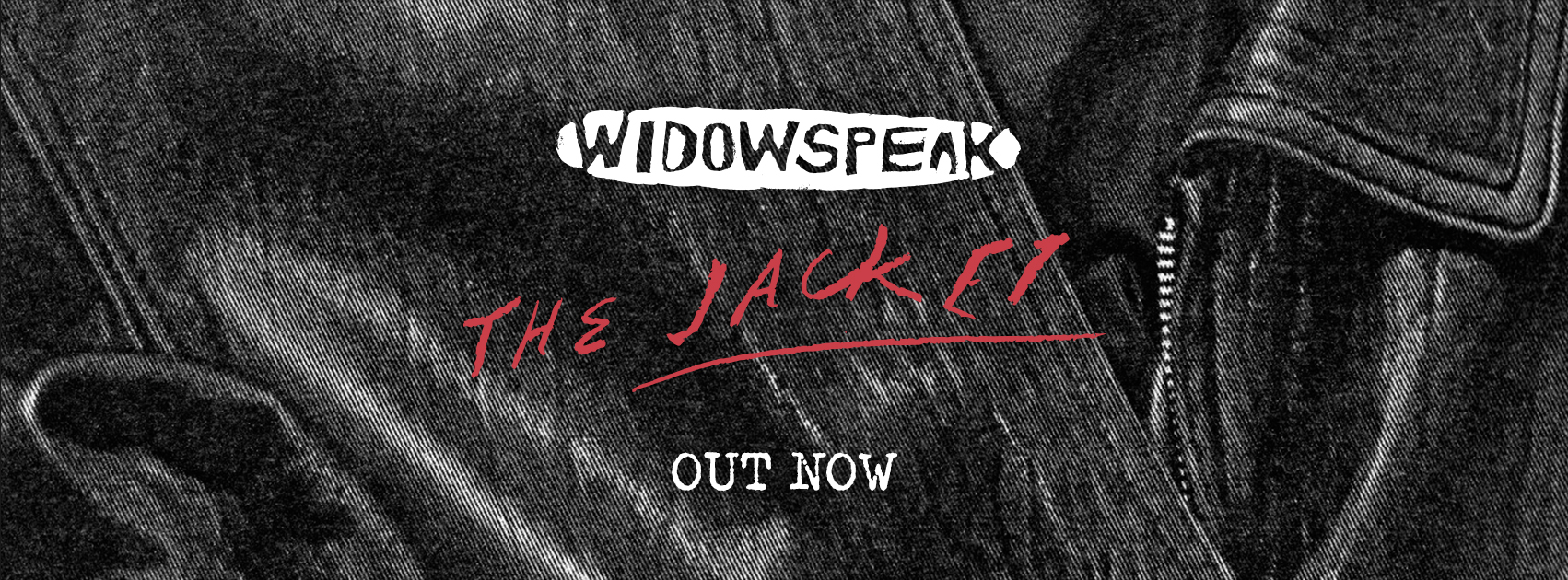
This the sixth studio album from New York City duo Widowspeak, and the follow-up to 2020’s “Plum”, “The Jacket” is a cozy fit. In many ways, it’s a homecoming: Singer/songwriter Molly Hamilton and guitarist Robert Earl Thomas returned to their NYC point of origin to record the album with co-producer Homer Steinweiss, also bringing founding drummer Michael Stasiak (who left the band in 2011) back into the fold. The result, which also features J.D. Sumner on bass and Michael Hess on keys, is as true to the band’s roots as it is difficult to place chronologically.
The Jacket’s 10 tracks each have one foot in the ‘60s and another in the ‘90s, melding gentle psychedelia (“Unwind”) and pop hooks (“While You Wait”) with humming guitar rock (“Everything Is Simple”) and Americana touches (“Forget It”). Hamilton’s Hope Sandoval-esque vocals are captivating, most of all, and Widowspeak’s songs never step out of sync with them, serving their tangled, alluring melodies above all else.
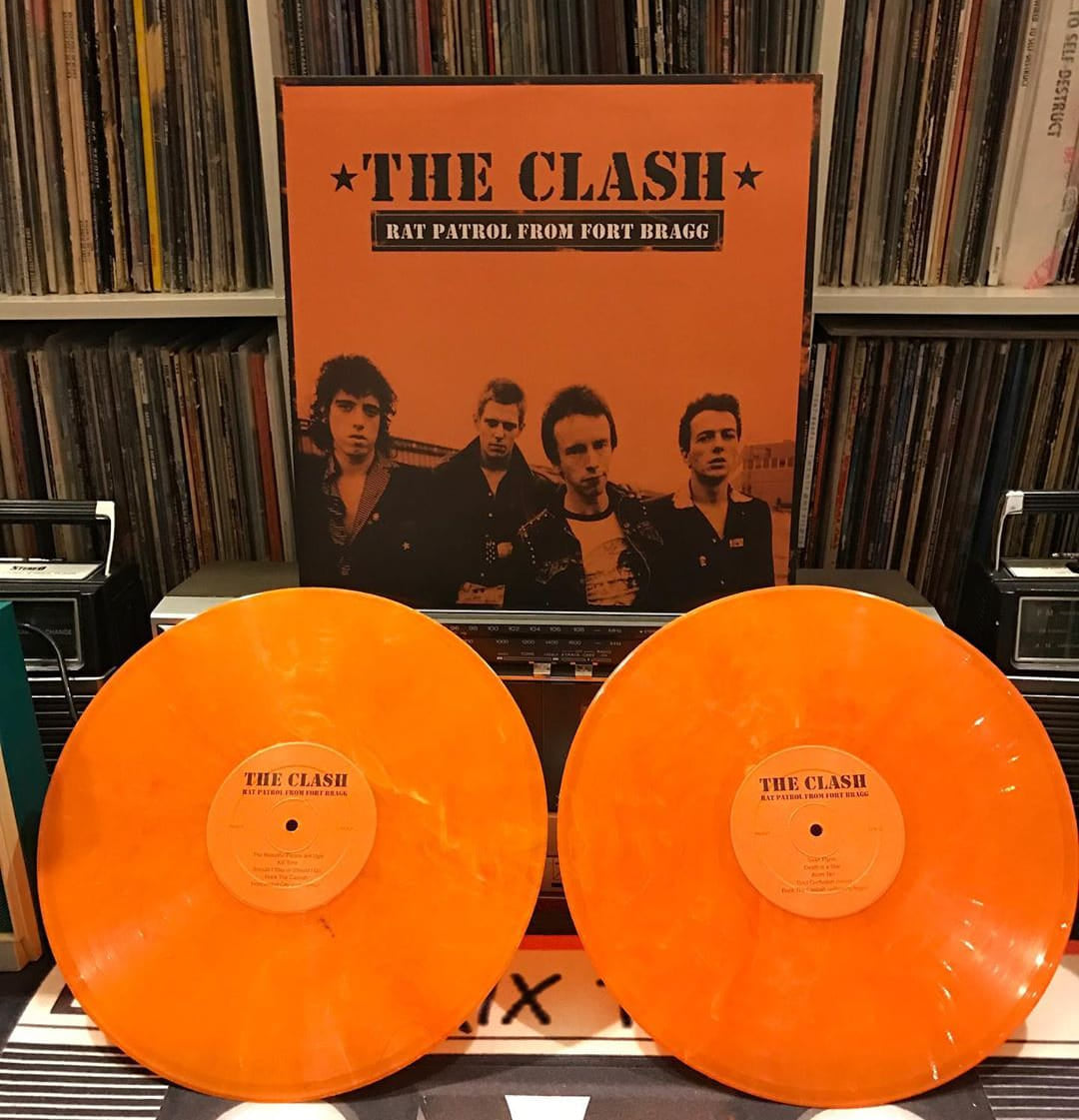
Rat Patrol… was meant to be The Clash’s fifth studio album. Conceived by Mick Jones as a double album, the plan was to continue the theme of a global rock’n’roll jukebox the band had staked out with its predecessor, “Sandinista!.” But Jones’ 15-track, 65-minute mix was rejected by Joe Strummer; Glyn Johns was brought in to edit it down to a single album: “Combat Rock”. Johns’ edits are cleaner and shorter (“Sean Flynn” loses three minutes, and its tropical atmosphere), but on “Overpowered By Funk”, the Rat Patrol version is closer to the skittish playfulness (and indulgence) of Sandinista!. There’s a sense of intimacy, too, on Mick Jones’ “Death Is A Star”, which is absent from the released version. Combat Rock ditched five Rat Patrol cuts. Three remain unreleased. “Walk Evil Talk” is seven minutes of jazzy atmosphere. “Kill Time” is a Caribbean shuffle. Ironically, “The Beautiful People Are Ugly”, later reworked by Topper Headon as “Casablanca”, would sit happily next to Strummer’s solo work.
The Beautiful People Are Ugly Too from The Clash´s Rat Patrol From Fort Bragg. RPFFB (as I have decided it should be abbreviated as) was, or is, what was originally planned to be the album that evolved into Combat Rock, and features along the Combat Rock songs a number of unreleased ones, such as this one. The Beautiful People Are UglyToo is also commmonly known as The Fullham Connection, and according The Clash Wiki and some people I´ve spoken too (on the internet) Mick Jones has confirmed that to be its correct name, but I´ve yet to see the proof and the Rat Patrol From Fort Bragg ‘release’ titles it…well, The Beautiful People Are Ugly Too. So that´s what I call it. Anyhow. This is a pretty damn beautiful song if you ask me, with some pretty damn beautiful lyrics too, though to be perfectly honest I can understand why it didn´t make it to the final Combat Rock release.
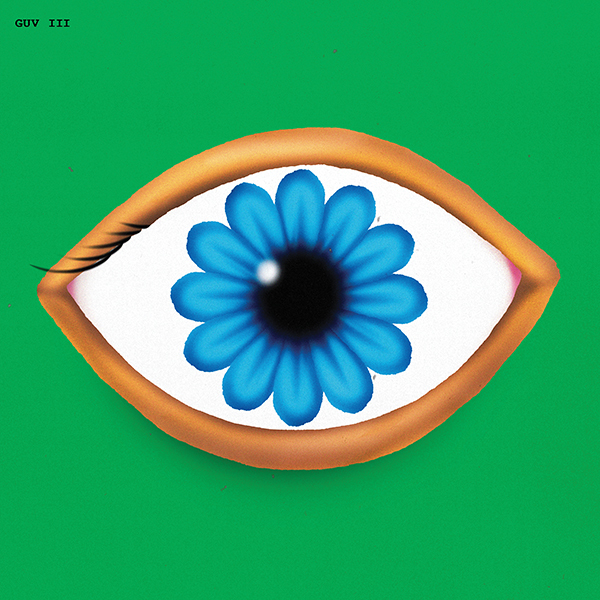
You may know Ben Cook as the guitarist in Canadian punk band Fucked Up, but his solo project, Young Guv, demonstrates his broad music taste and undeniable song writing talent. Last year, he unleashed a two-part album “GUV I & II” via Run For Cover Records, which boasted pretty, lo-fi guitar pop songs with a ravishing melancholia. After early-to-mid-2000s stints in hardcore bands No Warning and Fucked Up, it’s safe to say Toronto-based singer/songwriter Ben Cook has found his bliss since setting out on his own as Young Guv. From his 2015 debut “Ripe 4 Luv” to today’s “GUV III”, his third release on Run forCover Records, Cook has been putting out hooky, throwback guitar pop that sounds more like a ray of sunshine than a sock in the jaw.
You’ll know whether you’re onboard with GUV III within seconds, as opener “Couldn’t Leave U If I Tried” leads the way with textbook jangle-pop a la Teenage Fanclub or Matthew Sweet.
“Every Flower I See” by Young Guv from the album ‘GUV I’ out August 2nd, 2019 via Run For Cover Records.
The record maintains that buoyant tone all the way through, folding in power-pop (“Lo Lo Lonely”), psychedelia (“Scam Likely”) and even a touch of the orchestral (“April of My LIfe”) along the way. What’s to stop Cook’s bliss from becoming your own?
Born out of the death of Robert Tilden’s old band in 2016, his brainchild Boyo remains his outlet to create danceable psych-pop that balances a sense of both whimsy and wistfulness with ease. His latest studio effort “Echoes Like Memories” is eclectic, spanning genres across its track-listing. Still, in its inability to have a simple label slapped on it, it hangs together as one cohesive collection, fitting more hooks into a single song than lots of people can dream up for an entire album.
A breakup, a scrapped album, a sold-out tour, kidney stones, and collaborative song writing are all the genesis of BOYO’s funky, psychedelic new LP ‘Echoes Like Memories’. After his relationship’s romance faded, Rob Tilden (BOYO) embarked on a tour with bedroom-pop contemporaries Luna Luna in November/December of 2021: playing sold-out shows on the West Coast and in the South, reinvigorating Tilden’s love of playing more ‘upbeat and funky tunes’ that get a crowd moving. The only problem was, he had already completed an album to be released in March of 2022 and it was full of depressing, meditative emo songs that Tilden felt less and less connected to.
With only a month to turn in what he envisioned as a “short, poppy batch of greatest hits” Tilden holed up in his usual basement studio now equipped with slightly better gear and a reel-to-reel tape machine. With the song writing and arrangement help of his live bandmate Hudson Buckley on half of the songs, the record took shape over the course of three weeks. The momentum couldn’t be stopped by bouts of insomnia, a rough round of kidney stones from dehydration, and a false COVID19 positive from a bum home test.
The very detailed musical side of things catches the ear even more when paired up with Tilden’s soft, layered vocals, making their entrance on each track like a ghost whispering in your ear at your friend’s party while you’re dancing. Combined, each element adds up to a fun, often pretty full-length that charms much more than it haunts
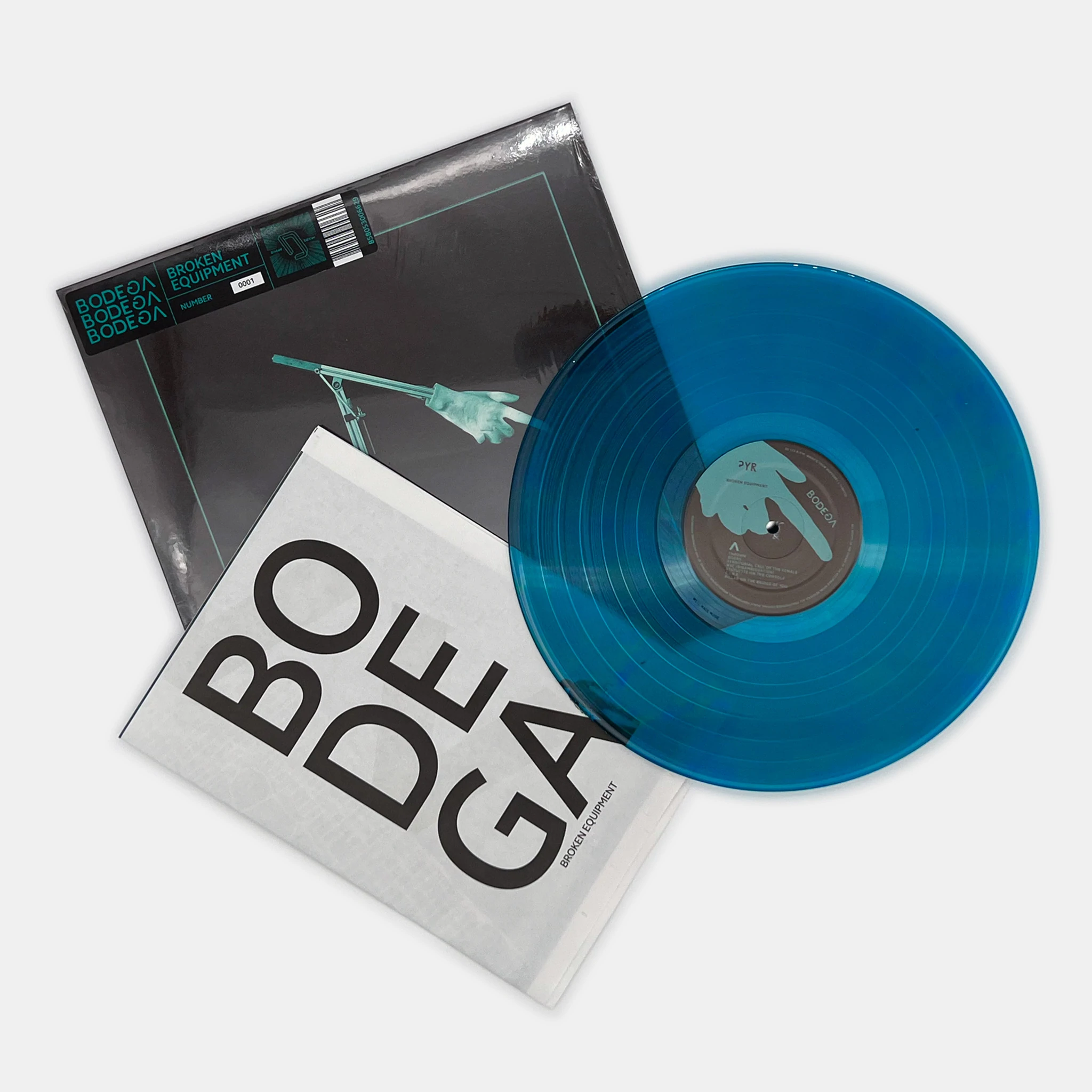
Absolutely hyped to welcome back the NYC Post Punks, this time in literary mood. The follow-up to the band’s acclaimed debut album, “Endless Scroll” (2018), and 2019’s “Shiny New Model” EP, “Broken Equipment” was inspired by a book club. In the early months of 2020, the Brooklyn art-punk incendiaries gathered together with close friends to study the works of a wide range of philosophers. Passionate debates lasting long into the night became a regular occurrence, motivating the band to become as ideologically unified as the weighty tomes they were reading. “Broken Equipment” is Bodega’s attempt to interrogate the external factors that make them who they are, propelling existential quandaries with tongue-in-cheek humour, highly personal lyrics, and irresistible grooves. There is a Dinked Edition Number 155 + Clear Teal Vinyl * + Bonus Flexi Disc with non-LP song “Top Hat No Rabbit” * + Glow in the Dark Alternate Sleeve * + Limited, numbered edition of 1000 * + One Per Customer
* Dinked Edition EXCLUSIVE
Since Bodega’s formation in 2016, Ben and Nikki (who previously played together in the band BODEGABAY) have experienced a rare meteoric rise. The duo double as filmmakers, earning acclaim for their 2020 erotic drama PVT Chat starring Peter Vack, Julia Fox, and other recognisable faces from the Safdie Brothers’ cinematic universe. When the pandemic forced them to hit pause, they used the opportunity to regroup with drummer/performance artist Tai Lee, bassist/book club leader Adam See, and lead guitarist Dan Ryan. Broken Equipment was produced by Ben himself with Bobby Lewis, BODEGA’s NYC live sound mixer. The record was mixed by Bryce Goggin, whom the band sought out for his work with Pavement, and Adam Sachs (WIVES). The album’s 12 songs are set in present-day New York City, packing in references to contemporary issues of algorithmic targeting, media gentrification, and the band itself. On “NYC (disambiguation)”, they break down how the Big Apple was “founded by a corporation” and history remains alive in the present.
The poetic “Pillar on the Bridge of You” is the first love song Ben ever wrote for Nikki, while “All Past Lovers” gazes back to the “southern belle” and “chat room suitor” who still lives inside him today.
Orphans: Brawlers, Bawlers and Bastards, the three CD set of Tom Waits’ rarities and previously unreleased archive tracks, was issued in November 2006, and was the great man’s first new album since 2004’s Real Gone.
Prior the release of Orphans…., Waits performed a short series of shows in the summer of 2006, across the South and Mid-West of the US, which he titled ‘Orphans’. Featuring numbers from the pending box set, Tom’s son Casey played with him in the band accompanying Tom.
In 2008, Waits embarked on his ‘Glitter and Doom Tour’, starting in the U.S. and then moving to Europe. Both of his sons played with him on the tour. At the June concert in El Paso, Texas, he was awarded the keys to the city.
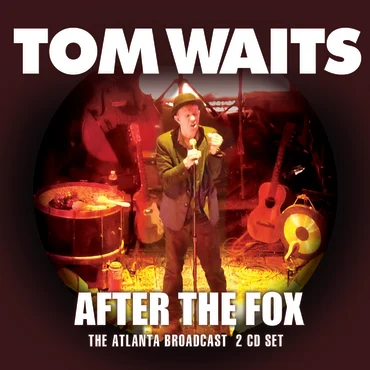
Among the finest concerts Tom and entourage played on this tour however, was their show at the Fox Theatre in Atlanta Georgia, on 5th July. Performing a quite extraordinary set covering cuts from numerous past records, plus a smattering of new material to boot, the event was dazzling. Previously unreleased, this new 2CD Set now contains the entire live broadcast, which was transmitted in the greater Georgia area at the time.
Sprints unveil a new EP “A Modern Job”on Nice Swan Records. Lyrically, “Modern Job” finds singer Karla Chubb at her sardonic and angry best, detailing her own personal wish-list “I wish I had the guts/I wish I had the gall/ I wish I had a girl” – all set to cascading guitars and a formidable rhythm section; working in unison to create unrelenting tension, all the while echoing the subject matter Chubb explores in her lyrics.
Sprints combine guitar-driven hooks, motoric rhythm and emotive lyricism to create a unique sound that pulls from garage, grunge, punk and beyond. Like the Irish guitar acts who have paved the way for them: Fontaines D.C., Silverbacks and Girl Band, the sound of Sprints is urgent and vital at every turn.
Sprints have hit a nerve. Driven by experience, tough political climates and social and economic uncertainty – their music is honest, often politically charged and authentic



 The Fat Angel Sings